‘Humility’ + ‘musician’ = Great combination

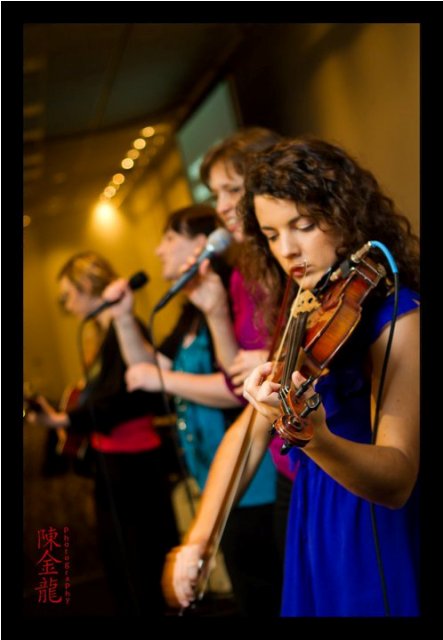
IMAG2157-1I had the privilege of being asked to organise a team of 7 musicians, most of whom I did not know, for a friend’s wedding on the weekend just gone. We had just one practice before the day, yet I am pleased to say the result was pretty great! (Out of interest, the songs we led were “Beautiful Saviour” (Stuart Townend), “This Life I Live” (Michael Morrow, EMU) and “Come Thou Fount of Every Blessing”).
But why should I be surprised that it worked well? The team was comprised of committed Christians who have learnt to balance their musical zeal with a great deal of humility and selflessness. So when it came to figuring out how to work together as a team, and how to best arrange the music, we were on the same page.
It’s like when you meet Christians from another place for the first time and have an instant affinity, an easy friendship. This comes because we have a dad in common, our heavenly Father! We are united in Christ and share a family resemblance in our attitudes. When there is a servant heart, a willingness to (musically) do less, to be restrained and to wait on each other, there is much unity and it can lead to a beautiful harmony.
This is certainly the challenge for all Christian musicians: to move from pride, insisting on our own way and seeking our glory, to an attitude of humble servant-heartedness. It is worth reminding ourselves of this every time we turn up for music practice at church.

Nb.  In the process of working with this team I happened to meet a fellow blogger who opened with the question “You’re Seven Notes of Grace aren’t you?” (he was married to one of the musicians). Small world! (I felt famous!) I hadn’t even realised he lived in the same city. You might like to visit some of his reviews over at Eternitainment: “Eternitainment seeks to bring this Christian worldview and the beliefs of modern entertainment together for a heart-to-heart chat, to hear what each is saying. Eternitainment invites you to listen in and join the conversation.” 

You may also like:
Laying aside my taste in music                                 Leading worship is not about us
bird tree music_feelingflat1

What if the music stinks?

Today’s post comes from Blogging Theologically which I have found to be a great site, with heaps of interesting book reviews and other commentary. This one focuses on the question of church music, of how ‘good’ it should be, and how we should respond if it ‘stinks’:

gracepianoCAN YOU WORSHIP EVEN WHEN THE MUSIC STINKS?: “Not all churches are blessed to have world-class musicians or top-of-the-line sound equipment, or talented people running the board. But, within Christian discussions on worship, it seems like there’s an expectation that all churches should.  People (apparently) can’t engage with hymns. They want “simple” and they, apparently, also want really big sound. Our church has a terrific group of musicians leading our congregation in their praise, so I totally get this. When people are giving it their all and the quality is phenomenal, it’s a really great thing to be a part of.

But let me ask you something: can you worship even when the music “stinks”?

This weekend we were visiting a Baptist church in a small town here in Ontario. The atmosphere was fascinating. This is the kind of church where you stand when the pastor enters the sanctuary and wait for him to leave before you make for the exit. The opening processional was handled on an electric organ. The songs were sung by five people (including the pastor) accompanied only by a piano. And they were all songs in keys in which man was never meant to sing.

They weren’t setting the world on fire with their talents. But you know what was cool?

People were singing their hearts out to Jesus in this church.

I saw more than a few people with hands raised (did I mention they were Baptist?). Their hearts were engaged. They were in it to win it.

I have to wonder, is this something we’ve forgotten in the age of the high-tech mega-church?

I’m not saying we shouldn’t all be pursuing excellence to the degree of ability God has given us, but have we lost the ability to be engaged in worship even when we aren’t particularly into the style, when there’s only a piano and a couple of singers, or when the special is a bit off-key?

I know a lot of folks who, if you put them into that kind of setting, would be so distracted they won’t know what to do. I know others who it wouldn’t be phased at all. And I’ve gotta say, the ones who wouldn’t be phased tend to be the more spiritually mature people I know.

They get that worship through song isn’t about what we like necessarily, but about the object of the people’s affection. So you can sing a song that makes you feel like you’re going through puberty a second time because it’s not about whether or not your voice is going to crack. It’s about Jesus and His glory, not our preferences.

How can we do a heart check on this? Here are a couple of options:

1. If you attend a church with high-end music, try to visit a small town church on your next vacation. The music won’t be as good as you’re used to, I can almost guarantee it. But watch how you respond; ask the Holy Spirit to test your heart and see what He does in response.

2. If you’re a worship leader, arrange for a ridiculously streamlined morning of worship. Seriously, pull a Bob Kauflin. Do one guy and a piano or guitar. And then check your inbox. You’ll have a better sense of where people are at by the number of complaints you receive.

Worship isn’t about style or preference, it’s about God. You can worship even when you think the music kind of stinks if you keep that in mind.” (Aaron Armstrong —  July 15, 2013)

You may also like:

C.S Lewis on musical taste & grace               Blessings of multi-generational music teams
music tastetop-10-offensively-young-musicians_h

Watch “‘Smile’ – The Idea of North” on YouTube

Love this group!! This is title track for their new album.

You may also like:
Who is the Idea of North

Another way music trains your brain

Musicians spot mistakes more quickly and more accurately than non-musicians

New research has shown that individuals who play an instrument are more capable at identifying errors and correcting mistakes, and that these benefits apply to amateur musicians as well as professionals.

The study, led by Dr Ines Jentzsch for the University of St Andrews, tested the cognitive abilities of musicians and non-musicians, with the research concluding that learning an instrument could “slow or even prevent”  the mental decline associated with aging.

The research, published in the journal Neuropsychologia, draws particular attention to the skills learnt in musical performance. When playing pieces to an audience or to themselves musicians must demonstrate heightened awareness of their actions: continually monitoring their playing through auditory feedback and rapidly adjusting their movements to anticipate possible mistakes.

The psychological and mental benefits of learning to play an instrument have been shown in previous studies, with research highlighting musicians’ improved reaction times and their increased capacity to “inhibit task irrelevant information” (aka, to stay focused).

“[The results] suggest that higher levels of musical training might result in more efficient information processing in general (indicated by faster overall speed across tasks without accuracy tradeoff), and confirms earlier reports indicating a positive link between mental speed and musical ability,” says Dr Jentzsch.

The research is notable in that unlike previous studies it focuses on amateur rather than professional musicians, showing that even “moderate levels of musical activity” were beneficial to cognitive performance.

The study also drew attention to the diminishing support for children to learn to play in schools, noting that “in times of economic hardship, funds for music education are often amongst the first to be cut.”

“This is particularly worrying given both anecdotal and limited research evidence suggesting that music can have strong positive effects on our physical as well as psychological functioning.”

http://www.independent.co.uk/news/science/musicians-spot-mistakes-quicker-and-more-accurately-than-nonmusicians-8849068.html

You may also like:

Why music makes our brains sing                                                      Pick up your instrument!
brainsingpiano

Why men have stopped singing in church

This is one of the most thought-provoking articles I have read about congregational singing in quite a while. As musicians we appreciate the freedom we now enjoy to learn and teach an infinite number of great songs in our gatherings. We are no longer limited to the several hundred in our now passé hymn book. But what is the impact of this change, particularly for men? This post suggests many things we should perhaps take heed of. It reminds me of the benefits that come from sticking to a smaller playlist for a term, as people get to know songs better. Let me know what you think.

WHY MEN HAVE STOPPED SINGING IN CHURCH

Worship BandIt happened again yesterday. I was attending one of those hip, contemporary churches — and almost no one sang. Worshippers stood obediently as the band rocked out, the smoke machine belched and lights flashed. Lyrics were projected on the screen, but almost no one sang them. A few women were trying, but I saw only one male (other than the worship leader) making the attempt.

A few months ago I blogged, “Have Christians Stopped Singing?” I did some research, and learned that congregational singing has ebbed and flowed over the centuries. It reached a high tide when I was a young man – but that tide may be going out again. And that could be bad news for men.

First, a very quick history of congregational singing.

Before the Reformation, laypersons were not allowed to sing in church. They were expected to stand mute as sacred music was performed by professionals (priests and cantors), played on complex instruments (pipe organs), and sung in an obscure language (Latin).

Reformers gave worship back to the people in the form of congregational singing. They composed simple tunes that were easy to sing, and mated them with theologically rich lyrics. Since most people were illiterate in the 16th century, singing became an effective form of catechism. Congregants learned about God as they sang about God.

A technological advance – the printing press – led to an explosion of congregational singing. The first hymnal was printed in 1532, and soon a few dozen hymns became standards across Christendom. Hymnals slowly grew over the next four centuries. By the mid twentieth century every Protestant church had a hymnal of about 1000 songs, 250 of which were regularly sung. In the church of my youth, everyone picked up a hymnal and sang every verse of every song.

About 20 years ago a new technological advance – the computer controlled projection screen – entered America’s sanctuaries. Suddenly churches could project song lyrics for all to see. Hymnals became obsolete. No longer were Christians limited to 1,000 songs handed down by our elders.
At first, churches simply projected the songs everyone knew – hymns and a few simple praise songs that had come out of the Jesus Movement. People sang robustly.

But that began to change about ten years ago. Worship leaders realized they could project anything on that screen. So they brought in new songs each week. They drew from the radio, the Internet, and Worship conferences. Some began composing their own songs, performing them during worship, and selling them on CD after church.
In short order we went from 250 songs everyone knows to 250,000+ songs nobody knows.

Years ago, worship leaders used to prepare their flocks when introducing a new song. “We’re going to do a new song for you now,” they would say. “We’ll go through it twice, and then we invite you to join in.”
That kind of coaching is rare today. Songs get switched out so frequently that it’s impossible to learn them. People can’t sing songs they’ve never heard. And with no musical notes to follow, how is a person supposed to pick up the tune?
And so the church has returned to the 14th century. Worshippers stand mute as professional-caliber musicians play complex instruments, sung in an obscure language. Martin Luther is turning over in his grave.

What does this mean for men? On the positive side, men no longer feel pressure to sing in church. Men who are poor readers or poor singers no longer have to fumble through hymnals, sing archaic lyrics or read a musical staff.
But the negatives are huge. Men are doers, and singing was one of the things we used to do together in church. It was a chance to participate. Now, with congregational singing going away, and communion no longer a weekly ordinance, there’s only one avenue left for men to participate in the service – the offering. Is this really the message we want to send to men? Sit there, be quiet, and enjoy the show. And don’t forget to give us money.

There’s nothing wrong with professionalism and quality in church music. The problem isn’t the rock band, or the lights, or the smoke machine. The key is familiarity. People enjoy singing songs they know.
How do I know? When that super-hip band performed a hymn, the crowd responded with gusto. People sang. Even the men.

http://www.patheos.com/blogs/afewgrownmen/2013/05/why-men-have-stopped-singing-in-church/

You may also enjoy:

How Church music can welcome newcomers                    When should we sing that song?

Image created by Sarah Danaher with a Canon EOS 5D MkIIpiano-stairs3

Looking for good Christmas songs?

Music leaders, it’s that time of year to start planning your Christmas events once again. If you are looking for ideas, check out some of these posts from Christmas past:

December 25 in song, thanks to Francesca!francescachristmasalbum

. . .  Click here for the itunes link. If you are looking for a great song for a Christmas event at your church, I would recommend “Heaven Everywhere” (sheet music available from Musicnotes.com) or a slower one “December 25“. If you live in a snowy location, try “Marshmallow world” for a bit of fun! Can’t say we relate to that over here in sunny Brisbane, in the middle of a heatwave. READ MORE

Grace has now appeared – Christ!advent

Titus 2:11  “For the grace of God has been revealed, bringing salvation to all people.”

. . .  another great new Christmas song published by the folks from EMU music. (If you haven’t heard of them, they are a great source of singable gospel-true congregational songs). This song “Grace has now appeared” is the first track on their recently released Christmas album Advent(follow this link to buy on itunes). The theme is obviously the “advent”, the arrival of our Saviour, the Word become flesh. The whole album is filled with gospel-rich songs of different styles and tempos. It’s great to play in your home or car through the holiday season, to help remember the loving act of our Holy God, who became man, and showed immeasurable kindness in stooping down to save us, from our addiction to worshipping ourselves.
My favourite lines of this song come in verse 3, “He has come to dwell within us, Bringing us from death to life, Giving us the hope of glory, Making us like Christ, Shining forth his light.” Grace has indeed appeared! And we “little Christs” are the living reminders of that grace. Hope you enjoy the album! (Sheet music available here) READ MORE

Fullness of grace in man’s human frailty

I have been dusting off all my Christmas CDs in anticipation of that most wonderful time of the year. A song I’ve enjoyed for quite a while (on the Christmas album NEW IRISH HYMNS 3: INCARNATION) has just been re-released on the newest Getty album: Joy – An Irish Christmas. The song is called “Fullness of Grace.” It effectively captures how the Incarnation event, when God became Man in Christ, is all about Jesus’ willing choice to wrap himself in our frail human form – an embodiment of the grace of God.
READ MORE

Mary did you know?

I have only recently discovered an awesome Christmas song by Mark Lowry and Buddy Greene (1991), called “Mary did you know?” Why haven’t I heard of this one before? Jeremy Camp has just released it on his new Christmas album “Christmas: God with Us”. It would make a great solo/ensemble song for your carols/Christmas program. READ MORE

And here are a few more song ideas:

Here they are. The first 4 come from a great album by Sovereign Grace Music called “Savior: Celebrating the Mystery of God Become Man” (click the title to listen to all these songs. Find free lead sheets, guitar tabs and mp3s for all these songs here)

Hope has Come (fast and cheery – great with chimes or bells)

Christ the Lord is born today (great Christmas Day item)

Glory be to God on High (bright upbeat song)

Salvation is Born (a gentler feel – I used this with a choir, soloist in v1 and ending, arranged the chorus in 3 part harmony).

Is this not the Carpenter? from Emmanuel: A musical celebration of the Life of Christ
The One who made the world made this world His home
This child that grew to man came unto His own
But His own received Him not, Even looked into His eyes, yet never recognized Him, saying
“Is this not the Carpenter – is this not the Son of Mary?”

“Is this not the Carpenter – is this not the Son of Mary?”
Saying “This is but the Carpenter – it’s only Jesus, Son of Mary.”
It’s a sadness without measure, They had been with Him forever
And still not realized He was the very Son of God, saying
“Is this not the Carpenter – is this not the Son of Mary?” . . . read more

So Let Us Shine from Emu Live 2 (lyrics, pdf music and mp3 here)
For desperate people at their darkest hour, When fault and failure held us in its power
A babe was born – he said, “I am the way”.
He came to earth to turn our night to day, He came to earth to turn our night to day
So let us shine! And show the world his love
So let us shine! Because he first loved us
So let us shine! And show the world his love
This baby is the light of the world.

And this last one, is new to me, untested, but I envisage a string section and some groovy chimes and bells!
Shout for Joy by Paul Baloche – as recorded on his most recent CD “The Same Love”
(Note that the CCLI version of the sheet music has a different bridge. I’m going with the one on the album.)

You may also like:
Why wouldn’t we remember Christmas            
dec 25

Trying on the shoes of a Christmas visitor2012-carols1

Praising God makes our joy complete

made-to-praise_tWe all know that self-praise is no praise at all – and seeking the praise of others is even worse. Nothing sounds so bad as someone describing or complaining about all their great efforts and actions simply so we can praise them for it!

So why then does God so eagerly and perhaps egotistically command us to praise Him? The pages of Scripture (which are in fact ‘God-breathed’ – 2Tim3:16) constantly direct and urge us to praise God. So basically he is asking for it. He created us for His pleasure and he does delight in our praise. Yet he doesn’t need our praise, surely? He is not insecure like us!  On the other hand, yes he does deserve praise, so why shouldn’t we praise Him?

Perhaps the short answer to this dilemma is that praising God is good for us! God knows this, so directs us to praise Him. But let me direct you to some relevant discussion from C.S Lewis and John Piper to explain:

“Just as men spontaneously praise whatever they value, so they spontaneously urge us to join them in praising it: “Isn’t she lovely? Wasn’t it glorious? Don’t you think that magnificent?” . . . The Psalmists in telling everyone to praise God are doing what all men do when they speak of what they care about. . . I think we delight to praise what we enjoy because the praise not merely expresses but completes the enjoyment; it is its appointed consummation. It is not out of compliment that lovers keep on telling one another how beautiful they are; the delight is incomplete till it is expressed. . .  If we were not allowed to speak of what we value and celebrate what we love and praise what we admire, our joy could not be full.”
(C.S. Lewis, Reflections on the Psalms)

“So if God loves us enough to make our joy full, he must not only give us himself; he must also win from us the praise of our hearts — not because he needs to shore up some weakness in himself or compensate for some deficiency, but because he loves us and seeks the fullness of our joy that can be found only in knowing and praising him, the most magnificent of all beings. . . . God is the one Being in all the universe for whom seeking his own praise is the ultimately loving act. For him, self-exaltation is the highest virtue. When he does all things “for the praise of his glory,” he preserves for us and offers to us the only thing in all the world that can satisfy our longings.”
(John Piper. Desiring God, pages 48–49)

So praising God completes our joyful experience of his good and gracious character. How important it is then to see our music ministry as providing an opportunity to do just that – to bring people to praise God, even when they don’t “feel” like it or sing with trepidation because they sing ‘out of tune’.
People need to praise God. Praising God not only completes our joyful experience of his love, it also takes our eyes from ourselves and our problems to the One who holds us together, who has moved towards us with compassion in Christ.
Let’s keep doing all we can to bring people to the place of praise!

(And this may be the topic for another blog post but I’ll mention it anyway: God sings over us!
“The LORD your God is with you, the Mighty Warrior who saves. He will take great delight in you; in his love he will no longer rebuke you, but will rejoice over you with singing.” (Zephaniah 3:17 – almost a Three Sixteen!))

You may also like:

Why is it so Critical that we Sing Together (from the Blazing Center)

Working for those moments of Joy                                     You are our Song from Age to Age
Age to Age - Sovereign Grace Musicgrow music


Oh, for a humble attitude to church – especially the music!

Worship_War_ThumbChurch music is a stand-out feature that quickly distinguishes one church from another. While it may be difficult to assess doctrinal differences or the measure of humility amongst the congregation, it is easy to measure them by their music. We label it as good, bad, mediocre, boring, outdated or shallow. Everyone is a critic when it comes to music because we have such diversity of tastes and experiences.
Yet we are to be one in Christ! To be one we need to prefer the needs of others, to consider others, to put others before ourselves (Philippians 2:3-4) and not insist on our own way (1Cor 13:4-5).

In The Screwtape Letters C.S. Lewis describes how damaging a critical spirit can be. In the book the uncle ‘devil’ guides his nephew to distract the new Christian from growing in his faith, by making him a critic of the church:
“The search for a “suitable” church makes the man a critic where God wants him to be a pupil. What he wants from the layman in church is an attitude which may, indeed, be critical in the sense of rejecting what is false or unhelpful but which is wholly uncritical in the sense that it does not appraise- does not waste time in thinking about what it rejects, but lays itself open in uncommenting, humble receptivity to any nourishment that is going.”
C.S. Lewis, The Screwtape Letters

When I first read those words many years ago I swallowed hard and thought how many times I had proudly commented about matters and manners in the church. I thought I knew best and spent plenty of time thinking about what I rejected. In terms of music I continue to make judgements all the time about our own music and music team. (Now to be fair I suppose a music leader does have to review and assess and work to improve. That is their purpose.)  But I then wondered how much nourishment I had missed because I was distracted by my own criticism. How much do other people miss as they judge the absence of their favourite songs or the volume of the drums or focus on that song they really don’t like? (If you want more examples of the critical spirit, check out this great post from ‘lessons by heart’)

Now this is not to say that we should mindlessly accept all things (or song lyrics) that contradict the truth of the Gospel. Of course not. If the Gospel is being compromised then that is certainly the time to spend time being a critic and sharing your concerns with someone who can correct the problem.

But imagine if we were all humble enough, in Christ-like humility, that we didn’t spend time thinking about what we reject? What if we put personal preferences aside for the sake of unity and focused on receiving (and passing on) what nourishment could be gained from any Christian gathering. Uncommenting humble receptivity! What a great description of a godly attitude to develop in our churches. . . and most importantly in ourselves.

There are six things the Lord hates, seven that are detestable to him:
haughty eyes, a lying tongue, hands that shed innocent blood,
a heart that devises wicked schemes, feet that are quick to rush into evil,
a false witness who pours out lies and a person who stirs up conflict in the community.
(Proverbs 6:16-19)

You may also like:

New songs say ‘God is doing something now’                           On musical taste and grace
music_is_nature__silhouette_by_sammy3773-1music taste

For great piano playing in contemporary worship . . .

piano-hands-0Posting today what looks like a really useful seminar from Bob Kauflin at Sovereign Grace, on effective piano playing in a worship band/music team. This is the third part of the seminar which deals with lots of things about chord colouring (with add 2, add 4), inversions, intros and leaving space for your band. Sometimes classically trained pianists find it hard to transition to playing with a band. This may be what you are looking for! I must admit I also share his enthusiasm for the add2 and the open 5th. Perhaps this would be worth a look together with all your pianists! (By the way, if there is a specific topic you want to learn something about Bob K has kindly indexed the video beneath).

http://www.worshipmatters.com/2012/01/07/the-piano-in-contemporary-worship-part-3/

You may also enjoy:
The Blessings of multi-generational music teams                 Music ministry training paper
top-10-offensively-young-musicians_hguitars

23 things my dad taught me

Martin McilrathToday we are celebrating Father’s Day in Australia. (Happy Father’s day to Martin!) This year sees me finally reaching half my dad’s age! Yesterday I went looking for a photo of him from around the time I was born (since it would be my current age and make for a good comparison). And yes, my husband soon came out with ‘you look like your dad’. The similarities are more than simply physical though, and it got me thinking about the things I do and think that come from him. So I compiled a list of the lessons I learned while living as the daughter of a dairy/beef farmer – jack of all trades – Mr fix and build everything – dad!

1. It’s important to have and display common sense, don’t be foolish.
2. Don’t throw anything away, it might be useful one day (btw, my dad was born into the Great Depression).
3. Think and learn and believe you can do things. Try new and ambitious plans – don’t defeat yourself before you start. Be creative and take initiative, invent things, repair things. Don’t let mistakes or challenges defeat you.
4. Don’t just sit there – get up and do something..
5. God is real and church is important so be there, be serving his family.
6. You stay married – no options exist.
7. God is sovereign over the weather and the harvest, and the days of your life.
8. The universe and natural world are fascinating places to discover and study. Take time to notice the sky, clouds, stars, planets, lightning.
9. Know what’s going on in the world.
10. Be calm and patient if people yell at you.
11. Sitting in the sun is worthwhile and relaxing.
12. Cats apparently don’t mind being thrown 6 metres in the air and landing in a pine tree.
13. Dogs are friends and you should always have one.
14. Porridge is the best breakfast.
15. Huge spiders aren’t going to jump off walls in the night and eat you.
16. New is not always better
17. You can do much with little

And in terms of music, here are some of the many things I learned from him:

18. To Love music!
19. Choir-singing is fun.
20. You can teach yourself an instrument if you try (so I have, several)!
21. How to tune a piano – and in fact, replace a broken string by making one yourself. (I have never tried this however!)
22. How to sing good harmony.
23. Good theology in hymns is important and worth defending.

My child, don’t lose sight of common sense and discernment.
    Hang on to them, for they will refresh your soul.
    They are like jewels on a necklace.
(Proverbs 3:21-22)

Ps. My daughter just reminded me of another: You must shut the fridge because ‘the penguins are coming’.
You may also like:
The Wonderful Mystery of Harmony singing
cracking_the_harmony_2