‘Humility’ + ‘musician’ = Great combination

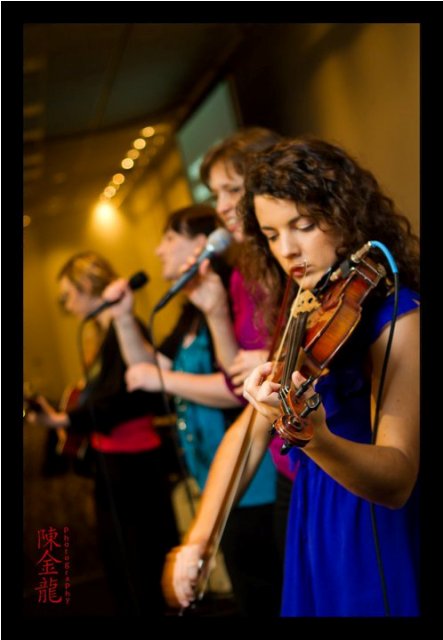
IMAG2157-1I had the privilege of being asked to organise a team of 7 musicians, most of whom I did not know, for a friend’s wedding on the weekend just gone. We had just one practice before the day, yet I am pleased to say the result was pretty great! (Out of interest, the songs we led were “Beautiful Saviour” (Stuart Townend), “This Life I Live” (Michael Morrow, EMU) and “Come Thou Fount of Every Blessing”).
But why should I be surprised that it worked well? The team was comprised of committed Christians who have learnt to balance their musical zeal with a great deal of humility and selflessness. So when it came to figuring out how to work together as a team, and how to best arrange the music, we were on the same page.
It’s like when you meet Christians from another place for the first time and have an instant affinity, an easy friendship. This comes because we have a dad in common, our heavenly Father! We are united in Christ and share a family resemblance in our attitudes. When there is a servant heart, a willingness to (musically) do less, to be restrained and to wait on each other, there is much unity and it can lead to a beautiful harmony.
This is certainly the challenge for all Christian musicians: to move from pride, insisting on our own way and seeking our glory, to an attitude of humble servant-heartedness. It is worth reminding ourselves of this every time we turn up for music practice at church.

Nb.  In the process of working with this team I happened to meet a fellow blogger who opened with the question “You’re Seven Notes of Grace aren’t you?” (he was married to one of the musicians). Small world! (I felt famous!) I hadn’t even realised he lived in the same city. You might like to visit some of his reviews over at Eternitainment: “Eternitainment seeks to bring this Christian worldview and the beliefs of modern entertainment together for a heart-to-heart chat, to hear what each is saying. Eternitainment invites you to listen in and join the conversation.” 

You may also like:
Laying aside my taste in music                                 Leading worship is not about us
bird tree music_feelingflat1

Another way music trains your brain

Musicians spot mistakes more quickly and more accurately than non-musicians

New research has shown that individuals who play an instrument are more capable at identifying errors and correcting mistakes, and that these benefits apply to amateur musicians as well as professionals.

The study, led by Dr Ines Jentzsch for the University of St Andrews, tested the cognitive abilities of musicians and non-musicians, with the research concluding that learning an instrument could “slow or even prevent”  the mental decline associated with aging.

The research, published in the journal Neuropsychologia, draws particular attention to the skills learnt in musical performance. When playing pieces to an audience or to themselves musicians must demonstrate heightened awareness of their actions: continually monitoring their playing through auditory feedback and rapidly adjusting their movements to anticipate possible mistakes.

The psychological and mental benefits of learning to play an instrument have been shown in previous studies, with research highlighting musicians’ improved reaction times and their increased capacity to “inhibit task irrelevant information” (aka, to stay focused).

“[The results] suggest that higher levels of musical training might result in more efficient information processing in general (indicated by faster overall speed across tasks without accuracy tradeoff), and confirms earlier reports indicating a positive link between mental speed and musical ability,” says Dr Jentzsch.

The research is notable in that unlike previous studies it focuses on amateur rather than professional musicians, showing that even “moderate levels of musical activity” were beneficial to cognitive performance.

The study also drew attention to the diminishing support for children to learn to play in schools, noting that “in times of economic hardship, funds for music education are often amongst the first to be cut.”

“This is particularly worrying given both anecdotal and limited research evidence suggesting that music can have strong positive effects on our physical as well as psychological functioning.”

http://www.independent.co.uk/news/science/musicians-spot-mistakes-quicker-and-more-accurately-than-nonmusicians-8849068.html

You may also like:

Why music makes our brains sing                                                      Pick up your instrument!
brainsingpiano

Laying aside my taste in music

bird tree musicSharing some challenging thoughts today from Nick Morrow’s blog, about leading songs in church which we don’t necessarily like! In fact we might not like them at all. He suggests that such a situation is a great opportunity to examine our egos (which we should check in at the church door) and our servant heart – do we have one?  Other great points include the fact that everyone’s different musical tastes and opinions are equally valid (can you believe it?) and the importance of not expecting the church worship band to be the outlet for all your creative outpouring. I’m sure you’ll find it worth a read!

CONFESSIONS OF A CHRISTIAN MUSIC SNOB (AND MY SIX STEPS TO REHAB)

“Confession: Of all the songs we sing at my church, I like about five of them.

Meaning, actually like them. Meaning, they’re songs I might listen to outside the four walls of my church. . . . There still exists an uncomfortable tension between my artistic tastes and most of the worship music I hear. I want to offer my musical abilities to serve the church, but I also want to be honest. It’s not that I have anything against worship bands. And it’s definitely not that the lyrics are bad. It’s just a matter of opinion.

It’s not about maintaining “artistic integrity” or musical street cred. We all have to check that ego at the door when we come to church. It’s about trying to figure out how to play and lead songs I may not like and still be completely genuine.
At some point every worship leader is going to get asked to sing a song they hate in church. The way that we respond to these requests speaks volumes about our views on servanthood. It’s been a long road for me in releasing my musical pride and embracing worship music. Here are a few steps I found helpful:

1. Realize that your opinions are just that: opinions. Your musical tastes are 100% opinion. No amount of graphs and flowcharts and albums sales will “prove” that your taste is better than anyone else’s. Believe me, I’ve tried. I learned the hard way that my musical tastes are not sovereign. Musical tastes are kind of like taste buds. They can be developed and stretched over time to appreciate more complex things. But the snob who looks down on people with different or less-developed tastes isn’t impressive. He’s just a jerk.

2. Know that your opinions are valid…and so are everyone else’s. I have to catch myself on this a lot. I try to replace phrases like “They’re the best band ever” with phrases like “they’re one of my favorites.” I know the semantics probably don’t matter in most conversations, but it keeps my music-critic ego from swelling up and entering a parallel universe where my musical opinions are absolute truths. Understanding exactly why someone loves polka or nu-metal or funk-tron-burgercore probably isn’t very important. But respecting the fact that they’re entitled to that opinion is. All our tastes are subjective, and that’s okay.

3. Be honest. The world (and the church) doesn’t benefit from your silence about the creative process. If you want to offer alternative opinions, start with humility and be honest. If something sounds cheesy, it’s okay to say it, just be kind and diplomatic about how you communicate that. Remember never to challenge people, but to focus on the group’s creative goals and helping achieve them.

4. Be pragmatic. Remember that music is all about context. You might crank out some Bruce Springsteen while driving on the highway with the windows down, but you’ll likely turn to a very different genre to lull you to sleep. Worship music is the same. Respect the fact that while youjohn-coltrane may not have any worship music on your “all time favorites” playlist, Beatles and John Coltrane songs don’t make for very good worship tunes.

5. Resolve to submit to church authority on matters of opinion. Don’t ever give your church leadership a chance to question your loyalty to the church. If you’re serving with a large “platform” like worship leading, submission should be foundational anyway. Musicians are known for rebellious attitudes, and I’ve even seen it happen in the church before. Don’t be the rebellious punk rock guy that always quotes the Scripture about Jesus flipping over tables. That may score you “cool” points with scenesters, but not in the Kingdom of God.

6. Use your unique voice to bless the church and further the Kingdom. Every worship musician offers something unique to their church. Find out what your musical offering is, and give it gladly. Don’t worry about whether people “get” what you’re trying to do artistically. There is a place for raw art and creativity, but it’s probably not your local church. You may have a deeper desire to serve the church through your creativity. Your local church may not recognize or need that. Don’t freak out. It’s okay to write, create, and serve outside of your local church. The advent of the Internet makes that easier than ever.
Leading worship in church may not satisfy all of your creative longings. That’s okay. Worship music is about glorifying Jesus and serving your church. “Serving your own agenda” is never part of the deal. The more we realize that, the more we’ll be able to serve with joy and clarity.
Are you willing to sacrifice your artistic tastes for the church? Even if you aren’t getting paid for it? What do you do when you don’t like a song you’re asked to sing in church? I’m convinced that the answers speak to our integrity and willingness to serve. It may not always be easy, but it’s totally possible to serve the church with your musical talents, even when you don’t like the music.

You may also like:
C.S. Lewis on musical taste and grace                    Oh for a humble attitude to church
music tasteWorship_War_Thumb

Why men have stopped singing in church

This is one of the most thought-provoking articles I have read about congregational singing in quite a while. As musicians we appreciate the freedom we now enjoy to learn and teach an infinite number of great songs in our gatherings. We are no longer limited to the several hundred in our now passé hymn book. But what is the impact of this change, particularly for men? This post suggests many things we should perhaps take heed of. It reminds me of the benefits that come from sticking to a smaller playlist for a term, as people get to know songs better. Let me know what you think.

WHY MEN HAVE STOPPED SINGING IN CHURCH

Worship BandIt happened again yesterday. I was attending one of those hip, contemporary churches — and almost no one sang. Worshippers stood obediently as the band rocked out, the smoke machine belched and lights flashed. Lyrics were projected on the screen, but almost no one sang them. A few women were trying, but I saw only one male (other than the worship leader) making the attempt.

A few months ago I blogged, “Have Christians Stopped Singing?” I did some research, and learned that congregational singing has ebbed and flowed over the centuries. It reached a high tide when I was a young man – but that tide may be going out again. And that could be bad news for men.

First, a very quick history of congregational singing.

Before the Reformation, laypersons were not allowed to sing in church. They were expected to stand mute as sacred music was performed by professionals (priests and cantors), played on complex instruments (pipe organs), and sung in an obscure language (Latin).

Reformers gave worship back to the people in the form of congregational singing. They composed simple tunes that were easy to sing, and mated them with theologically rich lyrics. Since most people were illiterate in the 16th century, singing became an effective form of catechism. Congregants learned about God as they sang about God.

A technological advance – the printing press – led to an explosion of congregational singing. The first hymnal was printed in 1532, and soon a few dozen hymns became standards across Christendom. Hymnals slowly grew over the next four centuries. By the mid twentieth century every Protestant church had a hymnal of about 1000 songs, 250 of which were regularly sung. In the church of my youth, everyone picked up a hymnal and sang every verse of every song.

About 20 years ago a new technological advance – the computer controlled projection screen – entered America’s sanctuaries. Suddenly churches could project song lyrics for all to see. Hymnals became obsolete. No longer were Christians limited to 1,000 songs handed down by our elders.
At first, churches simply projected the songs everyone knew – hymns and a few simple praise songs that had come out of the Jesus Movement. People sang robustly.

But that began to change about ten years ago. Worship leaders realized they could project anything on that screen. So they brought in new songs each week. They drew from the radio, the Internet, and Worship conferences. Some began composing their own songs, performing them during worship, and selling them on CD after church.
In short order we went from 250 songs everyone knows to 250,000+ songs nobody knows.

Years ago, worship leaders used to prepare their flocks when introducing a new song. “We’re going to do a new song for you now,” they would say. “We’ll go through it twice, and then we invite you to join in.”
That kind of coaching is rare today. Songs get switched out so frequently that it’s impossible to learn them. People can’t sing songs they’ve never heard. And with no musical notes to follow, how is a person supposed to pick up the tune?
And so the church has returned to the 14th century. Worshippers stand mute as professional-caliber musicians play complex instruments, sung in an obscure language. Martin Luther is turning over in his grave.

What does this mean for men? On the positive side, men no longer feel pressure to sing in church. Men who are poor readers or poor singers no longer have to fumble through hymnals, sing archaic lyrics or read a musical staff.
But the negatives are huge. Men are doers, and singing was one of the things we used to do together in church. It was a chance to participate. Now, with congregational singing going away, and communion no longer a weekly ordinance, there’s only one avenue left for men to participate in the service – the offering. Is this really the message we want to send to men? Sit there, be quiet, and enjoy the show. And don’t forget to give us money.

There’s nothing wrong with professionalism and quality in church music. The problem isn’t the rock band, or the lights, or the smoke machine. The key is familiarity. People enjoy singing songs they know.
How do I know? When that super-hip band performed a hymn, the crowd responded with gusto. People sang. Even the men.

http://www.patheos.com/blogs/afewgrownmen/2013/05/why-men-have-stopped-singing-in-church/

You may also enjoy:

How Church music can welcome newcomers                    When should we sing that song?

Image created by Sarah Danaher with a Canon EOS 5D MkIIpiano-stairs3

Two books I’ve got to get hold of!

During this week I came across reviews of several new books which may be very useful for those of you in the role of music/worship leader at your church. If it has been a while since you’ve read an actual book on such topics, these two look worth the effort!

“…the gathering is unique not as an encounter with God (it is that, though God’s presence is a constantly available comfort and help to the Christian); rather it’s unique because it is an encounter with the people of God, filled with the Spirit of God, spurring one another along in the mission of God. Christ in me meets Christ in you.”

These words come from a new book Rhythms of Grace (2013), There is a good, detailed review at Chong’s worship, which I’ll share some of here. It certainly whets my appetite for more thinking about music ministry:

RHYTHMS OF GRACE: How The Church’s Worship Tells the Story of the Gospel by Mike Cosper

rhythms of grace“What I appreciated: I finished this book loving Jesus – our true worship leader – more, and inspired to press on in retelling the gospel story when we gather as a church. Reading the first four chapters of the book is biblical theology at its breathtaking best, imaginatively told and left me (numerous times) grateful for God’s redemptive plan throughout history. If that’s where the book ended, it would already have been a worthwhile read!

When tackling more contentious issues of musical style, sound, vision etc. Mike has a gracious tone coupled with a rapier wit that leaves you embarrassed to disagree with him, and appreciative of the wisdom he’s curated from many helpful thinkers. I particularly appreciated:

  • his great explanation of John 4:24′s worship in Spirit and in Truth”
  • his critique of the Temple Model of worship planning (leading people into the throne room of God in music)
  • his appeal for worship planning and leading to be seen as a pastoral task.
  • his appeal for repetition and using non-singing elements in gathered worship (e.g. prayers, creeds, readings)

Most churches lack any real theology for worship, and most church leaders don’t know why the church is gathering, and what the goal is. Mike gives a concise yet thorough primer, rooted in Scripture and history, to answer all this. He doesn’t answer every question in-depth, and you don’t get a stand-alone, one-sentence definition of worship. But after reading this book you’ll definitely understand worship from a more biblical, gospel-centred, historically-rooted and theologically grounded perspective.”  READ THE FULL ARTICLE
(or purchase here)

The second book is:

Doxology and Theology: How the Gospel Forms the Worship Leader by Matt Boswell and friends (2013)

dox-theol-book

Worship—whether you’re talking about singing (in the narrowest sense) or every thought, word and deed (in the broadest sense)—has long been a source of fascination/frustration for me. we need a better, more robust theology of worship. Matt Boswell and co. have done an impressive job on this one. Here’s a great example from Zac Hicks’ chapter, “The Worship Leader and the Trinity:”

Many in recent years have commented on the anemic state of much of evangelical worship in the twenty-first century. We are me-focused, a-theological, biblically illiterate, and entertainment-saturated, they say. Many of these critics offer a prescription for recovery, ranging from things as practical as a reform of liturgy or musical styles to things as philosophical as media ecology and aesthetics. I’m convinced, though, that many of these (important) observations find resolution when we begin to be more intentional as worshippers, worship planners, and worship leaders about allowing our worship to take the shape of our beloved Object.  (Learn more or buy it at: Amazon)
This review comes from Blogging Theologically

You may also enjoy:

Music Ministry Training Paper                      A shot in the arm for your church music team
guitarssfj

Praising God makes our joy complete

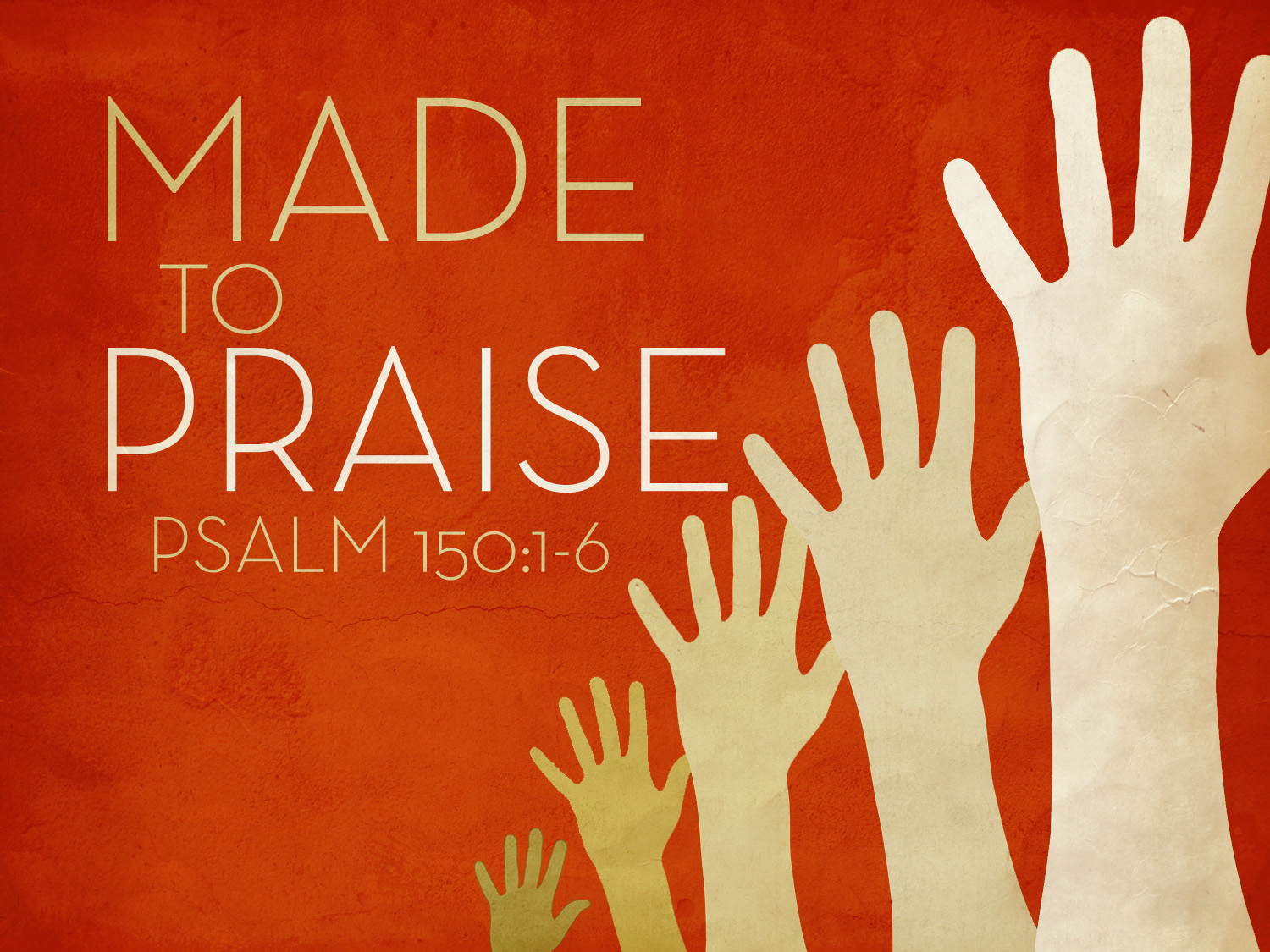
made-to-praise_tWe all know that self-praise is no praise at all – and seeking the praise of others is even worse. Nothing sounds so bad as someone describing or complaining about all their great efforts and actions simply so we can praise them for it!

So why then does God so eagerly and perhaps egotistically command us to praise Him? The pages of Scripture (which are in fact ‘God-breathed’ – 2Tim3:16) constantly direct and urge us to praise God. So basically he is asking for it. He created us for His pleasure and he does delight in our praise. Yet he doesn’t need our praise, surely? He is not insecure like us!  On the other hand, yes he does deserve praise, so why shouldn’t we praise Him?

Perhaps the short answer to this dilemma is that praising God is good for us! God knows this, so directs us to praise Him. But let me direct you to some relevant discussion from C.S Lewis and John Piper to explain:

“Just as men spontaneously praise whatever they value, so they spontaneously urge us to join them in praising it: “Isn’t she lovely? Wasn’t it glorious? Don’t you think that magnificent?” . . . The Psalmists in telling everyone to praise God are doing what all men do when they speak of what they care about. . . I think we delight to praise what we enjoy because the praise not merely expresses but completes the enjoyment; it is its appointed consummation. It is not out of compliment that lovers keep on telling one another how beautiful they are; the delight is incomplete till it is expressed. . .  If we were not allowed to speak of what we value and celebrate what we love and praise what we admire, our joy could not be full.”
(C.S. Lewis, Reflections on the Psalms)

“So if God loves us enough to make our joy full, he must not only give us himself; he must also win from us the praise of our hearts — not because he needs to shore up some weakness in himself or compensate for some deficiency, but because he loves us and seeks the fullness of our joy that can be found only in knowing and praising him, the most magnificent of all beings. . . . God is the one Being in all the universe for whom seeking his own praise is the ultimately loving act. For him, self-exaltation is the highest virtue. When he does all things “for the praise of his glory,” he preserves for us and offers to us the only thing in all the world that can satisfy our longings.”
(John Piper. Desiring God, pages 48–49)

So praising God completes our joyful experience of his good and gracious character. How important it is then to see our music ministry as providing an opportunity to do just that – to bring people to praise God, even when they don’t “feel” like it or sing with trepidation because they sing ‘out of tune’.
People need to praise God. Praising God not only completes our joyful experience of his love, it also takes our eyes from ourselves and our problems to the One who holds us together, who has moved towards us with compassion in Christ.
Let’s keep doing all we can to bring people to the place of praise!

(And this may be the topic for another blog post but I’ll mention it anyway: God sings over us!
“The LORD your God is with you, the Mighty Warrior who saves. He will take great delight in you; in his love he will no longer rebuke you, but will rejoice over you with singing.” (Zephaniah 3:17 – almost a Three Sixteen!))

You may also like:

Why is it so Critical that we Sing Together (from the Blazing Center)

Working for those moments of Joy                                     You are our Song from Age to Age
Age to Age - Sovereign Grace Musicgrow music


23 things my dad taught me

Martin McilrathToday we are celebrating Father’s Day in Australia. (Happy Father’s day to Martin!) This year sees me finally reaching half my dad’s age! Yesterday I went looking for a photo of him from around the time I was born (since it would be my current age and make for a good comparison). And yes, my husband soon came out with ‘you look like your dad’. The similarities are more than simply physical though, and it got me thinking about the things I do and think that come from him. So I compiled a list of the lessons I learned while living as the daughter of a dairy/beef farmer – jack of all trades – Mr fix and build everything – dad!

1. It’s important to have and display common sense, don’t be foolish.
2. Don’t throw anything away, it might be useful one day (btw, my dad was born into the Great Depression).
3. Think and learn and believe you can do things. Try new and ambitious plans – don’t defeat yourself before you start. Be creative and take initiative, invent things, repair things. Don’t let mistakes or challenges defeat you.
4. Don’t just sit there – get up and do something..
5. God is real and church is important so be there, be serving his family.
6. You stay married – no options exist.
7. God is sovereign over the weather and the harvest, and the days of your life.
8. The universe and natural world are fascinating places to discover and study. Take time to notice the sky, clouds, stars, planets, lightning.
9. Know what’s going on in the world.
10. Be calm and patient if people yell at you.
11. Sitting in the sun is worthwhile and relaxing.
12. Cats apparently don’t mind being thrown 6 metres in the air and landing in a pine tree.
13. Dogs are friends and you should always have one.
14. Porridge is the best breakfast.
15. Huge spiders aren’t going to jump off walls in the night and eat you.
16. New is not always better
17. You can do much with little

And in terms of music, here are some of the many things I learned from him:

18. To Love music!
19. Choir-singing is fun.
20. You can teach yourself an instrument if you try (so I have, several)!
21. How to tune a piano – and in fact, replace a broken string by making one yourself. (I have never tried this however!)
22. How to sing good harmony.
23. Good theology in hymns is important and worth defending.

My child, don’t lose sight of common sense and discernment.
    Hang on to them, for they will refresh your soul.
    They are like jewels on a necklace.
(Proverbs 3:21-22)

Ps. My daughter just reminded me of another: You must shut the fridge because ‘the penguins are coming’.
You may also like:
The Wonderful Mystery of Harmony singing
cracking_the_harmony_2


The Synchronicity of Singers

heart_beat_by_digitallymused-d4adcgaThis is a recent news item I simply had to share:

Choir members do more than sing in harmony – they synchronise their heartbeats, a study has shown. Their pulses rise and fall in unison, depending on the nature of the work they are performing.  Scientists in Sweden brought together 15 teenage choristers from a high school in Gothenburg and asked them to perform three different choral exercises – monotone humming, singing a Swedish hymn and chanting a slow mantra.

As the 18-year-olds performed, their heart rhythms were recorded. The results showed that the music’s melody and structure had a direct effect on their hearts. Singing in unison had a synchronising effect, so that the heart rates of all the singers tended to increase and decrease at the same time. Lead scientist Dr Bjorn Vickhoff, from the University of Gothenburg, said: ‘Singing regulates activity in the so-called vagus nerve which is involved in our emotional life and our communication with others and which, for example, affects our vocal timbre.

‘Songs with long phrases achieve the same effect as breathing exercises in yoga. In other words, through song we can exercise a certain control over mental states.’

Choral singing is said to have positive effects on health and feelings of well-being, although this has not been studied scientifically to any great extent. The Swedish researchers believe the health benefits arise through singing imposing a calm and regular breathing pattern, which in turn affects heart rate.

‘In the case of controlled breathing, the heart rate or pulse decreases when breathing out during exhalation in order to then increase again when breathing in during inhalation,’ said Vickhoff.
‘Exhalation activates the vagus nerve that lowers the heart rate which slows down the heart.’
The findings are published in the online journal Frontiers in Neuroscience.

http://www.independent.co.uk/news/science/new-study-shows-how-singing-synchronises-choirs-heartbeat-8698315.html

And if you would like some info on how selecting certain music can help you train better (by synching with your heart beat during exercise) check out jogtunes.

You may also like:
Film Review: As it is in Heaven                              Why music makes our brain sing
As it is in Heavenbrainsing
Who has the X Factor
cat vass

A letter from Fred

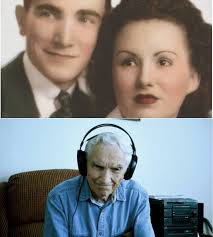
FredThis is a beautiful story of an old man and a song he wrote for his wife of many years. Grab a tissue! It is a great testimony to the power of music, of song and of commitment. You can watch the video at the end, but here is the story behind it:

A 95-year-old Peoria man isn’t a musician, but the lyrics he put on paper are now being shared with the world.  Fred Stobaugh said, “I was sitting here one night, oh about six weeks after she passed away and just sat here kind of hummin’ a little bit and it just finally came to me.”  Stobaugh recently lost his wife of nearly 75 years. He said they shared a love of music.  He soon turned his sadness into a song. “We were, like, just as one we were. Lorraine and I.”

Singer and songwriter Jacob Colgan remembers receiving Fred’s letter. “What made Fred’s entry so special was instead of a video, it was a large manila envelope titled Green Shoe Studio Singer Songwriter contest.”  It was an entry to his Studio’s songwriting contest. The kind of entry Jacob never expected. “He had written a song for his wife, ‘Sweet Lorraine’.”

Fred’s song is about his life and his love for his wife. He said, “’Sweet Lorraine’ I called it. Wish we could do the good times all over again.” Jacob said, “I started to read the lyrics and was so touched by the song and without even meeting Fred we thought, we’re going to do something.”  Fred said, “And I was surprised. It wasn’t too long that Jacob called me and it really touched him.”

Jacob said, “We wanted to put it to professional music and sing on it and he said, well you know that’s great but I just don’t have the money to cover it.” With Fred’s blessing, Jacob wanted to bring his lyrics to life. When Fred first heard the song, he cried. He said, “Wonderful, just wonderful.”

Fred said, “It just touched me. And I know Lorraine, she heard that too. It just has been a great life. If I could do over again, I would do it.” Fred said he finds comfort in the sound of his song. It’s something he has to cherish forever. He said, “The song really helps me. It really helps me. It just seemed like she’s just sort of with me. Which I know she’s smiling, she’s smiling down and she likes that song, I know.”

Story From WMBD online

You may also like:
Taking control doesn’t guarantee safety or happiness           Blessings through raindrops
hands on wheelBlessings laura s

What are hymns – do we still need them?

hymn booksHere is a series of quotes from some great thinkers on the topic (borrowed from Chong’s Worship). They look at defining a hymn, why we still need hymns and how to choose them well . . . which is probably the most important thing, since the language of some hymns simply does not translate for contemporary people. Remember too that the last good Christian hymn is still yet to be written (shortly before Christ’s return). . . and fortunately we are blessed with a great variety of singable and biblical Christian songs and hymns.

What’s a hymn?

“… a poem, designed for group singing, and written as a sequence of identical units called stanzas. Each stanza has the same line length, rhythms and rhyme scheme as its predecessor, so that the hymn can be sung, stanza by stanza, to the same tune.”

– Brian Wren, Praying Twice

Are they historically literary or musical texts?

Mike-Cosper

“Many of the great hymn writers weren’t musicians… they worked as theological poets, writing hymns in meters that were commonly used amongst the churches, relying on melodies that were written by others.” Mike Cosper

Do we still need them?

“I say without qualification, after the Sacred Scriptures, the next best companion for the soul is a good hymnal.

For the child of God, the Bible is the book of all books, to be reverenced, loved, pored over endlessly and feasted upon as living bread and manna for the soul. It is the first-best book, the only indispensable book. To ignore it or neglect it is to doom our minds to error and our hearts to starvation. After the Bible, the hymn book is next . . . containing the cream of the great Christian hymns left to us by the ages…”

 – AW Tozer, We Travel An Appointed Way

Why?

“A great hymn embodies the purest concentrated thoughts of some lofty saint who may have long ago gone from the earth and left little or nothing behind him except that hymn.

To read or sing a true hymn is to join in the act of worship with a great and gifted soul in his moments of intimate devotion.

It is to hear a lover of Christ explaining to his Saviour why he loves Him; it is to listen in without embarrassment on the softest whisperings of undying love between the bride and the heavenly Bridegroom.” – AW Tozer, We Travel An Appointed Way

But even today?

“Hymns are great art! The arts, stories, poetry, music all combine to sneak into the heart by the backdoor – something increasingly important for our ministry to the coming generations” – Kevin Twit, Why We Still Need Hymns in a Post-modern World

“How will you reach this post-modern generation – a generation that cannot conceive of objective truth, cannot follow your linear arguments, cannot tolerate anything (including evangelism) that smacks of religious intolerance?”” – Kevin Ford, Jesus for a New Generation

So how do we choose and sing good hymns?

James Montgomery

“[Good hymns are those] which, once heard, are remembered without effort, remembered involuntarily, yet remembered with renewed and increasing delight at every revival.” – James Montgomery, The Christian Psalmist

“The best results happen when theologically deep and emotionally rich texts are wedded to music that is aesthetically fitting and culturally resonant, that connects at every level.”Ron Rienstra

“We will not hide them from their children, but tell to the coming generation the glorious deeds of the Lord, and his might, and the wonders that he has done.” Psalm 78:4

Quotable: what’s a hymn and why we still need them

You may also like:

When should we sing that song?                         New songs say God is doing something now
piano-stairs3music_is_nature__silhouette_by_sammy3773-1