Working for those moments of Joy

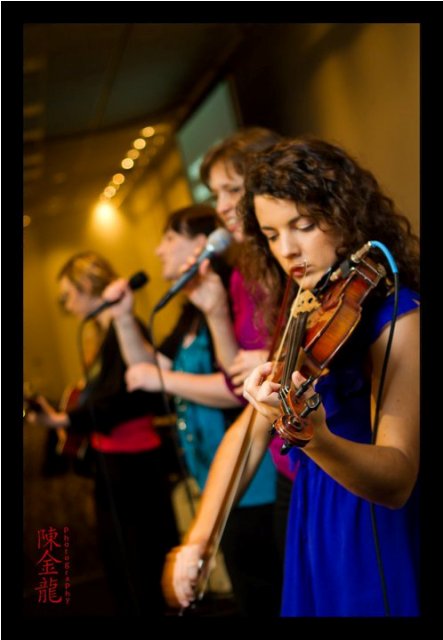
grow musicThe non-musician in our Christian gatherings often looks towards the musicians with a certain measure of (perhaps misguided) awe. One thing they find ‘awesome’ is that we even bother! We musicians put ourselves through many practices, where we must work closely with others, negotiating different opinions, and we put ourselves ‘out there’ and up front, where the criticism can sometimes sting. . .  a lot. (Luther didn’t call church music the War Department for nothing!)  And while some look with awe, others may look with disdain and consider most of our efforts simply for show and self-glory.
But there is one thing that keeps musicians (music directors in particular) in the job – and it’s not usually the pay grade!  It is the love for gathering people together in song, praising our great God! Corporate singing provides a unique opportunity to create joy as people praise God and sing out words of encouragement to each other. It gives people the opportunity to express publicly the joy, confidence and hope they have in Christ. These are things they may not find easy to say in everyday conversation.
Since God also delights in the praise of His people (which thwarts Satan’s best efforts at discouragement) we musicians experience much blessing and encouragement ourselves in leading people in something that has eternal, spiritual and cosmological impact!

When we put effort into selecting great sets of song, that are biblically true, Gospel-focused and singable for a group of people, there is the hope that the Word in song will challenge people’s hearts and teach them to know and love their Saviour more. The lyrics might even move people to great (or small) acts of love and service, bringing glory to God. Some may experience a lightbulb moment, as a difficult theological concept makes sense for the first time, in song. “Where the Word goes the Spirit goes” (John Piper) – so the more our songs are steeped in the Word, the more He works through them.
And while I admit that not everyone may be looking joyful as we lead them in praising God, it is the possibility for creating deep inner joy that keeps us coming back. This is what we love! We love to hear God’s praises! We love to see the joy that music brings, joy that encourages us all on our journey of faith.

“. . . . for the joy of the Lord is our strength.”
(Nehemiah 8:10)

You may also like:

How to encourage your music team                                            10 Principles for Church singing

praise-godtaintedcanvasdotcompraise him pic


The mystery of godliness (1 Timothy 3:16)

mystery_of_godlinessAs we arrive at 1 Timothy 3:16 (in the Three Sixteen series) Paul tells Timothy about the importance of godliness in the church, the church being the pillar and foundation of the faith. The church has been entrusted with the Gospel, with proclaiming Christ to the world. Paul lays down guidelines for selecting overseers and deacons in the church, for teaching, for prayer. Then he includes this apparently random summary statement about the great mystery of Christ:

“Beyond all question, the mystery from which true godliness springs* is great:
He appeared in the flesh,

    was vindicated by the Spirit,
was seen by angels,
    was preached among the nations,
was believed on in the world,
    was taken up in glory.”

This is a great summary about Jesus, his life and purpose, and makes a great 3:16 verse! But Paul is actually quoting lines from a well known hymn of the early church. This commentary has some good insights about the relevance of Paul’s words:

Now Paul’s citing of part of what was surely a well-known hymn in the course of writing instructions for behavior in the church is to bring his readers to the point of corporate response. The hymn itself, like many in the New Testament, celebrates Christ’s appearance and ministry on earth. The introductory phrase is a call to consider the implications of this grand event, to evaluate our conduct on the basis of what we confess. . . . Consequently, this phrase ‘the mystery of godliness’ forms a connection between the appearance of Christ, which the hymn celebrates, and Christian living: the mystery is the essence of godliness. It was critical for Paul to remind the readers of this principle, for the false teachers were successfully driving a wedge between belief and behavior with damaging results. In our day of institutionalized atheism and the popular heresy of humanism, the church faces the same danger. Even if dangers of this sort seem remote, we easily forget the practical implications of what we believe and profess to be true.” 

So this is a great verse not just because it celebrates Christ’s work, but because it connects his glorious saving work with our behaviour. We are to walk worthy of Christ’s saving work for us.  His work is finished, we don’t have to earn it! But we are called to live godly lives that point to Him as we, the Church, safeguard and pass on the Truth of His Saving work.

(*Note: if you look at other versions of this verse you may find that it simply says “the mystery of godliness” or the “mystery of our faith” – but the newest NIV translation seems to have hit the proverbial nail by phrasing it “the mystery from which true godliness springs”. True godliness will grow in us when we have build our life on Christ!)

C.S. Lewis on musical taste and grace

music tasteA few days ago I wrote about the way we can show grace to others by not demanding that they pander to our prideful ‘good taste’ (in a variety of areas).
Here C.S. Lewis talks about a related topic, musical taste. Disagreements over the ‘right’ or most godly church music have produced many hard-fought and rarely-won battles. While Lewis’ comments below are a bit of a challenge in terms of the language, it is worth the slog if you can get to his main point. Grace is the key! We must bear with one another in love, bear with things we dislike for the sake of others whom we are called to love, in Christ. If we are in music ministry and find ourselves filled with pride at our skill, or contempt and hostility to the congregation we serve, it’s probably time for a break! It’s probably time to re-examine our motives – and pray for God to work in us for His glory. Blessings!

Musical Taste

“There are two musical situations on which I think we can be confident that a blessing rests. One is where a priest or an organist, himself a man of trained and delicate taste, humbly and charitably sacrifices his own (aesthetically right) desires and gives the people humbler and coarser fare than he would wish, in a belief (even, as it may be, the erroneous belief) that he can thus bring them to God. The other is where the stupid and unmusical layman humbly and patiently, and above all silently, listens to music which he cannot, or cannot fully, appreciate, in the belief that it somehow glorifies God, and that if it does not edify him this must be his own defect. Neither such a High Brow nor such a Low Brow can be far out of the way. To both, Church Music will have been a means of grace; not the music they have liked, but the music they have disliked. They have both offered, sacrificed, their taste in the fullest sense. But where the opposite situation arises, where the musician is filled with the pride of skill or the virus of emulation and looks with contempt on the unappreciative congregation, or where the unmusical, complacently entrenched in their own ignorance and conservatism, look with the restless and resentful hostility of an inferiority complex on all who would try to improve their taste – there, we may be sure, all that both offer is unblessed and the spirit that moves them is not the Holy Ghost.”

This was taken from an essay entitled “On Church Music” by C. S. Lewis. It can be found in a current publication called Christian Reflections published by Wm. B. Eerdmans Publishing Co.; ISBN: 0802808697.

Ps. Today I celebrate my 150th Blog Post! Thanks for reading.
Read more about C.S.Lewis on this post: Our Glorious Capital C Church

Our glorious capital ‘C’ Church

Today I have the pleasure of talking about two of my favourite things: author C.S. Lewis and the band Casting Crowns. Both of them have much to say about the church, not just the local church, but the capital C “Church”. By this I mean the fellowship of believers that is spread around the globe, through all time and space. The Church is the Bride of Christ. We are all part of this if we are in Christ. The “crowd of witnesses” in Hebrews 12 help make up this great gathering of God’s people. They can already see the reality of the things we hope for in Him. And they cheer us on to persevere with the small ‘c’ church, no matter how frustrating it can be at times. God’s Church marches on as he unfolds his plans. What a great grace and privilege that God draws us into something (Someone!) much greater than ourselves, much greater than the here and now.

But when it comes to Church we often can’t see the wood for the trees. And Satan would happily keep us distracted in this way!screwtape  In The Screwtape Letters, Lewis describes the strength of the Church. These are fictional letters between a senior and junior devil. (For those not familiar with this classic book the main topics of their correspondance is how to discourage Christians, distract them and weaken their faith. Totally worth a read if you haven’t!)

“. . . the Church as we see her spread out through all time and space and rooted in eternity, (is) terrible as an army with banners. . . that, I confess, is a spectacle which makes our boldest tempters uneasy. But fortunately it is quite invisible to these humans”. (Letter 2)

“We want the Church to be small not only that fewer men may know the Enemy but also that those who do may acquire the uneasy intensity and the defensive self-righteousness of a secret society or clique. The Church Herself is, of course, heavily defended and we have never quite succeeded in giving her all the characteristics of a faction . . .” (Letter 7. By the way, by ‘Enemy’ these devils mean God)

Oh, that we could see the glory of Christ’s Bride! (That’s us!) Casting Crowns’ songwriter Mark Hall takes up this topic, looking forward to the final union of the Church, the Bride of Christ, with the Bridegroom, Jesus. Listen and read the lyrics below. I particularly like the description (verse 2) of the highs and lows of the Church through history. Despite these we were made to wear Christ’s robes of righteousness, on that wedding day! The love of Christ has come and set us free, indeed!

Wedding Day – Casting Crowns

There’s a stirring in the throne room
And all creation holds it’s breath
Waiting now to see the bride groom
Wondering how the bride will dress
And she wears white

And she knows that she’s undeserving
She bears the shame of history
But this worn and weary maiden
Is not the bride that he sees
And she wears white, head to toe
But only he could make it so

[Chorus:]
When someone dries your tears
When someone wins your heart
And says your beautiful
When you don’t know you are
And all you’ve longed to see
Is written on his face
When love has come and finally set you free
On that wedding day, On that wedding day

[Verse 2:]
She has danced in golden castles
And she has crawled through beggar’s dust
But today she stands before him
And she wears his righteousness
And she will be who he adores
This is what he made her for

[Bridge:]
When the hand that bears the only scars
And heaven touch her face
And the last tears she’ll ever cry
Are finally wiped away
And the clouds roll back as he takes her hand
And walks her through the gates
Forever we will reign

The Basin and the Towel

“Truly I tell you,” Jesus replied, “no one who has left home or brothers or sisters or mother or father or children or fields for me and the gospel will fail to receive a hundred times as much in this present age: homes, brothers, sisters, mothers, children and fields—along with persecutions—and in the age to come eternal life.
Mark 10-:29-30

When we are saved into Christ we are saved into community, a community of believers. This is a great promise from Mark 10. Even if we lose many things in order to own the name of Christ we gain so much more. We gain family! We gain relationship. We gain brothers and sisters in Christ. (And yes, we gain persecutions, though that is not the topic for today so I’ll just leave it to the side). As we serve one another, we grow relationships, we grow bridges between us – between people who would naturally be enemies of each other. Christ’s love makes it possible to serve and love one another. Songwriter Michael Card beautifully sums up this “call to community”, demonstrated by Christ in his earthly ministry. The call is now to us as his followers, to grow community in our churches by taking up the basin and the towel. I hope you have the time to chew over the lyrics below and reflect on your own attitude towards serving and growing community. (I know mine needs work.) The “servant’s bow” is a fragile bridge (see the bridge section below). Blessings! (Read more on Christian community here)

The Basin and the Towel (Michael Card)

In an upstairs room, a parable is just about to come alive.
And while they bicker about who’s best,
with a painful glance, He’ll silently rise.
Their Savior Servant must show them how
through the will of the water
and the tenderness of the towel.

Chorus:
And the call is to community,
The impoverished power that sets the soul free.
In humility, to take the vow,
that day after day we must take up the basin and the towel.

In any ordinary place,
on any ordinary day,
the parable can live again
when one will kneel and one will yield.
Our Saviour Servant must show us how
through the will of the water
and the tenderness of the towel.

bridge:
And the space between ourselves sometimes
is more than the distance between the stars.
By the fragile bridge of the Servant’s bow
we take up the basin and the towel.

(chorus)

You can look up sheet music for this song at the link below:

http://store.michaelcard.com/thebasinandthetowel-sheetmusic.aspx

Whatever is Lovely – Blog Award

“One of20130531-003155.jpg my favorite verses in the Bible is also Philippians 4:8, “Finally, brothers, whatever is true, whatever is honorable, whatever is just, whatever is pure, whatever is lovely, whatever is commendable, if there is any excellence, if there is anything worthy of praise, think about these things.” My thoughts can go in all sorts of directions, and most of them go in the course that is not in line with God’s way. What a gem this verse is to show me exactly how God wants me to love Him with all my mind! Right in the middle of this verse is the word “lovely”. It is one of the eight things mentioned in this verse that our thoughts ought to be. The original word actually has its root in the Greek word phileo, which means affection, friendship, or love (think of Philadelphia, the city of Brotherly Love). So, the word in this verse does not mean beautiful or something that is externally pleasing to the eye, as sometimes we use that word in English. In essence, what the verse is saying is this: whatever would encourage a love and friendship towards others, let your mind dwell on those things.” (Note: this was so good that I left it as it was written!)

Blogging can become another means to encourage love and friendship, despite many miles between us as we write, and the fact that we may not ever meet face to face. Yet because of Christ we are united, we are friends and family!

Thanks to Lessons by Heart who nominated me for this Lovely Blog award. Her posts are most encouraging and I read them just about everyday! I would like to pass this award on to 7 lovely bloggers. Here are my nominees (I’ll send you to their “About”):

An Imperfect Life made perfect by grace (http://sheensteve.wordpress.com/about/) – Mother of triplets who is learning to rest on Christ’s perfection each day.
Mere Inkling (http://mereinkling.wordpress.com/about/) is written by a wise gentleman who lifts up Christ as the heart of Christianity, with plenty of humour, history, CS Lewis and Tolkien along the way.
Revelling in the Overflowing Grace of God (http://bickleyhouse.wordpress.com/about/) is a prolific blogger who writes some great long and interesting devotional material. Most encouraging!
Blazing Center (http://www.theblazingcenter.com/about) written by father and son pastors at Sovereign Grace Ministries, who also write amazing and encouraging song lyrics. This blog is the one I have enjoyed reading for the longest time.
Sermons and Soda Water (http://sermonsandsodawater.wordpress.com/about/) is an encouraging blog written by my wise “old” uncle (ha! ha!) about living simply and enjoying life in Christ.
Worship One (https://worship1.wordpress.com/) is a blog by a vocal teacher who has lots of great resources to share, and encouragement to sing!
MGPC Pastor’s Blog (http://garyware.me/about/) is one I’ve only discovered in the last week, but have really enjoyed the reports, reviews, thoughts, news (and fun).

That was a difficult task to choose just seven!

If you would like to post about this award and pass it on to others, here are the rules.
1. Add the “One Lovely Blog Award” image to your new post (you can cut and paste the top section also)
2. Share seven things about you
3. Pass the award on to seven nominees
4. Thank the person who nominated you
5. Inform the nominees by posting on their blogs

Last and certainly least, here are 7 random things about me.
1. I have a Maremma dog named Mia – A maremma is an “Italian Shepherd” used in some countries to ward off foxes and bears. Ours minds the chickens.
2. I play too much “Words with Friends”
3. I play flute, piano, alto saxophone and sing, with some degree of success.
4. My favourite foods include almonds, ginger, avocado, mushrooms, mango and lychees.
5. My favorite “big word” to use is perspicuity – which means clarity! (ironically this word is unclear to many)
6. I love blogging about the BBC TV show DOCTOR WHO – at blueboxparables.wordpress.com
7. I grew up in the shadow of Mount Warning (which Captain Cook named), inside a volcanic crater, on a cattle farm (below is a view of the “backyard”).

mount warning

Now Go, Be the Church

“Don’t think of church as an address or location . . .
but as something deployed.

Don’t think of it as a place you are for an hour each week, but rather WHAT YOU ARE every day of the week.
The Church is the hands and feet of Jesus. . .
Now Go, be the church.”

church has left the buildingThis comes from a great 1.5 minute clip from Igniter Media. We have used it in our church services, when plenty of people were around who don’t normally come to church, or know what it means to follow Jesus. It’s also a good reminder to all of us, of what church is, and isn’t. Hope you can find a use for it. Blessings! (Click link below to watch the clip.)

http://www.ignitermedia.com/products/2202-this-is-church#

You may also enjoy:

Why Men have stopped singing in Church

Our Glorious Capital ‘C’ Church

God knew what He was doing when He made “church”

church isYesterday was the first Sunday in years that I didn’t make it to a service at my church. There’s nothing like a bit of bronchitis to keep you at home. And the more I think about it, the more I am convinced that God really knew what he was doing when he established the “church” and called us not to forsake meeting together (Hebrews 10:25).

Without that regular meeting together with other Christians, both on Sundays and at other times through the week, it is easy to become extremely self-focused. (Well that’s what I found out!) We forget the bigger picture, where God is holding the circumstances of both our lives and the universe in His strong hands. Without that frequent encouragement and challenge from God through His word, and His other children, your perspective can go extremely awry.  God lives in us together, through His Spirit. Being a lonely ‘coal’ away from the collective ‘heat’ of others makes you forget the strength and power of the living God that is in us together. We are part of the Body of Christ, the gathering of Christ’s followers, and like all bodies we function best when we are being used, when we are active. It’s hard for the body to be active if parts are missing and isolated.

Being part of the Body is a privilege, despite the fact that we will struggle at times to treat each other as Christ would. Yet this is God’s design for growing and strengthening us. As we rub shoulders with other saved sinners we learn to bear with each other’s imperfections, in love. Going to church is so good for us because it gets our eyes off ourselves (like Peter in Matthew 14) and onto the excellent One who holds all things together. He knows us by name and holds our head above water. He knows that our greatest happiness comes from pouring our adoration towards Him!

“God knows who He is. He knows what He’s worth. And He knows the best thing He can give us is Himself. So in calling us to prize Him above all else, God is both gaining the praise that is rightfully His alone and causing us to gain the greatest treasure we will ever know. God is not an egotist seeking more than He deserves from us. Rather, He is God, choosing, in worship, to reward us with Himself.” (Louie Giglio –  “The Air I Breathe” 2003, p.31)

When we see ourselves as part of the Body of Christ, we see ourselves as something greater than ourselves – something designed by the Undescribable Merciful one True God!
I have a number of Christian friends who for various reasons are unable to share regular time with a church family. This has challenged me to consider how we can be better at including those who find themselves in this situation – even those within our church family who are unable to gather with us regularly. The church* is the people and it does not have to be contained by walls or geography.
On the other hand, if you are the thing that is keeping you from being part of a church family, don’t let fear or geography or travelling time keep you away. Don’t miss out on the thing that will grow your faith and confidence in God, that will allow you to give and receive encouragement, to sharpen others and be sharpened in Christ, to publicly declare the praises of Him who brought you out of darkness into His wonderful light. Praising God is so good for us! Gathering together is even better!

I’m really looking forward to next Sunday when hopefully this sickness will not stop me getting to church! Being part of the gathering will be sweet medicine, without the nasty side effects of what I am currently taking!

Nb. If you want to read more about Suffering or Sickness visit these other posts I have written:
Book review: How to Suffer Well
Lessons from the tissue box

* By church I don’t mean any particular modern form of the church, merely the gathering of Christians, which began a few millennia ago, in the first century AD. This practice of gathering is one huge common denominator we have with those who first called themselves Christians.

God graciously works through the weak and unimpressive

weaknessI’m sharing today something encouraging I found over at the Blazing Center blog. If you want to read the whole post you can visit there, but this is the heart of it:

“God often does his most powerful work through those who are weak and unimpressive.

John Flavel says:

How the weak have been used for the good of the church! Christ did not choose eloquent orators, or men of authority in the courts of kings and emperors, but twelve poor labourers, and fishermen. This is the most ridiculous course that can be imagined, in appearance, for such a design. And yet, in how short a time was the gospel spread in all the kingdoms of the world. (Voices From the Past, 140)

Jesus established his kingdom on the shoulders of fishermen, tax collectors, and prostitutes. He chose Peter to lead the charge out of Jerusalem. Peter, the guy who denied Jesus three times. Peter, the guy who gave up gospel ground to the Judaizers. Peter, the guy whose mouth seemed to always run ahead of his brain.

Jesus could have chosen the most articulate orators as his spokesman. He could have chosen great war heroes, or political superstars. He could have built a campaign of shock and awe and power. Instead he chose fisherman. Guys with cracked hands, plain speech, minimal learning, and the constant aroma of raw fish.  The disciples were not power players in the Roman world.

God will not allow us to receive any of the glory, so he builds his kingdom through and in spite of our weakness. If your worship team is mediocre, don’t freak out. Instead, work toward excellence and trust that God will use your weak, halting efforts for his glory. If you stutter and stammer when sharing the gospel, don’t get discouraged! Seek to improve your gospel communication, but more importantly, trust God to use your stutters and stammers to bring salvation to the lost. If your sermons feel like duds, don’t sink into despair. Improve your sermons and improve your confidence in God. If you feel like a constant parenting trainwreck, seek to grow in your parenting and trust God to use your trainwreck efforts to work in your children.”

You Are A Theologian

theology-mattersFound a great post on a topic I have been meaning to write about myself over at Worship Sense. It talks of something about which I’m thoroughly convinced : that church music has a huge role to play in teaching good theology to the Body of Christ, and growing people in faith. I hope it will prove to be great encouragement to your music department! Enjoy.  . .

“In spiritual circles, few people are seen as intimidating as often as theologians. Theologians are scholars. Studied. Educated. Cultured. And they wear old-school glasses, vests and wool sweaters as they sit in an aged leather wingback chair in front of a stately, oversized bookcase in a home library with loaded oak bookshelves lining all of the walls, all the way up to the ceiling. (Whew . . . that was a mouthful!) Okay, maybe not all of them, but we like to think they do. The point is, when we hear the word “theologian” often we get an image in our minds that, at least in some way, represents the description above.

So what if I told you that YOU are a theologian?

Well, if you’re a worship leader and/or worship songwriter, you are! Sure, perhaps you aren’t necessarily discovering any brand-spankin’ new theology. But, you are writing and/or choosing worship songs that speak a theological truth. You are communicating theology to your local church. This is why one of the most important things you do as a worship leader is pick out the songs for the weekend setlist.

Sure, key changes, arrangements, transitions, dynamics and flow are all important parts of what we do as worship leaders, but none of those things matter if we aren’t singing truths in our churches. It is widely known that ideas and messages are retained better in our brains when presented in song than by spoken word (a sermon). This is because our brains interact with music differently, thereby establishing a stronger retention of what we heard/sang. Why is this important?

It’s sad to say this, but most people don’t remember the sermon they heard last week or this morning, in some cases. Now sure, these days we have recorded sermons, sermon notes, etc. All of these allow us to go back and go through the messages again. However, overall there is a limited shelf life on the specific messages that are preached every week (hopefully the themes and lessons are learned and continue on!).

With music, however, things stick around a bit longer, including the lyrics of the songs themselves. These lyrics are a biblical message, just like your pastor’s sermon. The only difference is that yours is set to a music, may have some repetition, and may be more like 4 to 5 mini-sermons during a typical worship set. This is a big deal!

Why? Because what you sing in your worship times is going to stick in people’s hearts and minds longer than the sermon does. Therefore, it’s imperative that we sing songs that contain solid theology.

We basically have three options with the songs we sing at  church:

1. Lyrics that present false, inaccurate theology.
2. Lyrics that aren’t false, but are theologically weak and don’t really say anything.
3. Lyrics that present a solid biblical truth with rich theology.

PLEASE stay away from songs in category one. As for category two, there is nothing wrong with this category necessarily, but there are too many songs that fit this mold.

I challenge you to shoot for the third category of songs. Pick songs that are not only correct, but really drive home messages that your congregation needs to hear. One helpful way that I’ve found to pick more songs in category three is not just listening to the song on the CD (with the fancy production), but taking the time to sit down and read the lyrics without the music.

This is no easy task, but it’s vital! You are a theologian. A musical theologian. Don’t take that responsibility lightly. Invest the time into being intentional about the words that your congregation sings each week.”