Rising Sun (All Sons and Daughters)

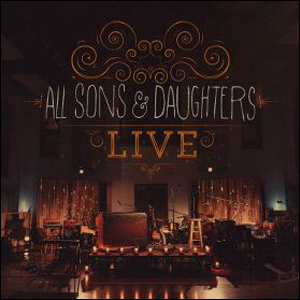
IBR-1113189Here is another song from All Sons and Daughters. Again the lyrics have a beautiful Psalm-like quality. As you may know, I’ve embarked on a quest to find singable contemporary Psalms. Suggestions are most welcome. Enjoy!
(Scroll down for youtube link with lyrics).

Rising Sun

Praise Him all you sinners, Sing oh sing you weary
Oh praise Him all you children of God
We lift high His glory, Shown throughout our stories
We praise Him as the children of God

Our great redeemer, Glorious Savior
Your name is higher than the rising sun
Light of the morning, You shine forever
Your name is higher than the rising sun

Praise His name forever, Speak it loud and clear now
Oh praise Him all you children of God

Our great redeemer, Glorious Savior. . .

Hallelujah, Name above all
Simply to speak Your name is praise
Hallelujah, Now and always
Forever we lift Your name in praise
Hallelujah, Our God, You reign
Simply to speak Your name is praise

Our great redeemer, Glorious Savior. . .

Hallelujah name above all
Hallelujah, Hallelujah

Learn more about the Album Sons & Daughters Live

You may also enjoy:
Great are You, Lord (All Sons & Daughters)                                      The Bible’s Songbook
all sons and daughtersImage created by Sarah Danaher with a Canon EOS 5D MkII

Advantages of playing an instrument

I’ve written before about the way musical training develops our brains and abilities, and helps us become well-rounded, highly functional human beings. (Check the links at the end of the page). Here is the opinion of one professional instrumentalist Emma Ayres, a musician and presenter of ABC Classic FM’s breakfast program. She talks about the benefits of a musical education, and how long students should stick with playing. No wonder God led humanity to discover the joy of making both instruments and music way back in Genesis 4:21!

BENEFITS OF A MUSICAL EDUCATION?

We take for granted the advantages of sport and science and literature, but what are the advantages of learning an instrument, particularly in an orchestral setting? Here are a few, in no particular order.

A best friend for life

Your instrument will always be there for you, no matter whether you have failed maths, broken the family heirloom or been shouted at by a loved one. Your instrument never shouts at you and, if you spend enough time with it, it gives you satisfaction back ten thousand fold.

You make friends

Playing music with others is a deeply bonding experience. The process of rehearsal then performance, just as in sports training and a match, brings you friendships forged in occasional adversity, frequent fun and always beauty.

We take for granted the advantages of sport and science and literature, but what are the advantages of learning an instrument?

Knowing yourself

In learning an instrument, you can have easy and challenging times. By remembering the ease and using that memory to propel you through the difficulty, you learn about your own abilities and tendencies, loves and dislikes, strengths and weaknesses.

Something real in a virtual world

We spend so much time staring at screens and doing virtual things, it is wonderfully grounding to do something with our hands and lungs. To make music, rather than merely listen to it through headphones, is a true, tangible pleasure.

Listening to others and being listened to

To play well at any level, you need to be aware of all the other parts in the music, to recognise who is more important in different sections and when to take the lead. In an orchestra, being listened to and supported is one of the great joys, because you then reciprocate. An orchestra is one great big love-in.

Self-discipline

You don’t always want to practise. But if you stuff up a part and that in turn stuffs it up for somebody else in the band, you feel terrible. So you practise and eventually that self-discipline rubs onto other areas of your life (well, most of the time…).

Self-expression

Sometimes words simply cannot express our emotions. You know how wonderfully transformative music can be to listen to; multiply that by a lot to know how transformative expressing yourself through playing music can be.

Being part of something greater than yourself

An orchestra is truly greater than the sum of its parts. Playing on one’s own has great benefits, but playing in an orchestra and together building a piece of art that is astoundingly complex is awe-inspiring. To be part of that must be one of the great pleasures of being human.

Travel

In my life as a musician I have travelled all over Europe, Asia, the US and now to Australia. As a musician you speak the universal language and graduates of the AYO play in orchestras all over the world.

A proud tradition

Many of the players here in Australia will be studying with musicians who can trace their musical heritage back to Mozart, Beethoven and Bach. To be part of that tradition, and to bring new music to life as well, is goose bump-inducingly splendid.

People applaud you

And finally, but by no means least, you get applauded for a day’s work. All those years of staying in to practise whilst your friends play outside, all those lessons and exams and scales and studies – yet when you walk out on stage and bring calm and wordless reason to people’s lives, you know it has been, and always will be, worth it.

You may also enjoy:

Pick up your instrument – food 4 soul &brain                 Why music makes our brain sing
pianobrainsing

Another way music trains your brain
Image created by Sarah Danaher with a Canon EOS 5D MkII

God’s Word leads us in prayer

prayer2Sometimes we can feel like our prayers are going unanswered, or that our feeble efforts to be consistent and persistent in prayer mean God probably doesn’t even want to answer! But God is not like us. He is compassionate and gracious. His grace is new every morning.

“Because he turned his ear to me, I will call on him as long as I live.” (Psalm 116:2)

If you need help to get praying again there are plenty of books to read on the topic. There is also journalling, prayer partners and other methods to try. But today I’d like to suggest a few simple points (courtesy of John Piper) to remind you that the greatest help for the practice of prayer is probably God’s Word itself. Consider the following reasons why:

  1. Much of the Bible is prayer (most of the Psalms especially).
  2. The Bible is full of commands and encouragements for us to pray (1 Thessalonians 5:17).
  3. We are told to pray according to the will of God (1 John 5:14 ), and the Bible is the revealed will of God.
  4. The Word of God cannot be truly desired (Psalm 119:36) or spiritually comprehended (Psalm 119:18) or savingly spoken (2 Thessalonians 3:1) without the work of the Holy Spirit, whom we ask for by prayer.
  5. Being saturated with the Word of God produces an effective prayer life: “If you abide in me, and my words abide in you , ask whatever you wish, and it will be done for you” (John 15:7).

You may also enjoy:

The waterfall, river and reservoir of God’s Grace                  An unwasted life makes much of Jesus
all things newsolid-joy-app

Great are You, Lord (All Sons and Daughters)

GREAT ARE YOU LORD
Written by: Jason Ingram, Leslie Jordan, David Leonard (All Sons & Daughters)all sons and daughters

You give life, You are love
You bring light to the darkness
You give hope, You restore
Every heart that is broken
Great are You, Lord

It’s Your breath in our lungs
So we pour out our praise
We pour out our praise
It’s Your breath in our lungs
So we pour out our praise to You only

You give life, You are love
You bring light to the darkness
You give hope, You restore
Every heart that is broken
Great are You, Lord

All the earth will shout Your praise
Our hearts will cry, these bones will sing
Great are You, Lord

© 2013 Integrity’s Praise! Music/BMI & Integrity’s Alleluia! Music/SESAC (both adm at EMICMGPublishing.com) & Sony/ATV Timber Publishing/West Main Music/Winsor Hill Music/SESAC

You can find the lead sheet for this song on CCLI. (Hope to try it at church! It has a very Psalm-like quality!) Find out more about the album All Sons & Daughters Live. You may also like their song Come to Save us which could be great for a Christmas special.

You may also enjoy:
Why do we sing about wrath?                         Angels long to understand the story of grace
angel starlightning

The Bible’s Songbook

I’vpsalmiste been thinking lately about the way many churches (including mine) have let the practice of Psalm-singing slip away. I also wonder why. Why do we neglect singing from the Bible’s songbook together? Surely there is much to be gained by singing directly from God’s word, especially when it is written in the form of song. So I’ve decided to embark on an epic journey to find some great arrangements of Psalms with a more with contemporary style. (I would LOVE to hear your suggestions! Please comment if you know some.) In the meantime, consider some of these thoughts on the Psalms from MERE INKLING’s robstroud:

 . .  . the Psalms are the foundation and epitome of worship music for Jews and Christians alike. One could read a Psalm each day and since there are one hundred and fifty, when you returned to the first psalm five months after beginning, it would be utterly fresh. C.S. Lewis enjoyed the Psalms. The following passage comes from a letter written in 1940.

“My enjoyment of the Psalms has been greatly increased lately. The point has been made before, but let me make it again: what an admirable thing it is in the divine economy that the sacred literature of the world should have been entrusted to a people whose poetry, depending largely on parallelism, should remain poetry in any language you translate it into. And glorious poetry it is. The beauty of the songs extends far beyond the family “Lord is my shepherd . . .” And yet, it would be impossible to comprehend the number of grieving souls that have been comforted with the words “Even though I walk through the valley of the shadow of death, I will fear no evil, for you are with me; your rod and your staff, they comfort me.”

Most Christian traditions greatly value the Psalms, and many include them as a portion of the regular service or liturgy. And individuals who include them in the personal devotions are never disappointed. C.S. Lewis included them in his prayer and devotion. In fact, he enjoyed the Psalms so much that in 1958 he wrote a book entitled Reflections on the Psalms. There he proclaims, “The most valuable thing the Psalms do for me is to express that same delight in God which made David dance.”

The Church has added an immense repertoire to the Psalms during the past two millennia, but they will never be replaced. In fact, many inspired songs owe a major debt to the Psalms themselves. This includes the Odes of Solomon, the first (post-Psalms) Christian hymnal (composed circa 100 A.D.). Speaking of the Odes, I wrote a thesis on them many years ago, and have been considering writing a book about these treasures. Perhaps I’ll share more about them in the future. (Nb. The lovely window pictured above is from a church in Fringford, England. David was likely a bit younger when most of the psalms he composed were written.)

http://mereinkling.wordpress.com/2013/10/10/the-bibles-songbook/

You may also enjoy:

C.S.Lewis on Musical Taste and Grace                                Oh for a humble attitude to church
music tasteWorship_War_Thumb

‘Humility’ + ‘musician’ = Great combination

IMAG2157-1I had the privilege of being asked to organise a team of 7 musicians, most of whom I did not know, for a friend’s wedding on the weekend just gone. We had just one practice before the day, yet I am pleased to say the result was pretty great! (Out of interest, the songs we led were “Beautiful Saviour” (Stuart Townend), “This Life I Live” (Michael Morrow, EMU) and “Come Thou Fount of Every Blessing”).
But why should I be surprised that it worked well? The team was comprised of committed Christians who have learnt to balance their musical zeal with a great deal of humility and selflessness. So when it came to figuring out how to work together as a team, and how to best arrange the music, we were on the same page.
It’s like when you meet Christians from another place for the first time and have an instant affinity, an easy friendship. This comes because we have a dad in common, our heavenly Father! We are united in Christ and share a family resemblance in our attitudes. When there is a servant heart, a willingness to (musically) do less, to be restrained and to wait on each other, there is much unity and it can lead to a beautiful harmony.
This is certainly the challenge for all Christian musicians: to move from pride, insisting on our own way and seeking our glory, to an attitude of humble servant-heartedness. It is worth reminding ourselves of this every time we turn up for music practice at church.

Nb.  In the process of working with this team I happened to meet a fellow blogger who opened with the question “You’re Seven Notes of Grace aren’t you?” (he was married to one of the musicians). Small world! (I felt famous!) I hadn’t even realised he lived in the same city. You might like to visit some of his reviews over at Eternitainment: “Eternitainment seeks to bring this Christian worldview and the beliefs of modern entertainment together for a heart-to-heart chat, to hear what each is saying. Eternitainment invites you to listen in and join the conversation.” 

You may also like:
Laying aside my taste in music                                 Leading worship is not about us
bird tree music_feelingflat1

Made Alive (Citizens)

CitizensThis is one of those groovy tunes with a cool piano riff that will really get stuck in your head. It comes from the folks at Mars Hill Music, the group “Citizens” on their recent self-titled album. It became hugely popular at a recent youth camp of 150 teenagers here in south-east QLD. Isn’t it great that they are singing scriptures to a tune that will play over in their minds: Colossians 2:13, Ephesians 2:1, Romans 6:11, Romans 5:19, Romans 3:20-21, Ephesians 2:8-9, John 8:12, John 9:5 and  John 3:19.
“Made Alive presents bold Scriptural truth without apology. We are by nature objects of wrath, dead in sin, alone and hopeless. God reached us in his love and kindness and made us alive in Christ. Believers are never the same. There are some nice contrasts are in the lyrics as well — light vs. darkness, death vs. life, wrath vs. mercy, etc. This new song correctly uses Law & Gospel and makes you want to sing.” (Bread for Beggars)

Made Alive

I once was dead in sin, Alone and hopeless,
A child of wrath I walked Condemned in darkness,
But your mercy brought new life And in your love and kindness,
Raised me up with Christ and made me righteous.

You have bought me back with the riches of,
Your amazing grace and relentless love.
I’m made alive forever, with you, life forever
By your grace I’m saved, By your grace I’m saved.

Lord, you are the light, that broke the darkness.
You satisfy my soul, When I am heartless.
If ever I forget My true identity,
Show me who I am, And help me to believe.

My sin has been erased, I’ll never be the same.

Read more at http://lyricstranslate.com/en/citizens-made-alive-lyrics.html#T4l26eHRtUToqOQO.99

You may also like:

10 Principles for Church Singing                                                             This is Amazing Grace
praise him picfor the sake of the world

10 Big Daily Reminders

sing in morningThis is a post I found at Desiring God. It is a great summary of the things we are so quick to forget (overnight)! We now have several copies around the house. Enjoy.

Ten Big, Daily Reminders  by Matt Reagan | March 20, 2013

I wake up lost every morning. At least that’s what it feels like. Perhaps something similar is true of you. Somehow during the night I’ve forgotten the big realities about God and the universe and myself and the gospel. I desperately need to steady myself with biblical truth rather than stumbling forward to live from unbelief.
I tend to forget the big realities during the day as well. I regularly catch myself living on the idiotic assumption that I will constantly remember the things that really matter — and that I will act in line with them. I assume that the realm of the seen and touched will not overwhelm the realm of the unseen and hoped for.
But in reality, whether it’s night or day, I don’t stay awake to what’s truly important for very long. I am like that college kid who sits in church on Sunday morning trying to keep his eyes open after an irresponsibly late Saturday night. My eyelids droop by default, and my mind wanders from the glories of the Bible to superfluous, naturalistic daydreams (that may or may not end with an embarrassing full-body twitch that snaps me awake again). So I’ve learned over time to put structures in place that remind me of those unseen things, especially during my bleary-eyed, half-conscious mornings.  One effort is this list of ten truths. I hung it up next to our dining room rocking chair (my preferred spot for study and contemplation). It’s developed over the years as a list of the daily reminders I need most. Many of them overlap substantially, but a double reminder only reinforces the original purpose.

1) God exists. (Exodus 3:14; John 8:58)

It seems so simple, so basic, but I tend to wake up a naturalist, and a narcissistic one at that. I assume that all there is in the world is what is in front of my face. My bed, my wife, my kids, and most importantly myself. The simple yet ultimate existence of God immediately clears my lens, makes me small, and infuses meaning into every step. God exists — and that changes everything.

2) God loves you. (Romans 5:8; John 16:27; Jeremiah 32:40–41)

Another massive biblical reality, this immediately counters my hesitation to embrace God’s ultimate authority, reminding me that he has set his affections on this little speck of a person. He is far from indifferent toward me.

3) Jesus died for you, and the Father has now bound himself to give you only good things. (Romans 8:28; Romans 8:32)

This draws me quickly to the central reality of all history: the cross. It is an objective truth set in time and space, so it immediately draws my gaze away from my own capacity to garner acceptance from God through my efforts. Furthermore, the outworkings of the cross make clear that even the harshest trials will come to me as blessing, for my ultimate good, no matter how bad I feel at the time.

4) God sees you as perfect. (Hebrews 10:14; 2 Corinthians 5:21)

My self-absorption, anxiety, and self-pity know no bounds. They must be beaten into submission by the beauty of imputed righteousness. The question, “How am I doing?” is met head-on with the answer, “Perfect.” In that regard, every day is a good day.

5) That is because of Jesus’ perfection, not yours. You deserve hell. (Romans 3:10; 1 Timothy 1:15)

There are two main purposes here: first, to counterpunch when my flesh looks for a way to subtly claim credit for the perfection that is mine only in Jesus; second, to maintain a sense of trembling gratitude for my salvation. While I enjoy the glory of the gospel, there should always be an awestruck voice in the back of my mind that is whispering, “I shouldn’t be here.”

6) You will die. (James 4:14, Hebrews 9:27)

Nothing brings clarity to me like this simple and straightforward reminder. How quickly I assume my earthly immortality, and how often I need to think of myself as a terminal cancer patient.

7) You will live forever in the new heavens and new earth. (Romans 8:18, Hebrews 10:34)

I don’t want to be a clear-headed fearer of death, like some atheistic poet. I want to glory in the guarantee of indescribable bliss that is just around the corner. And I want to live like it’s real — because it is.

8) For now, you are an exile on the earth. (Hebrews 11:13–16)

This keeps me from feeling at home when I’m not at home (especially in my own home). It prepares me for not fitting in, for weird looks when I speak with conviction about Jesus, and for holding loosely to every bit of earthly life.

9) Nothing on earth is truly worth putting your hope in. (Jeremiah 2:13; Galatians 6:14)

This is a practical specification of #8. It is right for me to remember that I will inevitably be disappointed by every earthly pursuit or relationship or emotional experience. It runs me back to my true Home and the true Bridegroom.

10) You have no right to be unhappy. (Philippians 4:4; 1 Peter 1:8–9)

This is a summarizing application of all the previous reminders, but it merits its own slot. How quick I am to become “blah” when there is a treasure trove of happy reality at my disposal! I must beat this into my discontent little brain. I can be plenty unhappy, but I have no right to be.

These reminders flee from my mind like stray socks in an armful of laundry. Every time I pick one up, another falls. By the time I read #10, #1 is beckoning again. What a grace that #4 is still true!

You may also enjoy:

Song of the Morning (at A Needed Word)

Why wouldn’t we remember Christmas?                 Is Your Smart Phone making you dumb?
dec 25hands on wheel

What if the music stinks?

Today’s post comes from Blogging Theologically which I have found to be a great site, with heaps of interesting book reviews and other commentary. This one focuses on the question of church music, of how ‘good’ it should be, and how we should respond if it ‘stinks’:

gracepianoCAN YOU WORSHIP EVEN WHEN THE MUSIC STINKS?: “Not all churches are blessed to have world-class musicians or top-of-the-line sound equipment, or talented people running the board. But, within Christian discussions on worship, it seems like there’s an expectation that all churches should.  People (apparently) can’t engage with hymns. They want “simple” and they, apparently, also want really big sound. Our church has a terrific group of musicians leading our congregation in their praise, so I totally get this. When people are giving it their all and the quality is phenomenal, it’s a really great thing to be a part of.

But let me ask you something: can you worship even when the music “stinks”?

This weekend we were visiting a Baptist church in a small town here in Ontario. The atmosphere was fascinating. This is the kind of church where you stand when the pastor enters the sanctuary and wait for him to leave before you make for the exit. The opening processional was handled on an electric organ. The songs were sung by five people (including the pastor) accompanied only by a piano. And they were all songs in keys in which man was never meant to sing.

They weren’t setting the world on fire with their talents. But you know what was cool?

People were singing their hearts out to Jesus in this church.

I saw more than a few people with hands raised (did I mention they were Baptist?). Their hearts were engaged. They were in it to win it.

I have to wonder, is this something we’ve forgotten in the age of the high-tech mega-church?

I’m not saying we shouldn’t all be pursuing excellence to the degree of ability God has given us, but have we lost the ability to be engaged in worship even when we aren’t particularly into the style, when there’s only a piano and a couple of singers, or when the special is a bit off-key?

I know a lot of folks who, if you put them into that kind of setting, would be so distracted they won’t know what to do. I know others who it wouldn’t be phased at all. And I’ve gotta say, the ones who wouldn’t be phased tend to be the more spiritually mature people I know.

They get that worship through song isn’t about what we like necessarily, but about the object of the people’s affection. So you can sing a song that makes you feel like you’re going through puberty a second time because it’s not about whether or not your voice is going to crack. It’s about Jesus and His glory, not our preferences.

How can we do a heart check on this? Here are a couple of options:

1. If you attend a church with high-end music, try to visit a small town church on your next vacation. The music won’t be as good as you’re used to, I can almost guarantee it. But watch how you respond; ask the Holy Spirit to test your heart and see what He does in response.

2. If you’re a worship leader, arrange for a ridiculously streamlined morning of worship. Seriously, pull a Bob Kauflin. Do one guy and a piano or guitar. And then check your inbox. You’ll have a better sense of where people are at by the number of complaints you receive.

Worship isn’t about style or preference, it’s about God. You can worship even when you think the music kind of stinks if you keep that in mind.” (Aaron Armstrong —  July 15, 2013)

You may also like:

C.S Lewis on musical taste & grace               Blessings of multi-generational music teams
music tastetop-10-offensively-young-musicians_h

The blessed and God-breathed Book (2 Timothy 3:16)

GodBreathed_slide1x_365_y_273This is one of the most breath-taking Three Sixteens, one which you may have already committed to memory.  2 Timothy 3:16-17 is that great statement of assurance concerning God’s Word, the Bible, the God-breathed book on which we build our faith.

“All Scripture is breathed out by God and profitable for teaching, for reproof, for correction, and for training in righteousness, that the man of God may be competent, equipped for every good work.” (ESV)

“All Scripture is inspired by God and is useful to teach us what is true and to make us realise what is wrong in our lives. It corrects us when we are wrong and teaches us to do what is right. God uses it to prepare and equip his people to do every good work.” (NLT)

I recently read through 2 Timothy with a friend, over several weeks and many great coffees! The whole letter is a call to persevere in the faith, despite persecutions and difficult people. These are (possibly) Paul’s parting and most important words. He wants Timothy to stick to the truth of the Scriptures, which he’d been taught from his earliest days. (For Timothy this would mean the Old Testament scriptures as well as the teachings of the apostles.) There are so many treasures in this 3:16 (and 17), but I’ll focus on just three points:

1. The Word is God-breathed:  Just as we speak with our actual breath, which forms and carries the sounds of our words, so it is with God’s breath. He has exhaled these words, he has breathed them into the minds and hearts of people who have faithfully written them down, carried along by the Holy Spirit who always does the Father’s will. How else could this extraordinary book, penned by so many authors across millennia, have such consistency and unity of message? This is His Word to us and he has ensured that his breath, his voice, will continue to be heard as we await the return of Christ, the Word of God.

I love what Peter Blowes says about the way the words of the omnipresent and eternal God apply across all time and space:
“. . . God had every reader of Holy Scripture in mind at the time of its ‘exhalation’. This means not only that God’s word is inspired and universally applicable, but also that, in it, God is speaking presently to every particular reader (or hearer) of his Word.” (2011, “Reading the Bible”, Matthias Minizine). 
This leads to my second point.

2. Reading the Word is the most profitable thing we can do.
More than the early morning coffee, jog, paper, news update, more than crossing things off our to do list, more than any amount of television viewing, study or social media, more than relaxing with the family, more than making money .  . . investing in the Word of God is THE most profitable thing we can do. The world shouts at us, calling for our attention, telling us that those ancient words are dead, irrelevant and useless. But as we immerse ourselves more and more in his Word we understand why reading it is the most profitable thing we can do. By reading we come to know our immortal, invisible, all wise, good and gracious God. The Spirit works in us and we grow in confidence of his power, his might and the reality of his work in our world and hearts. We grow in the certainty of our salvation won in Christ.

3. The Word is wonderfully sufficient, equipping us for every good work.
The Bible equips us not by containing enough lists of do’s and don’ts to train us how to do good in every situation (this is the world’s view of the “good book” – which shouldn’t be ours. Christ has fulfilled the law!) Instead, the Word of God equips us by making us more like Christ – who is entirely and always about the Father’s good work. The Word changes us from the inside out and drives our behaviour. This behaviour becomes good work, good fruit (like those good works prepared in advance for us, which Paul described in Ephesians 2:8-10).

John Piper explains well:
Bearing fruit in “every good work” (see Colossians 1:10 ) means that it comes out on the branches of your life naturally from something that has changed inside. And what has changed is that you are dead to the law as a set of lists to constrain from the outside, and are now united to Jesus Christ in a relationship of joyful trust so that when he speaks—even speaks some of that same law—it comes from within as the desire of your heart. . . .The Scripture, day after day, reveals to us the greatness and the beauty and the power and the wisdom and the mercy of all that God is for us in Christ so that by the power of the Spirit we find our joy in him, and the ways of sin become distasteful—indeed ugly and repugnant. Yes the Bible gives us many specifics as pointers how to live. But most deeply the way the Bible equips us for every good work is by changing what we find satisfaction in so that our obedience comes from within freely, not by coercion from without. It does this when we read it and meditate on it and memorize it and meditate over it every day.”
(John Piper from Desiring God)

You may also enjoy:
Sharing the rich, indwelling Word               Sharing the perspicuity of God’s gracious Word
bible-28