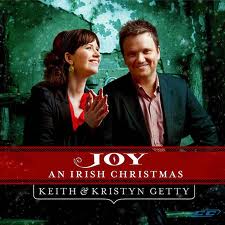
Working for those moments of Joy

grow musicThe non-musician in our Christian gatherings often looks towards the musicians with a certain measure of (perhaps misguided) awe. One thing they find ‘awesome’ is that we even bother! We musicians put ourselves through many practices, where we must work closely with others, negotiating different opinions, and we put ourselves ‘out there’ and up front, where the criticism can sometimes sting. . .  a lot. (Luther didn’t call church music the War Department for nothing!)  And while some look with awe, others may look with disdain and consider most of our efforts simply for show and self-glory.
But there is one thing that keeps musicians (music directors in particular) in the job – and it’s not usually the pay grade!  It is the love for gathering people together in song, praising our great God! Corporate singing provides a unique opportunity to create joy as people praise God and sing out words of encouragement to each other. It gives people the opportunity to express publicly the joy, confidence and hope they have in Christ. These are things they may not find easy to say in everyday conversation.
Since God also delights in the praise of His people (which thwarts Satan’s best efforts at discouragement) we musicians experience much blessing and encouragement ourselves in leading people in something that has eternal, spiritual and cosmological impact!

When we put effort into selecting great sets of song, that are biblically true, Gospel-focused and singable for a group of people, there is the hope that the Word in song will challenge people’s hearts and teach them to know and love their Saviour more. The lyrics might even move people to great (or small) acts of love and service, bringing glory to God. Some may experience a lightbulb moment, as a difficult theological concept makes sense for the first time, in song. “Where the Word goes the Spirit goes” (John Piper) – so the more our songs are steeped in the Word, the more He works through them.
And while I admit that not everyone may be looking joyful as we lead them in praising God, it is the possibility for creating deep inner joy that keeps us coming back. This is what we love! We love to hear God’s praises! We love to see the joy that music brings, joy that encourages us all on our journey of faith.

“. . . . for the joy of the Lord is our strength.”
(Nehemiah 8:10)

You may also like:

How to encourage your music team                                            10 Principles for Church singing

praise-godtaintedcanvasdotcompraise him pic


Never once did we ever walk alone

Most of you would agree that any form of exercise is more enjoyable when someone else is with you. Even just walking with a friend they help you go further and longer than you ever thought possible. You forget about the difficulties, your sore foot, or back, the cold weather, or how much you hate exercise. Walking alone you can think of a million reasons to stop. A companion helps you keep going. (Dog companions are especially good at this.)

When it comes to us and God, we have a wonderful promise – that He is with us, always. There is not once that we were alone. He is in us, walking with us through every difficulty. Yet he is more than just a faithful or encouraging companion. He is a Spirit who lives in us, a Spirit not of timidity and fear, but of love, power and sound mind (2 Timothy 1:7). Matt Redman’s song “Never Once” (Album: 10 000 Reasons) captures well this confidence we have in Christ, that we are in Christ and He is most certainly with us, in us. We are never alone!

“Never Once”

Standing on this mountaintop
Looking just how far we’ve come Knowing that for every step You were with us
Kneeling on this battle ground
Seeing just how much You’ve done Knowing every victory was Your power in us
Scars and struggles on the way
But with joy our hearts can say
Yes, our hearts can say

Never once did we ever walk alone
Never once did You leave us on our own
You are faithful, God, You are faithful

Scars and struggles on the way
But with joy our hearts can say
Never once did we ever walk alone Carried by Your constant grace
Held within Your perfect peace
Never once, no, we never walk alone

Every step we are breathing in Your grace
Evermore we’ll be breathing out Your praise
You are faithful, God, You are faithful You are faithful, God, You are faithful

Bags and Bags and Bags of Grace

Sharing today an encouraging post from The Blazing Center, which describes the overflowing mercy God shows us. . .

image

“Oh, how abundant is your goodness, which you have stored up for those who fear you and worked for those who take refuge in you, in the sight of the children of mankind!” Psalm 31:19

A local coffee roaster has bags and bags and bags of coffee beans stacked up in his warehouse, waiting to be roasted. God has bags and bags of grace and mercy stored up in his heavenly warehouses for his children (John Bunyan). Not just a little bit of goodness – abundant goodness. God doesn’t just give us enough grace to barely get by. He blesses us lavishly. He opens the storehouses of heaven and pours out blessings we can’t contain.

After feeding the multitude there were 12 baskets of bread left over. There was more bread afterwards than he had to start with. Surely goodness and mercy shall follow me all the days of my life, and I shall dwell in the house of the LORD forever. (Psalm 23:6)

Is this how you think about God and your life? Do you have a goodness and mercy mindset? Can you see God’s goodness and mercy on your tail when you look back? I feel like I can’t keep up with all God’s mercies to me. I can’t keep track of them all. God’s thoughts toward us are too many to number. His steadfast love for us is higher than the heavens are above the earth. He removes our sin as far as the east is from the west. God gives us these poetic pictures that we might grasp that his goodness toward us is infinite beyond measure.

But God, being rich in mercy, because of the great love with which he loved us, even when we were dead in our trespasses, made us alive together with Christ—by grace you have been saved— and raised us up with him and seated us with him in the heavenly places in Christ Jesus, so that in the coming ages he might show the immeasurable riches of his grace in kindness toward us in Christ Jesus. (Ephesians 2:4-7)

God’s riches of grace in Christ to us are so “immeasurable” they will take “the coming ages” for him to lay them out for us. Did you hear that? He didn’t say he’d be showing us his riches of grace for the next 1000 years – it’s going to take him the next 1000 ages. For all eternity God will give us one long pleasure cruise tour of the storehouse of his kindnesses to us.

Ok, my brain just shut down. I can’t comprehend ages and ages of God showering me with his kindness. I can’t even take that in. Given all the goodness God has stored up for us, we should never have a mentality that we won’t have enough. That God somehow won’t meet our needs or supply all we need. He’s a generous, lavish God who anxiously waits to pour out his kindness on us.The God who dresses the lilies of the field more stylishly than Solomon will surely meet all the needs of those who take refuge in him.

http://www.theblazingcenter.com/2012/06/bags-and-bags-and-bags-of-grace.html

C.S. Lewis on musical taste and grace

music tasteA few days ago I wrote about the way we can show grace to others by not demanding that they pander to our prideful ‘good taste’ (in a variety of areas).
Here C.S. Lewis talks about a related topic, musical taste. Disagreements over the ‘right’ or most godly church music have produced many hard-fought and rarely-won battles. While Lewis’ comments below are a bit of a challenge in terms of the language, it is worth the slog if you can get to his main point. Grace is the key! We must bear with one another in love, bear with things we dislike for the sake of others whom we are called to love, in Christ. If we are in music ministry and find ourselves filled with pride at our skill, or contempt and hostility to the congregation we serve, it’s probably time for a break! It’s probably time to re-examine our motives – and pray for God to work in us for His glory. Blessings!

Musical Taste

“There are two musical situations on which I think we can be confident that a blessing rests. One is where a priest or an organist, himself a man of trained and delicate taste, humbly and charitably sacrifices his own (aesthetically right) desires and gives the people humbler and coarser fare than he would wish, in a belief (even, as it may be, the erroneous belief) that he can thus bring them to God. The other is where the stupid and unmusical layman humbly and patiently, and above all silently, listens to music which he cannot, or cannot fully, appreciate, in the belief that it somehow glorifies God, and that if it does not edify him this must be his own defect. Neither such a High Brow nor such a Low Brow can be far out of the way. To both, Church Music will have been a means of grace; not the music they have liked, but the music they have disliked. They have both offered, sacrificed, their taste in the fullest sense. But where the opposite situation arises, where the musician is filled with the pride of skill or the virus of emulation and looks with contempt on the unappreciative congregation, or where the unmusical, complacently entrenched in their own ignorance and conservatism, look with the restless and resentful hostility of an inferiority complex on all who would try to improve their taste – there, we may be sure, all that both offer is unblessed and the spirit that moves them is not the Holy Ghost.”

This was taken from an essay entitled “On Church Music” by C. S. Lewis. It can be found in a current publication called Christian Reflections published by Wm. B. Eerdmans Publishing Co.; ISBN: 0802808697.

Ps. Today I celebrate my 150th Blog Post! Thanks for reading.
Read more about C.S.Lewis on this post: Our Glorious Capital C Church

When our ‘good taste’ overrides our grace towards others

coffee heartThe other day I turned my nose up at an instant coffee made for me from a jar of Nescafe 43. I thought I could justify this ungracious response by defending my ‘good taste’ in coffee, but apparently not, according to C.S. Lewis.

“(Humans) . . .  are best turned into gluttons with the help of their vanity. They ought to be made to think themselves very knowing about food, to pique themselves on having found the only restaurant in town whether the steaks are really “properly” cooked. What begins as vanity can then be gradually turned into habit. But however you approach it, the great thing is to bring him into the state in which the denial of any one indulgence “puts him out”, for then his charity, justice and obedience are all at your mercy.  Mere excess in food is much less valuable than delicacy.”  (Letter 16: Screwtape Letters by CS Lewis, 1942).

Ouch!  If you have never read the Screwtape Letters I would encourage you to rush out and get a copy (or download). The Letters record fictional (but strangely believable) correspondence between a Senior and Junior devil. The uncle instructs his nephew on how to keep his ‘patient’ (a new convert to Christianity) from getting too close to the Enemyscrewtape (for them the Enemy is, of course, God).  In the section above Uncle Screwtape explains how to get at his patient, to annoy him, by encouraging the unbearably fussy eating of his mother and her delicate tastes.  If he can make her insist on having her food served in a particular, apparently simple way he will have some delightful amusements. It is also designed to keep her deluded in selfishness and pride.

Here Lewis makes an insightful connection between the “god of the stomach” and pride in our own good taste. This is a much more dangerous distraction from godliness than simply overeating. What I find most interesting here is that he wrote on such matters long before our addiction to both reality TV cooking shows and the great variety of good foods we enjoy in the West (thanks to globalisation). Lewis’ words also come before ‘coffee culture’ swept our world and people became ‘coffee snobs’ – who insist on having their particular bean roasted a particular way on a particular machine in a particular shop, or their own kitchen. I have met people who will rave for hours about having the best taste in coffee and the most knowledge of how to make it – properly! How gracious are they when offered inferior coffee? (How gracious was I?) And it’s not just coffee. Our egos can be fed and mislead by thinking we have the best taste in food and the best skills in how cook it, to create amazing dishes and impress others.

I suppose I am not that far behind the people that I call coffee snobs! I do prefer real coffee from a coffee shop (though not A particular shop) and I do think I have better taste than others in many ways (doesn’t that just sound awful in print)!  The more I think such proud thoughts, the more I train myself to respond to others with less grace, less charity, less justice and kindness. Let’s measure our “own good taste” against God’s measure, of perfect grace, humility, charity and kindness to others. We are more likely to display the fruits of the spirit to others when our hearts are not bent on satisfying our own ‘good tastes’, and proving our superiority in such matters. I’ll keep working on this!

You may also like:
Living under the power of grace                           Fullness of grace in man’s human frailty
grace treejoy

The Basin and the Towel

“Truly I tell you,” Jesus replied, “no one who has left home or brothers or sisters or mother or father or children or fields for me and the gospel will fail to receive a hundred times as much in this present age: homes, brothers, sisters, mothers, children and fields—along with persecutions—and in the age to come eternal life.
Mark 10-:29-30

When we are saved into Christ we are saved into community, a community of believers. This is a great promise from Mark 10. Even if we lose many things in order to own the name of Christ we gain so much more. We gain family! We gain relationship. We gain brothers and sisters in Christ. (And yes, we gain persecutions, though that is not the topic for today so I’ll just leave it to the side). As we serve one another, we grow relationships, we grow bridges between us – between people who would naturally be enemies of each other. Christ’s love makes it possible to serve and love one another. Songwriter Michael Card beautifully sums up this “call to community”, demonstrated by Christ in his earthly ministry. The call is now to us as his followers, to grow community in our churches by taking up the basin and the towel. I hope you have the time to chew over the lyrics below and reflect on your own attitude towards serving and growing community. (I know mine needs work.) The “servant’s bow” is a fragile bridge (see the bridge section below). Blessings! (Read more on Christian community here)

The Basin and the Towel (Michael Card)

In an upstairs room, a parable is just about to come alive.
And while they bicker about who’s best,
with a painful glance, He’ll silently rise.
Their Savior Servant must show them how
through the will of the water
and the tenderness of the towel.

Chorus:
And the call is to community,
The impoverished power that sets the soul free.
In humility, to take the vow,
that day after day we must take up the basin and the towel.

In any ordinary place,
on any ordinary day,
the parable can live again
when one will kneel and one will yield.
Our Saviour Servant must show us how
through the will of the water
and the tenderness of the towel.

bridge:
And the space between ourselves sometimes
is more than the distance between the stars.
By the fragile bridge of the Servant’s bow
we take up the basin and the towel.

(chorus)

You can look up sheet music for this song at the link below:

http://store.michaelcard.com/thebasinandthetowel-sheetmusic.aspx

The power of a foolish Cross – and how to make the most of it

Cross“The message of the Cross is foolishness to those who are perishing, but to us who are being saved it is the power of God.” (1 Corinthians 1:18)

Making the Most of the Cross” (2011, Matthias media) is a book which gets right to the heart of Christianity, the Cross of Jesus Christ. It takes us on a tour of the riches God offers us at the Cross, and how to make the most of them, to grow our confidence in God. In less than 100 pages of fairly large print, author John Chapman examines two main topics: the death of Jesus and His resurrection.  Chapman writes in a simple yet engaging manner, with the clever wit of a seasoned preacher and evangelist.  He explains fully, yet clearly and in short chapters, who Jesus was and why he had to die. It is an excellent book for Christians to read, to revisit the basics of the Gospel and be challenged again by the grace of God. But it is also especially good for newcomers to the faith. It would make a great companion for home reading in conjunction with a course like ‘Christianity Explained’, ‘Christianity Explored’ or ‘Introducing God’ – or simply for extra reading for someone new to Jesus and the message of the Cross. Each chapter contains plenty of discussion from the big story of the bible to help people grasp God’s redemptive plan and how it is fulfilled in Jesus. There is a suggested short prayer at the end of each chapter, to pull together and apply what has been discussed.

For Chapman, Jesus’ death is “unique, unrepeatable and sufficient for all who turn to him” (p24). Chapman impresses on his readers that salvation is at the heart of what Jesus was about. Along the way he is not afraid to discuss God’s wrath (the reason we need salvation!) and to answer common objections, such as the belief that God is a vindictive child abuser (p26): “The Father did not force any punishment upon the Son; the Son himself chose to bear it on our behalf because of His love for us. That is anything but child abuse.” Jesus’ death turns away God’s anger, brings the defeat of Satan and justifies sinners. God is just, He punishes sin and love sinners. These are the clear concepts Chapman wants to reinforce.

I particularly enjoyed chapter 7 which explored the way ‘Jesus’ death is the unifying force in the Christian community’. He says we are “made acceptable to one another because of Christ. . . Understanding this truth is wonderfully liberating. We are free to be ourselves. There is no need to pretend. It doesn’t matter what you find out about my past, or what I might discover about yours. It is all deal with in the death of Jesus. That is the basis of acceptability. We are all sinners saved by grace.”
He then challenges us to apply this to how we treat others, to conduct radical surgery on our thinking, to accept and love others even (especially?) when it’s incovenient.

The second half of the book looks at the Resurrection across seven chapters. Of particular interest was his discussion of our ‘resurrection bodies’  This is a pretty difficult concept for people to grasp, but using texts from 1 Corinthians 15 and Revelation 21, Chapman makes it clear that we won’t be disembodied spirits floating around forever on clouds. He says Christ will take up our bodies “and transform them so they will be breathtaking! They will be immortal, imperishable, powerful, glorious and spiritual. They will be perfectly suited to the new creation. . . When I see the apostles relating to the risen Lord Jesus, I can see how it will be. I can see that the resurrection of the Lord Jesus means that there really is eternal life; there really is a new world in which we will live and relate to each other and to the Lord Jesus Christ” (p83-84).

13CHAPMANOne great thing about reading “Making the most of the Cross” is knowing that the author, John Chapman, can now see the reality of the things he has written about, the things he has long hoped for.  Last year, after 82 years, John Chapman went to be with the Lord.  We can take great encouragement from his faithful ministry – and his many books – of which this is most worthy of a read! Buy two and pass one on today. (Buy here)

Some of Chapman’s other books include:

  • Know and Tell the Gospel: a coherent and highly influential theological account not only of the gospel but of the involvement of every Christian in its spread
  • A Fresh Start: the most widely used gospel give-away book of the past 30 years
  • Setting Hearts on Fire: an inspiring and informative training resource for evangelistic preachers
  • A Sinner’s Guide to Holiness: a short guidebook on how the gospel calls sinners to a holy life as the fruit, not the means, of salvation
  • A Foot in Two Worlds: a simple guide to the eschatology of the gospel—that we belong to the next age but live out our salvation in this evil age
  • Making the Most of the Rest of Your Life: an evangelistic book for seniors on the meaning of eternal life
  • Making the Most of the Cross: a simple exposition of the key facets of the death and resurrection of Jesus
  • Making the Most of the Bible: a simple argument for the authority and sufficiency of Scripture as a necessary corollary of our faith in Jesus as Lord.

Never Alone

“Teach these new disciples to obey all the commands I have given you. And be sure of this: I am with you always, even to the end of the age.” (NLT Matthew 28:20)

“Keep your life free from love of money, and be content with what you have, for he has said, “I will never leave you nor forsake you.” So we can confidently say, “The Lord is my helper; I will not fear; what can man do to me?” (ESV Hebrews 13: 5-6)

Never Alone is a gentle song with a simple melody (which makes it great for church singing) but the lyrics bring us much comfort. Christ is with us! We are not alone . . . no matter how alone we may feel. This song closely echos and explains the reasons for our confidence in Christ, revealed in the bible passages above. In four verses it tells the story of the God-man Jesus coming to earth, dying and rising for us; now he walks with us, in all our joy and pain. He is alive!

Above you can watch a friend of mine with a beautiful voice (Sarah), leading a large group in singing ‘Never Alone’. It was written by Philip Percival & Simone Richardson (2006) from EMU Music – and has appeared on two of their albums: Let All Creation Sing and Songs for Little Rooms. You can buy the lead sheet here.
Whether or not you get to sing this with other people I trust it will be a blessing!

NEVER ALONE

1. We’re not alone, for Christ is here
Immanuel our God come near
We’re not alone, for to our world
Jesus has come, eternal Word.
And as he speaks, our souls laid bare
Naked, ashamed, sin is made clear
And yet he clothes us in his love
Never alone, Christ is with us, is with us.

2. The longest walk, earth’s darkest day
The pressing crowd, his mounting pain.
A heavy load of grief and shame
Breathless that we should breathe again.
“Father forgive them,” comes his cry
Silence from God blackens the sky.
A creeping dread in every heart
Lost in the world now God departs, God departs.

3. The dawn will come, the sun will rise
Out of the grave we’ll see hope’s light.
Tomb opened wide, stone rolled away
Morning has come, a brand new day.
“He isn’t here,” the angel said.
“He is alive no longer dead.”
Our hearts are lifted, souls raised high
Christ is with us, Christ is our life, he’s our life.

4. Never alone, is now our cry
In joy, in grief, in lonely sin.
Never alone, for Christ is ours
He lives in us, we live in him.
And ’til we reach that final day
When fears are gone, cast far away
We’ll live secure, trust in his love,
Never alone, Christ is with us, he’s with us.

Lyrics: © 2006 Simone Richardson Music: © 2006 Philip Percival

Future Grace by John Piper The Purifying Power of the Promises of God – Desiring God

Here is a review of a book I hope to read in near future, Future Grace by John Piper. Here is a taste.
http://www.desiringgod.org/resource-library/books/future-grace

future grace“By future I do not merely mean the grace of heaven and the age to come. I mean the grace that begins now, this very second, and sustains your life to the end of this paragraph. By grace I do not merely mean the pardon of God in passing over your sins, but also the power and beauty of God to keep you from sinning” (p. 5).

In Future Grace, author John Piper helps readers discover the key to overcoming sin and living a life that honors God. Many men and women attempt to walk upright out of gratitude for what Christ did in the past, but Piper encourages believers to look ahead to the grace God provides for us on a day-by-day, moment-by-moment basis—putting faith into action by laying hold of God’s promises for the challenges we face.

No one sins out of duty. We sin because we want to. Sin promises happiness, and we buy the lie. So how can the root of sin be severed in our lives? The penalty of sin must be paid by the righteous blood of Christ. And the power of sin must be broken by banking on the promises of Christ.

John Piper’s meditations are rooted in rock-solid biblical reflection. Chapter by chapter—one for each day of the month—he reveals how, by cherishing the promises of God, you can break the power of anxiety, despondency, covetousness, lust, bitterness, impatience, pride, misplaced shame, and more.

First Edition 1995; Revised Edition 2012
Multnomah Books (Colorado Springs, Colorado)

Whatever is Lovely – Blog Award

“One of20130531-003155.jpg my favorite verses in the Bible is also Philippians 4:8, “Finally, brothers, whatever is true, whatever is honorable, whatever is just, whatever is pure, whatever is lovely, whatever is commendable, if there is any excellence, if there is anything worthy of praise, think about these things.” My thoughts can go in all sorts of directions, and most of them go in the course that is not in line with God’s way. What a gem this verse is to show me exactly how God wants me to love Him with all my mind! Right in the middle of this verse is the word “lovely”. It is one of the eight things mentioned in this verse that our thoughts ought to be. The original word actually has its root in the Greek word phileo, which means affection, friendship, or love (think of Philadelphia, the city of Brotherly Love). So, the word in this verse does not mean beautiful or something that is externally pleasing to the eye, as sometimes we use that word in English. In essence, what the verse is saying is this: whatever would encourage a love and friendship towards others, let your mind dwell on those things.” (Note: this was so good that I left it as it was written!)

Blogging can become another means to encourage love and friendship, despite many miles between us as we write, and the fact that we may not ever meet face to face. Yet because of Christ we are united, we are friends and family!

Thanks to Lessons by Heart who nominated me for this Lovely Blog award. Her posts are most encouraging and I read them just about everyday! I would like to pass this award on to 7 lovely bloggers. Here are my nominees (I’ll send you to their “About”):

An Imperfect Life made perfect by grace (http://sheensteve.wordpress.com/about/) – Mother of triplets who is learning to rest on Christ’s perfection each day.
Mere Inkling (http://mereinkling.wordpress.com/about/) is written by a wise gentleman who lifts up Christ as the heart of Christianity, with plenty of humour, history, CS Lewis and Tolkien along the way.
Revelling in the Overflowing Grace of God (http://bickleyhouse.wordpress.com/about/) is a prolific blogger who writes some great long and interesting devotional material. Most encouraging!
Blazing Center (http://www.theblazingcenter.com/about) written by father and son pastors at Sovereign Grace Ministries, who also write amazing and encouraging song lyrics. This blog is the one I have enjoyed reading for the longest time.
Sermons and Soda Water (http://sermonsandsodawater.wordpress.com/about/) is an encouraging blog written by my wise “old” uncle (ha! ha!) about living simply and enjoying life in Christ.
Worship One (https://worship1.wordpress.com/) is a blog by a vocal teacher who has lots of great resources to share, and encouragement to sing!
MGPC Pastor’s Blog (http://garyware.me/about/) is one I’ve only discovered in the last week, but have really enjoyed the reports, reviews, thoughts, news (and fun).

That was a difficult task to choose just seven!

If you would like to post about this award and pass it on to others, here are the rules.
1. Add the “One Lovely Blog Award” image to your new post (you can cut and paste the top section also)
2. Share seven things about you
3. Pass the award on to seven nominees
4. Thank the person who nominated you
5. Inform the nominees by posting on their blogs

Last and certainly least, here are 7 random things about me.
1. I have a Maremma dog named Mia – A maremma is an “Italian Shepherd” used in some countries to ward off foxes and bears. Ours minds the chickens.
2. I play too much “Words with Friends”
3. I play flute, piano, alto saxophone and sing, with some degree of success.
4. My favourite foods include almonds, ginger, avocado, mushrooms, mango and lychees.
5. My favorite “big word” to use is perspicuity – which means clarity! (ironically this word is unclear to many)
6. I love blogging about the BBC TV show DOCTOR WHO – at blueboxparables.wordpress.com
7. I grew up in the shadow of Mount Warning (which Captain Cook named), inside a volcanic crater, on a cattle farm (below is a view of the “backyard”).

mount warning