“Truly I tell you,” Jesus replied, “no one who has left home or brothers or sisters or mother or father or children or fields for me and the gospel will fail to receive a hundred times as much in this present age: homes, brothers, sisters, mothers, children and fields—along with persecutions—and in the age to come eternal life. Mark 10-:29-30
When we are saved into Christ we are saved into community, a community of believers. This is a great promise from Mark 10. Even if we lose many things in order to own the name of Christ we gain so much more. We gain family! We gain relationship. We gain brothers and sisters in Christ. (And yes, we gain persecutions, though that is not the topic for today so I’ll just leave it to the side). As we serve one another, we grow relationships, we grow bridges between us – between people who would naturally be enemies of each other. Christ’s love makes it possible to serve and love one another. Songwriter Michael Card beautifully sums up this “call to community”, demonstrated by Christ in his earthly ministry. The call is now to us as his followers, to grow community in our churches by taking up the basin and the towel. I hope you have the time to chew over the lyrics below and reflect on your own attitude towards serving and growing community. (I know mine needs work.) The “servant’s bow” is a fragile bridge (see the bridge section below). Blessings! (Read more on Christian community here)
The Basin and the Towel (Michael Card)
In an upstairs room, a parable is just about to come alive.
And while they bicker about who’s best,
with a painful glance, He’ll silently rise.
Their Savior Servant must show them how
through the will of the water
and the tenderness of the towel.
Chorus: And the call is to community, The impoverished power that sets the soul free. In humility, to take the vow, that day after day we must take up the basin and the towel.
In any ordinary place,
on any ordinary day,
the parable can live again
when one will kneel and one will yield.
Our Saviour Servant must show us how
through the will of the water
and the tenderness of the towel.
bridge:
And the space between ourselves sometimes
is more than the distance between the stars.
By the fragile bridge of the Servant’s bow
we take up the basin and the towel.
(chorus)
You can look up sheet music for this song at the link below:
Colin Buchanan is a pretty clever guy. I’m not sure how many of you from the USA or UK know much about him, but he has been producing fun and biblically true kids songs for around two decades. He is very well known here in Australia, not just for his kids music, but also as a Country singer and presenter on kids TV.
This is just one example of how Colin’s songs teach the great doctrines of God in a really catchy way. Though some people steer away from teaching the big words of the Bible, Colin makes clear the meaning of words like propitiation, substitution, salvation, justification and redemption to name but a few. All these words reveal the awesome grace God has shown us in sending Jesus! Enjoy.
Big Words That End in “Shun”
CHORUS Big words that end in SHUN! Show us what the Lord has DUN! Through Jesus, His own SUN! Big words, Big words that end in SHUN!
Revelat-SHUN! God shows Himself to us
Substitut-SHUN! Jesus takes our place
Salva-SHUN! Sinners saved from hell
Big words, Big words that end in SHUN…
CHORUS
Propitia-SHUN! God’s anger turned away
Justifica-SHUN! Just like we’d never sinned
Imputat-SHUN! Jesus’righteousness is mine
Big words, Big words that end in SHUN!
CHORUS
Resurrect-SHUN! Raised from death to life
Redemp-SHUN! Sinners bought by God
Adopt-SHUN! Sinners made God’s sons
Big words, Big words that end in SHUN!
Found a great post on a topic I have been meaning to write about myself over at Worship Sense. It talks of something about which I’m thoroughly convinced : that church music has a huge role to play in teaching good theology to the Body of Christ, and growing people in faith. I hope it will prove to be great encouragement to your music department! Enjoy. . .
“In spiritual circles, few people are seen as intimidating as often as theologians. Theologians are scholars. Studied. Educated. Cultured. And they wear old-school glasses, vests and wool sweaters as they sit in an aged leather wingback chair in front of a stately, oversized bookcase in a home library with loaded oak bookshelves lining all of the walls, all the way up to the ceiling. (Whew . . . that was a mouthful!) Okay, maybe not all of them, but we like to think they do. The point is, when we hear the word “theologian” often we get an image in our minds that, at least in some way, represents the description above.
So what if I told you that YOU are a theologian?
Well, if you’re a worship leader and/or worship songwriter, you are! Sure, perhaps you aren’t necessarily discovering any brand-spankin’ new theology. But, you are writing and/or choosing worship songs that speak a theological truth. You are communicating theology to your local church. This is why one of the most important things you do as a worship leader is pick out the songs for the weekend setlist.
Sure, key changes, arrangements, transitions, dynamics and flow are all important parts of what we do as worship leaders, but none of those things matter if we aren’t singing truths in our churches. It is widely known that ideas and messages are retained better in our brains when presented in song than by spoken word (a sermon). This is because our brains interact with music differently, thereby establishing a stronger retention of what we heard/sang. Why is this important?
It’s sad to say this, but most people don’t remember the sermon they heard last week or this morning, in some cases. Now sure, these days we have recorded sermons, sermon notes, etc. All of these allow us to go back and go through the messages again. However, overall there is a limited shelf life on the specific messages that are preached every week (hopefully the themes and lessons are learned and continue on!).
With music, however, things stick around a bit longer, including the lyrics of the songs themselves. These lyrics are a biblical message, just like your pastor’s sermon. The only difference is that yours is set to a music, may have some repetition, and may be more like 4 to 5 mini-sermons during a typical worship set. This is a big deal!
Why? Because what you sing in your worship times is going to stick in people’s hearts and minds longer than the sermon does. Therefore, it’s imperative that we sing songs that contain solid theology.
We basically have three options with the songs we sing at church:
1. Lyrics that present false, inaccurate theology.
2. Lyrics that aren’t false, but are theologically weak and don’t really say anything.
3. Lyrics that present a solid biblical truth with rich theology.
PLEASE stay away from songs in category one. As for category two, there is nothing wrong with this category necessarily, but there are too many songs that fit this mold.
I challenge you to shoot for the third category of songs. Pick songs that are not only correct, but really drive home messages that your congregation needs to hear. One helpful way that I’ve found to pick more songs in category three is not just listening to the song on the CD (with the fancy production), but taking the time to sit down and read the lyrics without the music.
This is no easy task, but it’s vital! You are a theologian. A musical theologian. Don’t take that responsibility lightly. Invest the time into being intentional about the words that your congregation sings each week.”
Well I had promised to do some more study here for my exam on Mark, but a few things have been drawing me away. Let me share some things from the last few days: We hosted the first night of the Parenting Teenagers Course at our church, I prepared to run a session on one-to-one Bible reading for women at a retreat (and then did so), I found out I had upset a lovely long-term friend (sorry!), managed to put out my lower back (I am walking around like a fragile old woman), then hosted a staff meeting and dinner at my house. Most of that happened yesterday! Today I have led music at church and felt ‘obliged’ to go see Iron Man 3 with my teenagers and husband. (This last one was no huge sacrifice, but it did take a few hours. Fun film!)
So now it is time to stop and think clearly for a few moments in the midst of this whirlwind, about the way Christ referred to himself, the titles of Christ as recorded in Mark’s Gospel. These titles reveal so much of God’s great plan to rescue a people for His own Kingdom purposes, a people who would come to resemble the beautiful King who saved them!
“How do the titles of Christ reveal who Jesus is?”
MESSIAH/Christ
Messiah is the Hebrew term, Christos the Greek, for the title which tells us that Jesus is God’s anointed and promised King. He fulfills the promise to King David of a descendent who would reign on his throne forever! (2 Samuel 7). Jesus, God’s Son, became the Son of God (a Messianic title which also applied to the OT Kings of Israel). The Son of God would be the one to subdue the nations and be the means of reconciliation between God and man. “Kiss the Son” is the instruction of Psalm 2, meaning we must bow to or align ourself with him. We must trust in Him: “blessed are all who take refuge in Him”. Jesus’ divinity (meaning He IS God!) was made apparent by the authority he displayed over sickness, nature, death, evil spirits and most importantly sin – God alone could forgive (Mark 2 – the Man on the Mat!). Jesus is the One who clearly fulfilled the words of Isaiah: “Then will the eyes of the blind be opened and the ears of the deaf unstopped. Then will the lame leap like a deer, and the mute tongue shout for joy.” (Isaiah 35:5-6). Several times in Mark, in the voice from heaven (at the baptism and the transfiguration) and the voice of demons, God revealed that Jesus was indeed His Son. Peter, Blind Bartemeus and the Roman centurion (who saw Christ crucified) all conclude “You are the Christ”, Son of David, Son of God.
Son of Man
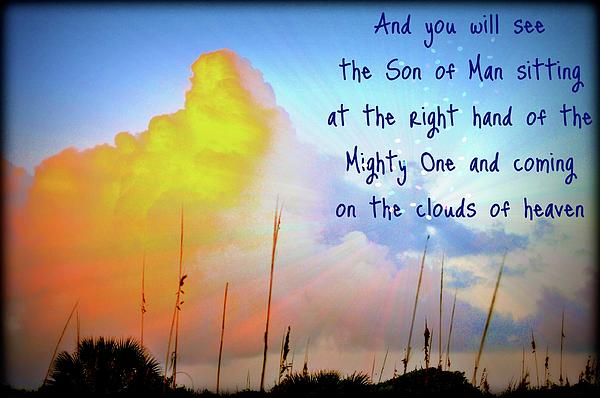
Another significant title is this one, Son of Man, which Jesus often used in referring to Himself, and what He had come to do. While this may seem to be a puzzling title, since the man Joseph was definitely not his biological father, Jesus used it to show how he fulfilled the promises which came through Daniel. Daniel 7 speaks of one like a Son of Man who will be victorious over evil, who receives the Kingdom in the new age, and shares it with the saints (all believers). He is the servant of the Lord who delivers God’s people through a resurrection (Daniel 12). This Son of Man has the authority to forgive sins (Mark 2:8-12), and he will preside over the great Sabbath rest at the end of time (Mark 2:27-28). The Son of Man is the true descendent of Adam, representative of God the Creator, who will rule over creation within God’s total and sovereign rule.
In Mark 14:61-63 Jesus draws these two titles together, and admits who He is, as he stands before the Sanhedrin under arrest. Jesus says He is “I AM”, both the divine Son of God, Son of the Blessed One, and the Son of Man who will receive the Kingdom with power!
Suffering Servant
The final title is that of Suffering Servant, promised through the prophet Isaiah many centuries before. “For even the Son of Man did not come to be served, but to serve, and to give his life as a ransom for many” (Mark 10:45). The Son of Man will serve us by suffering, in our place. He takes the punishment for sin, our sin, which was death. Isaiah 53 provides the clearest picture of what the suffering Servant would do: the righteous servant would justify many, giving his life as a ransom. Fulfilling Isaiah’s words perfectly, Christ was crushed for our iniquities, pierced for our trangressions. The punishment that brought us peace was laid on him. Silently as a lamb he was led to the slaughter, the Perfect Lamb of God, the sacrifice that perfectly fulfilled the Law and the Prophets and brought a way for our forgiveness. Psalms 22 and 69 also foreshadow the way Christ (in fact God himself) entered into our suffering, forsaken to death for US!
And strangely, apart from all that I can learn about the titles of Christ, there is a great comfort in knowing that Jesus is not some modern, man made or religious idea, but the great God-man who fulfills the purposes of our creator, and He draws us to himself through Jesus. The name of Jesus is indeed a refuge (as Chris Tomlin has sung, below). Theology brings us comfort and assurance of all that we hope for in faith.
And just if you are interested to keep reading:
Yehoshua means ‘the Lord saves’, and is translated into English as Joshua.
Jesus’ Hebrew name is Yeshua, which is a shortened version of Yehoshua. Yeshua means ‘he will save’, and is translated into English as Joshua. Yeshua translated into Greek is Iesous. Iesous transliterated into Latin is Jesu. Jesu became Jesus in English.
Jesus’ name is actually “Joshua”.
These thoughts come courtesy of a website that produces many good products for training your musicians. It is called Musicademy, with the tagline “Outstanding Practical Worship Training“. I found this list of 10 suggestions really useful. We often have sound issues caused by people being jammed in to a tight space. Have a read and see how much you can improve the overall sound of your music team!
10 Tips to improve your worship team – stage placement
There is rarely one quick fix to improve the musicianship of your worship team. Individual tuition so that each musician can play competently as well as an emphasis on practice both as individuals and as a group will help hugely. But there are also plenty of more subtle and often overlooked issues to be considered – communication, leadership, dynamics, arrangements, musical flow and more.
Before we even start to play its worth thinking about where each of the instruments are placed. Most contemporary worship music has been influenced by rock bands, and it is therefore no surprise that many worship teams position themselves in a similar manner – the drummer at the back, lead singer in the middle and other players flanking each side. The looks great visually and is fine if you are well rehearsed with little need for spontaneity but most worship bands are really based on making community music where the interactive involvement of the congregation actually changes the order, volume, tempo and sound of the music. This challenge means the musicians primarily need to be able to see and hear each other to run with those changes on the fly.
With that in mind here are 10 tips to improve your team all around positioning:
Arrange yourselves where you can see each others eyes. You can communicate a lot just by eye and body movements. It’s no good for a drummer if the primary view they get of the worship leader is the back of their head! And make sure everyone has a clear view of the worship leader who should be directing the band through body language and other cues. We often suggest that a “banana” shape works well.
Try placing the drum kit at the front and side of stage and rotate it 90 degrees so it faces inward to the rest of the musicians.
Experiment with arranging the other musicians in a semi circle so they can see each other too.
Split up instruments that produce sound in the same frequency range e.g. guitar and keyboard. Its so much easier to hear yourself if you are not competing with another sounds from the same octave range.
When sound checking work on hearing each other acoustically before adding any fold back.
Place amps only towards the musicians that need to hear them, like drummers. And be aware that when standing immediately in front of an amp you are unlikely to feel the full force – that will be reserved for the unfortunate Doris sitting in the front row of the congregation.
Try to position the whole band in the area in the building that best connects with the congregation. It can be anywhere, on a stage, in the round, whatever works best – just try to build a physical sense of all of us worshiping God communally together rather than a separated congregation and band.
Do you need to be on a stage at all? If so, too high or too low a platform can hinder communication.
The whole band doesn’t have to face the congregation. As in tip 1 the priority is being able to gain eye contact with each other.
Don’t put equipment in positions that block sight lines between you and the congregation – e.g. mic and music stands at head and even chest level can seem like a barrier and can hinder visual communication.
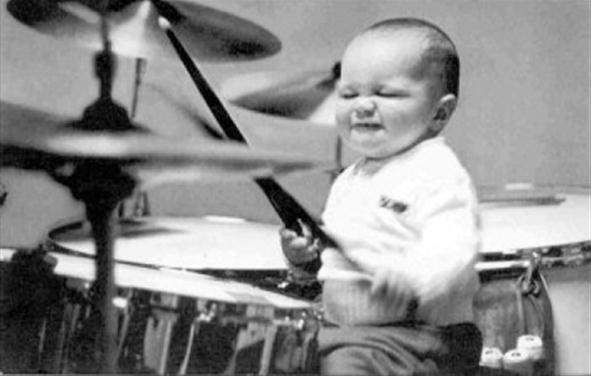
Though some may think church musicians must be either young and trendy or qualified professionals, people of all types and ages have different and valuable things to contribute to a church music team (even that baby drummer could add some great percussion!). Older, non-professional church musicians have many years of valuable experience, of knowing what works and what doesn’t, knowing how to create good arrangements of songs on the fly, and knowing how to work together effectively with others.
This last one is probably the most valuable asset! People who have been Christians and serving for a while (in an area which sometimes tempts us to all kinds of self-serving attitudes) have valuable insights, of thought and action, to teach newcomers to the faith and music ministry. Lots of really good discipling can occur in the context of regular team practices.
I must say I am blessed to be part of a team of around 30 people, with several representatives of each ‘decade’ from teens right through to people in their 60s.
One of my greatest joys is to learn from and teach others in music ministry. Often the learning comes from all directions, regardless of age.
If you are in the ‘older’ experienced church musician category, I would encourage you to seek out some younger players to mentor, not just in the mechanics of playing or singing, but in developing a mindset of music as Gospel ministry, where leaders are servants, and selflessness is the key.
Blessings to you in your ministry!
If you are a leader of a church music team it is helpful (and wise) to think of your ministry as a training ground for growing ‘servant hearts’ in people generally. You want your musicians to be willing to serve God in any area of gospel ministry, not just music. Simply because a person has musical ability then that should not be the extent of their service. Rather it is simply one way they can serve the body of Christ, and further develop an attitude of being ‘other-person-centred.’ This is certainly the example Christ has called us to follow.
In the link below you will find a great resource, a four page ministry discussion paper to work through with those your music team: Music Ministry Training Paper This paper explores a wide range of topics, from the role of the musician in the team, to the role music can play in ensuring the Bible stays at the centre of our activities. It looks at how church music can help ‘the Word of Christ’ dwell richly in the body of believers. It also touches on tricky issues like personal pride and motivation, committment to church and song-leading.
The paper could be used as a series of four discussions/studies, or two, or one, depending on the time you can afford to spare. It could even be something you give out ahead of time, then gather to discuss. Whichever way you do it, it should provoke some really useful discussion (and hopefully right thinking) in an area of serving which can easily become a self serving ministry, or Me-nistry, as some have described it.
If you want more indepth material to work through, check out my post on the bible studies called SING FOR JOY from Matthias Media.
This song from Garage Hymnal is one that has been really encouraging to our church family. It speaks with such certainty of the secure salvation we have in Christ.
We first came across it about 5 years ago, but it is the truth of Romans 8:28-39 that makes it lasting. Our heavenly Father is holding us. He is mighty to save, mighty and strong enough to keep hold of us even when we are on a slippery slope. He can lift us up, gently restore us, and he won’t let go. He is our Sovereign Lord!
This is the promise we find in Philippians 1:4-6. “In all my prayers for all of you, I always pray with joy because of your partnership in the gospel from the first day until now, being confident of this, that he who began a good work in you will carry it on to completion until the day of Christ Jesus.”
I have been taking John Piper out for a walk now and then recently – well, obviously not in person, but in mp3 format on my smart phone. Today I listened to a talk from 2010 on Mark 8, titled “The Son of Man Must Suffer many things“….. It was an astounding message. The first half explored the passage and the topic, and the second explained why he needed to take a complete 8 month break from preaching!
In the first half, the climax was this challenge from Piper on verse 38:
“Verse 38: “Whoever is ashamed of me and of my words in this adulterous and sinful generation, of him will the Son of Man also be ashamed when he comes in the glory of his Father with the holy angels.” Let’s get the meaning clear before we make the connection. What’s the opposite of being ashamed of somebody? Being proud of them. Admiring them. Not being embarrassed to be seen with them. Loving to be identified with them.
So Jesus is saying, “If you are embarrassed by me and the price I paid for you (and he’s not referring to lapses of courage when you don’t share your faith, but a settled state of your heart toward him)—if you’re not proud of me and you don’t cherish me and what I did for you—if you want to put yourself with the goats that value their reputation in the goat herd more than they value me, then that’s the way I will view you when I come. I will be ashamed of you, and you will perish with the people who consider me an embarrassment.”
Now I’m sure you are curious how preaching on this passage links with Piper announcing his request for a leave of absence from ministry (you can read or listen to the talk if you follow this link.) And I’m not going to tell you . . . because his challenge is what I want you to contemplate: are you in a settled state of admiration for Christ, do you love being identified with him – or are you in a settled state of embarrassment for the “foolishness” of the Cross of Christ? As I was being challenged by Piper’s words I was reminded of a similarly challenging plea that comes in a song from Sovereign Grace:
“Let me be unashamed, Jesus, to speak Your name Let me be bold to claim you as my Lord”
This is a brilliantly rousing song. The faster pace and guitar riffs would surely appeal to many, even though it may be considered “old”. I hope you will be able to encourage your whole church to bring this plea before God in song: “Let me be unashamed….” I definitely need to add this one back onto the new song list for our church!
(Click here to listen, for lead sheets and other music formats.)
UNASHAMED
VERSE 1
You were not ashamed to be
Emptied and poured out to death
Unashamed to give Your dying breath
You were not ashamed to bear
All of my reproach and sin
Jesus, You were such a faithful friend
So I will glory in the cross
And in the blood You shed for us
Glory in the gospel of Your grace
Let me be unashamed Jesus, to speak Your name For You were the one who came The Savior of the world Let me be unashamed Jesus, to speak Your name Let me be bold to claim You as my Lord
VERSE 2
You were not ashamed to give
Your body to a Roman lash
Unashamed to bear God’s holy wrath
You were not ashamed to hang
Naked bleeding on a tree
Gladly You did all of this for me
So I will glory in the cross
And in the blood you shed for us
Glory in the gospel of Your grace
I'm Ash. I love Jesus. I'm a wife and a mum. I'm a teacher. I'm also studying my Masters of Counselling. I started studying a few years after started the very hard work of engaging my own story of harm and trauma. This is a place where you'll hear my stories, as well as the stories of others. I'll also reflect on faith, healing and walking with Jesus. I pray that these words might encourage you to do your own painful but life-bringing work of examining your own stories, and allowing Jesus to heal the parts of you still locked in shame. For He came that we might have life, and have it to the full. Welcome, fellow traveller.
Words, words, words... well said Hamlet! A little blog to go off on tangents within the worlds of history, literature, TV and film that interest me. From the Tudors to Tom Hardy's Tess, the Boleyns to Bollywood or from the Wars of the Roses to Wuthering Heights, feel free to browse through my musings to pick up extra ideas and points for discussion!






 sevennotesofgrace