10 Big Daily Reminders

sing in morningThis is a post I found at Desiring God. It is a great summary of the things we are so quick to forget (overnight)! We now have several copies around the house. Enjoy.

Ten Big, Daily Reminders  by Matt Reagan | March 20, 2013

I wake up lost every morning. At least that’s what it feels like. Perhaps something similar is true of you. Somehow during the night I’ve forgotten the big realities about God and the universe and myself and the gospel. I desperately need to steady myself with biblical truth rather than stumbling forward to live from unbelief.
I tend to forget the big realities during the day as well. I regularly catch myself living on the idiotic assumption that I will constantly remember the things that really matter — and that I will act in line with them. I assume that the realm of the seen and touched will not overwhelm the realm of the unseen and hoped for.
But in reality, whether it’s night or day, I don’t stay awake to what’s truly important for very long. I am like that college kid who sits in church on Sunday morning trying to keep his eyes open after an irresponsibly late Saturday night. My eyelids droop by default, and my mind wanders from the glories of the Bible to superfluous, naturalistic daydreams (that may or may not end with an embarrassing full-body twitch that snaps me awake again). So I’ve learned over time to put structures in place that remind me of those unseen things, especially during my bleary-eyed, half-conscious mornings.  One effort is this list of ten truths. I hung it up next to our dining room rocking chair (my preferred spot for study and contemplation). It’s developed over the years as a list of the daily reminders I need most. Many of them overlap substantially, but a double reminder only reinforces the original purpose.

1) God exists. (Exodus 3:14; John 8:58)

It seems so simple, so basic, but I tend to wake up a naturalist, and a narcissistic one at that. I assume that all there is in the world is what is in front of my face. My bed, my wife, my kids, and most importantly myself. The simple yet ultimate existence of God immediately clears my lens, makes me small, and infuses meaning into every step. God exists — and that changes everything.

2) God loves you. (Romans 5:8; John 16:27; Jeremiah 32:40–41)

Another massive biblical reality, this immediately counters my hesitation to embrace God’s ultimate authority, reminding me that he has set his affections on this little speck of a person. He is far from indifferent toward me.

3) Jesus died for you, and the Father has now bound himself to give you only good things. (Romans 8:28; Romans 8:32)

This draws me quickly to the central reality of all history: the cross. It is an objective truth set in time and space, so it immediately draws my gaze away from my own capacity to garner acceptance from God through my efforts. Furthermore, the outworkings of the cross make clear that even the harshest trials will come to me as blessing, for my ultimate good, no matter how bad I feel at the time.

4) God sees you as perfect. (Hebrews 10:14; 2 Corinthians 5:21)

My self-absorption, anxiety, and self-pity know no bounds. They must be beaten into submission by the beauty of imputed righteousness. The question, “How am I doing?” is met head-on with the answer, “Perfect.” In that regard, every day is a good day.

5) That is because of Jesus’ perfection, not yours. You deserve hell. (Romans 3:10; 1 Timothy 1:15)

There are two main purposes here: first, to counterpunch when my flesh looks for a way to subtly claim credit for the perfection that is mine only in Jesus; second, to maintain a sense of trembling gratitude for my salvation. While I enjoy the glory of the gospel, there should always be an awestruck voice in the back of my mind that is whispering, “I shouldn’t be here.”

6) You will die. (James 4:14, Hebrews 9:27)

Nothing brings clarity to me like this simple and straightforward reminder. How quickly I assume my earthly immortality, and how often I need to think of myself as a terminal cancer patient.

7) You will live forever in the new heavens and new earth. (Romans 8:18, Hebrews 10:34)

I don’t want to be a clear-headed fearer of death, like some atheistic poet. I want to glory in the guarantee of indescribable bliss that is just around the corner. And I want to live like it’s real — because it is.

8) For now, you are an exile on the earth. (Hebrews 11:13–16)

This keeps me from feeling at home when I’m not at home (especially in my own home). It prepares me for not fitting in, for weird looks when I speak with conviction about Jesus, and for holding loosely to every bit of earthly life.

9) Nothing on earth is truly worth putting your hope in. (Jeremiah 2:13; Galatians 6:14)

This is a practical specification of #8. It is right for me to remember that I will inevitably be disappointed by every earthly pursuit or relationship or emotional experience. It runs me back to my true Home and the true Bridegroom.

10) You have no right to be unhappy. (Philippians 4:4; 1 Peter 1:8–9)

This is a summarizing application of all the previous reminders, but it merits its own slot. How quick I am to become “blah” when there is a treasure trove of happy reality at my disposal! I must beat this into my discontent little brain. I can be plenty unhappy, but I have no right to be.

These reminders flee from my mind like stray socks in an armful of laundry. Every time I pick one up, another falls. By the time I read #10, #1 is beckoning again. What a grace that #4 is still true!

You may also enjoy:

Song of the Morning (at A Needed Word)

Why wouldn’t we remember Christmas?                 Is Your Smart Phone making you dumb?
dec 25hands on wheel

What if the music stinks?

Today’s post comes from Blogging Theologically which I have found to be a great site, with heaps of interesting book reviews and other commentary. This one focuses on the question of church music, of how ‘good’ it should be, and how we should respond if it ‘stinks’:

gracepianoCAN YOU WORSHIP EVEN WHEN THE MUSIC STINKS?: “Not all churches are blessed to have world-class musicians or top-of-the-line sound equipment, or talented people running the board. But, within Christian discussions on worship, it seems like there’s an expectation that all churches should.  People (apparently) can’t engage with hymns. They want “simple” and they, apparently, also want really big sound. Our church has a terrific group of musicians leading our congregation in their praise, so I totally get this. When people are giving it their all and the quality is phenomenal, it’s a really great thing to be a part of.

But let me ask you something: can you worship even when the music “stinks”?

This weekend we were visiting a Baptist church in a small town here in Ontario. The atmosphere was fascinating. This is the kind of church where you stand when the pastor enters the sanctuary and wait for him to leave before you make for the exit. The opening processional was handled on an electric organ. The songs were sung by five people (including the pastor) accompanied only by a piano. And they were all songs in keys in which man was never meant to sing.

They weren’t setting the world on fire with their talents. But you know what was cool?

People were singing their hearts out to Jesus in this church.

I saw more than a few people with hands raised (did I mention they were Baptist?). Their hearts were engaged. They were in it to win it.

I have to wonder, is this something we’ve forgotten in the age of the high-tech mega-church?

I’m not saying we shouldn’t all be pursuing excellence to the degree of ability God has given us, but have we lost the ability to be engaged in worship even when we aren’t particularly into the style, when there’s only a piano and a couple of singers, or when the special is a bit off-key?

I know a lot of folks who, if you put them into that kind of setting, would be so distracted they won’t know what to do. I know others who it wouldn’t be phased at all. And I’ve gotta say, the ones who wouldn’t be phased tend to be the more spiritually mature people I know.

They get that worship through song isn’t about what we like necessarily, but about the object of the people’s affection. So you can sing a song that makes you feel like you’re going through puberty a second time because it’s not about whether or not your voice is going to crack. It’s about Jesus and His glory, not our preferences.

How can we do a heart check on this? Here are a couple of options:

1. If you attend a church with high-end music, try to visit a small town church on your next vacation. The music won’t be as good as you’re used to, I can almost guarantee it. But watch how you respond; ask the Holy Spirit to test your heart and see what He does in response.

2. If you’re a worship leader, arrange for a ridiculously streamlined morning of worship. Seriously, pull a Bob Kauflin. Do one guy and a piano or guitar. And then check your inbox. You’ll have a better sense of where people are at by the number of complaints you receive.

Worship isn’t about style or preference, it’s about God. You can worship even when you think the music kind of stinks if you keep that in mind.” (Aaron Armstrong —  July 15, 2013)

You may also like:

C.S Lewis on musical taste & grace               Blessings of multi-generational music teams
music tastetop-10-offensively-young-musicians_h

The blessed and God-breathed Book (2 Timothy 3:16)

GodBreathed_slide1x_365_y_273This is one of the most breath-taking Three Sixteens, one which you may have already committed to memory.  2 Timothy 3:16-17 is that great statement of assurance concerning God’s Word, the Bible, the God-breathed book on which we build our faith.

“All Scripture is breathed out by God and profitable for teaching, for reproof, for correction, and for training in righteousness, that the man of God may be competent, equipped for every good work.” (ESV)

“All Scripture is inspired by God and is useful to teach us what is true and to make us realise what is wrong in our lives. It corrects us when we are wrong and teaches us to do what is right. God uses it to prepare and equip his people to do every good work.” (NLT)

I recently read through 2 Timothy with a friend, over several weeks and many great coffees! The whole letter is a call to persevere in the faith, despite persecutions and difficult people. These are (possibly) Paul’s parting and most important words. He wants Timothy to stick to the truth of the Scriptures, which he’d been taught from his earliest days. (For Timothy this would mean the Old Testament scriptures as well as the teachings of the apostles.) There are so many treasures in this 3:16 (and 17), but I’ll focus on just three points:

1. The Word is God-breathed:  Just as we speak with our actual breath, which forms and carries the sounds of our words, so it is with God’s breath. He has exhaled these words, he has breathed them into the minds and hearts of people who have faithfully written them down, carried along by the Holy Spirit who always does the Father’s will. How else could this extraordinary book, penned by so many authors across millennia, have such consistency and unity of message? This is His Word to us and he has ensured that his breath, his voice, will continue to be heard as we await the return of Christ, the Word of God.

I love what Peter Blowes says about the way the words of the omnipresent and eternal God apply across all time and space:
“. . . God had every reader of Holy Scripture in mind at the time of its ‘exhalation’. This means not only that God’s word is inspired and universally applicable, but also that, in it, God is speaking presently to every particular reader (or hearer) of his Word.” (2011, “Reading the Bible”, Matthias Minizine). 
This leads to my second point.

2. Reading the Word is the most profitable thing we can do.
More than the early morning coffee, jog, paper, news update, more than crossing things off our to do list, more than any amount of television viewing, study or social media, more than relaxing with the family, more than making money .  . . investing in the Word of God is THE most profitable thing we can do. The world shouts at us, calling for our attention, telling us that those ancient words are dead, irrelevant and useless. But as we immerse ourselves more and more in his Word we understand why reading it is the most profitable thing we can do. By reading we come to know our immortal, invisible, all wise, good and gracious God. The Spirit works in us and we grow in confidence of his power, his might and the reality of his work in our world and hearts. We grow in the certainty of our salvation won in Christ.

3. The Word is wonderfully sufficient, equipping us for every good work.
The Bible equips us not by containing enough lists of do’s and don’ts to train us how to do good in every situation (this is the world’s view of the “good book” – which shouldn’t be ours. Christ has fulfilled the law!) Instead, the Word of God equips us by making us more like Christ – who is entirely and always about the Father’s good work. The Word changes us from the inside out and drives our behaviour. This behaviour becomes good work, good fruit (like those good works prepared in advance for us, which Paul described in Ephesians 2:8-10).

John Piper explains well:
Bearing fruit in “every good work” (see Colossians 1:10 ) means that it comes out on the branches of your life naturally from something that has changed inside. And what has changed is that you are dead to the law as a set of lists to constrain from the outside, and are now united to Jesus Christ in a relationship of joyful trust so that when he speaks—even speaks some of that same law—it comes from within as the desire of your heart. . . .The Scripture, day after day, reveals to us the greatness and the beauty and the power and the wisdom and the mercy of all that God is for us in Christ so that by the power of the Spirit we find our joy in him, and the ways of sin become distasteful—indeed ugly and repugnant. Yes the Bible gives us many specifics as pointers how to live. But most deeply the way the Bible equips us for every good work is by changing what we find satisfaction in so that our obedience comes from within freely, not by coercion from without. It does this when we read it and meditate on it and memorize it and meditate over it every day.”
(John Piper from Desiring God)

You may also enjoy:
Sharing the rich, indwelling Word               Sharing the perspicuity of God’s gracious Word
bible-28

None but God would graciously forgive

None but God would ever have thought of justifying me.
I am a wonder to myself.

I doubt not that grace is equally seen in others.
Look at Saul of Tarsus, who foamed at the mouth, against God’s servants.
Like a hungry wolf, he worried the lambs and the sheep right and left;
and yet God struck him down on the road to Damascus, and changed his heart,
and so fully justified him that before long, this man became the
greatest preacher of justification by faith that ever lived.
He must often have marveled that he was justified by faith in Christ Jesus;
for he was once a determined stickler for salvation by the works of the law.
None but God would have ever thought of justifying such a man as
Saul the persecutor; but the Lord God is glorious in grace.

Charles Spurgeon, All of Grace

You may also like:

The Blessings of Explaining your Faith                                 Why do we sing about wrath?
discipline-of-evangelism-sharing-the-good-newslightning

Watch “‘Smile’ – The Idea of North” on YouTube

Love this group!! This is title track for their new album.

You may also like:
Who is the Idea of North

Another way music trains your brain

Musicians spot mistakes more quickly and more accurately than non-musicians

New research has shown that individuals who play an instrument are more capable at identifying errors and correcting mistakes, and that these benefits apply to amateur musicians as well as professionals.

The study, led by Dr Ines Jentzsch for the University of St Andrews, tested the cognitive abilities of musicians and non-musicians, with the research concluding that learning an instrument could “slow or even prevent”  the mental decline associated with aging.

The research, published in the journal Neuropsychologia, draws particular attention to the skills learnt in musical performance. When playing pieces to an audience or to themselves musicians must demonstrate heightened awareness of their actions: continually monitoring their playing through auditory feedback and rapidly adjusting their movements to anticipate possible mistakes.

The psychological and mental benefits of learning to play an instrument have been shown in previous studies, with research highlighting musicians’ improved reaction times and their increased capacity to “inhibit task irrelevant information” (aka, to stay focused).

“[The results] suggest that higher levels of musical training might result in more efficient information processing in general (indicated by faster overall speed across tasks without accuracy tradeoff), and confirms earlier reports indicating a positive link between mental speed and musical ability,” says Dr Jentzsch.

The research is notable in that unlike previous studies it focuses on amateur rather than professional musicians, showing that even “moderate levels of musical activity” were beneficial to cognitive performance.

The study also drew attention to the diminishing support for children to learn to play in schools, noting that “in times of economic hardship, funds for music education are often amongst the first to be cut.”

“This is particularly worrying given both anecdotal and limited research evidence suggesting that music can have strong positive effects on our physical as well as psychological functioning.”

http://www.independent.co.uk/news/science/musicians-spot-mistakes-quicker-and-more-accurately-than-nonmusicians-8849068.html

You may also like:

Why music makes our brains sing                                                      Pick up your instrument!
brainsingpiano

Laying aside my taste in music

bird tree musicSharing some challenging thoughts today from Nick Morrow’s blog, about leading songs in church which we don’t necessarily like! In fact we might not like them at all. He suggests that such a situation is a great opportunity to examine our egos (which we should check in at the church door) and our servant heart – do we have one?  Other great points include the fact that everyone’s different musical tastes and opinions are equally valid (can you believe it?) and the importance of not expecting the church worship band to be the outlet for all your creative outpouring. I’m sure you’ll find it worth a read!

CONFESSIONS OF A CHRISTIAN MUSIC SNOB (AND MY SIX STEPS TO REHAB)

“Confession: Of all the songs we sing at my church, I like about five of them.

Meaning, actually like them. Meaning, they’re songs I might listen to outside the four walls of my church. . . . There still exists an uncomfortable tension between my artistic tastes and most of the worship music I hear. I want to offer my musical abilities to serve the church, but I also want to be honest. It’s not that I have anything against worship bands. And it’s definitely not that the lyrics are bad. It’s just a matter of opinion.

It’s not about maintaining “artistic integrity” or musical street cred. We all have to check that ego at the door when we come to church. It’s about trying to figure out how to play and lead songs I may not like and still be completely genuine.
At some point every worship leader is going to get asked to sing a song they hate in church. The way that we respond to these requests speaks volumes about our views on servanthood. It’s been a long road for me in releasing my musical pride and embracing worship music. Here are a few steps I found helpful:

1. Realize that your opinions are just that: opinions. Your musical tastes are 100% opinion. No amount of graphs and flowcharts and albums sales will “prove” that your taste is better than anyone else’s. Believe me, I’ve tried. I learned the hard way that my musical tastes are not sovereign. Musical tastes are kind of like taste buds. They can be developed and stretched over time to appreciate more complex things. But the snob who looks down on people with different or less-developed tastes isn’t impressive. He’s just a jerk.

2. Know that your opinions are valid…and so are everyone else’s. I have to catch myself on this a lot. I try to replace phrases like “They’re the best band ever” with phrases like “they’re one of my favorites.” I know the semantics probably don’t matter in most conversations, but it keeps my music-critic ego from swelling up and entering a parallel universe where my musical opinions are absolute truths. Understanding exactly why someone loves polka or nu-metal or funk-tron-burgercore probably isn’t very important. But respecting the fact that they’re entitled to that opinion is. All our tastes are subjective, and that’s okay.

3. Be honest. The world (and the church) doesn’t benefit from your silence about the creative process. If you want to offer alternative opinions, start with humility and be honest. If something sounds cheesy, it’s okay to say it, just be kind and diplomatic about how you communicate that. Remember never to challenge people, but to focus on the group’s creative goals and helping achieve them.

4. Be pragmatic. Remember that music is all about context. You might crank out some Bruce Springsteen while driving on the highway with the windows down, but you’ll likely turn to a very different genre to lull you to sleep. Worship music is the same. Respect the fact that while youjohn-coltrane may not have any worship music on your “all time favorites” playlist, Beatles and John Coltrane songs don’t make for very good worship tunes.

5. Resolve to submit to church authority on matters of opinion. Don’t ever give your church leadership a chance to question your loyalty to the church. If you’re serving with a large “platform” like worship leading, submission should be foundational anyway. Musicians are known for rebellious attitudes, and I’ve even seen it happen in the church before. Don’t be the rebellious punk rock guy that always quotes the Scripture about Jesus flipping over tables. That may score you “cool” points with scenesters, but not in the Kingdom of God.

6. Use your unique voice to bless the church and further the Kingdom. Every worship musician offers something unique to their church. Find out what your musical offering is, and give it gladly. Don’t worry about whether people “get” what you’re trying to do artistically. There is a place for raw art and creativity, but it’s probably not your local church. You may have a deeper desire to serve the church through your creativity. Your local church may not recognize or need that. Don’t freak out. It’s okay to write, create, and serve outside of your local church. The advent of the Internet makes that easier than ever.
Leading worship in church may not satisfy all of your creative longings. That’s okay. Worship music is about glorifying Jesus and serving your church. “Serving your own agenda” is never part of the deal. The more we realize that, the more we’ll be able to serve with joy and clarity.
Are you willing to sacrifice your artistic tastes for the church? Even if you aren’t getting paid for it? What do you do when you don’t like a song you’re asked to sing in church? I’m convinced that the answers speak to our integrity and willingness to serve. It may not always be easy, but it’s totally possible to serve the church with your musical talents, even when you don’t like the music.

You may also like:
C.S. Lewis on musical taste and grace                    Oh for a humble attitude to church
music tasteWorship_War_Thumb

Wake up and See the Glory

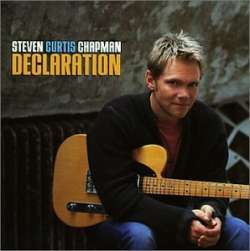
Recently I posted my thoughts on the problem I see with people so addicted to the small screen that they almost miss the wonder of living in a wonderful world full of amazing 3D people! (Is your Smart phone making you dumb?) Steven Curtis Chapman wrote in a similar vein in the song “See the Glory” except that he speaks of the tragedy of missing God’s amazing grace: “The wonder of his grace should take my breath away, I miss so many things when I’m content with playing gameboy sitting in the middle of the grandcanyon. . . “

steven-curtis-chapman-declaration-lyrics-4a1cNow while it would seem ridiculous to literally play your gameboy in the grand canyon, I’m sure it has been reality for some parents with bored kids on holiday. But figuratively speaking we all have plenty of distractions and thoughts and habits that prevent us from being truly in awe at the grace of a loving God who would lay down His life for us!  Sometimes I have ‘awoken’ with a start as I realised that I was treating the grace of God so lightly! Though I have the privilege of reading the bible in my language, of sharing with Christ’s Body and witnessing the work of the Spirit transforming the lives of people around me – I sometimes forget the AMAZING nature of what I see. I almost forget the wonder of my own salvation, that I am a citizen of heaven, a co-heir with Christ. Only by the renewing of my mind in His word can I come back to that point of wonder once more. (Romans 12:2) Oh, that we would let God’s word wake us up, daily, to see the glory of His work in the world, and in us.

SEE THE GLORY

I never did like the word mediocre, I never wanted it to be said of me, oh, no
Just point me to the job and I’d go over, over, Looking for the very best that could be

So what is this thing I see going on inside of me?
When it comes to the grace of God sometimes it’s like

I’m playing Gameboy standing in the middle of the Grand Canyon
I’m eating candy sittin’ at a gourmet feast
I’m wading in a puddle when I could be swimming in the ocean
Tell me what’s the deal with me, wake up and see the glory

Ever star in the sky tells his story, And every breeze is singing his song
All of creation is imploring: Hey, come see this grand phenomenon
The wonder of his grace should take my breath away
I miss so many things when I’m content with playing

Gameboy standing in the middle of the Grand Canyon
Or eating candy sittin’ at a gourmet feast
Or wading in a puddle when I could be swimming in the ocean
I know the time has come for me to, wake up and see the glory
Wake up and see the glory

How could I trivialize it
This awesome gift of Gods grace?
Once I have come to realize it
I should be speechless and amazed

Wake up and see the glory
Open your eyes and take it in
Wake up and be amazed
Over and over again

Songwriters Caleb Chapman;Steven Curtis Chapman [Ephesians 1: 18; 2 Corinthians 4: 6, 6: 1]
Album: “Declaration” (2001)

You may also like:

Angels long to understand the story of grace           An unwasted life makes much of Jesus
angel starall things new