Now Go, Be the Church

“Don’t think of church as an address or location . . .
but as something deployed.

Don’t think of it as a place you are for an hour each week, but rather WHAT YOU ARE every day of the week.
The Church is the hands and feet of Jesus. . .
Now Go, be the church.”

church has left the buildingThis comes from a great 1.5 minute clip from Igniter Media. We have used it in our church services, when plenty of people were around who don’t normally come to church, or know what it means to follow Jesus. It’s also a good reminder to all of us, of what church is, and isn’t. Hope you can find a use for it. Blessings! (Click link below to watch the clip.)

http://www.ignitermedia.com/products/2202-this-is-church#

You may also enjoy:

Why Men have stopped singing in Church

Our Glorious Capital ‘C’ Church

God knew what He was doing when He made “church”

church isYesterday was the first Sunday in years that I didn’t make it to a service at my church. There’s nothing like a bit of bronchitis to keep you at home. And the more I think about it, the more I am convinced that God really knew what he was doing when he established the “church” and called us not to forsake meeting together (Hebrews 10:25).

Without that regular meeting together with other Christians, both on Sundays and at other times through the week, it is easy to become extremely self-focused. (Well that’s what I found out!) We forget the bigger picture, where God is holding the circumstances of both our lives and the universe in His strong hands. Without that frequent encouragement and challenge from God through His word, and His other children, your perspective can go extremely awry.  God lives in us together, through His Spirit. Being a lonely ‘coal’ away from the collective ‘heat’ of others makes you forget the strength and power of the living God that is in us together. We are part of the Body of Christ, the gathering of Christ’s followers, and like all bodies we function best when we are being used, when we are active. It’s hard for the body to be active if parts are missing and isolated.

Being part of the Body is a privilege, despite the fact that we will struggle at times to treat each other as Christ would. Yet this is God’s design for growing and strengthening us. As we rub shoulders with other saved sinners we learn to bear with each other’s imperfections, in love. Going to church is so good for us because it gets our eyes off ourselves (like Peter in Matthew 14) and onto the excellent One who holds all things together. He knows us by name and holds our head above water. He knows that our greatest happiness comes from pouring our adoration towards Him!

“God knows who He is. He knows what He’s worth. And He knows the best thing He can give us is Himself. So in calling us to prize Him above all else, God is both gaining the praise that is rightfully His alone and causing us to gain the greatest treasure we will ever know. God is not an egotist seeking more than He deserves from us. Rather, He is God, choosing, in worship, to reward us with Himself.” (Louie Giglio –  “The Air I Breathe” 2003, p.31)

When we see ourselves as part of the Body of Christ, we see ourselves as something greater than ourselves – something designed by the Undescribable Merciful one True God!
I have a number of Christian friends who for various reasons are unable to share regular time with a church family. This has challenged me to consider how we can be better at including those who find themselves in this situation – even those within our church family who are unable to gather with us regularly. The church* is the people and it does not have to be contained by walls or geography.
On the other hand, if you are the thing that is keeping you from being part of a church family, don’t let fear or geography or travelling time keep you away. Don’t miss out on the thing that will grow your faith and confidence in God, that will allow you to give and receive encouragement, to sharpen others and be sharpened in Christ, to publicly declare the praises of Him who brought you out of darkness into His wonderful light. Praising God is so good for us! Gathering together is even better!

I’m really looking forward to next Sunday when hopefully this sickness will not stop me getting to church! Being part of the gathering will be sweet medicine, without the nasty side effects of what I am currently taking!

Nb. If you want to read more about Suffering or Sickness visit these other posts I have written:
Book review: How to Suffer Well
Lessons from the tissue box

* By church I don’t mean any particular modern form of the church, merely the gathering of Christians, which began a few millennia ago, in the first century AD. This practice of gathering is one huge common denominator we have with those who first called themselves Christians.

God graciously works through the weak and unimpressive

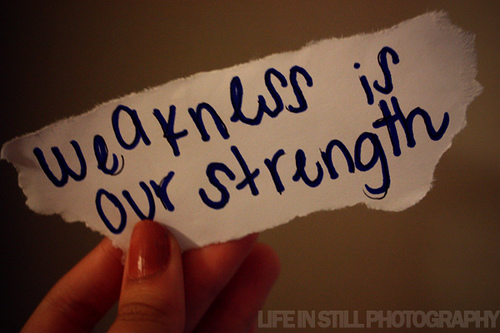
weaknessI’m sharing today something encouraging I found over at the Blazing Center blog. If you want to read the whole post you can visit there, but this is the heart of it:

“God often does his most powerful work through those who are weak and unimpressive.

John Flavel says:

How the weak have been used for the good of the church! Christ did not choose eloquent orators, or men of authority in the courts of kings and emperors, but twelve poor labourers, and fishermen. This is the most ridiculous course that can be imagined, in appearance, for such a design. And yet, in how short a time was the gospel spread in all the kingdoms of the world. (Voices From the Past, 140)

Jesus established his kingdom on the shoulders of fishermen, tax collectors, and prostitutes. He chose Peter to lead the charge out of Jerusalem. Peter, the guy who denied Jesus three times. Peter, the guy who gave up gospel ground to the Judaizers. Peter, the guy whose mouth seemed to always run ahead of his brain.

Jesus could have chosen the most articulate orators as his spokesman. He could have chosen great war heroes, or political superstars. He could have built a campaign of shock and awe and power. Instead he chose fisherman. Guys with cracked hands, plain speech, minimal learning, and the constant aroma of raw fish.  The disciples were not power players in the Roman world.

God will not allow us to receive any of the glory, so he builds his kingdom through and in spite of our weakness. If your worship team is mediocre, don’t freak out. Instead, work toward excellence and trust that God will use your weak, halting efforts for his glory. If you stutter and stammer when sharing the gospel, don’t get discouraged! Seek to improve your gospel communication, but more importantly, trust God to use your stutters and stammers to bring salvation to the lost. If your sermons feel like duds, don’t sink into despair. Improve your sermons and improve your confidence in God. If you feel like a constant parenting trainwreck, seek to grow in your parenting and trust God to use your trainwreck efforts to work in your children.”

You Are A Theologian

theology-mattersFound a great post on a topic I have been meaning to write about myself over at Worship Sense. It talks of something about which I’m thoroughly convinced : that church music has a huge role to play in teaching good theology to the Body of Christ, and growing people in faith. I hope it will prove to be great encouragement to your music department! Enjoy.  . .

“In spiritual circles, few people are seen as intimidating as often as theologians. Theologians are scholars. Studied. Educated. Cultured. And they wear old-school glasses, vests and wool sweaters as they sit in an aged leather wingback chair in front of a stately, oversized bookcase in a home library with loaded oak bookshelves lining all of the walls, all the way up to the ceiling. (Whew . . . that was a mouthful!) Okay, maybe not all of them, but we like to think they do. The point is, when we hear the word “theologian” often we get an image in our minds that, at least in some way, represents the description above.

So what if I told you that YOU are a theologian?

Well, if you’re a worship leader and/or worship songwriter, you are! Sure, perhaps you aren’t necessarily discovering any brand-spankin’ new theology. But, you are writing and/or choosing worship songs that speak a theological truth. You are communicating theology to your local church. This is why one of the most important things you do as a worship leader is pick out the songs for the weekend setlist.

Sure, key changes, arrangements, transitions, dynamics and flow are all important parts of what we do as worship leaders, but none of those things matter if we aren’t singing truths in our churches. It is widely known that ideas and messages are retained better in our brains when presented in song than by spoken word (a sermon). This is because our brains interact with music differently, thereby establishing a stronger retention of what we heard/sang. Why is this important?

It’s sad to say this, but most people don’t remember the sermon they heard last week or this morning, in some cases. Now sure, these days we have recorded sermons, sermon notes, etc. All of these allow us to go back and go through the messages again. However, overall there is a limited shelf life on the specific messages that are preached every week (hopefully the themes and lessons are learned and continue on!).

With music, however, things stick around a bit longer, including the lyrics of the songs themselves. These lyrics are a biblical message, just like your pastor’s sermon. The only difference is that yours is set to a music, may have some repetition, and may be more like 4 to 5 mini-sermons during a typical worship set. This is a big deal!

Why? Because what you sing in your worship times is going to stick in people’s hearts and minds longer than the sermon does. Therefore, it’s imperative that we sing songs that contain solid theology.

We basically have three options with the songs we sing at  church:

1. Lyrics that present false, inaccurate theology.
2. Lyrics that aren’t false, but are theologically weak and don’t really say anything.
3. Lyrics that present a solid biblical truth with rich theology.

PLEASE stay away from songs in category one. As for category two, there is nothing wrong with this category necessarily, but there are too many songs that fit this mold.

I challenge you to shoot for the third category of songs. Pick songs that are not only correct, but really drive home messages that your congregation needs to hear. One helpful way that I’ve found to pick more songs in category three is not just listening to the song on the CD (with the fancy production), but taking the time to sit down and read the lyrics without the music.

This is no easy task, but it’s vital! You are a theologian. A musical theologian. Don’t take that responsibility lightly. Invest the time into being intentional about the words that your congregation sings each week.”

Some unusual thoughts on parables and miracles (Message of Mark part 3)

peterIn studying Mark’s Gospel narrative I’ve been challenged to consider a few familiar things in a new light.

1. Parables
These stories were the main form of Jesus’ teaching. They are actually a veiled way of teaching spiritual truth, that draws some people closer to Jesus in faith, and turns others away in hardness of disbelief. This is a hard thing to grasp. You would think Jesus should speak in simple stories that clearly reveal who he is and what he is going to do . . . but no. And perhaps this is the point.
The Kingdom of God is not going to be handed to people on a platter. Jesus wants people to exercise faith! Jesus wants those who have “ears to hear” to draw near and gain understanding of the secrets of the Kingdom, to draw near in faith. To those who do this, they receive greater understanding. Their faith increases! After Jesus told the parable of the sower and the soils (Mark 4), he took the disciples aside to explain:

10 When he was alone, the Twelve and the others around him asked him about the parables. 11 He told them, “The secret of the kingdom of God has been given to you. But to those on the outside everything is said in parables 12 so that, ‘they may be ever seeing but never perceiving,

    and ever hearing but never understanding;
otherwise they might turn and be forgiven!’

While the Sower parable reminds us that there will be mixed responses to the gospel, there will be a certain harvest. Mark 4 contains several other parables of the Kingdom, explaining through brief stories or sayings the type of Kingdom he ruled over.

The Lamp: no matter what people think of Jesus now – as obscure, insignificant, foolish – one day he will be seen in power and glory.
The Seed and the harvest: The word of God will advance and grow Jesus’ kingdom by God’s hidden power. The harvest is guaranteed and will come suddenly.
The Mustard Seed and the Tree: The Kingdom of God may seem small, beginning in obscurity, but one day it will be see for what it is – the greatest Kingdom of all.

2. Miracles
While people think that if there were more miracles today there would be greater numbers of people following Jesus, if you look at what happened in Jesus day, this is unlikely. Although crowds swarmed around Jesus (and made his teaching ministry more difficult) the miracles he performed did not cause faith to appear. When most miracles occured it was because the person had faith in the first place. The faith of the men who brought their friend on a mat (Mark 2), the faith of the bleeding woman who touched Jesus & the faith of Jairus whose daughter was raised to life (Mark 5) – in all of these faith came first.
We also see that despite witnessing miracles most people still do not understand or draw near in faith (which is the case for the disciples several times!). Rather, the faithful are the ones who cut through the crowds to draw near to Jesus, having faith in his ability to restore them. Each time, Jesus directs their faith to greater knowledge of Himself.  Miracles are not the cause of faith, but Jesus uses them to increase a person’s understanding of him and to provoke questions.

Just thought you would like to know! It certainly changes the way I read the Gospels to appreciate these!

Ps. In searching for a suitable imappage I found a link to an iPhone/iPad app called “Parables and Miracles“. Check it out if you have children and you don’t mind giving them another reason to use your “i” device!

Message of Mark Part 1: Kingdom
Message of Mark Part 2: Titles of Christ in the midst of a whirlwind

Songs to GROW Women by . . .

.facebook_-22058451Great to have an audience of interested people who can consider my song selection for a Women’s conference in July, called GROW. Speaker Jenny Salt from Sydney will no doubt have some ‘salty’ words to share, teaching from the book of Numbers to show God’s trustworthiness and to encourage us to count on God, holding on to Him through all of life’s jouney. Themes include: trusting God, His faithfulness, taking Him at his Word, resting in God’s promises which are fulfilled in Jesus, blessings, consequences of sin, God’s holiness.

Here is my initial shortlist of songs, keeping in mind that we are hoping to cover a wide range of ages and denominations, mixing well known and new songs.

When Peace like a River (Hymn, aka It is Well) – connected with I will Rise (Chris Tomlin)
Hymn – Great is Your Faithfulness
My Hope (Nothing will change, if all the plans I make go wrong… by Paul Baloche). We taught this one last year at GROW.
Desert Song (This is my prayer in the desert – quite appropriate for Numbers, by Brooke Fraser)
O the Deep Deep Love of Jesus (Bob Kauflin’s hymn arrangement) – will do as item in 3part harmony, to teach it to the group.
Mighty to Save (Hillsong).
See the Man (Trevor Hodge) – this is a great one for see howing God’s promises are fulfilled in Jesus!
No Other Name (Trevor Hodge)
10 000 reasons
(Bless the Lord O my Soul . . . Chris Tomlin)
Blessed be your name (Matt Redman)

If you have any thoughts for other songs that tie into the theme perfectly, please comment below. I hope you can also find a new song or two above!

The blessings of multi-generational music teams

top-10-offensively-young-musicians_h
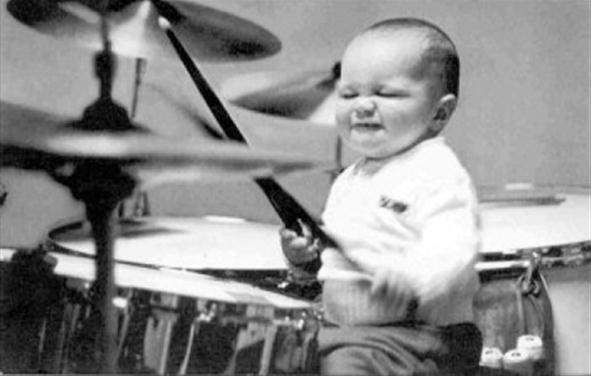
Though some may think church musicians must be either young and trendy or qualified professionals, people of all types and ages have different and valuable things to contribute to a church music team (even that baby drummer could add some great percussion!). Older, non-professional church musicians have many years of valuable experience, of knowing what works and what doesn’t, knowing how to create good arrangements of songs on the fly, and knowing how to work together effectively with others.
This last one is probably the most valuable asset! People who have been Christians and serving for a while (in an area which sometimes tempts us to all kinds of self-serving attitudes) have valuable insights, of thought and action, to teach newcomers to the faith and music ministry. Lots of really good discipling can occur in the context of regular team practices.
I must say I am blessed to be part of a team of around 30 people, with several representatives of each ‘decade’ from teens right through to people in their 60s.
One of my greatest joys is to learn from and teach others in music ministry. Often the learning comes from all directions, regardless of age.
If you are in the ‘older’ experienced church musician category, I would encourage you to seek out some younger players to mentor, not just in the mechanics of playing or singing, but in developing a mindset of music as Gospel ministry, where leaders are servants, and selflessness is the key.
Blessings to you in your ministry!

Sharing the rich, indwelling Word (Colossians 3:16)

Bible-28“Let the word of Christ dwell in you richly as you teach and admonish one another with all wisdom and as you sing psalms, hymns and spiritual songs with gratitude in your hearts to God.” (Colossians 3:16)

I have really been looking forward to this verse in the Three Sixteens series, because it identifies a strong connection between music and grace, my two favourite topics! When we make the effort to speak or sing the ‘Word of Christ’ to one another, we are showing grace because it serves to build others up in their faith. This is such an important yet sometimes overlooked aspect of praising God together. The horizontal encouragement that is gained from enthusiastic congregational praise is priceless! Praising God brings us untold blessings, both individually and together as the growing body of Christ.

But what is the ‘word of Christ’, you may ask?

Put simply, Paul most likely means the ‘teachings of Christ’, the doctrine of grace through faith in Jesus Christ, which at first was passed on as spoken words. This exhortation comes in the context of a letter which emphasises the person and work of Christ, a message that is centred on the Word of Truth, the good news of the gospel of Jesus.

This WORD is to have its gracious and glorious way in our lives, both individually and in community, as Christ shapes us to be more like himself. When we gather to listen and bow to the authority of Christ’s living Word, His word dwells richly in us. This Word indwells us by the Spirit. Such a glorious but unseen mystery this is!

John Piper speaks about the important role God has given each of us, to be speaking in a way that helps others persevere in the faith. In his message on Hebrews 3, Piper focuses on verse 13, where the writer says we must “encourage one another daily, as long as it is called “Today,” so that none of you may be hardened by sin’s deceitfulness.”

“God has designed his church so that its members endure to the end in faith by means of giving and receiving faith-sustaining words from each other. You and I are the instruments by which God preserves the faith of his children. Perseverance is a community project. Just like God is not going to evangelize the world without human, faith-awakening voices, neither is he going to preserve his church without human faith-sustaining voices. And clearly from the words, “exhort one another” (verse 13), it means all of us, not just preachers. We depend on each other to endure in faith to the end.”  Read more

We Christians are to be tactfully and thoughtfully challenging one another with the Word of Christ. Singing psalms, hymns and spiritual songs is but one way to do that… But what a great way to do it! And this is why it is so important to choose songs with lyrics that are true to the Living Word of Christ, rather than just songs that create a warm fuzzy feeling amongst us, or have a catchy rhythm.

How good it is that our times of corporate praise and worship give opportunity to speak the words of Christ to one another in song. Such an encouragement God’s people can be to one another!

You may also enjoy:

Sharing the Perspicuity of God’s gracious Word

The Blessed and God-breathed book (2 Timothy 3:16)

From the Gospel Coalition: 7 Arrows for Bible Reading

Music ministry training paper – great resource for your team

guitarsIf you are a leader of a church music team it is helpful (and wise) to think of your ministry as a training ground for growing ‘servant hearts’ in people generally. You want your musicians to be willing to serve God in any area of gospel ministry, not just music. Simply because a person has musical ability then that should not be the extent of their service. Rather it is simply one way they can serve the body of Christ, and further develop an attitude of being ‘other-person-centred.’ This is certainly the example Christ has called us to follow.

In the link below you will find a great resource, a four page ministry discussion paper to work through with those your music team:
Music Ministry Training Paper
This paper explores a wide range of topics, from the role of the musician in the team, to the role music can play in ensuring the Bible stays at the centre of our activities. It looks at how church music can help ‘the Word of Christ’ dwell richly in the body of believers. It also touches on tricky issues like personal pride and motivation, committment to church and song-leading.

The paper could be used as a series of four discussions/studies, or two, or one, depending on the time you can afford to spare. It could even be something you give out ahead of time, then gather to discuss. Whichever way you do it, it should provoke some really useful discussion (and hopefully right thinking) in an area of serving which can easily become a self serving ministry, or Me-nistry, as some have described it.

If you want more indepth material to work through, check out my post on the bible studies called SING FOR JOY from Matthias Media.

sfj

How church music can welcome newcomers.

New SongThere are many great ideas out there for how best to choose songs for your Sunday services, the order you put them in, and the types of songs you choose. (And if all else fails, tip over the filing cabinet and choose the first four you pick up.) But recently I picked up a new great idea: purposefully limit your song repertoire for a short period of time so as to make newcomers to your church feel more included. Let me explain.

You know how it is when you are in a new church – and you know none of the songs? You stand there looking awkward, and the whole exercise reminds you “you are a newcomer”! Unless you work really hard to get your eyes off yourself and onto the meaning of the lyrics, this can be quite isolating. Imagine how much more so for a new Christian or someone who is checking out church for the first time. Imagine too how it feels when all those people around you are belting out “How Great Thou Art” which they have sung from infancy – and you just silently stand and wonder why ‘they’ are praising graphic design (“Art”).

How can music help in this scenario?

Well, if you deliberately limit your playlist to a small rotation of songs for a term (around 10 weeks) this will allow newcomers (providing they come back next week) to quickly become very familiar with some of the church repertoire, as you will be repeating them more often. They won’t have to wait six months before they get to sing the song again. If you repeat one or two songs from the previous week in each subsequent service it will make a real difference to how included new comers feel (“Hey, I know this one, we sang it last week”). Even better, if you build a culture of learning a new song nearly every week then this becomes a great way to put your newcomers in the same boat as everyone else. They will feel more part of the group because everyone is learning together.

It also helps to choose songs that (predominantly) sound like contemporary mainstream music, which will sound familiar (in terms of the rhythm and the mix of instruments) for your newcomers.

So how do you find enough new songs?
Well of course you can start by reading my blog – but you will find many more resources at: CCLI, Worship Together, Gettymusic, Sovereign grace music and churchmusictoday……to name but a few.
Buy lots of CDs from Sovereign Grace and the Gettys and EMU music (from Australia) and you will get some great ideas for singable songs. Sovereign Grace have all their lead sheets free online and I doubt you would ever exhaust such a wealth of great songs!