6/7 Victory (The Significance of Jesus’ Final Words on the Cross)

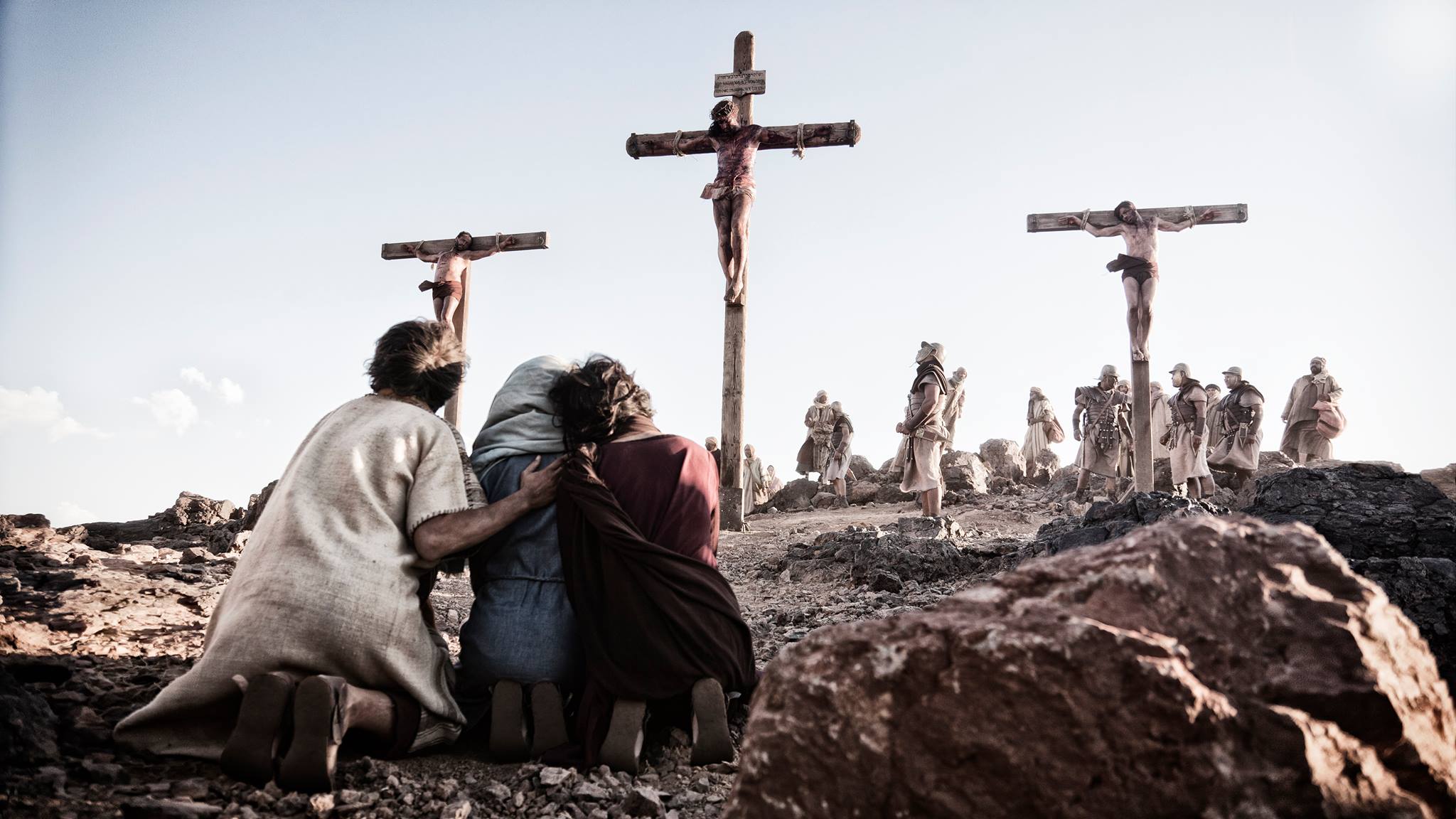
When he had received the drink, Jesus said, “It is finished.” With that, he bowed his head and gave up his spirit.” John 19:30

Though I didn’t complete this series before Easter Sunday, it seems fitting that the remaining two ‘sayings’ of Christ on the Cross are victorious words of completion and restoration. It is within the power of these final two sayings that we live and breathe, where life eternal begins. We are His because His work is finished. We can have complete confidence that Jesus is now restored to the Father, the living, Risen King who conquered death and sin.

Pink explains the power of these words:
“‘It is finished.’ This was not the despairing cry of a helpless martyr; it was not an expression of satisfaction that the termination of his sufferings was now reached; it was not the last gasp of a worn out life. No, rather it was the declaration on the part of the divine Redeemer that all for which He came from heaven to earth to do was now done; that all that was needed to reveal the full character of God had now been accomplished; that all that was required by the law before sinners could be saved had now been performed: that the full price of our redemption had been paid” (Pink, p.110).

As we have looked at in the previous five posts, Jesus’ death was no accident. It was a purposeful and loving rescue plan which culminated in the Cross – the design of a loving Father. In this moment close to death, Jesus sees that he has “finished” or made complete all these:

  1. Hundred of prophecies about his saving work, by his death.
  2. His sufferings.
  3. The goal of His incarnation (coming to earth inhabiting a human body and dying as a man).
  4. The atonement (the reconciliation of God and man, sins taken away, sin debt paid).
  5. The removal of our sins, which stands between God and us (Christ took them into the desolate land where God was not).
  6. The Law’s requirements.
  7. The destruction of Satan’s power.

Pink then asks us the most important question: “reader, do you believe it? Or are you trying to add to the finished work of Christ to secure the favour of God?” (p.125). Let’s take some time to reflect on this before we leave Easter celebrations. May we know that our own efforts are as filthy rags. It is Christ’s righteousness that matters.

“All that a holy God requires has been done. Nothing is left for the sinner to add. . . His finished work is the ground of all our hopes” (p. 121)

May the Lord show us where we are trying to bring our own “righteousness” to Him (and others), instead of depending on Christ’s finished work. This song from the Passion (2019) well sums up all that Christ has “finished” for us. What amazing grace!

See you soon for the final post. (Please like or subscribe below.)
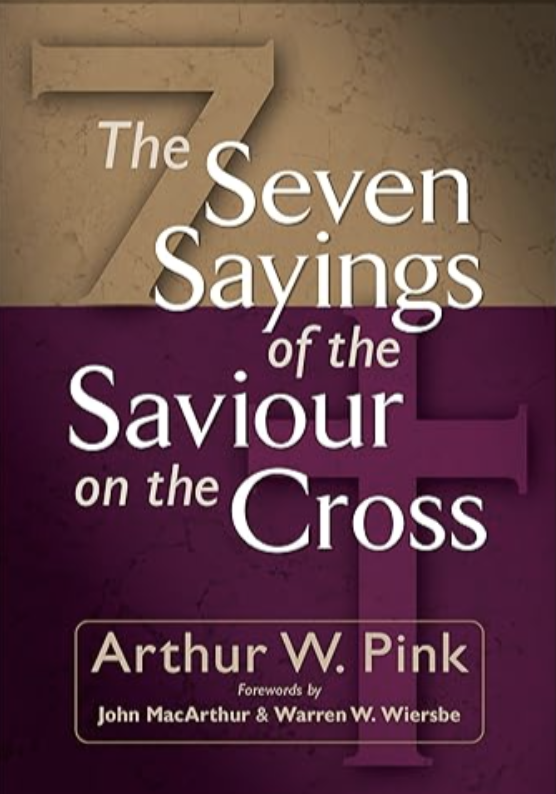
This series draws on the structure and ideas in “The Seven Sayings of the Saviour on the Cross” by Arthur W. Pink, 1984, Baker Book House. Direct quotations are indicated. AI was NOT used in the creation of this Blog post.

Main image credit: https://www.betheltempletwinfalls.org/devotionals/2020/4/10/it-is-finished

5/7: Suffering (The Significance of Jesus’ Final Words on the Cross)


If you have just joined me for this series exploring Jesus’ final words on the Cross, please see my previous posts (links below). Jesus’ words speak of salvation and forgiveness, revealing His great compassion. They also show his great anguish in being separated from the Father by our sin. But, most importantly, his words reveal who He is and what He is doing.

Today we look at the fifth and very short statement Jesus makes: “I thirst” (John 19:28). These words, spoken close to death after three hours of darkness (and six hours on the Cross), express physical suffering. But his actual thirst is not the only reason for saying them, as the surrounding verses reveal: “Later, knowing that everything had now been finished, and so that Scripture would be fulfilled, Jesus said, ‘I am thirsty.’”(NIV)

Jesus’ Humanity

As theologian Charles Spurgeon explains, there are multiple physical reasons for Jesus’ thirst: ” . . . [it] was caused, perhaps, in part by the loss of blood, and by the fever created by the irritation caused by his four grievous wounds. The nails were fastened in the most sensitive parts of the body . . . The extreme tension produced a burning feverishness. It was pain that dried his mouth and made it like an oven, till he declared, in the language of the twenty-second psalm, “My tongue cleaveth to my jaws. (Charles Spurgeon Sermon 1409.)

Pink believes that “I thirst” was not an appeal for pity, nor a request to alleviate his sufferings: “It gave expression to the intensity of the agonies He was undergoing” (p.98). At this point, Jesus thirsts both physically and spiritually, separated from the Father, longing to be reunited with Him. “His thirst was the effect of the agony of His soul in the fierce heat of God’s wrath. It told of the drought of the land where the living God is not” (p.98).

The Messiah who fulfils Scripture

Jesus expressed both the desire and knowledge that Scripture must be fulfilled. His phrase “I thirst” is the specific fulfilment of Psalm 69:21 (one of the many Messianic Psalms – we are just scratching the surface!). Jesus knew the predictions of previous verses were already fulfilled. For example, he had:
* sunk in the “deep mire”
* been hated “without a cause”
* borne reproach and shame
* become a stranger to his brothers
* cried to God in His distress
Nothing remained except the offer of gall and vinegar. For this reason, Jesus says, “I thirst”. Pink sees Christ’s deep reverence for both the Scriptures and his role as our Saviour, who must bow to the authority of the Father’s word in both life and death. “He hung on the cross for six hours and passed through unparalleled suffering, yet is His mind clear and His memory unimpaired. . . He remembers there is one prophetic Scripture unaccomplished. He overlooked nothing. What a proof is this that He was divinely superior to all circumstances!” (p.100).

Jesus, our Saviour, thirsts on the Cross to fulfil his role as the promised Messiah. He is obedient to His Father and to Scripture, to the drink the cup of wrath that we deserve. And though he thirsts on the Cross, he offers us “living water”. We need never thirst again.

These words from John 4 bring us this assurance: Jesus answered, “Everyone who drinks this water will be thirsty again, but whoever drinks the water I give them will never thirst. Indeed, the water I give them will become in them a spring of water welling up to eternal life.” This the power of Christ’s death for us!

See you for #6, Christ’s words from John 19:30: When he had received the drink, Jesus said, “It is finished.” With that, he bowed his head and gave up his spirit.”

Please also enjoy this beautiful modern Easter Hymn (2005) written by Keith Getty and Stuart Townend

This series draws on the structure and ideas in “The Seven Sayings of the Saviour on the Cross” by Arthur W. Pink, 1984, Baker Book House. Direct quotations are indicated. AI was NOT used in the creation of this Blog post.

Main image credit: https://resurrectionopc.org/i-thirst/

3/7: Affection (The Significance of Jesus’ Final Words on the Cross)

If you have just joined me for this series exploring Jesus’  final words on the Cross, please see also my previous two daily posts. This series combines key ideas from Arthur W. Pink’s “The Seven Sayings of the Saviour on the Cross” with my own observations and highlights.

Jesus’ first two phrases focus on forgiveness (for those who know not what they do) and then salvation (for the repentant thief on the cross, who would certainly share paradise with Jesus). We looked at Christ as our substitute, who dies in our place – who rescues repentant sinners to forgiveness and eternal life.

III. Words of Affection

The third set of words Jesus utters is recorded in John 19:26-27. They are a compassionate request of two people who stand by the Cross, a request which ensures their relationship and care into the future. These two are Mary (his mother) and John, the disciple. In Christ’s most dire moment, his focus includes providing for the earthly needs of those he loves.

When Jesus saw his mother there, and the disciple whom he loved standing nearby, he said to her, ‘Woman, here is your son,’  and to the disciple, ‘Here is your mother.’  From that time on, this disciple took her into his home.”

This request (and the response noted) reveals the heart and faithfulness of all three involved. There is much to unpack, but I will focus on just a few points.

  1. Jesus honouring his parent
    Amidst the sufferings of the Cross, Christ thinks of the woman who loved him best, whom he loved. “This is one of the greatest wonders of His person – the blending of the most perfect human affection with His divine glory” (Pink, p.68). He knows Mary is a widow in need of provision and home. He sees her present and future needs and commits her to his most trustworthy and dear friend, John. Here, Jesus is the perfect man giving the perfect example of the care that we are all to show our parents, especially in their later years. The command to “Honour thy parents” is vividly portrayed in Christ’s last words of care for his mother. Pink sees this as a stark reminder of the fifth commandment, embedded in the sufferings of Christ. He says that to honour our parents with care, attention, provision and love is a “sacred duty” which Christ displays from the Cross.

  2. Mary needed a Saviour and stood by him
    The Mary of the Bible is not the revered “Mother of God” who is put on a pedestal. In fact, never once in the Bible is it recorded that Jesus called her ‘mother’. So to address her here as ‘woman’ is not a demeaning statement, but it is to remind us that she is a member of a fallen race, a woman in need of a Saviour. She has faith in her Son as Saviour and understands (probably) better than the disciples that he must die to deal with our sin debt. “Before the birth of Christ, she declared ‘My soul doth magnify the Lord, and my spirit hath rejoiced in my Saviour(Luke 1:46-47) . . . And now at the death of the Lord Jesus she is found at the Cross” (p.67). Pink also reminds us of the courage and strength Mary shows in this moment, to stand for the full day and watch her Son endure the agony of the cross – and breathe his last. “Who can measure those hours of suffering as the sword was slowly drawn through Mary’s soul? (See Luke 2:35) . . . She suffered in unbroken silence . . . in profound desolation of spirit” (p.57). Yet John was by her side.

  3. What better choice than John?
    Of all the disciples, the one who returned to the cross was John, the disciple ‘whom Jesus loved‘. Clearly there was a great level of affection and friendship between them, so it was natural that after the other disciples fled in fear, John was the one who would return. Perhaps he understood the Saviour almost as well as Mary, so it was a fitting choice to hand them into each other’s care. There was “none so well suited to take care of Mary, none whose company she would find so congenial, and . . . none whose fellowship John would more enjoy” (p.65). Pink further explains why leaving John in the care of Mary who knew him best was so wise. He points out “that a wondrous and honorous work was waiting for John. Years later the Lord Jesus was to reveal himself to this apostle in glorious apocalypse” (referencing the visions of Revelation) . . . How better then could he equip himself than being constantly with her” (Mary), who knew Jesus so intimately for 30 years?

Join me for 4/7 next time, the words of Christ in Matthew 27:46. Blessings!

This series draws on the structure and ideas in “The Seven Sayings of the Saviour on the Cross” by Arthur W. Pink, 1984, Baker Book House. Direct quotations are indicated. AI was NOT used in the creation of this Blog post.


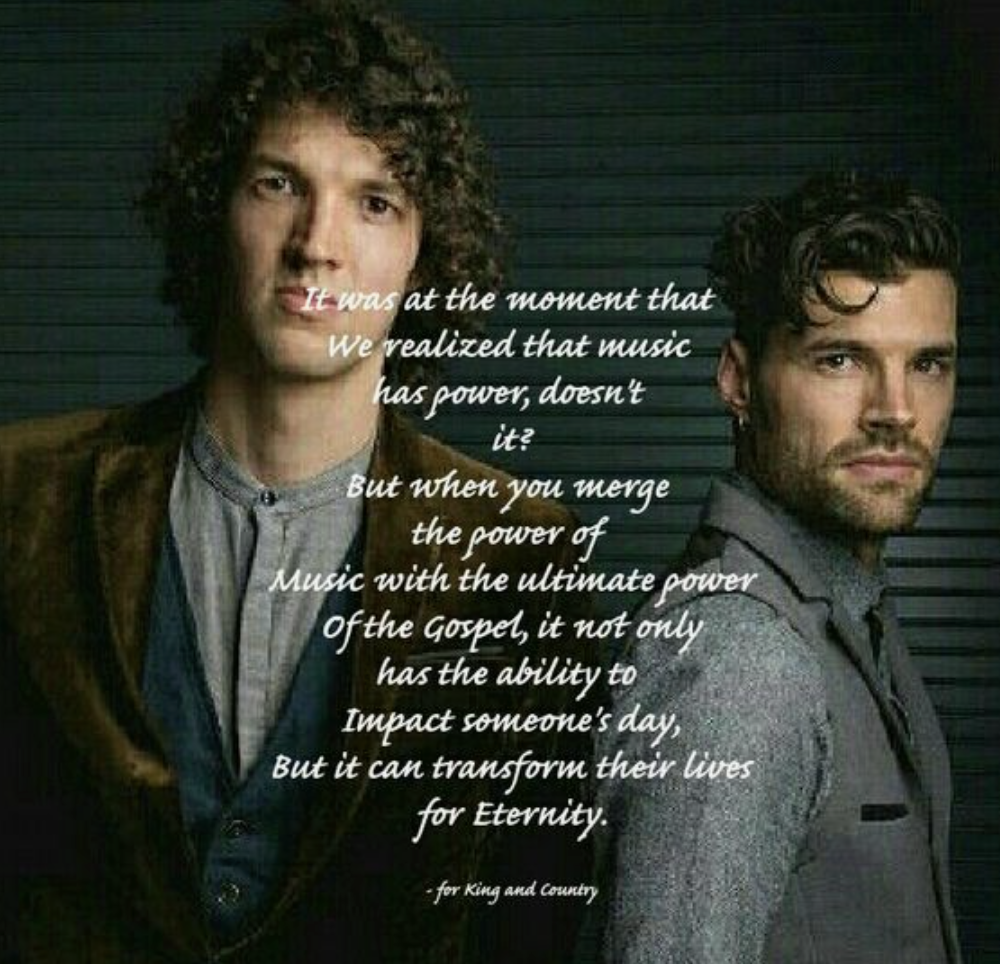
What are we waiting for? (For King and Country)

I’m enjoying the new album from For King and Country! This Youtube clip is from a few days ago. 40 minutes of time well spent. The messages of their songs are quite beautiful!

From the clip details:

We’re bringing our brand new album straight to your living room! Join us for ‘WHAT ARE WE WAITING FOR?’ THE WORLDWIDE SPECIAL: a global streaming event from the Mojave desert🏜🎶 in partnership with Convoy of Hope benefiting Ukrainian refugees.

Donate to support Ukrainian refugees by visiting: convoy.org/forUKRAINE or text to give “forUKRAINE” to 68828 Stream/download WHAT ARE WE WAITING FOR?: https://forkingandcountry.lnk.to/what…

https://www.pinterest.com.au/jeyanayagam/

Love Me Like I Am (King and Country)

LYRICS (excerpt)

I am a little unstable

Loose wires always getting tangled now

I am a little bit difficult I can be a little self-critical now

I am a little unable

To put all my cards on the table now

But somehow

You’re still with me

It’s amazing that

You can Love me like I am

And even when I can’t

You still love me as I am

Oh, I don’t know how You do it

And I know I put You through it

It’s amazing that You can

Love me like I Love me like I am,

ooh You love me like I am

Gray Havens: Tread the Dawn

Gray Havens: Tread the Dawn

Greetings all, just quickly want to share an album I’m now playing on repeat. It is based on CS Lewis’ writings, with overtones of Narnia! There is so much to explore. Enjoy!

https://lotr.fandom.com/wiki/Grey_Havens

Messiah – the long-awaited precious promise

Ready for your new favourite Christmas song? Here it is.

From the album, This Christmas, by Francesca Battistelli (2020)

Lyrics:

Long awaited precious promise
Son of God and son of man
Heaven’s glory in a manger
Has come to us in Bethlehem

Messiah
Messiah
A baby born to save us all
Messiah
Messiah
On our knees we fall

All we longed for, all we needed
Shining in this child’s eyes
Hope forever, death defeated
Because of this one holy night

O come let us adore him
O come let us adore…

Day 5/12 – Salvation is Born (Christmas Songs Countdown)

This has to be one of the most beautiful (and unfortunately less well known) Christmas songs I know, which was published in 2005 by Sovereign Grace Music. I arranged it for a three or four part choir with soloist at some point during the Noughties, and we performed it at our Christmas services. (If you are interested, I could probably find the score.) Enjoy this message!

VERSE 1
Come let us worship, come let us adore
Jesus, Messiah, our Savior is born
Carol His glory and sing His sweet Name
Offer a life of thanksgiving and praise
VERSE 2
Join with the angels proclaiming to earth
Join with the shepherds in awe of His birth
Join all creation rejoicing this morn
The glory of God-become-man has been born

CHORUS
Come, let us adore Him
Jesus, the hope of the world
Come, worship before Him
Christ, the Messiah has come
Salvation is born

VERSE 3
Prophets foretold Him, the Promise of God
The hope of Salvation and light of the world
Born in a stable and born as a man
Born to fulfill God’s redeeming plan

© 2005 Sovereign Grace Worship (ASCAP).

Salvation is Born by Greg Tulenko, sung by Shannon Harris from the album
“Savior: Celebrating the Mystery of God Become Man”
© 2006 Sovereign Grace Praise (BMI).

Christmas: The arrival of Jesus, the Mighty Warrior

Today’s post is an excellent excerpt from at post at The Blazing Center, entitled “Jesus is for people who hate Christmas.”

“That, ladies and gentlemen, is the true meaning of Christmas. Wherever Jesus goes he brings the reign of God! Christmas is ultimately about the kingdom of God coming to this sad, broken, sin-marred world. Christmas is ultimately about a baby who would grow into a mighty warrior – a warrior who would crush Satan, undo sadness, defeat death, and ensure that it would be always Christmas and never winter.

Listen closely. For just a moment, tune out the Christmas music and television commercials. Do you hear that slow creaking and cracking noise? It’s the sound of Satan’s skull being slowly crushed underneath the foot of our conquering Savior.

Now we suffer. Now we experience cancer and migraines and anxiety and singleness and sadness and loneliness and poverty. Now we are afflicted by sin and Satan and our flesh. But not always.

Ultimately, Christmas should give the most hope to those who hate Christmas. Things won’t always be this way. As it says in 1 John 3:8, “The reason the Son of God appeared was to destroy the works of the devil.”

Those are such sweet words. Christmas is a celebration of war! Jesus himself has declared open season on Satan. He came to destroy all the works of the evil one. He came to wipe away tears and heal broken bodies and lift up despondent hearts and drive out fear and destroy loneliness.”

Gracefully Broken

Enjoying this new Matt Redman song, from his latest album “Glory Song”