Why should I gain from His reward?

8128-ea_fathers_love how deep for us lyrics.pngYes, the Sovereign lord is coming in power. He will rule with a powerful arm. See, he brings his reward with him as he comes. He will feed his flock like a shepherd. He will carry the lambs in his arms, holding them close to his heart. (Isaiah 40:10-11 NLT)

Look, I am coming soon! My reward is with me, and I will give to each person according to what they have done. I am the Alpha and the Omega, the First and the Last, the Beginning and the End. (Revelation 22:12-13)

Sometimes even really great songs can become tired. People just get ‘over’ singing them and the impact and meaning is lost. It’s rare to find a song that endures very long these days! But this song is somehow different: How Deep the Father’s Love for Us (1995)

I remember when I first came across the Stuart Townend song. Its unusual time signature scheme (4/4 and 6/4 in alternate bars) coupled with beautiful poetry declaring the wonder of God’s love really gave the song a certain ‘X’ factor – and won me over! Perhaps for these reasons it has endured as a singable and meaningful song. Though it’s been around for almost two decades I’d say this song can still penetrate any stubborn heart and mind to see the beauty of our salvation afresh! (In case you somehow missed it, the lyrics are down below)

There is such rich theology in this song – but I’d like to focus on one intriguing line in verse 3:  “Why should I gain from His reward? I cannot give an answer. . .”

As we see in the passages above from Isaiah and Revelation, the Messiah, Risen Redeemer King, Jesus Christ turns up to rule bringing his reward with him, a reward which is his own flock of people, saved by His blood. These are the people the Father has given to Jesus, as His reward:
“My Father, who has given them to Me, is greater than all; and no one is able to snatch them out of the Father’s hand.…” (John 10:29)

How incredible that from Jesus’ perspective we are His reward, the people of God, sinners saved by undeserved grace! We cannot give an answer for why Jesus would die for us, for his enemies – we can only look with thankfulness that for the joy set before Him endured the cross, despising the shame, and has sat down at the right hand of the throne of God.” (Hebrews 12:12)
This is Jesus, our redeemer and friend! How deep the love of the Father to send his own Son for us!

HOW DEEP THE FATHER’S LOVE FOR US

How deep the Father’s love for us,
How vast beyond all measure,
That He should give His only Son
To make a wretch His treasure.
How great the pain of searing loss –
The Father turns His face away,
As wounds which mar the Chosen One
Bring many sons to glory.

Behold the man upon a cross,
My sin upon His shoulders;
Ashamed, I hear my mocking voice
Call out among the scoffers.
It was my sin that held Him there
Until it was accomplished;
His dying breath has brought me life –
I know that it is finished.

I will not boast in anything,
No gifts, no power, no wisdom;
But I will boast in Jesus Christ,
His death and resurrection.
Why should I gain from His reward?
I cannot give an answer;
But this I know with all my heart –
His wounds have paid my ransom.

Stuart Townend– See more at: http://www.stuarttownend.co.uk/song/how-deep-the-fathers-love-for-us/#sthash.jX205XY1.dpuf

Here are some links to learn more about the song:

http://www.worshiptogether.com/songs/songdetail.aspx?iid=577430

Don’t let the Word be strange – the Psalms included

psalms-59-16I had the privilege of leading music at a women’s conference in Brisbane last month, a conference called “Dazzled by Grace”. The speaker was Kathleen Nielson, head of women’s initiatives at the Gospel Coalition (USA). Her focus across three talks was how to read the Psalms in a way that allows us to drink deeply the beauty, poetry and truth they contain.
First she spent some time defining the Psalms, as:
*The beating heart at centre of God’s Word.
*The heart cries of God’s people: the thoughts, prayers and praises of people living in His story and seeking to trust Him through life’s ups and downs.
*Cries from a kingdom, the gathered people living under an earthly king, which points us right to God’s chosen perfect King, Jesus.

In addressing our modern difficulties in reading and appreciating the Psalms, Kathleen pointed to the fact that reading poetry has simply fallen out of practice in our culture. This was a regular practice in families for centuries gone by. They would sit around and listen to poetry, to appreciate the imagery and the repetition it contains. People would even hire poets to recite poetry for their dinner guests, and children would learn much poetry by heart. But now we live in a culture which is saturated not by poetic images, but Instagram, Facebook, Flash chat and the likes. We have trained ourselves through new technology to be addicted to cool graphics and images, through the multiple screens about us. So when it comes to the Psalms, their poetic form has become so foreign, so strange to us, something we are not used to reading.
This must really delight our enemy: “The devil is happy with a people who live on images and sound bites and tweets. He wants words of bible to seem foreign.”

So it is no wonder that we struggle to drink from the riches of the Word if the word is strange to us. How easily our minds can wander when we don’t see the point or the beauty of the poetry. But the more we immerse ourselves in it, the more the words of the Psalms become familiar to us, the more strength and confidence these words will bring to our lives. We must make friends with the imagery, the emotion, the shape, the rise and fall, of the tapestry of the Psalms. And naturally this applies to all of God’s word. We must not let His Word be a stranger to us. God has provided it for our strengthening and joy!

(Finally let me just add that I haven’t forgotten my project, of gathering all the most singable arrangements of hymns for congregational use! These talks highlighted for me the importance of us singing the Psalms together. Thanks for continuing to read along, dear followers. And welcome if you have just joined us! If you would like to spend some more time exploring the Psalms, check out this blog: Singing in Babylon)


The Song of a People

Enjoyed this post about the power of song to unite and encourage people. No wonder God calls us to praise Him!

Michael's avatarA 'Mike' for Christ

US Air Force CC-NCUS Air Force CC-NC

I love hearing the different anthems at global events, like the Olympics, and watching folk be patriotic.

A national anthem is “a generally patriotic musical composition that evokes and eulogizes the history, traditions and struggles of its people.”1

View original post 222 more words

Watch “Psalm 139 (Live) – New Scottish Hymns” on YouTube

If you are looking for new ways to sing the Bible’s song book (the Psalms) with your local church then NEW SCOTTISH HYMNS could have some answers. If you liked the version of Psalm 139 then click here to download and print sheet music.

Here is what they have to say about their music:

Great hymns speak timeless truths with profound passion. They unite the church, giving Christians words to sing that articulate afresh the glories of Jesus Christ.  The New Scottish Hymns project seeks to reignite that spirit of Scotland’s great hymn-writing tradition, and uncover its treasures for a new generation.

new-scottish-hymns-cover-final-300x300ABOUT THIS PROJECT

 One aim of this album was to introduce some new songs that churches in Scotland might find useful in their own unique worship services. Scottish traditional music and folk melodies have an adaptable quality that renders the best of them timeless. Paraphrases from the Scottish Psalter like Psalm 23 have been sung across the world for centuries, and it’s important to remind new generations that these ancient words of scripture remain profoundly relevant. Scottish writers like Horatius Bonar and James Montgomery showed that a wealth of transforming biblical truths could be taught and absorbed through songs, so we also wanted to introduce examples of their lyrics to new listeners.

 The motivation for making this hymns recording did not spring simply from a desire to create art. Hymnwriting is about making music firstly out of gratitude to Jesus Christ. With all our imperfections and limitations, Christians struggle to express anything more than an echo of His greatness, but we believe that this is a thing eminently worth sharing. For the person who finds this idea strange, it will hopefully make more sense as you listen! Our hope is that every listener might hear the joy that comes from the gospel: the good news of God’s saving and transforming love, made available to every person through his son.

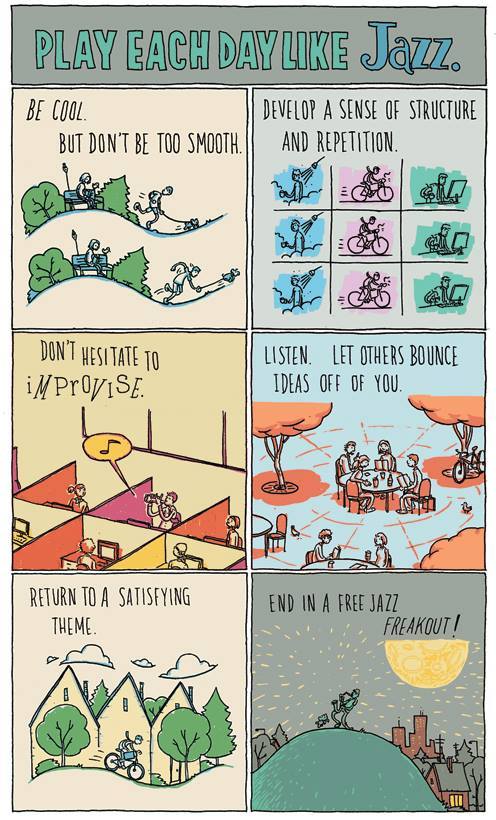
Play each day like Jazz.

This will make sense to some of you . . just a little musical humour to brighten your day. Blessings!jazz

A powerful performance

bryanpattersonfaithworks's avatarBryan Patterson's Faithworks

THE Piano Guys are on a mission to perform at all seven wonders of the world.

For their latest project, they travelled to the world famous Christ the Redeemer statue in Brazil. They created and performed a special piece at the special location, bringing the heartfelt hymn of praise How Great Thou Art together with the theme from the movie The Mission.

Listen and be calmed.

View original post

Not the first generation to be addicted to bass

If you have ever wondered about the love of pipe organs in church music, and the intense love for ‘good old hymns’ which have been played on this grand instrument, the following research may help explain these strong connections:

Church organ Does organ music ‘instil religious feelings’?

According to an experiment people who experience a sense of spirituality in church may be reacting to the extreme bass sound produced by some organ pipes.

Many churches and cathedrals have organ pipes that are so long they emit infrasound which at a frequency lower than 20 Hertz is largely inaudible to the human ear. In a controlled experiment in which infrasound was pumped into a concert hall, UK scientists found they could instil strange feelings in the audience at will. These included an extreme sense of sorrow, coldness, anxiety and even shivers down the spine.

To test the impact of extreme bass notes from an organ pipe on an audience, researchers constructed a seven-metre-long “infrasonic cannon” which they placed at the back of the Purcell Room, a concert hall in South London. They then invited 750 people to report their feelings after listening to pieces of contemporary music intermittently laced with sound from the “cannon”.

The results showed that odd sensations in the audience increased by an average of 22% when the extreme bass was present. Some of the experiences were described as, ‘shivering on my wrist’, ‘an odd feeling in my stomach’, ‘increased heart rate’, ‘feeling very anxious’, and ‘a sudden memory loss’. This was an experiment done under controlled conditions and it shows infrasound does have an impact, and that has implications in a religious context and some of the unusual experiences people may be having in certain churches.”

Sarah Angliss, an engineer and composer in charge of the project, added: “Organ players have been adding infrasound to the mix for 500 years so maybe we’re not the first generation to be ‘addicted to bass’.”

The article “Organ music ‘instils religious feelings‘” was first reported by the BBC in 2003.

http://www.musicademy.com/2014/05/first-generation-addicted-bass/

The Gift (and Curse) of Musical Time Travel

Such is the power of music….

johnmarkmiller's avatarThe Artistic Christian

Wallace Monument and Me

A picture of me standing on top of the William Wallace Memorial in Stirling, Scotland, overlooking one of the battlefields where Wallace fought for freedom.

So it turns out time machines do exist…

Any musician will tell you that music offers the ability to transport its listeners to another place and time, allowing you to relive old memories in a powerful and moving way. Have you ever wondered why this is?

According to Daniel Levitin, author of This Is Your Brain on Music: The Science of a Human Obsession, the memory centers in your brain light up any time music is played. This close connection between music and memory is why the information attached to songs is what children tend to remember for a lifetime (think of how you learned to write… the ABC Song). This is also why Alzheimer’s patients can forget the faces of their own spouse and…

View original post 504 more words

How worship murders our self-righteousness

20140428-162940.jpg
This is a post I have been meaning to share from Zac Hicks blog. It is a brilliant argument for persevering in the ‘gathered worship’ of God, even if we have issues with other people or with things not suiting our personal taste . . . Or even when it hurts! Of course ‘Worship’ is much greater than merely the Sunday gathering – it is a whole of life response of thankfulness for Christ’s saving work in us. But if you ever thought gathering together for corporate worship was not all that necessary, think again. God has some special work to do in us there.

“Many of us struggle to see gathered, corporate worship as helpful to our spiritual growth and vitality. And even if we find it helpful, we might lift an eyebrow at anyone who might say that it is instrumental or (dare say it) necessary. The irony for those of us who take lightly the weekly gathering of the people of God is that the spirit which rises up within us that says “I don’t really need this that much” is the very same spirit that worship intendeds to kill. If worship had a Twitter profile, its brief description would have to include “Murderer.” Worship was built by God to be a blood-thirsty attack dog with a keen appetite for something very specific in us. My favorite worship theologian, Jean-Jacques von Allmen, explains:

To declare that [worship] is optional, that it is not necessary to the continuation of God’s work of salvation, is to despise the source of grace. … By worship, if not by worship exclusively, the Church keeps open the wound which the resurrection of Christ and the outpouring of the Spirit have inflicted on the self-righteousness of the world, and in this way too the process of salvation is continued.*

God designed worship to slay our self-righteousness.

We human beings are “bruised by the Fall” (Philip Bliss) in such a way that we are hell-bent self-justification machines. We know no other pattern than to hide our weaknesses and manufacture pseudo-strengths. Our instinct, when accused of wrongdoing, is to deny and defend. Our default, when we do the right thing (no matter how much we say it’s “for the glory of God”) is to pat our spiritual selves on the back and believe that God is more happy with us because of what we’ve done. When the Holy Spirit applied the work of Christ to us, God the Father delivered the mortal wound to the beast of our self-righteousness. But the beast, while bleeding out this side of eternity, is still snarling, clawing, lashing, biting, and lunging. It is this disgusting creature that Paul is talking about in the latter half Romans 7, when he finally cries out, “Wretched man that I am!” This tormenter of souls rises weekly, daily, hourly within us.

But we’re not without hope. God has equipped a warrior to unsheath his gospel-sword every week to deliver another thrust into the thick flesh of our self-righteousness. That warrior is worship.

What von Allmen meant was that worship, rightly done, takes us on a needed weekly journey where we are reminded that we must come to the end of ourselves before we can fully see, appreciate, appropriate, and drink in the gospel. The beginning of worship should cast such a vision of God that we are blinded by His glory and leveled by His perfection. Worship gives us a picture of God’s holiness that is so high and so “other” that we are jarred out of any sense of being able to attain it. During the week, our amnesia begins to set in, and our eyes go blurry, such that the mountain of God’s glory starts looking like a gently-sloped hill. “I can climb that,” we think. (“I can avoid these pet sins for a few days.” “I can please God by being faithful in my devotions and Bible reading.” “I can be a good mom and not lose my temper.” “I can avoid those channels and sites.”) We think, “God must love me more this week, because I’ve been pretty good.”

And worship grabs us by the collar, slaps us in the face, and says, “Wake up, man!” It yells, “You’re far worse than you ever imagined, because, look, look at God!” And, once again, the scales fall off our eyes and the placid, green, hills-are-alive peak you thought you were looking at is really a hulking Himalayan cliff. And there it is: the moment of impossibility, where God’s gracious sword enters the beast yet again. Worship is God’s gracious murderer.

But God is in the business of killing precisely so He can make alive again. However, instead of reviving our self-righteousness, He gives us an alien organism–His very Self, Jesus Christ the Righteous One. This is the moment in worship where, after we have seen God’s glory and confessed our sin, God delivers the word, “There is therefore now no condemnation for those who are in Christ Jesus.” The gospel is good news, indeed.

Worship should be that epic…every week.”

*Jean-Jacques von Allmen, Worship: Its Theology and Practice (New York: Oxford, 1965), 115-116.

Check out this post for some more discussion about church and worship.
Blessings,
Ros

Drawing back the curtains on Christ – the role of Song Leaders

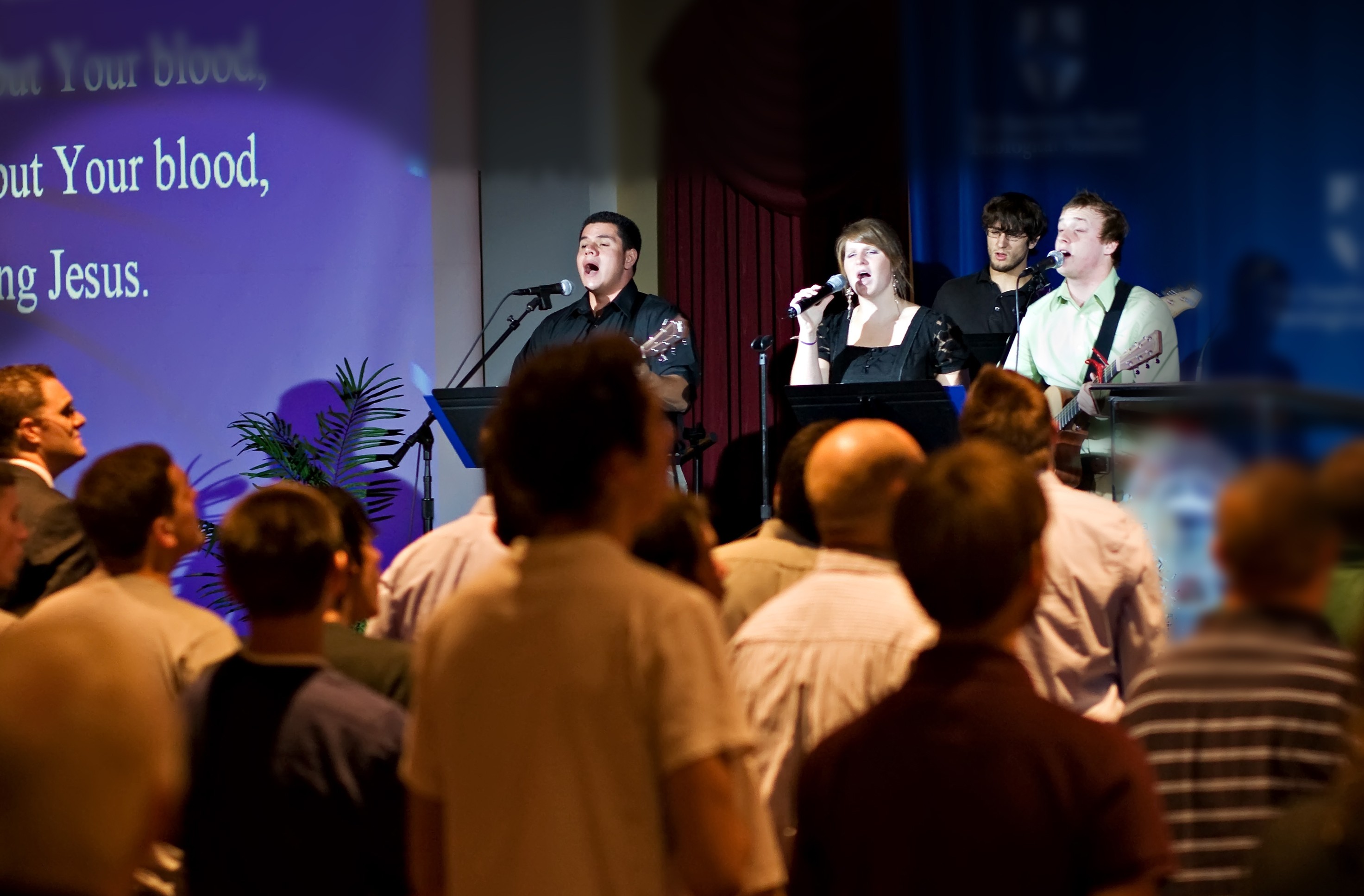
worship-band-chapel-sept-08A week ago I began a discussion on what makes a good song leader and promptly got distracted by the case for “song leaders” rather than worship leaders. (You can read it here: Why I prefer Song leader to Worship Leader.) Whether or not you are happy with my choice of terminology please come with me to consider 12 things that make an effective song leader.

Allow me to preface this list with a few comments. I’ve been working with song leaders and church bands (and serving as a song leader) for about 25 years now. I’ve seen the best and worst examples of what song leading can look like, and I’ve worked through plenty of issues. From what I’ve observed (in myself and others) I know that song leading can lead to all kinds of flattery, self-deceit and bad attitudes about your own importance and Christian life. (These must be confronted as soon as they raise their ugly heads, so be honest with someone you trust.)

To be an effective song leader requires discipline of both the mind and voice. It takes a balancing act of several important elements – especially humility, a desire to serve, vocal ability and confidence. And this does not just apply to when you are on stage! Song leaders must be genuine Christians who see their role as one of service, teaching and encouragement. They must think things through and prepare well. One of the most helpful and guiding pieces of advice I have found for song leaders was given by Charles Spurgeon! Though originally aimed at preachers, he said the challenge was to “draw back the curtains on Christ and get lost in the folds.” What a brilliant reminder that we are not up front for self-glorification, but for Christ!

Bob Kauflin defines the role of the song (‘corporate worship’) leader in a single sentence, like this:
“An effective corporate worship leader, aided and led by the Holy Spirit, skillfully combines biblical truth with music to magnify the worth of God and the redemptive work of Jesus Christ,
thereby motivating the gathered church to join him in proclaiming and cherishing the truth about God and seeking to live all of life for the glory of God.” (
http://www.worshipmatters.com/2006/03/01/what-does-a-worship-leader-do-part-16/)

That’s a pretty good definition, so I’m not going to tamper with it!

But for those wanting a longer list of things that make for effective song leading, here are my 12 points regarding the PERSPECTIVE, PRESENCE and PRACTICAL matters that can help song leaders serve more effectively:

Perspective:
1. See yourself as a “servant leader” who is doing a job to help others, to enable the gathered body of Christ to sing together, to praise God and encourage each other. You are serving the congregation with your voice, with clear and well-tuned singing that is easy to follow (just as you might serve with your hands in vacuuming the auditorium).
2. Keep serving in other ways. Don’t think song leading should be the full extent of your service to God. Be willing to take a break from it if it becomes all-consuming, or totally taking you from other gospel opportunities. (Vacuum the auditorium now and then! And speak the gospel to a friend!)
3. Don’t see yourself as the star of the show, and don’t take your musicians or sound crew for granted. Talk to them and express genuine appreciation! (On the other hand, don’t be blasé about your role. It is important to serve people in this role! And it is important for people to sing together to God and to encourage one another.)

Presence:
4. Your body language and facial expressions are pretty important, because they will be reflected to you by the congregation. If you are looking awkward or nervous or disinterested, they will feel that way too. A smile, particularly with your eyes, while you sing is something you can practice. Mirrors provide useful feedback. Stand evenly on your balls of feet, relax your knees, one foot slightly in front of the other. Keep your shoulders down and relaxed. Be a good example of an engaged and joyful participant in corporate praise to our great God!
5. Clothing choice is a question of not drawing attention to yourself and modesty. (Do I need to elaborate here? Is what your wearing causing some to focus their eyes on the shape of some particular part of you? Or not? Are you trying to show off your good taste and style, your brand names, or get attention? Consider modesty of dress and being less conspicuous than you might otherwise choose.)

Practicalities:
6. Be well practiced, so that you arent missing cues, or stuffing up words and doing things that will draw attention to yourself.
7. Be realistic about your abilities and keep tuning your instrument – get vocal lessons to help iron out any issues. Breathing technique is all important. Learn good technique! If you know you are forcing your voice to sound the way you do, seek some help or you could do damage!
8. Learn basic music theory so you can follow a melody and sing the right rhythms, or hold on to notes for the appropriate length. Learn how to follow repeats, first time endings, 2nd time endings, what ‘D.S al Coda means’ – and more.
9. Sing in a way that is easy to follow – avoiding “opera voice” or solo performer voice, with lots of trills and grace notes and vibrato. This makes it difficult for groups to follow. Use harmonies sparingly as these can get people off track when they are following you. Make sure the dominant voice is not the one doing the harmonies, and keep the harmony under the melody. (Descant lines can be especially distracting, unless it is a known part that many in the church know too – or one you want them to learn.)
10. Hold the microphone close enough so that the sound technician can get good levels (about 2 inches/5cm).  It’s easy to turn you down if too loud, but no way to boost a weak/distant signal. Pull it further away on high notes so you don’t blast the congregation!  If microphones are really new to you, get some time along in your church auditorium and sing, with foldback, to get used to sound of your own voice – because sometimes it can frighten you into singing more quietly (not great for a song leader to do!)
11. Give clear instructions if you are leading the band (both during practice and in the service). Use cues to keep everyone together. Make sure the structure of the song is clear for everyone. Listen to the members of the band, what they are saying in practice, as well as what they are playing.
12. Be on time for band practices – and organise them well ahead of time if that is something you as the singer has to do. Sing the song enough times on your own so that the melody is fully entrenched in your mind. Know the structure of the song as it will be sung at church, which may differ from the recorded version. Be willing to pray for your team and with your team, for their role as musicians in the gathering.

Being a song leader is a great privilege and it can be a great blessing to others as you help Christ’s visible body gather together in songs of praise to our great God. If you are a song leader, keep working at it! I hope these points have been helpful!

You may also like these earlier posts on similar topics:

Sharing the rich, indwelling word (Colossians 3:16)

How to encourage your music team even when you’re not the leader

Working for those moments of Joy

You are a Theologian