Hymn books: what we’ve lost and gained.

blue hymn booksI’ve really enjoyed following some blog discussions about hymnals in recent weeks (which you can find at the end of this post). In the space of around 30 years most church congregations have moved away from using them at all. Those piles of well-thumbed and well-sung collections of hymns have disappeared from church foyers and from the experience of many church-goers. In fact, if you are under the age of twenty you may have no memories at all of singing from a hymn book.

Last night I pulled out my little, moth-eaten, blue hymnal at the dinner table.  My ‘elderly’ teenagers and twenty-year-old were bemused by the little tome. And while not entirely oblivious to the contents, they did find my rendition of the drawn out and repetitive phrase from “All Hail the Power of Jesus’ Name” quite amusing: ‘And Crow… ow.. ow.. own Him! Crown Him! Crown Him! Crown Him and Crown Him Lord of All’. (Who said hymns were easy to sing, and not repetitive?)

Whenever there is a great cultural shift in the way something is done there will naturally be losses, and gains. (The internet itself is one giant case in point. While it allows me the opportunity to write and share with people on the other side of the world it can also distract me from giving good attention to the people under my roof!)

And of course we shouldn’t forget two things: the church has done without hymn books before – when people repeated or memorised the lyrics; and, the collection of hymns we have used in church in the last few hundred years are not actually the ones referred to in the Bible, in Ephesians 5:18-19. Those hymns and spiritual songs have been lost forever.

For me, the move away from hymn books has meant the loss of something tangible, a bound book of songs for the church, which have been agreed on and published for their value in helping us praise God, in spirit and truth. People could own or borrow a hymn book and look up songs and reflect on the lyrics. As a child who loved words, I spent many a Sunday service pouring over the hymn book (especially if the sermon was very long or over my head). I devoured both the poetry and theology they contained. They challenged me to learn new words and concepts about God. I was also fascinated by the names of the hymn writers and the years they lived, and wrote, as well as the number of hymns written by each person. This little blue book was something of a little Blue Box, bigger on the inside, and a portal to the rich history of the church for the past few centuries. (If you understand this Doctor Who reference, you may like to visit my old Blue Box Parables blog, on finding Christ in popular culture.)

While I have been brought up on hymns, (and learned to sing harmony because of them, and probably learned to read music from the hymn book on the piano at home) I am not mourning their loss. I have been part of the movement of change, and spent the last few decades looking for spiritual songs and hymns which will edify and teach us well. Alongside this new body of songs, most churches retain the ‘good old hymns’ in their repertoire, hymns that are biblical and continue to encourage people today. Modern adaptations of hymns also help keep the ones worth singing alive (while those full of obscurities and archaic phrases are happily shelved for good).

The authors of the following posts have explored these losses and gains in much more detail and you can read them at your leisure. But to close, I will quote myself for a change, and refer you back to a post written in the defense of new songs in 2012.

In a nutshell, I argued that new songs say that God is doing something here and now, not just a few hundred years ago: “. . . it also comes down to the concept of “renewing our minds”. By hearing the gospel explained in new and fresh ways, our understanding of God and the gospel of His grace is strengthened and deepened. That has got to be a good thing.” 

You will find that Tim Challies also picks up this point in the third post below (which is his own response to his first post about things we lost when hymn books were set aside). The second and fourth links below are other people’s responses to Challies’ original post.

I would love to hear your thoughts on this topic. Please comment below. Blessings!

https://www.challies.com/articles/what-we-lost-when-we-lost-hymnals

https://gregoryktyree.wordpress.com/2017/04/06/what-we-gained-when-we-gave-up-our-hymnals/

https://www.challies.com/articles/what-we-gained-when-we-lost-the-hymnal

https://chrislinzey.com/2017/04/09/hymnals-we-dont-need-no-stinkin-hymnals/

https://sevennotesofgrace.com/2012/07/31/new-songs-say-god-is-doing-something-now/
Behold the Lamb (Communion Hymn)

Sometimes it is easy to miss out on a really great song that could be a great encouragement for your congregation to sing together. We have been using this four-verse modern hymn for a while, courtesy of writers Keith and Kristyn Getty, with Stuart Townend. It is great for communion/Lord’s supper and Easter celebrations. If you have missed it, then it’s time to catch up. Blessings!

“Behold the Lamb who bears our sins away,
Slain for us – and we remember
The promise made that all who come in faith
Find forgiveness at the cross.
So we share in this bread of life,
And we drink of His sacrifice
As a sign of our bonds of peace
Around the table of the King.

The body of our Saviour Jesus Christ,
Torn for you – eat and remember
The wounds that heal, the death that brings us life
Paid the price to make us one.
So we share in this bread of life,
And we drink of His sacrifice
As a sign of our bonds of love
Around the table of the King.

The blood that cleanses every stain of sin,
Shed for you – drink and remember
He drained death’s cup that all may enter in
To receive the life of God.
So we share in this bread of life,
And we drink of His sacrifice
As a sign of our bonds of grace
Around the table of the King.

And so with thankfulness and faith we rise
To respond, – and to remember
Our call to follow in the steps of Christ
As His body here on earth.
As we share in His suffering
We proclaim Christ will come again!
And we’ll join in the feast of heaven
Around the table of the King ”

— WORDS AND MUSIC BY KEITH AND KRISTYN GETTY & STUART TOWNEND

What we’re singing this Easter

Today a good friend asked me what songs were on our music roster for next weekend. It then struck me that it might be a useful list to share more widely. Here it is. I’d love to hear what your church is singing . . . and where in the world you are. Please comment!

GOOD FRIDAY

Glories of Calvary (Sovereign Grace)

Man of Sorrows (Hillsong)

Behold the Lamb (Getty)

The Power of the Cross (Getty)

EASTER SUNDAY

The Father’s Love (Sovereign Grace)

Christ is Risen, He is Risen Indeed (Getty)

Grace has now appeared (EMU)

How deep the Father’s Love (Townend)

Here is the Spotify playlist

The promised river

Come all you who thirst! This is a song by Bethany Dillon based on Isaiah 55. Beautiful and encouraging.

Power of Music in Parkinson’s

This is just astounding.

There must be so many other instances, which we have not yet discovered, where music has the unique power to unlock and overcome problems in our physical bodies, minds and emotions. Thank You for the music!

Sing for Your Life | Desiring God

Singing is a potent life skill. Even the world knows that singing — true, heart-engaged singing — releases oxytocin into the body, a hormone that helps to alleviate anxiety and stress, while boosting your immune system, your mood, and serving as an ally in the fight against cancer. But even more importantly, singing releases a spiritual affection that breaks apart the cancer of our most ingrained sinful habits.

Singing is one of the most immediate actions we can take to stoke our God-centered affections, and yet we grow careless of this neglected spiritual discipline.

http://www.desiringgod.org/articles/sing-for-your-life

Setlists for Christmas

christmas-tree-sheet-music

Worship Together recently posted a series of Advent and Christmas songs as set lists to mix and match. They include traditional carols as well as recent praise and worship songs. You can watch a New Song Cafe video and play along with the charts! I hope you find something useful for your service planning. Blessings!

Set List #1

Hark! The Herald Angels Sing (Glory In The Highest) // Rend Collective

Looking For A Savior // United Pursuit

O Come, O Come Emmanuel // Crowder

We Have A Savior // Hillsong Worship

Set List #2

Emmanuel (God With Us Forever) // Bryan and Katie Torwalt

Angels (Singing Gloria) // Matt Redman

Adore // Chris Tomlin

When Hope Came Down // Kari Jobe

Set List #3

Even So Come // Passion

Give Me Jesus // Jeremy Camp

He Shall Reign Forevermore // Chris Tomlin

O Come Let Us Adore Him // Hillsong Worship

Set List #4

Hearts Waiting (Joy To The World) // Matt Redman

A King Like This // Chris Tomlin

O Holy Night (O Night Divine) // Rend Collective

We Have Come // United Pursuit

http://www.worshiptogether.com/blog/advent-2016/

Image from https://au.pinterest.com/explore/sheet-music-crafts/

Watch a 90-year-old husband and wife play Bach together

They’ve been married for over 65 years: when this couple sit at the piano, something magical happens.

Composer and pianist György Kurtág is one of the most important figures in music from the past 100 years. He has also played with his wife, Márta, another very accomplished pianist, for many years. Recent footage taken from a live concert in Budapest reveals the depth of their musical understanding.

The couple play transcriptions made by the composer of Bach’s choral preludeDas alte Jahr vergangen ist BWV 614, his Duet BWV 804 and a movement from the Baroque composer’s cantataActus tragicus.

György was born in Romania in 1926, moved to Hungary in 1946 and married pianist Márta Kinsker in 1947. The two have duetted ever since.  

This is what it sounds like when you live and play Bach together for 70 years:

http://www.classicfm.com/composers/bach/news/duets-video-kurtag/

His praises resound in us – the new temple!

image
“The Lord is my strength and my song; he has become my salvation. Glad songs of salvation are in the tents of the righteous.” (Psalm 118:14-15)

The New Testament doesn’t talk a great deal about the use of music in the gathering of God’s people – but what it does say is very clear. Singing the Word of Christ together is designed to build up, teach and encourage one another, while declaring the praises of Him who loves us. In fact our praises are a really important part of God’s plan for the new temple. Let me explain.

Psalm 118 (and so many more) describes the Temple of God as the place from which our praises and blessings towards God should come. But when Jesus turns up to this earthy temple (Mark 11:1-12:12) there is no praise coming from this place. Herod’s fancy bricks and mortar monstrosity is the seat of money making and exploitation. This place is wrong; this temple building in Jerusalem is not functioning as the house of God. So where is the true temple? How can such a place of praise be established to the Glory of God?

The answer is Jesus.
Jesus went through suffering, pain, rejection – the Cross. In doing this he established the true temple, where true worshippers will praise his holy name. Where is this true temple? Well, it is found in us! We are God’s holy temple (1 Peter 1:5-6,9 1 Peter 1:4-5, 9-10)
“As you come to him, the living Stone—rejected by men but chosen by God and precious to him— you also, like living stones, are being built into a spiritual house to be a holy priesthood, offering spiritual sacrifices acceptable to God through Jesus Christ…. you are a chosen people, a royal priesthood, a holy nation, a people belonging to God, that you may declare the praises of him who called you out of darkness into his wonderful light.”

Worship happens not in one tiny location in far off Israel to the exclusion of all other people. Now under new Management, Jesus’ temple is wherever his people are. His people will bring a prayer for the nations and praise for God’s holy name. We are His people, God’s true temple. What a privilege to be part of the true house of our holy God. He lives within and among us; he inspires us to prayer and praise. When we praise Him together we fulfil Psalm 118: People from all nations praying for the nations. We are to be people who pray without ceasing, people who praise his wonderful name. Pray and praise must sound and resound from our Christian communities and individuals. Does that describe you? does that describe us?

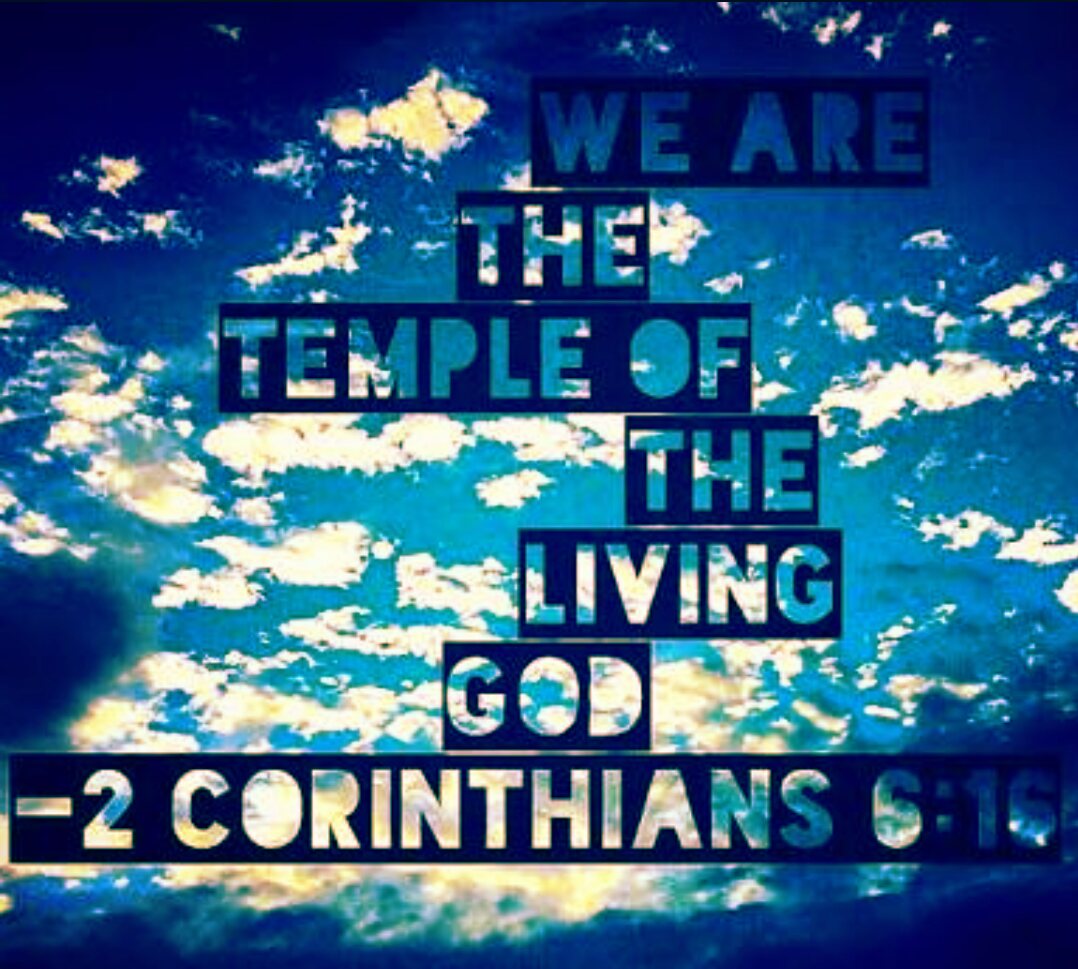
“Don’t you realize that all of you together are the temple of God and that the Spirit of God lives in you? (NLT)

In 1 Corinthians 3:16 the Corinthian church needed Paul to remind them many times about the danger of division amongst God’s people. Paul speaks boldly here, explaining that as a Body of believers, WE ARE the temple of God where He dwells. He lives in us! He no longer chooses to reveal himself and meet with people in an earthly building (as he had done in the past, in Solomon’s temple, God’s house). Now he LIVES in us together. He reveals Himself in us. He has put His Spirit in us, collectively. This echoes the words of Peter (1 Peter 2:5): “you also, like living stones, are being built into a spiritual house to be a holy priesthood, offering spiritual sacrifices acceptable to God through Jesus Christ.”

Peter sees that genuine resounding praise can only come from this new spiritual temple – us! So how important it is for God’s people to major on authentic, true, fresh and relevant praise in our gatherings.

For more on this:
https://sevennotesofgrace.com/2012/09/06/stones-or-bricks-god-lives-in-us-together-1-corinthians-316/

https://sevennotesofgrace.com/2013/08/14/10-principles-for-church-singing/

Why We Worship on Repeat | Desiring God

I enjoyed this discussion from Desiring God about praise/worship as meditating together on the truths of the Gospel. It makes me much more enthusiastic about the idea of another chorus repeat.

“Many a modern church-goer has been miffed by repetition in corporate worship.

The Information Age is conditioning us for new content, fresh ideas, new data. Why re-read what we’ve already read, why rehearse what we’ve already heard, when new information is available like never before?

But do we know what our unprecedented access to novelty is doing to us? All indications are that it’s threatening to make us shallower, not wiser and more mature. Running our eyes across the page and mouthing words to a song are not the same thing as experiencing the reality in our hearts. Our hearts simply don’t move as quickly as our eyes and our mouths.

Which makes corporate worship such an important elixir for what is increasingly ailing us today.

Learn to Feel the Truth

Take Psalm 136 as a flashing red light from the divine that our newfound intolerance for repetition is out of step with what it means to be human. The psalm is 26 verses, and each verse ends with “for his steadfast love endures forever.” It rehearses God’s goodness and supremacy, his wonder-working and world-creating, his delivery of his people from slavery and provision for them in a rich land.

Twenty-six times the psalm repeats this refrain — and not one of them is wasted. With each new verse, another attribute or rescue of God is celebrated, and then our souls are ushered deeper into his steadfast, ever-enduring love with each glorious repetition.

“Our hearts simply don’t move as quickly as our eyes and our mouths.”

The goal of the song is not to make his steadfast love old hat, but to help us feel it afresh and at new depth. The dance of each new verse, with each return to the refrain, is designed to bore the central truth about God’s resilient love deeper and deeper into our inner person. The psalm is not atreatise on the unwavering, persistent love of God, but what we call a meditation — less linear and more circular — crafted to help auger the reality of his love from information on our mental surface down to an experience in our hearts.

If you come away bored (unaffected), you’ve missed the point. But if you come away with God bored deeply into your soul (tasting afresh the strength and sweetness of his love), you’ve been carried by the Holy Spirit.

More Than Data

God made humans to meditate. And it is increasingly the lost art in our age. We were made to think deeply on his truth, not just be informed; to ponder reality down to the depths, not just move on to the next piece of data.

Non-Christian forms of meditation seek to empty the mind and transcend concrete specifics into the ethereal, and experience some form of meaningless enlightenment. But Christian meditation fills the mind with biblical truth, and chews on it, seeking to savor every bite.

“Meditation receives the truth into our souls and changes us in our deepest part.”

Unlike mere reading, even slow reading, where our minds and eyes keep moving at some pace, meditation slows us down, way down. We pause and ponder. Reading keeps us marching in linear fashion, while meditation moves us into a more spiral pattern by limiting the information set and seeking to press and apply the truth to our hearts, to actually experience the truth and not just let it run on through our minds on our way to the next thing.

Meditating Together

One remarkable aspect of corporate worship is that it gives us the opportunity to meditate together. The pinnacle of a good sermon is typically a form of corporate meditation, led by the preacher, as he circles around his main point and verbally kneads its goodness into our hearts.

And the summits of our best praises together in song are essentially meditative. It’s not the discovery and delivery of an obscure stanza that binds our hearts and draws us highest together toward heaven, but returning to the chorus, which has been enriched with each additional verse. The verses provide fresh information, but the refrain we know so well bores the truth even deeper into our souls. The verses and chorus together help us to know the reality even better, as we collectively digest the truth from our heads into our hearts. They help us actually experience and be affected by the truth in our inner person, not just rehearse the data on the surface.

“God made humans to meditate. And it is increasingly the lost art in our age.”

And only once we’ve taken the truth into the heart, into the core of our soul, do we organically grow external actions and lived-out transformation. Rather than circumventing the heart, by moving from the mind to the actions, meditation receives the truth into our souls and changes us in our deepest part so that our actions aren’t whitewashed, but authentic expressions of the movement of our souls.

Purposeful repetition in corporate worship empowers us to be changed not only as individuals, but as a people. It is not only the truths we read, but the truths we sing — and sing often, and take into our hearts — that mold and shape us for lives of worship.

So, perhaps this weekend, you’ll have a chance to experience corporate repetition afresh, and instead of begrudging the worship leader for it, you may find it to be a new pathway for enjoying the grandeur and love of God.”

http://www.desiringgod.org/articles/why-we-worship-on-repeat