Who has the X Factor?

cat vassOkay, I’m going to admit that I have been totally drawn into viewing the television talent show X Factor. The last time such a thing happened was a decade ago, with the very first series of Australian Idol (2003) won by Guy Sebastian. While I am thoroughly aggravated by the hype, drama, ad breaks and soapie-style formatting, I do simply enjoy hearing the people sing! (Especially Georgie, but he was eliminated tonight in the cut for the final 12! Can you believe it? I think he didn’t have the pop star physique they were looking for. Check out the video at the end – I assure you it will bring a smile to your dial, as they say!)

Yet each voice is like a fingerprint, a unique sound that each person owns and uses to bring new life to old melodies. Each person has been on a unique journey to arrive at a place where they feel comfortable and confident with their voices. I find this most intriguing. Though some of them try their best to sound like pop stars who already own fame, their unique vocal colour shines through.

And this leads me to contemplate the incredible gift of singing voices that God has given. Such a divine gift from the Creator, a gift greatly admired and applauded even by those who will not give credit to the Maker of the voice. And who can beat true emotion conveyed through sung lyrics? A pleasant, dynamic voice can pack a punch unmatched by any spoken rhetoric.

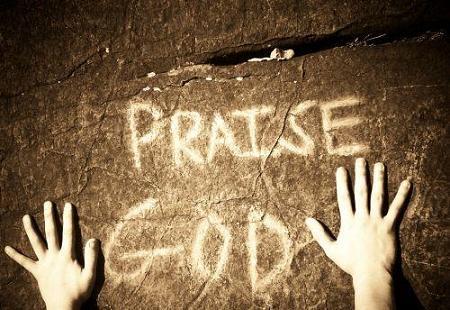
God has designed us with singing voices for many reasons, but perhaps above all, that we would praise Him!
Oh that we could inspire our congregations to sing to God (and one another) with the conviction and energy of these X Factor hopefuls. Though these singers gather together to sing for their own fame (and supper), we gather together as Christ’s Body to praise Him. As we share the true Word of God together in song, surely we should be displaying equal or greater effort? We sing for the most famous One, the author of Life, the Saviour of the world, to declare His glory.  When we remember this purpose it can change our self-consciousness, often off-key, efforts into something mutually edifying. Praising God is so good for us. And so is singing!
Don’t you think?

And here’s Georgie (the full audition):

You may also like these posts:

10 Principles for Church Singing                         The wonderful mystery of Harmony singing
praise him pic cracking_the_harmony_2

10 Principles for church singing

praise him picKevin de Young is writing lots of great material over at the Gospel coalition. If you have never visited there I would encourage you to do so. Today I’m sharing a summary of his ‘Ten Principles for Church songs’ which has been published in two parts. I have included his introduction, and then a summary of his ten principles (with some teasers) – which I would thoroughly endorse! To read his full explanation of each point you will need to click through to the actual website. It would make great material to work through with the church leadership or your music team, to clarify issues, prevent problems and encourage one another:

When it comes to singing on Sundays, churches have more options than ever before. From hymnals to Hillsong to homegrown creations, pastors and worship leaders have thousands of songs to choose from. A nice problem to have. But still a problem. No music leader or pastor can keep up. No church can sing all the great hymns and all the latest greatest songs on the radio. No musician can excel in all the available styles. No leader can please all the people all the time. . . There are other questions too. What sort of instruments should we use? How much should cultural context come into play? Is there only one right kind of song to sing? If not, are there any wrong ways? I can’t possibly answer all those questions. But there are some general principles we can use to make wise decisions with our church music. Let me suggest ten principles for congregational singing.

1. Love is indispensable to church singing that pleases God.
Love is indispensable when we sing and when we are trying to discern what is best to sing.
2. Our church singing is for God’s glory and the edification of the Body of Christ.
Congregational song is part of the teaching ministry of the church.
3. We ought to sing to the Lord new songs.
Sometimes I want to ask to very conservative Christians: “Do you really think the last good song of praise to Jesus has been written?”
4. Church singing should swim in its own history of church singing.
We should swim in this big ocean of church music, an ocean that is continually receiving new streams.
5. Sing the Psalms
It’s strange, even though we are commanded to sing Psalms and even though Psalms have been at the center of the Church’s singing for centuries, still we easily ignore the 800 pound gorilla in the middle of our Bibles.
6. We should strive for excellence in the musicality and the poetry of the songs we sing.
Some songs are simply deep and some are deeply simple, but there is a way to do both well.  With so many songs to choose from, there’s no reason churches can’t make an effort to sing songs with some sense of poetry and musical integrity.
7. The main sound to be heard in the worship music is the sound of the congregation singing.
What people want to see in your worship is that you mean it. And no matter how chill or how reverent your worship is, if no one is singing, it’s lame.
8. The congregation should also be stretched from time to time to learn new songs and broaden its musical horizons.
Every church will have a musical center. You should not reinvent the center every week. But you should not be enslaved to it either.
9. The texts of our songs should be matched with fitting musicality and instrumentation.
Musical style is not neutral, but it is elastic. Music conveys something. Some melodies are too syrupy or too raucous or too romantic.
10. All of our songs should employ manifestly biblical lyrics.
In all our songs we want to be teaching people about God. If we aren’t learning good theology and biblical truth from our songs, then either we don’t care much about our songs or we don’t care much about rich biblical truth, or both.

More great GRACE songs

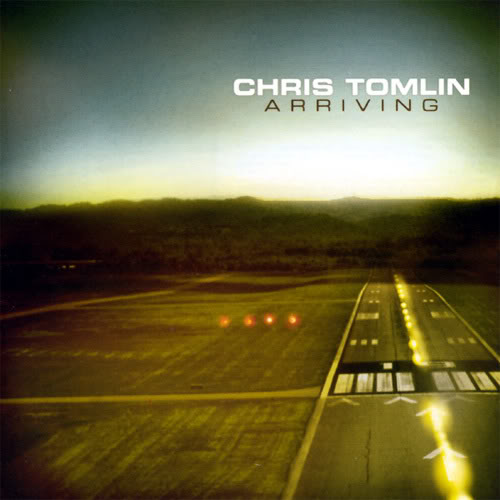
Here are two GRACE-filled songs, both with a lively tempo, for you to try with your church family. The first is “Grace has now Appeared” from a recent Christmas album, ADVENT by EMU Music. I think this would be very suitable to sing all year, since we celebrate the grace that comes to us in Christ every day. It is a joyful song, full of gospel riches. The second is an older song with a simple chorus, made popular by Chris Tomlin, “Your Grace is Enough” (album: ‘Arriving’). (Click on any of the titles to listen.)

Grace has now appearedadvent

See the love of God the Father for our lost and desperate race
Sending to our world a Saviour, full of truth and grace
People who once walked in darkness now are dwelling in the light
Undeserving of His kindness, Blindness turned to sight
Dead have come to life

Glory to our God in heaven, Celebrate the Saviour’s birth
Joyful news for all the people, Hope has come to earth
God has comforted His people, Come to drive away our fear
Born for us in David’s city, Grace has now appeared

See the grace of our Lord Jesus who was rich but became poor
In our place He pays our ransom, Satisfies the law
Giving up His life for sinners, Banishing our guilt and shame
Pouring out for us His life-blood, Freeing us from blame
This is why He came

See the Holy Spirit’s power overshadow Mary’s womb
Come upon the suffering servant, Raise Him from the tomb
He has come to dwell within us, Bringing us from death to life
Giving us the hope of glory, Making us like Christ
Shining forth His light

CCLI Song # 6426257 Rob Smith© 2012

arrivingYour Grace is enough

Great is Your faithfulness O God, You wrestle with the sinner’s restless heart
You lead us by still waters into mercy, And nothing can keep us apart
(PRE-CHORUS)
So remember Your people, Remember Your children, Remember Your promise O God
Your grace is enough
Your grace is enough for me

Great is Your love and justice God of Jacob, You use the weak to lead the strong
You lead us in the song of Your salvation, And all Your people sing along
(Chorus 2)
Yeah Your grace is enough, Heaven reaches out to us
Your grace is enough for me
God I sing Your grace is enough, I’m covered in Your love
Your grace is enough for me for me

CCLI Song # 4477026 Matt Maher © 2003 spiritandsong.com

You may also like:
My Hope in God’s grace
same love

The wonderful mystery of harmony singing

cracking_the_harmony_2I absolutely love singing in harmony. It would have to be my most favourite thing to do. At church it takes lots of self-control to stop myself singing harmony all the time. (But I do refrain most of the time since it can seem a bit show-off-ish, and also off-putting if you are meant to be leading people in the melody up the front!)
But give me a few spare minutes and some other keen people, this is my preferred activity! There is just something totally mysterious, extraordinary and beautiful about the way harmonic notes blend together. When people ask me to write them some harmony parts for a song I rejoice at the challenge and opportunity to sit and fiddle with harmony for a few hours. (I’ve often wondered if this could be a lucrative business activity via the internet! What do you think?)
You may call me crazy for such harmonic enthusiasm, but this is what comes from being brought up on huge doses of harmony singing, at home, at school and church, in choirs and small a cappella groups. Yet despite my experience, when people ask me to teach them how to sing harmony I scratch my head and wonder? How do you teach someone what is a pretty complicated process in listening and anticipating?

“In the simplest style of vocal harmony, the main vocal melody is supported by a single backup vocal line, either at a pitch which is above or below the main vocal line, often in thirds or sixths which fit in with the chord progression used in the song. In more complex vocal harmony arrangements, different backup singers may sing two or even three other notes at the same time as each of the main melody notes, mostly with consonant, pleasing-sounding thirds, sixths, and fifths (although dissonant notes may be used as short passing notes)”. (So says Wikipedia)

You can now see why I say it is a pretty complicated process, especially if you are going to improvise!
I think the only way to learn to harmonise well it is to hear it, to hear someone do it, a lot, then try it! When you sing harmony you have to anticipate what’s coming, both in the melody and the chords that support it. You have to anticipate what will blend well with the note coming up. You have to hear the harmony in your head before you execute it, and then you need the courage to try it. Good harmony singing has to be “caught not taught”. I had about 17 years of ‘weekly lessons’ in harmony singing with my dad – well not formal ones, more just singing in the pew beside him each Sunday, listening to his improvised tenor line for every hymn in the book.

And are there any benefits of harmony singing, you may ask? Well for singers you have to listen to other people well, which has to be a good thing. It develops team work, and together you create something beautiful which one voice alone could not create. In performance it helps shift the focus from the glory of one person, to the team work of several. There are also benefits for the listener, as they hear the blend, the movement of sound, the tension and the resolution of different voices working together.
And of course there is a spiritual application here. Living in harmony with others requires the same practised skillful decision making. We must choose to listen to others, consider where they are heading (they may be walking in shoes very different from ours), and then choose grace over judgement. Again, these skills are often better caught than taught. Great harmony can be achieved from a group of people who are careful to keep in tune with God and each other, living selfless lives. The loving characteristics of our heavenly Father blend so well together. If we are reflecting his character and glory we cannot help but harmonise beautifully. He is the Father of all harmonies, both musically and between us.

2 Corinthians 13:11 NLT
“Dear brothers and sisters, I close my letter with these last words: Be joyful. Grow to maturity. Encourage each other. Live in harmony and peace. Then the God of love and peace will be with you.”

Here is a clip of some harmony singing I did with a friend (on melody) at a recent women’s conference. Oh the Deep Deep Love of Jesus.

You may also like:
Film review: As it is in Heaven
As it is in Heaven

Hymn lines that didn’t stand the test of time

Today’s post comes from a ‘Gathered Worship Director’ (I like that!) in New Zealand – the original article can be found here at Chong’s Worship: I think you’ll find it quite amusing, but at the same time remember that some lines of our modern hymns may sound equally as strange in a few hundred years time!

old hymnGod’s blessed the church with hundreds of memorable hymns of the faith. Christians and non-Christians alike recognise lines such as “Amazing Grace! How sweet the sound…”, “How Great Thou Art”, “Great is Thy Faithfulness”, and “Abide with me, fast falls the eventide…” (I’m sure you can think of many of your own examples).

For a bit of a laugh, here are a couple of examples of old hymn lyrics that, although theologically sound, have thankfully fallen out of use:

Stanza 6 in “How Firm A Foundation”:

Even down to old age all My people shall prove
My sovereign, eternal, unchangeable love;
And when hoary hairs shall their temples adorn,
Like lambs they shall still in My bosom be borne.

(Hoary means ancient, aged.)

Stanza 9 of Charles Wesley’s “Come Thou O Traveller Unknown”:

’Tis Love! ’tis Love! Thou diedst for me!
I hear Thy whisper in my heart;
The morning breaks, the shadows flee,
Pure, universal love Thou art;
To me, to all, Thy bowels move;
Thy nature and Thy Name is Love.

The term “bowels” used to mean the seat of one’s emotion (what we refer today as our heart).

The first line of Isaac Watt’s “Hark the Herald Angels Sing” was originally:

Hark! How all the welkin rings, ‘Glory to the King of Kings.”

(Welkin refers to the highest heavens.)

And from verse 3 of Joseph Hart’s hymn, “Salvation to the Lamb”:

When we incurred the wrath of God, Alas! what could we worse?
He came, and with his own heart’s blood Redeem’d us from the curse.
This paschal Lambour heav’nly meat, was roasted in the flame.
Repeat, ye ransomed souls, repeat, “Salvation to the Lamb!”

While I like Joseph Hart’s sincere attempt to link Jesus to the Passover lamb in Exodus, this particular imagery is um… hard to stomach (thankfully other people have tried rewriting it).

To fit the language

So why did these hymnwriters use those words? To fit the language of the people at that time, who would have understood the phrases and meanings without any hint of snickering.

Brian Wren in his book Praying Twice adds some helpful insight (p.297-8):

“… The need for change sometimes overrides the need for familiarity… In the Preface to his Hymns and Spiritual Songs, [Isaac Watts] says that “what is provided for public worship should give to sincere consciences as little vexation and disturbance as possible” However, “where any unpleasing word is found, he that leads the worship may substitute a better; for (Blessed be God) we are not confined to the words of any Man in our public solemnities.”

“However much we value our past, our present interest in congregational song is not antiquarian, but immediate. We sing to God from today, in lyrics which — whether ancient or recent — express today’s faith. When a lyric from the past gets too archaic to be understood, or too out of sync with today’s hope, faith, and issues to speak for us, it will eventually cease to be sung, or amended to keep it singable.

I was reflecting awhile back on whether Christians had to hang on to obscure hymn lyrics. Ultimately, I think Brian Wren is right – if a line is worth understanding and remembering, it will stay in use. And if it makes you think about your bowels, it’s probably not worth keeping!

Working for those moments of Joy

grow musicThe non-musician in our Christian gatherings often looks towards the musicians with a certain measure of (perhaps misguided) awe. One thing they find ‘awesome’ is that we even bother! We musicians put ourselves through many practices, where we must work closely with others, negotiating different opinions, and we put ourselves ‘out there’ and up front, where the criticism can sometimes sting. . .  a lot. (Luther didn’t call church music the War Department for nothing!)  And while some look with awe, others may look with disdain and consider most of our efforts simply for show and self-glory.
But there is one thing that keeps musicians (music directors in particular) in the job – and it’s not usually the pay grade!  It is the love for gathering people together in song, praising our great God! Corporate singing provides a unique opportunity to create joy as people praise God and sing out words of encouragement to each other. It gives people the opportunity to express publicly the joy, confidence and hope they have in Christ. These are things they may not find easy to say in everyday conversation.
Since God also delights in the praise of His people (which thwarts Satan’s best efforts at discouragement) we musicians experience much blessing and encouragement ourselves in leading people in something that has eternal, spiritual and cosmological impact!

When we put effort into selecting great sets of song, that are biblically true, Gospel-focused and singable for a group of people, there is the hope that the Word in song will challenge people’s hearts and teach them to know and love their Saviour more. The lyrics might even move people to great (or small) acts of love and service, bringing glory to God. Some may experience a lightbulb moment, as a difficult theological concept makes sense for the first time, in song. “Where the Word goes the Spirit goes” (John Piper) – so the more our songs are steeped in the Word, the more He works through them.
And while I admit that not everyone may be looking joyful as we lead them in praising God, it is the possibility for creating deep inner joy that keeps us coming back. This is what we love! We love to hear God’s praises! We love to see the joy that music brings, joy that encourages us all on our journey of faith.

“. . . . for the joy of the Lord is our strength.”
(Nehemiah 8:10)

You may also like:

How to encourage your music team                                            10 Principles for Church singing
praise-godtaintedcanvasdotcompraise him pic


95,000 Liverpool Fans Sing You’ll Never Walk Alone

If you have ever doubted the power of song, check out this enormous ‘choir’ singing in the stands at the MCG overnight. Men’s choirs are great!

http://balls.ie/football/95000-liverpool-fans-sing-youll-never-walk-alone-at-the-mcg/

Why music makes our brain sing

Those of us who love music know how important it is to us, to be listening, creating and making music. But do we know why? Here are some interesting (though perhaps complex) answers from some neuroscientists, via the New York Times.

Why Music Makes Our Brain Sing

By ROBERT J. ZATORRE and VALORIE N. SALIMPOOR

MUSIC is not tangible. You can’t eat it, drink it or mate with it. It doesn’t protect against the rain, wind or cold. It doesn’t vanquish predators or mend broken bones. And yet humans have always prized music — or well beyond prized, loved it.

In the modern age we spend great sums of money to attend concerts, download music files, play instruments and listen to our favorite artists whether we’re in a subway or salon. . . . So why does this thingless “thing” — at its core, a mere sequence of sounds — hold such potentially enormous intrinsic value?

The quick and easy explanation is that music brings a unique pleasure to humans. Of course, that still leaves the question of why. But for that, neuroscience is starting to provide some answers.

More than a decade ago, our research team used brain imaging to show that music that people described as highly emotional engaged the reward system deep in their brains — activating subcortical nuclei known to be important in reward, motivation and emotion. Subsequently we found that listening to what might be called “peak emotional moments” in music — that moment when you feel a “chill” of pleasure to a musical passage — causes the release of the neurotransmitter dopamine, an essential signaling molecule in the brain.

When pleasurable music is heard, dopamine is released in the striatum which is known to respond to naturally rewarding stimuli like food and sex and which is artificially targeted by drugs like cocaine and amphetamine. But what may be most interesting here is when this neurotransmitter is released: not only when the music rises to a peak emotional moment, but also several seconds before, during what we might call the anticipation phase.

The idea that reward is partly related to anticipation (or the prediction of a desired outcome) has a long history in neuroscience. Making good predictions about the outcome of one’s actions would seem to be essential in the context of survival, after all. And dopamine neurons, both in humans and other animals, play a role in recording which of our predictions turn out to be correct.

To dig deeper into how music engages the brain’s reward system, we designed a study to mimic online music purchasing. Our goal was to determine what goes on in the brain when someone hears a new piece of music and decides he likes it enough to buy it.

We used music-recommendation programs to customize the selections to our listeners’ preferences, which turned out to be indie and electronic music, matching Montreal’s hip music scene. And we found that neural activity within the striatum — the reward-related structure — was directly proportional to the amount of money people were willing to spend.

But more interesting still was the cross talk between this structure and the auditory cortex, which also increased for songs that were ultimately purchased compared with those that were not.

Why the auditory cortex? Some 50 years ago, Wilder Penfield, the famed neurosurgeon and the founder of the Montreal Neurological Institute, reported that when neurosurgical patients received electrical stimulation to the auditory cortex while they were awake, they would sometimes report hearing music. Dr. Penfield’s observations, along with those of many others, suggest that musical information is likely to be represented in these brain regions.

The auditory cortex is also active when we imagine a tune: think of the first four notes of Beethoven’s Fifth Symphony — your cortex is abuzz! This ability allows us not only to experience music even when it’s physically absent, but also to invent new compositions and to reimagine how a piece might sound with a different tempo or instrumentation.

We also know that these areas of the brain encode the abstract relationships between sounds — for instance, the particular sound pattern that makes a major chord major, regardless of the key or instrument. Other studies show distinctive neural responses from similar regions when there is an unexpected break in a repetitive pattern of sounds, or in a chord progression. This is akin to what happens if you hear someone play a wrong note — easily noticeable even in an unfamiliar piece of music.

These cortical circuits allow us to make predictions about coming events on the basis of past events. They are thought to accumulate musical information over our lifetime, creating templates of the statistical regularities that are present in the music of our culture and enabling us to understand the music we hear in relation to our stored mental representations of the music we’ve heard.

So each act of listening to music may be thought of as both recapitulating the past and predicting the future. When we listen to music, these brain networks actively create expectations based on our stored knowledge.

Composers and performers intuitively understand this: they manipulate these prediction mechanisms to give us what we want — or to surprise us, perhaps even with something better.

In the cross talk between our cortical systems, which analyze patterns and yield expectations, and our ancient reward and motivational systems, may lie the answer to the question: does a particular piece of music move us?  When that answer is yes, there is little — in those moments of listening, at least — that we value more.

Robert J. Zatorre is a professor of neuroscience at the Montreal Neurological Institute and Hospital at McGill University. Valorie N. Salimpoor is a postdoctoral neuroscientist at the Baycrest Health Sciences’ Rotman Research Institute in Toronto.

You may also like:
Pick up your instrument – food for the soul and the brain
piano


Great use for an old piano

piano desk bigHow could you but be inspired sitting inside the beautiful timber frame of this old piano? What a great place to blog, to compose, to contemplate the music of our world. If anyone would like to make me one, I would happily accept.

What happens when we sing?

WORDS OF WONDER: What happens when we sing?

I just stumbled across this great conference talk from pastor and songwriter Bob Kauflin at Sovereign Grace ministries. If you have ever wondered what the big deal is about the body of Christ singing together (or if you’ve tried to explain that to someone) then this talk has the answers! God doesn’t just want us to praise Him with words, but with SINGING!! If you have a spare hour (or a walk to go on with your ipod or some ironing to do) then have a listen. You will certainly find it encouraging! It might also be a great boost for any music team you lead, to listen and discuss together. Blessings