
This looks like a really great workshop from a humble guy who became a worship/song leader. It would be great to watch together with your music team. I haven’t watched it all yet, but what I have seen so far is really helpful.
7 tips for those who play melody instruments in a church band.

Players of melody instruments (flute, saxophone, violin etc.) are often left to their own devices to work out what to play in the church band. Listening to what other good players do can help, but sometimes it still remains a mystery. Today I’m sharing the seven principles I work with (in my head) when I’m playing in that role (though I’m most often on keys or vocals). I hope you will find them helpful.
Melody instruments need to see their place in the band rather like the cherries on the top of a cheesecake. The cheesecake still holds together without them (the bass, rhythm and harmonies provide the main body of the music), yet melody instruments can add a great deal of sweetness and beauty, in small doses – especially if they refrain from playing the melody. Here are my top 7 pointers for being an effective single-line instrument in a church band:
1. Know why you are in the band. You are there to serve, as part of an ensemble, to add to the sound in an effective way. It is not the time for you to seek the limelight and show off your solo skills (even though that’s what you have probably been trained to do). Any note or riff you play should enhance the song and the impact of the lyrics. Don’t play just for the sake of it.
2. Less is more. Melody instruments don’t need to play all the time (please don’t!). It is better to add something small and worthwhile, a fill (when singers aren’t singing), or a harmony line for a line or two, than to play too much. Some melody can be useful in the introduction to remind people how a song goes, or when teaching a new song, but other than that your task is to add some light and shade, to help with dynamic build up to chorus, and help set the tone of certain sections of the song. If you find yourself playing start to finish, you are playing too much. If you find that you are standing about doing nothing for much of the time you have probably found a good balance.
3. Play by ear. Most of the effective things you could add to a piece will not be written on the sheet music. You will need to pencil them in during practice, or else learn to improvise. If you know the key (sharps and flats) and know the shape of the melody there is much you can do! Listen to professional recordings of worship music and learn from what the instruments are doing. Copy the types of things you hear that work to add colour and meaning to a song.
4. Fills. Trading phrases is a good thing to learn how to do during the rests of the vocal melody. If the melody goes up you can take a few steps down. If the melody goes down, fill with notes going up. Opposite movement can be quite effective. Think of your fills as a musical response or comment to the words that have been sung. Play along to recorded music to practice this skill.
5. Harmonies. On recorded music you will hear good and limited use of harmonies played by melody instruments. Again, copy good ideas you hear. Write them out if needed. If there is lots of movement in the melody line it is best to harmonise with sustained notes. Choose a note from the chord that is being played at that point. Harmonies work well a 3rd below the melody and up the octave (but it’s a rule that can be broken). Build your confidence by playing along with recorded music. And even if you can play beautiful harmonies for the whole song, don’t. It is best to drop out for whole verse at a time, so that when you do contribute it is effective. Less is more.
6. Improvising. Many people find it helpful to use the Pentatonic (5 note) scale to help with improvising fills. In the key of C major the notes in this scale would be C D E G and A (notes 1,2,3,5,6, of the scale). Play along with recorded songs (of ones you use at church) and try it out.
7. Know the song really well. With all these things I’ve described above you will be better able to effectively add to the arrangement of a song if you know the melody and structure well. It takes time and practice and making mistakes to figure out how to play as a melody instrument in a church band, yet it is a skill worth learning….for the glory of God as His people praise Him together.
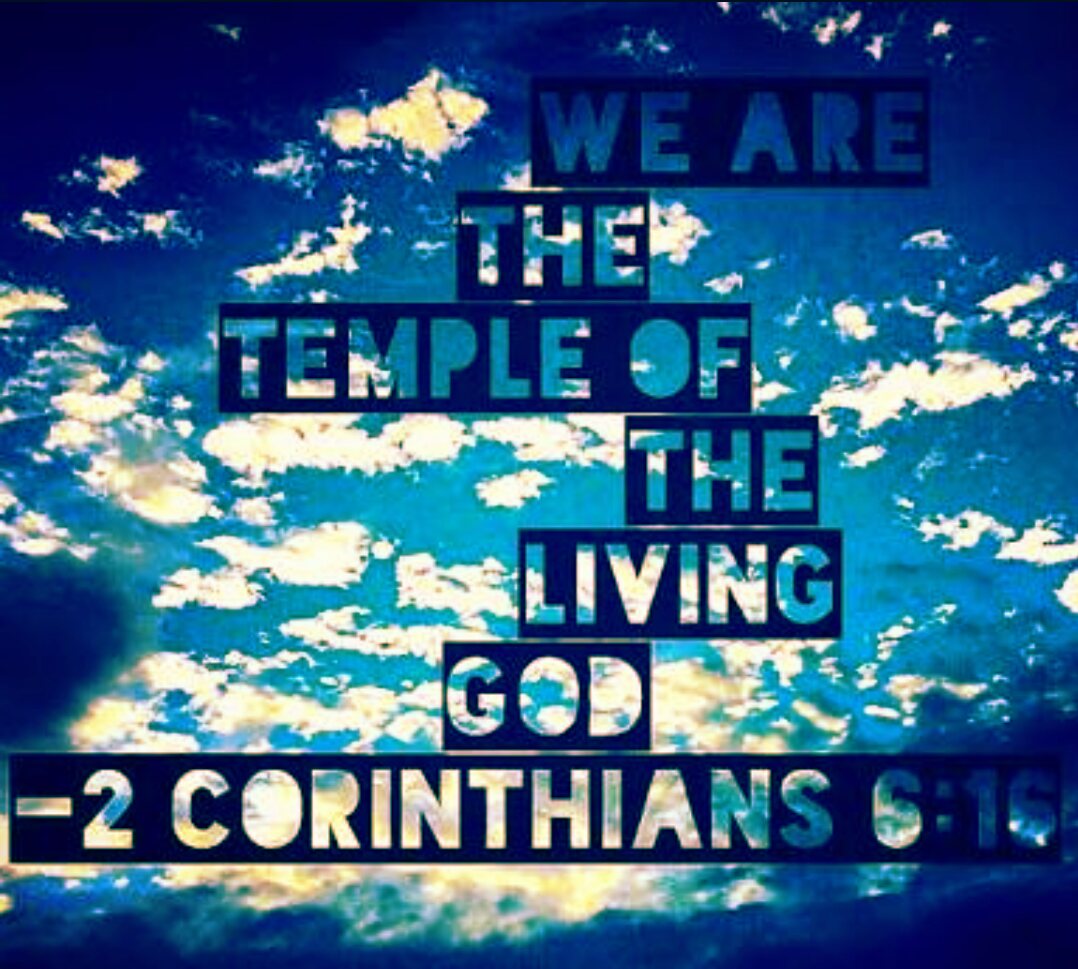
His praises resound in us – the new temple!
“The Lord is my strength and my song; he has become my salvation. Glad songs of salvation are in the tents of the righteous.” (Psalm 118:14-15)
The New Testament doesn’t talk a great deal about the use of music in the gathering of God’s people – but what it does say is very clear. Singing the Word of Christ together is designed to build up, teach and encourage one another, while declaring the praises of Him who loves us. In fact our praises are a really important part of God’s plan for the new temple. Let me explain.
Psalm 118 (and so many more) describes the Temple of God as the place from which our praises and blessings towards God should come. But when Jesus turns up to this earthy temple (Mark 11:1-12:12) there is no praise coming from this place. Herod’s fancy bricks and mortar monstrosity is the seat of money making and exploitation. This place is wrong; this temple building in Jerusalem is not functioning as the house of God. So where is the true temple? How can such a place of praise be established to the Glory of God?
The answer is Jesus.
Jesus went through suffering, pain, rejection – the Cross. In doing this he established the true temple, where true worshippers will praise his holy name. Where is this true temple? Well, it is found in us! We are God’s holy temple (1 Peter 1:5-6,9 1 Peter 1:4-5, 9-10)
“As you come to him, the living Stone—rejected by men but chosen by God and precious to him— you also, like living stones, are being built into a spiritual house to be a holy priesthood, offering spiritual sacrifices acceptable to God through Jesus Christ…. you are a chosen people, a royal priesthood, a holy nation, a people belonging to God, that you may declare the praises of him who called you out of darkness into his wonderful light.”
Worship happens not in one tiny location in far off Israel to the exclusion of all other people. Now under new Management, Jesus’ temple is wherever his people are. His people will bring a prayer for the nations and praise for God’s holy name. We are His people, God’s true temple. What a privilege to be part of the true house of our holy God. He lives within and among us; he inspires us to prayer and praise. When we praise Him together we fulfil Psalm 118: People from all nations praying for the nations. We are to be people who pray without ceasing, people who praise his wonderful name. Pray and praise must sound and resound from our Christian communities and individuals. Does that describe you? does that describe us?
“Don’t you realize that all of you together are the temple of God and that the Spirit of God lives in you?“ (NLT)
In 1 Corinthians 3:16 the Corinthian church needed Paul to remind them many times about the danger of division amongst God’s people. Paul speaks boldly here, explaining that as a Body of believers, WE ARE the temple of God where He dwells. He lives in us! He no longer chooses to reveal himself and meet with people in an earthly building (as he had done in the past, in Solomon’s temple, God’s house). Now he LIVES in us together. He reveals Himself in us. He has put His Spirit in us, collectively. This echoes the words of Peter (1 Peter 2:5): “you also, like living stones, are being built into a spiritual house to be a holy priesthood, offering spiritual sacrifices acceptable to God through Jesus Christ.”
Peter sees that genuine resounding praise can only come from this new spiritual temple – us! So how important it is for God’s people to major on authentic, true, fresh and relevant praise in our gatherings.
For more on this:
https://sevennotesofgrace.com/2012/09/06/stones-or-bricks-god-lives-in-us-together-1-corinthians-316/
https://sevennotesofgrace.com/2013/08/14/10-principles-for-church-singing/
Soar – Meredith Andrews
Watch “Angel” – Sarah McLachlan – by The Idea of North
Just a beautiful arrangement!
Friday Flashback: Lord Of The Dance
Lord of the Dance by Steven Curtis Chapman
On the bank of the Tennessee River
In a small Kentucky town
I drew my first breath one cold November morning
And before my feet even touched the ground
With the doctors and the nurses gathered ’round
I started to dance, I started to dance
A little boy full of wide-eyed wonder
Footloose and fancy free
But it would happen, as it does for every dancer
That I’d stumble on a truth I couldn’t see
And find a longing deep inside of me, it said
I am the heart, I need the heartbeat
I am the eyes, I need the sight
I realize that I am just a body
I need the life
I move my feet, I go through the motions
But who’ll give purpose to chance
I am the dancer
I need the Lord of the dance
The world beneath us spins in circles
And this life makes us twist and turn and sway
But we were made for more than rhythm with no reason
By the one who moves with passion and with grace
As He dances over all that He has made
I am the heart . . .
And while the music of His love and mercy plays
I will fall down on my knees and I will pray
I am the heart, You are the heartbeat
I am the eyes, You are the sight
And I see clearly, I am just a body
You are the life
I move my feet, I go through the motions
But You give purpose to chance
I am the dancer
You are the Lord of the dance
I am the dancer
You are the Lord of the dance
The end goal: Hope
God demonstrates his own love toward us, in that while we were yet sinners, Christ died for us.
(Romans 5:8)
Notice that “demonstrates” is present tense and “died” is past tense.
The present tense implies that this demonstrating is an ongoing act that keeps happening in today’s present and tomorrow’s present.
The past tense “died” implies that the death of Christ happened once for all and will not be repeated. “Christ died for sins once for all, the just for the unjust, that he might bring us to God” (1 Peter 3:18).
Why did Paul use the present tense (“God demonstrates”)? I would have expected Paul to say, “God demonstrated (past tense) his own love toward us, in that while we were yet sinners, Christ died for us.” Was not the death of Christ the demonstration of God’s love? And did not that demonstration happen in the past?
I think the clue is given a few verses earlier. Paul has just said that “tribulations work patient endurance, and patient endurance works proven character, and proven character works hope, and hope does not put us to shame” (vv. 3–5).
In other words, the goal of everything God takes us through is hope. He wants us to feel unwaveringly hopeful through all tribulations.
But how can we?
Paul answers in the next line: “Because the love of God has been poured out within our hearts through the Holy Spirit who was given to us” (v. 5). God’s love “has been poured out in our hearts.” The tense of this verb means that God’s love was poured out in our hearts in the past (at our conversion) and is still present and active.
God did demonstrate his love for us in giving his own Son to die once for all in the past for our sins (v. 8). But he also knows that this past love must be experienced as a present reality (today and tomorrow) if we are to have patience and character and hope.
Therefore he not only demonstrated it on Calvary, he goes on demonstrating it now by the Spirit. He does this by opening the eyes of our hearts to “taste and see” the glory of the cross and the guarantee that it gives that nothing can separate us from the love of God in Christ Jesus (Romans 8:39).
http://www.desiringgod.org/articles/the-love-of-god-past-and-present
Flashback: God is God
“Oh, the depth of the riches of the wisdom and knowledge of God! How unsearchable his judgments, and his paths beyond tracing out!” (Romans 11:33)
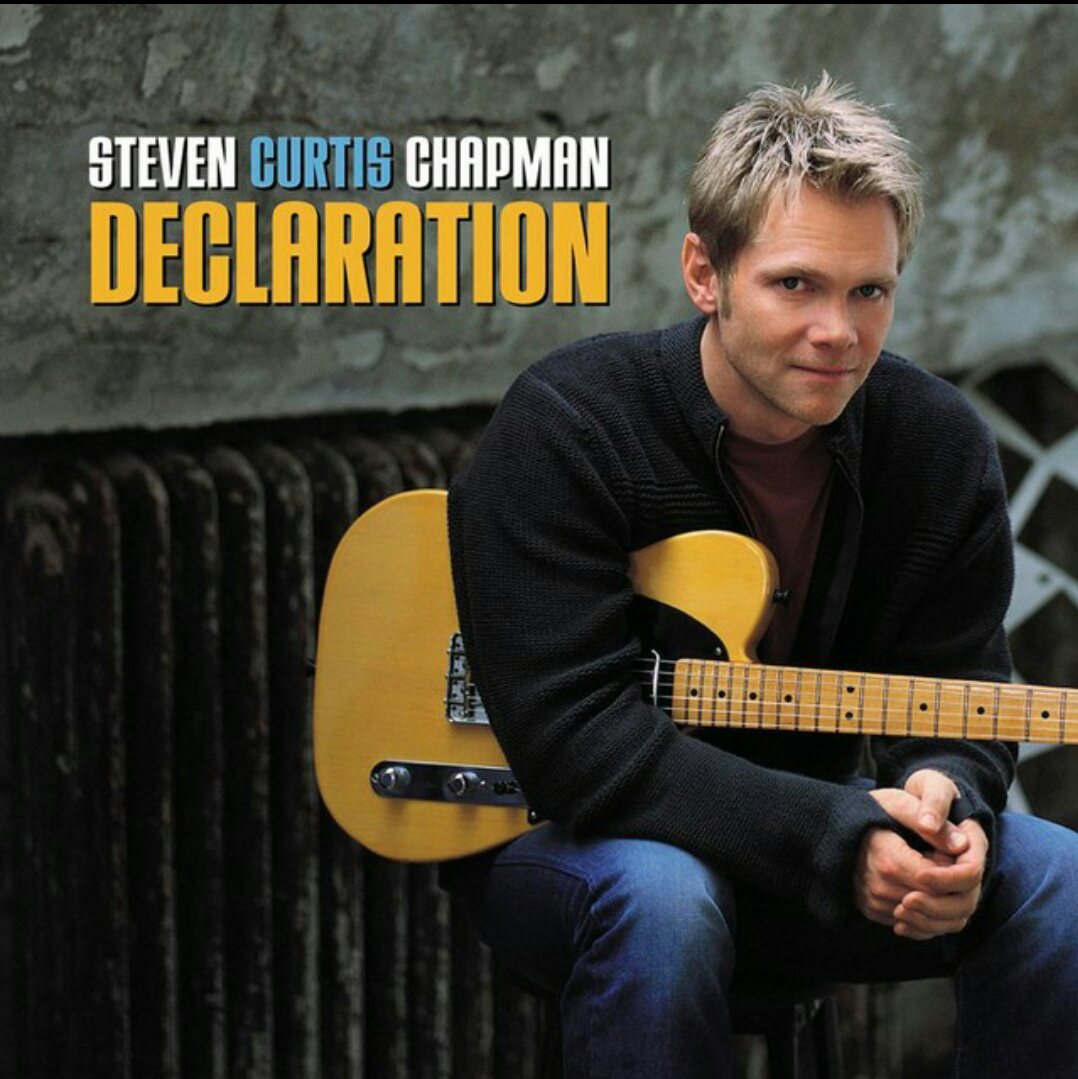
I recently listened to an old favourite album of mine by Steven Curtis Chapman and was struck by the words of the song, God is God. I won’t try to comment on what is significant about these words. There are so many treasures here. But they hold one simple and powerful lesson, that takes most of us a lifetime to realise: Only God is God.
“God Is God”
(Listen here on Spotify)
And the pain falls like a curtain
On the things I once called certain
And I have to say the words I fear the most, I just don’t know
And the questions without answers
Come and paralyze the dancer
So I stand here on the stage afraid to move, afraid to fall,
oh, but fall I must on this truth that my life has been formed from the dust
[Chorus]
God is God and I am not
I can only see a part of the picture He’s painting
God is God and I am man
So I’ll never understand it all
For only God is God
And the sky begins to thunder
And I’m filled with awe and wonder
‘Til the only burning question that remains
Is who am I
Can I form a single mountain
Take the stars in hand and count them
Can I even take a breath without God giving it to me
He is first and last before all that has been
Beyond all that will pass
[Chorus]
Oh, how great are the riches of His wisdom and knowledge
How unsearchable for to Him and through Him and from Him are all things
So let us worship before the throne
Of the One who is worthy of worship alone
[Chorus]
From the album Declaration (2001)
The Basin and the Towel
Hello readers, today I’m sharing a post from a few years ago, before many of you were following. I hope it will encourage you as you gather with and serve other Christ followers in your church community. Blessings!

“Truly I tell you,” Jesus replied, “no one who has left home or brothers or sisters or mother or father or children or fields for me and the gospel will fail to receive a hundred times as much in this present age: homes, brothers, sisters, mothers, children and fields—along with persecutions—and in the age to come eternal life.
Mark 10-:29-30
When we are saved into Christ we are saved into community, a community of believers. This is a great promise from Mark 10. Even if we lose many things in order to own the name of Christ we gain so much more. We gain family! We gain relationship. We gain brothers and sisters in Christ. (And yes, we gain persecutions, though that is not the topic for today so I’ll just leave it to the side). As we serve one another, we grow relationships, we grow bridges between us –…
View original post 281 more words
Why We Worship on Repeat | Desiring God
I enjoyed this discussion from Desiring God about praise/worship as meditating together on the truths of the Gospel. It makes me much more enthusiastic about the idea of another chorus repeat.
“Many a modern church-goer has been miffed by repetition in corporate worship.
The Information Age is conditioning us for new content, fresh ideas, new data. Why re-read what we’ve already read, why rehearse what we’ve already heard, when new information is available like never before?
But do we know what our unprecedented access to novelty is doing to us? All indications are that it’s threatening to make us shallower, not wiser and more mature. Running our eyes across the page and mouthing words to a song are not the same thing as experiencing the reality in our hearts. Our hearts simply don’t move as quickly as our eyes and our mouths.
Which makes corporate worship such an important elixir for what is increasingly ailing us today.
Learn to Feel the Truth
Take Psalm 136 as a flashing red light from the divine that our newfound intolerance for repetition is out of step with what it means to be human. The psalm is 26 verses, and each verse ends with “for his steadfast love endures forever.” It rehearses God’s goodness and supremacy, his wonder-working and world-creating, his delivery of his people from slavery and provision for them in a rich land.
Twenty-six times the psalm repeats this refrain — and not one of them is wasted. With each new verse, another attribute or rescue of God is celebrated, and then our souls are ushered deeper into his steadfast, ever-enduring love with each glorious repetition.
“Our hearts simply don’t move as quickly as our eyes and our mouths.”
The goal of the song is not to make his steadfast love old hat, but to help us feel it afresh and at new depth. The dance of each new verse, with each return to the refrain, is designed to bore the central truth about God’s resilient love deeper and deeper into our inner person. The psalm is not atreatise on the unwavering, persistent love of God, but what we call a meditation — less linear and more circular — crafted to help auger the reality of his love from information on our mental surface down to an experience in our hearts.
If you come away bored (unaffected), you’ve missed the point. But if you come away with God bored deeply into your soul (tasting afresh the strength and sweetness of his love), you’ve been carried by the Holy Spirit.
More Than Data
God made humans to meditate. And it is increasingly the lost art in our age. We were made to think deeply on his truth, not just be informed; to ponder reality down to the depths, not just move on to the next piece of data.
Non-Christian forms of meditation seek to empty the mind and transcend concrete specifics into the ethereal, and experience some form of meaningless enlightenment. But Christian meditation fills the mind with biblical truth, and chews on it, seeking to savor every bite.
“Meditation receives the truth into our souls and changes us in our deepest part.”
Unlike mere reading, even slow reading, where our minds and eyes keep moving at some pace, meditation slows us down, way down. We pause and ponder. Reading keeps us marching in linear fashion, while meditation moves us into a more spiral pattern by limiting the information set and seeking to press and apply the truth to our hearts, to actually experience the truth and not just let it run on through our minds on our way to the next thing.
Meditating Together
One remarkable aspect of corporate worship is that it gives us the opportunity to meditate together. The pinnacle of a good sermon is typically a form of corporate meditation, led by the preacher, as he circles around his main point and verbally kneads its goodness into our hearts.
And the summits of our best praises together in song are essentially meditative. It’s not the discovery and delivery of an obscure stanza that binds our hearts and draws us highest together toward heaven, but returning to the chorus, which has been enriched with each additional verse. The verses provide fresh information, but the refrain we know so well bores the truth even deeper into our souls. The verses and chorus together help us to know the reality even better, as we collectively digest the truth from our heads into our hearts. They help us actually experience and be affected by the truth in our inner person, not just rehearse the data on the surface.
“God made humans to meditate. And it is increasingly the lost art in our age.”
And only once we’ve taken the truth into the heart, into the core of our soul, do we organically grow external actions and lived-out transformation. Rather than circumventing the heart, by moving from the mind to the actions, meditation receives the truth into our souls and changes us in our deepest part so that our actions aren’t whitewashed, but authentic expressions of the movement of our souls.
Purposeful repetition in corporate worship empowers us to be changed not only as individuals, but as a people. It is not only the truths we read, but the truths we sing — and sing often, and take into our hearts — that mold and shape us for lives of worship.
So, perhaps this weekend, you’ll have a chance to experience corporate repetition afresh, and instead of begrudging the worship leader for it, you may find it to be a new pathway for enjoying the grandeur and love of God.”
http://www.desiringgod.org/articles/why-we-worship-on-repeat
 sevennotesofgrace