We live in an age which confuses activity for fruitfulness.
Christians can import that confusion into the way they follow Jesus.
Part of the discernment process of wisdom is not to simply know right from wrong, but to also know which is best from among a range of worthy opportunities.
HT: Z
The hardest lesson we learned in our first twenty years of marriage was this: life is full of good, worthwhile, and meaningful programs, activities, organizations, causes, and ministry opportunities — the vast majority of which we cannot and should not be involved with! It is not sufficient that something be good or important. It must be the best and most important for me, and God must show me that. Why? For the same reason that if I have a hundred dollars to spend on groceries this month, I should buy meat and milk and fruit…
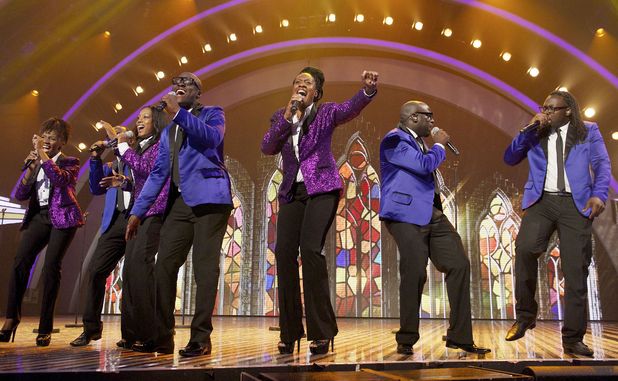
This was the comment made by infamous Britain’s Got Talent judge Simon Cowell, in response to a performance of “O Happy Day”, by Gospel choir “Incognito”. This is the power of the Gospel in song, the proclamation that the day Jesus washed our sins away is indeed happy! And this makes others happy, despite their best intentions! Click the link below to enjoy.
“Don’t think of church as an address or location . . .
but as something deployed. Don’t think of it as a place you are for an hour each week, but rather WHAT YOU ARE every day of the week. The Church is the hands and feet of Jesus. . .
Now Go, be the church.”
This comes from a great 1.5 minute clip from Igniter Media. We have used it in our church services, when plenty of people were around who don’t normally come to church, or know what it means to follow Jesus. It’s also a good reminder to all of us, of what church is, and isn’t. Hope you can find a use for it. Blessings! (Click link below to watch the clip.)
Yesterday was the first Sunday in years that I didn’t make it to a service at my church. There’s nothing like a bit of bronchitis to keep you at home. And the more I think about it, the more I am convinced that God really knew what he was doing when he established the “church” and called us not to forsake meeting together (Hebrews 10:25).
Without that regular meeting together with other Christians, both on Sundays and at other times through the week, it is easy to become extremely self-focused. (Well that’s what I found out!) We forget the bigger picture, where God is holding the circumstances of both our lives and the universe in His strong hands. Without that frequent encouragement and challenge from God through His word, and His other children, your perspective can go extremely awry. God lives in us together, through His Spirit. Being a lonely ‘coal’ away from the collective ‘heat’ of others makes you forget the strength and power of the living God that is in us together. We are part of the Body of Christ, the gathering of Christ’s followers, and like all bodies we function best when we are being used, when we are active. It’s hard for the body to be active if parts are missing and isolated.
Being part of the Body is a privilege, despite the fact that we will struggle at times to treat each other as Christ would. Yet this is God’s design for growing and strengthening us. As we rub shoulders with other saved sinners we learn to bear with each other’s imperfections, in love. Going to church is so good for us because it gets our eyes off ourselves (like Peter in Matthew 14) and onto the excellent One who holds all things together. He knows us by name and holds our head above water. He knows that our greatest happiness comes from pouring our adoration towards Him!
“God knows who He is. He knows what He’s worth. And He knows the best thing He can give us is Himself. So in calling us to prize Him above all else, God is both gaining the praise that is rightfully His alone and causing us to gain the greatest treasure we will ever know. God is not an egotist seeking more than He deserves from us. Rather, He is God, choosing, in worship, to reward us with Himself.”(Louie Giglio – “The Air I Breathe” 2003, p.31)
When we see ourselves as part of the Body of Christ, we see ourselves as something greater than ourselves – something designed by the Undescribable Merciful one True God!
I have a number of Christian friends who for various reasons are unable to share regular time with a church family. This has challenged me to consider how we can be better at including those who find themselves in this situation – even those within our church family who are unable to gather with us regularly. The church* is the people and it does not have to be contained by walls or geography.
On the other hand, if you are the thing that is keeping you from being part of a church family, don’t let fear or geography or travelling time keep you away. Don’t miss out on the thing that will grow your faith and confidence in God, that will allow you to give and receive encouragement, to sharpen others and be sharpened in Christ, to publicly declare the praises of Him who brought you out of darkness into His wonderful light. Praising God is so good for us! Gathering together is even better!
I’m really looking forward to next Sunday when hopefully this sickness will not stop me getting to church! Being part of the gathering will be sweet medicine, without the nasty side effects of what I am currently taking!
* By church I don’t mean any particular modern form of the church, merely the gathering of Christians, which began a few millennia ago, in the first century AD. This practice of gathering is one huge common denominator we have with those who first called themselves Christians.
I’m sharing today something encouraging I found over at the Blazing Centerblog. If you want to read the whole post you can visit there, but this is the heart of it:
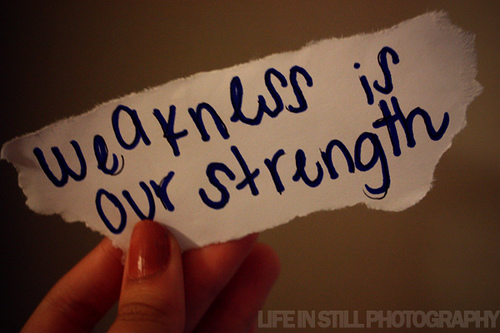
“God often does his most powerful work through those who are weak and unimpressive.
John Flavel says:
How the weak have been used for the good of the church! Christ did not choose eloquent orators, or men of authority in the courts of kings and emperors, but twelve poor labourers, and fishermen. This is the most ridiculous course that can be imagined, in appearance, for such a design. And yet, in how short a time was the gospel spread in all the kingdoms of the world.(Voices From the Past, 140)
Jesus established his kingdom on the shoulders of fishermen, tax collectors, and prostitutes. He chose Peter to lead the charge out of Jerusalem. Peter, the guy who denied Jesus three times. Peter, the guy who gave up gospel ground to the Judaizers. Peter, the guy whose mouth seemed to always run ahead of his brain.
Jesus could have chosen the most articulate orators as his spokesman. He could have chosen great war heroes, or political superstars. He could have built a campaign of shock and awe and power. Instead he chose fisherman. Guys with cracked hands, plain speech, minimal learning, and the constant aroma of raw fish. The disciples were not power players in the Roman world.
God will not allow us to receive any of the glory, so he builds his kingdom through and in spite of our weakness. If your worship team is mediocre, don’t freak out. Instead, work toward excellence and trust that God will use your weak, halting efforts for his glory. If you stutter and stammer when sharing the gospel, don’t get discouraged! Seek to improve your gospel communication, but more importantly, trust God to use your stutters and stammers to bring salvation to the lost. If your sermons feel like duds, don’t sink into despair. Improve your sermons and improve your confidence in God. If you feel like a constant parenting trainwreck, seek to grow in your parenting and trust God to use your trainwreck efforts to work in your children.”
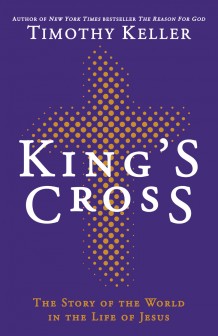
How do you feel when you’re given good advice on how to live? Someone says “Here’s the love you ought to have, or the integrity you ought to have,” and maybe they illustrate high moral standards by telling a story of some great hero. But when you hear it, how does it make you feel? Inspired, sure, but . . . do you feel your burdens have fallen off? Do you feel as if something great has been done for you and you’re not a slave anymore? Of course you don’t. It weighs you down: This is how I have to live. It’s not a gospel. The gospel is that God connects to you not on the basis of what you’ve done (or haven’t done) but on the basis of what Jesus has done, in history, for you. And that makes it absolutely different from every other religion or philosophy.
from Tim Keller “King’s Cross: The Story of the World in the Life of Jesus” (2011) For my first post on this book click HERE
Colin Buchanan is a pretty clever guy. I’m not sure how many of you from the USA or UK know much about him, but he has been producing fun and biblically true kids songs for around two decades. He is very well known here in Australia, not just for his kids music, but also as a Country singer and presenter on kids TV.
This is just one example of how Colin’s songs teach the great doctrines of God in a really catchy way. Though some people steer away from teaching the big words of the Bible, Colin makes clear the meaning of words like propitiation, substitution, salvation, justification and redemption to name but a few. All these words reveal the awesome grace God has shown us in sending Jesus! Enjoy.
Big Words That End in “Shun”
CHORUS Big words that end in SHUN! Show us what the Lord has DUN! Through Jesus, His own SUN! Big words, Big words that end in SHUN!
Revelat-SHUN! God shows Himself to us
Substitut-SHUN! Jesus takes our place
Salva-SHUN! Sinners saved from hell
Big words, Big words that end in SHUN…
CHORUS
Propitia-SHUN! God’s anger turned away
Justifica-SHUN! Just like we’d never sinned
Imputat-SHUN! Jesus’righteousness is mine
Big words, Big words that end in SHUN!
CHORUS
Resurrect-SHUN! Raised from death to life
Redemp-SHUN! Sinners bought by God
Adopt-SHUN! Sinners made God’s sons
Big words, Big words that end in SHUN!
Found a great post on a topic I have been meaning to write about myself over at Worship Sense. It talks of something about which I’m thoroughly convinced : that church music has a huge role to play in teaching good theology to the Body of Christ, and growing people in faith. I hope it will prove to be great encouragement to your music department! Enjoy. . .
“In spiritual circles, few people are seen as intimidating as often as theologians. Theologians are scholars. Studied. Educated. Cultured. And they wear old-school glasses, vests and wool sweaters as they sit in an aged leather wingback chair in front of a stately, oversized bookcase in a home library with loaded oak bookshelves lining all of the walls, all the way up to the ceiling. (Whew . . . that was a mouthful!) Okay, maybe not all of them, but we like to think they do. The point is, when we hear the word “theologian” often we get an image in our minds that, at least in some way, represents the description above.
So what if I told you that YOU are a theologian?
Well, if you’re a worship leader and/or worship songwriter, you are! Sure, perhaps you aren’t necessarily discovering any brand-spankin’ new theology. But, you are writing and/or choosing worship songs that speak a theological truth. You are communicating theology to your local church. This is why one of the most important things you do as a worship leader is pick out the songs for the weekend setlist.
Sure, key changes, arrangements, transitions, dynamics and flow are all important parts of what we do as worship leaders, but none of those things matter if we aren’t singing truths in our churches. It is widely known that ideas and messages are retained better in our brains when presented in song than by spoken word (a sermon). This is because our brains interact with music differently, thereby establishing a stronger retention of what we heard/sang. Why is this important?
It’s sad to say this, but most people don’t remember the sermon they heard last week or this morning, in some cases. Now sure, these days we have recorded sermons, sermon notes, etc. All of these allow us to go back and go through the messages again. However, overall there is a limited shelf life on the specific messages that are preached every week (hopefully the themes and lessons are learned and continue on!).
With music, however, things stick around a bit longer, including the lyrics of the songs themselves. These lyrics are a biblical message, just like your pastor’s sermon. The only difference is that yours is set to a music, may have some repetition, and may be more like 4 to 5 mini-sermons during a typical worship set. This is a big deal!
Why? Because what you sing in your worship times is going to stick in people’s hearts and minds longer than the sermon does. Therefore, it’s imperative that we sing songs that contain solid theology.
We basically have three options with the songs we sing at church:
1. Lyrics that present false, inaccurate theology.
2. Lyrics that aren’t false, but are theologically weak and don’t really say anything.
3. Lyrics that present a solid biblical truth with rich theology.
PLEASE stay away from songs in category one. As for category two, there is nothing wrong with this category necessarily, but there are too many songs that fit this mold.
I challenge you to shoot for the third category of songs. Pick songs that are not only correct, but really drive home messages that your congregation needs to hear. One helpful way that I’ve found to pick more songs in category three is not just listening to the song on the CD (with the fancy production), but taking the time to sit down and read the lyrics without the music.
This is no easy task, but it’s vital! You are a theologian. A musical theologian. Don’t take that responsibility lightly. Invest the time into being intentional about the words that your congregation sings each week.”
In studying Mark’s Gospel narrative I’ve been challenged to consider a few familiar things in a new light.
1. Parables These stories were the main form of Jesus’ teaching. They are actually a veiled way of teaching spiritual truth, that draws some people closer to Jesus in faith, and turns others away in hardness of disbelief. This is a hard thing to grasp. You would think Jesus should speak in simple stories that clearly reveal who he is and what he is going to do . . . but no. And perhaps this is the point.
The Kingdom of God is not going to be handed to people on a platter. Jesus wants people to exercise faith! Jesus wants those who have “ears to hear” to draw near and gain understanding of the secrets of the Kingdom, to draw near in faith. To those who do this, they receive greater understanding. Their faith increases! After Jesus told the parable of the sower and the soils (Mark 4), he took the disciples aside to explain: 10 When he was alone, the Twelve and the others around him asked him about the parables. 11 He told them, “The secret of the kingdom of God has been given to you. But to those on the outside everything is said in parables 12 so that, ‘they may be ever seeing but never perceiving, and ever hearing but never understanding; otherwise they might turn and be forgiven!’
While the Sower parable reminds us that there will be mixed responses to the gospel, there will be a certain harvest. Mark 4 contains several other parables of the Kingdom, explaining through brief stories or sayings the type of Kingdom he ruled over.
The Lamp: no matter what people think of Jesus now – as obscure, insignificant, foolish – one day he will be seen in power and glory. The Seed and the harvest: The word of God will advance and grow Jesus’ kingdom by God’s hidden power. The harvest is guaranteed and will come suddenly. The Mustard Seed and the Tree: The Kingdom of God may seem small, beginning in obscurity, but one day it will be see for what it is – the greatest Kingdom of all.
2. Miracles While people think that if there were more miracles today there would be greater numbers of people following Jesus, if you look at what happened in Jesus day, this is unlikely. Although crowds swarmed around Jesus (and made his teaching ministry more difficult) the miracles he performed did not cause faith to appear. When most miracles occured it was because the person had faith in the first place. The faith of the men who brought their friend on a mat (Mark 2), the faith of the bleeding woman who touched Jesus & the faith of Jairus whose daughter was raised to life (Mark 5) – in all of these faith came first.
We also see that despite witnessing miracles most people still do not understand or draw near in faith (which is the case for the disciples several times!). Rather, the faithful are the ones who cut through the crowds to draw near to Jesus, having faith in his ability to restore them. Each time, Jesus directs their faith to greater knowledge of Himself. Miracles are not the cause of faith, but Jesus uses them to increase a person’s understanding of him and to provoke questions.
Just thought you would like to know! It certainly changes the way I read the Gospels to appreciate these!
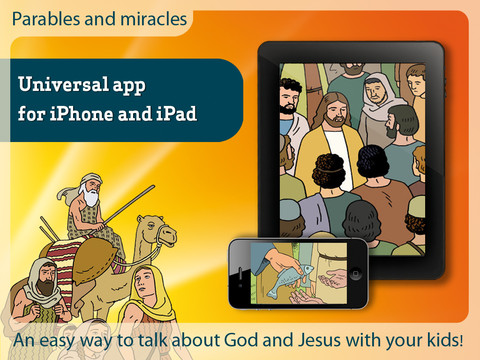
Ps. In searching for a suitable image I found a link to an iPhone/iPad app called “Parables and Miracles“. Check it out if you have children and you don’t mind giving them another reason to use your “i” device!
Well I had promised to do some more study here for my exam on Mark, but a few things have been drawing me away. Let me share some things from the last few days: We hosted the first night of the Parenting Teenagers Course at our church, I prepared to run a session on one-to-one Bible reading for women at a retreat (and then did so), I found out I had upset a lovely long-term friend (sorry!), managed to put out my lower back (I am walking around like a fragile old woman), then hosted a staff meeting and dinner at my house. Most of that happened yesterday! Today I have led music at church and felt ‘obliged’ to go see Iron Man 3 with my teenagers and husband. (This last one was no huge sacrifice, but it did take a few hours. Fun film!)
So now it is time to stop and think clearly for a few moments in the midst of this whirlwind, about the way Christ referred to himself, the titles of Christ as recorded in Mark’s Gospel. These titles reveal so much of God’s great plan to rescue a people for His own Kingdom purposes, a people who would come to resemble the beautiful King who saved them!
“How do the titles of Christ reveal who Jesus is?”
MESSIAH/Christ
Messiah is the Hebrew term, Christos the Greek, for the title which tells us that Jesus is God’s anointed and promised King. He fulfills the promise to King David of a descendent who would reign on his throne forever! (2 Samuel 7). Jesus, God’s Son, became the Son of God (a Messianic title which also applied to the OT Kings of Israel). The Son of God would be the one to subdue the nations and be the means of reconciliation between God and man. “Kiss the Son” is the instruction of Psalm 2, meaning we must bow to or align ourself with him. We must trust in Him: “blessed are all who take refuge in Him”. Jesus’ divinity (meaning He IS God!) was made apparent by the authority he displayed over sickness, nature, death, evil spirits and most importantly sin – God alone could forgive (Mark 2 – the Man on the Mat!). Jesus is the One who clearly fulfilled the words of Isaiah: “Then will the eyes of the blind be opened and the ears of the deaf unstopped. Then will the lame leap like a deer, and the mute tongue shout for joy.” (Isaiah 35:5-6). Several times in Mark, in the voice from heaven (at the baptism and the transfiguration) and the voice of demons, God revealed that Jesus was indeed His Son. Peter, Blind Bartemeus and the Roman centurion (who saw Christ crucified) all conclude “You are the Christ”, Son of David, Son of God.
Son of Man
Another significant title is this one, Son of Man, which Jesus often used in referring to Himself, and what He had come to do. While this may seem to be a puzzling title, since the man Joseph was definitely not his biological father, Jesus used it to show how he fulfilled the promises which came through Daniel. Daniel 7 speaks of one like a Son of Man who will be victorious over evil, who receives the Kingdom in the new age, and shares it with the saints (all believers). He is the servant of the Lord who delivers God’s people through a resurrection (Daniel 12). This Son of Man has the authority to forgive sins (Mark 2:8-12), and he will preside over the great Sabbath rest at the end of time (Mark 2:27-28). The Son of Man is the true descendent of Adam, representative of God the Creator, who will rule over creation within God’s total and sovereign rule.
In Mark 14:61-63 Jesus draws these two titles together, and admits who He is, as he stands before the Sanhedrin under arrest. Jesus says He is “I AM”, both the divine Son of God, Son of the Blessed One, and the Son of Man who will receive the Kingdom with power!
Suffering Servant
The final title is that of Suffering Servant, promised through the prophet Isaiah many centuries before. “For even the Son of Man did not come to be served, but to serve, and to give his life as a ransom for many” (Mark 10:45). The Son of Man will serve us by suffering, in our place. He takes the punishment for sin, our sin, which was death. Isaiah 53 provides the clearest picture of what the suffering Servant would do: the righteous servant would justify many, giving his life as a ransom. Fulfilling Isaiah’s words perfectly, Christ was crushed for our iniquities, pierced for our trangressions. The punishment that brought us peace was laid on him. Silently as a lamb he was led to the slaughter, the Perfect Lamb of God, the sacrifice that perfectly fulfilled the Law and the Prophets and brought a way for our forgiveness. Psalms 22 and 69 also foreshadow the way Christ (in fact God himself) entered into our suffering, forsaken to death for US!
And strangely, apart from all that I can learn about the titles of Christ, there is a great comfort in knowing that Jesus is not some modern, man made or religious idea, but the great God-man who fulfills the purposes of our creator, and He draws us to himself through Jesus. The name of Jesus is indeed a refuge (as Chris Tomlin has sung, below). Theology brings us comfort and assurance of all that we hope for in faith.
And just if you are interested to keep reading:
Yehoshua means ‘the Lord saves’, and is translated into English as Joshua.
Jesus’ Hebrew name is Yeshua, which is a shortened version of Yehoshua. Yeshua means ‘he will save’, and is translated into English as Joshua. Yeshua translated into Greek is Iesous. Iesous transliterated into Latin is Jesu. Jesu became Jesus in English.
Jesus’ name is actually “Joshua”.
I'm Ash. I love Jesus. I'm a wife and a mum. I'm a teacher. I'm also studying my Masters of Counselling. I started studying a few years after started the very hard work of engaging my own story of harm and trauma. This is a place where you'll hear my stories, as well as the stories of others. I'll also reflect on faith, healing and walking with Jesus. I pray that these words might encourage you to do your own painful but life-bringing work of examining your own stories, and allowing Jesus to heal the parts of you still locked in shame. For He came that we might have life, and have it to the full. Welcome, fellow traveller.
Words, words, words... well said Hamlet! A little blog to go off on tangents within the worlds of history, literature, TV and film that interest me. From the Tudors to Tom Hardy's Tess, the Boleyns to Bollywood or from the Wars of the Roses to Wuthering Heights, feel free to browse through my musings to pick up extra ideas and points for discussion!








 sevennotesofgrace