Leading praise and worship is not about us

It also doesn’t depend on us feeling good!  I recently read the interesting musings of a worship leader who was feeling temporarily rather flat, and contemplating how to go about leading at church in such a state.  I love his conclusions, about the fact that faithfulness to the task is what counts, not the results. I’m sure you’ll be encouraged by the excerpt below.

FEELING FLAT (from Daniel K. Robinson, Voice in Worship)

“. . . My current sense of d_feelingflat1ejection did have me wondering (as you do) about the role of the worship leader and how we don’t always ‘feel’ like leading people in worship. . . . So let’s hypothesise that I was ‘rostered on’ to lead worship this Sunday. How should I approach such a service? Should I, as I just suggested, ‘rouse’ my emotions and challenge myself to sing God’s praises regardless. Most certainly! God is worthy of my praise, regardless of my situation, circumstance or even emotional state. . . .  Can I worship God, moreover can I, and should I lead worship even when I’m not feeling emotionally buoyant?

Well I guess the answer to that query is found in the underlying ethos upon which my worship orientation is founded. For example, as Mark Pierson (2010) writes in The Art of Curating Worship, “If excellence is a primary goal, then the weak, the timid, the depressed, the disabled, the unskilled, the sick, the introverted, the overweight, the less attractive, the poor, and the untalented aren’t going to get a look in” (p. 65). I’m adding to Mark’s list…the temporarily despondent.
Allow me to offer the thought: perhaps my worship (and my leading thereof) in this moment of temporary despondency is worship experienced differently. Sure, on the outside it might not present with the level of excellence I have in the past but I am choosing to worship regardless of my feelings; offering myself as a living sacrifice – imperfectly despondent. Could this actually be a wonderful opportunity, disguised though it may be (even to myself), where my offering of worship is simply in the doing? Sometimes our worship becomes very ‘results’ orientated. . .  But maybe this occasion calls me to simply do and be with no expectation of result or outcome. How wonderfully un-gratifying! Now, in my current state of glumness, it’s not about me…it has to be all about Him. In the midst of the moment it may well be that God touches me in a refreshing way and I come through the experience changed and uplifted. Equally, it might not happen like that. But that should not be my reasoning anyway. I don’t worship simply for ‘what’s in it for me’. At least I shouldn’t…and this circumstance (my feeling flat) has actually gifted me with the opportunity to make sure that the worship service can’t be about me – but about the one to whom we offer our praise!”

(Read the full article here: Voice in Worship)

You may also like:

Working for those moments of joy                                     Sharing the rich, indwelling Word
grow musicbible-28

Jesus, friend of sinners

casting-crowns-come-to-the-well-TOURJesus, Friend of Sinners is the title of a beautiful song from Casting Crowns’ most recent album “Come to the Well“. It is a song which speaks of need for us to show the love of Christ to others, to show what we stand for . . . that we stand for and by the grace that has been shown to us in Christ. We stand for His forgiveness, won on the cross. We want the world to know that our God shows unmeasured grace and love to those who are his enemies. We don’t want the world to define Christians as those who simply oppose everything, and who stand against them. Jesus is the only righteous Judge of those for whom he died, so let’s leave the judging to him. Let this resounding challenge (from the chorus) go with you today:

“Oh Jesus, friend of sinners, Open our eyes to the world at the end our pointing fingers
Let our hearts be led by mercy, Help us reach with open hearts and open doors
Oh Jesus, friend of sinners, Break our hearts for what breaks Yours.”

Jesus, Friend of Sinners

Jesus, friend of sinners, We have strayed so far away
We cut down people in Your name
But the sword was never ours to swing
Jesus, friend of sinners, The truth’s become so hard to see
The world is on their way to You
But they’re tripping over me

Always looking around but never looking up, I’m so double minded
A plank-eyed saint with dirty hands and a heart divided

Oh Jesus, friend of sinners
Open our eyes to the world at the end our pointing fingers
Let our hearts be led by mercy
Help us reach with open hearts and open doors
Oh Jesus, friend of sinners
Break our hearts for what breaks Yours

Jesus, friend of sinners
The One whose writing in the sand made the righteous turn away
And the stones fall from their hands
Help us to remember we are all the least of these
Let the memory of Your mercy
Bring Your people to their knees

Nobody knows what we’re for, only what we’re against
When we judge the wounded
What if we put down our signs, Crossed over the lines
And loved like You did

You love every lost cause, You reach for the outcast
For the leper and the lame, They’re the reason that You came
Lord, I was that lost cause, And I was the outcast
But You died for sinners just like me, a grateful leper at Your feet

‘Cause You are good, You are good
And Your love endures forever
And I was the lost cause, And I was the outcast
You died for sinners just like me
A grateful leper at Your feet

by Mark Hall, Matthew West © 2011 Sony/ATV Tree Publishing (BMI)

Listen to Mark Hall speak about the story behind the song – click HERE

You may also like:

Our glorious capital ‘C’ Church                                                               The Basin and the Towel
screwtapeImage created by Sarah Danaher with a Canon EOS 5D MkII

Why men have stopped singing in church

This is one of the most thought-provoking articles I have read about congregational singing in quite a while. As musicians we appreciate the freedom we now enjoy to learn and teach an infinite number of great songs in our gatherings. We are no longer limited to the several hundred in our now passé hymn book. But what is the impact of this change, particularly for men? This post suggests many things we should perhaps take heed of. It reminds me of the benefits that come from sticking to a smaller playlist for a term, as people get to know songs better. Let me know what you think.

WHY MEN HAVE STOPPED SINGING IN CHURCH

Worship BandIt happened again yesterday. I was attending one of those hip, contemporary churches — and almost no one sang. Worshippers stood obediently as the band rocked out, the smoke machine belched and lights flashed. Lyrics were projected on the screen, but almost no one sang them. A few women were trying, but I saw only one male (other than the worship leader) making the attempt.

A few months ago I blogged, “Have Christians Stopped Singing?” I did some research, and learned that congregational singing has ebbed and flowed over the centuries. It reached a high tide when I was a young man – but that tide may be going out again. And that could be bad news for men.

First, a very quick history of congregational singing.

Before the Reformation, laypersons were not allowed to sing in church. They were expected to stand mute as sacred music was performed by professionals (priests and cantors), played on complex instruments (pipe organs), and sung in an obscure language (Latin).

Reformers gave worship back to the people in the form of congregational singing. They composed simple tunes that were easy to sing, and mated them with theologically rich lyrics. Since most people were illiterate in the 16th century, singing became an effective form of catechism. Congregants learned about God as they sang about God.

A technological advance – the printing press – led to an explosion of congregational singing. The first hymnal was printed in 1532, and soon a few dozen hymns became standards across Christendom. Hymnals slowly grew over the next four centuries. By the mid twentieth century every Protestant church had a hymnal of about 1000 songs, 250 of which were regularly sung. In the church of my youth, everyone picked up a hymnal and sang every verse of every song.

About 20 years ago a new technological advance – the computer controlled projection screen – entered America’s sanctuaries. Suddenly churches could project song lyrics for all to see. Hymnals became obsolete. No longer were Christians limited to 1,000 songs handed down by our elders.
At first, churches simply projected the songs everyone knew – hymns and a few simple praise songs that had come out of the Jesus Movement. People sang robustly.

But that began to change about ten years ago. Worship leaders realized they could project anything on that screen. So they brought in new songs each week. They drew from the radio, the Internet, and Worship conferences. Some began composing their own songs, performing them during worship, and selling them on CD after church.
In short order we went from 250 songs everyone knows to 250,000+ songs nobody knows.

Years ago, worship leaders used to prepare their flocks when introducing a new song. “We’re going to do a new song for you now,” they would say. “We’ll go through it twice, and then we invite you to join in.”
That kind of coaching is rare today. Songs get switched out so frequently that it’s impossible to learn them. People can’t sing songs they’ve never heard. And with no musical notes to follow, how is a person supposed to pick up the tune?
And so the church has returned to the 14th century. Worshippers stand mute as professional-caliber musicians play complex instruments, sung in an obscure language. Martin Luther is turning over in his grave.

What does this mean for men? On the positive side, men no longer feel pressure to sing in church. Men who are poor readers or poor singers no longer have to fumble through hymnals, sing archaic lyrics or read a musical staff.
But the negatives are huge. Men are doers, and singing was one of the things we used to do together in church. It was a chance to participate. Now, with congregational singing going away, and communion no longer a weekly ordinance, there’s only one avenue left for men to participate in the service – the offering. Is this really the message we want to send to men? Sit there, be quiet, and enjoy the show. And don’t forget to give us money.

There’s nothing wrong with professionalism and quality in church music. The problem isn’t the rock band, or the lights, or the smoke machine. The key is familiarity. People enjoy singing songs they know.
How do I know? When that super-hip band performed a hymn, the crowd responded with gusto. People sang. Even the men.

http://www.patheos.com/blogs/afewgrownmen/2013/05/why-men-have-stopped-singing-in-church/

You may also enjoy:

How Church music can welcome newcomers                    When should we sing that song?
Image created by Sarah Danaher with a Canon EOS 5D MkIIpiano-stairs3

Looking for good Christmas songs?

Music leaders, it’s that time of year to start planning your Christmas events once again. If you are looking for ideas, check out some of these posts from Christmas past:

December 25 in song, thanks to Francesca!francescachristmasalbum

. . .  Click here for the itunes link. If you are looking for a great song for a Christmas event at your church, I would recommend “Heaven Everywhere” (sheet music available from Musicnotes.com) or a slower one “December 25“. If you live in a snowy location, try “Marshmallow world” for a bit of fun! Can’t say we relate to that over here in sunny Brisbane, in the middle of a heatwave. READ MORE

Grace has now appeared – Christ!advent

Titus 2:11  “For the grace of God has been revealed, bringing salvation to all people.”

. . .  another great new Christmas song published by the folks from EMU music. (If you haven’t heard of them, they are a great source of singable gospel-true congregational songs). This song “Grace has now appeared” is the first track on their recently released Christmas album Advent(follow this link to buy on itunes). The theme is obviously the “advent”, the arrival of our Saviour, the Word become flesh. The whole album is filled with gospel-rich songs of different styles and tempos. It’s great to play in your home or car through the holiday season, to help remember the loving act of our Holy God, who became man, and showed immeasurable kindness in stooping down to save us, from our addiction to worshipping ourselves.
My favourite lines of this song come in verse 3, “He has come to dwell within us, Bringing us from death to life, Giving us the hope of glory, Making us like Christ, Shining forth his light.” Grace has indeed appeared! And we “little Christs” are the living reminders of that grace. Hope you enjoy the album! (Sheet music available here) READ MORE

Fullness of grace in man’s human frailty

I have been dusting off all my Christmas CDs in anticipation of that most wonderful time of the year. A song I’ve enjoyed for quite a while (on the Christmas album NEW IRISH HYMNS 3: INCARNATION) has just been re-released on the newest Getty album: Joy – An Irish Christmas. The song is called “Fullness of Grace.” It effectively captures how the Incarnation event, when God became Man in Christ, is all about Jesus’ willing choice to wrap himself in our frail human form – an embodiment of the grace of God.
READ MORE

Mary did you know?

I have only recently discovered an awesome Christmas song by Mark Lowry and Buddy Greene (1991), called “Mary did you know?” Why haven’t I heard of this one before? Jeremy Camp has just released it on his new Christmas album “Christmas: God with Us”. It would make a great solo/ensemble song for your carols/Christmas program. READ MORE

And here are a few more song ideas:

Here they are. The first 4 come from a great album by Sovereign Grace Music called “Savior: Celebrating the Mystery of God Become Man” (click the title to listen to all these songs. Find free lead sheets, guitar tabs and mp3s for all these songs here)

Hope has Come (fast and cheery – great with chimes or bells)

Christ the Lord is born today (great Christmas Day item)

Glory be to God on High (bright upbeat song)

Salvation is Born (a gentler feel – I used this with a choir, soloist in v1 and ending, arranged the chorus in 3 part harmony).

Is this not the Carpenter? from Emmanuel: A musical celebration of the Life of Christ
The One who made the world made this world His home
This child that grew to man came unto His own
But His own received Him not, Even looked into His eyes, yet never recognized Him, saying
“Is this not the Carpenter – is this not the Son of Mary?”

“Is this not the Carpenter – is this not the Son of Mary?”
Saying “This is but the Carpenter – it’s only Jesus, Son of Mary.”
It’s a sadness without measure, They had been with Him forever
And still not realized He was the very Son of God, saying
“Is this not the Carpenter – is this not the Son of Mary?” . . . read more

So Let Us Shine from Emu Live 2 (lyrics, pdf music and mp3 here)
For desperate people at their darkest hour, When fault and failure held us in its power
A babe was born – he said, “I am the way”.
He came to earth to turn our night to day, He came to earth to turn our night to day
So let us shine! And show the world his love
So let us shine! Because he first loved us
So let us shine! And show the world his love
This baby is the light of the world.

And this last one, is new to me, untested, but I envisage a string section and some groovy chimes and bells!
Shout for Joy by Paul Baloche – as recorded on his most recent CD “The Same Love”
(Note that the CCLI version of the sheet music has a different bridge. I’m going with the one on the album.)

You may also like:
Why wouldn’t we remember Christmas            
dec 25

Trying on the shoes of a Christmas visitor2012-carols1

Praising God makes our joy complete

made-to-praise_tWe all know that self-praise is no praise at all – and seeking the praise of others is even worse. Nothing sounds so bad as someone describing or complaining about all their great efforts and actions simply so we can praise them for it!

So why then does God so eagerly and perhaps egotistically command us to praise Him? The pages of Scripture (which are in fact ‘God-breathed’ – 2Tim3:16) constantly direct and urge us to praise God. So basically he is asking for it. He created us for His pleasure and he does delight in our praise. Yet he doesn’t need our praise, surely? He is not insecure like us!  On the other hand, yes he does deserve praise, so why shouldn’t we praise Him?

Perhaps the short answer to this dilemma is that praising God is good for us! God knows this, so directs us to praise Him. But let me direct you to some relevant discussion from C.S Lewis and John Piper to explain:

“Just as men spontaneously praise whatever they value, so they spontaneously urge us to join them in praising it: “Isn’t she lovely? Wasn’t it glorious? Don’t you think that magnificent?” . . . The Psalmists in telling everyone to praise God are doing what all men do when they speak of what they care about. . . I think we delight to praise what we enjoy because the praise not merely expresses but completes the enjoyment; it is its appointed consummation. It is not out of compliment that lovers keep on telling one another how beautiful they are; the delight is incomplete till it is expressed. . .  If we were not allowed to speak of what we value and celebrate what we love and praise what we admire, our joy could not be full.”
(C.S. Lewis, Reflections on the Psalms)

“So if God loves us enough to make our joy full, he must not only give us himself; he must also win from us the praise of our hearts — not because he needs to shore up some weakness in himself or compensate for some deficiency, but because he loves us and seeks the fullness of our joy that can be found only in knowing and praising him, the most magnificent of all beings. . . . God is the one Being in all the universe for whom seeking his own praise is the ultimately loving act. For him, self-exaltation is the highest virtue. When he does all things “for the praise of his glory,” he preserves for us and offers to us the only thing in all the world that can satisfy our longings.”
(John Piper. Desiring God, pages 48–49)

So praising God completes our joyful experience of his good and gracious character. How important it is then to see our music ministry as providing an opportunity to do just that – to bring people to praise God, even when they don’t “feel” like it or sing with trepidation because they sing ‘out of tune’.
People need to praise God. Praising God not only completes our joyful experience of his love, it also takes our eyes from ourselves and our problems to the One who holds us together, who has moved towards us with compassion in Christ.
Let’s keep doing all we can to bring people to the place of praise!

(And this may be the topic for another blog post but I’ll mention it anyway: God sings over us!
“The LORD your God is with you, the Mighty Warrior who saves. He will take great delight in you; in his love he will no longer rebuke you, but will rejoice over you with singing.” (Zephaniah 3:17 – almost a Three Sixteen!))

You may also like:

Why is it so Critical that we Sing Together (from the Blazing Center)

Working for those moments of Joy                                     You are our Song from Age to Age
Age to Age - Sovereign Grace Musicgrow music


Living under the power of grace

grace tree“Sin will have no dominion over me! Why? Because I’m not under the law any more. I’ve died to the law of Moses. The law of Moses did not give me power to obey God’s commands, it only informed me of God’s commands. But I’m not under the law any more, I’m under grace, and God’s grace is pulsing with power. God’s grace at work within me ensures that sin will have no dominion over me.”
(Stephen Altrogge. ‘The Blazing Centre‘)

You may also like:
This is Amazing Grace                                       What is so amazing about “Amazing Grace”?
for the sake of the worldamazing-grace-graphic4web

What are hymns – do we still need them?

hymn booksHere is a series of quotes from some great thinkers on the topic (borrowed from Chong’s Worship). They look at defining a hymn, why we still need hymns and how to choose them well . . . which is probably the most important thing, since the language of some hymns simply does not translate for contemporary people. Remember too that the last good Christian hymn is still yet to be written (shortly before Christ’s return). . . and fortunately we are blessed with a great variety of singable and biblical Christian songs and hymns.

What’s a hymn?

“… a poem, designed for group singing, and written as a sequence of identical units called stanzas. Each stanza has the same line length, rhythms and rhyme scheme as its predecessor, so that the hymn can be sung, stanza by stanza, to the same tune.”

– Brian Wren, Praying Twice

Are they historically literary or musical texts?

Mike-Cosper

“Many of the great hymn writers weren’t musicians… they worked as theological poets, writing hymns in meters that were commonly used amongst the churches, relying on melodies that were written by others.” Mike Cosper

Do we still need them?

“I say without qualification, after the Sacred Scriptures, the next best companion for the soul is a good hymnal.


For the child of God, the Bible is the book of all books, to be reverenced, loved, pored over endlessly and feasted upon as living bread and manna for the soul. It is the first-best book, the only indispensable book. To ignore it or neglect it is to doom our minds to error and our hearts to starvation. After the Bible, the hymn book is next . . . containing the cream of the great Christian hymns left to us by the ages…”

 – AW Tozer, We Travel An Appointed Way

Why?

“A great hymn embodies the purest concentrated thoughts of some lofty saint who may have long ago gone from the earth and left little or nothing behind him except that hymn.

To read or sing a true hymn is to join in the act of worship with a great and gifted soul in his moments of intimate devotion.

It is to hear a lover of Christ explaining to his Saviour why he loves Him; it is to listen in without embarrassment on the softest whisperings of undying love between the bride and the heavenly Bridegroom.” – AW Tozer, We Travel An Appointed Way

But even today?

“Hymns are great art! The arts, stories, poetry, music all combine to sneak into the heart by the backdoor – something increasingly important for our ministry to the coming generations” – Kevin Twit, Why We Still Need Hymns in a Post-modern World

“How will you reach this post-modern generation – a generation that cannot conceive of objective truth, cannot follow your linear arguments, cannot tolerate anything (including evangelism) that smacks of religious intolerance?”” – Kevin Ford, Jesus for a New Generation

So how do we choose and sing good hymns?

James Montgomery

“[Good hymns are those] which, once heard, are remembered without effort, remembered involuntarily, yet remembered with renewed and increasing delight at every revival.” – James Montgomery, The Christian Psalmist

“The best results happen when theologically deep and emotionally rich texts are wedded to music that is aesthetically fitting and culturally resonant, that connects at every level.”Ron Rienstra

“We will not hide them from their children, but tell to the coming generation the glorious deeds of the Lord, and his might, and the wonders that he has done.” Psalm 78:4

Quotable: what’s a hymn and why we still need them

You may also like:

When should we sing that song?                         New songs say God is doing something now
piano-stairs3music_is_nature__silhouette_by_sammy3773-1


Who has the X Factor?

cat vassOkay, I’m going to admit that I have been totally drawn into viewing the television talent show X Factor. The last time such a thing happened was a decade ago, with the very first series of Australian Idol (2003) won by Guy Sebastian. While I am thoroughly aggravated by the hype, drama, ad breaks and soapie-style formatting, I do simply enjoy hearing the people sing! (Especially Georgie, but he was eliminated tonight in the cut for the final 12! Can you believe it? I think he didn’t have the pop star physique they were looking for. Check out the video at the end – I assure you it will bring a smile to your dial, as they say!)

Yet each voice is like a fingerprint, a unique sound that each person owns and uses to bring new life to old melodies. Each person has been on a unique journey to arrive at a place where they feel comfortable and confident with their voices. I find this most intriguing. Though some of them try their best to sound like pop stars who already own fame, their unique vocal colour shines through.

And this leads me to contemplate the incredible gift of singing voices that God has given. Such a divine gift from the Creator, a gift greatly admired and applauded even by those who will not give credit to the Maker of the voice. And who can beat true emotion conveyed through sung lyrics? A pleasant, dynamic voice can pack a punch unmatched by any spoken rhetoric.

God has designed us with singing voices for many reasons, but perhaps above all, that we would praise Him!
Oh that we could inspire our congregations to sing to God (and one another) with the conviction and energy of these X Factor hopefuls. Though these singers gather together to sing for their own fame (and supper), we gather together as Christ’s Body to praise Him. As we share the true Word of God together in song, surely we should be displaying equal or greater effort? We sing for the most famous One, the author of Life, the Saviour of the world, to declare His glory.  When we remember this purpose it can change our self-consciousness, often off-key, efforts into something mutually edifying. Praising God is so good for us. And so is singing!
Don’t you think?

And here’s Georgie (the full audition):

You may also like these posts:

10 Principles for Church Singing                         The wonderful mystery of Harmony singing
praise him pic cracking_the_harmony_2

The waterfall, river and reservoir of God’s grace

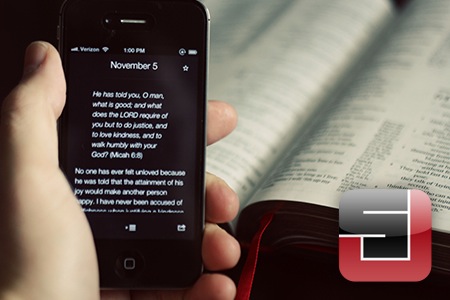
solid-joy-appI have been really enjoying a smart phone app called “Solid Joys” which comes from the pen of John Piper. Each daily devotion takes about a minute to read, and a few more minutes to contemplate. (You can look it up here if you would like to read online, or check your phone’s app store.) This one is on the theme of grace and how it relates to our past, present and future. Grace is not just about God doing good to us, but also in us. I hope you will find it as encouraging as I did.

The Different Tenses of Grace

We always pray for you, that our God may make you worthy of his calling and may fulfill every resolve for good and every work of faith by his power, so that the name of our Lord Jesus may be glorified in you, and you in him, according to the grace of our God and the Lord Jesus Christ. (2 Thessalonians 1:11–12)

Grace is not only God’s disposition to do good for us when we don’t deserve it — undeserved favor. It is also a power from God that acts in our lives and makes good things happen in us and for us.

Paul said that we fulfill our resolves for good “by his power” (verse 11). And then he adds at the end of verse 12, “according to the grace of our God and the Lord Jesus Christ.” The power that actually works in our lives to make Christ-exalting obedience possible is an extension of the grace of God.

You can see this also in 1 Corinthians 15:10: By the grace of God I am what I am, and his grace toward me was not in vain. On the contrary, I worked harder than any of them, though it was not I, but the grace of God that is with me.

So grace is an active, present, transformative, obedience-enabling power.

Therefore this grace which moves in power from God to you at a point in time is both past and future. It has already done something for you or in you and therefore is past. And it is about to do something in you and for you, and so it is future — both five seconds away and five million years away.

God’s grace is ever cascading over the waterfall of the present from the inexhaustible river of grace coming to us from the future into the ever-increasing reservoir of grace in the past. In the next five minutes, you will receive sustaining grace flowing to you from the future, and you will accumulate another five minutes’ worth of grace in the reservoir of the past.

“Living by Faith in Future Grace”

You may also like these posts:

More Great Grace Songs                                                   The Unexpected timing of God’s grace
advent                               kingscross

10 Principles for church singing

praise him picKevin de Young is writing lots of great material over at the Gospel coalition. If you have never visited there I would encourage you to do so. Today I’m sharing a summary of his ‘Ten Principles for Church songs’ which has been published in two parts. I have included his introduction, and then a summary of his ten principles (with some teasers) – which I would thoroughly endorse! To read his full explanation of each point you will need to click through to the actual website. It would make great material to work through with the church leadership or your music team, to clarify issues, prevent problems and encourage one another:

When it comes to singing on Sundays, churches have more options than ever before. From hymnals to Hillsong to homegrown creations, pastors and worship leaders have thousands of songs to choose from. A nice problem to have. But still a problem. No music leader or pastor can keep up. No church can sing all the great hymns and all the latest greatest songs on the radio. No musician can excel in all the available styles. No leader can please all the people all the time. . . There are other questions too. What sort of instruments should we use? How much should cultural context come into play? Is there only one right kind of song to sing? If not, are there any wrong ways? I can’t possibly answer all those questions. But there are some general principles we can use to make wise decisions with our church music. Let me suggest ten principles for congregational singing.

1. Love is indispensable to church singing that pleases God.
Love is indispensable when we sing and when we are trying to discern what is best to sing.
2. Our church singing is for God’s glory and the edification of the Body of Christ.
Congregational song is part of the teaching ministry of the church.
3. We ought to sing to the Lord new songs.
Sometimes I want to ask to very conservative Christians: “Do you really think the last good song of praise to Jesus has been written?”
4. Church singing should swim in its own history of church singing.
We should swim in this big ocean of church music, an ocean that is continually receiving new streams.
5. Sing the Psalms
It’s strange, even though we are commanded to sing Psalms and even though Psalms have been at the center of the Church’s singing for centuries, still we easily ignore the 800 pound gorilla in the middle of our Bibles.
6. We should strive for excellence in the musicality and the poetry of the songs we sing.
Some songs are simply deep and some are deeply simple, but there is a way to do both well.  With so many songs to choose from, there’s no reason churches can’t make an effort to sing songs with some sense of poetry and musical integrity.
7. The main sound to be heard in the worship music is the sound of the congregation singing.
What people want to see in your worship is that you mean it. And no matter how chill or how reverent your worship is, if no one is singing, it’s lame.
8. The congregation should also be stretched from time to time to learn new songs and broaden its musical horizons.
Every church will have a musical center. You should not reinvent the center every week. But you should not be enslaved to it either.
9. The texts of our songs should be matched with fitting musicality and instrumentation.
Musical style is not neutral, but it is elastic. Music conveys something. Some melodies are too syrupy or too raucous or too romantic.
10. All of our songs should employ manifestly biblical lyrics.
In all our songs we want to be teaching people about God. If we aren’t learning good theology and biblical truth from our songs, then either we don’t care much about our songs or we don’t care much about rich biblical truth, or both.