Thanks for the blog award!

notes 7I was recently nominated for the Liebster Award by one of my blog followers: http://savurbks.wordpress.com/ (Check out their About to understand their intriguing title!)  I am honored to accept as well as humbled to have been nominated. (The Liebster Award is an award designed to help bloggers enter the blogging community.)  I’ve just reached 10000 views on my blog this weekend and I’m really enjoying sharing with people all over the globe.

Here are the questions I was posed and my answers:liebster
1. If you could meet any author, whom would you like to meet?
Harper Lee, author of To Kill a Mockingbird
2. What is your favorite childhood book?

My Little Dinosaur – a Little Golden Book!
3. If you could watch a movie adaptation of any book, which book would you choose?
Markus Zusak’s THE MESSENGER. His other most famous book, THE BOOK THIEF, will be released as a film later this year.
4. What is your favorite genre of books?
Historical fiction – though I do read heaps of non-fiction books, in the realms of psychology and relationships.
5. What is the next book on your “must read” list?
Eric Metaxas’ biography on Bonhoeffer.
6. If you could visit any place in the world, where would you go?
The National parks in the USA and Canada would be awesome. But I live so far away! New Zealand might have to do.
7. Who is your role model?
As a Christian I obviously follow Jesus and want to have his ‘mind’ in my living, in my attitude to the things of this world, and to others. But there are plenty of wise older Christian women I attempt to emulate in their attitude to their husbands, children and living in general – probably not one particular person.
8. If you wrote a book, what would the title be?
“In Pitch Silence” (I’ve even described the basic plot to my daughter but just haven’t made a start!)
9. What book has inspired you through use of a Bible verse?
THINK by John Piper – which encourages us to think on God’s word and be changed: “Think over what I say, for the Lord will give you understanding in everything.” (2 Timothy 2:7) (You can find a good review here.)
10. Why or how did you start bogging?
Having a journalism degree and many years working as a high school English/History/Media teacher, I thought it would be fun to start writing and sharing some ideas with people out there – particularly on my two favourite topics, music and God’s grace. That is simply how sevennotesofgrace was born. (But it was tricky to devise the blog title I must say). It is fun to see your words ‘published’ and shared, so they can be an encouragement or challenge to others.

Though extremely hard to choose, I am limited to only ten blog nominees, so here are my choices:

A Journey of faith (http://daughterbydesign.wordpress.com/about/)
An Imperfect Life made perfect by grace (http://sheensteve.wordpress.com/about/)
Sermons and Soda Water (http://sermonsandsodawater.wordpress.com/about/)
Revelling in the Overflowing Grace of God (http://bickleyhouse.wordpress.com/about/)
Proverbs Way  (http://proverbsway.com/about-2/)
Chong’s Worship (http://www.chongsworship.com/about/)
Singing in Babylon (http://singinginbabylon.wordpress.com/about/)
Journey of Joy (http://greatjourneyofjoy.com/about/)
Eternitainment (http://eternitainment.com/about/)
One Passion One Devotion (http://onepassiononedevotion.wordpress.com/about/)

And I will also mention this favourite blog (though her blog is declared ‘award free’ – so I’m not really giving her an award :))
Lessons by Heart (http://lessonsbyheart.wordpress.com/about/)

Here are a few procedures to forward this Award on (if you so desire):
– Link back the blogger that tagged you
– Nominate ten others and answer the questions of the one who tagged you
– Ask ten questions for the bloggers you nominate
– Let your nominees know of their award
(Please let me know when you answer the questions as I would like to check back and read through your answers.)

And here are your questions, my dear nominated blogs!
1. What do you remember about your favourite teacher?
2. What was your favourite childhood book?
3. Which fictional book would you like to live in?
4. What is your favourite bible book – why?
5. What is your favourite Christian band/artist?
6. Where do you do your best thinking?
7. Where in the world would you most like to visit?
8. What is the next book on your to read list?
9. Why/how did you start blogging?
10. What is the most burning question you have – to ask God?

Again, thank-you to http://savurbks.wordpress.com/. Have fun and enjoy the Award!

Oh, for a humble attitude to church – especially the music!

Worship_War_ThumbChurch music is a stand-out feature that quickly distinguishes one church from another. While it may be difficult to assess doctrinal differences or the measure of humility amongst the congregation, it is easy to measure them by their music. We label it as good, bad, mediocre, boring, outdated or shallow. Everyone is a critic when it comes to music because we have such diversity of tastes and experiences.
Yet we are to be one in Christ! To be one we need to prefer the needs of others, to consider others, to put others before ourselves (Philippians 2:3-4) and not insist on our own way (1Cor 13:4-5).

In The Screwtape Letters C.S. Lewis describes how damaging a critical spirit can be. In the book the uncle ‘devil’ guides his nephew to distract the new Christian from growing in his faith, by making him a critic of the church:
“The search for a “suitable” church makes the man a critic where God wants him to be a pupil. What he wants from the layman in church is an attitude which may, indeed, be critical in the sense of rejecting what is false or unhelpful but which is wholly uncritical in the sense that it does not appraise- does not waste time in thinking about what it rejects, but lays itself open in uncommenting, humble receptivity to any nourishment that is going.”
C.S. Lewis, The Screwtape Letters

When I first read those words many years ago I swallowed hard and thought how many times I had proudly commented about matters and manners in the church. I thought I knew best and spent plenty of time thinking about what I rejected. In terms of music I continue to make judgements all the time about our own music and music team. (Now to be fair I suppose a music leader does have to review and assess and work to improve. That is their purpose.)  But I then wondered how much nourishment I had missed because I was distracted by my own criticism. How much do other people miss as they judge the absence of their favourite songs or the volume of the drums or focus on that song they really don’t like? (If you want more examples of the critical spirit, check out this great post from ‘lessons by heart’)

Now this is not to say that we should mindlessly accept all things (or song lyrics) that contradict the truth of the Gospel. Of course not. If the Gospel is being compromised then that is certainly the time to spend time being a critic and sharing your concerns with someone who can correct the problem.

But imagine if we were all humble enough, in Christ-like humility, that we didn’t spend time thinking about what we reject? What if we put personal preferences aside for the sake of unity and focused on receiving (and passing on) what nourishment could be gained from any Christian gathering. Uncommenting humble receptivity! What a great description of a godly attitude to develop in our churches. . . and most importantly in ourselves.

There are six things the Lord hates, seven that are detestable to him:
haughty eyes, a lying tongue, hands that shed innocent blood,
a heart that devises wicked schemes, feet that are quick to rush into evil,
a false witness who pours out lies and a person who stirs up conflict in the community.
(Proverbs 6:16-19)

You may also like:

New songs say ‘God is doing something now’                           On musical taste and grace
music_is_nature__silhouette_by_sammy3773-1music taste

23 things my dad taught me

Martin McilrathToday we are celebrating Father’s Day in Australia. (Happy Father’s day to Martin!) This year sees me finally reaching half my dad’s age! Yesterday I went looking for a photo of him from around the time I was born (since it would be my current age and make for a good comparison). And yes, my husband soon came out with ‘you look like your dad’. The similarities are more than simply physical though, and it got me thinking about the things I do and think that come from him. So I compiled a list of the lessons I learned while living as the daughter of a dairy/beef farmer – jack of all trades – Mr fix and build everything – dad!

1. It’s important to have and display common sense, don’t be foolish.
2. Don’t throw anything away, it might be useful one day (btw, my dad was born into the Great Depression).
3. Think and learn and believe you can do things. Try new and ambitious plans – don’t defeat yourself before you start. Be creative and take initiative, invent things, repair things. Don’t let mistakes or challenges defeat you.
4. Don’t just sit there – get up and do something..
5. God is real and church is important so be there, be serving his family.
6. You stay married – no options exist.
7. God is sovereign over the weather and the harvest, and the days of your life.
8. The universe and natural world are fascinating places to discover and study. Take time to notice the sky, clouds, stars, planets, lightning.
9. Know what’s going on in the world.
10. Be calm and patient if people yell at you.
11. Sitting in the sun is worthwhile and relaxing.
12. Cats apparently don’t mind being thrown 6 metres in the air and landing in a pine tree.
13. Dogs are friends and you should always have one.
14. Porridge is the best breakfast.
15. Huge spiders aren’t going to jump off walls in the night and eat you.
16. New is not always better
17. You can do much with little

And in terms of music, here are some of the many things I learned from him:

18. To Love music!
19. Choir-singing is fun.
20. You can teach yourself an instrument if you try (so I have, several)!
21. How to tune a piano – and in fact, replace a broken string by making one yourself. (I have never tried this however!)
22. How to sing good harmony.
23. Good theology in hymns is important and worth defending.

My child, don’t lose sight of common sense and discernment.
    Hang on to them, for they will refresh your soul.
    They are like jewels on a necklace.
(Proverbs 3:21-22)

Ps. My daughter just reminded me of another: You must shut the fridge because ‘the penguins are coming’.
You may also like:
The Wonderful Mystery of Harmony singing
cracking_the_harmony_2


A letter from Fred

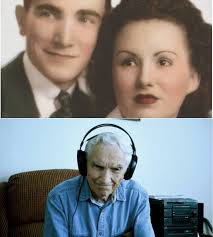
FredThis is a beautiful story of an old man and a song he wrote for his wife of many years. Grab a tissue! It is a great testimony to the power of music, of song and of commitment. You can watch the video at the end, but here is the story behind it:

A 95-year-old Peoria man isn’t a musician, but the lyrics he put on paper are now being shared with the world.  Fred Stobaugh said, “I was sitting here one night, oh about six weeks after she passed away and just sat here kind of hummin’ a little bit and it just finally came to me.”  Stobaugh recently lost his wife of nearly 75 years. He said they shared a love of music.  He soon turned his sadness into a song. “We were, like, just as one we were. Lorraine and I.”

Singer and songwriter Jacob Colgan remembers receiving Fred’s letter. “What made Fred’s entry so special was instead of a video, it was a large manila envelope titled Green Shoe Studio Singer Songwriter contest.”  It was an entry to his Studio’s songwriting contest. The kind of entry Jacob never expected. “He had written a song for his wife, ‘Sweet Lorraine’.”

Fred’s song is about his life and his love for his wife. He said, “’Sweet Lorraine’ I called it. Wish we could do the good times all over again.” Jacob said, “I started to read the lyrics and was so touched by the song and without even meeting Fred we thought, we’re going to do something.”  Fred said, “And I was surprised. It wasn’t too long that Jacob called me and it really touched him.”

Jacob said, “We wanted to put it to professional music and sing on it and he said, well you know that’s great but I just don’t have the money to cover it.” With Fred’s blessing, Jacob wanted to bring his lyrics to life. When Fred first heard the song, he cried. He said, “Wonderful, just wonderful.”

Fred said, “It just touched me. And I know Lorraine, she heard that too. It just has been a great life. If I could do over again, I would do it.” Fred said he finds comfort in the sound of his song. It’s something he has to cherish forever. He said, “The song really helps me. It really helps me. It just seemed like she’s just sort of with me. Which I know she’s smiling, she’s smiling down and she likes that song, I know.”

Story From WMBD online

You may also like:
Taking control doesn’t guarantee safety or happiness           Blessings through raindrops
hands on wheelBlessings laura s

What are hymns – do we still need them?

hymn booksHere is a series of quotes from some great thinkers on the topic (borrowed from Chong’s Worship). They look at defining a hymn, why we still need hymns and how to choose them well . . . which is probably the most important thing, since the language of some hymns simply does not translate for contemporary people. Remember too that the last good Christian hymn is still yet to be written (shortly before Christ’s return). . . and fortunately we are blessed with a great variety of singable and biblical Christian songs and hymns.

What’s a hymn?

“… a poem, designed for group singing, and written as a sequence of identical units called stanzas. Each stanza has the same line length, rhythms and rhyme scheme as its predecessor, so that the hymn can be sung, stanza by stanza, to the same tune.”

– Brian Wren, Praying Twice

Are they historically literary or musical texts?

Mike-Cosper

“Many of the great hymn writers weren’t musicians… they worked as theological poets, writing hymns in meters that were commonly used amongst the churches, relying on melodies that were written by others.” Mike Cosper

Do we still need them?

“I say without qualification, after the Sacred Scriptures, the next best companion for the soul is a good hymnal.


For the child of God, the Bible is the book of all books, to be reverenced, loved, pored over endlessly and feasted upon as living bread and manna for the soul. It is the first-best book, the only indispensable book. To ignore it or neglect it is to doom our minds to error and our hearts to starvation. After the Bible, the hymn book is next . . . containing the cream of the great Christian hymns left to us by the ages…”

 – AW Tozer, We Travel An Appointed Way

Why?

“A great hymn embodies the purest concentrated thoughts of some lofty saint who may have long ago gone from the earth and left little or nothing behind him except that hymn.

To read or sing a true hymn is to join in the act of worship with a great and gifted soul in his moments of intimate devotion.

It is to hear a lover of Christ explaining to his Saviour why he loves Him; it is to listen in without embarrassment on the softest whisperings of undying love between the bride and the heavenly Bridegroom.” – AW Tozer, We Travel An Appointed Way

But even today?

“Hymns are great art! The arts, stories, poetry, music all combine to sneak into the heart by the backdoor – something increasingly important for our ministry to the coming generations” – Kevin Twit, Why We Still Need Hymns in a Post-modern World

“How will you reach this post-modern generation – a generation that cannot conceive of objective truth, cannot follow your linear arguments, cannot tolerate anything (including evangelism) that smacks of religious intolerance?”” – Kevin Ford, Jesus for a New Generation

So how do we choose and sing good hymns?

James Montgomery

“[Good hymns are those] which, once heard, are remembered without effort, remembered involuntarily, yet remembered with renewed and increasing delight at every revival.” – James Montgomery, The Christian Psalmist

“The best results happen when theologically deep and emotionally rich texts are wedded to music that is aesthetically fitting and culturally resonant, that connects at every level.”Ron Rienstra

“We will not hide them from their children, but tell to the coming generation the glorious deeds of the Lord, and his might, and the wonders that he has done.” Psalm 78:4

Quotable: what’s a hymn and why we still need them

You may also like:

When should we sing that song?                         New songs say God is doing something now
piano-stairs3music_is_nature__silhouette_by_sammy3773-1


Who has the X Factor?

cat vassOkay, I’m going to admit that I have been totally drawn into viewing the television talent show X Factor. The last time such a thing happened was a decade ago, with the very first series of Australian Idol (2003) won by Guy Sebastian. While I am thoroughly aggravated by the hype, drama, ad breaks and soapie-style formatting, I do simply enjoy hearing the people sing! (Especially Georgie, but he was eliminated tonight in the cut for the final 12! Can you believe it? I think he didn’t have the pop star physique they were looking for. Check out the video at the end – I assure you it will bring a smile to your dial, as they say!)

Yet each voice is like a fingerprint, a unique sound that each person owns and uses to bring new life to old melodies. Each person has been on a unique journey to arrive at a place where they feel comfortable and confident with their voices. I find this most intriguing. Though some of them try their best to sound like pop stars who already own fame, their unique vocal colour shines through.

And this leads me to contemplate the incredible gift of singing voices that God has given. Such a divine gift from the Creator, a gift greatly admired and applauded even by those who will not give credit to the Maker of the voice. And who can beat true emotion conveyed through sung lyrics? A pleasant, dynamic voice can pack a punch unmatched by any spoken rhetoric.

God has designed us with singing voices for many reasons, but perhaps above all, that we would praise Him!
Oh that we could inspire our congregations to sing to God (and one another) with the conviction and energy of these X Factor hopefuls. Though these singers gather together to sing for their own fame (and supper), we gather together as Christ’s Body to praise Him. As we share the true Word of God together in song, surely we should be displaying equal or greater effort? We sing for the most famous One, the author of Life, the Saviour of the world, to declare His glory.  When we remember this purpose it can change our self-consciousness, often off-key, efforts into something mutually edifying. Praising God is so good for us. And so is singing!
Don’t you think?

And here’s Georgie (the full audition):

You may also like these posts:

10 Principles for Church Singing                         The wonderful mystery of Harmony singing
praise him pic cracking_the_harmony_2

The waterfall, river and reservoir of God’s grace

solid-joy-appI have been really enjoying a smart phone app called “Solid Joys” which comes from the pen of John Piper. Each daily devotion takes about a minute to read, and a few more minutes to contemplate. (You can look it up here if you would like to read online, or check your phone’s app store.) This one is on the theme of grace and how it relates to our past, present and future. Grace is not just about God doing good to us, but also in us. I hope you will find it as encouraging as I did.

The Different Tenses of Grace

We always pray for you, that our God may make you worthy of his calling and may fulfill every resolve for good and every work of faith by his power, so that the name of our Lord Jesus may be glorified in you, and you in him, according to the grace of our God and the Lord Jesus Christ. (2 Thessalonians 1:11–12)

Grace is not only God’s disposition to do good for us when we don’t deserve it — undeserved favor. It is also a power from God that acts in our lives and makes good things happen in us and for us.

Paul said that we fulfill our resolves for good “by his power” (verse 11). And then he adds at the end of verse 12, “according to the grace of our God and the Lord Jesus Christ.” The power that actually works in our lives to make Christ-exalting obedience possible is an extension of the grace of God.

You can see this also in 1 Corinthians 15:10: By the grace of God I am what I am, and his grace toward me was not in vain. On the contrary, I worked harder than any of them, though it was not I, but the grace of God that is with me.

So grace is an active, present, transformative, obedience-enabling power.

Therefore this grace which moves in power from God to you at a point in time is both past and future. It has already done something for you or in you and therefore is past. And it is about to do something in you and for you, and so it is future — both five seconds away and five million years away.

God’s grace is ever cascading over the waterfall of the present from the inexhaustible river of grace coming to us from the future into the ever-increasing reservoir of grace in the past. In the next five minutes, you will receive sustaining grace flowing to you from the future, and you will accumulate another five minutes’ worth of grace in the reservoir of the past.

“Living by Faith in Future Grace”

You may also like these posts:

More Great Grace Songs                                                   The Unexpected timing of God’s grace
advent                               kingscross

10 Principles for church singing

praise him picKevin de Young is writing lots of great material over at the Gospel coalition. If you have never visited there I would encourage you to do so. Today I’m sharing a summary of his ‘Ten Principles for Church songs’ which has been published in two parts. I have included his introduction, and then a summary of his ten principles (with some teasers) – which I would thoroughly endorse! To read his full explanation of each point you will need to click through to the actual website. It would make great material to work through with the church leadership or your music team, to clarify issues, prevent problems and encourage one another:

When it comes to singing on Sundays, churches have more options than ever before. From hymnals to Hillsong to homegrown creations, pastors and worship leaders have thousands of songs to choose from. A nice problem to have. But still a problem. No music leader or pastor can keep up. No church can sing all the great hymns and all the latest greatest songs on the radio. No musician can excel in all the available styles. No leader can please all the people all the time. . . There are other questions too. What sort of instruments should we use? How much should cultural context come into play? Is there only one right kind of song to sing? If not, are there any wrong ways? I can’t possibly answer all those questions. But there are some general principles we can use to make wise decisions with our church music. Let me suggest ten principles for congregational singing.

1. Love is indispensable to church singing that pleases God.
Love is indispensable when we sing and when we are trying to discern what is best to sing.
2. Our church singing is for God’s glory and the edification of the Body of Christ.
Congregational song is part of the teaching ministry of the church.
3. We ought to sing to the Lord new songs.
Sometimes I want to ask to very conservative Christians: “Do you really think the last good song of praise to Jesus has been written?”
4. Church singing should swim in its own history of church singing.
We should swim in this big ocean of church music, an ocean that is continually receiving new streams.
5. Sing the Psalms
It’s strange, even though we are commanded to sing Psalms and even though Psalms have been at the center of the Church’s singing for centuries, still we easily ignore the 800 pound gorilla in the middle of our Bibles.
6. We should strive for excellence in the musicality and the poetry of the songs we sing.
Some songs are simply deep and some are deeply simple, but there is a way to do both well.  With so many songs to choose from, there’s no reason churches can’t make an effort to sing songs with some sense of poetry and musical integrity.
7. The main sound to be heard in the worship music is the sound of the congregation singing.
What people want to see in your worship is that you mean it. And no matter how chill or how reverent your worship is, if no one is singing, it’s lame.
8. The congregation should also be stretched from time to time to learn new songs and broaden its musical horizons.
Every church will have a musical center. You should not reinvent the center every week. But you should not be enslaved to it either.
9. The texts of our songs should be matched with fitting musicality and instrumentation.
Musical style is not neutral, but it is elastic. Music conveys something. Some melodies are too syrupy or too raucous or too romantic.
10. All of our songs should employ manifestly biblical lyrics.
In all our songs we want to be teaching people about God. If we aren’t learning good theology and biblical truth from our songs, then either we don’t care much about our songs or we don’t care much about rich biblical truth, or both.

Seeking truth or comfort?

birds“If you look for truth, you may find comfort in the end; if you look for comfort you will not get either comfort or truth …”
C.S. Lewis

I discovered this quotation today and thought it would have gone well with my previous post on taking control of your life – but really it stands alone. Blessings!

The wonderful mystery of harmony singing

cracking_the_harmony_2I absolutely love singing in harmony. It would have to be my most favourite thing to do. At church it takes lots of self-control to stop myself singing harmony all the time. (But I do refrain most of the time since it can seem a bit show-off-ish, and also off-putting if you are meant to be leading people in the melody up the front!)
But give me a few spare minutes and some other keen people, this is my preferred activity! There is just something totally mysterious, extraordinary and beautiful about the way harmonic notes blend together. When people ask me to write them some harmony parts for a song I rejoice at the challenge and opportunity to sit and fiddle with harmony for a few hours. (I’ve often wondered if this could be a lucrative business activity via the internet! What do you think?)
You may call me crazy for such harmonic enthusiasm, but this is what comes from being brought up on huge doses of harmony singing, at home, at school and church, in choirs and small a cappella groups. Yet despite my experience, when people ask me to teach them how to sing harmony I scratch my head and wonder? How do you teach someone what is a pretty complicated process in listening and anticipating?

“In the simplest style of vocal harmony, the main vocal melody is supported by a single backup vocal line, either at a pitch which is above or below the main vocal line, often in thirds or sixths which fit in with the chord progression used in the song. In more complex vocal harmony arrangements, different backup singers may sing two or even three other notes at the same time as each of the main melody notes, mostly with consonant, pleasing-sounding thirds, sixths, and fifths (although dissonant notes may be used as short passing notes)”. (So says Wikipedia)

You can now see why I say it is a pretty complicated process, especially if you are going to improvise!
I think the only way to learn to harmonise well it is to hear it, to hear someone do it, a lot, then try it! When you sing harmony you have to anticipate what’s coming, both in the melody and the chords that support it. You have to anticipate what will blend well with the note coming up. You have to hear the harmony in your head before you execute it, and then you need the courage to try it. Good harmony singing has to be “caught not taught”. I had about 17 years of ‘weekly lessons’ in harmony singing with my dad – well not formal ones, more just singing in the pew beside him each Sunday, listening to his improvised tenor line for every hymn in the book.

And are there any benefits of harmony singing, you may ask? Well for singers you have to listen to other people well, which has to be a good thing. It develops team work, and together you create something beautiful which one voice alone could not create. In performance it helps shift the focus from the glory of one person, to the team work of several. There are also benefits for the listener, as they hear the blend, the movement of sound, the tension and the resolution of different voices working together.
And of course there is a spiritual application here. Living in harmony with others requires the same practised skillful decision making. We must choose to listen to others, consider where they are heading (they may be walking in shoes very different from ours), and then choose grace over judgement. Again, these skills are often better caught than taught. Great harmony can be achieved from a group of people who are careful to keep in tune with God and each other, living selfless lives. The loving characteristics of our heavenly Father blend so well together. If we are reflecting his character and glory we cannot help but harmonise beautifully. He is the Father of all harmonies, both musically and between us.

2 Corinthians 13:11 NLT
“Dear brothers and sisters, I close my letter with these last words: Be joyful. Grow to maturity. Encourage each other. Live in harmony and peace. Then the God of love and peace will be with you.”

Here is a clip of some harmony singing I did with a friend (on melody) at a recent women’s conference. Oh the Deep Deep Love of Jesus.

You may also like:
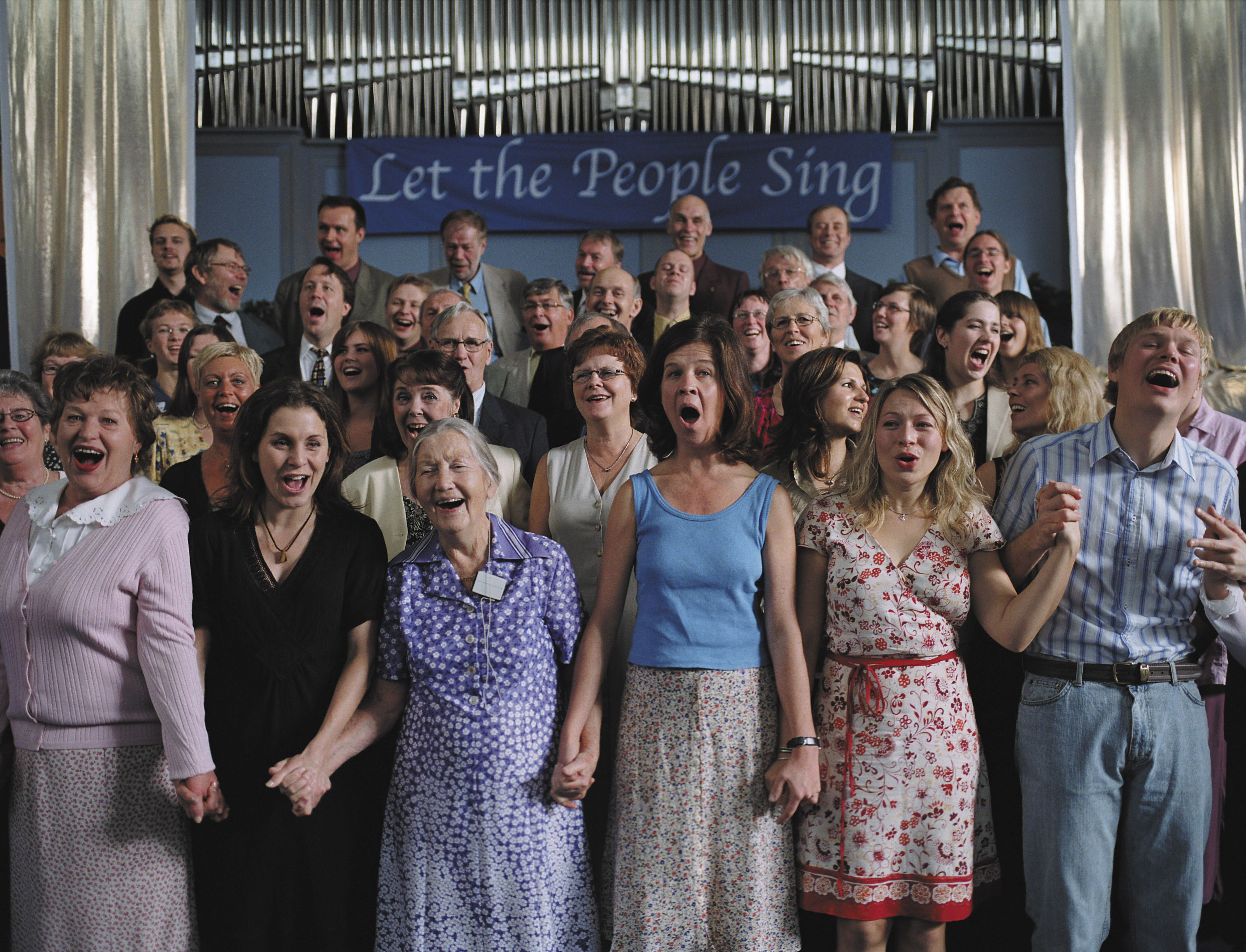
Film review: As it is in Heaven
As it is in Heaven