Green Carpet Players: Endurance Songs

IMG_0210.JPG
It’s always fun to discover a new group of musicians whose sound you enjoy. I discovered this one by following a trail from another blog. They are the musicians from Redeemer Church of Knoxville. Their site describes the songs as “endurance songs, a companion to help you journey by faith every day from Morning to Evening.”
I like the sound of that! The music of our faith is indeed an encouragement.
The album was released 09 October 2014, and can be bought by donation.
http://redeemerknoxville.bandcamp.com

tags: americana christian folk redeemer acoustic rock folk rock hymns liturgy retuned hymns Knoxville

Great resource for learning new songs

worship siteThere is an invaluable resource, particularly for guitarists, within the Worship Together website. In case you haven’t discovered it yet, go there now! http://www.worshiptogether.com/
Each song comes with a SONG VIDEO/NEW SONG CAFE where the song writer is interviewed, they share their song, and explain some of the unusual things they do to make the song work. Chord structures, rhythm and dynamics are all explored. It’s also helpful to hear the history of how the song came together, and the main things the writer intends the song to say. I always enjoy getting to know a little about the person behind the song as well.  These clips are a great research for helping with tricky chord structures, and just getting the right feel to a song. I hope you find it helpful!


Why should I gain from His reward?

8128-ea_fathers_love how deep for us lyrics.pngYes, the Sovereign lord is coming in power. He will rule with a powerful arm. See, he brings his reward with him as he comes. He will feed his flock like a shepherd. He will carry the lambs in his arms, holding them close to his heart. (Isaiah 40:10-11 NLT)

Look, I am coming soon! My reward is with me, and I will give to each person according to what they have done. I am the Alpha and the Omega, the First and the Last, the Beginning and the End. (Revelation 22:12-13)

Sometimes even really great songs can become tired. People just get ‘over’ singing them and the impact and meaning is lost. It’s rare to find a song that endures very long these days! But this song is somehow different: How Deep the Father’s Love for Us (1995)

I remember when I first came across the Stuart Townend song. Its unusual time signature scheme (4/4 and 6/4 in alternate bars) coupled with beautiful poetry declaring the wonder of God’s love really gave the song a certain ‘X’ factor – and won me over! Perhaps for these reasons it has endured as a singable and meaningful song. Though it’s been around for almost two decades I’d say this song can still penetrate any stubborn heart and mind to see the beauty of our salvation afresh! (In case you somehow missed it, the lyrics are down below)

There is such rich theology in this song – but I’d like to focus on one intriguing line in verse 3:  “Why should I gain from His reward? I cannot give an answer. . .”

As we see in the passages above from Isaiah and Revelation, the Messiah, Risen Redeemer King, Jesus Christ turns up to rule bringing his reward with him, a reward which is his own flock of people, saved by His blood. These are the people the Father has given to Jesus, as His reward:
“My Father, who has given them to Me, is greater than all; and no one is able to snatch them out of the Father’s hand.…” (John 10:29)

How incredible that from Jesus’ perspective we are His reward, the people of God, sinners saved by undeserved grace! We cannot give an answer for why Jesus would die for us, for his enemies – we can only look with thankfulness that for the joy set before Him endured the cross, despising the shame, and has sat down at the right hand of the throne of God.” (Hebrews 12:12)
This is Jesus, our redeemer and friend! How deep the love of the Father to send his own Son for us!

HOW DEEP THE FATHER’S LOVE FOR US

How deep the Father’s love for us,
How vast beyond all measure,
That He should give His only Son
To make a wretch His treasure.
How great the pain of searing loss –
The Father turns His face away,
As wounds which mar the Chosen One
Bring many sons to glory.

Behold the man upon a cross,
My sin upon His shoulders;
Ashamed, I hear my mocking voice
Call out among the scoffers.
It was my sin that held Him there
Until it was accomplished;
His dying breath has brought me life –
I know that it is finished.

I will not boast in anything,
No gifts, no power, no wisdom;
But I will boast in Jesus Christ,
His death and resurrection.
Why should I gain from His reward?
I cannot give an answer;
But this I know with all my heart –
His wounds have paid my ransom.

Stuart Townend– See more at: http://www.stuarttownend.co.uk/song/how-deep-the-fathers-love-for-us/#sthash.jX205XY1.dpuf

Here are some links to learn more about the song:

http://www.worshiptogether.com/songs/songdetail.aspx?iid=577430

Should worship be fun?

From the Archives: Should Worship be Fun?People-Laughing

(by Bob Kauflin at Worship matters)
More than once I’ve heard Christians insist that worship should be fun, or act like they had a responsibility to prove that Christians knew how to “party” in church. I’ve always been uncomfortable with that connection, so I started thinking about the place of “fun” in worship, if one even exists. I’m going to address this question by answering it as I posed it, and then considering two other ways it might be phrased.

Should worship be fun? If we take the exhaustive testimony of Scripture, the answer would have to be a resounding NO. “Fun” wouldn’t characterize any of the scenes in the Bible where people encounter God together, at least not the zany, slap-happy, crazy, mindless kind of fun. We’re told to worship God with reverence and awe, for he is a consuming fire (Heb. 12:28-29). To have “fun” one of our primary motives as we gather. Among other things our goals include remembering, rehearsing, and reveling in the gospel, magnifying God’s glory in Christ, spurring one another on to love and good deeds, presenting our petitions before God, and being strengthened by his Word and the communion of the saints. Celebration will certainly be included in that, but there are also times when worshipping God will produce awe, tears of repentance, or a profound silence.

But let me rephrase the question. Can worship be fun? It depends on how we define “fun.”

If “fun” is defined as a lighthearted activity with no purpose or meaning, strictly meant to amuse, then the answer to the question, “Can worship be fun?” must surely be no. When we worship God together, we are not looking to be merely entertained or momentarily distracted from the cares of this world. We’re not seeking to promote a Christian alternative to Saturday Night Live (Sunday Morning Live?). Diversion is not the same as worship. Our joy and gladness are meant to be grounded in and informed by God’s character, nature, and acts.

But when I looked up “fun” on my desktop dictionary, the first meaning was “enjoyable.” If we’re asking, “Can worshipping God be enjoyable?” then surely the answer must be yes. That doesn’t mean Isaiah 6 has no relevance to our meeting together to engage with God. But Isaiah 6 isn’t the only chapter in Scripture that describes how we are to relate to God. There have been countless times that I’ve been leading or singing as part of the congregation and thought, “I love doing this!” Joy floods my soul, and I could legitimately say I’m having “fun!”

It may be similar to what the Israelites experienced in 2 Chronicles 30. They so enjoyed celebrating the Feast of Unleavened Bread for seven days that Hezekiah and the people spontaneously decided to keep the feast for another seven days (2 Chron. 30:22-23)! That must have been some celebration! On another occasion, Ezra and the priests told the people not to mourn or weep because that day was “holy to the Lord” and that the joy of the Lord was their strength (Neh. 8:9-10). Holiness and joy aren’t necessarily exclusive.

When my children were growing up, I wanted them to look forward to singing worship songs, and not see a relationship with God as something that was only serious, sober, and solemn. After all, singing to God is meant to be pleasant (Ps. 135:3; Ps. 147:1). David danced before the Lord with all his might as he brought the ark back to Jerusalem (2 Sam. 6:12-15). The Psalmist was glad when they said to him, “Let us go up to the house of the Lord” (Ps. 122:1). So yes, when defined as enjoyment and not seen as the only aspect of our time together on Sunday morning, worshipping God can be very “fun.” People shouldn’t find our meetings dull or dour. Smiles and even laughter should abound as we consider how kind, merciful, and gracious God has been to us (Ps. 126:2)!

But let me rephrase the question one more time, to broaden the application.

“Should our fun be worship?” Well now the answer must surely be “yes.” We’re told in 1 Cor. 10:31 that whether we eat or drink, or whatever we do, we’re to do it all for the glory of God. Rather than focusing on making our corporate worship fun, maybe we should spend more time making sure our “fun” is worship.

Here are some questions that can lead us in that direction.

  • Do I choose a fun activity because there’s nothing else to do, or because I believe it will in some way cause me to grow in my love for God?
  • When I play games, participate in sports, or pursue a hobby, does my attitude demonstrate the fruit of the Spirit?
  • When I go out with a group of friends, am I seeking just to have fun, or to glorify God through encouraging them, challenging sin, and serving them?
  • Do the activities I consider “fun” increase my affections for God or dilute them?
  • Do I view my free time as belonging to me or to God?

The fun this world offers is unsatisfying, deceptive, and temporary. Let’s not idolize it or imagine it’s God offers nothing better. As Christians, we can enjoy fun activities without believing they’re the root of our happiness. The joy we experience when in worshiping God together is greater than the world will ever know, because the root is knowing our sins have been paid for through the substitutionary sacrifice of Jesus Christ and we worship a risen and reigning Savior.

Our joy is ultimately in God himself. We’d be fools to look for it anywhere else.

For more on this topic, download the following messages from the Sovereign Grace Ministries website:
Worshiping God as the Source of All Secondary Joys by Randy Alcorn
A Biblical Understanding of Leisure by Jeff Purswell

[This is a slightly edited version of a post from Feb. 6, 2007]

Don’t let the Word be strange – the Psalms included

psalms-59-16I had the privilege of leading music at a women’s conference in Brisbane last month, a conference called “Dazzled by Grace”. The speaker was Kathleen Nielson, head of women’s initiatives at the Gospel Coalition (USA). Her focus across three talks was how to read the Psalms in a way that allows us to drink deeply the beauty, poetry and truth they contain.
First she spent some time defining the Psalms, as:
*The beating heart at centre of God’s Word.
*The heart cries of God’s people: the thoughts, prayers and praises of people living in His story and seeking to trust Him through life’s ups and downs.
*Cries from a kingdom, the gathered people living under an earthly king, which points us right to God’s chosen perfect King, Jesus.

In addressing our modern difficulties in reading and appreciating the Psalms, Kathleen pointed to the fact that reading poetry has simply fallen out of practice in our culture. This was a regular practice in families for centuries gone by. They would sit around and listen to poetry, to appreciate the imagery and the repetition it contains. People would even hire poets to recite poetry for their dinner guests, and children would learn much poetry by heart. But now we live in a culture which is saturated not by poetic images, but Instagram, Facebook, Flash chat and the likes. We have trained ourselves through new technology to be addicted to cool graphics and images, through the multiple screens about us. So when it comes to the Psalms, their poetic form has become so foreign, so strange to us, something we are not used to reading.
This must really delight our enemy: “The devil is happy with a people who live on images and sound bites and tweets. He wants words of bible to seem foreign.”

So it is no wonder that we struggle to drink from the riches of the Word if the word is strange to us. How easily our minds can wander when we don’t see the point or the beauty of the poetry. But the more we immerse ourselves in it, the more the words of the Psalms become familiar to us, the more strength and confidence these words will bring to our lives. We must make friends with the imagery, the emotion, the shape, the rise and fall, of the tapestry of the Psalms. And naturally this applies to all of God’s word. We must not let His Word be a stranger to us. God has provided it for our strengthening and joy!

(Finally let me just add that I haven’t forgotten my project, of gathering all the most singable arrangements of hymns for congregational use! These talks highlighted for me the importance of us singing the Psalms together. Thanks for continuing to read along, dear followers. And welcome if you have just joined us! If you would like to spend some more time exploring the Psalms, check out this blog: Singing in Babylon)


Watch “Psalm 139 (Live) – New Scottish Hymns” on YouTube

If you are looking for new ways to sing the Bible’s song book (the Psalms) with your local church then NEW SCOTTISH HYMNS could have some answers. If you liked the version of Psalm 139 then click here to download and print sheet music.

Here is what they have to say about their music:

Great hymns speak timeless truths with profound passion. They unite the church, giving Christians words to sing that articulate afresh the glories of Jesus Christ.  The New Scottish Hymns project seeks to reignite that spirit of Scotland’s great hymn-writing tradition, and uncover its treasures for a new generation.

new-scottish-hymns-cover-final-300x300ABOUT THIS PROJECT

 One aim of this album was to introduce some new songs that churches in Scotland might find useful in their own unique worship services. Scottish traditional music and folk melodies have an adaptable quality that renders the best of them timeless. Paraphrases from the Scottish Psalter like Psalm 23 have been sung across the world for centuries, and it’s important to remind new generations that these ancient words of scripture remain profoundly relevant. Scottish writers like Horatius Bonar and James Montgomery showed that a wealth of transforming biblical truths could be taught and absorbed through songs, so we also wanted to introduce examples of their lyrics to new listeners.

 The motivation for making this hymns recording did not spring simply from a desire to create art. Hymnwriting is about making music firstly out of gratitude to Jesus Christ. With all our imperfections and limitations, Christians struggle to express anything more than an echo of His greatness, but we believe that this is a thing eminently worth sharing. For the person who finds this idea strange, it will hopefully make more sense as you listen! Our hope is that every listener might hear the joy that comes from the gospel: the good news of God’s saving and transforming love, made available to every person through his son.

Reflections on effective Preaching: “A view from the pew”

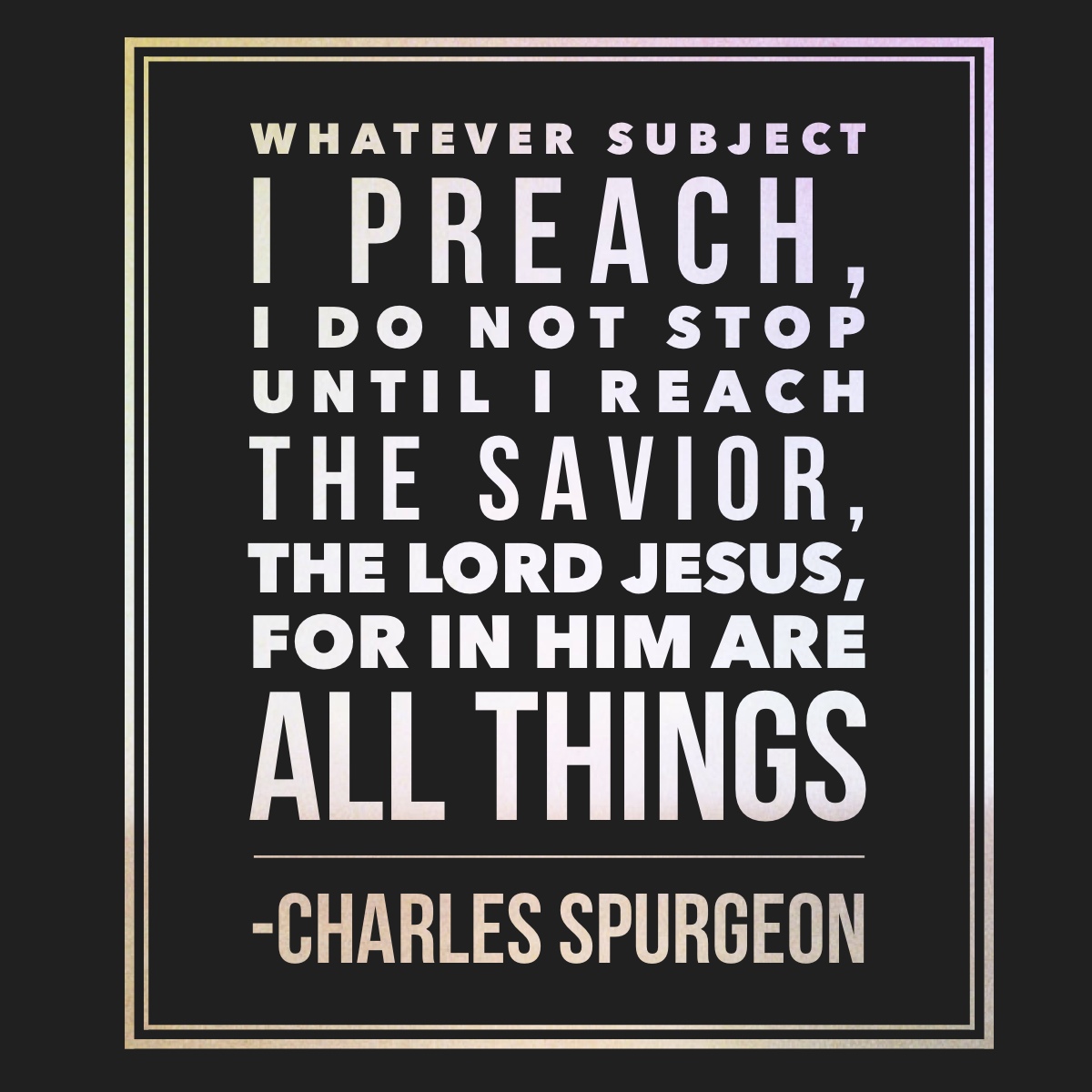
  1. 14–Charles-SpurgeonFor a preacher to have mastery of a passage, the passage ought to have mastery over him.
  2. Preachers who preach God’s truth into life (births, deaths, marriages, job losses, debts, breakins, car accidents, cancers etc.) give me the equipment to fight and survive as God’s child in the real world.
  3. Good preachers obliterate the divide between lofty grandeur of God and the messiness of real life, so that I see and do something about the constant rub of idolatry against the call to discipleship in my own life.
  4. I love it when preachers tell me what arrests, intrigues, amazes and captivates them from God’s word. A preacher’s delighted, wide-eyed insight is a massive aid to engagement.
  5. Preachers with a humble conviction about the authority of preaching pack more punch.
  6. “Unpacking a passage” is much less exciting than releasing a wild lion into our midst.
  7. I sense when a preacher’s preparation has included preparation of his own heart, because he preaches not only to me but to himself.
  8. I find preachers who walk boldly into a passage hungry for vital truth, fearless of apparent exegetical, theological or pastoral difficulty are far more compelling for their courage.
  9. I like to hear a preacher’s certainty born of a thoroughness of preparation and theological conviction.
  10. It is frustrating when a sermon has no application.
  11. I am discouraged when applications are effectively an exercise in heaping guilt on the listener. Rhetorical questions are a cheap way out! It is different from being challenged by gospel. My guilt has been taken by Christ!
  12. I’m captivated when I get sense that the preacher’s hardest fight has been the fight for his own soul, obedience, understanding and submission to the truth.
  13. Only after taking God’s word to his own heart is a preacher able to cleverly, sensitively, wisely, boldly craft a sermon that has the hearts of others as its goal. Pastors make good preachers – they are students of their own heart and other’s. They anticipate my questions.
  14. Laughter opens hearts and minds and helps me stay awake.
  15. Listeners lose interest when the preacher has lost interest first. (Boredom is the new morality – if it is boring it is more than wrong!)
  16. Every preacher must ask himself at the end of every sermon, “So what!?”
  17. God-breathed scriptures are full of risk, danger, opportunity, drama and daring – not like a stuffed lion in a museum. Tame sermons turn the living Word of God into a lifeless museum exhibit.
  18. Preachers shouldn’t be afraid of deep truths that average mortals have to take time and thought to comprehend. It isn’t bad that a listener doesn’t understand something this time round.
  19. I feel secure when preacher shares his sermon structure/aim for his sermon with me.
  20. Passion in preaching is by product of love for God.
  21. Preachers who tell me how to feel – or how they feel – leave my feelings unstirred. Challenge is to so use their words and their insight into the text and people to add the weight of all their energies to the Spirit’s sovereign work.
  22. Choose someone interesting if you are going to copy another preacher!
  23. Poetry and art are the preacher’s friends – they move hearts and stir affections…that my life would be warm to God!
  24. Biblical theses and models are helpful in my understanding and recall of breadth, theme and unity of the bible.
  25. Biblical theses and models can suck the life out of sermons when they become wheel ruts.
  26. Good preachers don’t take themselves too seriously, but take God’s truth seriously enough to die for.
  27. A sermon must be personal, passionate and pleading – not just a talk.
  28. A truth known intellectually may not be a truth truly comprehended, believed and obeyed. (It’s helpful when a preacher knows I believe it, but that I haven’t acted on it or truly comprehended it. It’s great when a preacher probes, personally, from pulpit!)
  29. You may never say anything really new, but that’s no excuse for not saying it in a fresh way.
  30. My obedience (thought, word, deed) completes God’s purpose for preaching.(These points were taken from a talk given at the QTC Preaching Conference 2012 by musician Colin Buchanan)

Always in His presence

music_is_nature__silhouette_by_sammy3773-1And God raised us up with Christ and seated us with him in the heavenly realms in Christ Jesus. . . (Ephesians 2:6)

“…the gathering is unique not as an encounter with God (it is that, though God’s presence is a constantly available comfort and help to the Christian); rather it’s unique because it is an encounter with the people of God, filled with the Spirit of God, spurring one another along in the mission of God. Christ in me meets Christ in you.”  (Mike Cosper, Rhythms of Grace)

Lately I’ve been chatting with fellow musical Christians on “LinkedIn” – particularly on the question of worship, the difference between the titles ‘song leader’ and ‘worship leader’ (click here to read that discussion) and if there is any way to reconcile our different opinions. In some ways I feel I’ve been told that my preference for calling those who lead the singing in church ‘song leaders’ is way too blinkered, because singer do so much more than just lead the singing. In the view of many, it seems, song leaders are actually leading people into God’s presence through the experience of corporate worship. Now this may just be semantics, and perhaps all they mean is that we feel closer to God as we draw near to Him together in praise. But if not then such ‘Worship leaders’ have the responsibility of making a way of access between sinful man and God. To me, that is a huge claim, a responsibility we could never have. In fact, it sounds like something that JESUS has already accomplished.

Now should I sit quietly and take this as being a denominational difference, or difference in opinion, which doesn’t really matter? Or is this view actually misleading, with no grounding in the New Testament texts or the practice of the early church? Does this view of corporate worship actually detract from what Christ has already done? Does it hark back to the Old Testament ‘temple worship’ model which is now fulfilled in Christ?

From what I understand in God’s word, the idea that our corporate worship is a worship experience – where we tentatively approach God and hope that he will inject his spirit and power into us through this experience – has very much been surpassed in Christ! This is how the Old Testament people (who did not experience the Holy Spirit in an ongoing, everyday, ‘I will never leave you’ kind of way) approached God in the temple. They came with some measure of uncertainty and a great measure of unworthiness.

But for us as Christ followers, living this side of the cross, the power that raised Jesus from the dead is living in us! He is living in us! We are always in Him, always in His presence. (Check this review of One Forever: The transforming power of being in Christ.) We are in the very throne room of heaven right now, even while our daily lives here continue. You could even say that we Christians are always in church, because we are always ‘in Christ’. There is such great certainty and confidence here. Our unworthiness has been dealt with and wrapped up in Christ.

“We do not go to church to worship, but, already at worship, we join our brothers and sisters in continuing those actions that should have been going on – privately, [as families], or even corporately – all week long.” (Harold Best, Music through the eyes of Faith, p.147)

Jesus is our great High Priest, the way to the Father which the Father provided. He is our one true worship leader, who leads us into a life of worshipping our loving Heavenly Father at the very moment we are saved.
Of course it is great to gather together as God’s people, to remind one another of the reality that we serve a great and wonderful God. As we sing we fulfill the way God designed for us to be building each other up in the Lord, speaking the ‘Word of Christ’ into each other’s lives. But we don’t need to see corporate worship as a tenuous time, when hopefully the music is good and powerful enough to lead people into His presence. My friends, we are already there! We are always in His presence!

“Paul says to the church at Corinth, ‘Don’t you know that you yourselves are God’s temple and that God’s Spirit lives in you?’ He later tells them that their bodies are the temple of God. This is the astounding reality of New Testament religion: we as Christians are the house of worship.”
(David Platt, Radical Together, 2011)

Here are a few other verses from God’s Word to consider – to remind us that our worship of the Almighty God is an ongoing and daily activity, which is also expressed corporately when we gather together.

“In him the whole building is joined together and rises to become a holy temple in the Lord. And in him you too are being built together to become a dwelling in which God lives by his Spirit.” (Ephesians 2:21-22)

“Therefore, I urge you, brothers and sisters, in view of God’s mercy, to offer your bodies as a living sacrifice, holy and pleasing to God—this is your true and proper worship.” (Romans 12:1)

Thanks for reading my rant – an important one! If you want to think more on these things check out the following:

https://sevennotesofgrace.com/2014/04/17/why-i-prefer-song-leader-to-worship-leader/
https://sevennotesofgrace.com/2013/09/13/two-books-ive-got-to-get-hold-of/
https://sevennotesofgrace.com/2013/09/25/all-of-creation-sing-with-me-now-the-veil-is-torn/
https://sevennotesofgrace.com/2013/10/26/corporate-worship-is-a-serious-gift/
https://sevennotesofgrace.com/2014/04/30/how-worship-murders-our-self-righteousness/
https://sevennotesofgrace.com/2014/04/26/drawing-back-the-curtains-on-christ-the-role-of-song-leaders/

Not the first generation to be addicted to bass

If you have ever wondered about the love of pipe organs in church music, and the intense love for ‘good old hymns’ which have been played on this grand instrument, the following research may help explain these strong connections:

Church organ Does organ music ‘instil religious feelings’?

According to an experiment people who experience a sense of spirituality in church may be reacting to the extreme bass sound produced by some organ pipes.

Many churches and cathedrals have organ pipes that are so long they emit infrasound which at a frequency lower than 20 Hertz is largely inaudible to the human ear. In a controlled experiment in which infrasound was pumped into a concert hall, UK scientists found they could instil strange feelings in the audience at will. These included an extreme sense of sorrow, coldness, anxiety and even shivers down the spine.

To test the impact of extreme bass notes from an organ pipe on an audience, researchers constructed a seven-metre-long “infrasonic cannon” which they placed at the back of the Purcell Room, a concert hall in South London. They then invited 750 people to report their feelings after listening to pieces of contemporary music intermittently laced with sound from the “cannon”.

The results showed that odd sensations in the audience increased by an average of 22% when the extreme bass was present. Some of the experiences were described as, ‘shivering on my wrist’, ‘an odd feeling in my stomach’, ‘increased heart rate’, ‘feeling very anxious’, and ‘a sudden memory loss’. This was an experiment done under controlled conditions and it shows infrasound does have an impact, and that has implications in a religious context and some of the unusual experiences people may be having in certain churches.”

Sarah Angliss, an engineer and composer in charge of the project, added: “Organ players have been adding infrasound to the mix for 500 years so maybe we’re not the first generation to be ‘addicted to bass’.”

The article “Organ music ‘instils religious feelings‘” was first reported by the BBC in 2003.

http://www.musicademy.com/2014/05/first-generation-addicted-bass/

Scraps of Worship

scrapsSharing today a good post for Monday morning – for encouragement! How is your “devotional life” going? Much of this post from The Blazing Center will no doubt ring true for you too:

If you could use one word to describe your current devotional life, what would it be? Mine would be “scraps”. So often I feel like all I can muster is a distracted scrap of devotion to God. For example, here’s what my Bible reading time often looks like:

Step 1: Open Bible. Pray that God would meet me as I read his word.
Step 2: Read diligently for thirty seconds, taking in at least three full sentences.
Step 3: Begin wondering if I’ll ever receive my tax refund, because it sure would come in handy right now.
Step 4: Feel guilty for being distracted. Try to “come back” into the presence of God (whatever that means).
Step 5: Repeat steps one and two plus additional prayer of repentance for being distracted.
Step 6: Begin thinking about my next killer blog post that will rock the blogosphere.
Step 7: Repeat steps 1, 4, and 5.

You get the point. It’s a constant battle against my sinful nature, which will seize on the slightest distraction. Many times I feel guilty instead of refreshed after doing my devotions. I feel like I didn’t pray enough, or with enough passion, or for enough people. And I certainly didn’t have enough love for God. My feeble scraps of devotion to God are pathetic, with a capital “pathetic”.

But God has been teaching me about devotional scraps lately. My devotion (probably too strong of a word) to God is nothing more than scraps, but God accepts, and even delights in those scraps. And when I get distracted, I don’t have to work my way back into God’s presence. I can come right back to God and experience full acceptance. Why? Because Jesus Christ is holding the door open. Always.
God’s love for me has nothing to do with my devotion and everything to do with Christ’s perfect devotion. Jesus was passionately devoted to God. He didn’t offer any scraps, he offered perfect obedience and love. And then his life ended. Abruptly. Brutally.

Now his righteousness is mine, and he perfects my feeble scraps of devotion and presents them to God. God loves Jesus, which means God loves me, end of story. The door to God is held open by the cross.

So yes, my worship is nothing more than scraps. But to God, they’re delightful scraps, made perfect by his son. How freeing this truth is. Today let’s throw aside any hope we have in our scraps of devotion and place all our hope in Christ. True devotion to God starts at the cross.

Can you relate to my feeling of devotional scraps?