Always in His presence

music_is_nature__silhouette_by_sammy3773-1And God raised us up with Christ and seated us with him in the heavenly realms in Christ Jesus. . . (Ephesians 2:6)

“…the gathering is unique not as an encounter with God (it is that, though God’s presence is a constantly available comfort and help to the Christian); rather it’s unique because it is an encounter with the people of God, filled with the Spirit of God, spurring one another along in the mission of God. Christ in me meets Christ in you.”  (Mike Cosper, Rhythms of Grace)

Lately I’ve been chatting with fellow musical Christians on “LinkedIn” – particularly on the question of worship, the difference between the titles ‘song leader’ and ‘worship leader’ (click here to read that discussion) and if there is any way to reconcile our different opinions. In some ways I feel I’ve been told that my preference for calling those who lead the singing in church ‘song leaders’ is way too blinkered, because singer do so much more than just lead the singing. In the view of many, it seems, song leaders are actually leading people into God’s presence through the experience of corporate worship. Now this may just be semantics, and perhaps all they mean is that we feel closer to God as we draw near to Him together in praise. But if not then such ‘Worship leaders’ have the responsibility of making a way of access between sinful man and God. To me, that is a huge claim, a responsibility we could never have. In fact, it sounds like something that JESUS has already accomplished.

Now should I sit quietly and take this as being a denominational difference, or difference in opinion, which doesn’t really matter? Or is this view actually misleading, with no grounding in the New Testament texts or the practice of the early church? Does this view of corporate worship actually detract from what Christ has already done? Does it hark back to the Old Testament ‘temple worship’ model which is now fulfilled in Christ?

From what I understand in God’s word, the idea that our corporate worship is a worship experience – where we tentatively approach God and hope that he will inject his spirit and power into us through this experience – has very much been surpassed in Christ! This is how the Old Testament people (who did not experience the Holy Spirit in an ongoing, everyday, ‘I will never leave you’ kind of way) approached God in the temple. They came with some measure of uncertainty and a great measure of unworthiness.

But for us as Christ followers, living this side of the cross, the power that raised Jesus from the dead is living in us! He is living in us! We are always in Him, always in His presence. (Check this review of One Forever: The transforming power of being in Christ.) We are in the very throne room of heaven right now, even while our daily lives here continue. You could even say that we Christians are always in church, because we are always ‘in Christ’. There is such great certainty and confidence here. Our unworthiness has been dealt with and wrapped up in Christ.

“We do not go to church to worship, but, already at worship, we join our brothers and sisters in continuing those actions that should have been going on – privately, [as families], or even corporately – all week long.” (Harold Best, Music through the eyes of Faith, p.147)

Jesus is our great High Priest, the way to the Father which the Father provided. He is our one true worship leader, who leads us into a life of worshipping our loving Heavenly Father at the very moment we are saved.
Of course it is great to gather together as God’s people, to remind one another of the reality that we serve a great and wonderful God. As we sing we fulfill the way God designed for us to be building each other up in the Lord, speaking the ‘Word of Christ’ into each other’s lives. But we don’t need to see corporate worship as a tenuous time, when hopefully the music is good and powerful enough to lead people into His presence. My friends, we are already there! We are always in His presence!

“Paul says to the church at Corinth, ‘Don’t you know that you yourselves are God’s temple and that God’s Spirit lives in you?’ He later tells them that their bodies are the temple of God. This is the astounding reality of New Testament religion: we as Christians are the house of worship.”
(David Platt, Radical Together, 2011)

Here are a few other verses from God’s Word to consider – to remind us that our worship of the Almighty God is an ongoing and daily activity, which is also expressed corporately when we gather together.

“In him the whole building is joined together and rises to become a holy temple in the Lord. And in him you too are being built together to become a dwelling in which God lives by his Spirit.” (Ephesians 2:21-22)

“Therefore, I urge you, brothers and sisters, in view of God’s mercy, to offer your bodies as a living sacrifice, holy and pleasing to God—this is your true and proper worship.” (Romans 12:1)

Thanks for reading my rant – an important one! If you want to think more on these things check out the following:

https://sevennotesofgrace.com/2014/04/17/why-i-prefer-song-leader-to-worship-leader/
https://sevennotesofgrace.com/2013/09/13/two-books-ive-got-to-get-hold-of/
https://sevennotesofgrace.com/2013/09/25/all-of-creation-sing-with-me-now-the-veil-is-torn/
https://sevennotesofgrace.com/2013/10/26/corporate-worship-is-a-serious-gift/
https://sevennotesofgrace.com/2014/04/30/how-worship-murders-our-self-righteousness/
https://sevennotesofgrace.com/2014/04/26/drawing-back-the-curtains-on-christ-the-role-of-song-leaders/


Growing into sacrificial, radical living

jesuschangedmylifejpgAs we grow in relational intimacy with Christ through the gospel, we gradually overflow in radical living for Christ. Any low-grade sense of guilt gets conquered by a high-grade sense of gospel that compels a willing, urgent, joyful, uncompromising, grace-saturated, God-glorifying obedience in us. We live sacrificially, not because we feel guilty, but because we have been loved greatly and now find satisfaction in sacrificial love for others. We live radically, not because we have to, but because we want to.

David Platt in “Radical Together

Lost in worshipping the created

I have some friends who are totally in lonature-man-in-tree-on-waterve with the beauty of the natural world. They ravenously consume nature documentaries and scientific discoveries, and relish the fascinating and amazing laws which exist in the universe. I must say I do share and rejoice in such a fascination! Yet it is possible to be lost, from God’s perspective, even with such an attitude. Linked to this love of creation is the exaltation of mankind, as the crown of creation. As mankind exalts, expresses, captures, ponders, reproduces, learns from and preserves all the wonder of creation, the wonder of the Creator (who in fact made, entered and sustains this creation!) can be, sadly, pushed aside.


Consider these words from John Piper:

“The tragedy of the world is that the echo is mistaken for the Original Shout. When our back is to the breathtaking beauty of God, we cast a shadow on the earth and fall in love with it. But it does not satisfy. The books or the music in which we thought the beauty was located will betray us if we trust to them. . . For they are not the thing itself; they are only the scent of the flower we have not found, the echo of a tune we have not heard, news from a country we have never visited.”
(from The Dangerous Duty of Delight)

His words remind me of those penned by the apostle Paul in his letter to the Romans, chapter 1:  For although they knew God, they neither glorified him as God nor gave thanks to him, but their thinking became futile and their foolish hearts were darkened. Although they claimed to be wise, they became fools and exchanged the glory of the immortal God for images made to look like mortal man and birds and animals and reptiles. . . They exchanged the truth about God for a lie, and worshiped and served created things rather than the Creator

Piper comments further on this ‘exchange’:  How could I put my eye to some great telescope, designed to make me glad with visions of the galaxies, and notice in the glass a dim reflection of my face and say:”Now I am happy, I am loved?” How could I stand before the setting sun, between the mountain range and the vastness of the sea, and think that everlasting joy should come from making much of me? . . . “
(Don’t Waste your Life, John Piper, 2003, p.186.)

What this really boils down to is love of humanity, humanity exalting itself in bold denial of the Creator, saying ‘all this can exist and be sustained simply by the ingenuity of mankind’ – or by the evolutionary process, which apparently needs no initial designer (?!).

How sad to be so in love with the shadow of the Creator, that a relationship with the Creator is fortfeited, the Creator in whose image we are made, the Creator whose love and sense of right and justice and compassion lives in us as a testimony to his character – even if we deny him.

If this is a struggle for you, please check out my older post on a similar topic: https://sevennotesofgrace.com/2013/07/01/an-unwasted-life-makes-much-of-jesus/

I trust and pray you can see the God who created and sustains this universe, by His living and eternal Word, Jesus Christ. Faith in him will never disappoint!

The Cross has made you Flawless

mercy me welcome to newThanks to the band Mercy Me we have another way of appreciating what the cross has achieved for us, by grace. In Christ we stand before our heavenly Father as perfect, flawless people. We are wrapped up in Christ’s righteousness. What a great image. We have done nothing to deserve this grace, nor can we do anything to deserve it. The song is called Flawless, from the album Welcome to the New.

FLAWLESS

There’s got to be more
Than going back and forth From doing right to doing wrong
‘Cause we were taught that’s who we are
Come on get in line right behind me
You along with everybody, Thinking there’s worth in what you do

Then Like a hero who takes the stage when
We’re on the edge of our seats saying it’s too late
Well let me introduce you to amazing grace

No matter the bumps, No matter the bruises
No matter the scars, Still the truth is
The cross has made, The cross has made you flawless
No matter the hurt, Or how deep the wound is
No matter the pain, Still the truth is
The cross has made, The cross has made you flawless

Could it possibly be That we simply can’t believe
That this unconditional Kind of love would be enough
To take a filthy wretch like this
And wrap him up in righteousness
But that’s exactly what He did

Take a breath smile and say
Right here right now I’m ok
Because the cross was enough

Then Like a hero who takes the stage when
We’re on the edge of our seats saying it’s too late
Well let me introduce you to grace grace
God’s grace

Chorus:

No matter what they say Or what you think you are
The day you called His name
He made you flawless, He made you flawless

Chorus:


Scraps of Worship

scrapsSharing today a good post for Monday morning – for encouragement! How is your “devotional life” going? Much of this post from The Blazing Center will no doubt ring true for you too:

If you could use one word to describe your current devotional life, what would it be? Mine would be “scraps”. So often I feel like all I can muster is a distracted scrap of devotion to God. For example, here’s what my Bible reading time often looks like:

Step 1: Open Bible. Pray that God would meet me as I read his word.
Step 2: Read diligently for thirty seconds, taking in at least three full sentences.
Step 3: Begin wondering if I’ll ever receive my tax refund, because it sure would come in handy right now.
Step 4: Feel guilty for being distracted. Try to “come back” into the presence of God (whatever that means).
Step 5: Repeat steps one and two plus additional prayer of repentance for being distracted.
Step 6: Begin thinking about my next killer blog post that will rock the blogosphere.
Step 7: Repeat steps 1, 4, and 5.

You get the point. It’s a constant battle against my sinful nature, which will seize on the slightest distraction. Many times I feel guilty instead of refreshed after doing my devotions. I feel like I didn’t pray enough, or with enough passion, or for enough people. And I certainly didn’t have enough love for God. My feeble scraps of devotion to God are pathetic, with a capital “pathetic”.

But God has been teaching me about devotional scraps lately. My devotion (probably too strong of a word) to God is nothing more than scraps, but God accepts, and even delights in those scraps. And when I get distracted, I don’t have to work my way back into God’s presence. I can come right back to God and experience full acceptance. Why? Because Jesus Christ is holding the door open. Always.
God’s love for me has nothing to do with my devotion and everything to do with Christ’s perfect devotion. Jesus was passionately devoted to God. He didn’t offer any scraps, he offered perfect obedience and love. And then his life ended. Abruptly. Brutally.

Now his righteousness is mine, and he perfects my feeble scraps of devotion and presents them to God. God loves Jesus, which means God loves me, end of story. The door to God is held open by the cross.

So yes, my worship is nothing more than scraps. But to God, they’re delightful scraps, made perfect by his son. How freeing this truth is. Today let’s throw aside any hope we have in our scraps of devotion and place all our hope in Christ. True devotion to God starts at the cross.

Can you relate to my feeling of devotional scraps?

The Gospel changes everything, it’s changing me!

gospel changes everythingSharing today two simply beautiful songs which seek to share the message and the hope of the gospel of grace. They are from two different writers and bring two different perspectives. The first is about the changes Jesus has made both to history and the heart of the person he rescued. The second song focuses on the manner by which Jesus went to the Cross and took our shame, the perfect man showing perfect love to the unworthy (in just 4 lines).

The Gospel Changes Everything
(Meredith Andrews – from Worth it All)

Verse 1

The gospel changes ev’rything
The turning point in history
Even now it’s changing me from who I was
The story of my Savior calls
Me to the wonder of the cross
The gospel changes ev’rything
And it is changing me
(REPEAT)

Chorus 1

You saved my soul by Your blood
And I’m undone by Your great love
You made a way so I could come
Just as I am to You my God

Verse 2

Jesus changes ev’rything
There is no greater mystery
That God would come to rescue me
From who I was
The kindness of my Savior calls
Me to the wonder of His love
Jesus changes ev’rything
And He is changing me

You made a way so I could come
Just as I am to You my God
To You my God
Just as I am to You my God

The Gospel Song
(Sovereign Grace Music Bob Kauflin and Drew Jones – from Songs for the Cross-Centered Life)

Holy God in love became
Perfect man to bear my blame
On the cross He took my sin
By his death I live again
© 2002 Sovereign Grace Praise (BMI)/Sovereign Grace Worship (ASCAP).

Why I prefer “song leader” to “worship leader”

grow musicSo I sat down to compile my thoughts in answer to a question someone asked on Facebook: “What makes a good church song leader?”  What should their attitudes and actions be? I was going to make a useful list to share, but soon realised that first I’d better explain why I’m talking about “song leaders” and not “worship leaders”. The latter term is probably the most widely used across the globe to describe those people who sing upfront in church. But is it the most helpful title? I think “song leader” is much better and my reasoning could be pretty significant in shaping the thinking and actions of any “song” or “worship” leader.

For me the term “song leader” is not something new. It has been part of our church culture here* for more than a few decades. Back in the 90’s when (for us) it was a new thing, and a big deal, to have singers upfront leading the congregation, there were a few things impressed on me by our pastor. One was our title: songleader!  Our job was to lead the singing, to help people to praise God together. There were many new songs, and much more syncopation than most hymns demanded. It was easier for a congregation to learn songs and sing together in time if there was a leader. But these singers weren’t leading the worship. Worship is about more than just singing, as this comment from Don Carson explains:

“I would abolish forever the notion of “worship leader”. If you want to have a “song leader” who leads part of the worship, just as the preacher leads part of the worship, that’s fine. But to call the person a “worship leader” takes away the idea that by preaching, teaching, listening to and devouring the Word of God, and applying it to our lives, we are somehow not worshipping God.”
(Don Carson – from Tony Payne interview with D.A.Carson, The Briefing, Issue 232, Matthias Media, 2000)

“Worship” is all of life, 24×7. To see only the singing, or even just the Sunday gathering, as “worship” is to deny what Romans 12:1 calls us to do in giving our whole lives to Christ: “Therefore, I urge you, brothers, in view of God’s mercy, to offer your bodies as living sacrifices, holy and pleasing to God-this is your spiritual act of worship.” Cleaning the toilets, leading a bible study, going to work, encouraging others, praying to God privately, serving coffee, serving your family, controlling your anger – all these are part of our worship of our Lord and Saviour Jesus Christ.

“There can only be one call to worship, and this comes at conversion, when in complete repentance we admit to worshiping falsely, trapped by the inversion and enslaved to false gods before whom we have been dying sacrifices. This call to true worship comes but once, not every Sunday, in spite of the repeated calls to worship that begin most liturgies and orders of worship. These should not be labeled calls to worship but calls to continuation of worship. We do not go to church to worship, but, already at worship, we join our brothers and sisters in continuing those actions that should have been going on – privately, [as families], or even corporately – all week long.” (Harold Best, Music through the eyes of Faith, p.147)

Going further, you could say that Jesus is the only true worship leader. He is the only mediator between God and man, the perfect man who sings God’s praise in our midst. (1 Tim. 2:5; Heb. 2:12) He is our high priest who has offered the perfect sacrifice of Himself to insure our entrance into the holy places. (Heb. 10:19-22)

This is what Jesus is doing now and always in the throne room of heaven, while for us daily life goes on, and Sundays roll by only every seven days. But on those Sundays the “ultimate worship Leader in the gathering, who enables us to know the Father – He tells us the Father’s name – and leader of our song of adoration, is Christ Himself! We aren’t the only ones singing. The Church sings to a singing God. “The Lord your God is in your midst, a mighty one who will save; he will rejoice over you with gladness; he will quiet you by his love; he will exult over you with loud singing.” (Zephaniah 3:17)
(from “Doxology & Theology: How the Gospel forms the Worship leader” by Matt Boswell, 2013)

Jesus is in the presence of the Father and we are in Him. We are in His presence all the time, wrapped up in Christ, united with Him. We don’t need a worship leader to lead us into his presence, or into the feeling of being worshipful. Christ is with us, we are with Him.

“It’s only when we understand his (Christ’s) presence in the church as being the fulfillment of God’s promise in Zephaniah 3:17 to “quiet you with his love” and “rejoice over you with singing” that a crucial aspect of our salvation comes into perspective. Jesus didn’t coldly settle accounts for us. He doesn’t bark us into improving ourselves. He unites us to himself in the glorious communion he has enjoyed for eternity with his heavenly Father. He resides within us to heal the broken places and reflesh our cauterized hearts. He sings us into a new mode of existence.”
(from “With One voice: Discovering Christ’s Song in our Worship” by Reggie Kidd, 2005).

Couple all this with the fact that we collectively are the temple of living stones, the place where the praises of God resound, and you may see why attaching the word ‘worship’ to such a narrow slice of our Christian lives (singing together on Sunday) may not be the best idea to perpetuate. There are so many great reasons to sing together as the body of Christ, as I have written about before (see https://sevennotesofgrace.com/2013/05/07/sharing-the-rich-indwelling-word-colossians-316/). Promise I will get back to that list about song leaders soon, but at least you may now understand my choice of words.

* My church is part of the Presbyterian Church of Queensland, but you will find the term ‘song leader’ commonly used with Sydney Anglicans and some other denominations across Australia. I’d be interested to know if the term is used in the USA (where I know the majority of my lovely readers are from) so please feel free to share your thoughts!

Unconditional – the type of love only God can give

“But God demonstrates his own love for us in this: While we were still sinners, Christ died for us.” (Romans 5:10)

“For I am convinced that neither death nor life, neither angels nor demons, neither the present nor the future, nor any powers, neither height nor depth, nor anything else in all creation, will be able to separate us from the love of God that is in Christ Jesus our Lord.” (Romans 8:38-39)

Unconditional love is certainly an interesting topic for a pop princess to sing about. I’ve written before of the way Katy Perry’s lyrics often contain (perhaps) unintentional references to the wisdom and character of God. He is the God she was brought up to know and though she has now clearly denied him, he still speaks. (See a previous post:  ‘Jesus wants me for a Sunbeam, or maybe a Firework). Katy Perry’s “Unconditionally” expresses a commitment to live out the type of love that has no strings attached. It’s the sort of inspiring song that would well suit a marriage ceremony of committed Christ-followers, those who know God’s unconditional love in Christ and desire to minister to another person’s needs, in love, regardless of their response.

Here are some of the lyrics (chorus and verse 2)

Unconditional, unconditionally, I will love you unconditionally
There is no fear now, Let go and just be free, I will love you unconditionally

Come just as you are to me, Don’t need apologise, Know that you are worthy
I’ll take your bad days with your good, Walk through the storm I would
I do it all because I love you, I love you”

Thanks to Katy people are now singing along to a song about the type of love God shows us in Christ! (though the visuals of the film clip don’t seem to illustrate that too well :))
But in thinking this through I just have to ask: how unconditional can our human love really be? Despite our best intentions, if our partner were to suddenly start abusing us or our children, or blatantly breaking all social or moral laws (including their marriage vows) would we stick by them – really? We could work to resolve issues, but how well would we love if we received nothing back, or worse? We cannot love perfectly or unconditionally because we are not perfect.

Katy no doubt experienced this harsh truth in her failed first marriage, and no matter how much she sings about it, only God can love unconditionally. No matter how much we declare it, our sinful pride will overrule our best intentions. It is only the power of the risen Lord Jesus living in us which allows us to reflect God’s unconditional love in any way. It is his strength in us that helps us choose to keep loving, regardless of the response. Let’s pray that Katy and her fans will come to know the truly unconditional love of Christ, in the freedom and power of the Gospel.

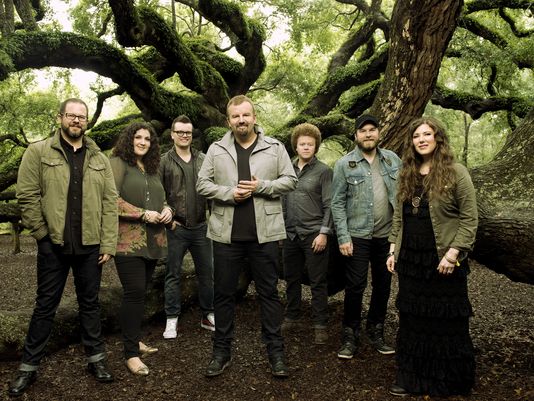
Here is a song from Casting Crowns which I think does a much better job at describing the brokenness of human relationships, and the way we can love and accept each other, in our brokenness:

BROKEN TOGETHER (Casting Crowns)

What do you think about when you look at me Casting-Crowns-PR-Image
I know were not the fairytale you dreamed wed be
You wore the veil, you walked the aisle, you took my hand
And we dove into a mystery

How I wish we could go back to simpler times
Before all our scars and all our secrets were in the light
Now on this hallowed ground, weve drawn the battle lines
Will we make it through the night

Its going to take much more than promises this time
Only God can change our minds

Maybe you and I were never meant to be complete
Could we just be broken together
If you can bring your shattered dreams and Ill bring mine
Could healing still be spoken and save us
The only way well last forever is broken together

How it must have been so lonely by my side
We were building kingdoms and chasing dreams and left love behind
Im praying God will help our broken hearts align
And we wont give up the fight

The amazing grace that justifies the ungodly – that’s me!

all of graceToday I was exploring my Olive Tree Bible app (on the ipad) and discovered a library of free books, from Piper to Edwards to Spurgeon and more! The excerpt below comes from Spurgeon’s “All of Grace“.  Though he was writing in the late 1800’s he is direct and bold in his writing – you can’t run and hide. He offers us salvation, by grace, through faith. I trust you will find it an encouragement – a reminder of the grace that saves. (You can find the book free on many places on line as well.)

“If God justifieth the ungodly, then, dear friend, He can justify you. Is not that the very kind of person that you are? If you are unconverted at this moment, it is a very proper description of you; you have lived without God, you have been the reverse of godly; in one word, you have been and are ungodly. Perhaps you have not even attended a place of worship on Sunday, but have lived in disregard of God’s day, and house, and Word- this proves you to have been ungodly. Sadder still, it may be you have even tried to doubt God’s existence, and have gone the length of saying that you did so. You have lived on this fair earth, which is full of the tokens of God’s presence, and all the while you have shut your eyes to the clear evidences of His power and Now, while this is very surprising, I want you to notice how available it makes the gospel to you and to me. If God justifieth the ungodly, then, dear friend, He can justify you. Is not that the very kind of person that you are? If you are unconverted at this moment, it is a very proper description of you; you have lived without God, you have been the reverse of godly; in one word, you have been and are ungodly. Perhaps you have not even attended a place of worship on Sunday, but have lived in disregard of God’s day, and house, and Word- this proves you to have been ungodly. Sadder still, it may be you have even tried to doubt God’s existence, and have gone the length of saying that you did so. You have lived on this fair earth, which is full of the tokens of God’s presence, and all the while you have shut your eyes to the clear evidences of His power and Godhead. You have lived as if there were no God.
Indeed, you would have been very pleased if you could have demonstrated to yourself to a certainty that there was no God whatever. Possibly you have lived a great many years in this way, so that you are now pretty well settled in your ways, and yet God is not in any of them. If you were labeled
UNGODLY
it would as well describe you as if the sea were to be labeled salt water. Would it not?
Possibly you are a person of another sort; you have regularly attended to all the outward forms of religion, and yet you have had no heart in them at all, but have been really ungodly. Though meeting with the people of God, you have never met with God for yourself; you have been in the choir, and yet have not praised the Lord with your heart. You have lived without any love to God in your heart, or regard to his commands in your life. Well, you are just the kind of man to whom this gospel is sent- this gospel which says that God justifieth the ungodly. It is very wonderful, but it is happily available for you. It just suits you. Does it not? How I wish that you would accept it! If you are a sensible man, you will see the remarkable grace of God in providing for such as you are, and you will say to yourself, “Justify the ungodly! Why, then, should not I be justified, and justified at once?”
Now, observe further, that it must be so– that the salvation of God is for those who do not deserve it, and have no preparation for it. It is reasonable that the statement should be put in the Bible; for, dear friend, no others need justifying but those who have no justification of their own. If any of my readers are perfectly righteous, they want no justifying. You feel that you are doing your duty well, and almost putting heaven under an obligation to you. What do you want with a Saviour, or with mercy? What do you want with justification? You will be tired of my book by this time, for it will have no interest to you.
If any of you are giving yourselves such proud airs, listen to me for a little while. You will be lost, as sure as you are alive. You righteous men, whose righteousness is all of your own working, are either deceivers or deceived; for the Scripture cannot lie, and it saith plainly, “There is none righteous, no, not one.” In any case I have no gospel to preach to the self- righteous, no, not a word of it. Jesus Christ himself came not to call the righteous, and I am not going to do what He did not do. If I called you, you would not come, and, therefore, I will not call you, under that character. No, I bid you rather look at that righteousness of yours till you see what a delusion it is. It is not half so substantial as a cobweb. Have done with it! Flee from it! Oh believe that the only persons that can need justification are those who are not in themselves just! They need that something should be done for them to make them just before the judgment seat of God. Depend upon it, the Lord only does that which is needful. Infinite wisdom never attempts that which is unnecessary. Jesus never undertakes that which is superfluous. To make him just who is just is no work for God– that were a labor for a fool; but to make him just who is unjust– that is work for infinite love and mercy. To justify the ungodly– this is a miracle worthy of a God. And for certain it is so.”

A great way to search for songs

sg-ministries-bannerI’ve recently discovered a great search tool for Sovereign Grace songs at their website. Though I’ve been using Sovereign Grace for many years (as a source of good biblical, singable songs for church) I had not noticed the menu that allows you to search for songs by theme, tempo, key, genre and keyword. It’s especially useful if your church sings many of their songs. But even if you don’t it’s very easy to follow links to the songs, listen to samples and download the music for free. Sometimes even the suggestion of song titles can help point you in the direction of songs you do know (with similar titles).

Here is a link to the search page:
http://www.sovereigngracemusic.org/Songs

Make sure you scroll down when you get to the page. The top half is all about style, but the bottom section has an immense number of themes you can select in your search. I found it best to tick just one or two boxes at a time. (If you choose too many you will get results ‘zero’.)

Here is my shortlist of the most congregation-friendly Sovereign Grace songs:

1. Jesus Thankyou (Pat Sczebel)
2. O Great God (Bob Kauflin)
3. Let Your Kingdom Come (Bob Kauflin)
4. I will Glory in My Redeemer (Steve & Vikki Cook)
5. The Glories of Calvary (Steve & Vikki Cook)
6. O the Deep Deep Love of Jesus ((Bob Kauflin arrangement)
7. Unashamed (Mark Altrogge)
8. Show us Christ (Bob Kauflin & Doug Plank)
9. Through the Precious Blood (Mark Altrogge)
10. Hope has come (Stephen Altrogge)
11. How high and how wide (Mark Altrogge)