Oh the Mercy of God

GOD'S GRACE IN HANDSAs I prepare a new playlist of songs for church this year, I’ve been thinking through older songs we have enjoyed in the last decade of which you may not even be aware. Can’t believe I haven’t mentioned this one yet (since I am blogging about God’s grace, and music!). The lyrics of “Oh the Mercy of God” (1997) come to us straight from Ephesians 1:3-12, through the pen of Geoff Bullock, one of the founding musicians at Hillsong Sydney. In just three verses and a chorus he manages to sum up the wonder of a gracious God, who not only redeems us, but counts as as righteous! And why? For His own praise and glory. This is the astounding and almost unbelievable good news of the Gospel. Enjoy.
(Click on the link below to listen)

Oh the Mercy of God

Oh the mercy of God, The glory of grace
That You choose to redeem us, To forgive and restore
And You call us Your children, Chosen in Him
To be holy and blameless, To the glory of God

Chorus:
To the praise of His Glorious Grace
To the praise of His Glory and Power
To Him be all Glory Honour and Praise
For ever and ever and ever A–men

Oh the richness of Grace, The depths of His love
In Him is redemption, The forgiveness of sin
You called us as righteous, Predestined in Him
For the praise of His Glory, Included in Christ.

Oh the Glory of God expressed in His Son
His image and likeness revealed to us all
The plan of the ages completed in Christ
That we be presented perfected in Him.

Mary did you know?

I have only recently discovered an awesome Christmas song by Mark Lowry and Buddy Greene (1991), called “Mary did you know?” Why haven’t I heard of this one before? Jeremy Camp has just released it on his new Christmas album “Christmas: God with Us”. It would make a great solo/ensemble song for your carols/Christmas program. (And see my other suggestions here to ease your planning stress). Enjoy!

Buy the song here at iTunes

Here are the lyrics:

Mary did you know that your baby boy will one day walk on water?
Mary did you know that your baby boy will save our sons and daughters?
Did you know that your baby boy has come to make you new?
This child that you’ve delivered, will soon deliver you.

Mary did you know that your baby boy will give sight to a blind man?
Mary did you know that your baby boy will calm a storm with his hand?
Did you know that your baby boy has walked where angels trod?
And when you kiss your little baby, you have kissed the face of God.

The blind will see, the deaf will hear and the dead will live again.
The lame will leap, the dumb will speak, the praises of the lamb.

Mary did you know that your baby boy is Lord of all creation?
Mary did you know that your baby boy will one day rule the nations?
Did you know that your baby boy is heaven’s perfect Lamb?
This sleeping child you’re holding is the great I am.

Read more of what I’ve learned about the great I AM in my post from last month “You are I AM”

Why wouldn’t we remember Christmas?

Ever since the Roman church fixed Christmas on December 25 (440AD) there have been a vast array of opinions about whether or not we Christians should in fact be celebrating Christ’s birth in this way. Some people wholeheartedly support it and go all out in their celebrations. Others try to avoid it, and mock or despise those who do celebrate Christ’s birth at the time of an old Pagan Sun-god festival. Some families I know refuse to partake in the gift giving of the day (with much sadness for their children).

In 1647 Christmas was abolished in Britain by Oliver Cromwell and his Puritan parliament. December 25 was a working day from 1644 to 1656. There were riots across the country. Christmas church services were broken up by armed soldiers. Shopkeepers came off the worst: if they closed then soldiers forced them to open; if they opened, the rioters forced them to close! Christmas decorations in London were torn down and burned by the mayor. Christmas puddings were banned.

In America the Puritan leaders followed suit and banned Christmas in some states (1659). A New England state law said: “Whosoever shall be found observing any such day as Christmas shall pay 5 shillings as a fine.” And you could buy a lot for 5 shillings! The Christmas ban was dropped in 1681 but it wasn’t until 1836 that Alabama said 25 December was to be a holiday, then everyone in the USA copied them. By then people in Victorian Britain had lost interest in Christmas, but when Charles Dickens published “A Christmas Carol” in 1843 they decided Christmas was a wonderful idea.

For me Christmas has always been a wonderful time of year, full of family fun and traditions – but does that justify the celebration? While the commercialism is distracting (and the concept of an jolly Father figure who rewards us according to merit is in total opposition to the forgiveness and grace found in Jesus) I do think there is a case for celebrating wholeheartedly as Christians.

And it all comes down to remembering.

Throughout the history of God’s redemptive intervention into our fallen world, He has told us to keep remembering what he has done.  It was on the basis of the covenant promises given to Abraham that Israel was rescued from slavery (to Egypt and to sin) through Moses. The Passover Lamb which saved them from death (well, God saved them!) was so important to remember that a whole special menu plan was devised. As people ate they would remember, and teach their children to remember what God had done. When the new generation of Israel emerged from the wilderness wanderings (their parents caused), Moses spent a whole book (Deuteronomy) explaining how important it was to remember and obey all the laws God had given, to guide and direct their new lives in the Promised Land. They were to live lives worthy of their God and show the world what he had done for them. He rescued them into a covenant relationship, for the glory of His Name.

So why wouldn’t we remember the one event which reminds us of the time God stepped into human history Himself. This is when the Word of God became flesh and dwelt among us, to save us!  While the Cross is the thing that saves us, we must remember the beginning of that journey to the Cross: Christ born as a helpless baby, fully God and fully man, in such lowly circumstances. He was born, destined to be despised and rejected, for our sake.

What a great opportunity we have at Christmas time, when even non-Christians are willing to celebrate the birth of a Saviour they do not know! They are remembering, even though they don’t fully understand. We have the full story to share – to explain to them what they are really celebrating! Let’s open the dialogue at every opportunity, even in those long line-ups at the checkout! Let’s show them how to remember in thankfulness and awe the Incarnation of God’s son, sent to save.

May the glory go to our great God this Christmas – as we remember!

You may also enjoy:

Great Christmas music                                    Is He really making a list and checking it twice?
ChristmasSheetMusicsanta

You are “I AM”

Things have been pretty quiet for the last week or so at Sevennotes. I’m studying for an exam in “Old Testament 1” (through Moore College External Studies). This subject focuses on the Pentateuch (first five books) and has been such an eye-opening journey, informing my understanding of everything else I read in the Bible. So I’ll call this ‘studying’ and share with you a few things I have been learning. The concepts are also refered to in a great song I heard today (for the first time), YOU ARE ‘I AM’ by Mercy Me. (You can listen at the end).

“I AM” is the name by which God revealed himself to Moses in the burning bush.
“I AM who I am” . . .”I AM has sent me to you” . . .”This is my name forever, the name by which I am to be remembered”. (Exodus 3:14-15)
The Hebrew form of this name is Yahweh (seen in our English bibles as “LORD” in small capitals). This name expresses God’s character as the dependable, faithful God who desires the full trust of his people. In John 8:58-59 Jesus applied this name to Himself. Here are some other significant things I’ve learned about the name:
1. Giving the name established a relationship with the Israelites and made worship possible. The name was exclusively given to Israel, the name by which God would be known and worshipped.
2. In giving His name, God gave Himself. Yahweh established a new personal relationship with Moses – this was extended to the Israelites when they received his name in the Sinai covenant (Exodus 19) before the 10 Commandments were given. Note that God redeemed Israel and brough them into the covenant relationship before the law was given (ie. The Law can’t save).
3. The “I AM” name reminds us of God’s faithful and unchanging nature.
4. Faith included a personal response to God – Moses responded to God’s revelation of His name, in faith. This is how the Israelites were to respond. (This is how we must respond.)
5. To call on the new covenant name ‘Yahweh’ was to appeal to the covenant relationship which the giving of the name established.

God’s faithfulness to his own promises is what we must rely on! We draw on his faithfulness when we call on his name. For me this has really changed the significance those opening words of our prayers: “Dear God”. We are calling on all that He has done and all He is. The song below reminds us of all He is, and all we are in relation to the One who is “I AM”. (Thanks for studying with me!)

YOU ARE I AM
I’ve been the one to shake with fear
And wonder if You’re even here
I’ve been the one to doubt Your love
I’ve told myself You’re not enough

I’ve been the one to try and say
I’ll overcome by my own strength
I’ve been the one to fall apart
And to start to question who You are

You’re the one who conquers giants
You’re the one who calls out kings
You shut the mouths of lions
You tell the dead to breathe
You’re the one who walks through fire
You take the orphan’s hand
You are the one Messiah
You are I am
You are I am

I’ve been the one held down in chains
Beneath the weight of all my shame
I’ve been the one to believe
That where I am You cannot reach

You’re the one who conquers giants
You’re the one who calls out kings
You shut the mouths of lions
You tell the dead to breathe
You’re the one who walks through fire
You take the orphan’s hand
You are the one Messiah
You are I am
You are I am

The veil is torn
And now I live with the Spirit inside
The same one, the very same one
who brought the Son back to life

Hallelujah, He lives in me (x4)

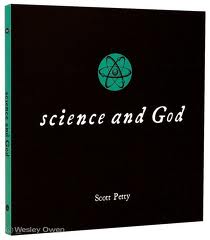
Science and God: still playing on the same team

While the “new athiest” movement is doing its best to persuade people otherwise, there remains an incredible amount of harmony between the world of scientific knowledge and the Christian faith. The main reason why this (perhaps unrecognised) harmony is possible is that science and faith are really asking different types of questions about the universe. This means that ultimately we don’t have to pick one team or the other! These thoughts are the subject of Scott Petty’s most engaging Little Black Book “Science and God” (part of a series published by Matthias Media, 2011).

Petty begins by asking us to consider whether or not fact and faith really are locked in a tenacious battle to the death, which is by and large the way popular culture presents the issue. And the winner of this battle, we are told, will be Science! with Faith backed only by rigid conservative moralists – and stupid people! We need to look beyond these popular portrayals of the issue to see that science and Christianity have in fact enjoyed a long friendship stretching back centuries. Petty cites evidence of many science-focused Christians, past and present, who have advanced scientific research and knowledge. And such findings in no way contradict the claims of the Bible.

This is the heart of the matter: science and faith are answering different questions. One answers the question of how the universe works – the other answers the question of why the universe exists. “Just because we think we have understood the mechanism or operation of something in the universe without bring in God does not mean that there was no God who designed the universe in the beginning.” Petty uses a great illustration of the Ford motor car: gaining knowledge of the workings of the car does not negate the fact that Ford designed it, even though, within the car, Henry Ford is no where to be found. God may not visible to the human eye, but it would be a big mistake to dismiss the Him as designer, without precious scientific evidence to prove his non-existence (if that is what you are placing your faith in).

This book has a great deal more to offer, particularly regarding how the Big Bang theory (not the TV show) matches well with God’s explanation for the Creation moment, that single definite point at which the universe was created, out of nothing! Petty shares recent evidence from Hubble telescope and other research to back this. “It denies plain reason to say that no-one created something out of nothing, and it demolishes the building blocks of science to say that when it comes to the universe, there is no cause”.

Chapter 3 of this little book explores all the factors which work together to support life on the planet, things like gravity and the atmosphere. Petty then moves onto the ultimate chicken and egg problem of human DNA: “if you believe life emerged from non-living things like chemicals and such” you have problem, says Petty. “DNA relies on proteins for its production. But proteins rely on DNA for their existence. So which came first? Each must be present for the other to be made. It seems neither proteins nor DNA could create themselves”.

Petty deals with each of these points in good detail and with appropriate references to reputable studies. He also tackles the big “challenge” of evolution in a clear and effective manner, diffusing the bomb that some people see it to be. He also discusses the language and purpose of the biblical Creation account in a refreshing way, offering perspectives you may not have previously considered. But rather than give all that away, I’ll leave it with you to get a hold of the book and read it for yourself. Make sure you then pass it on to someone who finds the whole Science/Faith debate to be a real challenge. It would be a great book for your church or council library, for youth groups, university or highschool students – or anyone like you or me who live on this planet and must wrestle with these issues. There are only 96 pages of reading (and the pages are small, size of a CD case), with a helpful Q and A section at the end. Petty concludes with a friendly challenge to the reader, to consider that while scientific knowledge is useful, it is the personal and relational knowledge of God, through his Son, that counts most.
“God is not afraid of science, and he also knows that it’s not enough if we are to know him. In the past he spoke through the prophets, but in these last days he has spoken to us by His Son”.

You can buy a copy of the book directly from Matthias Media by clicking here.

The sum total of God’s grace

“The sum total of God’s activity towards his human creatures is grace. The sum total of the benefits is peace.”
C.J.Mahaney, Sovereign Grace Ministries

Angels long to understand the story of Grace

10 Concerning this salvation, the prophets, who spoke of the grace that was to come to you, searched intently and with the greatest care, 11 trying to find out the time and circumstances to which the Spirit of Christ in them was pointing when he predicted the sufferings of the Messiah and the glories that would follow. 12 It was revealed to them that they were not serving themselves but you, when they spoke of the things that have now been told you by those who have preached the gospel to you by the Holy Spirit sent from heaven. Even angels long to look into these things. (1 Peter 1:10-12)

Whenever I’m feeling a little confused by God’s mysterious ways I find it comforting to remember that even angelic beings do not fully understand the mind of God. We imagine that since angels are in God’s presence, they would know why God is doing what He is doing. But they don’t. Peter spoke of this in his letter above. He says angels long to look into ‘these things’, to fully comprehend God’s mysterious plan of redemption, in which they SERVE us! What an amazing thought! They obey God, they follow the plan, without fully understanding why.

We humans are so privileged. Not only have we have been told the story of God’s grace, shown in his Son coming to redeem us and restore us to relationship with God, we also benefit from this grace! We have eternal life. Steven Curtis Chapman’s song, ANGELS WISH, develops these thoughts in a beautiful way. He looks forward to the time when he will sit down with his angel friends and explain to them the “story of grace”. I know things angels only wish they knew!
How privileged am I?

ANGELS WISH:

Was God smiling when He spoke the words and made the world?
And did he cry about the flood?
And what does God’s voice sound like when He sings, or when He’s angry?
These are just a few things that the angels have on me

Well, I can’t fly, at least not yet
I’ve got no halo on my head
And I can’t even start to picture Heaven’s beauty
But I’ve been shown the Savior’s love
The grace of God has raised me up
To show me things the angels long to look into
And I know things the Angels only wish they knew

I have seen the dark and desperate place where sin will take you
I’ve felt loneliness and shame
And I have watched the blinding light of grace
Come breaking through with a sweetness
Only tasted by the forgiven and redeemed

And someday I’ll sit down with my angel friends
Up in Heaven
They’ll tell me about creation
And I’ll tell them a story of grace
 

A reminder of who we are by Grace

Greetings! Have decided to repost an excellent challenge from The Blazing Center blog. It’s one of those things you read and think “yes, exactly, I’ve been wondering what to do in that situation!” I hope you find it as encouraging as I did (especially if you are a small group leader): We are not slaves to sin!

It’s Time To Stop Being Authentic Christians by Stephen Altrogge on September 13, 2012

How many small group/home group/community group/cell group/care group meetings (did I forget any names?) have started out like this:
PERSON 1: I’m really struggling with [insert impatience, anger, lust, discontentment, and any other sin].
PERSON 2: Thanks for being so open and honest about your struggles. We can all identify with that struggle.
PERSON 1: Yeah, it’s just so hard to overcome. I feel like I’m struggling with this all the time.
PERSON 2: I can relate to that feeling. I feel the same way. In fact just yesterday I [yelled at my kids, looked at porn, wasted money, etc.] We’re all broken people. Thankfully there’s grace. Let’s pray and ask God to help us.
Now, is there anything wrong with this interchange? Not exactly. It’s good to confess our sins to one another and pray for one another. Plus, if there’s one thing the world hates, it’s hypocrites. So, in an effort to obey scripture and be “authentic”, we confess our struggles. And we drink fair trade coffee, listen to Bon Iver, and wear faded jeans. But I think in general, we as Christians need to be less authentic.

What I mean is, we need to identify more with who we are in Christ than our current struggles. We are not primarily defined by our anger, lust, impatience, or discontentment. We are defined by the fact that we are united to Jesus Christ, and that Christ himself lives in us!

So should we talk about our struggles and sins? Yes, of course. But we shouldn’t stop there. We need to remind each other that, because we are united to Christ, we will not be ruled by our sin. As Romans 6:14 says, “For sin will have no dominion over you, since you are not under law but under grace.”

We are united to the almighty Christ. That fact should completely transform the way we talk about our sins. We need to remind each other that our struggles with sin are NOT our authentic identity. Our authentic identity is as new creations in Christ. So our discussions should go a little more like this:
PERSON 1: Man, I’m just really struggling with anger this week!
PERSON 2: Thanks for being open and honest about your struggles. I can relate to that struggle too.
PERSON 1: Yeah, it feels like I can’t get past this! I’m always going to be angry.
PERSON 2: I know that it feels that way, but I want encourage you that this sin WILL NOT rule you. You are under grace. You don’t have to obey this feeling of anger that is rising within you. That feeling of anger is not your identity. You are in Christ and he is in you, and he will give you the power to overcome that sin. You don’t have to give in to it! Isn’t that good news? Now let’s pray and ask God to help you obey.

We are not slaves to sin. Our true, authentic, real identity is as Christians, united to Christ and filled with the Holy Spirit. Yes we confess and repent of our sins. But we don’t stay there. By faith we embrace our identity and fight against the sin that wages war against us.

The great unveiling (2Corinthians 3:16)

open eyes“But whenever someone turns to the Lord the veil is taken away.” (2 Corinthians 3:16)

For this next verse in the Three Sixteen series I am going to say very little. God/Paul can speak for himself here. He does it so well.

I’ll start from a little way back, at verse 7, to give you a run-up to the standout verse, 16.
“The old way, with laws etched in stone, led to death, though it began with such glory that the people of Israel could not bear to look at Moses’ face. For his face shone with the glory of God, even though the brightness was already fading away. Shouldn’t we expect far greater glory under the new way, now that the Holy Spirit is giving life? 9 If the old way, which brings condemnation, was glorious, how much more glorious is the new way, which makes us right with God! . . . . . 13 We are not like Moses, who put a veil over his face so the people of Israel would not see the glory, even though it was destined to fade away. 14 But the people’s minds were hardened, and to this day whenever the old covenant is being read, the same veil covers their minds so they cannot understand the truth. And this veil can be removed only by believing in Christ. 15 Yes, even today when they read Moses’ writings, their hearts are covered with that veil, and they do not understand.
16 But whenever someone turns to the Lord, the veil is taken away. 17 For the Lord is the Spirit, and wherever the Spirit of the Lord is, there is freedom. 18 So all of us who have had that veil removed can see and reflect the glory of the Lord. And the Lord—who is the Spirit—makes us more and more like him as we are changed into his glorious image.”

What magnificent grace! What privilege has been shown to us in Christ! We have received the grace of the knowledge of God, through the Spirit of Christ. We have had the veil lifted, unlike so many who still are stumbling in the dark. Even the Jews, who were the first recipients of God’s favour, they stumble over Christ. Both back then and now. The veil is not lifted.
Praise be to God! He has turned us around, back to himself, and removed the veil which kept him hidden from us! Now we can reflect His glory to others!

2 Corinthians 4:6 – “For God, who said, “Let light shine out of darkness,” made his light shine in our hearts to give us the light of the knowledge of the glory of God in the face of Christ.”

You may also like:
New mercy, just like the first time
Image created by Sarah Danaher with a Canon EOS 5D MkII

The gracious choice to carry others’ burdens

The other day I was involved in a discussion about how we can knowingly or unknowingly tempt others to sin. What is our responsibility in that situation? Interesting discussion!
One person shared a verse from James 1:14 –But each person is tempted when he is lured and enticed by his own desire.” In their view this verse excuses us from much responsibility. Now James does have a fair point here of course. People do have a choice, to give in to the temptation/entertain the thought, or not! But does this exempt me from responsibility?
If I know someone who has difficulty with being, frankly, a glutton, should I offer them a large serve of chips and a whole block of chocolate? If someone has a problem with anger, should I provoke them by luring them into a heated debate? If someone, by virtue of being male, is tempted by images of scantily dressed females should I make the effort to wear more modest, less figure hugging clothes? If someone is an avid gossiper should I mention some tasty little bit of information to them, out of turn?

In seeking godly wisdom for this dilemma, Paul reminded me in his letter to the Galatians (6:1-2) that: ” . . .  if someone is caught in a sin, you who are spiritual should restore him gently. But watch yourself, or you also may be tempted. Carry each other’s burdens, and in this way you will fulfill the law of Christ.(NIV)
Also in Philippians we read: “Do nothing out of selfish ambition or vain conceit, but in humility consider others better than yourselves. Each of you should look not only to your own interests, but also to the interests of others.” (James 2:3-4)

This is how the law of Christ is fulfilled! This is the law of love, lived out when we consider that each of us carry burdens, and the heaviest burden is sin. Paul commands us to carry each other’s burdens. “This is how we know what love is: Jesus Christ laid down his life for us. And we ought to lay down our lives for our brothers.(1 John 3:16). (See the post in the Three Sixteens.)

We carry each others burdens best when we remember that we are part of the Body of Christ. We are part of a larger unit of people who need each other, and should support each other, just as the different organs and limbs in our physical bodies do. We are a living system and we are to seek the good of others in that system. I don’t think God intends us to struggle alone with our sin, without help. Let’s look around and consider what burdens others are carrying, and help them by being mindful of their weakness. We can even pray for them! And if it means we have to change something about ourselves, our actions, then so be it. Just because we aren’t responsible for other people’s sinful actions doesn’t mean we shouldn’t consider them ‘better’ enough to help carry their burden. Let’s spur each other on to love and good deeds (not more sin).

Ps.
I now feel compelled to, most daringly, turn this whole thing around and back on to me.
Does this all mean that I, a sinner saved by grace, should be honest enough and vulnerable enough with others to let them know my struggles with sin? Am I willing to do that? If I don’t, aren’t I preventing others from fulfilling the law of Christ. What do you think?

You may also like

The waterfall, river and reservoir of God’s Grace                Unexpected Timing of Grace  
solid-joy-appkingscross