
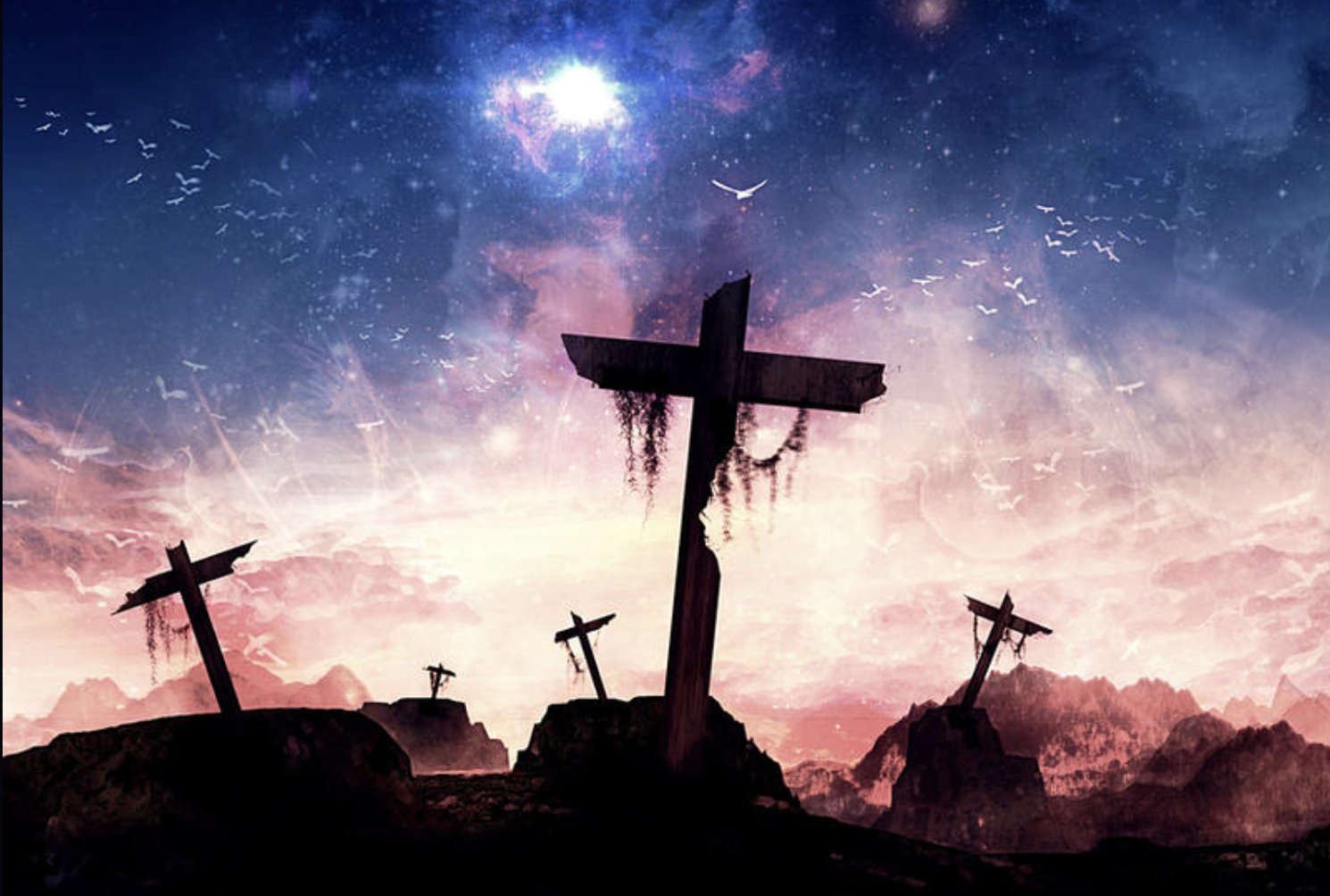
IV. Words of Anguish
Matthew 27: 45-46
From noon until three in the afternoon darkness came over all the land. About three in the afternoon Jesus cried out in a loud voice, “Eli, Eli, lema sabachthani?” (which means “My God, my God, why have you forsaken me?”).
Why have you forsaken me?
Most of us find this anguished, questioning cry to be the most shocking and confusing of the words uttered by Christ on the Cross. We can understand His words of compassion and forgiveness. But what are we to make of Christ asking why the Father has left him? How could Jesus feel or be abandoned, forsaken, by his loving Father God?
This is an incredibly confronting idea. The Lord God had never forsaken His people. Throughout history, He rescued them again and again. When the people cried out, He listened and acted. He was their Rock and Refuge in every trial. “Jesus’ cry startles and staggers us. Of old (King) David said, ‘I have never seen the righteous forsaken,’ but here we behold the Righteous One forsaken” (Pink, p.74).
Though Jesus had existed in perfect communion with the Father and Spirit from eternity, here he suffers painful, undeserved separation and shame. “The hiding of the Father’s face from Him was the most bitter ingredient of that cup the Father had given the redeemer to drink” (p.73). The separation of Jesus from His Father due to our sin is indeed the point. These anguished words point to the enormity of the weight of sin transferred to his shoulders, sin which separates him from the Father.
Pink points out that no other historical judgement poured out against sin compares to this moment on Calvary hill. It is the ultimate “demonstration of God’s inflexible justice and ineffable holiness, of His infinite hatred of sin . . . [which] flamed against His own Son on the Cross. Because he was enduring sin’s terrific judgement, He was forsaken of God. . . God’s holy character could not do less than judge sin even though it be found on Christ himself” (p.80).
This is the whole message of the Gospel and the reason for our hope: Christ died for sinners! He saved us! As Galatians 3:13 says, “Christ redeemed us from the curse of the law by becoming a curse for us, for it is written: “Cursed is everyone who is hung on a pole” (or tree). The death of Christ was the death of a curse, the curse of alienation from God. In these words of anguish, Jesus feels the weight of this alienation: “My God, my God, why have you forsaken me?“
As we leave this scene, we shouldn’t forget that it is the love of the Father which drives this great sacrifice of his Son. As he hands Jesus over to be punished for our sin, there is nothing but love as the motivation. Christ is forsaken so that we are not.
“See what great love the Father has lavished on us, that we should be called children of God!” (1 John 3:1). Stuart Townend sums this up so well in the song below, “How deep the Father’s love” (1995). I’ll leave you to spend some time contemplating the lyrics.
How deep the Father’s love for us
How vast beyond all measure
That He should give His only Son
To make a wretch His treasure How great the pain of searing loss
The Father turns His face away
As wounds which mar the Chosen One bring many sons to glory
Behold the man upon a cross,
My sin upon His shoulders;
Ashamed, I hear my mocking voice
Call out among the scoffers.
It was my sin that held Him there
Until it was accomplished;
His dying breath has brought me life – I know that it is finished.
I will not boast in anything,
No gifts, no power, no wisdom;
But I will boast in Jesus Christ,
His death and resurrection.
Why should I gain from His reward?
I cannot give an answer;
But this I know with all my heart – His wounds have paid my ransom.
You can read more about this song and the lyrics in this previous post: “Why should I gain from his reward?”
Blessings, and see you for #5.
How Deep The Father’s Love: Artist: Celtic Worship // Writer: Stuart Townend © 1995 Thankyou Music.
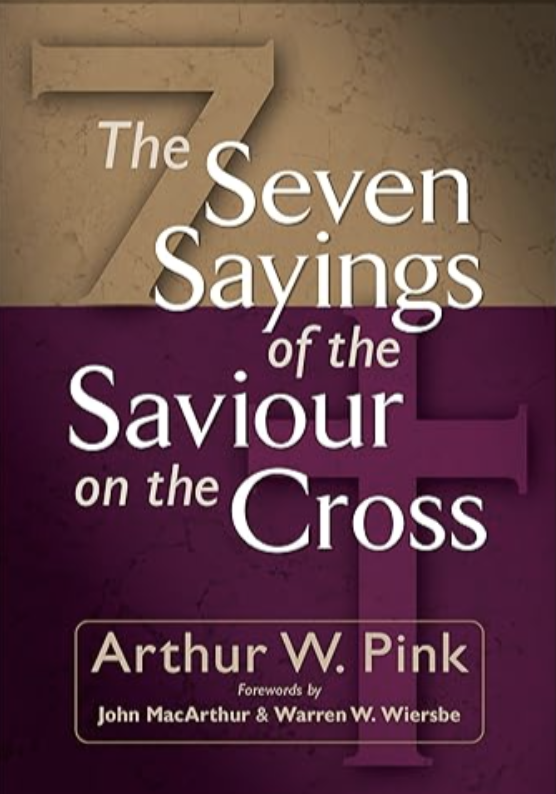
This series draws on the structure and ideas in “The Seven Sayings of the Saviour on the Cross” by Arthur W. Pink, 1984, Baker Book House. Direct quotations are indicated. AI was NOT used in the creation of this Blog post.
Main picture Credit: https://www.deviantart.com/muhammadriza/art/Eli-Eli-Lama-Sabachthani-411714602

 sevennotesofgrace