Why music makes our brain sing

Those of us who love music know how important it is to us, to be listening, creating and making music. But do we know why? Here are some interesting (though perhaps complex) answers from some neuroscientists, via the New York Times.

Why Music Makes Our Brain Sing

By ROBERT J. ZATORRE and VALORIE N. SALIMPOOR

MUSIC is not tangible. You can’t eat it, drink it or mate with it. It doesn’t protect against the rain, wind or cold. It doesn’t vanquish predators or mend broken bones. And yet humans have always prized music — or well beyond prized, loved it.

In the modern age we spend great sums of money to attend concerts, download music files, play instruments and listen to our favorite artists whether we’re in a subway or salon. . . . So why does this thingless “thing” — at its core, a mere sequence of sounds — hold such potentially enormous intrinsic value?

The quick and easy explanation is that music brings a unique pleasure to humans. Of course, that still leaves the question of why. But for that, neuroscience is starting to provide some answers.

More than a decade ago, our research team used brain imaging to show that music that people described as highly emotional engaged the reward system deep in their brains — activating subcortical nuclei known to be important in reward, motivation and emotion. Subsequently we found that listening to what might be called “peak emotional moments” in music — that moment when you feel a “chill” of pleasure to a musical passage — causes the release of the neurotransmitter dopamine, an essential signaling molecule in the brain.

When pleasurable music is heard, dopamine is released in the striatum which is known to respond to naturally rewarding stimuli like food and sex and which is artificially targeted by drugs like cocaine and amphetamine. But what may be most interesting here is when this neurotransmitter is released: not only when the music rises to a peak emotional moment, but also several seconds before, during what we might call the anticipation phase.

The idea that reward is partly related to anticipation (or the prediction of a desired outcome) has a long history in neuroscience. Making good predictions about the outcome of one’s actions would seem to be essential in the context of survival, after all. And dopamine neurons, both in humans and other animals, play a role in recording which of our predictions turn out to be correct.

To dig deeper into how music engages the brain’s reward system, we designed a study to mimic online music purchasing. Our goal was to determine what goes on in the brain when someone hears a new piece of music and decides he likes it enough to buy it.

We used music-recommendation programs to customize the selections to our listeners’ preferences, which turned out to be indie and electronic music, matching Montreal’s hip music scene. And we found that neural activity within the striatum — the reward-related structure — was directly proportional to the amount of money people were willing to spend.

But more interesting still was the cross talk between this structure and the auditory cortex, which also increased for songs that were ultimately purchased compared with those that were not.

Why the auditory cortex? Some 50 years ago, Wilder Penfield, the famed neurosurgeon and the founder of the Montreal Neurological Institute, reported that when neurosurgical patients received electrical stimulation to the auditory cortex while they were awake, they would sometimes report hearing music. Dr. Penfield’s observations, along with those of many others, suggest that musical information is likely to be represented in these brain regions.

The auditory cortex is also active when we imagine a tune: think of the first four notes of Beethoven’s Fifth Symphony — your cortex is abuzz! This ability allows us not only to experience music even when it’s physically absent, but also to invent new compositions and to reimagine how a piece might sound with a different tempo or instrumentation.

We also know that these areas of the brain encode the abstract relationships between sounds — for instance, the particular sound pattern that makes a major chord major, regardless of the key or instrument. Other studies show distinctive neural responses from similar regions when there is an unexpected break in a repetitive pattern of sounds, or in a chord progression. This is akin to what happens if you hear someone play a wrong note — easily noticeable even in an unfamiliar piece of music.

These cortical circuits allow us to make predictions about coming events on the basis of past events. They are thought to accumulate musical information over our lifetime, creating templates of the statistical regularities that are present in the music of our culture and enabling us to understand the music we hear in relation to our stored mental representations of the music we’ve heard.

So each act of listening to music may be thought of as both recapitulating the past and predicting the future. When we listen to music, these brain networks actively create expectations based on our stored knowledge.

Composers and performers intuitively understand this: they manipulate these prediction mechanisms to give us what we want — or to surprise us, perhaps even with something better.

In the cross talk between our cortical systems, which analyze patterns and yield expectations, and our ancient reward and motivational systems, may lie the answer to the question: does a particular piece of music move us?  When that answer is yes, there is little — in those moments of listening, at least — that we value more.

Robert J. Zatorre is a professor of neuroscience at the Montreal Neurological Institute and Hospital at McGill University. Valorie N. Salimpoor is a postdoctoral neuroscientist at the Baycrest Health Sciences’ Rotman Research Institute in Toronto.

You may also like:
Pick up your instrument – food for the soul and the brain
piano


Great use for an old piano

piano desk bigHow could you but be inspired sitting inside the beautiful timber frame of this old piano? What a great place to blog, to compose, to contemplate the music of our world. If anyone would like to make me one, I would happily accept.

What happens when we sing?

WORDS OF WONDER: What happens when we sing?

I just stumbled across this great conference talk from pastor and songwriter Bob Kauflin at Sovereign Grace ministries. If you have ever wondered what the big deal is about the body of Christ singing together (or if you’ve tried to explain that to someone) then this talk has the answers! God doesn’t just want us to praise Him with words, but with SINGING!! If you have a spare hour (or a walk to go on with your ipod or some ironing to do) then have a listen. You will certainly find it encouraging! It might also be a great boost for any music team you lead, to listen and discuss together. Blessings

An unwasted life makes much of Jesus

In 2004 I read John Piper’s Don’t Waste your Life. In the book he calls us not to get caught up in living for things that count for nothing! Piper says you can ensure you don’t waste your life by seeking to live and die boasting in the cross of Christ – by making the glory of God your singular passion. Instantly this became a book that I recommended to everyone, since it takes ‘faith in Christ’ straight from your head to your heart and hands. The section I found most beautiful to read (and most re-orienting) was towards the end in chapter 10:
“How could I, Lord, have ever been so blind to think that being loved by you means making much of me and not yourself? How could I put my eye to some great telescope, designed to make me glad with visions of the galaxies, and notice in the glass a dim reflection of my face and say:”Now I am happy, I am loved?” How could I stand before the setting sun, between the mountain range and the vastness of the sea, and think that everlasting joy should come from making much of me? . . . “
(Don’t Waste your Life, John Piper, 2003, p.186.)

I then recalled that these very words had challenged me before. In Steven Curtis Chapman’s song “Much of You” he cleverly crafts Piper’s lyrical prose into a song that really could change your life – and ensure you don’t waste it! Have a listen above/read below and be encouraged!
Even if you can only “make much of Jesus” in what you think are small ways your life is not wasted. And what a privilege if your words (spoken, written, blogged or sung) help even one person to see Jesus for who He is. I love being part of a community of bloggers who do their best to make much of Jesus! Blessings.

MUCH OF YOU (Steven Curtis Chapman)all things new

How could I stand here and watch the sun rise
Follow the mountains where they touch the sky
Ponder the vastness and the depths of the sea
And think for a moment the point of it all was to make much of me
‘Cause I’m just a whisper and you are the thunder and

I want to make much of you Jesus
I want to make much of your love
I want to live today to give you the praise
That You alone are so worthy of
I want to make much of your mercy
I want to make much of your cross
I give you my life, Take it and let it be used
To make much of you

And how can I kneel here and think of the cross
The thorns and the whip and the nails and the spear
The infinite cost
To purchase my pardon and bear all my shame
To think I have anything worth boasting in except for your name
‘Cause I am a sinner and you are the Savior

Bridge:
This is your love, oh God
Not to make much of me
But to send your own son
So that we could make much of you
For all eternity

Written by Steven Curtis Chapman ©2004 Sparrow Song – CD: All things new

Behind the Song:
‘A lot of times as I’m writing an album I’ll read books, and certain books will come along and at the right time, will impress, affect and inspire me. One book I read was by John Piper called Don’t Waste Your Life, and by the time I finished reading it, I think I had eight or nine songs started and several that ended up on this album. I felt as I finished this book my understanding of just who God is and why I’m here, what the whole point and purpose of my life is, is ultimately to glorify God and to really make much of Him. I feel like He created us for this purpose. He’s the point, not me. This book helped put that in such great perspective for me – to get a new deeper understanding of that.’Steven Curtis Chapman

You may also like:
Growing for God’s Splendor                                                                   The Hurt and the Healer
christyMercyMe_-_The_Hurt_And_The_Healer


“You make me want to be nice”

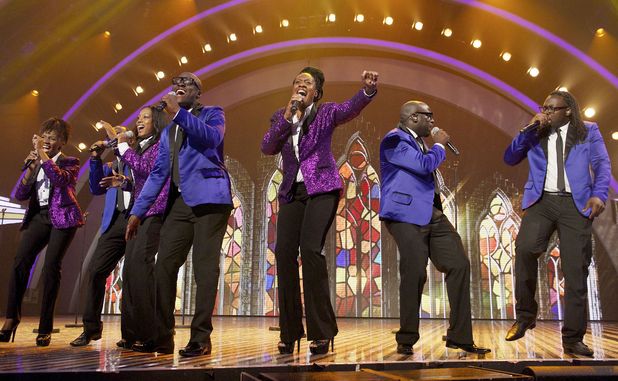
choirThis was the comment made by infamous Britain’s Got Talent judge Simon Cowell, in response to a performance of “O Happy Day”, by Gospel choir “Incognito”. This is the power of the Gospel in song, the proclamation that the day Jesus washed our sins away is indeed happy! And this makes others happy, despite their best intentions! Click the link below to enjoy.

http://www.godvine.com/Gospel-Choir-Simon-fb-gv-3433.html

Cowell

Riddled with Grace

You Are A Theologian

theology-mattersFound a great post on a topic I have been meaning to write about myself over at Worship Sense. It talks of something about which I’m thoroughly convinced : that church music has a huge role to play in teaching good theology to the Body of Christ, and growing people in faith. I hope it will prove to be great encouragement to your music department! Enjoy.  . .

“In spiritual circles, few people are seen as intimidating as often as theologians. Theologians are scholars. Studied. Educated. Cultured. And they wear old-school glasses, vests and wool sweaters as they sit in an aged leather wingback chair in front of a stately, oversized bookcase in a home library with loaded oak bookshelves lining all of the walls, all the way up to the ceiling. (Whew . . . that was a mouthful!) Okay, maybe not all of them, but we like to think they do. The point is, when we hear the word “theologian” often we get an image in our minds that, at least in some way, represents the description above.

So what if I told you that YOU are a theologian?

Well, if you’re a worship leader and/or worship songwriter, you are! Sure, perhaps you aren’t necessarily discovering any brand-spankin’ new theology. But, you are writing and/or choosing worship songs that speak a theological truth. You are communicating theology to your local church. This is why one of the most important things you do as a worship leader is pick out the songs for the weekend setlist.

Sure, key changes, arrangements, transitions, dynamics and flow are all important parts of what we do as worship leaders, but none of those things matter if we aren’t singing truths in our churches. It is widely known that ideas and messages are retained better in our brains when presented in song than by spoken word (a sermon). This is because our brains interact with music differently, thereby establishing a stronger retention of what we heard/sang. Why is this important?

It’s sad to say this, but most people don’t remember the sermon they heard last week or this morning, in some cases. Now sure, these days we have recorded sermons, sermon notes, etc. All of these allow us to go back and go through the messages again. However, overall there is a limited shelf life on the specific messages that are preached every week (hopefully the themes and lessons are learned and continue on!).

With music, however, things stick around a bit longer, including the lyrics of the songs themselves. These lyrics are a biblical message, just like your pastor’s sermon. The only difference is that yours is set to a music, may have some repetition, and may be more like 4 to 5 mini-sermons during a typical worship set. This is a big deal!

Why? Because what you sing in your worship times is going to stick in people’s hearts and minds longer than the sermon does. Therefore, it’s imperative that we sing songs that contain solid theology.

We basically have three options with the songs we sing at  church:

1. Lyrics that present false, inaccurate theology.
2. Lyrics that aren’t false, but are theologically weak and don’t really say anything.
3. Lyrics that present a solid biblical truth with rich theology.

PLEASE stay away from songs in category one. As for category two, there is nothing wrong with this category necessarily, but there are too many songs that fit this mold.

I challenge you to shoot for the third category of songs. Pick songs that are not only correct, but really drive home messages that your congregation needs to hear. One helpful way that I’ve found to pick more songs in category three is not just listening to the song on the CD (with the fancy production), but taking the time to sit down and read the lyrics without the music.

This is no easy task, but it’s vital! You are a theologian. A musical theologian. Don’t take that responsibility lightly. Invest the time into being intentional about the words that your congregation sings each week.”

Songs to GROW Women by . . .

.facebook_-22058451Great to have an audience of interested people who can consider my song selection for a Women’s conference in July, called GROW. Speaker Jenny Salt from Sydney will no doubt have some ‘salty’ words to share, teaching from the book of Numbers to show God’s trustworthiness and to encourage us to count on God, holding on to Him through all of life’s jouney. Themes include: trusting God, His faithfulness, taking Him at his Word, resting in God’s promises which are fulfilled in Jesus, blessings, consequences of sin, God’s holiness.

Here is my initial shortlist of songs, keeping in mind that we are hoping to cover a wide range of ages and denominations, mixing well known and new songs.

When Peace like a River (Hymn, aka It is Well) – connected with I will Rise (Chris Tomlin)
Hymn – Great is Your Faithfulness
My Hope (Nothing will change, if all the plans I make go wrong… by Paul Baloche). We taught this one last year at GROW.
Desert Song (This is my prayer in the desert – quite appropriate for Numbers, by Brooke Fraser)
O the Deep Deep Love of Jesus (Bob Kauflin’s hymn arrangement) – will do as item in 3part harmony, to teach it to the group.
Mighty to Save (Hillsong).
See the Man (Trevor Hodge) – this is a great one for see howing God’s promises are fulfilled in Jesus!
No Other Name (Trevor Hodge)
10 000 reasons
(Bless the Lord O my Soul . . . Chris Tomlin)
Blessed be your name (Matt Redman)

If you have any thoughts for other songs that tie into the theme perfectly, please comment below. I hope you can also find a new song or two above!

The blessings of multi-generational music teams

top-10-offensively-young-musicians_h
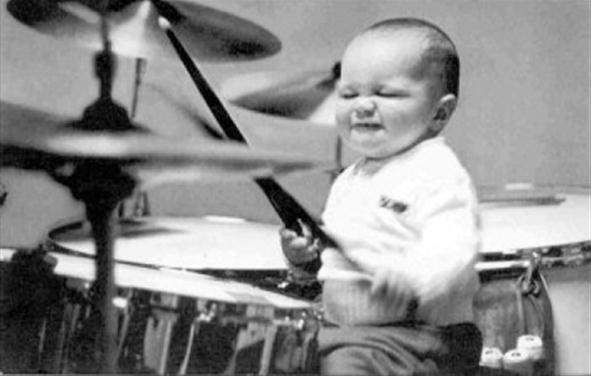
Though some may think church musicians must be either young and trendy or qualified professionals, people of all types and ages have different and valuable things to contribute to a church music team (even that baby drummer could add some great percussion!). Older, non-professional church musicians have many years of valuable experience, of knowing what works and what doesn’t, knowing how to create good arrangements of songs on the fly, and knowing how to work together effectively with others.
This last one is probably the most valuable asset! People who have been Christians and serving for a while (in an area which sometimes tempts us to all kinds of self-serving attitudes) have valuable insights, of thought and action, to teach newcomers to the faith and music ministry. Lots of really good discipling can occur in the context of regular team practices.
I must say I am blessed to be part of a team of around 30 people, with several representatives of each ‘decade’ from teens right through to people in their 60s.
One of my greatest joys is to learn from and teach others in music ministry. Often the learning comes from all directions, regardless of age.
If you are in the ‘older’ experienced church musician category, I would encourage you to seek out some younger players to mentor, not just in the mechanics of playing or singing, but in developing a mindset of music as Gospel ministry, where leaders are servants, and selflessness is the key.
Blessings to you in your ministry!

Sharing the rich, indwelling Word (Colossians 3:16)

Bible-28“Let the word of Christ dwell in you richly as you teach and admonish one another with all wisdom and as you sing psalms, hymns and spiritual songs with gratitude in your hearts to God.” (Colossians 3:16)

I have really been looking forward to this verse in the Three Sixteens series, because it identifies a strong connection between music and grace, my two favourite topics! When we make the effort to speak or sing the ‘Word of Christ’ to one another, we are showing grace because it serves to build others up in their faith. This is such an important yet sometimes overlooked aspect of praising God together. The horizontal encouragement that is gained from enthusiastic congregational praise is priceless! Praising God brings us untold blessings, both individually and together as the growing body of Christ.

But what is the ‘word of Christ’, you may ask?

Put simply, Paul most likely means the ‘teachings of Christ’, the doctrine of grace through faith in Jesus Christ, which at first was passed on as spoken words. This exhortation comes in the context of a letter which emphasises the person and work of Christ, a message that is centred on the Word of Truth, the good news of the gospel of Jesus.

This WORD is to have its gracious and glorious way in our lives, both individually and in community, as Christ shapes us to be more like himself. When we gather to listen and bow to the authority of Christ’s living Word, His word dwells richly in us. This Word indwells us by the Spirit. Such a glorious but unseen mystery this is!

John Piper speaks about the important role God has given each of us, to be speaking in a way that helps others persevere in the faith. In his message on Hebrews 3, Piper focuses on verse 13, where the writer says we must “encourage one another daily, as long as it is called “Today,” so that none of you may be hardened by sin’s deceitfulness.”

“God has designed his church so that its members endure to the end in faith by means of giving and receiving faith-sustaining words from each other. You and I are the instruments by which God preserves the faith of his children. Perseverance is a community project. Just like God is not going to evangelize the world without human, faith-awakening voices, neither is he going to preserve his church without human faith-sustaining voices. And clearly from the words, “exhort one another” (verse 13), it means all of us, not just preachers. We depend on each other to endure in faith to the end.”  Read more

We Christians are to be tactfully and thoughtfully challenging one another with the Word of Christ. Singing psalms, hymns and spiritual songs is but one way to do that… But what a great way to do it! And this is why it is so important to choose songs with lyrics that are true to the Living Word of Christ, rather than just songs that create a warm fuzzy feeling amongst us, or have a catchy rhythm.

How good it is that our times of corporate praise and worship give opportunity to speak the words of Christ to one another in song. Such an encouragement God’s people can be to one another!

You may also enjoy:

Sharing the Perspicuity of God’s gracious Word

The Blessed and God-breathed book (2 Timothy 3:16)

From the Gospel Coalition: 7 Arrows for Bible Reading