The wonderful mystery of harmony singing

cracking_the_harmony_2I absolutely love singing in harmony. It would have to be my most favourite thing to do. At church it takes lots of self-control to stop myself singing harmony all the time. (But I do refrain most of the time since it can seem a bit show-off-ish, and also off-putting if you are meant to be leading people in the melody up the front!)
But give me a few spare minutes and some other keen people, this is my preferred activity! There is just something totally mysterious, extraordinary and beautiful about the way harmonic notes blend together. When people ask me to write them some harmony parts for a song I rejoice at the challenge and opportunity to sit and fiddle with harmony for a few hours. (I’ve often wondered if this could be a lucrative business activity via the internet! What do you think?)
You may call me crazy for such harmonic enthusiasm, but this is what comes from being brought up on huge doses of harmony singing, at home, at school and church, in choirs and small a cappella groups. Yet despite my experience, when people ask me to teach them how to sing harmony I scratch my head and wonder? How do you teach someone what is a pretty complicated process in listening and anticipating?

“In the simplest style of vocal harmony, the main vocal melody is supported by a single backup vocal line, either at a pitch which is above or below the main vocal line, often in thirds or sixths which fit in with the chord progression used in the song. In more complex vocal harmony arrangements, different backup singers may sing two or even three other notes at the same time as each of the main melody notes, mostly with consonant, pleasing-sounding thirds, sixths, and fifths (although dissonant notes may be used as short passing notes)”. (So says Wikipedia)

You can now see why I say it is a pretty complicated process, especially if you are going to improvise!
I think the only way to learn to harmonise well it is to hear it, to hear someone do it, a lot, then try it! When you sing harmony you have to anticipate what’s coming, both in the melody and the chords that support it. You have to anticipate what will blend well with the note coming up. You have to hear the harmony in your head before you execute it, and then you need the courage to try it. Good harmony singing has to be “caught not taught”. I had about 17 years of ‘weekly lessons’ in harmony singing with my dad – well not formal ones, more just singing in the pew beside him each Sunday, listening to his improvised tenor line for every hymn in the book.

And are there any benefits of harmony singing, you may ask? Well for singers you have to listen to other people well, which has to be a good thing. It develops team work, and together you create something beautiful which one voice alone could not create. In performance it helps shift the focus from the glory of one person, to the team work of several. There are also benefits for the listener, as they hear the blend, the movement of sound, the tension and the resolution of different voices working together.
And of course there is a spiritual application here. Living in harmony with others requires the same practised skillful decision making. We must choose to listen to others, consider where they are heading (they may be walking in shoes very different from ours), and then choose grace over judgement. Again, these skills are often better caught than taught. Great harmony can be achieved from a group of people who are careful to keep in tune with God and each other, living selfless lives. The loving characteristics of our heavenly Father blend so well together. If we are reflecting his character and glory we cannot help but harmonise beautifully. He is the Father of all harmonies, both musically and between us.

2 Corinthians 13:11 NLT
“Dear brothers and sisters, I close my letter with these last words: Be joyful. Grow to maturity. Encourage each other. Live in harmony and peace. Then the God of love and peace will be with you.”

Here is a clip of some harmony singing I did with a friend (on melody) at a recent women’s conference. Oh the Deep Deep Love of Jesus.

You may also like:
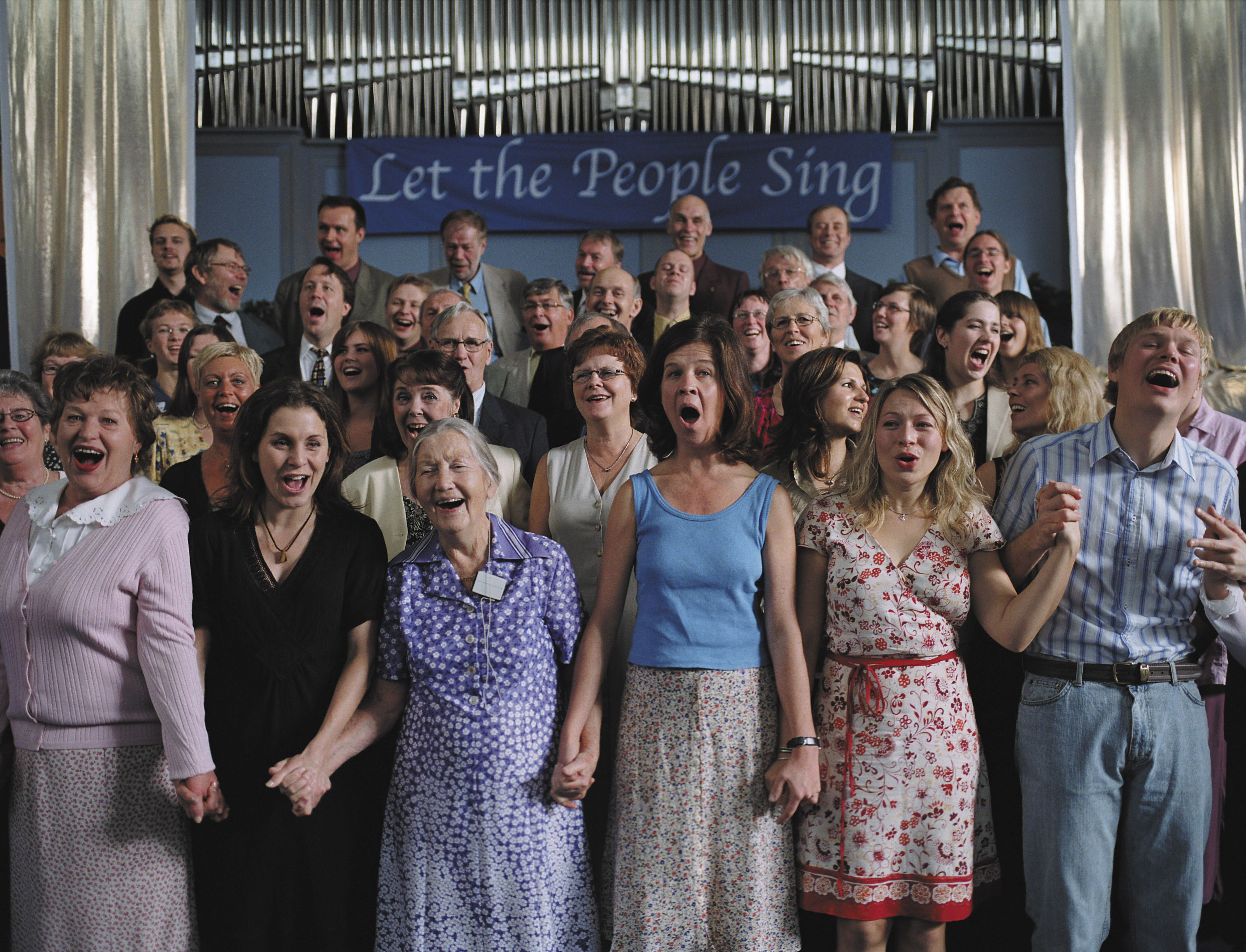
Film review: As it is in Heaven
As it is in Heaven

Hymn lines that didn’t stand the test of time

Today’s post comes from a ‘Gathered Worship Director’ (I like that!) in New Zealand – the original article can be found here at Chong’s Worship: I think you’ll find it quite amusing, but at the same time remember that some lines of our modern hymns may sound equally as strange in a few hundred years time!

old hymnGod’s blessed the church with hundreds of memorable hymns of the faith. Christians and non-Christians alike recognise lines such as “Amazing Grace! How sweet the sound…”, “How Great Thou Art”, “Great is Thy Faithfulness”, and “Abide with me, fast falls the eventide…” (I’m sure you can think of many of your own examples).

For a bit of a laugh, here are a couple of examples of old hymn lyrics that, although theologically sound, have thankfully fallen out of use:

Stanza 6 in “How Firm A Foundation”:

Even down to old age all My people shall prove
My sovereign, eternal, unchangeable love;
And when hoary hairs shall their temples adorn,
Like lambs they shall still in My bosom be borne.

(Hoary means ancient, aged.)

Stanza 9 of Charles Wesley’s “Come Thou O Traveller Unknown”:

’Tis Love! ’tis Love! Thou diedst for me!
I hear Thy whisper in my heart;
The morning breaks, the shadows flee,
Pure, universal love Thou art;
To me, to all, Thy bowels move;
Thy nature and Thy Name is Love.

The term “bowels” used to mean the seat of one’s emotion (what we refer today as our heart).

The first line of Isaac Watt’s “Hark the Herald Angels Sing” was originally:

Hark! How all the welkin rings, ‘Glory to the King of Kings.”

(Welkin refers to the highest heavens.)

And from verse 3 of Joseph Hart’s hymn, “Salvation to the Lamb”:

When we incurred the wrath of God, Alas! what could we worse?
He came, and with his own heart’s blood Redeem’d us from the curse.
This paschal Lambour heav’nly meat, was roasted in the flame.
Repeat, ye ransomed souls, repeat, “Salvation to the Lamb!”

While I like Joseph Hart’s sincere attempt to link Jesus to the Passover lamb in Exodus, this particular imagery is um… hard to stomach (thankfully other people have tried rewriting it).

To fit the language

So why did these hymnwriters use those words? To fit the language of the people at that time, who would have understood the phrases and meanings without any hint of snickering.

Brian Wren in his book Praying Twice adds some helpful insight (p.297-8):

“… The need for change sometimes overrides the need for familiarity… In the Preface to his Hymns and Spiritual Songs, [Isaac Watts] says that “what is provided for public worship should give to sincere consciences as little vexation and disturbance as possible” However, “where any unpleasing word is found, he that leads the worship may substitute a better; for (Blessed be God) we are not confined to the words of any Man in our public solemnities.”

“However much we value our past, our present interest in congregational song is not antiquarian, but immediate. We sing to God from today, in lyrics which — whether ancient or recent — express today’s faith. When a lyric from the past gets too archaic to be understood, or too out of sync with today’s hope, faith, and issues to speak for us, it will eventually cease to be sung, or amended to keep it singable.

I was reflecting awhile back on whether Christians had to hang on to obscure hymn lyrics. Ultimately, I think Brian Wren is right – if a line is worth understanding and remembering, it will stay in use. And if it makes you think about your bowels, it’s probably not worth keeping!

Evolution of music – in song

This is a clever medley of songs across the last few centuries. Styles may change, but the desire remains constant, the desire to sing and harmonise, to express joy and emotions that otherwise would be difficult to say. Praise God for this unique gift he has given us.

Grace has come – new Sovereign Grace album

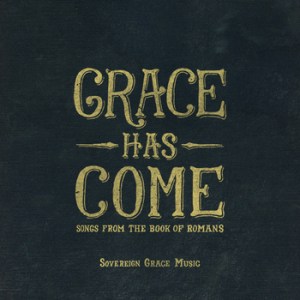
grace has comeIf you are the person who chooses new songs for your church, (like me) you may be very excited by the announcement of a new album from Sovereign Grace (August 1). “Grace has come: Songs from the Book of Romans”looks sure to be a treat! Sovereign Grace certainly has figured out a good recipe for singable Gospel songs garnished with much grace! The sample track is based on Romans 8:31-39 – Nothing can tear us from the everlasting love of Christ.

NOTHING IN ALL THE EARTH

(click title to listen)

VERSE 1   
What shall separate us from Your love?
Can years of sorrow break eternal bonds?
Can condemnation ever raise its voice?
Against the pardon of the blood of Christ?
Though our journey here is long
This will be our triumph song

CHORUS
Nothing in all the earth

Not any height above
Could ever tear us from Your everlasting love
Nothing in all the earth
Not any height above
Could ever tear us from Your everlasting love

VERSE 2
What shall separate us from Your love?
For now the sting of death is overcome
And all the powers of this world must fall
Before Your feet because You rule them all
And though our journey here is long
This shall be our triumph song

BRIDGE
Nothing in all the earth
Could ever tear us from
Your everlasting love

© 2013 Sovereign Grace Worship (ASCAP)

http://sovereigngracemusic.bandcamp.com/album/grace-has-come-songs-from-the-book-of-romans

Why music makes our brain sing

Those of us who love music know how important it is to us, to be listening, creating and making music. But do we know why? Here are some interesting (though perhaps complex) answers from some neuroscientists, via the New York Times.

Why Music Makes Our Brain Sing

By ROBERT J. ZATORRE and VALORIE N. SALIMPOOR

MUSIC is not tangible. You can’t eat it, drink it or mate with it. It doesn’t protect against the rain, wind or cold. It doesn’t vanquish predators or mend broken bones. And yet humans have always prized music — or well beyond prized, loved it.

In the modern age we spend great sums of money to attend concerts, download music files, play instruments and listen to our favorite artists whether we’re in a subway or salon. . . . So why does this thingless “thing” — at its core, a mere sequence of sounds — hold such potentially enormous intrinsic value?

The quick and easy explanation is that music brings a unique pleasure to humans. Of course, that still leaves the question of why. But for that, neuroscience is starting to provide some answers.

More than a decade ago, our research team used brain imaging to show that music that people described as highly emotional engaged the reward system deep in their brains — activating subcortical nuclei known to be important in reward, motivation and emotion. Subsequently we found that listening to what might be called “peak emotional moments” in music — that moment when you feel a “chill” of pleasure to a musical passage — causes the release of the neurotransmitter dopamine, an essential signaling molecule in the brain.

When pleasurable music is heard, dopamine is released in the striatum which is known to respond to naturally rewarding stimuli like food and sex and which is artificially targeted by drugs like cocaine and amphetamine. But what may be most interesting here is when this neurotransmitter is released: not only when the music rises to a peak emotional moment, but also several seconds before, during what we might call the anticipation phase.

The idea that reward is partly related to anticipation (or the prediction of a desired outcome) has a long history in neuroscience. Making good predictions about the outcome of one’s actions would seem to be essential in the context of survival, after all. And dopamine neurons, both in humans and other animals, play a role in recording which of our predictions turn out to be correct.

To dig deeper into how music engages the brain’s reward system, we designed a study to mimic online music purchasing. Our goal was to determine what goes on in the brain when someone hears a new piece of music and decides he likes it enough to buy it.

We used music-recommendation programs to customize the selections to our listeners’ preferences, which turned out to be indie and electronic music, matching Montreal’s hip music scene. And we found that neural activity within the striatum — the reward-related structure — was directly proportional to the amount of money people were willing to spend.

But more interesting still was the cross talk between this structure and the auditory cortex, which also increased for songs that were ultimately purchased compared with those that were not.

Why the auditory cortex? Some 50 years ago, Wilder Penfield, the famed neurosurgeon and the founder of the Montreal Neurological Institute, reported that when neurosurgical patients received electrical stimulation to the auditory cortex while they were awake, they would sometimes report hearing music. Dr. Penfield’s observations, along with those of many others, suggest that musical information is likely to be represented in these brain regions.

The auditory cortex is also active when we imagine a tune: think of the first four notes of Beethoven’s Fifth Symphony — your cortex is abuzz! This ability allows us not only to experience music even when it’s physically absent, but also to invent new compositions and to reimagine how a piece might sound with a different tempo or instrumentation.

We also know that these areas of the brain encode the abstract relationships between sounds — for instance, the particular sound pattern that makes a major chord major, regardless of the key or instrument. Other studies show distinctive neural responses from similar regions when there is an unexpected break in a repetitive pattern of sounds, or in a chord progression. This is akin to what happens if you hear someone play a wrong note — easily noticeable even in an unfamiliar piece of music.

These cortical circuits allow us to make predictions about coming events on the basis of past events. They are thought to accumulate musical information over our lifetime, creating templates of the statistical regularities that are present in the music of our culture and enabling us to understand the music we hear in relation to our stored mental representations of the music we’ve heard.

So each act of listening to music may be thought of as both recapitulating the past and predicting the future. When we listen to music, these brain networks actively create expectations based on our stored knowledge.

Composers and performers intuitively understand this: they manipulate these prediction mechanisms to give us what we want — or to surprise us, perhaps even with something better.

In the cross talk between our cortical systems, which analyze patterns and yield expectations, and our ancient reward and motivational systems, may lie the answer to the question: does a particular piece of music move us?  When that answer is yes, there is little — in those moments of listening, at least — that we value more.

Robert J. Zatorre is a professor of neuroscience at the Montreal Neurological Institute and Hospital at McGill University. Valorie N. Salimpoor is a postdoctoral neuroscientist at the Baycrest Health Sciences’ Rotman Research Institute in Toronto.

You may also like:
Pick up your instrument – food for the soul and the brain
piano


“You make me want to be nice”

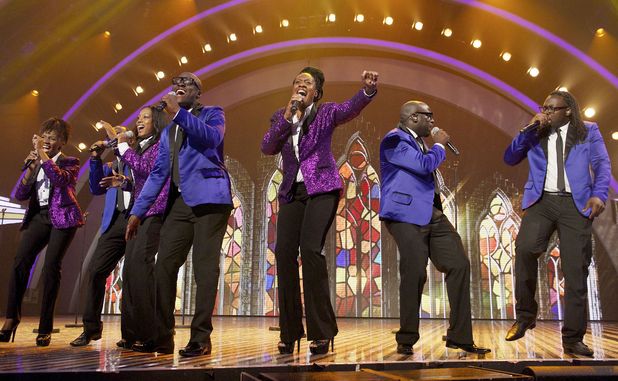
choirThis was the comment made by infamous Britain’s Got Talent judge Simon Cowell, in response to a performance of “O Happy Day”, by Gospel choir “Incognito”. This is the power of the Gospel in song, the proclamation that the day Jesus washed our sins away is indeed happy! And this makes others happy, despite their best intentions! Click the link below to enjoy.

http://www.godvine.com/Gospel-Choir-Simon-fb-gv-3433.html

Cowell

Songs to GROW Women by . . .

.facebook_-22058451Great to have an audience of interested people who can consider my song selection for a Women’s conference in July, called GROW. Speaker Jenny Salt from Sydney will no doubt have some ‘salty’ words to share, teaching from the book of Numbers to show God’s trustworthiness and to encourage us to count on God, holding on to Him through all of life’s jouney. Themes include: trusting God, His faithfulness, taking Him at his Word, resting in God’s promises which are fulfilled in Jesus, blessings, consequences of sin, God’s holiness.

Here is my initial shortlist of songs, keeping in mind that we are hoping to cover a wide range of ages and denominations, mixing well known and new songs.

When Peace like a River (Hymn, aka It is Well) – connected with I will Rise (Chris Tomlin)
Hymn – Great is Your Faithfulness
My Hope (Nothing will change, if all the plans I make go wrong… by Paul Baloche). We taught this one last year at GROW.
Desert Song (This is my prayer in the desert – quite appropriate for Numbers, by Brooke Fraser)
O the Deep Deep Love of Jesus (Bob Kauflin’s hymn arrangement) – will do as item in 3part harmony, to teach it to the group.
Mighty to Save (Hillsong).
See the Man (Trevor Hodge) – this is a great one for see howing God’s promises are fulfilled in Jesus!
No Other Name (Trevor Hodge)
10 000 reasons
(Bless the Lord O my Soul . . . Chris Tomlin)
Blessed be your name (Matt Redman)

If you have any thoughts for other songs that tie into the theme perfectly, please comment below. I hope you can also find a new song or two above!

When should we sing that song?

piano-stairs3There are times when a song fits just so perfectly! It arrives during the gathering at just the right place and right time. Other times a song will stand out like a sore thumb. Despite our best laid plans, both of these instances can occur even within the one church service! If you are new to the service planning task, or even if you’ve been doing it for a while, here are a few tips to help create the best possible sequencing of songs. I hope these thoughts are helpful in some way. (Note: I am writing for churches that use a mix of contemporary songs and hymns.)

OPENING SONGS:
Songs work well early in the service if they have a positive feel and lively tempo. They should be uplifting and encourage as many people to sing as possible. This will create energy and anticipation for all they will do/hear together in the rest of the service. Avoid songs with super-complicated rhythms or minor keys. Songs should be quite well-known to the congregation and not be recently ‘new’ songs. Thematically, it is good to open with songs of adoration, which describe the general attributes and actions of God/Jesus and give praise for them. Songs that encourage personal response/reflection, or that describe details about salvation, are not very helpful as opening songs. Newcomers may be struggling with the concept of God existing at all. Let’s establish that first!
Good Examples:
Come People of the Risen King (Getty), Creation sings the Father’s Song (Getty), Indescribable (Laura Story), Majesty of Heaven (Tomlin), Hallelujah to the King of Kings (EMU), Across the Lands (Getty), O God Our Redeemer (Everlasting) (Altrogge), God of Wonders (Byrd & Hindalong).

MIDDLE SONGS:
Songs through the middle of your service can branch out in terms of theme and feel and tempo. It is a good place to sing songs that teach the Gospel in detail, that speak of salvation and how it was won for us. Songs that speak to each other as God’s people (using terms like we/us/our) help draw people together into community. These songs provide the encouragement described in Colossians 3:16 “Let the word of Christ dwell in you richly as you teach and admonish one another with all wisdom, and as you sing psalms, hymns and spiritual songs with gratitude in your hearts to God.”  Songs that move from minor to major feel are great here. Certain songs can also be a calming influence, helping people prepare to hear God’s word preached (without putting them to sleep!).
Good examples:
By Our Love (Christy Nockels), We Belong to the Day (EMU), By Faith (Getty), How deep the Father’s Love for Us (Townend), Mighty to Save (Hillsong), Glorious Day (Casting Crowns), See the Man (Hodge/EMU),  In Christ Alone (Getty), Count it all Joy (Sovereign Grace). How Great is Our God (Tomlin) is an interesting one – seems like it should fit in the opening songs category by theme, but the tempo and feel are not quite right (in my humble opinion). It works well in the middle.

END SONGS:
This is probably the best place to put songs of personal response or commitment or resolve (“I” songs) – since by this point people will have heard the Gospel explained in the sermon, bible readings and earlier songs. Both slow songs and more upbeat songs can be effective for closing, depending on the type of mood you want to leave people in. It is good to remember the final song can be ringing in people’s ears long after they have forgotten the main points of the sermon, so choose something memorable that says something important!
Good examples:
You are My King (I’m Forgiven),.My Hope (Baloche), I give you my Heart (Hillsong), You Chose the Cross (Lost in Wonder) (Martyn Layzell), I will Glory in My Redeemer (Sovereign Grace), From the Inside Out (Hillsong), Stronger (Hillsong), Be Thou My Vision, This Life I live (EMU), Desert Song (Brooke Fraser Hillsong), 10000 Reasons (Matt Redman), May the Mind of Christ my Saviour, Here I am to Worship (Redman), Jesus Thankyou (Sovereign Grace).

You may also like:

“It’s always a good time”

Sometimes when I go to the gym in an attempt to work the knots out of my muscles, I feel rather out of place. It doesn’t bother me that I don’t fit in with the gym junkies, in the pink fluoro outfits and expensive running shoes. It is more the music film clips on the big screens all around that make me feel rather awkward. There is something about staring at women, in what equates to their swimming costumes (or less), singing and dancing rather erotically in front of my eyes that just doesn’t seem right. Images that would have been classified as pornography 40 years ago are now the stock standard of the gym environment.

Anyway, let me get to the point. In the midst of all these rather alarming images I was pleasantly surprised to encounter a film clip where the people were fully clothed (though the shorts are quite short!). They were not making “out” together, and the activities they participated in during the unfolding narrative looked more like a youth group camping trip than the events at a strip club. This is a good thing. They even cooked marshmallows on the fire, but there was no singing of Kum Ba Yah. . . . Instead they were singing their new “party anthem”  – “It’s Always a Good time” with Owl City’s Adam Young with Carly Rae Jepsen. (How clever was he, to enlist the “Call me maybe” girl in his latest hit!) Now I must warn you if you listen to this song, it may get stuck in your head for hours, which could be a good or bad thing, depending on your reaction.

If you are not aware of Owl City (from #1 songs like Fireflies and Vanilla Twilight – the ultimate “what is that in the sky” situation) he is a rather unconventional performer/composer/musician who comes across as a home grown good guy from Minnesota. He also happens to be a Christian. And despite all the references to the carefree Gen Y lifestyle (the phone, the ATM, the sleeping all day to get up at twilight) there is a clear and simple acknowledgement in this song that we have been blessed with a good life.

“We don’t even have to try, it’s always a good time.” is the catch phrase of the song.

Absolutely! We can move, sing, shout, enjoy friendships, eat, laugh – there’s so much good stuff to enjoy, simple things. We don’t even have to try that hard to enjoy this life – because it is good! We don’t need to alter our minds with drugs or alcohol to experience good things. God’s creation is good. Yes it is a creation marred by our rebellion, but God’s grace to us is that we don’t have to live out our days in misery. (Perhaps it is often our own ungrateful or entitled attitudes that make us think life is all bad!)

Yes, Adam Young, life is good.
It’s even better if you have peace with your Creator and the hope of eternal life through Christ.

You can also check out Owl City’s version of ‘In Christ Alone’ here.

And if you are interested, here is a little more on Owl City which I’m borrowing from Wikipedia (with good references!):
“Owl City’s music is described as indietronica and synthpop and is often described as belonging under the “electronic music” label.  Young has stated that he is inspired by disco and European electronic music, as well as instrumental genres such as drone, ambient, and post-rock. He cites his biggest influences as Johnathon Ford of Unwed Sailor and Thomas Newman. Young also incorporates a large amount of his Christian faith into his music, since he is a vocal Christian. Young’s faith is evident on the album, “All Things Bright and Beautiful”, especially in “Galaxies”. Explaining why the faith-filled song was added to the mix, he said, “I feel like if I were ever to hide the fact that that’s what’s so important to me, it would be a crime, that I should probably be put in jail for that.”

New songs we’ve been singing in 2012

Just reflecting here on the range of new songs our church family has enjoyed this year, songs of great encouragement and challenge, songs which speak God’s truth well. I’ll describe each one a little for you below (click on the title to listen), with my suggested best key for each. Hopefully you will find something refreshing to inspire your congregation, and continue to grow everyone together in the grace and knowledge of God . . . through the power of His Word in song!

My Hope (2010) – Paul Baloche, Alyssa Mellinger, Ed Kerr, Sheila Rabe (album “The Same Love”). This one has been a real blessing, particularly the line “Nothing can reach the end of all your faithfulness”. I have introduced this at two women’s conferences during the year also, where one woman told me it was an answer to prayer. Awesome. It has a fairly gentle verse, and a rousing Chorus which echos the thoughts of “My Hope is built on nothing less”. I’ve talked more about this one in another post. (Key: A Major)

Majesty of Heaven (2010) – Chris Tomlin, Jesse Reeves, Matt Redman (album And if our God is For Us). This song gives a great picture of King Jesus ruling over this creation, and each of us. The nations bow down to the Majesty of Heaven, in whom all things hold together! We also taught this one in January to a gathering of 600+, mainly mature folk at a CMS convention. They caught on quickly and sang well! (Key G Major).

Hail the Day that Christ Arose (2011) – Charles Wesley, Steve and Vikki Cook (Sovereign Grace Music, album Risen). This song is about the day of the Ascension, something not written about all that often. It is based on an old hymn, but has a really triumphant new ‘Hallelujah’ chorus, which points us to see the King of Love on His throne. We use the Coda section as a Bridge and finish with the Chorus. (Key D Major)

By Our Love (2009)- Christy Nockels (Album Life Light Up). This song is a great one for encouraging unity and acts of love in your church family. It is based around the verse which says the world will know we are Christians by our love. Each verse addresses a different group of people, men, women, and children – who will be reaching with the words of the Gospel “long after we’ve gone”. (We use G major – starts quite low, but chorus is too high if you shift up a key.)

Stronger (2007) – Ben Fielding & Reuben Morgan (Hillsong – Album This is Our God). This song has a really victorious feel, which celebrates the power of Jesus’ resurrection over our sin. He is stronger than every thing that burdens us, He is Lord of all, so let’s lift up His name. (Try this in C or Bb major.)

Oh What a Day (2011)  – Mark Altrogge (Sovereign Grace Music, album Risen). This is pretty speedy and rhythmic song, which can be carried by a drummer or pianist with good rhythm! The Day this song focuses on is the Day Christ defeated death and rose from the grave. (Default key is D – we find it works better in C.)

Glorious Day (2009)- John Wilbur Chapman, Mark Hall, Michael Bleecker (Casting Crowns, album Til the Whole World Hears). You will find the whole Gospel in this song. Each verse speaks of a different glorious day: Christ coming to earth, dying, rising, and then looking forward to the day of his return! (Key A Major.)

“Let the word of Christ dwell in you richly as you teach and admonish one another with all wisdom, and as you sing psalms, hymns and spiritual songs with gratitude in your hearts to God.” (Colossians 3:16)

Blessings to you as you encourage God’s gathered people to praise Him!