NEW ALBUM SPOTLIGHT: “Hymns for the Christian Life” by Keith and Kristyn Getty.
Click on the link above to find out info about a new album by the Gettys, who always can be relied on for writing singable, beautiful and Truthful modern hymns. Enjoy!

NEW ALBUM SPOTLIGHT: “Hymns for the Christian Life” by Keith and Kristyn Getty.
Click on the link above to find out info about a new album by the Gettys, who always can be relied on for writing singable, beautiful and Truthful modern hymns. Enjoy!
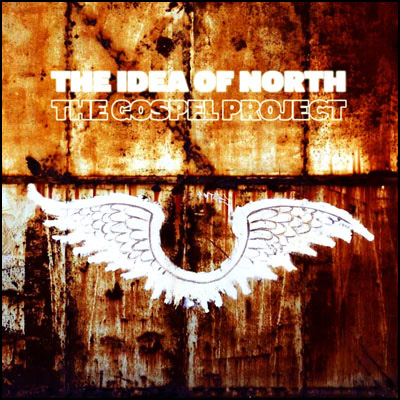 The Idea of North is widely acclaimed as Australia’s premier vocal ensemble. While I would love to speculate about the reason for the snazzy name of this a capella jazz quartet, I think it’s best if we just get on to introducing them. (And while you may not have heard of them as being “Christian musicians” there is much Gospel, heart and soul in their music).
“So who are The Idea of North? In short, they’re a quartet of musicians, serious about their music without taking themselves too seriously. Their instrumentation: voice (soprano), voice (alto), voice (tenor) and voice (bass), with a little bit of vocal percussion thrown in. They have a beautifully distinct sound and style, but they cross many musical genres: jazz, folk, gospel, pop, classical, comedy – exactly what you see and hear at a concert is difficult to describe. With eight albums in the catalogue, a significant local and international fan base . . . ” You can read more here.
They have plenty of awesome covers of songs, along with their own original work. Their first, self-titled album may still be my favourite (1997), but THE GOSPEL PROJECT (2006) is a close second (listen to the sample of “People get ready“). They have been touring internationally with FEELS LIKE SPRING (2010) and EXTRAORDINARY TALE (2011). So be on the lookout, my readers in the Northern hemisphere. They will probably be coming to a city near you. Not only do they sing brilliantly, but their concerts are also lots of great fun with considerable audience interaction! Have a listen below (and let me know if you do get to see them live.)
Just a closer walk with thee – this one is lots of fun (filmed in concert), with much vocal percussion
Sweet Sweet Spirit – just the audio here
 Although my 16 year old daughter is well acquainted with the distinctive features of different film genre, there is one filmmaking convention with which she cannot abide: the Hollywood musical – with the notion that normal people could just burst into song in the middle of a conversation. It doesn’t matter where they are or who they are with, they just sing! Now don’t get me wrong. She and I both love watching these musicals, Singing in the Rain, Seven Brides for Seven Brothers and The Sound of Music all being on our favourites list. But for her, this ‘random singing in real life’ just lacks all credibility. We have some hilarious debates about it!
Victor Hugo is credited with saying, “Music expresses that which cannot be said and on which it is impossible to be silent.”
In these film narratives the characters literally burst into song because they can’t help it! Simple dialogue just will not do for these characters (or for that matter opera singers and Broadway actors, or the composers and screenplay writers behind all these). Words cannot express the largeness of their thoughts and emotions. They are compelled to sing.
Is it any different in real life? We sing at the football (well I have heard people do!), at birthdays, to our babies. My husband sings strange songs to our girls at times, most often in the morning when trying to get them out of bed.
So is it any wonder that God’s gathered people must sing. How could we NOT sing?
The gratitude we feel because our sins are forgiven, the awe we have for God’s amazing grace, the freedom from shame. . . All this cannot be expressed adequately by mere words. The wonders of our God must be sung! He is beyond the limits of our spoken words and imaginations. So too the astonishing nature of his salvation plan for mankind. If I could find a statistic about how many new praise songs are written about and to God each day I would include it here – but Google was no help. Probably the number was beyond the grasp of Google’s search engines.
So think then….what is the effect of encouraging people to sing God’s praise, when they don’t feel like it? Or when they don’t really know God? Does this work in reverse? Does singing the words inspire the feelings that would have made us burst out into to song in the first place? And what about churches who do not sing when they gather? What does that say to them? to us?
Comments welcome, as always.
You may also like:
The Wonderful Mystery of Harmony Singing Ten Principles for Church singing
Love this “flashmob” event. It says so much about the way music touches people and brings such joy. The experience brings smiles, goosebumps and tears all wrapped up in the one package. Music is indeed a gracious gift from God!
(The little girl up the lamp post is my favourite.)
 Sometimes being part of a church music team/worship band is an inspiring and encouraging thing, something you absolutely enjoy and look forward to. But other times it can become a bit of a drag, unfortunately! And if you are the leader, and you are experiencing the latter emotions, then oh dear! This is not good news for anyone, especially the congregation. Something needs to change and fast.
What to do?
The Cambridge online dictionary defines “a shot in the arm” as something which has a sudden and positive effect on something, providing encouragement and new activity. And that is precisely what I believe this great little set of 6 bible studies can do for you.
The study book “Sing for Joy” written by Nathan Lovell (2010) is produced by the insightful people at Matthias Media, as part of a range of Interactive Bible Studies. It would be a great shot in the arm for a flagging music team (or leader) as they work through it with others, in order to re-energise and refocus. It would allow you to raise and explore all those tricky issues about the behaviour and motives of church musicians/music in an unthreatening manner. Each study is around 8 pages long (in 60 page study booklet).
Here is a sampling of the topics you will discuss while diving into God’s Word together:
#1 What is Church and Why do we sing there? – looks at music as a natural expression of joy, and why singing is the right response for God’s gathered people.
#2 Praise be to God – looks at the nature of biblical praise, the songs of the Bible, and how we praise God in ways other than singing.
#3 True Worship – traces different meanings of the word “worship” and the implications for how God’s people serve in the Old and New Testament eras. The ideas of worship and sacrifice are explored through the texts of Romans 12 and Hebrews 12-13. Connections are drawn between true praise and true worship.
#4 The Function of Church Music – looks at the many different ways music benefits God’s gathered people.
#5 The Gift of Musicians – explores what it means to be gifted musically, and how to be a servant-hearted leader as a musician, rather than a self-focused one.
#6 Music & Lyrics – considers the importance of song lyrics which should “continually refocus our mind on Christ, teach us His Word and remind us of what he has done for us” (p.57)
One of the most useful and simple definitions given in these studies regarding with purpose of church singing was this: “we sing in church because we are rejoicing over who God is and what He has done for us. Our singing is a response to the Gospel – an extravagant, joyous response to our God who has delivered us from our enemies, redeemed us for Himself, and gathered us together as his people” (p.35)
Describing church musicians as both servants and leaders was a really interesting approach, and a really useful one I think.
“Like it or not, musicians are in the role of leadership within our congregations. It has always been this way. In David’s day there was a band consisting of 120 trumpets as well as cymbals, harps, lyres and a whole tribe of singers (2 Chronicles 5:12)! They dressed up in fine linen and stood apart from the rest of the congregation and led them in praise. What a spectacle that must have been!” (p.47)
We will definitely be discussing that at our next team meeting! You can order these studies by following this link to Matthias Media. I am sure they will help get your whole music team back on the same page. . . and singing from the same score!
 This week I am busy trying to get a few memory verses stuck firmly in my head. I hope this will allow me to impress those who mark my term exam in Intro to the Bible! I haven’t really done this for a long while. . . studying or memorising.
Several ‘scriptures in song’ in the back of my mind are coming in quite handy, but I am wondering why no one has ever put Ezekiel 36:26 into a song, or Jeremiah 31:33-34, or Colossians 3:1-2, or even God’s promises to David?
Memorising Scripture, difficult as it is, is so worth it. How invaluable to have the one source of life and hope, to have the Word, IN you. You don’t have to rely on the presence of your Bible or have enough memory left in your smart phone in order to hear God’s voice. It is what Paul speaks of in Colossians 3:16, where he says we should LET the Word dwell in us richly. What am I doing to LET it sink into my heart and mind on weeks when I don’t have an exam? What am I doing that is preventing it?
The Word dwelling in us is how God’s Spirit works to change and shape us, transforming our heart through radical surgery at the hand of God.
“The Word of God is living and active, sharper than any double-edged sword, it is for teaching and rebuking,….. training in righteousness so that the man of God might be thoroughly equipped for every good work.” Hebrews 4:12.
Consider also these words from John Piper: “Satan’s #1 objective is to destroy our faith. We have one offensive weapon: the Sword of the Spirit, the Word of God (Ephesians 6:17). But what many Christians fail realise is that we can’t draw the Sword from someone else’s scabbard! If we don’t wear it we can’t wield it. If the Word of God does not abide in us (John 15:7) we will reach for it in vain when the enemy strikes.” (Piper, ‘Desiring God’ p.151)
If you want to start letting the Word sink in, try writing or printing out important verses and posting them behind the toilet door, or behind the glass in the shower. Singing them in the shower is even better, since music helps to cement things in our minds so much more easily (unless people in your household object). Here are two musicians who have done some hard work in writing songs that help the Word settle in, put its feet up and feel right at home in our hearts:
Colin Buchanan, an awesome Aussie who has a huge string of kids praise albums. For remembering scripture try this CD: Baa Baa Do Baa Baa!
Also, Sovereign Grace songwriter/Pastor Mark Altrogge has several cd collections for scripture memorisation for adults at Forever Grateful Music
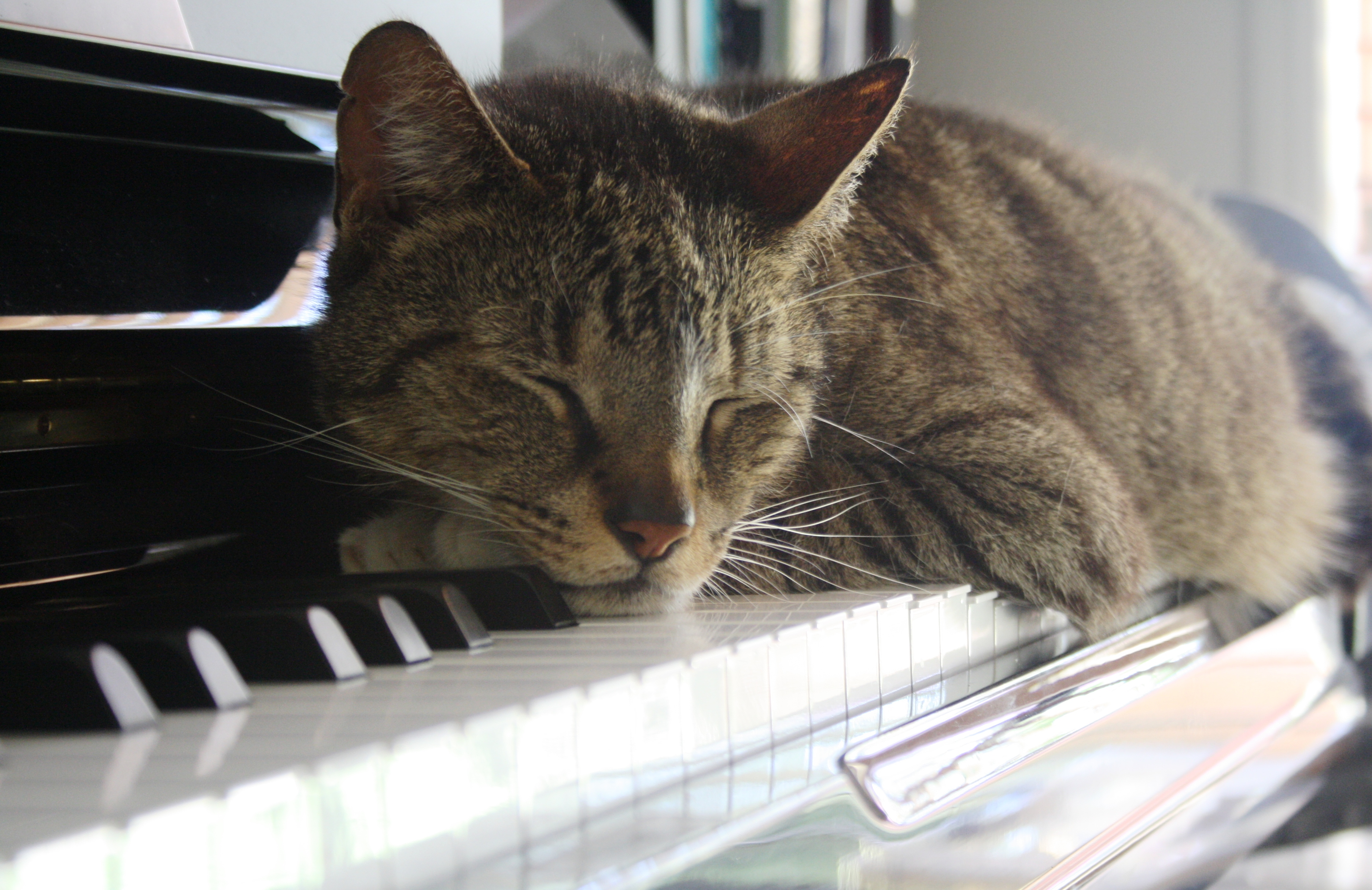 Tigger takes every opportunity to enjoy the 7 notes! Whenever someone plays the piano he jumps up to add his own contribution to the composition. Even when no one is around (like in the middle of the night, and yes, that proved quite a shock) he thinks it is a great time to belt out a new tune. These notes obviously provide comfort to beings other than mere humans! (Does anyone else have an animal that appreciates music?)
Proverbs 12:10 says “A righteous man cares about his animal’s health, but even the merciful acts of the wicked are cruel.”
Perhaps one of the best things we can do for the health of our animals is play them some music, and even involve them in the composition.
Cats probably like Jazz best. I have tried the alto sax with our dog – it was not appreciated.
I do recall my dad’s dairy cows appreciated classical music at milking time (back in the days of hand milking).
Speaking of different musical genres, I just came across this clever clip – 16 musical genres in one song. Watch below if you don’t believe me.
Anyway, I hope there are no fleas in the piano.
 “Jesus wants me for a sunbeam” was one of the first Sunday school songs I ever learned. (If you have never had the pleasure of singing it, try google.) It called us all to shine for Jesus each day, to please Him “at home, at school, at play”. I wonder if Katy Perry learned this song in Sunday school? Daughter of an evangelist/pastor in California, Katy Perry grew up as part of her parents’ ministry, singing in church from age 9 to 17. She grew up listening to gospel music and was not allowed to listen to secular songs. And despite her recent liftestyle choices and the song lyrics which shout about things that would deny the God of her childhood, His truth comes shining through (at times), possibly despite her intentions.
Perhaps you already know what I’m talking about? Perry’s song “Firework” is her self-confessed favourite from the album ‘Teenage Dream’ (2010). When you check out the lyrics you could be mistaken for thinking this was a song that called Christians to remember that they are a unique creation, called to “shine like stars” in the darkness of this generation. Here is a sampling of the lyrics:
Do you know that there’s still a chance for you, ‘Cause there’s a spark in you
You just gotta ignite the light, and let it shine, Just own the night like the 4th of July
‘Cause baby you’re a firework, Come on, show ’em what you’re worth
Make ’em go “Oh, oh, oh” As you shoot across the sky-y-y
Baby, you’re a firework, Come on, let your colours burst
Make ’em go “Oh, oh, oh”, You’re gonna leave ’em all in “awe, awe, awe”
You don’t have to feel like a wasted space, You’re original, cannot be replaced
If you only knew what the future holds . . .
Perry says of this song: “Now, people are coming back and almost adopting it as their own anthem . . . I hope this could be one of those things where it’s like, ‘Yeah, I want to put my fist up and feel proud and feel strong. . . and I think ‘Firework’ … would be like the opus or my one song — if I had to pick a song to play — ’cause it has a great beat. But it also has a fantastic message.”
God’s truth bleeds through this song, as it proclaims that we are unique beings, the intentional creation of a loving all-powerful Creator. Amen to that! But what she has needs to know is that our potential to “shine” comes from outside of us. It’s not “deep inside of you“, as Perry says, waiting for us to ignite it. Our “full potential” is realised when we make peace with God, through Christ, and He enters into our life. We become His children, heirs of the promise, co-heirs with Christ. He puts his Spirit in us, the “spark” which begins to restore us according to God’s original design. God’s spark is what makes us see our true worth, and changes the way we live our lives and interact with others, for their good. We can only shine out the likeness of His character if He is in us. We can shine out the family likeness only if our Father is God. Here is the way we are to “shine”:
“Do everything without complaining or arguing, so that you may become blameless and pure, children of God without fault in a crooked and depraved generation, in which you shine like stars in the universe as you hold out the word of life—in order that I may boast on the day of Christ that I did not run or labor for nothing.” (Philippians 2:14-16)
If you are looking for a great ‘church’ song, produced by Sydney Anglicans which sums up the essence of this verse, try looking at EMU music for the song “The Light” by Nicky Chiswell (2000). It has been a real encouragement for many years in our church. Keep shining!
 Sometimes change can make us very uncomfortable. It can make us feel totally out of control, it can rob us of things to which we feel entitled. Let’s explore this for a moment in terms of church music.
We Christians develop a real attachment to the songs of our faith. They become associated with the ups and downs we have been through, or the exciting time of our youth, or the time we first came to faith. When we sing them the songs instantly conjure the emotions of those times. This is why some people just can’t sing songs from the funerals of dearly departed friends and family, without being overwhelmed by sadness.
So should we learn new hymns and spiritual songs, especially when such change can cause great angst? I had a conversation with a lovely friend over the weekend who was frustrated with a lack of interest for changing and updating the songs they sing in their church. Many of her congregation are still attached to the ‘Scripture in Song’ repertoire which became popular in the 70s and 80s. The musical style of these choruses hark back to this era . . . and make some people really cringe!
I have found a great rationale for new songs from Rick Warren, author of the “Purpose Driven Church” (1995). “If you study church history you’ll discover that every genuine revival has always been accompanied by new music. New songs say ‘God is doing something here and now, not just a hundred years ago’. Every generation needs new songs to express its faith“.
Another great insight comes from a Presbyterian minister Rowland Lowther (2002). He says that his favourite Christian song is “When I survey the Wondrous Cross”, to the old hymn tune, “. . . but for the sake of the Gospel I would be willing to change the musical style so that those wonderful lyrics could impact on the next generation. . . What matters to me more is not that I be moved, but those in the next generation has those wonderful old lyrics to a music format that can lift their spirits to worship the same living God that the writer of this hymn worshipped hundreds of years ago”.
Great point. I think it also comes down to the concept of “renewing our minds”. By hearing the gospel explained by new people, in new and fresh ways, our understanding of God and the gospel of His grace is strengthened and deepened. That has got to be a good thing.
You may also like:
12 Principles for Church Singing New Songs we have been singing

If you are someone who hasn’t recently picked up your guita r, saxophone, flute, recorder or piano (well you can’t really pick that one “up”) then might I point out something . . . you should!
Recently, while trying to enthuse my girls to pursue more consistent practice on their instruments, I was encouraged to read new research which supports what I always thought was true. While music is good for you, making music is even better!
According to a recent study* these are some of the benefits of playing a musical instrument regularly:
1. People over the age of 65 experienced positive changes in brain function after 4 or 5 months of playing an instrument an hour a week.
2. Playing the piano (particularly) teaches children to be more self-disciplined, attentive and better at planning.
3. Playing an instrument makes you more perceptive in interpreting the emotions of others. Musicians are able to pick out exactly what others are feeling just by the tone of their voices.
4. IQ can increase by seven points in both children and adults.
5. It becomes easier to learn foreign languages, as your memory and language skills improve.
“Hopefully the current trend in the use of musicians as a model for brain plasticity will continue . . . and extend to the field of neuropsychological rehabilitation“*.
Wow. If you played an instrument as a child then know that part of the reason you have intelligence, memory, language and empathy is down to that instrument, even if you hated it. Your parents certainly did something right!
And if you want to develop your brain in any of these areas, then it certainly is time to dust of your violin, blow the cobwebs from your trumpet, and get playing! Music is such an amazing and at times under-rated gift from our gracious God. He made us with desire to praise Him in song, to “Praise him with the sounding of the trumpet,praise him with the harp and lyre, praise him with tambourine and dancing, praise him with the strings and flute, praise him with the clash of cymbals” (Psalm 150).
God wired our brains with the ability to learn to play, to sing, to write and read music, to create instruments, to create emotion through music, to lift the souls of ourselves and others, and grow our brain function by employing those “seven notes of grace”. Don’t miss out on the joy of this gracious gift!
(*The research is published online, Faculty of 1000 Biology Reports, by Lutz Jancke, a psychologist at the University of Zurich.)
You may also like:
Why music makes our brain sing
“Create in me a pure heart, O God, and renew a steadfast spirit within me.” Psalm 51:10
Praising God in the everyday
Following Jesus while Seeking Joy and Contentment in the Christian Life
The Musings of a Writer / Editor in Training
I'm Ash. I love Jesus. I'm a wife and a mum. I'm a teacher. I'm also studying my Masters of Counselling. I started studying a few years after started the very hard work of engaging my own story of harm and trauma. This is a place where you'll hear my stories, as well as the stories of others. I'll also reflect on faith, healing and walking with Jesus. I pray that these words might encourage you to do your own painful but life-bringing work of examining your own stories, and allowing Jesus to heal the parts of you still locked in shame. For He came that we might have life, and have it to the full. Welcome, fellow traveller.
Words, words, words... well said Hamlet! A little blog to go off on tangents within the worlds of history, literature, TV and film that interest me. From the Tudors to Tom Hardy's Tess, the Boleyns to Bollywood or from the Wars of the Roses to Wuthering Heights, feel free to browse through my musings to pick up extra ideas and points for discussion!
Jesus lover, aspiring writer & Bible Gateway Partner
I write for my own sanity, but I share with hope to encourage you.
Looking for the real God
Life in the country with family, animals, and good food
 sevennotesofgrace