“You make me want to be nice”

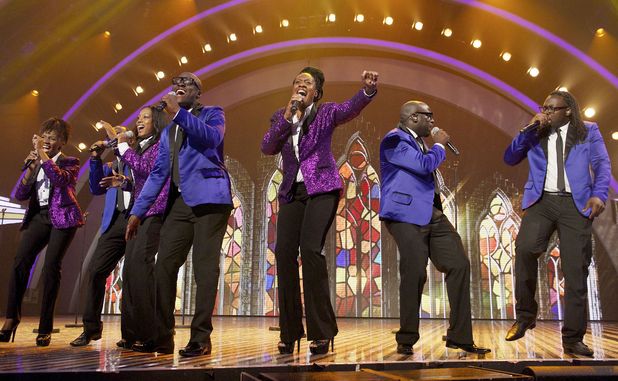
choirThis was the comment made by infamous Britain’s Got Talent judge Simon Cowell, in response to a performance of “O Happy Day”, by Gospel choir “Incognito”. This is the power of the Gospel in song, the proclamation that the day Jesus washed our sins away is indeed happy! And this makes others happy, despite their best intentions! Click the link below to enjoy.

http://www.godvine.com/Gospel-Choir-Simon-fb-gv-3433.html

Cowell

You Are A Theologian

theology-mattersFound a great post on a topic I have been meaning to write about myself over at Worship Sense. It talks of something about which I’m thoroughly convinced : that church music has a huge role to play in teaching good theology to the Body of Christ, and growing people in faith. I hope it will prove to be great encouragement to your music department! Enjoy.  . .

“In spiritual circles, few people are seen as intimidating as often as theologians. Theologians are scholars. Studied. Educated. Cultured. And they wear old-school glasses, vests and wool sweaters as they sit in an aged leather wingback chair in front of a stately, oversized bookcase in a home library with loaded oak bookshelves lining all of the walls, all the way up to the ceiling. (Whew . . . that was a mouthful!) Okay, maybe not all of them, but we like to think they do. The point is, when we hear the word “theologian” often we get an image in our minds that, at least in some way, represents the description above.

So what if I told you that YOU are a theologian?

Well, if you’re a worship leader and/or worship songwriter, you are! Sure, perhaps you aren’t necessarily discovering any brand-spankin’ new theology. But, you are writing and/or choosing worship songs that speak a theological truth. You are communicating theology to your local church. This is why one of the most important things you do as a worship leader is pick out the songs for the weekend setlist.

Sure, key changes, arrangements, transitions, dynamics and flow are all important parts of what we do as worship leaders, but none of those things matter if we aren’t singing truths in our churches. It is widely known that ideas and messages are retained better in our brains when presented in song than by spoken word (a sermon). This is because our brains interact with music differently, thereby establishing a stronger retention of what we heard/sang. Why is this important?

It’s sad to say this, but most people don’t remember the sermon they heard last week or this morning, in some cases. Now sure, these days we have recorded sermons, sermon notes, etc. All of these allow us to go back and go through the messages again. However, overall there is a limited shelf life on the specific messages that are preached every week (hopefully the themes and lessons are learned and continue on!).

With music, however, things stick around a bit longer, including the lyrics of the songs themselves. These lyrics are a biblical message, just like your pastor’s sermon. The only difference is that yours is set to a music, may have some repetition, and may be more like 4 to 5 mini-sermons during a typical worship set. This is a big deal!

Why? Because what you sing in your worship times is going to stick in people’s hearts and minds longer than the sermon does. Therefore, it’s imperative that we sing songs that contain solid theology.

We basically have three options with the songs we sing at  church:

1. Lyrics that present false, inaccurate theology.
2. Lyrics that aren’t false, but are theologically weak and don’t really say anything.
3. Lyrics that present a solid biblical truth with rich theology.

PLEASE stay away from songs in category one. As for category two, there is nothing wrong with this category necessarily, but there are too many songs that fit this mold.

I challenge you to shoot for the third category of songs. Pick songs that are not only correct, but really drive home messages that your congregation needs to hear. One helpful way that I’ve found to pick more songs in category three is not just listening to the song on the CD (with the fancy production), but taking the time to sit down and read the lyrics without the music.

This is no easy task, but it’s vital! You are a theologian. A musical theologian. Don’t take that responsibility lightly. Invest the time into being intentional about the words that your congregation sings each week.”

Where should we put those musicians?

bananaThese thoughts come courtesy of a website that produces many good products for training your musicians. It is called Musicademy, with the tagline “Outstanding Practical Worship Training“. I found this list of 10 suggestions really useful. We often have sound issues caused by people being jammed in to a tight space. Have a read and see how much you can improve the overall sound of your music team!

10 Tips to improve your worship team – stage placement

There is rarely one quick fix to improve the musicianship of your worship team. Individual tuition so that each musician can play competently as well as an emphasis on practice both as individuals and as a group will help hugely. But there are also plenty of more subtle and often overlooked issues to be considered – communication, leadership, dynamics, arrangements, musical flow and more.

Before we even start to play its worth thinking about where each of the instruments are placed. Most contemporary worship music has been influenced by rock bands, and it is therefore no surprise that many worship teams position themselves in a similar manner – the drummer at the back, lead singer in the middle and other players flanking each side. The looks great visually and is fine if you are well rehearsed with little need for spontaneity but most worship bands are really based on making community music where the interactive involvement of the congregation actually changes the order, volume, tempo and sound of the music. This challenge means the musicians primarily need to be able to see and hear each other to run with those changes on the fly.

With that in mind here are 10 tips to improve your team all around positioning:

  1. Arrange yourselves where you can see each others eyes. You can communicate a lot just by eye and body movements. It’s no good for a drummer if the primary view they get of the worship leader is the back of their head! And make sure everyone has a clear view of the worship leader who should be directing the band through body language and other cues.
    We often suggest that a “banana” shape works well.
  2. Try placing the drum kit at the front and side of stage and rotate it 90 degrees so it faces inward to the rest of the musicians.
  3. Experiment with arranging the other musicians in a semi circle so they can see each other too.
  4. Split up instruments that produce sound in the same frequency range e.g. guitar and keyboard. Its so much easier to hear yourself if you are not competing with another sounds from the same octave range.
  5. When sound checking work on hearing each other acoustically before adding any fold back.
  6. Place amps only towards the musicians that need to hear them, like drummers. And be aware that when standing immediately in front of an amp you are unlikely to feel the full force – that will be reserved for the unfortunate Doris sitting in the front row of the congregation.
  7. Try to position the whole band in the area in the building that best connects with the congregation.  It can be anywhere, on a stage, in the round, whatever works best – just try to build a physical sense of all of us worshiping God communally together rather than a separated congregation and band.
  8. Do you need to be on a stage at all? If so, too high or too low a platform can hinder communication.
  9. The whole band doesn’t have to face the congregation. As in tip 1 the priority is being able to gain eye contact with each other.
  10. Don’t put equipment in positions that block sight lines between you and the congregation – e.g. mic and music stands at head and even chest level can seem like a barrier and can hinder visual communication.

Music ministry training paper – great resource for your team

guitarsIf you are a leader of a church music team it is helpful (and wise) to think of your ministry as a training ground for growing ‘servant hearts’ in people generally. You want your musicians to be willing to serve God in any area of gospel ministry, not just music. Simply because a person has musical ability then that should not be the extent of their service. Rather it is simply one way they can serve the body of Christ, and further develop an attitude of being ‘other-person-centred.’ This is certainly the example Christ has called us to follow.

In the link below you will find a great resource, a four page ministry discussion paper to work through with those your music team:
Music Ministry Training Paper
This paper explores a wide range of topics, from the role of the musician in the team, to the role music can play in ensuring the Bible stays at the centre of our activities. It looks at how church music can help ‘the Word of Christ’ dwell richly in the body of believers. It also touches on tricky issues like personal pride and motivation, committment to church and song-leading.

The paper could be used as a series of four discussions/studies, or two, or one, depending on the time you can afford to spare. It could even be something you give out ahead of time, then gather to discuss. Whichever way you do it, it should provoke some really useful discussion (and hopefully right thinking) in an area of serving which can easily become a self serving ministry, or Me-nistry, as some have described it.

If you want more indepth material to work through, check out my post on the bible studies called SING FOR JOY from Matthias Media.

sfj

How church music can welcome newcomers.

New SongThere are many great ideas out there for how best to choose songs for your Sunday services, the order you put them in, and the types of songs you choose. (And if all else fails, tip over the filing cabinet and choose the first four you pick up.) But recently I picked up a new great idea: purposefully limit your song repertoire for a short period of time so as to make newcomers to your church feel more included. Let me explain.

You know how it is when you are in a new church – and you know none of the songs? You stand there looking awkward, and the whole exercise reminds you “you are a newcomer”! Unless you work really hard to get your eyes off yourself and onto the meaning of the lyrics, this can be quite isolating. Imagine how much more so for a new Christian or someone who is checking out church for the first time. Imagine too how it feels when all those people around you are belting out “How Great Thou Art” which they have sung from infancy – and you just silently stand and wonder why ‘they’ are praising graphic design (“Art”).

How can music help in this scenario?

Well, if you deliberately limit your playlist to a small rotation of songs for a term (around 10 weeks) this will allow newcomers (providing they come back next week) to quickly become very familiar with some of the church repertoire, as you will be repeating them more often. They won’t have to wait six months before they get to sing the song again. If you repeat one or two songs from the previous week in each subsequent service it will make a real difference to how included new comers feel (“Hey, I know this one, we sang it last week”). Even better, if you build a culture of learning a new song nearly every week then this becomes a great way to put your newcomers in the same boat as everyone else. They will feel more part of the group because everyone is learning together.

It also helps to choose songs that (predominantly) sound like contemporary mainstream music, which will sound familiar (in terms of the rhythm and the mix of instruments) for your newcomers.

So how do you find enough new songs?
Well of course you can start by reading my blog – but you will find many more resources at: CCLI, Worship Together, Gettymusic, Sovereign grace music and churchmusictoday……to name but a few.
Buy lots of CDs from Sovereign Grace and the Gettys and EMU music (from Australia) and you will get some great ideas for singable songs. Sovereign Grace have all their lead sheets free online and I doubt you would ever exhaust such a wealth of great songs!

When should we sing that song?

piano-stairs3There are times when a song fits just so perfectly! It arrives during the gathering at just the right place and right time. Other times a song will stand out like a sore thumb. Despite our best laid plans, both of these instances can occur even within the one church service! If you are new to the service planning task, or even if you’ve been doing it for a while, here are a few tips to help create the best possible sequencing of songs. I hope these thoughts are helpful in some way. (Note: I am writing for churches that use a mix of contemporary songs and hymns.)

OPENING SONGS:
Songs work well early in the service if they have a positive feel and lively tempo. They should be uplifting and encourage as many people to sing as possible. This will create energy and anticipation for all they will do/hear together in the rest of the service. Avoid songs with super-complicated rhythms or minor keys. Songs should be quite well-known to the congregation and not be recently ‘new’ songs. Thematically, it is good to open with songs of adoration, which describe the general attributes and actions of God/Jesus and give praise for them. Songs that encourage personal response/reflection, or that describe details about salvation, are not very helpful as opening songs. Newcomers may be struggling with the concept of God existing at all. Let’s establish that first!
Good Examples:
Come People of the Risen King (Getty), Creation sings the Father’s Song (Getty), Indescribable (Laura Story), Majesty of Heaven (Tomlin), Hallelujah to the King of Kings (EMU), Across the Lands (Getty), O God Our Redeemer (Everlasting) (Altrogge), God of Wonders (Byrd & Hindalong).

MIDDLE SONGS:
Songs through the middle of your service can branch out in terms of theme and feel and tempo. It is a good place to sing songs that teach the Gospel in detail, that speak of salvation and how it was won for us. Songs that speak to each other as God’s people (using terms like we/us/our) help draw people together into community. These songs provide the encouragement described in Colossians 3:16 “Let the word of Christ dwell in you richly as you teach and admonish one another with all wisdom, and as you sing psalms, hymns and spiritual songs with gratitude in your hearts to God.”  Songs that move from minor to major feel are great here. Certain songs can also be a calming influence, helping people prepare to hear God’s word preached (without putting them to sleep!).
Good examples:
By Our Love (Christy Nockels), We Belong to the Day (EMU), By Faith (Getty), How deep the Father’s Love for Us (Townend), Mighty to Save (Hillsong), Glorious Day (Casting Crowns), See the Man (Hodge/EMU),  In Christ Alone (Getty), Count it all Joy (Sovereign Grace). How Great is Our God (Tomlin) is an interesting one – seems like it should fit in the opening songs category by theme, but the tempo and feel are not quite right (in my humble opinion). It works well in the middle.

END SONGS:
This is probably the best place to put songs of personal response or commitment or resolve (“I” songs) – since by this point people will have heard the Gospel explained in the sermon, bible readings and earlier songs. Both slow songs and more upbeat songs can be effective for closing, depending on the type of mood you want to leave people in. It is good to remember the final song can be ringing in people’s ears long after they have forgotten the main points of the sermon, so choose something memorable that says something important!
Good examples:
You are My King (I’m Forgiven),.My Hope (Baloche), I give you my Heart (Hillsong), You Chose the Cross (Lost in Wonder) (Martyn Layzell), I will Glory in My Redeemer (Sovereign Grace), From the Inside Out (Hillsong), Stronger (Hillsong), Be Thou My Vision, This Life I live (EMU), Desert Song (Brooke Fraser Hillsong), 10000 Reasons (Matt Redman), May the Mind of Christ my Saviour, Here I am to Worship (Redman), Jesus Thankyou (Sovereign Grace).

You may also like:

Impossible to be silent

Although my 16 year old daughter is well acquainted with the distinctive features of different film genre, there is one filmmaking convention with which she cannot abide: the Hollywood musical – with the notion that normal people could just burst into song in the middle of a conversation. It doesn’t matter where they are or who they are with, they just sing! Now don’t get me wrong. She and I both love watching these musicals, Singing in the Rain, Seven Brides for Seven Brothers and The Sound of Music all being on our favourites list. But for her, this ‘random singing in real life’ just lacks all credibility. We have some hilarious debates about it!

Victor Hugo is credited with saying, “Music expresses that which cannot be said and on which it is impossible to be silent.”

In these film narratives the characters literally burst into song because they can’t help it! Simple dialogue just will not do for these characters (or for that matter opera singers and Broadway actors, or the composers and screenplay writers behind all these). Words cannot express the largeness of their thoughts and emotions. They are compelled to sing.
Is it any different in real life? We sing at the football (well I have heard people do!), at birthdays, to our babies. My husband sings strange songs to our girls at times, most often in the morning when trying to get them out of bed.

So is it any wonder that God’s gathered people must sing. How could we NOT sing?
The gratitude we feel because our sins are forgiven, the awe we have for God’s amazing grace, the freedom from shame. . . All this cannot be expressed adequately by mere words. The wonders of our God must be sung! He is beyond the limits of our spoken words and imaginations. So too the astonishing nature of his salvation plan for mankind. If I could find a statistic about how many new praise songs are written about and to God each day I would include it here – but Google was no help. Probably the number was beyond the grasp of Google’s search engines.

So think then….what is the effect of encouraging people to sing God’s praise, when they don’t feel like it? Or when they don’t really know God? Does this work in reverse? Does singing the words inspire the feelings that would have made us burst out into to song in the first place? And what about churches who do not sing when they gather? What does that say to them? to us?
Comments welcome, as always.

You may also like:

The Wonderful Mystery of Harmony Singing                            Ten Principles for Church singing

An Ode to Joy and the Power of Music

Love this “flashmob” event. It says so much about the way music touches people and brings such joy. The experience brings smiles, goosebumps and tears all wrapped up in the one package. Music is indeed a gracious gift from God!
(The little girl up the lamp post is my favourite.)

A shot in the arm for your church music team

Sometimes being part of a church music team/worship band is an inspiring and encouraging thing, something you absolutely enjoy and look forward to. But other times it can become a bit of a drag, unfortunately! And if you are the leader, and you are experiencing the latter emotions, then oh dear! This is not good news for anyone, especially the congregation. Something needs to change and fast.
What to do?
The Cambridge online dictionary defines “a shot in the arm” as something which has a sudden and positive effect on something, providing encouragement and new activity. And that is precisely what I believe this great little set of 6 bible studies can do for you.

The study book “Sing for Joy” written by Nathan Lovell (2010) is produced by the insightful people at Matthias Media, as part of a range of Interactive Bible Studies. It would be a great shot in the arm for a flagging music team (or leader) as they work through it with others, in order to re-energise and refocus. It would allow you to raise and explore all those tricky issues about the behaviour and motives of church musicians/music in an unthreatening manner. Each study is around 8 pages long (in 60 page study booklet).

Here is a sampling of the topics you will discuss while diving into God’s Word together:
#1 What is Church and Why do we sing there? – looks at music as a natural expression of joy, and why singing is the right response for God’s gathered people.
#2 Praise be to God – looks at the nature of biblical praise, the songs of the Bible, and how we praise God in ways other than singing.
#3 True Worship – traces different meanings of the word “worship” and the implications for how God’s people serve in the Old and New Testament eras. The ideas of worship and sacrifice are explored through the texts of Romans 12 and Hebrews 12-13. Connections are drawn between true praise and true worship.
#4 The Function of Church Music – looks at the many different ways music benefits God’s gathered people.
#5 The Gift of Musicians – explores what it means to be gifted musically, and how to be a servant-hearted leader as a musician, rather than a self-focused one.
#6 Music & Lyrics – considers the importance of song lyrics which should “continually refocus our mind on Christ, teach us His Word and remind us of what he has done for us” (p.57)

One of the most useful and simple definitions given in these studies regarding with purpose of church singing was this: “we sing in church because we are rejoicing over who God is and what He has done for us. Our singing is a response to the Gospel – an extravagant, joyous response to our God who has delivered us from our enemies, redeemed us for Himself, and gathered us together as his people” (p.35)

Describing church musicians as both servants and leaders was a really interesting approach, and a really useful one I think.
“Like it or not, musicians are in the role of leadership within our congregations. It has always been this way. In David’s day there was a band consisting of 120 trumpets as well as cymbals, harps, lyres and a whole tribe of singers (2 Chronicles 5:12)! They dressed up in fine linen and stood apart from the rest of the congregation and led them in praise. What a spectacle that must have been!” (p.47)

We will definitely be discussing that at our next team meeting! You can order these studies by following this link to Matthias Media. I am sure they will help get your whole music team back on the same page. . . and singing from the same score!

New songs say ‘God is doing something now’!

music_is_nature__silhouette_by_sammy3773-1Sometimes change can make us very uncomfortable. It can make us feel totally out of control, it can rob us of things to which we feel entitled. Let’s explore this for a moment in terms of church music.
We Christians develop a real attachment to the songs of our faith. They become associated with the ups and downs we have been through, or the exciting time of our youth, or the time we first came to faith. When we sing them the songs instantly conjure the emotions of those times. This is why some people just can’t sing songs from the funerals of dearly departed friends and family, without being overwhelmed by sadness.

So should we learn new hymns and spiritual songs, especially when such change can cause great angst?  I had a conversation with a lovely friend over the weekend who was frustrated with a lack of interest for changing and updating the songs they sing in their church. Many of her congregation are still attached to the ‘Scripture in Song’ repertoire which became popular in the 70s and 80s. The musical style of these choruses hark back to this era . . . and make some people really cringe!

I have found a great rationale for new songs from Rick Warren, author of the “Purpose Driven Church” (1995). If you study church history you’ll discover that every genuine revival has always been accompanied by new music. New songs say ‘God is doing something here and now, not just a hundred years ago’. Every generation needs new songs to express its faith“.

Another great insight comes from a Presbyterian minister Rowland Lowther (2002). He says that his favourite Christian song is “When I survey the Wondrous Cross”, to the old hymn tune, . . . but for the sake of the Gospel I would be willing to change the musical style so that those wonderful lyrics could impact on the next generation. . . What matters to me more is not that I be moved, but those in the next generation has those wonderful old lyrics to a music format that can lift their spirits to worship the same living God that the writer of this hymn worshipped hundreds of years ago”.

Great point. I think it also comes down to the concept of “renewing our minds”. By hearing the gospel explained by new people, in new and fresh ways, our understanding of God and the gospel of His grace is strengthened and deepened. That has got to be a good thing.

You may also like:

12 Principles for Church Singing                                       New Songs we have been singing
praise him picFamily Singing