3/7: Affection (The Significance of Jesus’ Final Words on the Cross)

If you have just joined me for this series exploring Jesus’  final words on the Cross, please see also my previous two daily posts. This series combines key ideas from Arthur W. Pink’s “The Seven Sayings of the Saviour on the Cross” with my own observations and highlights.

Jesus’ first two phrases focus on forgiveness (for those who know not what they do) and then salvation (for the repentant thief on the cross, who would certainly share paradise with Jesus). We looked at Christ as our substitute, who dies in our place – who rescues repentant sinners to forgiveness and eternal life.

III. Words of Affection

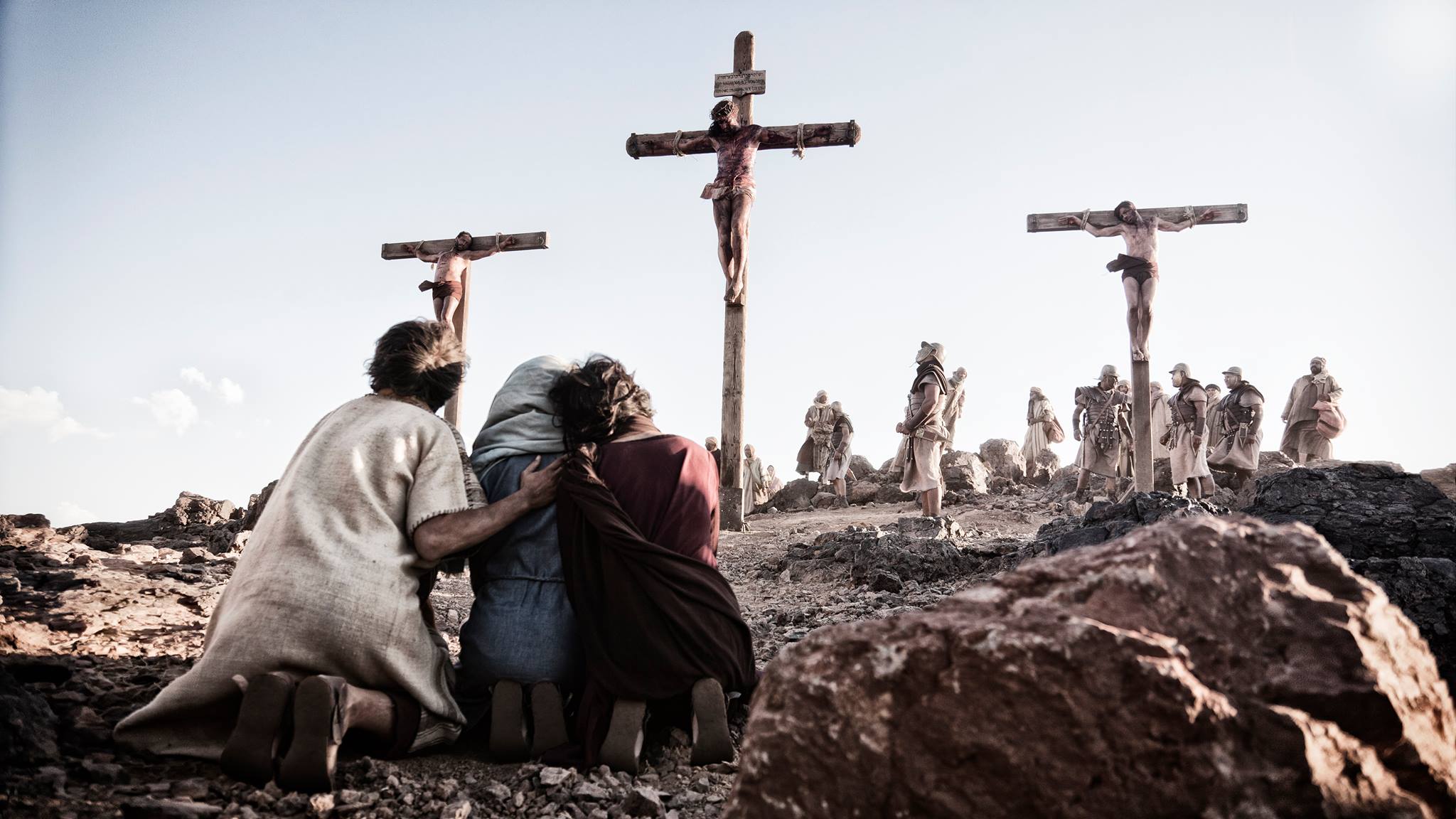
The third set of words Jesus utters is recorded in John 19:26-27. They are a compassionate request of two people who stand by the Cross, a request which ensures their relationship and care into the future. These two are Mary (his mother) and John, the disciple. In Christ’s most dire moment, his focus includes providing for the earthly needs of those he loves.

When Jesus saw his mother there, and the disciple whom he loved standing nearby, he said to her, ‘Woman, here is your son,’  and to the disciple, ‘Here is your mother.’  From that time on, this disciple took her into his home.”

This request (and the response noted) reveals the heart and faithfulness of all three involved. There is much to unpack, but I will focus on just a few points.

  1. Jesus honouring his parent
    Amidst the sufferings of the Cross, Christ thinks of the woman who loved him best, whom he loved. “This is one of the greatest wonders of His person – the blending of the most perfect human affection with His divine glory” (Pink, p.68). He knows Mary is a widow in need of provision and home. He sees her present and future needs and commits her to his most trustworthy and dear friend, John. Here, Jesus is the perfect man giving the perfect example of the care that we are all to show our parents, especially in their later years. The command to “Honour thy parents” is vividly portrayed in Christ’s last words of care for his mother. Pink sees this as a stark reminder of the fifth commandment, embedded in the sufferings of Christ. He says that to honour our parents with care, attention, provision and love is a “sacred duty” which Christ displays from the Cross.

  2. Mary needed a Saviour and stood by him
    The Mary of the Bible is not the revered “Mother of God” who is put on a pedestal. In fact, never once in the Bible is it recorded that Jesus called her ‘mother’. So to address her here as ‘woman’ is not a demeaning statement, but it is to remind us that she is a member of a fallen race, a woman in need of a Saviour. She has faith in her Son as Saviour and understands (probably) better than the disciples that he must die to deal with our sin debt. “Before the birth of Christ, she declared ‘My soul doth magnify the Lord, and my spirit hath rejoiced in my Saviour(Luke 1:46-47) . . . And now at the death of the Lord Jesus she is found at the Cross” (p.67). Pink also reminds us of the courage and strength Mary shows in this moment, to stand for the full day and watch her Son endure the agony of the cross – and breathe his last. “Who can measure those hours of suffering as the sword was slowly drawn through Mary’s soul? (See Luke 2:35) . . . She suffered in unbroken silence . . . in profound desolation of spirit” (p.57). Yet John was by her side.

  3. What better choice than John?
    Of all the disciples, the one who returned to the cross was John, the disciple ‘whom Jesus loved‘. Clearly there was a great level of affection and friendship between them, so it was natural that after the other disciples fled in fear, John was the one who would return. Perhaps he understood the Saviour almost as well as Mary, so it was a fitting choice to hand them into each other’s care. There was “none so well suited to take care of Mary, none whose company she would find so congenial, and . . . none whose fellowship John would more enjoy” (p.65). Pink further explains why leaving John in the care of Mary who knew him best was so wise. He points out “that a wondrous and honorous work was waiting for John. Years later the Lord Jesus was to reveal himself to this apostle in glorious apocalypse” (referencing the visions of Revelation) . . . How better then could he equip himself than being constantly with her” (Mary), who knew Jesus so intimately for 30 years?

Join me for 4/7 next time, the words of Christ in Matthew 27:46. Blessings!
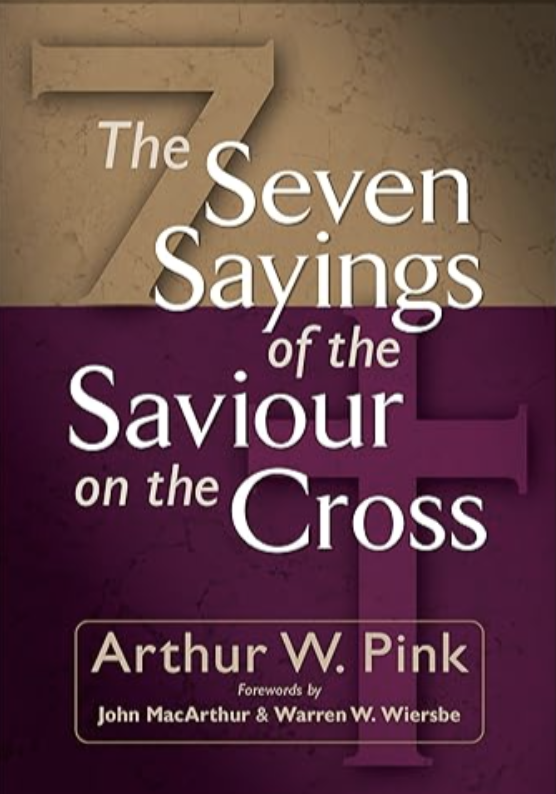
This series draws on the structure and ideas in “The Seven Sayings of the Saviour on the Cross” by Arthur W. Pink, 1984, Baker Book House. Direct quotations are indicated. AI was NOT used in the creation of this Blog post.
 

The Significance of Jesus’ Final Words on the Cross (1/7)


As a teacher of English literature, I often point students to explore the significance of a character’s final words, spoken when they exit a text or when the author brings the whole story-world to a conclusion. In these final words we see the essence of each character’s intentions, motives, and – well, how else can I say it – character! These words also crystallise what the author wants us to know or remember about the character, their actions and meaning.

What can we learn then from Jesus’ final words – the words of the Word of Life, the Author and perfector of our Faith? “The Seven Sayings of the Saviour on the Cross” is a book by Arthur W. Pink which has been waiting on my desk for some time. It seems like this Easter week is a perfect time to make actually reading it a priority. At the end of each chapter, I’ll offer you some insights on the significance of Jesus’ final words, which reveal his heart, mind, and purpose. Stay with me if you want to know more, but can’t see yourself reading the whole book.


Before we begin to explore Jesus’ words more deeply, let me remind you of the key facts of Jesus’ crucifixion. This summary is provided by Charles Swindoll:

Jesus of Nazareth said He would “suffer . . . be killed, and be raised up on the third day” (Matt. 16:21). Betrayed by Judas, He was seized, placed under arrest, pushed hurriedly through several trials (all of them illegal), and declared guilty . . . first of “blasphemy,” next of “treason” (Luke 22:70–23:24). Alone and forsaken, He endured the torture of scourging, the humiliation of insults and mockery, and the agony of that walk to Golgotha (Mark 15:15–22). The horrors of crucifixion followed, leaving Him suspended for six excruciating hours . . . the last three of which were spent in eerie darkness that “fell over the whole land” (Mark 15:33). By three o’clock that afternoon He uttered His final words. “Father, into Your hands I commit My spirit” (Luke 23:46). Then . . . He died (Matt. 27:50Mark 15:37Luke 23:46John 19:30).

(NB. I also recommend Swindoll’s The Darkness and the Dawn as another great read for Easter. It will give you a much insight into the last 24 hours of Jesus’ life.)

  1. Words of Forgiveness

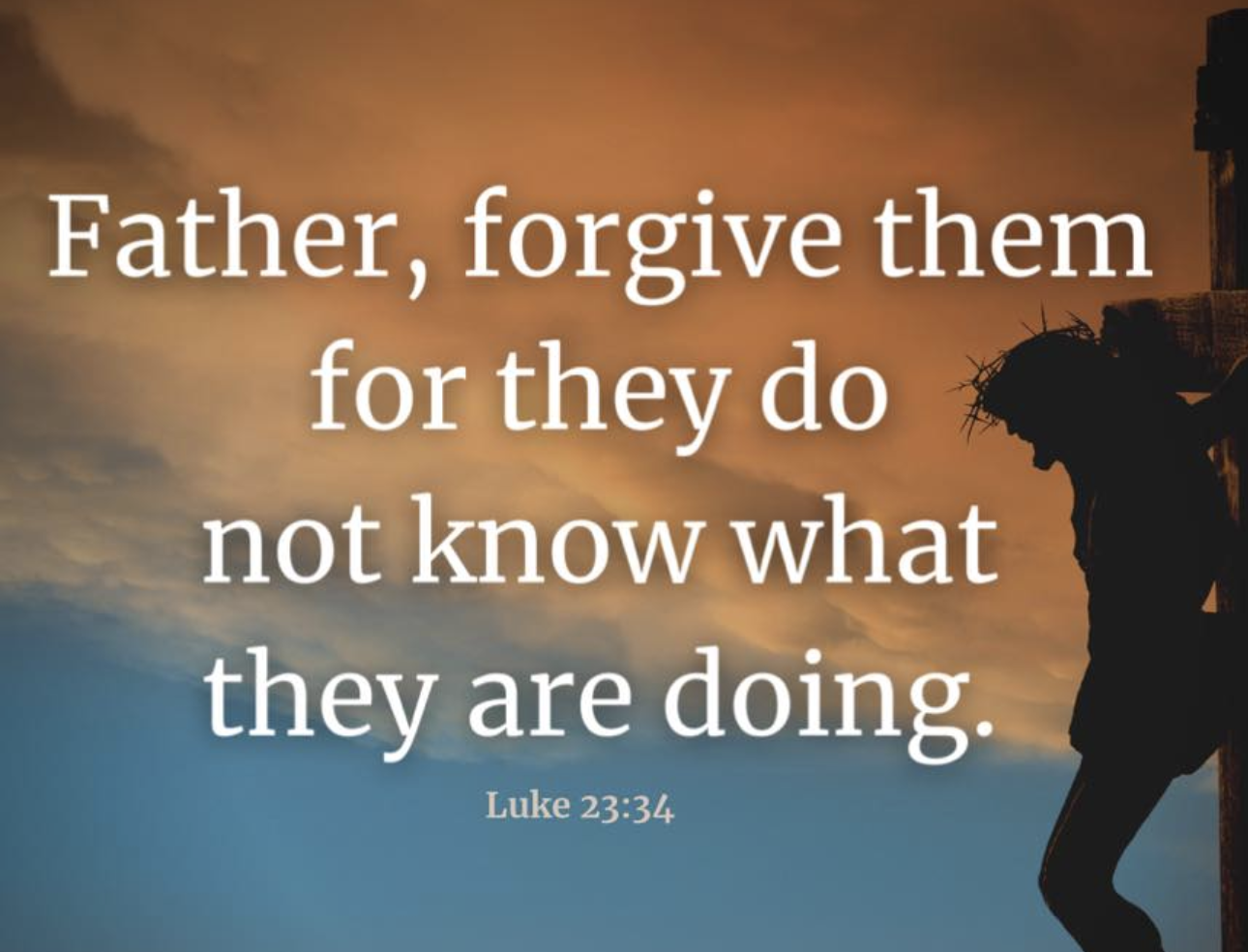
“Jesus said, “Father, forgive them, for they do not know what they are doing.”
Luke 23:34 (NIV)

These first “last” words, also translated more poetically as “they know not what they do”, are probably the most famous words associated with Jesus’ crucifixion. They sum up his compassion and humility, and emphasise just how undeserving he is of such punishment at the hands of sin-blinded humans. In this moment, Jesus is praying for his enemies, both those who are inflicting this ultimate form of Roman torture and those who have forsaken him and fled. Jesus prays for forgiveness from the Father, for all who acted in wilful ignorance. He prays for these people (people just like us) on their behalf, that the Father might forgive them.

Here are 4 most important things to know about this first phrase, when Jesus prays “Father, forgive them, they know not what they do.”

1. A Prophecy Fulfilled: The book of Isaiah foretold that the promised Saviour would make “intercession for the transgressors”. In these complex terms we find the significance of Jesus’ gracious prayer at the time of the crucifixion. Intercession means the act of intervening or praying on behalf of others; in this case, the ‘others’ are transgressors – criminals or offenders – who break laws or moral principles. Now read Isaiah 53 again, or at least verse 12: “. . . He poured out his life unto death and was numbered with the transgressors. For he bore the sin of many and made intercession for the transgressors.In the words ‘Father forgive them‘, Jesus prays for all those who have rejected and beaten him, who mocked and spat on him. He pleads for his crucifiers and asks on their behalf for forgiveness. Jesus’ prayer fulfills this role of the promised Messiah. (All of Isaiah 53 points to Jesus’ death (hundreds of years later) with pinpoint accuracy. Please spend some time there.)

2. The Blindness of the Human Heart:They know not what they do” does not mean these people didn’t know the facts of the crucifixion and their role in it. They are fully aware of the impact of their cries to “crucify him” and how they delight in the spectacle of his mocking trial, torture, and death. But they do not know the enormity of their crime against the Son of God. It is what they are doing that they don’t know. They are rejecting the promised Saviour. Yet Pink says they should have known. “From the start of Jesus’ ministry, His was a life on which was stamped the Father’s approval: ‘This is my beloved Son, in whom I am well pleased’.” Pink laments that this tragic rejection of Jesus continues to be repeated across time and place: “Sinner, little you know what you are doing in neglecting God’s great salvation. You little know how awful is the sin of slighting the Christ of God and spurning the invitations of his mercy” (p.26). May God reveal the truth of Christ in the lives of all who continue to deny Him.

3. Christ Identifies with His people: In asking “Father, forgive them,” Jesus reveals how much he identifies with the humans whose sin he carries. This is the only time when Jesus requests that His Father bestow forgiveness. Prior to this, Jesus himself is the one forgiving the sins of multiple people (often with simultaneous healing). To forgive sin is a divine prerogative and that is why Jesus must call on the Father instead to forgive. When Jesus is raised from earth, hanging on the Cross as the Son of Man, he has given up his divine position. He has “become” sin for us, taking our place as one of us and carrying the weight of our sin. He pleads with the Father to forgive those whose sins he has taken as his own.

4. Jesus’ Prayer is fulfilled: Jesus’ request that the Father “forgive them” is fulfilled just over a month later with the astonishing conversion of 3000 souls on the Day of Pentecost. This connection is made clear by the Apostle Peter in Acts 3: 17-20:
17 “Now, fellow Israelites, I know that you acted in ignorance, as did your leaders. 18 But this is how God fulfilled what he had foretold through all the prophets, saying that his Messiah would suffer. 19 Repent, then, and turn to God, so that your sins may be wiped out, that times of refreshing may come from the Lord, 20 and that he may send the Messiah, who has been appointed for you—even Jesus.” Pink sees this as a direct and perfect fulfilment of Jesus’ prayer: “it was not Peter’s eloquence that was the cause, but the Saviour’s prayer” (p.21) which turned these once ignorant people to Him and won their salvation.

In summary, Pink says that “in praying for His enemies, not only did Christ set before us a perfect example of how we should treat those who wrong and hate us, he also taught us never to regard any as beyond the reach of prayer. If Christ prayed for His murderers, then surely we have encouragement to pray now for the very chief of sinners! Christian reader, never lose hope (p.20).

Let’s rejoice that Jesus’ prayer continues to be answered. According to the World Christian Encyclopedia, around 2.7 million people convert to Christianity from other religions each year, which is about 7500 people per day! The Encyclopedia also notes that Christianity is “the religion with the largest net gain in population through religious conversions.” In an article about the unexpected surge of Global Christianity (2024), Frontier Partners International reports that “Christianity is not only growing in numbers but is also expanding geographically.”

Let’s continue to pray that Jesus’ prayer would be fulfilled this Easter – that forgiveness may be won and souls redeemed to new life in Him. Catch you again on Day 2. You may like to think ahead and consider the significance for yourself. Luke 23:42-43

And here is a song which I think sums up much of the compassion of the dying Saviour who seeks forgiveness for us on our behalf: “Glorious Day” by Casting Crowns:

https://youtu.be/2ntwGWzdCwc?si=8PhGFJj4cj2RKg2y

(This series draws on the structure and ideas in “The Seven Sayings of the Saviour on the Cross” by Arthur W. Pink, 1984, Baker Book House. Direct quotations are indicated. AI was NOT used in the creation of this Blog post.)

7 Ways Biblical Theology Transforms Bible Study

Years ago I was teaching a study of Genesis in my church when one of the discussion-group leaders, a godly older woman, came and sat by me. “How come…

7 Ways Biblical Theology Transforms Bible Study

When we all get to heaven

“Now we see things imperfectly, like puzzling reflections in a mirror, but then we will see everything with perfect clarity. All that I know now is partial and incomplete, but then I will know everything completely, just as God now knows me completely.” 
1 Corinthians 13:12

I think we have been waiting for this song to be written. Imagine the rejoicing and the praises on that day – to sing and shout the victory! To see Jesus! Thanks to Matt Redman for this new expression of the hope in which we live each day, as Christ followers.
Blessings to those for whom this day is likely not far away.
xx

LYRICS:
One day You’ll make everything new, Jesus
One day You will bind every wound
The former things shall all pass away
No more tears

One day You’ll make sense of it all, Jesus
One day every question resolved
Every anxious thought left behind
No more fear

When we all get to heaven
What a day of rejoicing that will be
When we all see Jesus
We’ll sing and shout the victory

One day we will see face to face, Jesus
Is there a greater vision of grace
And in a moment, we shall be changed
On that day

And one day we’ll be free, free indeed, Jesus
One day all this struggle will cease
And we will see Your glory revealed
On that day

Music video by Matt Redman performing One Day (When We All Get To Heaven). © 2018 Capitol Christian Music Group, Inc. http://vevo.ly/8ZTF28

The Mystery of Love (part 1)

Weddings do hold a great fascination for human kind. They consist of great joys, traditions, promises, losses and gains, endings and beginnings. They transport us through time, looking back, looking forward, remembering those who have gone before and those yet to come. They tie us to our families and they unite what once was separate. They provide hope as we express faith and love. They amplify our faith to the witnesses who gather, as we are reminded of the Great Designer’s plan for human kind to be joined as one, to live in love and commitment to one another. At my daughter’s wedding yesterday, I was reminded by the best man (in his humorous yet poignant speech) that a wedding day poses a great question to Christian couples: will this relationship honour Christ? The day is the question. The marriage is the answer.

http://kellyrenaephotography.com/

Grace – City Alight

A beautiful ‘grace’ song for your congregation from City Alight.

Are you amazed that you belong to Christ?

BEAUTY-OF-THE-CHRIST“If you really see and feel your helplessness and God’s deliverance, you will be amazed that you are a Christian. You will be amazed that your heart inclines to the beauty of Christ. You will be amazed at every good resolve, and every impulse to praise, and every good deed.”

http://www.desiringgod.org/articles/six-practical-reasons-free-will-matters


What to do with ‘Jesus, Son of God’

Following on my recent conundrum about keys, capos and congregations I’d like to explore the dilemma I am having with this great Chris Tomlin song, and the best key to sing it in at church. Firstly, have a listen and read the words (on the video, or scroll to the end):

In this version, it is played with Capo 4 in G, which means that, at pitch, they are singing in key of B (which has five sharps – the reason they are using a capo).

Since the lyrics of this song are just too good to pass up, we found the best way around the issue of the range, is to sing it in D. This means the range of the melody falls between D and A, which most people can manage! Unfortunately, it also means that the melody in the chorus ends up lower than it is in the verse – but in order for the greatest number of people to sing it well together (which is the point), we decided to go this way. It seems to be working well!

A few other thoughts about this Key choice:
1. If you are into adding harmonies with backing singers, you can easily add some harmonies above the melody in the chorus (a third or 5th above). You could even teach some to your congregation.
2. Some male singers could jump up the octave to help build a crescendo in part of a verse or chorus. This could be modeled by your male song-leader.

Let me know how you go. Here are the lyrics again:

Jesus Son Of God

Verse 1

You came down from Heaven’s throne
This earth You formed was not Your home
A love like this the world had never known
A crown of thorns to mock Your name
Forgiveness fell upon Your face
A love like this the world had never known

Chorus

On the altar of our praise
Let there be no higher name
Jesus Son of God
You laid down Your perfect life
You are the sacrifice
Jesus Son of God
(You are Jesus Son of God)

Verse 2

You took our sin You bore our shame
You rose to life You defeated the grave
And a love like this the world has never known
‘Cause You took our sin You bore our shame
You rose to life You defeated the grave
A love like this the world has never known

Bridge

Be lifted higher than all You’ve overcome
Your name be louder than any other song
There is no power that can come against Your love
The cross was enough
(The cross was enough)

Ending

The cross was enough

Watch “CityAlight – I Want to Know You”

Am loving this song from City Alight, which perfectly sums up the ongoing desire to grow in knowing Christ.

Lyrics

I’ve tried in vain a thousand ways

My fears to quell, my hopes to raise

But what I need, Your word has said

Is ever, only, Jesus

You died, you live, you reign, you plead

There’s love in all your words and deeds

This weary heart finds all it needs

In ever, only, Jesus

I want to know you, Jesus my Lord

King of the Heavens, King of my soul

I trade my treasure and all my rewards

Jesus to know you, then know you more

Though some should curse me for your name

I have no fear, I have no shame

You stand with me for all my days

My ever, only, Jesus

Like wave after wave on the ocean

Like all of the sand on the shore

Your beauty and glory are endless

O Jesus I must know you more

Resources

Chords & Lyrics

Credits

Michael Farren, Jonny Robinson, Rich Thompson, James Proctor

CCLI 7073331

http://www.cityalight.com/i-want-to-know-you/

Behold the Lamb (Communion Hymn)

Sometimes it is easy to miss out on a really great song that could be a great encouragement for your congregation to sing together. We have been using this four-verse modern hymn for a while, courtesy of writers Keith and Kristyn Getty, with Stuart Townend. It is great for communion/Lord’s supper and Easter celebrations. If you have missed it, then it’s time to catch up. Blessings!

“Behold the Lamb who bears our sins away,
Slain for us – and we remember
The promise made that all who come in faith
Find forgiveness at the cross.
So we share in this bread of life,
And we drink of His sacrifice
As a sign of our bonds of peace
Around the table of the King.

The body of our Saviour Jesus Christ,
Torn for you – eat and remember
The wounds that heal, the death that brings us life
Paid the price to make us one.
So we share in this bread of life,
And we drink of His sacrifice
As a sign of our bonds of love
Around the table of the King.

The blood that cleanses every stain of sin,
Shed for you – drink and remember
He drained death’s cup that all may enter in
To receive the life of God.
So we share in this bread of life,
And we drink of His sacrifice
As a sign of our bonds of grace
Around the table of the King.

And so with thankfulness and faith we rise
To respond, – and to remember
Our call to follow in the steps of Christ
As His body here on earth.
As we share in His suffering
We proclaim Christ will come again!
And we’ll join in the feast of heaven
Around the table of the King ”

— WORDS AND MUSIC BY KEITH AND KRISTYN GETTY & STUART TOWNEND
