Why We Worship on Repeat | Desiring God

I enjoyed this discussion from Desiring God about praise/worship as meditating together on the truths of the Gospel. It makes me much more enthusiastic about the idea of another chorus repeat.

“Many a modern church-goer has been miffed by repetition in corporate worship.

The Information Age is conditioning us for new content, fresh ideas, new data. Why re-read what we’ve already read, why rehearse what we’ve already heard, when new information is available like never before?

But do we know what our unprecedented access to novelty is doing to us? All indications are that it’s threatening to make us shallower, not wiser and more mature. Running our eyes across the page and mouthing words to a song are not the same thing as experiencing the reality in our hearts. Our hearts simply don’t move as quickly as our eyes and our mouths.

Which makes corporate worship such an important elixir for what is increasingly ailing us today.

Learn to Feel the Truth

Take Psalm 136 as a flashing red light from the divine that our newfound intolerance for repetition is out of step with what it means to be human. The psalm is 26 verses, and each verse ends with “for his steadfast love endures forever.” It rehearses God’s goodness and supremacy, his wonder-working and world-creating, his delivery of his people from slavery and provision for them in a rich land.

Twenty-six times the psalm repeats this refrain — and not one of them is wasted. With each new verse, another attribute or rescue of God is celebrated, and then our souls are ushered deeper into his steadfast, ever-enduring love with each glorious repetition.

“Our hearts simply don’t move as quickly as our eyes and our mouths.”

The goal of the song is not to make his steadfast love old hat, but to help us feel it afresh and at new depth. The dance of each new verse, with each return to the refrain, is designed to bore the central truth about God’s resilient love deeper and deeper into our inner person. The psalm is not atreatise on the unwavering, persistent love of God, but what we call a meditation — less linear and more circular — crafted to help auger the reality of his love from information on our mental surface down to an experience in our hearts.

If you come away bored (unaffected), you’ve missed the point. But if you come away with God bored deeply into your soul (tasting afresh the strength and sweetness of his love), you’ve been carried by the Holy Spirit.

More Than Data

God made humans to meditate. And it is increasingly the lost art in our age. We were made to think deeply on his truth, not just be informed; to ponder reality down to the depths, not just move on to the next piece of data.

Non-Christian forms of meditation seek to empty the mind and transcend concrete specifics into the ethereal, and experience some form of meaningless enlightenment. But Christian meditation fills the mind with biblical truth, and chews on it, seeking to savor every bite.

“Meditation receives the truth into our souls and changes us in our deepest part.”

Unlike mere reading, even slow reading, where our minds and eyes keep moving at some pace, meditation slows us down, way down. We pause and ponder. Reading keeps us marching in linear fashion, while meditation moves us into a more spiral pattern by limiting the information set and seeking to press and apply the truth to our hearts, to actually experience the truth and not just let it run on through our minds on our way to the next thing.

Meditating Together

One remarkable aspect of corporate worship is that it gives us the opportunity to meditate together. The pinnacle of a good sermon is typically a form of corporate meditation, led by the preacher, as he circles around his main point and verbally kneads its goodness into our hearts.

And the summits of our best praises together in song are essentially meditative. It’s not the discovery and delivery of an obscure stanza that binds our hearts and draws us highest together toward heaven, but returning to the chorus, which has been enriched with each additional verse. The verses provide fresh information, but the refrain we know so well bores the truth even deeper into our souls. The verses and chorus together help us to know the reality even better, as we collectively digest the truth from our heads into our hearts. They help us actually experience and be affected by the truth in our inner person, not just rehearse the data on the surface.

“God made humans to meditate. And it is increasingly the lost art in our age.”

And only once we’ve taken the truth into the heart, into the core of our soul, do we organically grow external actions and lived-out transformation. Rather than circumventing the heart, by moving from the mind to the actions, meditation receives the truth into our souls and changes us in our deepest part so that our actions aren’t whitewashed, but authentic expressions of the movement of our souls.

Purposeful repetition in corporate worship empowers us to be changed not only as individuals, but as a people. It is not only the truths we read, but the truths we sing — and sing often, and take into our hearts — that mold and shape us for lives of worship.

So, perhaps this weekend, you’ll have a chance to experience corporate repetition afresh, and instead of begrudging the worship leader for it, you may find it to be a new pathway for enjoying the grandeur and love of God.”

http://www.desiringgod.org/articles/why-we-worship-on-repeat

Are we eager for the King of Heaven?

Here is a song from Paul Baloche which I have been considering for a while to include in our church repertoire: King of Heaven from ‘The Same Love’ album. It challenges us to collectively anticipate and call on the Lord Jesus for His return. It has a lively and uplifting feel. You will find the words in the first clip, and at the end. Blessings!

“King Of Heaven”
Jesus, let Your kingdom come here
Let Your will be done here in us
Jesus, there is no one greater
You alone are Savior, show the world Your love

King of Heaven come down
King of Heaven come now
Let Your glory reign, shining like the day, King of Heaven come

King of Heaven rise up
Who can stand against us?
You are strong to save in Your mighty name
King of Heaven come

We are children of Your mercy
Rescued for Your glory
We cry, Jesus set our hearts towards You
Every eye would see You lifted high

King of Heaven come down
King of Heaven come now
Let Your glory reign shining like the day
King of Heaven come

King of Heaven rise up
Who can stand against us?
You are strong to save in Your mighty name
King Of Heaven come

Ooh, ooh, ooh, King of Heaven come

King of Heaven come down
King of Heaven come now
Let Your glory reign, shining like the day
King of Heaven come

King of Heaven rise up
Who can stand against us
You are strong to save in Your mighty name
King of Heaven come

The conundrum of keys, capos and congregational singing

capoarticle_1_1

Most of the songs we now use to gather Christ’s body together in praise and worship are not written for that specific purpose – for singing together. Rather, they are written to be performed and recorded (for God’s glory), while satisfying the vocal range of an experienced soloist, who most often has a fairly high male (tenor) voice. The melodies are therefore shaped and situated in a vocal range that few of us can manage. Sure, we can sing along with the best of them on our iPods, but unconsciously we do a lot of octave jumping, or harmonising, so that we can sing along. This doesn’t work too well when the congregation is singing together.

Choosing the right key is quite tricky. The default or original key on SongSelect rarely works well. It can end up with a really high melody section in the chorus that no one can sing (bar the tenors) or else the whole thing is too low when you jump down an octave. This low singing equates to really quiet singing, and when we can’t hear each other we are discouraged from singing at all.

You also have to consider the musicians: is this great key the guitarists are happy to play in one which will induce a mild psychosis in the keyboard player, as they scamper around playing on only the black notes?

Here are just four rules of thumb that I find work well when selecting singable and playable keys for church singing (on SongSelect (CCLI) or a similar website).

1. Keep the vocal range between A (below middle C) and D (8 notes above middle C). Remember that D signals Distress for many people, so ensure the transposed melody only has a few passing notes of the high D (and the low A as well, for that matter). If the song ends up with a low G as the anacrusis note in the melody of the verse then teach it as a B instead (it should fit the chord, and won’t really be noticed).

2. Try to maintain the original shape and development of the song, starting with low verse notes and moving to higher chorus notes. If you sabotage the ‘chorus lift’ by a poorly chosen key, or by forcing people to jump down an octave, it can all fall seriously flat.

3. Don’t choose keys that have too many sharps or flats. Stick to maximum of four sharps (E major) and max 3 flats (Eb major). There are a few major keys that work well for both guitar and keys: C, D, E, G and A major. Keyboard players generally don’t mind keys with flats (one flat F major, two flats Bb major), but these will probably make your guitarists unhappy. This leads to my next point.

4. Understand Capos and get your guitarists to understand and use them. The keyboard and the guitarists can play in different keys quite effectively. A guitar capo effectively shortens the guitar strings and produces a higher sound. This enables the guitarists to play in comfortable keys (mostly ones with sharps) while the pianist can play in a key with flats that may mean a better vocal range for the congregation.

For example, if I want to use Matt Redman’s Ten Thousand Reasons in a flat key (Eb major, with three flats), then the guitarists can play in D (with their music in key of D) and capo on the first fret. (Each fret raises the guitar’s pitch by a semitone. So, the guitarists playing in D major want it to sound Eb major. Placing the capo on fret one moves the sound up by a semitone. Success! It sounds in Eb major but they don’t have to play in a key with flats.)

Another example would be Trevor Hodge’s No Other Name (Listen below!) in Bb, which has two flats. The guitarists can play in G major, but sound Bb by placing the capo on fret 3. There are 3 semitone steps to get from G to Bb (go check a keyboard) which is why the guitar must use capo three.

Remember that the guitarist needs to be playing in a key slightly lower than the keyboard player, so that the capo will bring their sound up to pitch, and they will only need to use capo 1, 2 or 3.

Next time: let’s look at a case study and decide what to do with Tomlin’s ‘Jesus, Son of God’ which has a huge vocal range! I’m still working on this one myself.

Grace Upon Grace

“My sin is erased, my heart is amazed by your grace upon grace.”

Here are some beautiful song lyrics from a recent song by Josh Wilson, on the album “That was Then, This is Now” (2015). 

“Grace Upon Grace”

Every morning I open up my eyes to see mercy’s brand new
Darkness disappears and the day reveals all You’ve carried me thru
You are so faithful and I am so grateful God

Heavenly Father
You love like no other
You call me Your own
You never let go
You are my rescue
How can I thank You?
My sin is erased, my heart is amazed by Your
Grace upon grace

Seems impossible, a love unstoppable that just won’t give up on me
You left the 99 to find a heart like mine that’s all the proof that I need
You are so faithful and I am so grateful God

Heavenly Father
You love like no other
You call me Your own
You never let go
You are my rescue
How can I thank You?
My sin is erased, my heart is amazed by Your
Grace upon grace

I am Yours, I am Yours
I was made for You, I was made for You
I am Yours, I am Yours
I will live for You, I will live for You (Lord)

Heavenly Father
You love like no other
You call me Your own
You never let go
You are my rescue
How can I thank You?
My sin is erased, my heart is amazed
Forever oh God I will give You my praise
My sin is erased, my heart is amazed by Your
Grace upon grace

Worship with a human heart

sunset-585334_1920This post comes from a student I taught about six years ago. She has recently started a blog and would no doubt appreciate some visitors and followers. I thoroughly enjoyed her post, the content of which you will find below; please visit the original post:
Worship With A Human Heart

The church fellowship I attend is small. Worship is usually run by a singer and one – or, if we’re lucky, two – musicians, along with someone in charge of displaying lyrics. . . This week, it didn’t quite go smoothly. Sometimes the lyrics were out of order, sometimes the guitar was louder than the singer, sometimes the congregation was off-key or sang at the wrong time. At one point the musician couldn’t find the music sheet for a song, so we ended up singing one song twice!

This is my favourite worship. When we raise up our voices and stumble, when our plans go awry and the guitarist stumbles. And when we continue anyway. Because we must. I love these moments. They make me smile, and I like to think they make God smile too.

Because we aren’t a concert of professionals with a stage and fancy lightning. Because we aren’t here to produce beautiful, on-key music without missing a beat. We are here as humans to worship the one true God.

And how remarkable, how astounding that He loves our worship, stumbles and all. How awesome is it that He loves such imperfect humans.

“But God demonstrates his own love for us in this: While we were still sinners, Christ died for us.” Romans 5:8

We don’t need to be perfect to come before God. In fact, He came to us, arms held wide, while we were unworthy. How can we not praise Him? How could anyone stand to wait until perfection before raising off-tune voices in worship to our God?

Thank you, Lord, that You love it when we worship with a fallible human heart.

His Glory shown in our praise

The dark canvas that points to Grace

This is such a joyful song which brilliantly describes the Joy we share in Christ. My favourite line is this: “The dark is just a canvas for Your grace and brightness.”  If this post meets you in a dark place look to Christ, the song of our hearts.

“Joy” (Rend Collective)
We’re choosing celebration
Breaking into freedom
You’re the song
You’re the song
Of our hearts

We cast aside our shadows
Trust You with our sorrows
You’re the song
You’re the song
Of our hearts

We’re dancing to the rhythm of Your heart
We’re rising from the ashes to the stars

You’re the joy joy joy lighting my soul
The joy joy joy making me whole
Though I’m broken, I am running
Into Your arms of love

The pain will not define us
Joy will reignite us
You’re the song
You’re the song
Of our hearts

The dark is just a canvas
For Your grace and brightness
You’re the song
You’re the song
Of our hearts

We’re dancing to the rhythm of Your heart
We’re rising from the ashes to the stars

CHORUS

You’re the joy
The song in my heart
The hope of my soul

In the shadows
In the sorrows
In the desert
When the pain hits
You are constant
Ever-present
You’re the song of my heart
[x2]

CHORUS


Frustrated in your song-writing?

Valuable Reasons To Try Co-Writing

Why You Need Writing Partners (from http://www.thesongsphere.com/co-writing-2/)

One of the biggest surprises for many songwriters who move to Nashville, is how much co-writing goes on in the professional circles.  Venturing an educated guess, I would say that 80% or more of today’s hit songs, across most popular genres, are co-written.  That’s a surprising number to most people, and the percentage could actually be higher.

A colleague of mine has often mused about the fact that songwriting might be the only art form where a work of art can be created through collaboration.   He gives the example that you don’t see fine artists “co-painting” or “co-sculpturing”.   He may be right that songwriting is different than painting in that way.  However when it comes to music, collaboration is not a new thing.  For decades (if not hundreds of years), society has created music through partnership.   And we have seen the same with the writing of literature and plays.  We certainly see collaboration in artistic performance everyday, with musicians “co-performing” as an orchestra, band or choir, and actors “co-acting” on the stage or screen.

Most of the professional songwriters that I know have a co-writing session on their calendar almost every day of the week.  Why are so many songs co-written today, and why should you work with writing partners too?

Here are four reasons you may consider co-writing your songs:

  • LEARN SOMETHING NEW –  Writing with others helps expand your possibilities – whether it’s new genres, new structures, new techniques, or something else, you’ll almost always sharpen your songwriting skills from writing with a partner.   Songwriters improve in their craft much quicker when they collaborate often.
  • BREAK BAD HABITS –  When writing solo, we tend to fall into ruts that limit us in our growth as a songwriter.  Sometimes our songs even begin to sound the same.  Through collaboration we more readily realize our weaknesses and the imaginary limits that we’ve put on ourselves.
  • TWO HEADS ARE BETTER THAN ONE –  With two or more working together on a song, it’s easier to get through the tough spots or the hurdles.  If you’re writing alone and you just can’t find the right word, or don’t know what to do for a bridge, you’re stuck.  With a team of writers contributing to the song, those issues are much easier to navigate.  Plus… we all want to write songs that others will enjoy.  If you bounce ideas off of one another, and you both like the outcome, there is a better chance that other listeners will like it too.
  • GET AROUND YOUR WEAKNESS –   Know what your strengths are and find someone that is strong where you are weak.  For example, one of you may be strong with melody; the other with lyric.  Or one may be more of an idea person and the other  a “finisher”.  There have been many famous songwriting teams over the years.  Often when two writers find that their skills successfully compliment one another, they will become a career team. . . .

It’s normal to be apprehensive about collaboration, especially when it’s with someone you don’t know very well.  But co-writing has become part of the fabric of today’s music business.  If you’ve never tried writing a song with someone else, let me encourage you to step out and try it.  Maybe the first time will be more of a “get to know you” coffee session.  You don’t have to write something the first time you get together.   Do try writing with 3 or 4 different partners and see which ones are the best fit.  And don’t throw in the towel immediately.  It might take a while to get the hang of it, but I believe you’ll love it in the long run!

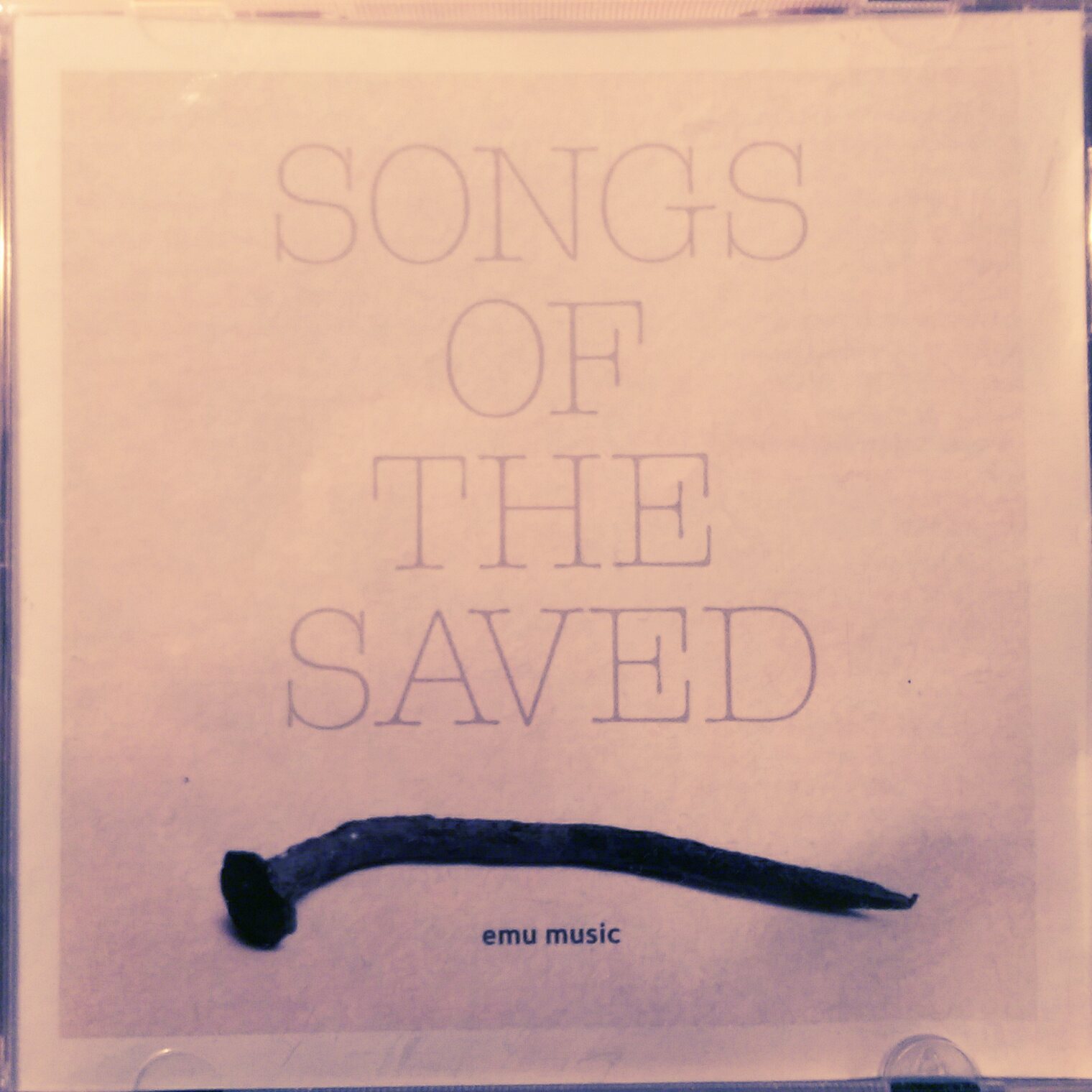
Songs of the Saved

IMAG3748_1 (1)Sharing today my two favourite songs from Emu Music‘s most recent album Songs of the Saved.
(You can listen to the album on Spotify). Both these songs would probably be good for a congregation to sing. I’m particularly keen on introducing Risen asap. It has such a triumphant chorus and bridge – and much encouragement! Blessings to you in your ministry.

Track 10: Risen 

1. When I am weak you are strong
When I am poor you are rich
When I am on my knees you are with me

2. When I lay down calm my fears
Death has no power you are near
Jesus my Lord will save
Jesus, you conquered the grave

Chorus
Jesus, you are our Saviour
Mighty, death has no hold
Risen, reigning forever
Jesus, you conquered the grave

3. Trumpets will sound, we will rise
Ashes and dust glorified
Never to die again
Never stop singing his praise

Bridge
You are wonderful, you are powerful
You are glorious, Jesus
You are wonderful, you are powerful
You are glorious, Jesus

© 2014 Michael Morrow, Philip Percival & Simone Richardson

Track 3: Rock of our Salvation

1. Have you heard the day is coming?
When the things our hearts have loved –
Dust and ashes ever-failing –
Will be seen for what they are

2. Can you hear a voice now calling?
Saying, “This is not the end
Come and walk new ways of blessing
And sing a new song to our Lord”

He’s the rock of our salvation
We will trust and be not afraid
He’s the sure and firm foundation
When every other ground gives way

3. Have you heard the condemnation?
Who could pay the dreadful price?
But, look, the silent suffering servant
Took on death to give us life!

4. Can you hear the voice of splendour?
Calling out “whom shall I send
To be a light to every nation?”
“Send me Lord God, here I am!”

The former things will be forgotten
A new creation descends at last
All fear and loss will be no more
All grief and sorrow and tears will pass

Mountains and trees will clap their hands
We’ll enter Zion with songs of joy
And every eye will see his glory
Our king exalted forevermore

He’s the Rock of our Salvation
Soon our hearts will be renewed
Crowned in everlasting gladness
And Jesus’ splendour fills our view

© 2013 Liv Chapman & Gavin Perkins


Watch “Christy Nockels – My Anchor (Live/Lyrics And Chords)” on YouTube