Taking control doesn’t guarantee safety or happiness

hands on wheel“Faith is deliberate confidence in the character of God whose ways you may not understand at the time.”
Oswald Chambers

There is an illusion of safety that comes with being the driver of a car. We think we have control over the brake, the steering and accelerator, and we feel safer since we are calling the shots. We think we have control over our destination, that we will arrive safe and happy. And we can foolishly think this holds true while juggling a coffee or phone – or both!  On the other hand it takes a great deal of trust (particularly for me) to hand over the controls to an unseen pilot who sustains your life 30,000 feet in the air in a metal tube, and promises to deliver you safely to some distant destination. Yet statistically we are safer in the air! (There is a 1 in 20 000 chance of death by air travel, but only 1 in 100 by car! Read more here).

Now I know this is not a perfect analogy, but the same is true of the Christian life in many ways.

When things seem to be going wrong in our life, and we are not enjoying the level of happiness we (think we) see all around us, it is all too tempting to grab the reins and take back control over our life. We think our way (or the way of the world around us) will lead to fulfillment and lasting joy. Even if God has explicitly put certain choices off limits, our hurts push us to take back control. We may feel desperately lonely as a single woman, a childless mother or uncherished wife (talking mainly to the women here today). We think God (and others) don’t understand just how difficult it is to live like this! And in this state it may seem like a great idea to have an affair or hook up with an unbeliever, to focus on the selfish pursuit of eternal youth, or fill your life with material things that (also) can only buy short term joy. But taking control doesn’t mean we will be happy!

As Christians we have placed our lives in the hands of our Saviour. That’s how we became Christians – by submitting to Christ, to His revealed will, to His word. We chose to live with Christ as our Lord and Saviour, to walk His way, worthy of the life he called us, worthy of His name we own. So even in the hard things of loneliness or loss, God’s way is still the best way. His ‘restrictions’ are motivated by love and designed for our good! If we take control and choose to live outside of his revealed will, it won’t be long before we find ourselves in a greater state of unhappiness than we were in before.

There are no easy solutions in this fallen world, but If you are in Christ then pushing Him out the driver’s door won’t help. Try digging deeper into His living words. Try serving, try building deep relationships with others, sharing your frustrations and praying together, and growing in the knowledge of God. These things will not fulfill all our longings in this life, but they will be living inside God’s good will for us. As John Piper says (in a post entitled “Are Christians Satisfied?“):

“Christ does offer total satisfaction, much of it right now in hope and forgiveness and growing power to love. But all of it in the age to come when we will be made perfect in a perfect world. Then there will be no sense in which we will be disappointed in ourselves or in our circumstances at all.”

Choosing to go God’s way definitely means we won’t have our hands on the wheel, but the One who does is infinitely wiser and greater than we. Keep trusting Him!


The mystery of godliness (1 Timothy 3:16)

mystery_of_godlinessAs we arrive at 1 Timothy 3:16 (in the Three Sixteen series) Paul tells Timothy about the importance of godliness in the church, the church being the pillar and foundation of the faith. The church has been entrusted with the Gospel, with proclaiming Christ to the world. Paul lays down guidelines for selecting overseers and deacons in the church, for teaching, for prayer. Then he includes this apparently random summary statement about the great mystery of Christ:

“Beyond all question, the mystery from which true godliness springs* is great:
He appeared in the flesh,

    was vindicated by the Spirit,
was seen by angels,
    was preached among the nations,
was believed on in the world,
    was taken up in glory.”

This is a great summary about Jesus, his life and purpose, and makes a great 3:16 verse! But Paul is actually quoting lines from a well known hymn of the early church. This commentary has some good insights about the relevance of Paul’s words:

Now Paul’s citing of part of what was surely a well-known hymn in the course of writing instructions for behavior in the church is to bring his readers to the point of corporate response. The hymn itself, like many in the New Testament, celebrates Christ’s appearance and ministry on earth. The introductory phrase is a call to consider the implications of this grand event, to evaluate our conduct on the basis of what we confess. . . . Consequently, this phrase ‘the mystery of godliness’ forms a connection between the appearance of Christ, which the hymn celebrates, and Christian living: the mystery is the essence of godliness. It was critical for Paul to remind the readers of this principle, for the false teachers were successfully driving a wedge between belief and behavior with damaging results. In our day of institutionalized atheism and the popular heresy of humanism, the church faces the same danger. Even if dangers of this sort seem remote, we easily forget the practical implications of what we believe and profess to be true.” 

So this is a great verse not just because it celebrates Christ’s work, but because it connects his glorious saving work with our behaviour. We are to walk worthy of Christ’s saving work for us.  His work is finished, we don’t have to earn it! But we are called to live godly lives that point to Him as we, the Church, safeguard and pass on the Truth of His Saving work.

(*Note: if you look at other versions of this verse you may find that it simply says “the mystery of godliness” or the “mystery of our faith” – but the newest NIV translation seems to have hit the proverbial nail by phrasing it “the mystery from which true godliness springs”. True godliness will grow in us when we have build our life on Christ!)

The unexpected timing of God’s grace

From Tim Keller:

God’s sense of timing will confound ours, no matter what culture we’re from. His grace rarely operates according to our schedule. When Jesus looks at Jairus and says, “Trust me, be patient,” in effect he is looking over Jairus’ head at all of us and saying, “Remember how when I calmed the storm I showed you that my grace and love are compatible with going through storms, though you may not think so? Well, now I’m telling you that my grace and love are compatible with what seem to you unconscionable delays.
It’s not “I will not be hurried even though I love you”; it’s “I will not be hurried because I love you. I know what I’m doing. And if you try to impose your understanding of schedule and timing on me, you will struggle to feel loved by me.”

(Kings Cross, pg. 63)

You may also like:
Taking control doesn’t guarantee safety or happiness
hands on wheel

Never once did we ever walk alone

Most of you would agree that any form of exercise is more enjoyable when someone else is with you. Even just walking with a friend they help you go further and longer than you ever thought possible. You forget about the difficulties, your sore foot, or back, the cold weather, or how much you hate exercise. Walking alone you can think of a million reasons to stop. A companion helps you keep going. (Dog companions are especially good at this.)

When it comes to us and God, we have a wonderful promise – that He is with us, always. There is not once that we were alone. He is in us, walking with us through every difficulty. Yet he is more than just a faithful or encouraging companion. He is a Spirit who lives in us, a Spirit not of timidity and fear, but of love, power and sound mind (2 Timothy 1:7). Matt Redman’s song “Never Once” (Album: 10 000 Reasons) captures well this confidence we have in Christ, that we are in Christ and He is most certainly with us, in us. We are never alone!

“Never Once”

Standing on this mountaintop
Looking just how far we’ve come Knowing that for every step You were with us
Kneeling on this battle ground
Seeing just how much You’ve done Knowing every victory was Your power in us
Scars and struggles on the way
But with joy our hearts can say
Yes, our hearts can say

Never once did we ever walk alone
Never once did You leave us on our own
You are faithful, God, You are faithful

Scars and struggles on the way
But with joy our hearts can say
Never once did we ever walk alone Carried by Your constant grace
Held within Your perfect peace
Never once, no, we never walk alone

Every step we are breathing in Your grace
Evermore we’ll be breathing out Your praise
You are faithful, God, You are faithful You are faithful, God, You are faithful

When our ‘good taste’ overrides our grace towards others

coffee heartThe other day I turned my nose up at an instant coffee made for me from a jar of Nescafe 43. I thought I could justify this ungracious response by defending my ‘good taste’ in coffee, but apparently not, according to C.S. Lewis.

“(Humans) . . .  are best turned into gluttons with the help of their vanity. They ought to be made to think themselves very knowing about food, to pique themselves on having found the only restaurant in town whether the steaks are really “properly” cooked. What begins as vanity can then be gradually turned into habit. But however you approach it, the great thing is to bring him into the state in which the denial of any one indulgence “puts him out”, for then his charity, justice and obedience are all at your mercy.  Mere excess in food is much less valuable than delicacy.”  (Letter 16: Screwtape Letters by CS Lewis, 1942).

Ouch!  If you have never read the Screwtape Letters I would encourage you to rush out and get a copy (or download). The Letters record fictional (but strangely believable) correspondence between a Senior and Junior devil. The uncle instructs his nephew on how to keep his ‘patient’ (a new convert to Christianity) from getting too close to the Enemyscrewtape (for them the Enemy is, of course, God).  In the section above Uncle Screwtape explains how to get at his patient, to annoy him, by encouraging the unbearably fussy eating of his mother and her delicate tastes.  If he can make her insist on having her food served in a particular, apparently simple way he will have some delightful amusements. It is also designed to keep her deluded in selfishness and pride.

Here Lewis makes an insightful connection between the “god of the stomach” and pride in our own good taste. This is a much more dangerous distraction from godliness than simply overeating. What I find most interesting here is that he wrote on such matters long before our addiction to both reality TV cooking shows and the great variety of good foods we enjoy in the West (thanks to globalisation). Lewis’ words also come before ‘coffee culture’ swept our world and people became ‘coffee snobs’ – who insist on having their particular bean roasted a particular way on a particular machine in a particular shop, or their own kitchen. I have met people who will rave for hours about having the best taste in coffee and the most knowledge of how to make it – properly! How gracious are they when offered inferior coffee? (How gracious was I?) And it’s not just coffee. Our egos can be fed and mislead by thinking we have the best taste in food and the best skills in how cook it, to create amazing dishes and impress others.

I suppose I am not that far behind the people that I call coffee snobs! I do prefer real coffee from a coffee shop (though not A particular shop) and I do think I have better taste than others in many ways (doesn’t that just sound awful in print)!  The more I think such proud thoughts, the more I train myself to respond to others with less grace, less charity, less justice and kindness. Let’s measure our “own good taste” against God’s measure, of perfect grace, humility, charity and kindness to others. We are more likely to display the fruits of the spirit to others when our hearts are not bent on satisfying our own ‘good tastes’, and proving our superiority in such matters. I’ll keep working on this!

You may also like:
Living under the power of grace                           Fullness of grace in man’s human frailty
grace treejoy

Our glorious capital ‘C’ Church

Today I have the pleasure of talking about two of my favourite things: author C.S. Lewis and the band Casting Crowns. Both of them have much to say about the church, not just the local church, but the capital C “Church”. By this I mean the fellowship of believers that is spread around the globe, through all time and space. The Church is the Bride of Christ. We are all part of this if we are in Christ. The “crowd of witnesses” in Hebrews 12 help make up this great gathering of God’s people. They can already see the reality of the things we hope for in Him. And they cheer us on to persevere with the small ‘c’ church, no matter how frustrating it can be at times. God’s Church marches on as he unfolds his plans. What a great grace and privilege that God draws us into something (Someone!) much greater than ourselves, much greater than the here and now.

But when it comes to Church we often can’t see the wood for the trees. And Satan would happily keep us distracted in this way!screwtape  In The Screwtape Letters, Lewis describes the strength of the Church. These are fictional letters between a senior and junior devil. (For those not familiar with this classic book the main topics of their correspondance is how to discourage Christians, distract them and weaken their faith. Totally worth a read if you haven’t!)

“. . . the Church as we see her spread out through all time and space and rooted in eternity, (is) terrible as an army with banners. . . that, I confess, is a spectacle which makes our boldest tempters uneasy. But fortunately it is quite invisible to these humans”. (Letter 2)

“We want the Church to be small not only that fewer men may know the Enemy but also that those who do may acquire the uneasy intensity and the defensive self-righteousness of a secret society or clique. The Church Herself is, of course, heavily defended and we have never quite succeeded in giving her all the characteristics of a faction . . .” (Letter 7. By the way, by ‘Enemy’ these devils mean God)

Oh, that we could see the glory of Christ’s Bride! (That’s us!) Casting Crowns’ songwriter Mark Hall takes up this topic, looking forward to the final union of the Church, the Bride of Christ, with the Bridegroom, Jesus. Listen and read the lyrics below. I particularly like the description (verse 2) of the highs and lows of the Church through history. Despite these we were made to wear Christ’s robes of righteousness, on that wedding day! The love of Christ has come and set us free, indeed!

Wedding Day – Casting Crowns

There’s a stirring in the throne room
And all creation holds it’s breath
Waiting now to see the bride groom
Wondering how the bride will dress
And she wears white

And she knows that she’s undeserving
She bears the shame of history
But this worn and weary maiden
Is not the bride that he sees
And she wears white, head to toe
But only he could make it so

[Chorus:]
When someone dries your tears
When someone wins your heart
And says your beautiful
When you don’t know you are
And all you’ve longed to see
Is written on his face
When love has come and finally set you free
On that wedding day, On that wedding day

[Verse 2:]
She has danced in golden castles
And she has crawled through beggar’s dust
But today she stands before him
And she wears his righteousness
And she will be who he adores
This is what he made her for

[Bridge:]
When the hand that bears the only scars
And heaven touch her face
And the last tears she’ll ever cry
Are finally wiped away
And the clouds roll back as he takes her hand
And walks her through the gates
Forever we will reign

An unwasted life makes much of Jesus

In 2004 I read John Piper’s Don’t Waste your Life. In the book he calls us not to get caught up in living for things that count for nothing! Piper says you can ensure you don’t waste your life by seeking to live and die boasting in the cross of Christ – by making the glory of God your singular passion. Instantly this became a book that I recommended to everyone, since it takes ‘faith in Christ’ straight from your head to your heart and hands. The section I found most beautiful to read (and most re-orienting) was towards the end in chapter 10:
“How could I, Lord, have ever been so blind to think that being loved by you means making much of me and not yourself? How could I put my eye to some great telescope, designed to make me glad with visions of the galaxies, and notice in the glass a dim reflection of my face and say:”Now I am happy, I am loved?” How could I stand before the setting sun, between the mountain range and the vastness of the sea, and think that everlasting joy should come from making much of me? . . . “
(Don’t Waste your Life, John Piper, 2003, p.186.)

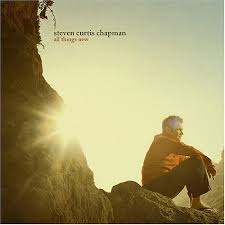
I then recalled that these very words had challenged me before. In Steven Curtis Chapman’s song “Much of You” he cleverly crafts Piper’s lyrical prose into a song that really could change your life – and ensure you don’t waste it! Have a listen above/read below and be encouraged!
Even if you can only “make much of Jesus” in what you think are small ways your life is not wasted. And what a privilege if your words (spoken, written, blogged or sung) help even one person to see Jesus for who He is. I love being part of a community of bloggers who do their best to make much of Jesus! Blessings.

MUCH OF YOU (Steven Curtis Chapman)all things new

How could I stand here and watch the sun rise
Follow the mountains where they touch the sky
Ponder the vastness and the depths of the sea
And think for a moment the point of it all was to make much of me
‘Cause I’m just a whisper and you are the thunder and

I want to make much of you Jesus
I want to make much of your love
I want to live today to give you the praise
That You alone are so worthy of
I want to make much of your mercy
I want to make much of your cross
I give you my life, Take it and let it be used
To make much of you

And how can I kneel here and think of the cross
The thorns and the whip and the nails and the spear
The infinite cost
To purchase my pardon and bear all my shame
To think I have anything worth boasting in except for your name
‘Cause I am a sinner and you are the Savior

Bridge:
This is your love, oh God
Not to make much of me
But to send your own son
So that we could make much of you
For all eternity

Written by Steven Curtis Chapman ©2004 Sparrow Song – CD: All things new

Behind the Song:
‘A lot of times as I’m writing an album I’ll read books, and certain books will come along and at the right time, will impress, affect and inspire me. One book I read was by John Piper called Don’t Waste Your Life, and by the time I finished reading it, I think I had eight or nine songs started and several that ended up on this album. I felt as I finished this book my understanding of just who God is and why I’m here, what the whole point and purpose of my life is, is ultimately to glorify God and to really make much of Him. I feel like He created us for this purpose. He’s the point, not me. This book helped put that in such great perspective for me – to get a new deeper understanding of that.’Steven Curtis Chapman

You may also like:
Growing for God’s Splendor                                                                   The Hurt and the Healer
christyMercyMe_-_The_Hurt_And_The_Healer


The Peace of Christ (2 Thessalonians 3:16)

Peace-With-God“Now may the Lord of peace himself give you his peace at all times and in every situation. The Lord be with you all.”
2 Thessalonians 3:16

There is much comfort from the promises of the Bible which tell us that if we are in Christ we have forgiveness, we have peace with God. (Romans 5:1, Romans 14:17, Philippians 4:7, John 14:27, Galatians 5:22, Colossians 3:15)
This next verse in the Three Sixteen series points us to Jesus, the Lord of peace, the Prince of Peace. If Peace were a country then Jesus is its royal head of State! And from Jesus this peace flows in every direction, at all times and in many different situations.

But why do we need this peace of Christ? Peace is something you only need when there is a time of war, stress, unrest, anxiety, a lack of peace. And such is our natural unpeaceful state apart from Christ.

The peace He brings works on 3 levels:
1. Peace with God.
When we bow to him as Lord we move from enmity with our Creator to a state of peace. Our sin, that the Holy one cannot look upon, has been dealt with in Christ. God’s wrath is removed. We are at peace with Him. This is the greatest treasure in the whole wide world: peace with God! In Christ it is as though a legal or political declaration has been stamped on us. A peace treaty has been signed for us by Christ. He has made peace for us by His blood shed at the Cross.

2. Peace in ourselves.
We need the peace of Christ not just for forgiveness but for each moment. We must choose to let the peace of Christ reign on the throne of our hearts, rather than our sinful desires. Even if we are in Christ we can still lack a sense of peace, due to the ‘wars’ that rage both around and within us in this fallen world. Sinful desires compete within us. But Jesus offers us peace for the moment, applicable to different times and places. Anxiety about health, the future, our children, a car accident, an exam….all can be met with the soothing balm of peace given by Christ. We can respond with a quiet confidence. He is our peace, and He gives us peace. He gives us purpose and wisdom to deal with our innermost conflicts. Sometimes just remembering the name of Christ is enough to bring peace to anxious hearts. He is an anchor for our souls, a mighty fortress, a refuge.

3. Peace with others.
Christian brothers and sisters still have their troubles and conflicts, despite their best intentions and the fact they are united in Christ. In this area the peace of Christ is also called on, to help us live what we are, to sort out our differences and make peace between us.

2 Corinthians 13:11 NLT
“Dear brothers and sisters, I close my letter with these last words: Be joyful. Grow to maturity. Encourage each other. Live in harmony and peace. Then the God of love and peace will be with you.”

So today whatever troubles are with you, look to the Lord of Peace, and He will give you rest.

The Basin and the Towel

“Truly I tell you,” Jesus replied, “no one who has left home or brothers or sisters or mother or father or children or fields for me and the gospel will fail to receive a hundred times as much in this present age: homes, brothers, sisters, mothers, children and fields—along with persecutions—and in the age to come eternal life.
Mark 10-:29-30

When we are saved into Christ we are saved into community, a community of believers. This is a great promise from Mark 10. Even if we lose many things in order to own the name of Christ we gain so much more. We gain family! We gain relationship. We gain brothers and sisters in Christ. (And yes, we gain persecutions, though that is not the topic for today so I’ll just leave it to the side). As we serve one another, we grow relationships, we grow bridges between us – between people who would naturally be enemies of each other. Christ’s love makes it possible to serve and love one another. Songwriter Michael Card beautifully sums up this “call to community”, demonstrated by Christ in his earthly ministry. The call is now to us as his followers, to grow community in our churches by taking up the basin and the towel. I hope you have the time to chew over the lyrics below and reflect on your own attitude towards serving and growing community. (I know mine needs work.) The “servant’s bow” is a fragile bridge (see the bridge section below). Blessings! (Read more on Christian community here)

The Basin and the Towel (Michael Card)

In an upstairs room, a parable is just about to come alive.
And while they bicker about who’s best,
with a painful glance, He’ll silently rise.
Their Savior Servant must show them how
through the will of the water
and the tenderness of the towel.

Chorus:
And the call is to community,
The impoverished power that sets the soul free.
In humility, to take the vow,
that day after day we must take up the basin and the towel.

In any ordinary place,
on any ordinary day,
the parable can live again
when one will kneel and one will yield.
Our Saviour Servant must show us how
through the will of the water
and the tenderness of the towel.

bridge:
And the space between ourselves sometimes
is more than the distance between the stars.
By the fragile bridge of the Servant’s bow
we take up the basin and the towel.

(chorus)

You can look up sheet music for this song at the link below:

http://store.michaelcard.com/thebasinandthetowel-sheetmusic.aspx

The power of a foolish Cross – and how to make the most of it

Cross“The message of the Cross is foolishness to those who are perishing, but to us who are being saved it is the power of God.” (1 Corinthians 1:18)

Making the Most of the Cross” (2011, Matthias media) is a book which gets right to the heart of Christianity, the Cross of Jesus Christ. It takes us on a tour of the riches God offers us at the Cross, and how to make the most of them, to grow our confidence in God. In less than 100 pages of fairly large print, author John Chapman examines two main topics: the death of Jesus and His resurrection.  Chapman writes in a simple yet engaging manner, with the clever wit of a seasoned preacher and evangelist.  He explains fully, yet clearly and in short chapters, who Jesus was and why he had to die. It is an excellent book for Christians to read, to revisit the basics of the Gospel and be challenged again by the grace of God. But it is also especially good for newcomers to the faith. It would make a great companion for home reading in conjunction with a course like ‘Christianity Explained’, ‘Christianity Explored’ or ‘Introducing God’ – or simply for extra reading for someone new to Jesus and the message of the Cross. Each chapter contains plenty of discussion from the big story of the bible to help people grasp God’s redemptive plan and how it is fulfilled in Jesus. There is a suggested short prayer at the end of each chapter, to pull together and apply what has been discussed.

For Chapman, Jesus’ death is “unique, unrepeatable and sufficient for all who turn to him” (p24). Chapman impresses on his readers that salvation is at the heart of what Jesus was about. Along the way he is not afraid to discuss God’s wrath (the reason we need salvation!) and to answer common objections, such as the belief that God is a vindictive child abuser (p26): “The Father did not force any punishment upon the Son; the Son himself chose to bear it on our behalf because of His love for us. That is anything but child abuse.” Jesus’ death turns away God’s anger, brings the defeat of Satan and justifies sinners. God is just, He punishes sin and love sinners. These are the clear concepts Chapman wants to reinforce.

I particularly enjoyed chapter 7 which explored the way ‘Jesus’ death is the unifying force in the Christian community’. He says we are “made acceptable to one another because of Christ. . . Understanding this truth is wonderfully liberating. We are free to be ourselves. There is no need to pretend. It doesn’t matter what you find out about my past, or what I might discover about yours. It is all deal with in the death of Jesus. That is the basis of acceptability. We are all sinners saved by grace.”
He then challenges us to apply this to how we treat others, to conduct radical surgery on our thinking, to accept and love others even (especially?) when it’s incovenient.

The second half of the book looks at the Resurrection across seven chapters. Of particular interest was his discussion of our ‘resurrection bodies’  This is a pretty difficult concept for people to grasp, but using texts from 1 Corinthians 15 and Revelation 21, Chapman makes it clear that we won’t be disembodied spirits floating around forever on clouds. He says Christ will take up our bodies “and transform them so they will be breathtaking! They will be immortal, imperishable, powerful, glorious and spiritual. They will be perfectly suited to the new creation. . . When I see the apostles relating to the risen Lord Jesus, I can see how it will be. I can see that the resurrection of the Lord Jesus means that there really is eternal life; there really is a new world in which we will live and relate to each other and to the Lord Jesus Christ” (p83-84).

13CHAPMANOne great thing about reading “Making the most of the Cross” is knowing that the author, John Chapman, can now see the reality of the things he has written about, the things he has long hoped for.  Last year, after 82 years, John Chapman went to be with the Lord.  We can take great encouragement from his faithful ministry – and his many books – of which this is most worthy of a read! Buy two and pass one on today. (Buy here)

Some of Chapman’s other books include:

  • Know and Tell the Gospel: a coherent and highly influential theological account not only of the gospel but of the involvement of every Christian in its spread
  • A Fresh Start: the most widely used gospel give-away book of the past 30 years
  • Setting Hearts on Fire: an inspiring and informative training resource for evangelistic preachers
  • A Sinner’s Guide to Holiness: a short guidebook on how the gospel calls sinners to a holy life as the fruit, not the means, of salvation
  • A Foot in Two Worlds: a simple guide to the eschatology of the gospel—that we belong to the next age but live out our salvation in this evil age
  • Making the Most of the Rest of Your Life: an evangelistic book for seniors on the meaning of eternal life
  • Making the Most of the Cross: a simple exposition of the key facets of the death and resurrection of Jesus
  • Making the Most of the Bible: a simple argument for the authority and sufficiency of Scripture as a necessary corollary of our faith in Jesus as Lord.