3/7: Affection (The Significance of Jesus’ Final Words on the Cross)

If you have just joined me for this series exploring Jesus’  final words on the Cross, please see also my previous two daily posts. This series combines key ideas from Arthur W. Pink’s “The Seven Sayings of the Saviour on the Cross” with my own observations and highlights.

Jesus’ first two phrases focus on forgiveness (for those who know not what they do) and then salvation (for the repentant thief on the cross, who would certainly share paradise with Jesus). We looked at Christ as our substitute, who dies in our place – who rescues repentant sinners to forgiveness and eternal life.

III. Words of Affection

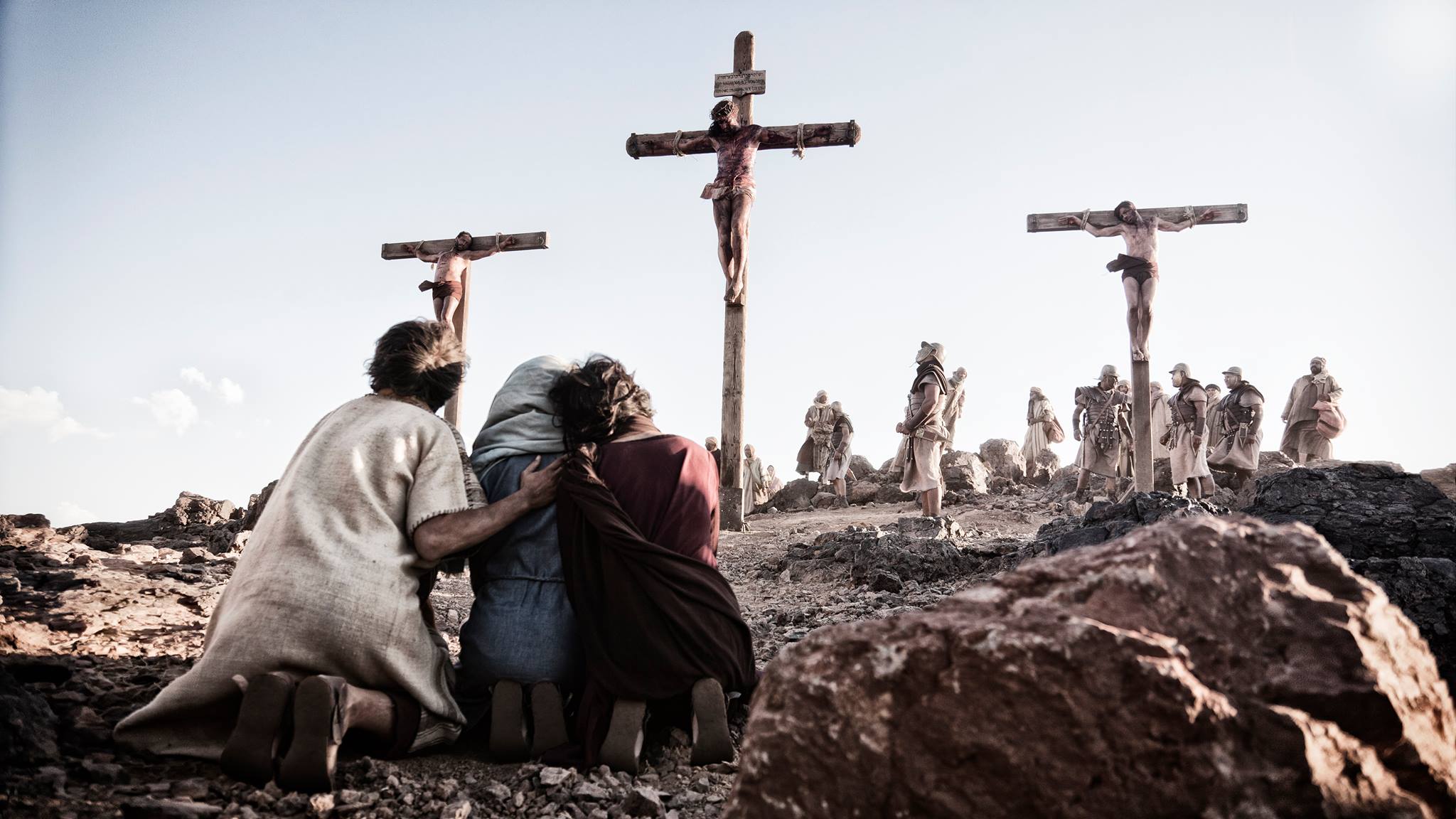
The third set of words Jesus utters is recorded in John 19:26-27. They are a compassionate request of two people who stand by the Cross, a request which ensures their relationship and care into the future. These two are Mary (his mother) and John, the disciple. In Christ’s most dire moment, his focus includes providing for the earthly needs of those he loves.

When Jesus saw his mother there, and the disciple whom he loved standing nearby, he said to her, ‘Woman, here is your son,’  and to the disciple, ‘Here is your mother.’  From that time on, this disciple took her into his home.”

This request (and the response noted) reveals the heart and faithfulness of all three involved. There is much to unpack, but I will focus on just a few points.

  1. Jesus honouring his parent
    Amidst the sufferings of the Cross, Christ thinks of the woman who loved him best, whom he loved. “This is one of the greatest wonders of His person – the blending of the most perfect human affection with His divine glory” (Pink, p.68). He knows Mary is a widow in need of provision and home. He sees her present and future needs and commits her to his most trustworthy and dear friend, John. Here, Jesus is the perfect man giving the perfect example of the care that we are all to show our parents, especially in their later years. The command to “Honour thy parents” is vividly portrayed in Christ’s last words of care for his mother. Pink sees this as a stark reminder of the fifth commandment, embedded in the sufferings of Christ. He says that to honour our parents with care, attention, provision and love is a “sacred duty” which Christ displays from the Cross.

  2. Mary needed a Saviour and stood by him
    The Mary of the Bible is not the revered “Mother of God” who is put on a pedestal. In fact, never once in the Bible is it recorded that Jesus called her ‘mother’. So to address her here as ‘woman’ is not a demeaning statement, but it is to remind us that she is a member of a fallen race, a woman in need of a Saviour. She has faith in her Son as Saviour and understands (probably) better than the disciples that he must die to deal with our sin debt. “Before the birth of Christ, she declared ‘My soul doth magnify the Lord, and my spirit hath rejoiced in my Saviour(Luke 1:46-47) . . . And now at the death of the Lord Jesus she is found at the Cross” (p.67). Pink also reminds us of the courage and strength Mary shows in this moment, to stand for the full day and watch her Son endure the agony of the cross – and breathe his last. “Who can measure those hours of suffering as the sword was slowly drawn through Mary’s soul? (See Luke 2:35) . . . She suffered in unbroken silence . . . in profound desolation of spirit” (p.57). Yet John was by her side.

  3. What better choice than John?
    Of all the disciples, the one who returned to the cross was John, the disciple ‘whom Jesus loved‘. Clearly there was a great level of affection and friendship between them, so it was natural that after the other disciples fled in fear, John was the one who would return. Perhaps he understood the Saviour almost as well as Mary, so it was a fitting choice to hand them into each other’s care. There was “none so well suited to take care of Mary, none whose company she would find so congenial, and . . . none whose fellowship John would more enjoy” (p.65). Pink further explains why leaving John in the care of Mary who knew him best was so wise. He points out “that a wondrous and honorous work was waiting for John. Years later the Lord Jesus was to reveal himself to this apostle in glorious apocalypse” (referencing the visions of Revelation) . . . How better then could he equip himself than being constantly with her” (Mary), who knew Jesus so intimately for 30 years?

Join me for 4/7 next time, the words of Christ in Matthew 27:46. Blessings!
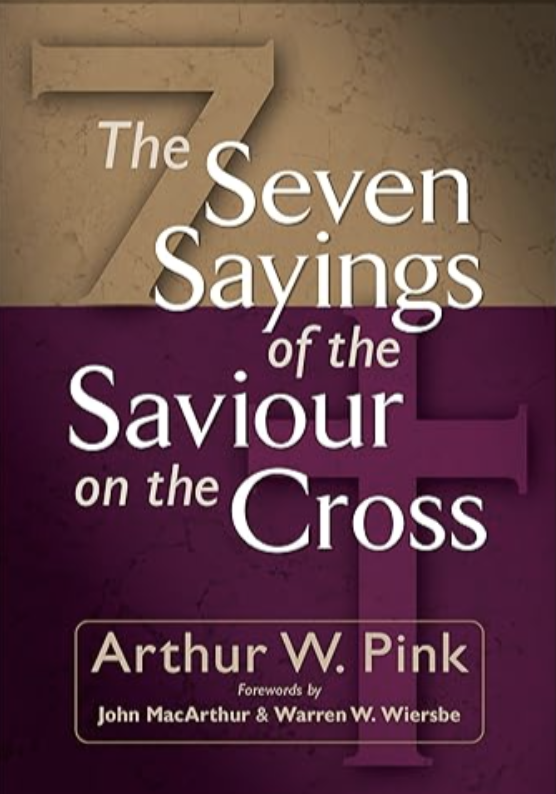
This series draws on the structure and ideas in “The Seven Sayings of the Saviour on the Cross” by Arthur W. Pink, 1984, Baker Book House. Direct quotations are indicated. AI was NOT used in the creation of this Blog post.


Day 9/12: The bells of Christmas

I Heard the Bells on Christmas Day
I heard the bells on Christmas day
Their old familiar carols play
And mild and sweet their songs repeat
Of peace on earth good will to men
And the bells are ringing (peace on earth)
Like a choir they’re singing (peace on earth)
In my heart I hear them (peace on earth)
Peace on earth, good will to men
And in despair I bowed my head
There is no peace on earth I said
For hate is strong and mocks the song
Of peace on earth, good will to men
But the bells are ringing (peace on earth)
Like a choir singing (peace on earth)
Does anybody hear them? (peace on earth)
Peace on earth, good will to men
Then rang the bells more loud and deep
God is not dead, nor does he sleep (peace on earth, peace on earth)
The wrong shall fail, the right prevail
With peace on earth, good will to men
Then ringing singing on its way
The world revolved from night to day
A voice, a chime, a chant sublime
Of peace on earth, good will to men
And the bells they’re ringing (peace on earth)
Like a choir they’re singing (peace on earth)
And with our hearts we’ll hear them (peace on earth)
Peace on earth, good will to men
Do you hear the bells they’re ringing? (peace on earth)
The life the angels singing (peace on earth)
Open up your heart and hear them (peace on earth)
Peace on earth, good will to men
Peace on earth, peace on earth
Peace on earth, Good will to men

Songwriters: John Mark Hall / Dale Oliver / Bernie Herms

I Heard the Bells on Christmas Day lyrics © Sony/ATV Music Publishing LLC, Warner/Chappell Music, Inc, Capitol Christian Music Group

Songwriters: John Mark Hall / Dale Oliver / Bernie Herms

I Heard the Bells on Christmas Day lyrics © Sony/ATV Music Publishing LLC, Warner/Chappell Music, Inc, Capitol Christian Music Group

Songwriters: John Mark Hall / Dale Oliver / Bernie Herms
I Heard the Bells on Christmas Day lyrics © Sony/ATV Music Publishing LLC, Warner/Chappell Music, Inc, Capitol Christian Music Group

Are you amazed that you belong to Christ?

BEAUTY-OF-THE-CHRIST“If you really see and feel your helplessness and God’s deliverance, you will be amazed that you are a Christian. You will be amazed that your heart inclines to the beauty of Christ. You will be amazed at every good resolve, and every impulse to praise, and every good deed.”

http://www.desiringgod.org/articles/six-practical-reasons-free-will-matters


Back to 3:16 – Your reason for hope (1 Peter)

sunrise for hope1 Peter 3:14-16

1 Peter 3:14-16 (NIV)
14 But even if you should suffer for what is right, you are blessed. “Do not fear their threats; do not be frightened.” 15 But in your hearts revere Christ as Lord. Always be prepared to give an answer to everyone who asks you to give the reason for the hope that you have. But do this with gentleness and respect, 16 keeping a clear conscience, so that those who speak maliciously against your good behavior in Christ may be ashamed of their slander.

Greetings fellow bloggers,

It is nearly three years since I stalled in my exploration of the Three Sixteens, but today is the day to jump back in. With only four more of these 3:16 verses to go, perhaps I will make it to Revelation by Christmas! (If you missed all the earlier posts, on Matthew 3:16 through to James 3:16, then I’d encourage you to go back to the start and check them out.)

It is truly astounding the way such rich theology is anchored at this point in nearly every New Testament book. Admittedly, the more memorable verse sometimes does fall at 3:15 or 3:17, but this one starts in 15 and carries on.

Firstly, some context. In Chapter 3, Peter has been writing about submission to Christ and to each other, about our witness, and suffering in doing good. Verse 14 says, if we are doing what is right and suffering for it it, we should not fear the threats and slander of mere humans. These should be of no consequence to us (which is much easier said than done, right?). In fact, Peter says we are blessed/rewarded for the suffering we must endure, as we seek to live a holy life. This right behaviour ‘in Christ‘ (done in his strength and for his sake) is further described in verse 16. Other people are going to speak maliciously against us, but Peter says that when we act in good conscience, the slanderers who criticise our good behaviour will ultimately be put to shame. That’s tough for them, but good for us. (However, you certainly wouldn’t want to be doing ‘good things’ with that motivation in your heart – to shame others!)

So, what is the heart of the matter in this 3:16?

As I said before, verse 16 begins in 15, and it starts with a big BUT: But in your hearts revere Christ as Lord. In the midst of suffering and slander, revere Christ. This is Peter’s solution.

The presence of the BUT tells me that our natural inclination is to do just the opposite. Our natural reaction is NOT to revere Christ as Lord. Instead, we hold the opinions and power of mere humans as being more important than that of Christ. We are naturally afraid of living in a way that brings suffering for following Christ (verse 14). That is the precisely the way the World lives – fearing one another, and the power that others’ have over us, yet constantly seeking the approval of those very people.

That’s why Peter has to say, “But . . “ do this instead! Honour Christ. Fear Christ.

Rather than fearing Man, we Christ-followers are to revere Christ as Lord, to recognise that He is the Lord of this universe and He holds ultimate power. Because He will Judge each of us, He is the right person to fear. And when we fear the right thing, everything else falls into place. When we fear the Lord, the suffering that brings blessing for us also brings hope and peace!

This is what Peter alludes to in verse 14, which is a reference to Isaiah 8:12-15:
12 “Do not call conspiracy all that this people calls conspiracy, and do not fear what they fear, nor be in dread. 13 But the Lord of hosts, him you shall honor as holy. Let him be your fear, and let him be your dread. 14 And he will become a sanctuary and a stone of offense and a rock of stumbling to both houses of Israel, a trap and a snare to the inhabitants of Jerusalem. 15 And many shall stumble on it. They shall fall and be broken; they shall be snared and taken.” (NLT)

In the fear of the Lord there is refuge and sanctuary. In fearing the Lord we find peace and confidence (we are not frightened), because we revere the true power! Isn’t that astounding?

Perhaps it is only when we patiently suffer for Christ that we find the strength and opportunity to express the HOPE that is in us.

What an encouraging bunch of verses we have here, which remind us that our strength comes from Christ! The meat in the sandwich (verse 15) is honouring or revering Christ, which brings us hope and a readiness to share the hope. This hope allows us to cope with the suffering wrapped around our hope, as we live for Christ in a world that despises him, and us.

Ultimately Peter’s message is this:
As you live for Christ, you will suffer – but you will be blessed and strengthened in your hope as you honour Christ as Lord of your life.

That sounds like a pretty significant message to take away.
Thanks for another great 3:16, Peter!

(Note: If you have ever wondered how we got chapters and verses in the bible, you can read about it here.)

The Christmas gift written on our hearts

christmas-heart“So the meaning of Christmas is not only that God replaces shadows with Reality, but also that he takes the reality and makes it real to his people. He writes it on our hearts. He does not lay his Christmas gift of salvation and transformation down for you to pick up in your own strength. He picks it up and puts in your heart and in your mind, and seals to you that you are a child of God.”

Making It Real for His People #SolidJoys http://solidjoys.desiringgod.org/en/devotionals/making-it-real-for-his-people

The blessings of explaining your faith

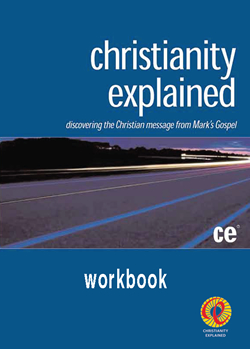
discipline-of-evangelism-sharing-the-good-newsI have been working through the course Christianity Explained* with a new friend over the past few months. She came to our church because she has seen the huge changes Jesus made in the life of her adult son, and wanted to know what it was all about!
Now I must say, it can be a scary thing when you realise you are the first person to explain to someone who Jesus is and what he has done. You think you will say the wrong thing or put them off, and damage their only hope of knowing peace with God!  But then you remember that God works through His Spirit and His Word (and us) despite our abilities or inabilities. You just have to keep resting on this knowledge and move forward. God worked in my own stubborn heart (and yours I trust) so that I would come to a point of repentance and faith. . . and He will keep drawing people to Himself in this way until Jesus returns! Softening hearts to the Gospel is something only God can do. Let’s trust Him to do it. And just keep explaining it as best we can. (Apart from all this, Christianity Explained is a really easy course to use, where the Bible and the course booklet explain everything simply and well. You can check out the summary of the course at the end of this post, with links for where to buy the resources.)

It is such a privilege to be explaining Christianity to someone – not just because of the earthly and eternal benefits involved for them – but also for growing your own faith. I have been challenged and refreshed in going carefully over the basics again, looking deeply into Mark’s Gospel and being confronted by Jesus up close! I see anew his character, his humour, love, compassion and his determination to fulfill his rescue mission for all people, even for those who despised him. He showed people such grace and such patience, dealing with crowds who really just wanted to see a show – crowds that made it difficult for those who had real faith in Him to get close. He lived for three years with a group of men who almost understood who he was, yet showed great lack of faith at times and were probably quite annoying! (a bit like me).

I have also been challenged by the way my friend has been so keen to share with her friends the things that she has been learning about Christian beliefs, particularly the difference between salvation by works and salvation by grace! She realises that GRACE is so totally opposite to the message the media portrays of do-gooder Christians who are trying to make it to heaven!

So can I encourage you if you are a Christian, to keep explaining the Gospel as much as you can . . . not just in the quick hit evangelism format (which is often very useful) but in the more relaxed teaching-style format of this course (or something similar). It gives people plenty of time to think and process what they are being told, and for God to challenge them personally through His Word. It also means you grow a close relationship with someone else who gets to know you, over time, and see how your belief makes a difference in your life.

Don’t miss out on sharing that moment of awe, when someone sees God’s amazing grace for the first time! It is such an encouragement to see God working, challenging someone in what they know and believe about the Son of God who died for them. Whether or not they become a Christian in the end – well that is up to God (and I pray that may be so) – the encouragement and growth gained along the way is certainly worth the journey.

* * *

*CchristianityExplained_coverhristianity Explained is a great short course which in 6 sessions takes you through the basics of what Christians believe and who they are. The course, developed by Michael Bennett, has been widely used in Australia and internationally for several decades. Each session takes about 45mins to an hour to complete, depending on how many questions your person wants to ask and discuss. It is based on the gospel of Mark, which course participants read at home in small segments for the duration of the course. It is a great tool for clearly and fully explaining the Gospel – one to one, or in a group setting. The 6 sessions focus on the meaning of:
1. Jesus, Son of God
2. The Cross
3. The Resurrection
4. Salvation by Grace
5. Repent
6. Believe

Check out the course here at The Good Book (US) or Koorong Books (Australia).