The gracious choice to carry others’ burdens

The other day I was involved in a discussion about how we can knowingly or unknowingly tempt others to sin. What is our responsibility in that situation? Interesting discussion!
One person shared a verse from James 1:14 –But each person is tempted when he is lured and enticed by his own desire.” In their view this verse excuses us from much responsibility. Now James does have a fair point here of course. People do have a choice, to give in to the temptation/entertain the thought, or not! But does this exempt me from responsibility?
If I know someone who has difficulty with being, frankly, a glutton, should I offer them a large serve of chips and a whole block of chocolate? If someone has a problem with anger, should I provoke them by luring them into a heated debate? If someone, by virtue of being male, is tempted by images of scantily dressed females should I make the effort to wear more modest, less figure hugging clothes? If someone is an avid gossiper should I mention some tasty little bit of information to them, out of turn?

In seeking godly wisdom for this dilemma, Paul reminded me in his letter to the Galatians (6:1-2) that: ” . . .  if someone is caught in a sin, you who are spiritual should restore him gently. But watch yourself, or you also may be tempted. Carry each other’s burdens, and in this way you will fulfill the law of Christ.(NIV)
Also in Philippians we read: “Do nothing out of selfish ambition or vain conceit, but in humility consider others better than yourselves. Each of you should look not only to your own interests, but also to the interests of others.” (James 2:3-4)

This is how the law of Christ is fulfilled! This is the law of love, lived out when we consider that each of us carry burdens, and the heaviest burden is sin. Paul commands us to carry each other’s burdens. “This is how we know what love is: Jesus Christ laid down his life for us. And we ought to lay down our lives for our brothers.(1 John 3:16). (See the post in the Three Sixteens.)

We carry each others burdens best when we remember that we are part of the Body of Christ. We are part of a larger unit of people who need each other, and should support each other, just as the different organs and limbs in our physical bodies do. We are a living system and we are to seek the good of others in that system. I don’t think God intends us to struggle alone with our sin, without help. Let’s look around and consider what burdens others are carrying, and help them by being mindful of their weakness. We can even pray for them! And if it means we have to change something about ourselves, our actions, then so be it. Just because we aren’t responsible for other people’s sinful actions doesn’t mean we shouldn’t consider them ‘better’ enough to help carry their burden. Let’s spur each other on to love and good deeds (not more sin).

Ps.
I now feel compelled to, most daringly, turn this whole thing around and back on to me.
Does this all mean that I, a sinner saved by grace, should be honest enough and vulnerable enough with others to let them know my struggles with sin? Am I willing to do that? If I don’t, aren’t I preventing others from fulfilling the law of Christ. What do you think?

You may also like

The waterfall, river and reservoir of God’s Grace                Unexpected Timing of Grace  
solid-joy-appkingscross


An Ode to Joy and the Power of Music

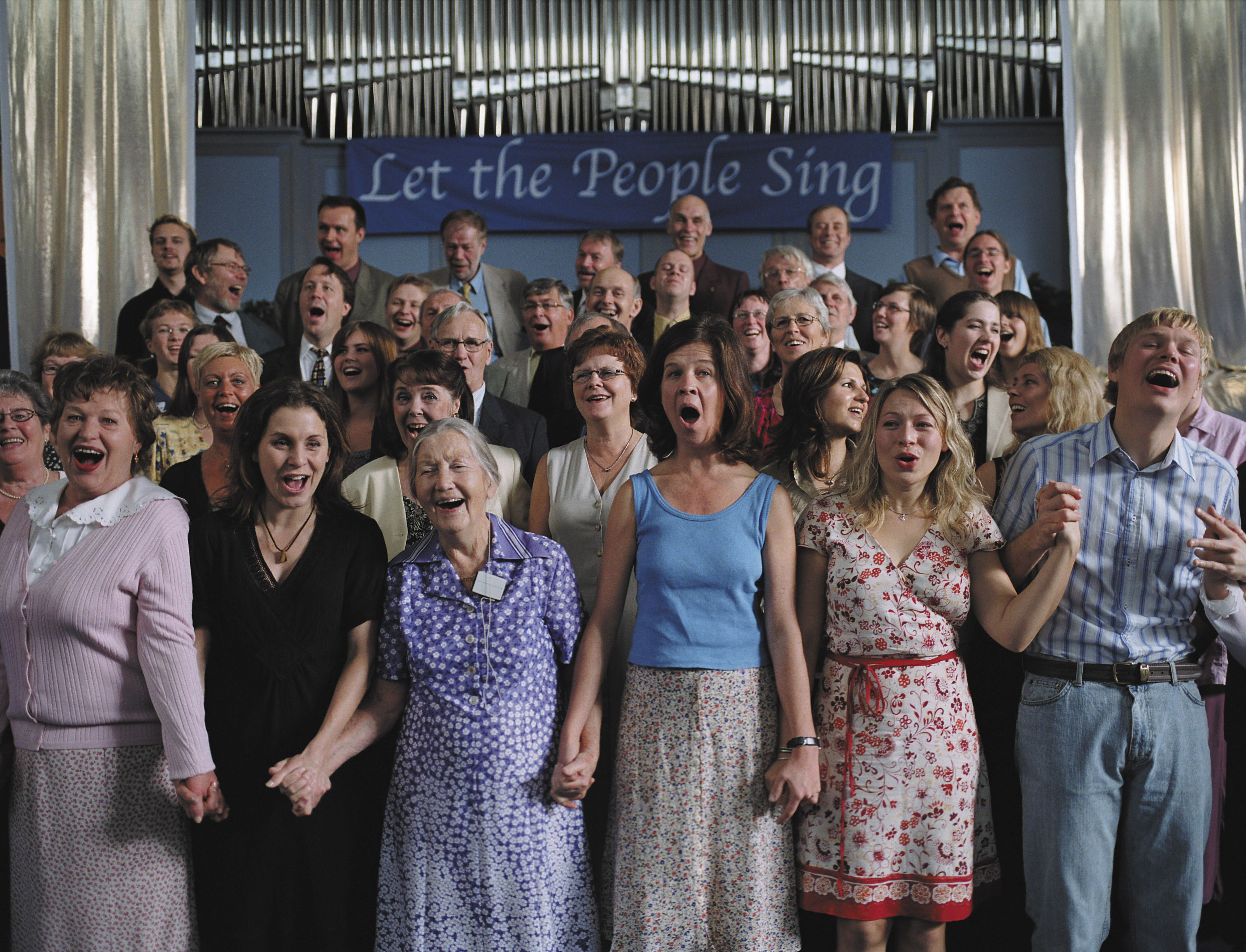
Love this “flashmob” event. It says so much about the way music touches people and brings such joy. The experience brings smiles, goosebumps and tears all wrapped up in the one package. Music is indeed a gracious gift from God!
(The little girl up the lamp post is my favourite.)

It’s all Yours!

Feeling desperately tired and somewhat overwhelmed by all the demands on my being, I found a refreshing perspective in a song by Steven Curtis Chapman the other day, “Yours”. Here is a little of the perspective he shared:

It’s all Yours, God
My life is Yours, my heart is Yours
My hands and my feet are Yours
Every song that I sing
It’s all Yours, all is Yours
All belongs to You
Our gifts are Yours, God
All our dreams are Yours, God
All our plans are Yours, God
The whole earth is Yours, God
Everything is Yours

For me this song brought a “Peter moment”. I was able to get my eyes off the waves and stresses of my situation, and look instead to the God who created and calms the waves.

Despite all the strivings of mankind,striving to appear competent, achieve worthwhile things, be responsible and get a slice of glory in this world, it really all belongs to God! We are a vapour. He is the only rightful recipient of praise. He made everything and everyone. He owns everything! All the glory goes to Him.

We are most satisfied in this life when we recognise that God is the one who deserves praise and glory. We are most satisfied when He gets the glory He deserves. Everything is yours, God! The pressures of our day to day living are relieved and we are refreshed when we grasp this reality.


IT’S ALL YOURS

I walk the streets of London
And notice in the faces passing by
Somthing that makes me stop and listen
My heart grows heavy with the cry
Where is the hope for London?
You whisper and my heart begins to soar
As I’m reminded that every street in London in Yours

I walk the dirt roads of Uganda
I see the scars that war has left behind
Hope like the sun is fading
They’re waiting for a cure no one can find
And I hear children’s voices singing
Of a God who heals and rescues and restores
And I’m reminded that every child in Africa is Yours

And its all Yours, God, Yours, God
Everything is Yours
From the stars in the sky to the depths of the ocean floor
And its all Yours, God, Yours, God
Everything is Yours
You’re the Maker and Keeper, Father and Ruler of everything
It’s all Yours

And I walk the sidewalks of Nashville
Like Singapore, Manila and Shanghai
I rush by the beggar’s hand and the wealthy man
And everywhere I look I realize
That just like the streets of London
For every man and woman, boy and girl
All of creation, This is our Father’s world

It’s all Yours, God
It’s all Yours, God
It’s all Yours, God
It’s all Yours, God
The glory is Yours, God
All the honor is Yours, God
The power is Yours, God
The glory is Yours, God
You’re the King of Kings
And Lord of Lords

It’s all Yours, God
My life is Yours, my heart is Yours
My hands and my feet are Yours
Every song that I sing
It’s all Yours, all is Yours
All belongs to You
Our gifts are Yours, God
All our dreams are Yours, God
All our plans are Yours, God
The whole earth is Yours, God
Everything is Yours

Steven Curtis Chapman (2007) Album: This Moment

Blessed with extravagant grace to bless others

Do you ever shake your head in bewilderment at God’s people in Old Testament days? Despite many blessings, God’s faithfulness and the repeated demonstration of His power and redeeming love, they refused to share the glory and knowledge of their merciful God with the peoples about them. Instead they chose to turn away from the true & living God to pursue the gods and lifestyle of the culture around them. How could they do this? (we ask!) I know I have thought this way in the past, but perhaps we need to examine ourselves here in 2012, as God’s blessed people.

Consider these words from David Platt: “God blesses His people with extravagant grace, so they might extend His extravagant glory to all peoples on the earth. This basic, fundamental truth permeates Scripture from beginning to end. . . (yet) we live in a church culture that has a dangerous tendency to disconnect the grace of God from the glory of God. Our hearts resonate with the idea of enjoying God’s grace. We bask in sermons, conferences and books that exalt a grace centering on us. And while the wonder of grace is worthy of our attention, if that grace is disconnected from its purpose, the sad result is a self-centred Christianity that bypasses the heart of God.”
(“Radical” by David Platt (2010), p69-70).

Ouch! Basking in conferences, sermons and books! (That’s me.)
So have we also been keeping God’s blessings to ourselves? In our modern (western) world we have freedoms and luxuries unimaginable in past eras. Consider our education, our health, our homes, our families, our incomes. Are we using them to make ourselves comfortable or to spread the extravagant glory and grace of God to all peoples? Do we use our technology, our maturity in Christ, our education and knowledge of the Bible to bless others? Our blessings are given that we might bless others – this was the essence of God’s promises to Abraham (that all the world would be blessed through Father Abraham’s great nation).
Let’s not be content to sit on our blessings – particularly the blessing of salvation.
Unlike those OT people, we have the gracious gift of the Holy Spirit at work in us, moulding and shaping us to be more like Christ and giving us the desire to serve Him. Pray that we would not be content with self-centred Christianity. . . let’s not keep the blessings to ourselves.

Jeremiah 31:33 –  “But this is the new covenant I will make with the people of Israel on that day,” says the Lord. “I will put my instructions deep within them, and I will write them on their hearts. I will be their God, and they will be my people. (NLT)

Pick up your instrument: food for the soul and brain

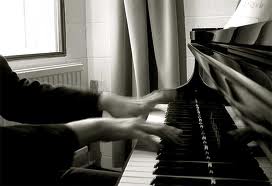
If you are someone who hasn’t recently picked up your guitar, saxophone, flute, recorder or piano (well you can’t really pick that one “up”) then might I point out something . . . you should!
Recently, while trying to enthuse my girls to pursue more consistent practice on their instruments, I was encouraged to read new research which supports what I always thought was true. While music is good for you, making music is even better!
According to a recent study* these are some of the benefits of playing a musical instrument regularly:
1.  People over the age of 65 experienced positive changes in brain function after 4 or 5 months of playing an instrument an hour a week.
2.  Playing the piano (particularly) teaches children to be more self-disciplined, attentive and better at planning.
3.  Playing an instrument makes you more perceptive in interpreting the emotions of others. Musicians are able to pick out exactly what others are feeling just by the tone of their voices.
4.  IQ can increase by seven points in both children and adults.
5.  It becomes easier to learn foreign languages, as your memory and language skills improve.
Hopefully the current trend in the use of musicians as a model for brain plasticity will continue . . . and extend to the field of neuropsychological rehabilitation“*.

Wow. If you played an instrument as a child then know that part of the reason you have intelligence, memory, language and empathy is down to that instrument, even if you hated it. Your parents certainly did something right!

And if you want to develop your brain in any of these areas, then it certainly is time to dust of your violin, blow the cobwebs from your trumpet, and get playing!  Music is such an amazing and at times under-rated gift from our gracious God. He made us with desire to praise Him in song, to “Praise him with the sounding of the trumpet,praise him with the harp and lyre, praise him with tambourine and dancing, praise him with the strings and flute, praise him with the clash of cymbals” (Psalm 150).
God wired our brains with the ability to learn to play, to sing, to write and read music, to create instruments, to create emotion through music, to lift the souls of ourselves and others, and grow our brain function by employing those “seven notes of grace”. Don’t miss out on the joy of this gracious gift!

(*The research is published online, Faculty of 1000 Biology Reports, by Lutz Jancke, a psychologist at the University of Zurich.)

You may also like:
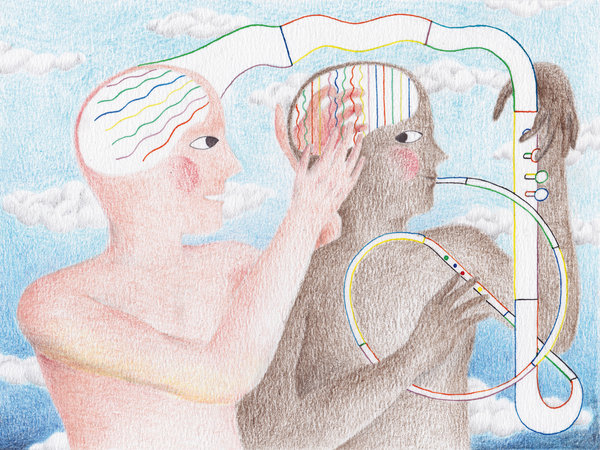
Why music makes our brain sing

Film review: “As it is in Heaven”

If you have ever sung in a church choir or run a church choir, and if you have no aversion to foreign films, then like me you might really enjoy the film “As it is in Heaven” (2004). Set in Sweden the film tells the story of a brilliant violinist, conductor and composer, Daniel Daréus, who is forced to “retire” from his musical career due to ill health. He returns to Norrland, his childhood home town, but no one remembers him and just as well! He was ostracised and bullied there as a child. Though initially alone and viewed with strange curiosity by the townsfolk, he is soon asked to take on the leadership of the local church choir. Predictably he takes their small group from mediocrity to brilliance, yet the journey is enthralling and in no wasy predictable! There is such a mixture of personalities and personal issues which bubble along, creating both tension and many hilarious moments. His vocal training methods produce great results and there are eventually more people in the choir than there are in church congregation, much to Pastor Stig’s disgust! Daniel’s morality is soon brought into question: “There’s sin in the congregation hall” one wary and reluctant chorister reports! The film is full of funny moments for viewers who are privvy to the dynamics of church congregations.
But even more than the humour I love the way the film reveals the impact and significance of music in our lives. It has such power to unite people and create harmony, both vocally and in our relationships. In the final, surprising scene Daniel is immersed in the beautiful unwritten harmony coming of around 1000 voices. Perhaps this is as it should be, as it IS in heaven!

“Then I heard every creature in heaven and on earth and under the earth and on the sea, and all that is in them, singing: “To him who sits on the throne and to the Lamb be praise and honor and glory and power, for ever and ever!” (Revelation 5:13)

What amazing grace God has given us in those 7 little notes (A to G) which can be employed in infinite combinations for such diversity of results!

You may also like:
Why music makes our brain sing                                                               Who has the X Factor?
brainsingcat vass


Blessings (through raindrops!)

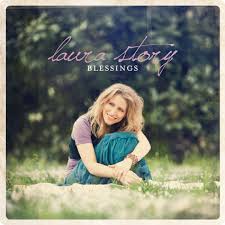
Blessings laura sThis is a song by Laura Story, author of the very popular song Indescribable, a song made famous by Chris Tomlin. (Apparently she wrote the song with the help of Tomlin’s bass player.)  I love the way she challenges us to remember that even circumstances we don’t consider “blessings” may actually be just that! My favourite line comes at the end of each chorus: “What if the trials of this life are Your mercies in disguise?” You can listen to the song by following the link at the end. Blessings!

“We pray for blessings, We pray for peace,
Comfort for family, protection while we sleep
We pray for healing, for prosperity,
We pray for Your mighty hand to ease our suffering
All the while, You hear each spoken need,
Yet love us way too much to give us lesser things
‘Cause what if Your blessings come through raindrops,
What if Your healing comes through tears,
What if a thousand sleepless nights are what it takes to know You’re near
What if trials of this life are Your mercies in disguise?

We pray for wisdom, Your voice to hear,
And we cry in anger when we cannot feel You near
We doubt Your goodness, we doubt Your love,
As if every promise from Your Word is not enough
All the while, You hear each desperate plea
And long that we’d have faith to believe
When friends betray us, When darkness seems to win
We know the pain reminds this heart
That this is not, this is not our home
‘Cause what if Your blessings come through raindrops
What if Your healing comes through tears and
What if a thousand sleepless nights are what it takes to know You’re near
What if my greatest disappointments
Or the aching(s) of this life
Is the revealing of a greater thirst this world can’t satisfy
And what if trials of this life,
The rain, the storms, the hardest nights
Are Your mercies in disguise.”


You may also like:
Lessons from the tissue box                                                                               How to Suffer Well
runny-noseSuffering Well book cover


To Glory in my Redeemer

my-redeemer-livesWhile some people may argue that a song can have more impact than a sermon (probably none of those people are preachers!) I would say that it is only the extent to which God’s Word is at work in either a song or sermon that people’s hearts and minds will be transformed!  This may sound rather complicated.  Let me explain what got me thinking about this.

On Good Friday morning we sang the words of a beautiful song together, “I will Glory in My Redeemer” (click on the title to see the lyrics).  As I was song leading that morning and trying to articulate something worthwhile in my introduction, the meaning of the title got me thinking. What does it mean to “glory in” my redeemer?  And how can I explain that in two easy sentences?  (Please pause here and have a go at it yourself!)

The song itself explains much about the saving work of our Redeemer: His blood has ransomed me, He has crushed the power of sin and death, He has bought my life, He crowns my life with lovingkindness, He waits for me at gates of gold!  But how are we to “glory in” this?  To say “I will glory in” something is not a very common expression these days. Looking up a dictionary I discovered that to “glory in” means to enjoy, to derive great pride, pleasure, amusement or satisfaction from something. What an amazing statement and challenge this song title holds! It prompts me to ask questions like: Am I glorying in my Redeemer?  Is He my only boast? Am I satisfied in Him alone (as the song says) and does He really “own my love”?

To glory in my Redeemer is an action, something we can choose to do; in fact it is a daily decision to be made! We will enjoy Jesus when we turn daily (hourly? moment by moment?) from the things of ourselves, our abilities and our possessions and status in this world as a source of our glory, and instead we give the glory to Him. Rather than boasting in myself, my house, my children, or my ability to be organised and control the myriad of circumstances and concerns of each day, I must choose to boast in Christ alone! He must receive the glory from my life and circumstances. My ultimate delight should be in contemplating the saving work of my redeemer and the treasure of my relationship with Him.

The impact of this song lies in the way it so closely echoes the challenge of God’s Word. From Paul to the Philippians ” …everything else is worthless when compared with the infinite value of knowing Christ Jesus my Lord. For his sake I have discarded everything else, counting it all as garbage, so that I could gain Christ and become one with him.”(Philippians 3:8-9 NLT). And it is through the power of the Holy Spirit, as we think on God’s word, that our minds can be transformed: Don’t copy the behavior and customs of this world, but let God transform you into a new person by changing the way you think. Then you will learn to know God’s will for you, which is good and pleasing and perfect. (Romans 12:2 NLT)

So may I encourage you to examine your own hearts in light of this challenge, and turn to Him who alone deserves to be treasured in this world, whose glory is fading away. May we “glory in” our Redeemer alone!

Lessons from the tissue box

runny-noseA friend who knows I’m sick at the moment has passed on a deep theological question, probably just to keep me busy and distracted from the headcold and sore throat. Here is the question: is God teaching us stuff in sickness always, or is sickness just bad stuff that happens as a result of being in a sin filled world, or is it both? Well I could just say ‘both ‘and be done with it! But let’s ponder for a little while.

It seems that we all have become convinced that the default setting of our body should be 100% health. We think that eternal youth is possible if we just eat well, sleep well, exercise and use the right face cream. From the moment we are born our bodies begin to visibly grow and blossom, but at the same time we are degrading! Skin cells die and flake off even on those cute little babies. And there are a thousand other processes of repair (and warfare) going on behind the scenes, minute by minute, day after day, year after year, that we are not even aware of.
Sciencemuseum.org.uk says: “A cell can die in many ways – through infection, poisoning, overheating or lack of oxygen. An uncontrolled death is messy: the cell swells up, and its contents leak away. This may damage surrounding cells. But there is another, tidier way to go – programmed self-destruction, or apoptosis. It seems that cells often choose to kill themselves. We now know that controlled cell death is crucial for normal human development and good health throughout life.”
Yet strangely it is only when this ‘cell death and repair’ process inconveniences us (or threatens our very existence) that we notice it and label it ‘sickness’. The pain in the throat, the headache and the runny nose all represent an unseen and amazing battle being fought in our bodies. They are simply doing what God designed them with the ability to do – fight off intruding viruses and other random elements. Now this is cheery isn’t it!

If sin had never entered the world through the first Adam, would people still have had to endure sickness? Probably? Their immortal bodies, that were NOT going to have to experience death, surely would have to repair themselves, and sometimes that fight to repair would mean ‘sickness’. (This is all supposition, please understand).  Sickness is perhaps not so abnormal afterall, but a mechanism designed by God to sustain and repair us. And as it is part of normal life (though perhaps made more difficult by fall of man and the groanings of the imperfect world around us) it is something we must learn to be content with and glorify God in.

Paul’s words in Philippians 4 perhaps apply here: 12 I know what it is to be in need, and I know what it is to have plenty. I have learned the secret of being content in any and every situation, whether well fed or hungry, whether living in plenty or in want. 13 I can do everything through Him who gives me strength. Being sick brings a greater need, for sleep, for relief from pain, for someone to go to the shops and buy more tissues and panadol. Yet this is just part of the normal daily challenge to look to God and see this world and ourselves from His gracious perspective. He IS teaching us everyday, but could we say especially in days of sickness we LEARN more? Perhaps we are more teachable when it is a greater challenge to be content in Him. We learn more because our self-reliance, on our own abilities and physical strength, is sorely challenged.
But in Christ, who gives us strength, we can be content even in sickness. It will be a battle, as we remind ourselves that we are in Him, and seek to rest on His strength, not ours.

Sickness also helps imprint in our hearts and minds this truth from Romans 8:28 (NLT)
“. . . God causes everything to work togetherfor the good of those who love God and are called according to His purpose for them”.

Sickness teaches us to trust Him more – and rest in Him.

You may also like:
How to suffer well
Suffering Well book cover

The Power of Thinking

thinkThis may sound like a really obvious thing to say, but when you tell others that you have been thinking about them, something good happens. If I were Oprah W, and had my own talk show, I may tell you that when someone thinks positive thoughts about someone else then it causes a cosmic set of ripples to flow out from you which can cross continents and oceans and contributes good karma to the universe . . or some such. But what I am actually proposing is much more practical and real. Let me explain.

While attempting to jog around the lake today (more of a jog/walk) the thought came to me that I should pray for my children, and specifically for their future spouses (if that is something that will be part of their future). I know many people who have made this a regular practice since their children were small, and I think we did it better many years ago; haven’t really discussed or prayed for them in this way for a while. So I did.

And the outcome? Well there weren’t 3 Christian Prince Charmings lined up at the door with application forms when I got home, but when I mentioned these thoughts and prayers to my eldest girl (15) I know by her response that she felt loved, knowing I cared about her future. No doubt this interaction, these shared thoughts, will lead to more careful thinking on her behalf as well. (Not that she needs to make a choice right now!)

Another example is a young mum who comes to our playgroup at church. She normally is difficult to engage in conversation, but by mentioning a simple thought to her, many new conversations have opened up about quite personal things. (You are probably wondering what ‘thought’ I shared with her? I simply shared that she really reminded me of the lead female character in the Hunger Games film. She checked her out and reported back to me the next week).

We all have so many thoughts about many different people throughout the course of a day. . . some of these are admittedly not always very edifying thoughts! But next time you are thinking, turns those ‘random’ thoughts to prayer, then see what happens if you share them with that very person (and let me know the outcome)!