Watch “COME ONE AND ALL” Christmas Clip

This is a lovely song with an interesting clip, recorded by Garage Hymnal.
It would make a lovely addition to any upcoming Christmas service.

COME ONE AND ALL

Come, oh come one and all
To Bethlehem’s stable, to Bethlehem’s stall
The star, it beams on this sight
The father in heaven sent us this glorious light.

More lovely than the angels
Than the stars, this holy child!
Lying here before us, sent here for us Jesus Christ!

Come, oh come one and all
The shepherds are kneeling, bowing before him in awe
Angels sing from above
Mary and Joseph smile at their baby with love

More lovely than the angels
Than the stars, this holy child!
Lying here before us, sent here for us Jesus Christ!

Music by Garage Hymnal, words by Alanna Rodgers with adaptations from Christoph Von Schmid’s German Folk Song, “Oh Come Little Children”
Animation by Taste Media http://www.tastemedia.com.au

The glorious gospel song

grassy sunYou may also enjoy:

Keep Your Ears tuned to the Gospel of Grace

10 Big Daily Reminders

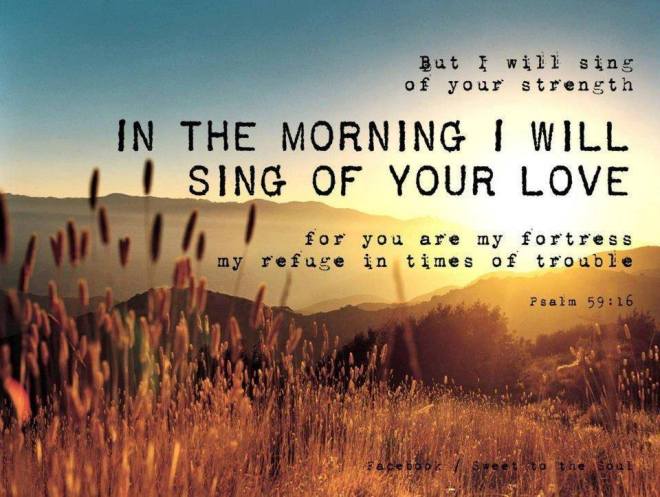
sing in morningThis is a post I found at Desiring God. It is a great summary of the things we are so quick to forget (overnight)! We now have several copies around the house. Enjoy.

Ten Big, Daily Reminders  by Matt Reagan | March 20, 2013

I wake up lost every morning. At least that’s what it feels like. Perhaps something similar is true of you. Somehow during the night I’ve forgotten the big realities about God and the universe and myself and the gospel. I desperately need to steady myself with biblical truth rather than stumbling forward to live from unbelief.
I tend to forget the big realities during the day as well. I regularly catch myself living on the idiotic assumption that I will constantly remember the things that really matter — and that I will act in line with them. I assume that the realm of the seen and touched will not overwhelm the realm of the unseen and hoped for.
But in reality, whether it’s night or day, I don’t stay awake to what’s truly important for very long. I am like that college kid who sits in church on Sunday morning trying to keep his eyes open after an irresponsibly late Saturday night. My eyelids droop by default, and my mind wanders from the glories of the Bible to superfluous, naturalistic daydreams (that may or may not end with an embarrassing full-body twitch that snaps me awake again). So I’ve learned over time to put structures in place that remind me of those unseen things, especially during my bleary-eyed, half-conscious mornings.  One effort is this list of ten truths. I hung it up next to our dining room rocking chair (my preferred spot for study and contemplation). It’s developed over the years as a list of the daily reminders I need most. Many of them overlap substantially, but a double reminder only reinforces the original purpose.

1) God exists. (Exodus 3:14; John 8:58)

It seems so simple, so basic, but I tend to wake up a naturalist, and a narcissistic one at that. I assume that all there is in the world is what is in front of my face. My bed, my wife, my kids, and most importantly myself. The simple yet ultimate existence of God immediately clears my lens, makes me small, and infuses meaning into every step. God exists — and that changes everything.

2) God loves you. (Romans 5:8; John 16:27; Jeremiah 32:40–41)

Another massive biblical reality, this immediately counters my hesitation to embrace God’s ultimate authority, reminding me that he has set his affections on this little speck of a person. He is far from indifferent toward me.

3) Jesus died for you, and the Father has now bound himself to give you only good things. (Romans 8:28; Romans 8:32)

This draws me quickly to the central reality of all history: the cross. It is an objective truth set in time and space, so it immediately draws my gaze away from my own capacity to garner acceptance from God through my efforts. Furthermore, the outworkings of the cross make clear that even the harshest trials will come to me as blessing, for my ultimate good, no matter how bad I feel at the time.

4) God sees you as perfect. (Hebrews 10:14; 2 Corinthians 5:21)

My self-absorption, anxiety, and self-pity know no bounds. They must be beaten into submission by the beauty of imputed righteousness. The question, “How am I doing?” is met head-on with the answer, “Perfect.” In that regard, every day is a good day.

5) That is because of Jesus’ perfection, not yours. You deserve hell. (Romans 3:10; 1 Timothy 1:15)

There are two main purposes here: first, to counterpunch when my flesh looks for a way to subtly claim credit for the perfection that is mine only in Jesus; second, to maintain a sense of trembling gratitude for my salvation. While I enjoy the glory of the gospel, there should always be an awestruck voice in the back of my mind that is whispering, “I shouldn’t be here.”

6) You will die. (James 4:14, Hebrews 9:27)

Nothing brings clarity to me like this simple and straightforward reminder. How quickly I assume my earthly immortality, and how often I need to think of myself as a terminal cancer patient.

7) You will live forever in the new heavens and new earth. (Romans 8:18, Hebrews 10:34)

I don’t want to be a clear-headed fearer of death, like some atheistic poet. I want to glory in the guarantee of indescribable bliss that is just around the corner. And I want to live like it’s real — because it is.

8) For now, you are an exile on the earth. (Hebrews 11:13–16)

This keeps me from feeling at home when I’m not at home (especially in my own home). It prepares me for not fitting in, for weird looks when I speak with conviction about Jesus, and for holding loosely to every bit of earthly life.

9) Nothing on earth is truly worth putting your hope in. (Jeremiah 2:13; Galatians 6:14)

This is a practical specification of #8. It is right for me to remember that I will inevitably be disappointed by every earthly pursuit or relationship or emotional experience. It runs me back to my true Home and the true Bridegroom.

10) You have no right to be unhappy. (Philippians 4:4; 1 Peter 1:8–9)

This is a summarizing application of all the previous reminders, but it merits its own slot. How quick I am to become “blah” when there is a treasure trove of happy reality at my disposal! I must beat this into my discontent little brain. I can be plenty unhappy, but I have no right to be.

These reminders flee from my mind like stray socks in an armful of laundry. Every time I pick one up, another falls. By the time I read #10, #1 is beckoning again. What a grace that #4 is still true!

You may also enjoy:

Song of the Morning (at A Needed Word)

Why wouldn’t we remember Christmas?                 Is Your Smart Phone making you dumb?
dec 25hands on wheel

The blessed and God-breathed Book (2 Timothy 3:16)

GodBreathed_slide1x_365_y_273This is one of the most breath-taking Three Sixteens, one which you may have already committed to memory.  2 Timothy 3:16-17 is that great statement of assurance concerning God’s Word, the Bible, the God-breathed book on which we build our faith.

“All Scripture is breathed out by God and profitable for teaching, for reproof, for correction, and for training in righteousness, that the man of God may be competent, equipped for every good work.” (ESV)

“All Scripture is inspired by God and is useful to teach us what is true and to make us realise what is wrong in our lives. It corrects us when we are wrong and teaches us to do what is right. God uses it to prepare and equip his people to do every good work.” (NLT)

I recently read through 2 Timothy with a friend, over several weeks and many great coffees! The whole letter is a call to persevere in the faith, despite persecutions and difficult people. These are (possibly) Paul’s parting and most important words. He wants Timothy to stick to the truth of the Scriptures, which he’d been taught from his earliest days. (For Timothy this would mean the Old Testament scriptures as well as the teachings of the apostles.) There are so many treasures in this 3:16 (and 17), but I’ll focus on just three points:

1. The Word is God-breathed:  Just as we speak with our actual breath, which forms and carries the sounds of our words, so it is with God’s breath. He has exhaled these words, he has breathed them into the minds and hearts of people who have faithfully written them down, carried along by the Holy Spirit who always does the Father’s will. How else could this extraordinary book, penned by so many authors across millennia, have such consistency and unity of message? This is His Word to us and he has ensured that his breath, his voice, will continue to be heard as we await the return of Christ, the Word of God.

I love what Peter Blowes says about the way the words of the omnipresent and eternal God apply across all time and space:
“. . . God had every reader of Holy Scripture in mind at the time of its ‘exhalation’. This means not only that God’s word is inspired and universally applicable, but also that, in it, God is speaking presently to every particular reader (or hearer) of his Word.” (2011, “Reading the Bible”, Matthias Minizine). 
This leads to my second point.

2. Reading the Word is the most profitable thing we can do.
More than the early morning coffee, jog, paper, news update, more than crossing things off our to do list, more than any amount of television viewing, study or social media, more than relaxing with the family, more than making money .  . . investing in the Word of God is THE most profitable thing we can do. The world shouts at us, calling for our attention, telling us that those ancient words are dead, irrelevant and useless. But as we immerse ourselves more and more in his Word we understand why reading it is the most profitable thing we can do. By reading we come to know our immortal, invisible, all wise, good and gracious God. The Spirit works in us and we grow in confidence of his power, his might and the reality of his work in our world and hearts. We grow in the certainty of our salvation won in Christ.

3. The Word is wonderfully sufficient, equipping us for every good work.
The Bible equips us not by containing enough lists of do’s and don’ts to train us how to do good in every situation (this is the world’s view of the “good book” – which shouldn’t be ours. Christ has fulfilled the law!) Instead, the Word of God equips us by making us more like Christ – who is entirely and always about the Father’s good work. The Word changes us from the inside out and drives our behaviour. This behaviour becomes good work, good fruit (like those good works prepared in advance for us, which Paul described in Ephesians 2:8-10).

John Piper explains well:
Bearing fruit in “every good work” (see Colossians 1:10 ) means that it comes out on the branches of your life naturally from something that has changed inside. And what has changed is that you are dead to the law as a set of lists to constrain from the outside, and are now united to Jesus Christ in a relationship of joyful trust so that when he speaks—even speaks some of that same law—it comes from within as the desire of your heart. . . .The Scripture, day after day, reveals to us the greatness and the beauty and the power and the wisdom and the mercy of all that God is for us in Christ so that by the power of the Spirit we find our joy in him, and the ways of sin become distasteful—indeed ugly and repugnant. Yes the Bible gives us many specifics as pointers how to live. But most deeply the way the Bible equips us for every good work is by changing what we find satisfaction in so that our obedience comes from within freely, not by coercion from without. It does this when we read it and meditate on it and memorize it and meditate over it every day.”
(John Piper from Desiring God)

You may also enjoy:
Sharing the rich, indwelling Word               Sharing the perspicuity of God’s gracious Word
bible-28

Another way music trains your brain

Musicians spot mistakes more quickly and more accurately than non-musicians

New research has shown that individuals who play an instrument are more capable at identifying errors and correcting mistakes, and that these benefits apply to amateur musicians as well as professionals.

The study, led by Dr Ines Jentzsch for the University of St Andrews, tested the cognitive abilities of musicians and non-musicians, with the research concluding that learning an instrument could “slow or even prevent”  the mental decline associated with aging.

The research, published in the journal Neuropsychologia, draws particular attention to the skills learnt in musical performance. When playing pieces to an audience or to themselves musicians must demonstrate heightened awareness of their actions: continually monitoring their playing through auditory feedback and rapidly adjusting their movements to anticipate possible mistakes.

The psychological and mental benefits of learning to play an instrument have been shown in previous studies, with research highlighting musicians’ improved reaction times and their increased capacity to “inhibit task irrelevant information” (aka, to stay focused).

“[The results] suggest that higher levels of musical training might result in more efficient information processing in general (indicated by faster overall speed across tasks without accuracy tradeoff), and confirms earlier reports indicating a positive link between mental speed and musical ability,” says Dr Jentzsch.

The research is notable in that unlike previous studies it focuses on amateur rather than professional musicians, showing that even “moderate levels of musical activity” were beneficial to cognitive performance.

The study also drew attention to the diminishing support for children to learn to play in schools, noting that “in times of economic hardship, funds for music education are often amongst the first to be cut.”

“This is particularly worrying given both anecdotal and limited research evidence suggesting that music can have strong positive effects on our physical as well as psychological functioning.”

http://www.independent.co.uk/news/science/musicians-spot-mistakes-quicker-and-more-accurately-than-nonmusicians-8849068.html

You may also like:

Why music makes our brains sing                                                      Pick up your instrument!
brainsingpiano

Is He really making a list, checking it twice?

santaYes, Christmas is still several days away (well, 15 Saturdays at least), but I was revising some posts on Christmas and Christmas songs which I had shared in the past, and found this post (borrowed from My Broom). It contains some really encouraging thoughts about how God sees us, in defiance of a popular song about Santa. You know the one, where he makes a list, checks it twice, and will certainly find out who is naughty or nice.
Some of us mistakenly slip into thinking about God this way – that he is keeping a list of whether we are doing good or bad, and is completely discouraged by our lack of faithfulness. But God has moved to us with pure grace in Christ! This post also serves a reminder for me in parenting: at Christmas time we have the opportunity to tell our children that our gifts (to them) are not based on merit (and won’t be taken back if they are naughty!). Rather, they are gifts of GRACE and love – just like the gift of new life in Christ.

IS GOD MAKING A LIST?
Having entered into the joy of salvation, many Christians spend the rest of their lives in a fearful and frantic state of trying to ensure they don’t lose it. They have tasted the Lord and found that He is indeed good, but their knowledge of the work of Christ is either incomplete or incorrect, and so they focus their efforts on staying in His favour ~ (not losing their salvation).
For those who have been taught that Christ bore your sins up to the moment you repented and then put the load of obligation to live righteously straight back on our shoulders, I would say this ~ ‘you don’t have to live a moment longer worrying if you are living your life well enough to keep God satisfied’.
It doesn’t matter how well you live your life ~ you will never be able to maintain your salvation by your good works, our salvation rests squarely on the work of Christ both for its inception and for its maintenance. We do not drift in and out of salvation according to whether we have keep our list short and repented of every sin we can think of. No, No, No, we have crossed over from death to life… to think otherwise would be to lift from us the curse of sin, only to place back on us the curse of fear.
The writer of Hebrews expands on this in chapter 4 and verse 10; he says; “For anyone who enters God’s rest also rests from his own works, just as God did from His”. Have you ever thought that Christ has also rested from His work on the cross? When Christ said; “it is finished” He meant the entire problem of sin was finished for those who fix their eyes on Christ and Him crucified.
The only thing that remains is for us to live in the assurance of our completed salvation by faith, Hebrews calls this ‘rest’, it is a completely new way of living, one of boldness and confidence, based entirely on Christ. Some will say that I am advocating a license to sin, hardly, I am advocating that we don’t have to sin any longer because Christ has given us righteousness… we are free to live from the sheer joy of knowing that God doesn’t keep a list.
I’ve tried to live the yo-yo life of pleasing God by watching every step I take, it’s exhausting, it’s crushing, it’s dis-empowering. Now I spend my day focused on Christ’s goodness and not my own, and if I trip up I don’t get stressed, I just rest in the fact that all my failings were crucified with Christ.”

You may also like:

Trying on the Shoes of a Christmas visitor                                       Grace has now appeared
2012-carols1advent

Thanks for the blog award!

notes 7I was recently nominated for the Liebster Award by one of my blog followers: http://savurbks.wordpress.com/ (Check out their About to understand their intriguing title!)  I am honored to accept as well as humbled to have been nominated. (The Liebster Award is an award designed to help bloggers enter the blogging community.)  I’ve just reached 10000 views on my blog this weekend and I’m really enjoying sharing with people all over the globe.

Here are the questions I was posed and my answers:liebster
1. If you could meet any author, whom would you like to meet?
Harper Lee, author of To Kill a Mockingbird
2. What is your favorite childhood book?

My Little Dinosaur – a Little Golden Book!
3. If you could watch a movie adaptation of any book, which book would you choose?
Markus Zusak’s THE MESSENGER. His other most famous book, THE BOOK THIEF, will be released as a film later this year.
4. What is your favorite genre of books?
Historical fiction – though I do read heaps of non-fiction books, in the realms of psychology and relationships.
5. What is the next book on your “must read” list?
Eric Metaxas’ biography on Bonhoeffer.
6. If you could visit any place in the world, where would you go?
The National parks in the USA and Canada would be awesome. But I live so far away! New Zealand might have to do.
7. Who is your role model?
As a Christian I obviously follow Jesus and want to have his ‘mind’ in my living, in my attitude to the things of this world, and to others. But there are plenty of wise older Christian women I attempt to emulate in their attitude to their husbands, children and living in general – probably not one particular person.
8. If you wrote a book, what would the title be?
“In Pitch Silence” (I’ve even described the basic plot to my daughter but just haven’t made a start!)
9. What book has inspired you through use of a Bible verse?
THINK by John Piper – which encourages us to think on God’s word and be changed: “Think over what I say, for the Lord will give you understanding in everything.” (2 Timothy 2:7) (You can find a good review here.)
10. Why or how did you start bogging?
Having a journalism degree and many years working as a high school English/History/Media teacher, I thought it would be fun to start writing and sharing some ideas with people out there – particularly on my two favourite topics, music and God’s grace. That is simply how sevennotesofgrace was born. (But it was tricky to devise the blog title I must say). It is fun to see your words ‘published’ and shared, so they can be an encouragement or challenge to others.

Though extremely hard to choose, I am limited to only ten blog nominees, so here are my choices:

A Journey of faith (http://daughterbydesign.wordpress.com/about/)
An Imperfect Life made perfect by grace (http://sheensteve.wordpress.com/about/)
Sermons and Soda Water (http://sermonsandsodawater.wordpress.com/about/)
Revelling in the Overflowing Grace of God (http://bickleyhouse.wordpress.com/about/)
Proverbs Way  (http://proverbsway.com/about-2/)
Chong’s Worship (http://www.chongsworship.com/about/)
Singing in Babylon (http://singinginbabylon.wordpress.com/about/)
Journey of Joy (http://greatjourneyofjoy.com/about/)
Eternitainment (http://eternitainment.com/about/)
One Passion One Devotion (http://onepassiononedevotion.wordpress.com/about/)

And I will also mention this favourite blog (though her blog is declared ‘award free’ – so I’m not really giving her an award :))
Lessons by Heart (http://lessonsbyheart.wordpress.com/about/)

Here are a few procedures to forward this Award on (if you so desire):
– Link back the blogger that tagged you
– Nominate ten others and answer the questions of the one who tagged you
– Ask ten questions for the bloggers you nominate
– Let your nominees know of their award
(Please let me know when you answer the questions as I would like to check back and read through your answers.)

And here are your questions, my dear nominated blogs!
1. What do you remember about your favourite teacher?
2. What was your favourite childhood book?
3. Which fictional book would you like to live in?
4. What is your favourite bible book – why?
5. What is your favourite Christian band/artist?
6. Where do you do your best thinking?
7. Where in the world would you most like to visit?
8. What is the next book on your to read list?
9. Why/how did you start blogging?
10. What is the most burning question you have – to ask God?

Again, thank-you to http://savurbks.wordpress.com/. Have fun and enjoy the Award!

What are hymns – do we still need them?

hymn booksHere is a series of quotes from some great thinkers on the topic (borrowed from Chong’s Worship). They look at defining a hymn, why we still need hymns and how to choose them well . . . which is probably the most important thing, since the language of some hymns simply does not translate for contemporary people. Remember too that the last good Christian hymn is still yet to be written (shortly before Christ’s return). . . and fortunately we are blessed with a great variety of singable and biblical Christian songs and hymns.

What’s a hymn?

“… a poem, designed for group singing, and written as a sequence of identical units called stanzas. Each stanza has the same line length, rhythms and rhyme scheme as its predecessor, so that the hymn can be sung, stanza by stanza, to the same tune.”

– Brian Wren, Praying Twice

Are they historically literary or musical texts?

Mike-Cosper

“Many of the great hymn writers weren’t musicians… they worked as theological poets, writing hymns in meters that were commonly used amongst the churches, relying on melodies that were written by others.” Mike Cosper

Do we still need them?

“I say without qualification, after the Sacred Scriptures, the next best companion for the soul is a good hymnal.

For the child of God, the Bible is the book of all books, to be reverenced, loved, pored over endlessly and feasted upon as living bread and manna for the soul. It is the first-best book, the only indispensable book. To ignore it or neglect it is to doom our minds to error and our hearts to starvation. After the Bible, the hymn book is next . . . containing the cream of the great Christian hymns left to us by the ages…”

 – AW Tozer, We Travel An Appointed Way

Why?

“A great hymn embodies the purest concentrated thoughts of some lofty saint who may have long ago gone from the earth and left little or nothing behind him except that hymn.

To read or sing a true hymn is to join in the act of worship with a great and gifted soul in his moments of intimate devotion.

It is to hear a lover of Christ explaining to his Saviour why he loves Him; it is to listen in without embarrassment on the softest whisperings of undying love between the bride and the heavenly Bridegroom.” – AW Tozer, We Travel An Appointed Way

But even today?

“Hymns are great art! The arts, stories, poetry, music all combine to sneak into the heart by the backdoor – something increasingly important for our ministry to the coming generations” – Kevin Twit, Why We Still Need Hymns in a Post-modern World

“How will you reach this post-modern generation – a generation that cannot conceive of objective truth, cannot follow your linear arguments, cannot tolerate anything (including evangelism) that smacks of religious intolerance?”” – Kevin Ford, Jesus for a New Generation

So how do we choose and sing good hymns?

James Montgomery

“[Good hymns are those] which, once heard, are remembered without effort, remembered involuntarily, yet remembered with renewed and increasing delight at every revival.” – James Montgomery, The Christian Psalmist

“The best results happen when theologically deep and emotionally rich texts are wedded to music that is aesthetically fitting and culturally resonant, that connects at every level.”Ron Rienstra

“We will not hide them from their children, but tell to the coming generation the glorious deeds of the Lord, and his might, and the wonders that he has done.” Psalm 78:4

Quotable: what’s a hymn and why we still need them

You may also like:

When should we sing that song?                         New songs say God is doing something now
piano-stairs3music_is_nature__silhouette_by_sammy3773-1


Who has the X Factor?

cat vassOkay, I’m going to admit that I have been totally drawn into viewing the television talent show X Factor. The last time such a thing happened was a decade ago, with the very first series of Australian Idol (2003) won by Guy Sebastian. While I am thoroughly aggravated by the hype, drama, ad breaks and soapie-style formatting, I do simply enjoy hearing the people sing! (Especially Georgie, but he was eliminated tonight in the cut for the final 12! Can you believe it? I think he didn’t have the pop star physique they were looking for. Check out the video at the end – I assure you it will bring a smile to your dial, as they say!)

Yet each voice is like a fingerprint, a unique sound that each person owns and uses to bring new life to old melodies. Each person has been on a unique journey to arrive at a place where they feel comfortable and confident with their voices. I find this most intriguing. Though some of them try their best to sound like pop stars who already own fame, their unique vocal colour shines through.

And this leads me to contemplate the incredible gift of singing voices that God has given. Such a divine gift from the Creator, a gift greatly admired and applauded even by those who will not give credit to the Maker of the voice. And who can beat true emotion conveyed through sung lyrics? A pleasant, dynamic voice can pack a punch unmatched by any spoken rhetoric.

God has designed us with singing voices for many reasons, but perhaps above all, that we would praise Him!
Oh that we could inspire our congregations to sing to God (and one another) with the conviction and energy of these X Factor hopefuls. Though these singers gather together to sing for their own fame (and supper), we gather together as Christ’s Body to praise Him. As we share the true Word of God together in song, surely we should be displaying equal or greater effort? We sing for the most famous One, the author of Life, the Saviour of the world, to declare His glory.  When we remember this purpose it can change our self-consciousness, often off-key, efforts into something mutually edifying. Praising God is so good for us. And so is singing!
Don’t you think?

And here’s Georgie (the full audition):

You may also like these posts:

10 Principles for Church Singing                         The wonderful mystery of Harmony singing
praise him pic cracking_the_harmony_2

The waterfall, river and reservoir of God’s grace

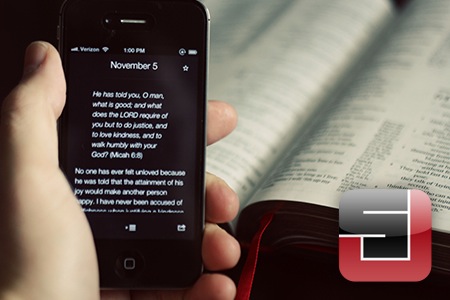
solid-joy-appI have been really enjoying a smart phone app called “Solid Joys” which comes from the pen of John Piper. Each daily devotion takes about a minute to read, and a few more minutes to contemplate. (You can look it up here if you would like to read online, or check your phone’s app store.) This one is on the theme of grace and how it relates to our past, present and future. Grace is not just about God doing good to us, but also in us. I hope you will find it as encouraging as I did.

The Different Tenses of Grace

We always pray for you, that our God may make you worthy of his calling and may fulfill every resolve for good and every work of faith by his power, so that the name of our Lord Jesus may be glorified in you, and you in him, according to the grace of our God and the Lord Jesus Christ. (2 Thessalonians 1:11–12)

Grace is not only God’s disposition to do good for us when we don’t deserve it — undeserved favor. It is also a power from God that acts in our lives and makes good things happen in us and for us.

Paul said that we fulfill our resolves for good “by his power” (verse 11). And then he adds at the end of verse 12, “according to the grace of our God and the Lord Jesus Christ.” The power that actually works in our lives to make Christ-exalting obedience possible is an extension of the grace of God.

You can see this also in 1 Corinthians 15:10: By the grace of God I am what I am, and his grace toward me was not in vain. On the contrary, I worked harder than any of them, though it was not I, but the grace of God that is with me.

So grace is an active, present, transformative, obedience-enabling power.

Therefore this grace which moves in power from God to you at a point in time is both past and future. It has already done something for you or in you and therefore is past. And it is about to do something in you and for you, and so it is future — both five seconds away and five million years away.

God’s grace is ever cascading over the waterfall of the present from the inexhaustible river of grace coming to us from the future into the ever-increasing reservoir of grace in the past. In the next five minutes, you will receive sustaining grace flowing to you from the future, and you will accumulate another five minutes’ worth of grace in the reservoir of the past.

“Living by Faith in Future Grace”

You may also like these posts:

More Great Grace Songs                                                   The Unexpected timing of God’s grace
advent                               kingscross