Faith in Jesus’ powerful name (Acts 3:16)

Here in Acts we continue our journey through the “Three Sixteens” – Peter and John have just gone up to the temple to pray. Peter commands a beggar, lame from birth, to get up and “in the name of Jesus Christ of Nazareth, walk.” Literally Peter means a continuous action ‘be walking‘. He grabs him by the right hand to raise him up. “The power was Christ’s but the hand was Peter’s” (John Stott 1990). This healed beggar then famously goes “walking and leaping and praising God!” He becomes the living embodiment of the Messianic age, predicted in Isaiah 35:6, Then will the lame leap like a deer.

The result of all this is another hugely important 3:16 verse:
“By faith in the name of Jesus, this man whom you see and know was made strong. It is Jesus’ name and the faith that comes through him that has completely healed him, as you can all see.(Acts 3:16)

Peter explains to those in the temple courts that this healing reveals Jesus is the Christ, the Messiah. He is the promised suffering Servant who brings healing to all the nations. Peter’s own “power or godliness” did not heal the man. It was the power of the risen Lord Jesus. Peter tells the Jews that though they acted in ignorance and killed the “author of life“, this is howGod fulfilled what he had foretold through all the prophets, saying that his Christ would suffer (verse 18).

This miracle, performed “in the name of Jesus”, brings physical healing and a great testimony. Peter wants them to repent and receive the promised Messiah who can bring them healing, promised healing that is so much more than physical.
“I will give you a new heart and put a new spirit in you; I will remove from you your heart of stone and give you a heart of flesh. And I will put my Spirit in you and move you to follow my decrees and be careful to keep my laws.” (Ezekiel 36:26-27)
“I will put my law in their minds and write it on their hearts. I will be their God, and they will be my people.” (Jeremiah 31:33)

Peter has received the Spirit of the risen Christ, and in Jesus’ name alone can Peter heal.  In Jesus’ name we can be healed from our sinful separation from God. He has offered to give us a new heart, a heart transplant. Our sick, dead, un-beating, stony hearts can be replaced. This is the healing we all need to receive – in Jesus’ powerful name.

Finally, here is the link to Chris Tomlin ‘s take on “The Name of Jesus” which he describes as “a saving place to run, a hope unshakeable . . . there is power in Your name, in the name of Jesus there is life and healing, chains are broken in Your name”.

2010 worshiptogether.com Songs / sixsteps Music 

“My Hope” in God’s grace

same loveFor many years I have been a church music junkie (still am). I spend lots of time seeking out great new songs to inspire the local church. Paul Baloche is one writer who usually delivers great songs about great bible truths and the great love of our Saviour.

This one is a fairly recently release, the song “My Hope”. We have taught it at our church; actually it became a sort of theme song to a sermon series on Deuteronomy. The song speaks of the guidance and the faithfulness of God, how through every test His GRACE is with us. Amen to that. Our God is not fickle or changing. That’s why we can hold on to Him. I’m really looking forward to teaching about 600 women this new song at a Women’s conference (called GROW) in Brisbane early next month. I hope you enjoy the song too.

“My Hope” from the album The Same Love, Paul Baloche 2012
Nothing will change if all the plans I make go wrong
Your love stays the same
Your light will guide me through it all
I’m hanging on, I’m leaning in to You

Nothing can reach the end of all Your faithfulness
Your grace is with me through every shadow every test
I’m hanging on, I’m leaning in to You

I don’t know where You’ll take me
But I know You’re always good

My hope is built on nothing less
Than Your great love, Your righteousness
I will not walk another way
I trust Your heart, I trust Your Name
I’m holding on, I’m holding on to You

You are my Rock when storms are raging all around
You shelter me God
I’m safe with You on solid ground
I’m hanging on, I’m leaning in to You

I don’t know where You’ll take me
But I know You’re always good

My hope is built on nothing less than Your great love, Your righteousness,
I will not walk another way, I trust Your heart, I trust Your Name
I’m holding on, I’m holding on to You

CCLI Song # 5882177  Alyssa Mellinger | Ed Kerr | Paul Baloche | Sheila Rabe
© 2010 kerrtunes Integrity Worship Music (Admin. by Crossroad Distributors Pty. Ltd.)

You may also like:
I will boast in the Lord my God                                                                More Great grace songs
Image created by Sarah Danaher with a Canon EOS 5D MkIIadvent


Pick up your instrument: food for the soul and brain

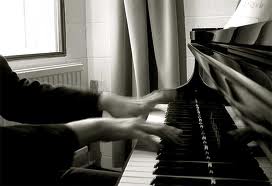
If you are someone who hasn’t recently picked up your guitar, saxophone, flute, recorder or piano (well you can’t really pick that one “up”) then might I point out something . . . you should!
Recently, while trying to enthuse my girls to pursue more consistent practice on their instruments, I was encouraged to read new research which supports what I always thought was true. While music is good for you, making music is even better!
According to a recent study* these are some of the benefits of playing a musical instrument regularly:
1.  People over the age of 65 experienced positive changes in brain function after 4 or 5 months of playing an instrument an hour a week.
2.  Playing the piano (particularly) teaches children to be more self-disciplined, attentive and better at planning.
3.  Playing an instrument makes you more perceptive in interpreting the emotions of others. Musicians are able to pick out exactly what others are feeling just by the tone of their voices.
4.  IQ can increase by seven points in both children and adults.
5.  It becomes easier to learn foreign languages, as your memory and language skills improve.
Hopefully the current trend in the use of musicians as a model for brain plasticity will continue . . . and extend to the field of neuropsychological rehabilitation“*.

Wow. If you played an instrument as a child then know that part of the reason you have intelligence, memory, language and empathy is down to that instrument, even if you hated it. Your parents certainly did something right!

And if you want to develop your brain in any of these areas, then it certainly is time to dust of your violin, blow the cobwebs from your trumpet, and get playing!  Music is such an amazing and at times under-rated gift from our gracious God. He made us with desire to praise Him in song, to “Praise him with the sounding of the trumpet,praise him with the harp and lyre, praise him with tambourine and dancing, praise him with the strings and flute, praise him with the clash of cymbals” (Psalm 150).
God wired our brains with the ability to learn to play, to sing, to write and read music, to create instruments, to create emotion through music, to lift the souls of ourselves and others, and grow our brain function by employing those “seven notes of grace”. Don’t miss out on the joy of this gracious gift!

(*The research is published online, Faculty of 1000 Biology Reports, by Lutz Jancke, a psychologist at the University of Zurich.)

You may also like:
Why music makes our brain sing

This is How we Know (John 3:16)

John 3 16If you have only recently joined me for the Three Sixteens, you should know that this series explores my observation that nearly all New Testament books have some “lightbulb” moment, a standout verse, event or promise, landing at the point of chapter 3 verse 16. (And no one knows why!) The 3:16 of John’s Gospel is no doubt the most famous of all. It has been printed on shirts, cards, keyrings and stickers and taught in Sunday School songs til it has become the most famous bible verse of all time (even with non-Christians). And fair enough. This verse reveals God’s great love to us in Christ, his great sacrifice of sending his perfect son to be scorned, suffer and die, to satisfy the law and save us as his own. This eternal life cannot be earned, it is free and available to all who will believe.

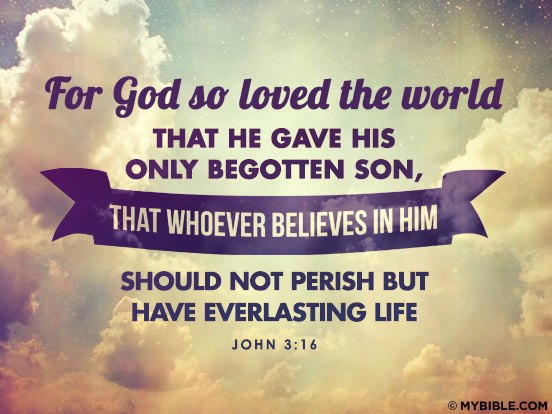
John 3:16 “For God so loved the world that he gave his one and only Son, that whoever believes in him shall not perish but have eternal life.”

Since I really don’t need to convince you that this is a significant summary of God’s love and His redemptive purposes in Christ, I won’t. Instead I will share a song where another clever person (yes, being cheeky here) noticed the 3:16 connection. Matt Redman has connected John 3:16 with 1 John 3:16, and put them together in a song called “This is How we Know” (from the album We Shall not be Shaken, 2009).

1 John 3:16 “This is how we know what love is: Jesus Christ laid down his life for us. And we ought to lay down our lives for our brothers.”

Redman takes us from God’s great love, demonstrated in Christ, to our response: love God and love others! We recently taught this song to our evening congregation, to match with the sermon series in 1 John. It’s not the easiest song for a congregation to learn, but it is worth the few weeks of revision for the benefit of singing these glorious truths together. You can find the lyrics below.

THIS IS HOW WE KNOW

This is how we know, this is how we know what love is
Just one look at Your cross
And this is where we see, this is where we see how love works
For You surrendered Your all
And this is how we know that You have loved us first
And this is where we chose to love You in return

For You so loved the world that You gave Your only Son
Love amazing so divine, we will love You in return
For this life that You give, for this death that You have died
Love amazing so divine, We will love You in reply, Lord

And our love will be loud, Our love will be strong
Our love should be hands and feet that serve You in this world
So let it stay true and let it endure
That You will be glorified worshipped and adored

Authors Beth Redman  Matt Redman Copyright 2009 Thankyou Music

You are our Song from Age to Age

“. . . Though tears now veil our eyes
Your steadfast love, our perfect hope
Our eyes are fixed on grace
We have no doubt You’ll lead us home
To finally see Your face”

These words are found in verse 3 of a new song by Sovereign Grace music, “Our Song from Age to Age”. I first heard it last Thursday night in Brisbane at an event hosted by Qld Theological College, where Don Carson shared an amazing vision of the “Future of Christianity” (from Revelation 21-22) with around 1500 people.

For me this song highlights GRACE, the thing we fix our eyes on as Christians, the GRACE by which we are saved. (See Ephesians 2:8-10). This is the only thing worth singing about and has been since . . . forever!

The first grace-filled song recorded in the Bible (though most probably not the first song uttered on this topic!) comes from Moses and Miriam in Exodus 15. Here are a few choice lines:

“I will sing to the Lord, for he has triumphed gloriously; he has hurled both horse and rider into the sea.
The Lord is my strength and my song; he has given me victory. . .
Who is like you among the gods, O Lord—  glorious in holiness, awesome in splendor, performing great wonders?
You raised your right hand, and the earth swallowed our enemies.
With your unfailing love you lead the people you have redeemed.
In your might, you guide them to your sacred home.”

This great rescue is pure grace. Yet so is music! So is praising God! It is a healing balm for the soul.
God has created us with the desire to praise Him and strangely, we feel most satisfied in ourselves when we are doing just that. Though sin deceives us into thinking we will feel our best when proudly singing our own praises, that will make us feel worse. Really, how long could we praise ourselves before we ran into something we would rather not sing about?
We must praise Him, not just with our mouths but with all our heart, our attitudes, our actions, our thoughts. Even if we could praise Him fully or perfectly, there would still be more to praise Him for, with the grace of each new day and into eternity! As creative image bearers of our Father, we should never run out of fresh ways to “declare the praises of him who called you out of darkness into his wonderful light. Once you were not a people, but now you are the people of God; once you had not received mercy, but now you have received mercy.” (1 Peter 2:9-10)
If you have found great grace in praising God, whether by yourself, or when gathered with his people, I would love to hear your comments.

Here is the link to listen to the song “Our Song from Age to Age” written by Joel Sczebel 2012.

And if you are someone who enjoys discovering great praise and worship songs for today’s church, then spend a bit of time exploring the Sovereign Grace site:  www.sovereigngracemusic.org . They graciously allow you to download their lyrics and sheet music for free! (Click on the STORE tab). These are inspiring and singable songs, full of bible/gospel truth. Enjoy!

Oh and if you want to know more about Don Carson, I’m sure you can figure out how to google him. Also check out a great website of his resources: thegospelcoalition.org

How to suffer well

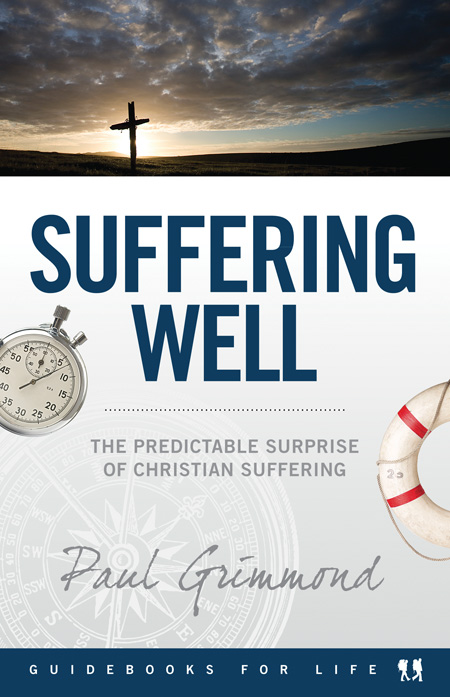
BOOK REVIEW: Suffering Well: The predictable surprise of Christian Suffering by Paul Grimmond (2011), Matthias Media.

It was John Wesley who famously said of Christians in his era “our people die well”.  Presumably they died strong in the faith, with an understanding that this life is not all there is, or all that matters, and with hope in the glorious future that awaits in Christ beyond the grave.

Could the same be said of Christians in the 21st century? How do we cope with suffering in general, let alone death? Do we suffer and die ‘well’?

In the first chapter of his challenging book ‘Suffering Well’ author Paul Grimmond states his case: when it comes to suffering we are prisoners of our age who have “lost touch with biblical truth because of the constant hum of worldly thinking that swirls around in our heads” (p.18). As a result we don’t know how to view suffering, to suffer well, or how to encourage one another in suffering for Christ.

I read this book during a month of suffering; it was not the sufferings of physical attack or public persecution, simply that the flu had descended, making an ordeal of every simple daily task. As I suffered and coughed, Grimmond’s book helped resolve some of the dilemmas about suffering which I had wrestled with before. Here are just two main points (of many great ones which the book raises) which will stay with me:

1. Don’t come to the Bible with the world’s view of suffering – start with Bible’s view and look at suffering in our world through those eyes. In the world’s view suffering, or at least the avoidance of suffering, is the new moral standard. According to Grimmond it is the only determinant of what is right: a disabled child will suffer, and so will the parents, so it is apparently “right” to terminate their existence before birth; the same goes for an injured dog and an old person with terminal cancer. Suffering is seen as the only evil, which must be avoided at all costs. “Suffering is a major part of the argument against God’s existence. The very presence of suffering . . . is a key piece of evidence. If we really have an all-good and all-powerful God then how can there possibly be suffering?” (p.25) More than that our world believes religion is one great cause of human suffering. “In our brave new world, suffering means that God is immoral and Christians are immoral” (p.28) since we believe in a God who would allow suffering to exist!

If we come to the Bible with this worldly view in our heads, no wonder we don’t know what to do with suffering, or how to speak up for the God who allows it. Grimmond takes us back to the Bible to see that God is in control, that God is God and I am not! He is the potter, we are His clay. God is in complete control over creation, which means that “the suffering of God’s creation occurs by his hands . . .Scripture never suggests suffering and difficulty come because God is out of control; rather . . . they come because he is IN control.” (p.46-7). This may seem a big and bitter pill to swallow, but it is the teaching of the Bible through and through. This God is not a god we have created, one the world would approve of, a benevolent grandfatherly figure who simply indulges us moment by moment. God wills, He purposes, He acts, He works all things together for good, including suffering. “The world is suffering because it stands under the heavy hand of God’s judgement . . . Our world, marked by suffering and death , is a world that has been bent out of shape BY GOD. . . God has visited upon us the results of our sin” (p48-49).
Yet this God has involved Himself in the suffering of His creation; suffering is at the heart of His plan to create a perfect world and glorify himself. Jesus faced the suffering that should be ours. While suffering may be painful and awful, it comes from the hand of a sovereign God who will use it for good, and who guarantees that good by the gift of his Son (p64).

2. Don’t downplay the real suffering for Christ that Western Christians experience – being scorned, reviled and mocked! In Chapter 6, entitled “Where’s all the persecution gone?” the discussion moves from the general suffering of our fallen world to specific suffering for being a Christian. Grimmond wants us to see that in taking up the cross of as Christ’s disciple, the imminent danger is not usually physical hardship, but the danger of being ashamed of Christ. “When we think of suffering for Christ “persecution” is the word we naturally use. But in the bible the language is much more diverse. It talks of being reviled and spoken against and maligned . . . The Bible’s big question for us is will you obey Jesus and speak for Him, or will you be ashamed of his words?” (p.96).  Grimmond sees the great danger for Western Christians is “the slow, spiritual death of a thousand tiny compromises crouched at the door, waiting to devour our hearts. . . at the moment we need it most we have let go of a robust theology of belonging to Christ and suffering for him”(p.97).  Though we live in a culture where words are cheap and people can say what they want and be rude to each other all the time, we don’t have to see it as weakness if those words really sting us. Grimmond suggests that we do not serve or encourage one another well when we say we don’t suffer, because it reinforces the view that suffering for Christ is only physical. “As a result we fail to teach each other to live without shame in the face of the more subtle pressures in our culture” (p.98).  So, this IS persecution and we discourage each other when we downplay it! We should also rebuke ourselves when we fear it or shy away from it. This is the shame we are NOT to be ashamed of! With regards to the promise of suffering for and with Christ, Grimmond insists we teach it to people from the moment of conversion. We must share this truth with our children so they grow up rejoicing that they’re counted as Christ’s when they suffer for him(p.103).

Grimmond says we also suffer as Christians because of our compassion. When we see the suffering, the sin, the lost people of this world through God’s eyes, it brings deep sorrow. And as for the ‘predictable surprise’ of the title . . . I might leave that for you to read about in chapter 5! If you want to get a better handle on the question of suffering, and find hope in the midst of it, grab a copy of Grimmond’s book, which successfully turns our eyes back to our Sovereign God, who is in control of all our suffering.

What are we Christians called to do in the face of suffering? We are called to wait well, to praise our God in every moment, and to ask for God’s strength to do good – even to our enemies (p.139).

You can buy Paul Grimmond’s book from Matthias Media by following this link: suffering-well

You may also like:
Thinking about Psalm 73                                                                    Lessons from the Tissue Box

asaphrunny-nose

Baptism of Fire in Luke 3:16

“John answered them all, “I baptize you with water. But one more powerful than I will come, the thongs of whose sandals I am not worthy to untie. He will baptize you with the Holy Spirit and with fire.” Luke 3:16

As far as memory verses go, this one is exciting! Matthew’s 3:16 was about the dove coming to rest on God’s beloved Son, and Mark 3:16 about Jesus choosing his disciples. But here in Luke, the people are wondering in their hearts if John (the Baptist) could possibly be the Christ. This is his reply, to set them straight. (Did John have some special ability to know their thoughts? Perhaps he was just very wise and perceptive). While John’s baptism, with water, pointed symbolically to the cleansing Christ would bring, he knew this water could not save them. John told them to bear fruit in keeping with repentence, to show they were ready to receive the Son of God. Jesus would clean their hearts with fire, with the purification and power of the Holy Spirit. This was something no one else could do – only the God Man, Jesus, who would lay down his life for us, and pour His Spirit out on all believers. And just how it works is a mystery! But I am so thankful it does.

I also love the reference to sandals here. This ‘untieing’ would normally be done by a lowly servant, who would then go on to wash the feet of the wearer. John the Baptist says he is not even worthy of being a lowly, foot washing servant in comparison with the Messiah.
How I need to remember this, and not treat the Saviour of the universe, the one who baptises with FIRE, as my servant.

Sharing the perspicuity of God’s gracious Word

Bible-28Perspicuity – I just love that word!
Before we go any further I should probably tell you what it means, shouldn’t I? It means “the quality of being perspicuous, of being clearly expressed and easily understood”. The word “Perspex” (which is a clear acrylic substitute for glass) is a close relative. If something is as “clear as glass” you can see through it!
Now for the sake of being “perspicuous” I better get to my main point: God’s Word is perspicuous, but many of us are unconvinced!
Years of sitting through bible studies and sermons can make us doubt the perspicuity of the bible, and our own ability to read and understand it. We think we must always rely on theologically trained people to explain the Bible to us. And so . . . we don’t read it, or we read with fear or reluctance. (Nb. I still love theologically trained people who teach the Word well.)
One great way to come back to the perspicuity to the bible is to read it with someone else, and this is what I was thinking about when I first came across the word a few months ago. I was preparing a presentation on One-2-One bible reading for a women’s breakfast. D. Broughton Knox (Moore College Principal 1959-1985) said regarding the perspicuity of the bible, that “the Bible is comprehensible, and its interpretation does not depend on experts or even authoritative interpreters“. Another theologian would like us to remember a similar point: “In evangelism, in edification, nothing can beat opening the text of the Bible and reading what God Himself has actually said. Christians need only have confidence in God’s word and a basic skill in reading it with others” (Phillip Jensen, Dean of Sydney, Anglican Church).

Through preparing and delivering my talk I now realise it is no easy task convincing people they can read the bible informally, understand it and be strengthened by it. Yet I have found this to be true by nearly all who will dare try it, including myself. So will you dare? If you are feeling flat or stuck or stifled or at a standstill in your growth as a Christian, or if you simply want to “let His Word dwell in you richly” (Colossians 3:16) then try it. All you need is a friend, a bible book (and pencil), and an hour a week, over whatever period of time you choose. Around 15-20 verses is enough to share each week; just pick up where you left off the next time you meet.

WHAT TO DO:
Read through the text aloud once, silently once, and then grab a pencil to mark up your text.
Identify 3 things: questions, “lightbulbs” (main points) and “arrows” (application points, things to apply and act on). I use little symbols for each of these. Once you’ve both marked your text with a pencil, simply share and discuss each of your questions, lightbulbs and arrows.

THINGS TO REMEMBER:
1. The purpose of reading together is to read and question the text together; the huge benefits come through the conversation, the dialogue you have around the text. Over time you will have talked your way through and in and around a whole book of the bible. You WILL remember the message of that book much better. . .and you will have deepened your friendship in the Lord! Bonus!
2. You don’t have to have all the answers or be an expert. It is best not to use study bibles as that can prevent you from thinking and really listening to the text. (That said, it is sometimes useful to look at intro notes before you start a book, just to clarify the context, date and author of a book. If burning or totally difficult issues/questions come out of your discussion look it up during the week and report back. I’ve found this isn’t required often at all).
3. No preparation! Don’t read ahead or study a passage so you can appear wiser/a better Christian! Trust that God can and will speak though His Word and that you will be able to discuss and understand it.
4. It’s good to use 2 different translations (if you can cope with that, like NIV and ESV and NLT) as you will get a greater grasp of the passage this way. A different translation sometimes help clarify the intended message.
5. Silence is okay! In fact, it’s great! Encourage thinking time. Make this clear to your reading partner at the start.
6. Pray at the start and end of your time together.

Enjoy the gracious gift of God’s perspicuous Word in your own language, and the opportunity to read it in freedom!

“God had every reader of Holy Scripture in mind at the time of its ‘exhalation’. This means not only that God’s Word is inspired and universally applicable, but also that, in it, God is speaking presently to every particular reader (or hearer) of His Word.”
(Peter Blowes, 2011, “Reading the Bible”, Matthias Minizine)

You may also like these posts:

From the Gospel Coalition: 7 Arrows for Bible Reading

The Blessed and God-breathed book (2 Timothy 3:16)GodBreathed_slide1x_365_y_273


Film review: “As it is in Heaven”

If you have ever sung in a church choir or run a church choir, and if you have no aversion to foreign films, then like me you might really enjoy the film “As it is in Heaven” (2004). Set in Sweden the film tells the story of a brilliant violinist, conductor and composer, Daniel Daréus, who is forced to “retire” from his musical career due to ill health. He returns to Norrland, his childhood home town, but no one remembers him and just as well! He was ostracised and bullied there as a child. Though initially alone and viewed with strange curiosity by the townsfolk, he is soon asked to take on the leadership of the local church choir. Predictably he takes their small group from mediocrity to brilliance, yet the journey is enthralling and in no wasy predictable! There is such a mixture of personalities and personal issues which bubble along, creating both tension and many hilarious moments. His vocal training methods produce great results and there are eventually more people in the choir than there are in church congregation, much to Pastor Stig’s disgust! Daniel’s morality is soon brought into question: “There’s sin in the congregation hall” one wary and reluctant chorister reports! The film is full of funny moments for viewers who are privvy to the dynamics of church congregations.
But even more than the humour I love the way the film reveals the impact and significance of music in our lives. It has such power to unite people and create harmony, both vocally and in our relationships. In the final, surprising scene Daniel is immersed in the beautiful unwritten harmony coming of around 1000 voices. Perhaps this is as it should be, as it IS in heaven!

“Then I heard every creature in heaven and on earth and under the earth and on the sea, and all that is in them, singing: “To him who sits on the throne and to the Lamb be praise and honor and glory and power, for ever and ever!” (Revelation 5:13)

What amazing grace God has given us in those 7 little notes (A to G) which can be employed in infinite combinations for such diversity of results!

You may also like:
Why music makes our brain sing                                                               Who has the X Factor?
brainsingcat vass


The gracious God who satisfies

“God is the highest good of the reasonable creature, and the enjoyment of him is the only happiness with which our souls can be satisfied. To go to heaven fully to enjoy God, is infinitely better than the most pleasant accommodations here. Fathers and mothers, husbands, wives, children, or the company of earthly friends, are but shadows. But the enjoyment of God is the substance. These are but scattered beams, but God is the sun. These are but streams, but God is the fountain. These are but drops, but God is the ocean. Therefore it becomes us to spend this life only as a journey towards heaven, as it becomes us to make the seeking of our highest end and proper good, the whole work of our lives, to which we should subordinate all other concerns of life. Why should we labor for, or set our hearts on anything else, but that which is our proper end, and true happiness?”
(Edwards, “Christian Pilgrim,” in The works of Jonathan Edwards)