Choir members do more than sing in harmony– they synchronise their heartbeats, a study has shown. Their pulses rise and fall in unison, depending on the nature of the work they are performing. Scientists in Sweden brought together 15 teenage choristers from a high school in Gothenburg and asked them to perform three different choral exercises – monotone humming, singing a Swedish hymn and chanting a slow mantra.
As the 18-year-olds performed, their heart rhythms were recorded. The results showed that the music’s melody and structure had a direct effect on their hearts. Singing in unison had a synchronising effect, so that the heart rates of all the singers tended to increase and decrease at the same time. Lead scientist Dr Bjorn Vickhoff, from the University of Gothenburg, said: ‘Singing regulates activity in the so-called vagus nerve which is involved in our emotional life and our communication with others and which, for example, affects our vocal timbre.
‘Songs with long phrases achieve the same effect as breathing exercises in yoga. In other words, through song we can exercise a certain control over mental states.’
Choral singing is said to have positive effects on health and feelings of well-being, although this has not been studied scientifically to any great extent. The Swedish researchers believe the health benefits arise through singing imposing a calm and regular breathing pattern, which in turn affects heart rate.
‘In the case of controlled breathing, the heart rate or pulse decreases when breathing out during exhalation in order to then increase again when breathing in during inhalation,’ said Vickhoff.
‘Exhalation activates the vagus nerve that lowers the heart rate which slows down the heart.’
The findings are published in the online journal Frontiers in Neuroscience.
And if you would like some info on how selecting certain music can help you train better (by synching with your heart beat during exercise) check out jogtunes.
“Cheap grace is the grace we bestow on ourselves. Cheap grace is the preaching of forgiveness without requiring repentance, baptism without church discipline, Communion without confession. . . Cheap grace is grace without discipleship, grace without the cross, grace without Jesus Christ, living and incarnate.”
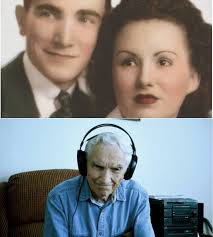
This is a beautiful story of an old man and a song he wrote for his wife of many years. Grab a tissue! It is a great testimony to the power of music, of song and of commitment. You can watch the video at the end, but here is the story behind it:
A 95-year-old Peoria man isn’t a musician, but the lyrics he put on paper are now being shared with the world. Fred Stobaugh said, “I was sitting here one night, oh about six weeks after she passed away and just sat here kind of hummin’ a little bit and it just finally came to me.” Stobaugh recently lost his wife of nearly 75 years. He said they shared a love of music. He soon turned his sadness into a song. “We were, like, just as one we were. Lorraine and I.”
Singer and songwriter Jacob Colgan remembers receiving Fred’s letter. “What made Fred’s entry so special was instead of a video, it was a large manila envelope titled Green Shoe Studio Singer Songwriter contest.” It was an entry to his Studio’s songwriting contest. The kind of entry Jacob never expected. “He had written a song for his wife, ‘Sweet Lorraine’.”
Fred’s song is about his life and his love for his wife. He said, “’Sweet Lorraine’ I called it. Wish we could do the good times all over again.” Jacob said, “I started to read the lyrics and was so touched by the song and without even meeting Fred we thought, we’re going to do something.” Fred said, “And I was surprised. It wasn’t too long that Jacob called me and it really touched him.”
Jacob said, “We wanted to put it to professional music and sing on it and he said, well you know that’s great but I just don’t have the money to cover it.” With Fred’s blessing, Jacob wanted to bring his lyrics to life. When Fred first heard the song, he cried. He said, “Wonderful, just wonderful.”
Fred said, “It just touched me. And I know Lorraine, she heard that too. It just has been a great life. If I could do over again, I would do it.” Fred said he finds comfort in the sound of his song. It’s something he has to cherish forever. He said, “The song really helps me. It really helps me. It just seemed like she’s just sort of with me. Which I know she’s smiling, she’s smiling down and she likes that song, I know.”
“Sin will have no dominion over me! Why? Because I’m not under the law any more. I’ve died to the law of Moses. The law of Moses did not give me power to obey God’s commands, it only informed me of God’s commands. But I’m not under the law any more, I’m under grace, and God’s grace is pulsing with power. God’s grace at work within me ensures that sin will have no dominion over me.” (Stephen Altrogge. ‘The Blazing Centre‘)
Here is a series of quotes from some great thinkers on the topic (borrowed from Chong’s Worship). They look at defining a hymn, why we still need hymns and how to choose them well . . . which is probably the most important thing, since the language of some hymns simply does not translate for contemporary people. Remember too that the last good Christian hymn is still yet to be written (shortly before Christ’s return). . . and fortunately we are blessed with a great variety of singable and biblical Christian songs and hymns.
What’s a hymn?
“… a poem, designed for group singing, and written as a sequence of identical units called stanzas. Each stanza has the same line length, rhythms and rhyme scheme as its predecessor, so that the hymn can be sung, stanza by stanza, to the same tune.”
“Many of the great hymn writers weren’t musicians… they worked as theological poets, writing hymns in meters that were commonly used amongst the churches, relying on melodies that were written by others.” – Mike Cosper
Do we still need them?
“I say without qualification, after the Sacred Scriptures, the next best companion for the soul is a good hymnal.
For the child of God, the Bible is the book of all books, to be reverenced, loved, pored over endlessly and feasted upon as living bread and manna for the soul. It is the first-best book, the only indispensable book. To ignore it or neglect it is to doom our minds to error and our hearts to starvation. After the Bible, the hymn book is next . . . containing the cream of the great Christian hymns left to us by the ages…”
“A great hymn embodies the purest concentrated thoughts of some lofty saint who may have long ago gone from the earth and left little or nothing behind him except that hymn.
To read or sing a true hymn is to join in the act of worship with a great and gifted soul in his moments of intimate devotion.
It is to hear a lover of Christ explaining to his Saviour why he loves Him; it is to listen in without embarrassment on the softest whisperings of undying love between the bride and the heavenly Bridegroom.”– AW Tozer, We Travel An Appointed Way
But even today?
“Hymns are great art! The arts, stories, poetry, music all combine to sneak into the heart by the backdoor – something increasingly important for our ministry to the coming generations” – Kevin Twit, Why We Still Need Hymns in a Post-modern World
“How will you reach this post-modern generation – a generation that cannot conceive of objective truth, cannot follow your linear arguments, cannot tolerate anything (including evangelism) that smacks of religious intolerance?”” – Kevin Ford, Jesus for a New Generation
So how do we choose and sing good hymns?
“[Good hymns are those] which, once heard, are remembered without effort, remembered involuntarily, yet remembered with renewed and increasing delight at every revival.” – James Montgomery, The Christian Psalmist
“The best results happen when theologically deep and emotionally rich texts are wedded to music that is aesthetically fitting and culturally resonant, that connects at every level.” – Ron Rienstra
“We will not hide them from their children, but tell to the coming generation the glorious deeds of the Lord, and his might, and the wonders that he has done.”– Psalm 78:4
Okay, I’m going to admit that I have been totally drawn into viewing the television talent show X Factor. The last time such a thing happened was a decade ago, with the very first series of Australian Idol (2003) won by Guy Sebastian. While I am thoroughly aggravated by the hype, drama, ad breaks and soapie-style formatting, I do simply enjoy hearing the people sing! (Especially Georgie, but he was eliminated tonight in the cut for the final 12! Can you believe it? I think he didn’t have the pop star physique they were looking for. Check out the video at the end – I assure you it will bring a smile to your dial, as they say!)
Yet each voice is like a fingerprint, a unique sound that each person owns and uses to bring new life to old melodies. Each person has been on a unique journey to arrive at a place where they feel comfortable and confident with their voices. I find this most intriguing. Though some of them try their best to sound like pop stars who already own fame, their unique vocal colour shines through.
And this leads me to contemplate the incredible gift of singing voices that God has given. Such a divine gift from the Creator, a gift greatly admired and applauded even by those who will not give credit to the Maker of the voice. And who can beat true emotion conveyed through sung lyrics? A pleasant, dynamic voice can pack a punch unmatched by any spoken rhetoric.
God has designed us with singing voices for many reasons, but perhaps above all, that we would praise Him!
Oh that we could inspire our congregations to sing to God (and one another) with the conviction and energy of these X Factor hopefuls. Though these singers gather together to sing for their own fame (and supper), we gather together as Christ’s Body to praise Him. As we share the true Word of God together in song, surely we should be displaying equal or greater effort? We sing for the most famous One, the author of Life, the Saviour of the world, to declare His glory. When we remember this purpose it can change our self-consciousness, often off-key, efforts into something mutually edifying. Praising God is so good for us. And so is singing!
Don’t you think?
I have been really enjoying a smart phone app called “Solid Joys” which comes from the pen of John Piper. Each daily devotion takes about a minute to read, and a few more minutes to contemplate. (You can look it up here if you would like to read online, or check your phone’s app store.) This one is on the theme of grace and how it relates to our past, present and future. Grace is not just about God doing good to us, but also in us. I hope you will find it as encouraging as I did.
The Different Tenses of Grace
We always pray for you, that our God may make you worthy of his calling and may fulfill every resolve for good and every work of faith by his power, so that the name of our Lord Jesus may be glorified in you, and you in him, according to the grace of our God and the Lord Jesus Christ. (2 Thessalonians 1:11–12)
Grace is not only God’s disposition to do good for us when we don’t deserve it — undeserved favor. It is also a power from God that acts in our lives and makes good things happen in us and for us.
Paul said that we fulfill our resolves for good “by his power” (verse 11). And then he adds at the end of verse 12, “according to the grace of our God and the Lord Jesus Christ.” The power that actually works in our lives to make Christ-exalting obedience possible is an extension of the grace of God.
You can see this also in 1 Corinthians 15:10: By the grace of God I am what I am, and his grace toward me was not in vain. On the contrary, I worked harder than any of them, though it was not I, but the grace of God that is with me.
So grace is an active, present, transformative, obedience-enabling power.
Therefore this grace which moves in power from God to you at a point in time is both past and future. It has already done something for you or in you and therefore is past. And it is about to do something in you and for you, and so it is future — both five seconds away and five million years away.
God’s grace is ever cascading over the waterfall of the present from the inexhaustible river of grace coming to us from the future into the ever-increasing reservoir of grace in the past. In the next five minutes, you will receive sustaining grace flowing to you from the future, and you will accumulate another five minutes’ worth of grace in the reservoir of the past.
“The faithful love of the Lord never ends! His mercies never cease. Great is his faithfulness; his mercies begin afresh each morning. I say to myself, “The Lord is my inheritance; therefore, I will hope in him!” (Lamentations 3:22-24)
Screwtape LettersChapter 2 (C.S. Lewis) “Work hard, then, on the disappointment or anticlimax which is certainly coming to the patient during his first few weeks as a churchman. The Enemy (God) allows this disappointment to occur on the threshold of every human endeavour. . . It occurs when lovers have got married and begin the real task of learning to live together. In every department of life it marks the transition from dreaming aspiration to laborious doing.The Enemy takes this risk because He has a curious fantasy of making all these disgusting little human vermin into what He calls His “free” lovers and servants-“sons” . . . Desiring their freedom, He therefore refuses to carry them, by their mere affections and habits, to any of the goals which He sets before them: He leaves them to do it on their own.”
There are few Christians who do not feel some loss of their ‘first love’ for Christ. When our eyes are first opened to the truth of who God is, who we are in relation to him and what trusting in Christ’s death means, our lives and our thinking are radically changed! Even if you grow up in a Christian or church-going family there is a time where faith becomes your own. At first the blessings and presence of God are so tangible. We feel like our love and our passion will never grow cold. . . But then there is passing time, then there is the pressure of the everyday, the kids, the mortgage, the settling in to what is acceptable or expected. And we can lose that first love, that deep appreciation for the things of God. (In fact this is one of Christ’s complaints of the church at Ephesus: “You don’t love me or each other as you did at first!” – Revelation 2:4.)
It is comforting to know that in C.S. Lewis’ opinion (Screwtape Letters) there is some element of God’s design in this. To grow our faith he allows us to experience the disappointment that comes in every aspect of life, once the shiny and exciting veneer of “new” has worn off. God grows us as he deepens our reliance on Him. We come to know His grace more as we see our failings. And for these failings His mercy comes, new every morning. Each day the opportunity is there for us to appreciate anew the reality of God’s love for us in Christ. His grace and mercy pours to us through His Word and His Spirit in us. We also have His body, His people, and we can gather together in Him. We can serve, and in serving, receive encouragement!
The band Mercy Me has captured something of this new deep appreciation of God’s mercy which comes as we mature in the faith. (Watch and read the lyrics below: “The First Time”). As we go through the ups and downs of life we realise the unfathomable depth of God’s love. We realise the worthlessness of our own attempts at self-righteousness, and cast ourselves on Him. This is the grace we rest in, and are refreshed by, each day.
The First Time (by Mercy Me)
“Day after day, I try to explain you, like I can contain you in so many words
You are the ocean, I’m on the shoreline, thinking I know you, like you could be learned
It’s so amazing, that you’d ever save me . . .
I thought I knew your face, I thought I tasted grace
But I have never felt anything close to this. Just when I’d seen it all, new mercy breaks the door. With eyes open wide, it feels like the first time, first time.
it feelslike the first time, first time.
After all of my searching, all of my reaching,
I’m left with nothing, nothing of worth.
You treasure the broken, over and over,
And give me a hope that can never be earned.
It’s still amazing, that you’d ever save me.
And your beauty no eye has seen, Your majesty overwhelming
You love for me is healing, O God!
I thought I knew your face, I thought I tasted grace But it was nothing like this. Just when I’d seen it all, new mercy breaks the door. With my eyes open wide, I feel alive for the first time, first time. Just like the first time, first time. I can see like the first time.
2012 – Songwriters: Muckala, Daniel John / Millard, Bart / Bryson, Jim / Cochran, Nathan / Graul, Barry E / Scheuchzer, Mike / Shaffer, Robby / Ingram, Jason David
Kevin de Young is writing lots of great material over at the Gospel coalition. If you have never visited there I would encourage you to do so. Today I’m sharing a summary of his ‘Ten Principles for Church songs’ which has been published in two parts. I have included his introduction, and then a summary of his ten principles (with some teasers) – which I would thoroughly endorse! To read his full explanation of each point you will need to click through to the actual website. It would make great material to work through with the church leadership or your music team, to clarify issues, prevent problems and encourage one another:
“When it comes to singing on Sundays, churches have more options than ever before. From hymnals to Hillsong to homegrown creations, pastors and worship leaders have thousands of songs to choose from. A nice problem to have. But still a problem. No music leader or pastor can keep up. No church can sing all the great hymns and all the latest greatest songs on the radio. No musician can excel in all the available styles. No leader can please all the people all the time. . . There are other questions too. What sort of instruments should we use? How much should cultural context come into play? Is there only one right kind of song to sing? If not, are there any wrong ways? I can’t possibly answer all those questions. But there are some general principles we can use to make wise decisions with our church music. Let me suggest ten principles for congregational singing.
1. Love is indispensable to church singing that pleases God. Love is indispensable when we sing and when we are trying to discern what is best to sing. 2. Our church singing is for God’s glory and the edification of the Body of Christ. Congregational song is part of the teaching ministry of the church. 3. We ought to sing to the Lord new songs. Sometimes I want to ask to very conservative Christians: “Do you really think the last good song of praise to Jesus has been written?” 4. Church singing should swim in its own history of church singing. We should swim in this big ocean of church music, an ocean that is continually receiving new streams. 5. Sing the Psalms It’s strange, even though we are commanded to sing Psalms and even though Psalms have been at the center of the Church’s singing for centuries, still we easily ignore the 800 pound gorilla in the middle of our Bibles. 6. We should strive for excellence in the musicality and the poetry of the songs we sing. Some songs are simply deep and some are deeply simple, but there is a way to do both well. With so many songs to choose from, there’s no reason churches can’t make an effort to sing songs with some sense of poetry and musical integrity. 7. The main sound to be heard in the worship music is the sound of the congregation singing. What people want to see in your worship is that you mean it. And no matter how chill or how reverent your worship is, if no one is singing, it’s lame. 8. The congregation should also be stretched from time to time to learn new songs and broaden its musical horizons. Every church will have a musical center. You should not reinvent the center every week. But you should not be enslaved to it either. 9. The texts of our songs should be matched with fitting musicality and instrumentation. Musical style is not neutral, but it is elastic. Music conveys something. Some melodies are too syrupy or too raucous or too romantic. 10. All of our songs should employ manifestly biblical lyrics. In all our songs we want to be teaching people about God. If we aren’t learning good theology and biblical truth from our songs, then either we don’t care much about our songs or we don’t care much about rich biblical truth, or both.”
Planning today for songs to share with those who attend the intensive CMS Summer School at Mt Tamborine in January 2014. The theme is Christ’s Victory, specifically in the book of Revelation. I have been having a meeting with myself at a coffee shop and the level of agreement is quite remarkable!
One of the speakers for the conference is federal Secretary of CMS Australia, Peter Rodgers. At a recent speaking engagement, he shared some words which stand as a challenge to my comfortable, middle-class Aussie, Christian outlook. He suggests that Christians have a love affair with the secular worldview:“Australian Christians often value exactly the same things non-Christians value. They prioritise their own comforts over the gospel and consequently have a low commitment to global mission. The antidote to this is to help people develop a biblical worldview. The gospel of Jesus Christ is the central message of the bible. If people put Jesus and the gospel at the centre of their lives then mission will receive the attention it deserves.” from SMBC news winter 2013 issue 29.
The sad thing about these words is the extent to which I know they are true – for me, and most other Christians I know. But is it any wonder considering the amount of time we spend soaking ourselves in the worldview of the world’s media? (Read more on this here.) Oh that we would soak our minds more in the truths of God’s Word and keep the gospel at the centre of our lives.
‘Do not conform any longer to the pattern of this world, but be transformed by the renewing of your mind. Then you will be able to test and approve what God’s will is–his good, pleasing and perfect will.’ Romans 12:2
And in case you are curious, here are some of the songs I have selected to go with the Revelation/Christ’s victory theme:All I have is Christ (Sovereign Grace), Behold the Lamb (Communion Hymn – Getty), Beautiful Saviour (Stuart Townend), Come Hear the Angels Sing (EMU), Crown Him with Many Crowns (Hymn), Glorious Day (Casting Crowns), Grace has now appeared (EMU), Hail the Day (EMU), Hope of the Nations (Doerksen), It is Well (Todd Fields), Jesus Thankyou (Sovereign Grace), Let Your Kingdom Come (Sov Grace), Majesty of Heaven (Tomlin), No Other Name (Trevor Hodge), See Him Coming (EMU), We Belong to the Day (Michael Morrow).
I'm Ash. I love Jesus. I'm a wife and a mum. I'm a teacher. I'm also studying my Masters of Counselling. I started studying a few years after started the very hard work of engaging my own story of harm and trauma. This is a place where you'll hear my stories, as well as the stories of others. I'll also reflect on faith, healing and walking with Jesus. I pray that these words might encourage you to do your own painful but life-bringing work of examining your own stories, and allowing Jesus to heal the parts of you still locked in shame. For He came that we might have life, and have it to the full. Welcome, fellow traveller.
Words, words, words... well said Hamlet! A little blog to go off on tangents within the worlds of history, literature, TV and film that interest me. From the Tudors to Tom Hardy's Tess, the Boleyns to Bollywood or from the Wars of the Roses to Wuthering Heights, feel free to browse through my musings to pick up extra ideas and points for discussion!

 This is a recent news item I simply had to share: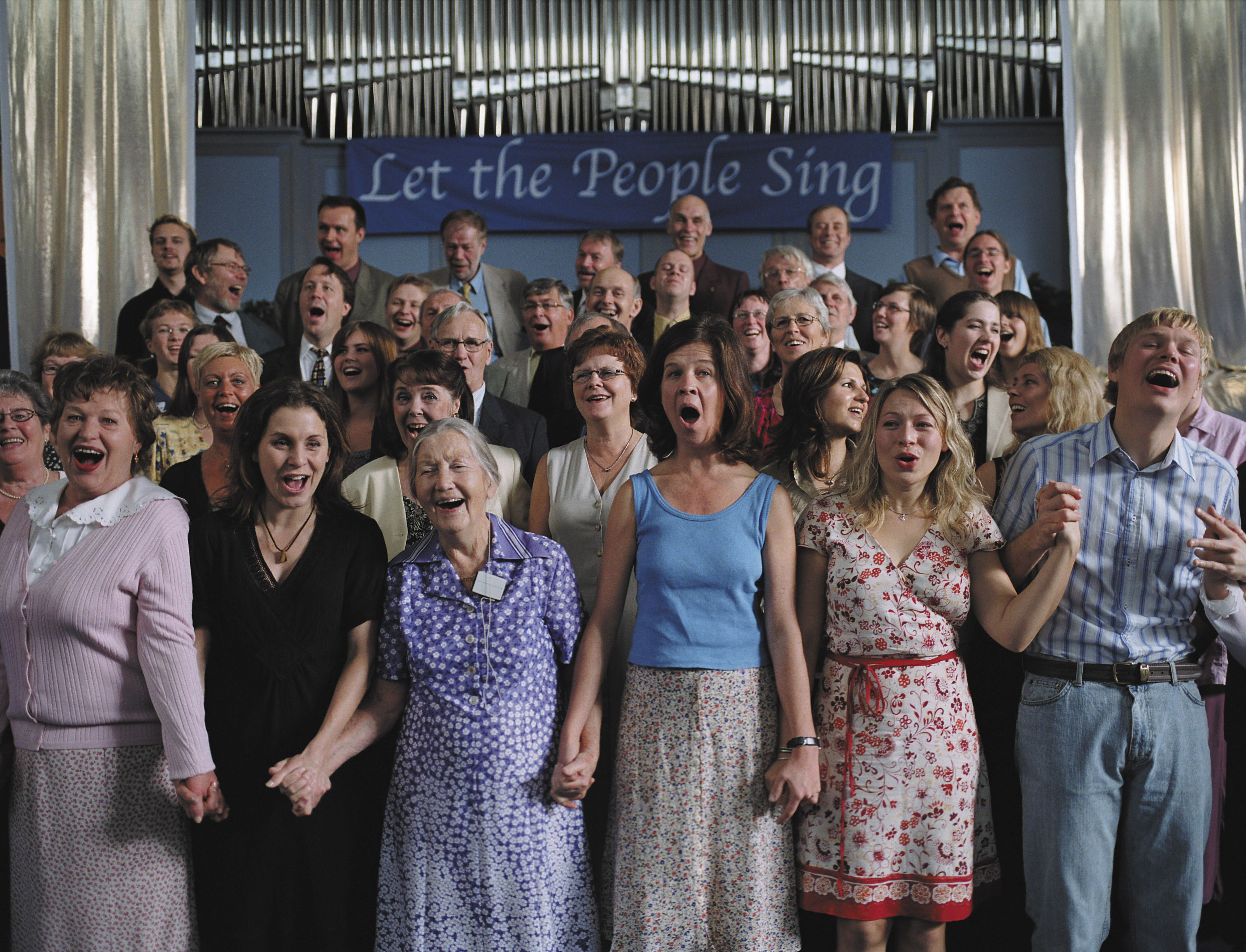








 “I say without qualification, after the Sacred Scriptures, the next best companion for the soul is a good hymnal.