Who is “The Idea of North”?

The Idea of North is widely acclaimed as Australia’s premier vocal ensemble. While I would love to speculate about the reason for the snazzy name of this a capella jazz quartet, I think it’s best if we just get on to introducing them. (And while you may not have heard of them as being “Christian musicians” there is much Gospel, heart and soul in their music).

So who are The Idea of North? In short, they’re a quartet of musicians, serious about their music without taking themselves too seriously. Their instrumentation: voice (soprano), voice (alto), voice (tenor) and voice (bass), with a little bit of vocal percussion thrown in. They have a beautifully distinct sound and style, but they cross many musical genres: jazz, folk, gospel, pop, classical, comedy – exactly what you see and hear at a concert is difficult to describe. With eight albums in the catalogue, a significant local and international fan base . . . ” You can read more here.

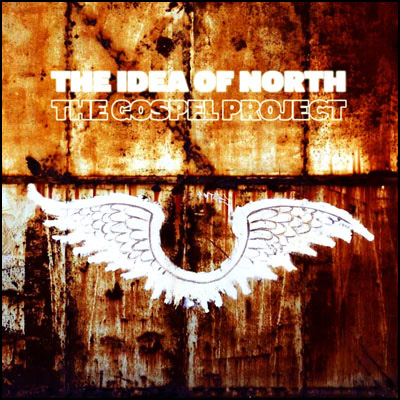
They have plenty of awesome covers of songs, along with their own original work. Their first, self-titled album may still be my favourite (1997), but THE GOSPEL PROJECT (2006) is a close second (listen to the sample of “People get ready“). They have been touring internationally with FEELS LIKE SPRING (2010) and EXTRAORDINARY TALE (2011). So be on the lookout, my readers in the Northern hemisphere. They will probably be coming to a city near you. Not only do they sing brilliantly, but their concerts are also lots of great fun with considerable audience interaction! Have a listen below (and let me know if you do get to see them live.)

Just a closer walk with thee – this one is lots of fun (filmed in concert), with much vocal percussion

Sweet Sweet Spirit – just the audio here

Impossible to be silent

Although my 16 year old daughter is well acquainted with the distinctive features of different film genre, there is one filmmaking convention with which she cannot abide: the Hollywood musical – with the notion that normal people could just burst into song in the middle of a conversation. It doesn’t matter where they are or who they are with, they just sing! Now don’t get me wrong. She and I both love watching these musicals, Singing in the Rain, Seven Brides for Seven Brothers and The Sound of Music all being on our favourites list. But for her, this ‘random singing in real life’ just lacks all credibility. We have some hilarious debates about it!

Victor Hugo is credited with saying, “Music expresses that which cannot be said and on which it is impossible to be silent.”

In these film narratives the characters literally burst into song because they can’t help it! Simple dialogue just will not do for these characters (or for that matter opera singers and Broadway actors, or the composers and screenplay writers behind all these). Words cannot express the largeness of their thoughts and emotions. They are compelled to sing.
Is it any different in real life? We sing at the football (well I have heard people do!), at birthdays, to our babies. My husband sings strange songs to our girls at times, most often in the morning when trying to get them out of bed.

So is it any wonder that God’s gathered people must sing. How could we NOT sing?
The gratitude we feel because our sins are forgiven, the awe we have for God’s amazing grace, the freedom from shame. . . All this cannot be expressed adequately by mere words. The wonders of our God must be sung! He is beyond the limits of our spoken words and imaginations. So too the astonishing nature of his salvation plan for mankind. If I could find a statistic about how many new praise songs are written about and to God each day I would include it here – but Google was no help. Probably the number was beyond the grasp of Google’s search engines.

So think then….what is the effect of encouraging people to sing God’s praise, when they don’t feel like it? Or when they don’t really know God? Does this work in reverse? Does singing the words inspire the feelings that would have made us burst out into to song in the first place? And what about churches who do not sing when they gather? What does that say to them? to us?
Comments welcome, as always.

You may also like:

The Wonderful Mystery of Harmony Singing                            Ten Principles for Church singing

Great Christmas music to ease your planning stress

Around this time of the year, every year, music team/worship team/church band leaders everywhere get a strange kind of nervous twitch whenever they remember how many weeks it is ’til Christmas. By October you could describe them as rather nervous, by November totally stressed, and it’s panic stations by December – but only if they have not sorted out their Christmas music repertoire! Finding great NEW item songs can be tricky… and there’s only 96 days to go.

Well I have got some great news for you (though there are no free steak knives involved). I’m going to share with you my favourite Christmas songs. They are tried and tested (except the new one I’m trying this year) and true to the gospel, with a great festive feel that even non-Christian Christmas visitors will appreciate. So hopefully, while it is still only September, you can settle on some great Christmas songs – and feel most smug that you are organised so far ahead of time!

Here they are. The first 4 come from a great album by Sovereign Grace Music called “Savior: Celebrating the Mystery of God Become Man” (click the title to listen to all these songs. Find free lead sheets, guitar tabs and mp3s for all these songs here)

Hope has Come (fast and cheery – great with chimes or bells)

Christ the Lord is born today (great Christmas Day item)

Glory be to God on High (bright upbeat song)

Salvation is Born (a gentler feel – I used this with a choir, soloist in v1 and ending, arranged the chorus in 3 part harmony).

Is this not the Carpenter? from Emmanuel: A musical celebration of the Life of Christ
The One who made the world made this world His home
This child that grew to man came unto His own
But His own received Him not, Even looked into His eyes, yet never recognized Him, saying
“Is this not the Carpenter – is this not the Son of Mary?”

“Is this not the Carpenter – is this not the Son of Mary?”
Saying “This is but the Carpenter – it’s only Jesus, Son of Mary.”
It’s a sadness without measure, They had been with Him forever
And still not realized He was the very Son of God, saying
“Is this not the Carpenter – is this not the Son of Mary?” . . . read more

So Let Us Shine from Emu Live 2 (lyrics, pdf music and mp3 here)
For desperate people at their darkest hour, When fault and failure held us in its power
A babe was born – he said, “I am the way”.
He came to earth to turn our night to day, He came to earth to turn our night to day
So let us shine! And show the world his love
So let us shine! Because he first loved us
So let us shine! And show the world his love
This baby is the light of the world.

And this last one, is new to me, untested, but I envisage a string section and some groovy chimes and bells!
Shout for Joy by Paul Baloche – as recorded on his most recent CD “The Same Love”
(Note that the CCLI version of the sheet music has a different bridge. I’m going with the one on the album.)

Merry Christmas! (Just a little early)

Ps. Since writing this post I have included another which might be helpful – some new songs from Francesca Battistelli. Click here to read that post.


What is so amazing about “Amazing Grace”?

It just dawned on me that though I have been blogging for almost a year now on the subject of music and grace, I haven’t even made a single mention of that most famous combination of music and grace: John Newton’sAmazing Grace“. It has been an anthem of hope and faith for generations.
But why has this hymn had such an impact? What does Newton point out about God’s grace that resonates with us so strongly? Is there something in the music which made it so popular?

At the time Newton penned Amazing Grace, hymnbooks did not contain music; they were simply religious poetry books. The first time Newton’s lines were joined to music was in 1808, in A Companion to the Countess of Huntingdon’s Hymns, set to the tune “Hephzibah” by English composer John Jenkins Husband. More than twenty musical settings of “Amazing Grace” circulated with varying popularity until 1835 when William Walker assigned Newton’s words to a traditional song named “New Britain”.

According to author Steve Turner, the joining of these words and melody was a “marriage made in heaven . . . There was a rise at the point of confession, as though the author was stepping out into the open and making a bold declaration, but a corresponding fall when admitting his blindness.”

Sing through the lyrics at the end (if you need them to test his theory). I think Turner is quite right. It is at this very point we can see why the hymn works so well in communal praise. As we sing this appropriately-shaped melody together, we step out into the open and make a public and communal confession of our wretchedness, our need for God’s forgiving grace. We declare we have moved from ‘lost’ to ‘found’, from hopeless to being filled with hope! As we declare this together, the Spirit works.

It probably has a lot to do with the truth which James expresses here:
“Confess your sins to each other and pray for each other so that you may be healed. The earnest prayer of a righteous person has great power and produces wonderful results.” (James 5:16)

This hymn is a prayer! We pray together as we sing. We confess (our wretched need for God’s grace) to one another, and look with eyes of faith to the glorious future for us who are ‘found’. The power of this prayer-song transcends time, culture and place. I would predict that there are many more centuries of life in Newton’s hymn.

(Nb. If you are so young that you only know of Amazing Grace as being part of Chris Tomlin’s “My Chains are gone” then you should note how skilfully Tomlin has mimicked the rise and fall of the “New Britain” melody in his additional chorus. In this way he moves our focus to the flood of mercy experienced by all who are in Christ. Such amazing grace!)

Here are the 6 verses of the hymn:

Amazing grace how sweet the sound
That saved a wretch like me
I once was lost but now am found
Was blind but now I see

‘Twas grace that taught my heart to fear
And grace my fears relieved
How precious did that grace appear
The hour I first believed

The Lord has promised good to me
His Word my hope secures
He will my shield and portion be
As long as life endures

Through many dangers toils and snares
I have already come
‘Tis grace hath brought me safe thus far
And grace will lead me home

Yea when this flesh and heart shall fail
And mortal life shall cease
I shall possess within the veil
A life of joy and peace

When we’ve been there ten thousand years
Bright shining as the sun
We’ve no less days to sing God’s praise
Than when we first begun

And Tomlin’s clever chorus:

My chains are gone, I’ve been set free
My God my Saviour has ransomed me
And like a flood His mercy rains
Unending love, Amazing Grace!

If you want to think a bit more about this grace, watch the film trailer . . . or the whole film AMAZING GRACE (2006).

You may also like:

Saved by a violent grace                                  Keep your ears tuned to the gospel of grace
soul anchorlisten

An Ode to Joy and the Power of Music

Love this “flashmob” event. It says so much about the way music touches people and brings such joy. The experience brings smiles, goosebumps and tears all wrapped up in the one package. Music is indeed a gracious gift from God!
(The little girl up the lamp post is my favourite.)

A shot in the arm for your church music team

Sometimes being part of a church music team/worship band is an inspiring and encouraging thing, something you absolutely enjoy and look forward to. But other times it can become a bit of a drag, unfortunately! And if you are the leader, and you are experiencing the latter emotions, then oh dear! This is not good news for anyone, especially the congregation. Something needs to change and fast.
What to do?
The Cambridge online dictionary defines “a shot in the arm” as something which has a sudden and positive effect on something, providing encouragement and new activity. And that is precisely what I believe this great little set of 6 bible studies can do for you.

The study book “Sing for Joy” written by Nathan Lovell (2010) is produced by the insightful people at Matthias Media, as part of a range of Interactive Bible Studies. It would be a great shot in the arm for a flagging music team (or leader) as they work through it with others, in order to re-energise and refocus. It would allow you to raise and explore all those tricky issues about the behaviour and motives of church musicians/music in an unthreatening manner. Each study is around 8 pages long (in 60 page study booklet).

Here is a sampling of the topics you will discuss while diving into God’s Word together:
#1 What is Church and Why do we sing there? – looks at music as a natural expression of joy, and why singing is the right response for God’s gathered people.
#2 Praise be to God – looks at the nature of biblical praise, the songs of the Bible, and how we praise God in ways other than singing.
#3 True Worship – traces different meanings of the word “worship” and the implications for how God’s people serve in the Old and New Testament eras. The ideas of worship and sacrifice are explored through the texts of Romans 12 and Hebrews 12-13. Connections are drawn between true praise and true worship.
#4 The Function of Church Music – looks at the many different ways music benefits God’s gathered people.
#5 The Gift of Musicians – explores what it means to be gifted musically, and how to be a servant-hearted leader as a musician, rather than a self-focused one.
#6 Music & Lyrics – considers the importance of song lyrics which should “continually refocus our mind on Christ, teach us His Word and remind us of what he has done for us” (p.57)

One of the most useful and simple definitions given in these studies regarding with purpose of church singing was this: “we sing in church because we are rejoicing over who God is and what He has done for us. Our singing is a response to the Gospel – an extravagant, joyous response to our God who has delivered us from our enemies, redeemed us for Himself, and gathered us together as his people” (p.35)

Describing church musicians as both servants and leaders was a really interesting approach, and a really useful one I think.
“Like it or not, musicians are in the role of leadership within our congregations. It has always been this way. In David’s day there was a band consisting of 120 trumpets as well as cymbals, harps, lyres and a whole tribe of singers (2 Chronicles 5:12)! They dressed up in fine linen and stood apart from the rest of the congregation and led them in praise. What a spectacle that must have been!” (p.47)

We will definitely be discussing that at our next team meeting! You can order these studies by following this link to Matthias Media. I am sure they will help get your whole music team back on the same page. . . and singing from the same score!

Hide the Word

This week I am busy trying to get a few memory verses stuck firmly in my head. I hope this will allow me to impress those who mark my term exam in Intro to the Bible! I haven’t really done this for a long while. . . studying or memorising.
Several ‘scriptures in song’ in the back of my mind are coming in quite handy, but I am wondering why no one has ever put Ezekiel 36:26 into a song, or Jeremiah 31:33-34, or Colossians 3:1-2, or even God’s promises to David?
Memorising Scripture, difficult as it is, is so worth it. How invaluable to have the one source of life and hope, to have the Word, IN you. You don’t have to rely on the presence of your Bible or have enough memory left in your smart phone in order to hear God’s voice. It is what Paul speaks of in Colossians 3:16, where he says we should LET the Word dwell in us richly. What am I doing to LET it sink into my heart and mind on weeks when I don’t have an exam? What am I doing that is preventing it?

The Word dwelling in us is how God’s Spirit works to change and shape us, transforming our heart through radical surgery at the hand of God.
“The Word of God is living and active, sharper than any double-edged sword, it is for teaching and rebuking,….. training in righteousness so that the man of God might be thoroughly equipped for every good work.” Hebrews 4:12.

Consider also these words from John Piper: “Satan’s #1 objective is to destroy our faith. We have one offensive weapon: the Sword of the Spirit, the Word of God (Ephesians 6:17). But what many Christians fail realise is that we can’t draw the Sword from someone else’s scabbard!  If we don’t wear it we can’t wield it. If the Word of God does not abide in us (John 15:7) we will reach for it in vain when the enemy strikes.” (Piper, ‘Desiring God’ p.151)

If you want to start letting the Word sink in, try writing or printing out important verses and posting them behind the toilet door, or behind the glass in the shower. Singing them in the shower is even better, since music helps to cement things in our minds so much more easily (unless people in your household object). Here are two musicians who have done some hard work in writing songs that help the Word settle in, put its feet up and feel right at home in our hearts:
Colin Buchanan, an awesome Aussie who has a huge string of kids praise albums. For remembering scripture try this CD: Baa Baa Do Baa Baa!
Also, Sovereign Grace songwriter/Pastor Mark Altrogge has several cd collections for scripture memorisation for adults at Forever Grateful Music

Saved by a violent grace

“So ruthless, He loves us,
So reckless His embrace

To show relentless kindness,
To a hardened human race

The joy that was before Him
On the Man of Sorrows face,
And by His blood He bought a violent grace”

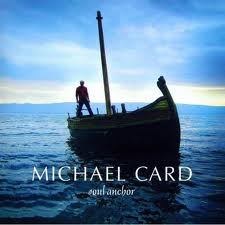
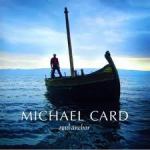
Many years ago some great ministry friends introduced me to a writer of very “deep” and challenging Christian songs, Michael Card. And I had almost forgotten him until the other day! Now why did I remember him, you ask? At the moment I am studying for an exam, a “big picture” Bible overview subject and I really need to get some memory verses and concepts stuck in my head, about how Christ fulfills all the OT law and prophets. So then I thought, Hebrews! Great book for explaining that. This was quickly followed by my recollection that Michael Card’s “Soul Anchor” album is the book of Hebrews in song (just about).

“A Violent Grace” (quoted above and below) is Track 1. So passionately does it remind us that God’s grace was no stroll in the park! Jesus was the high priest who sacrificed Himself. His love was (and is) ruthless! He showed the ultimate kindness and grace to the hardened human race that despised Him. Yet the joy set before Him held the Man of Sorrows to the Cross. And what was this joy? (Hebrews 12:2)
“Let us fix our eyes on Jesus, the author and perfecter of our faith, who for the joy set before him endured the cross, scorning its shame, and sat down at the right hand of the throne of God.” (NIV)
“We do this by keeping our eyes on Jesus, the champion who initiates and perfects our faith. Because of the joy awaiting him, he endured the cross, disregarding its shame. Now he is seated in the place of honor beside God’s throne.” (NLT)

What was this joy? I suppose there was the joy of sitting on the Throne. But moreso, we are His joy! We are His reward. His death saved a people. All those the Father gave Him can never be snatched from His hand by the power of His death and resurrection. (John 10:28-29) We are God’s chosen people, recipients of immense and violent grace.
No wonder the message of the Cross is so offensive to so many.
But for us being saved it is the power of God!

A Violent Grace (Michael Card, 2001)

A mural of memories moves by in a blur
His prayers all seem unanswered and unheard
His pleading petitions, his loud cries and tears
A last reprieve will simply not appear
So ruthless, He loves us, So reckless His embrace
To show relentless kindness, To a hardened human race
The joy that was before Him
On the Man of Sorrows face
And by His blood He bought a violent grace
Most willing of victims, And with His final breath
Destroyed the one who holds the power of death
The hate heaped upon Him, scorning all the shame
But all for love He died and overcame

In all of time no one had ever heard
And to the world the thought seemed so absurd
Beyond their wildest dreams no one could ever tell
Of a high priest who would sacrifice Himself

Other beings appreciate 7 notes

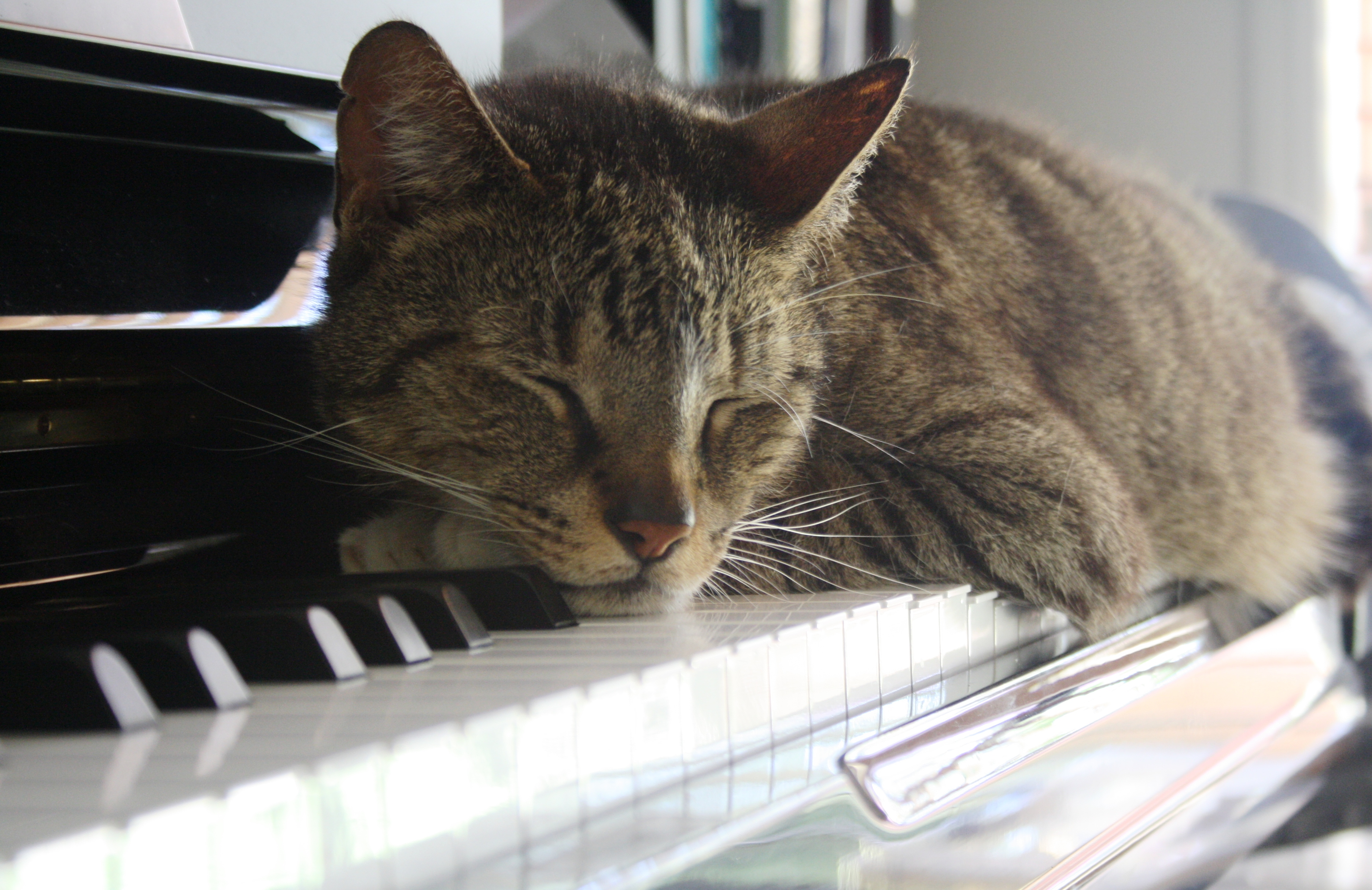
Tigger takes every opportunity to enjoy the 7 notes! Whenever someone plays the piano he jumps up to add his own contribution to the composition. Even when no one is around (like in the middle of the night, and yes, that proved quite a shock) he thinks it is a great time to belt out a new tune. These notes obviously provide comfort to beings other than mere humans! (Does anyone else have an animal that appreciates music?)
Proverbs 12:10 says A righteous man cares about his animal’s health, but even the merciful acts of the wicked are cruel.”
Perhaps one of the best things we can do for the health of our animals is play them some music, and even involve them in the composition.
Cats probably like Jazz best. I have tried the alto sax with our dog – it was not appreciated.
I do recall my dad’s dairy cows appreciated classical music at milking time (back in the days of hand milking).

Speaking of different musical genres, I just came across this clever clip – 16 musical genres in one song. Watch below if you don’t believe me.

Anyway, I hope there are no fleas in the piano.

New songs say ‘God is doing something now’!

music_is_nature__silhouette_by_sammy3773-1Sometimes change can make us very uncomfortable. It can make us feel totally out of control, it can rob us of things to which we feel entitled. Let’s explore this for a moment in terms of church music.
We Christians develop a real attachment to the songs of our faith. They become associated with the ups and downs we have been through, or the exciting time of our youth, or the time we first came to faith. When we sing them the songs instantly conjure the emotions of those times. This is why some people just can’t sing songs from the funerals of dearly departed friends and family, without being overwhelmed by sadness.

So should we learn new hymns and spiritual songs, especially when such change can cause great angst?  I had a conversation with a lovely friend over the weekend who was frustrated with a lack of interest for changing and updating the songs they sing in their church. Many of her congregation are still attached to the ‘Scripture in Song’ repertoire which became popular in the 70s and 80s. The musical style of these choruses hark back to this era . . . and make some people really cringe!

I have found a great rationale for new songs from Rick Warren, author of the “Purpose Driven Church” (1995). If you study church history you’ll discover that every genuine revival has always been accompanied by new music. New songs say ‘God is doing something here and now, not just a hundred years ago’. Every generation needs new songs to express its faith“.

Another great insight comes from a Presbyterian minister Rowland Lowther (2002). He says that his favourite Christian song is “When I survey the Wondrous Cross”, to the old hymn tune, . . . but for the sake of the Gospel I would be willing to change the musical style so that those wonderful lyrics could impact on the next generation. . . What matters to me more is not that I be moved, but those in the next generation has those wonderful old lyrics to a music format that can lift their spirits to worship the same living God that the writer of this hymn worshipped hundreds of years ago”.

Great point. I think it also comes down to the concept of “renewing our minds”. By hearing the gospel explained by new people, in new and fresh ways, our understanding of God and the gospel of His grace is strengthened and deepened. That has got to be a good thing.

You may also like:

12 Principles for Church Singing                                       New Songs we have been singing
praise him picFamily Singing