Why music makes our brain sing

Those of us who love music know how important it is to us, to be listening, creating and making music. But do we know why? Here are some interesting (though perhaps complex) answers from some neuroscientists, via the New York Times.

Why Music Makes Our Brain Sing

By ROBERT J. ZATORRE and VALORIE N. SALIMPOOR

MUSIC is not tangible. You can’t eat it, drink it or mate with it. It doesn’t protect against the rain, wind or cold. It doesn’t vanquish predators or mend broken bones. And yet humans have always prized music — or well beyond prized, loved it.

In the modern age we spend great sums of money to attend concerts, download music files, play instruments and listen to our favorite artists whether we’re in a subway or salon. . . . So why does this thingless “thing” — at its core, a mere sequence of sounds — hold such potentially enormous intrinsic value?

The quick and easy explanation is that music brings a unique pleasure to humans. Of course, that still leaves the question of why. But for that, neuroscience is starting to provide some answers.

More than a decade ago, our research team used brain imaging to show that music that people described as highly emotional engaged the reward system deep in their brains — activating subcortical nuclei known to be important in reward, motivation and emotion. Subsequently we found that listening to what might be called “peak emotional moments” in music — that moment when you feel a “chill” of pleasure to a musical passage — causes the release of the neurotransmitter dopamine, an essential signaling molecule in the brain.

When pleasurable music is heard, dopamine is released in the striatum which is known to respond to naturally rewarding stimuli like food and sex and which is artificially targeted by drugs like cocaine and amphetamine. But what may be most interesting here is when this neurotransmitter is released: not only when the music rises to a peak emotional moment, but also several seconds before, during what we might call the anticipation phase.

The idea that reward is partly related to anticipation (or the prediction of a desired outcome) has a long history in neuroscience. Making good predictions about the outcome of one’s actions would seem to be essential in the context of survival, after all. And dopamine neurons, both in humans and other animals, play a role in recording which of our predictions turn out to be correct.

To dig deeper into how music engages the brain’s reward system, we designed a study to mimic online music purchasing. Our goal was to determine what goes on in the brain when someone hears a new piece of music and decides he likes it enough to buy it.

We used music-recommendation programs to customize the selections to our listeners’ preferences, which turned out to be indie and electronic music, matching Montreal’s hip music scene. And we found that neural activity within the striatum — the reward-related structure — was directly proportional to the amount of money people were willing to spend.

But more interesting still was the cross talk between this structure and the auditory cortex, which also increased for songs that were ultimately purchased compared with those that were not.

Why the auditory cortex? Some 50 years ago, Wilder Penfield, the famed neurosurgeon and the founder of the Montreal Neurological Institute, reported that when neurosurgical patients received electrical stimulation to the auditory cortex while they were awake, they would sometimes report hearing music. Dr. Penfield’s observations, along with those of many others, suggest that musical information is likely to be represented in these brain regions.

The auditory cortex is also active when we imagine a tune: think of the first four notes of Beethoven’s Fifth Symphony — your cortex is abuzz! This ability allows us not only to experience music even when it’s physically absent, but also to invent new compositions and to reimagine how a piece might sound with a different tempo or instrumentation.

We also know that these areas of the brain encode the abstract relationships between sounds — for instance, the particular sound pattern that makes a major chord major, regardless of the key or instrument. Other studies show distinctive neural responses from similar regions when there is an unexpected break in a repetitive pattern of sounds, or in a chord progression. This is akin to what happens if you hear someone play a wrong note — easily noticeable even in an unfamiliar piece of music.

These cortical circuits allow us to make predictions about coming events on the basis of past events. They are thought to accumulate musical information over our lifetime, creating templates of the statistical regularities that are present in the music of our culture and enabling us to understand the music we hear in relation to our stored mental representations of the music we’ve heard.

So each act of listening to music may be thought of as both recapitulating the past and predicting the future. When we listen to music, these brain networks actively create expectations based on our stored knowledge.

Composers and performers intuitively understand this: they manipulate these prediction mechanisms to give us what we want — or to surprise us, perhaps even with something better.

In the cross talk between our cortical systems, which analyze patterns and yield expectations, and our ancient reward and motivational systems, may lie the answer to the question: does a particular piece of music move us?  When that answer is yes, there is little — in those moments of listening, at least — that we value more.

Robert J. Zatorre is a professor of neuroscience at the Montreal Neurological Institute and Hospital at McGill University. Valorie N. Salimpoor is a postdoctoral neuroscientist at the Baycrest Health Sciences’ Rotman Research Institute in Toronto.

You may also like:
Pick up your instrument – food for the soul and the brain
piano


Great use for an old piano

piano desk bigHow could you but be inspired sitting inside the beautiful timber frame of this old piano? What a great place to blog, to compose, to contemplate the music of our world. If anyone would like to make me one, I would happily accept.

What happens when we sing?

WORDS OF WONDER: What happens when we sing?

I just stumbled across this great conference talk from pastor and songwriter Bob Kauflin at Sovereign Grace ministries. If you have ever wondered what the big deal is about the body of Christ singing together (or if you’ve tried to explain that to someone) then this talk has the answers! God doesn’t just want us to praise Him with words, but with SINGING!! If you have a spare hour (or a walk to go on with your ipod or some ironing to do) then have a listen. You will certainly find it encouraging! It might also be a great boost for any music team you lead, to listen and discuss together. Blessings

“You make me want to be nice”

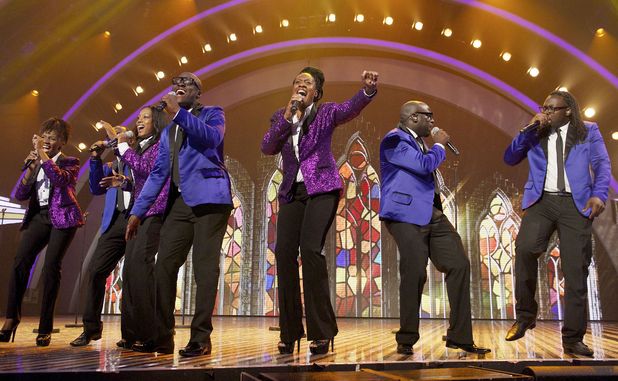
choirThis was the comment made by infamous Britain’s Got Talent judge Simon Cowell, in response to a performance of “O Happy Day”, by Gospel choir “Incognito”. This is the power of the Gospel in song, the proclamation that the day Jesus washed our sins away is indeed happy! And this makes others happy, despite their best intentions! Click the link below to enjoy.

http://www.godvine.com/Gospel-Choir-Simon-fb-gv-3433.html

Cowell

Where should we put those musicians?

bananaThese thoughts come courtesy of a website that produces many good products for training your musicians. It is called Musicademy, with the tagline “Outstanding Practical Worship Training“. I found this list of 10 suggestions really useful. We often have sound issues caused by people being jammed in to a tight space. Have a read and see how much you can improve the overall sound of your music team!

10 Tips to improve your worship team – stage placement

There is rarely one quick fix to improve the musicianship of your worship team. Individual tuition so that each musician can play competently as well as an emphasis on practice both as individuals and as a group will help hugely. But there are also plenty of more subtle and often overlooked issues to be considered – communication, leadership, dynamics, arrangements, musical flow and more.

Before we even start to play its worth thinking about where each of the instruments are placed. Most contemporary worship music has been influenced by rock bands, and it is therefore no surprise that many worship teams position themselves in a similar manner – the drummer at the back, lead singer in the middle and other players flanking each side. The looks great visually and is fine if you are well rehearsed with little need for spontaneity but most worship bands are really based on making community music where the interactive involvement of the congregation actually changes the order, volume, tempo and sound of the music. This challenge means the musicians primarily need to be able to see and hear each other to run with those changes on the fly.

With that in mind here are 10 tips to improve your team all around positioning:

  1. Arrange yourselves where you can see each others eyes. You can communicate a lot just by eye and body movements. It’s no good for a drummer if the primary view they get of the worship leader is the back of their head! And make sure everyone has a clear view of the worship leader who should be directing the band through body language and other cues.
    We often suggest that a “banana” shape works well.
  2. Try placing the drum kit at the front and side of stage and rotate it 90 degrees so it faces inward to the rest of the musicians.
  3. Experiment with arranging the other musicians in a semi circle so they can see each other too.
  4. Split up instruments that produce sound in the same frequency range e.g. guitar and keyboard. Its so much easier to hear yourself if you are not competing with another sounds from the same octave range.
  5. When sound checking work on hearing each other acoustically before adding any fold back.
  6. Place amps only towards the musicians that need to hear them, like drummers. And be aware that when standing immediately in front of an amp you are unlikely to feel the full force – that will be reserved for the unfortunate Doris sitting in the front row of the congregation.
  7. Try to position the whole band in the area in the building that best connects with the congregation.  It can be anywhere, on a stage, in the round, whatever works best – just try to build a physical sense of all of us worshiping God communally together rather than a separated congregation and band.
  8. Do you need to be on a stage at all? If so, too high or too low a platform can hinder communication.
  9. The whole band doesn’t have to face the congregation. As in tip 1 the priority is being able to gain eye contact with each other.
  10. Don’t put equipment in positions that block sight lines between you and the congregation – e.g. mic and music stands at head and even chest level can seem like a barrier and can hinder visual communication.

How church music can welcome newcomers.

New SongThere are many great ideas out there for how best to choose songs for your Sunday services, the order you put them in, and the types of songs you choose. (And if all else fails, tip over the filing cabinet and choose the first four you pick up.) But recently I picked up a new great idea: purposefully limit your song repertoire for a short period of time so as to make newcomers to your church feel more included. Let me explain.

You know how it is when you are in a new church – and you know none of the songs? You stand there looking awkward, and the whole exercise reminds you “you are a newcomer”! Unless you work really hard to get your eyes off yourself and onto the meaning of the lyrics, this can be quite isolating. Imagine how much more so for a new Christian or someone who is checking out church for the first time. Imagine too how it feels when all those people around you are belting out “How Great Thou Art” which they have sung from infancy – and you just silently stand and wonder why ‘they’ are praising graphic design (“Art”).

How can music help in this scenario?

Well, if you deliberately limit your playlist to a small rotation of songs for a term (around 10 weeks) this will allow newcomers (providing they come back next week) to quickly become very familiar with some of the church repertoire, as you will be repeating them more often. They won’t have to wait six months before they get to sing the song again. If you repeat one or two songs from the previous week in each subsequent service it will make a real difference to how included new comers feel (“Hey, I know this one, we sang it last week”). Even better, if you build a culture of learning a new song nearly every week then this becomes a great way to put your newcomers in the same boat as everyone else. They will feel more part of the group because everyone is learning together.

It also helps to choose songs that (predominantly) sound like contemporary mainstream music, which will sound familiar (in terms of the rhythm and the mix of instruments) for your newcomers.

So how do you find enough new songs?
Well of course you can start by reading my blog – but you will find many more resources at: CCLI, Worship Together, Gettymusic, Sovereign grace music and churchmusictoday……to name but a few.
Buy lots of CDs from Sovereign Grace and the Gettys and EMU music (from Australia) and you will get some great ideas for singable songs. Sovereign Grace have all their lead sheets free online and I doubt you would ever exhaust such a wealth of great songs!

Building Bolero – flash orchestra (Queensland Symphony)

I was driving home the other day and heard about this happening via the radio – wish I was close enough to have made it there to see. Thanks to youtube we both can. Enjoy this flash orchestra – it is a really well put-together clip! (And welcome to the city of Brisbane for all my international readers!)
“The Queensland Symphony Orchestra surprises a curious and enthusiastic crowd with a guerrilla-style performance of Ravel’s Bolero in Brisbane’s South Bank. The Orchestra relocated to the city’s cultural hub in December of 2012 and performed the pop-up performance to celebrate their move into a new state of the art studio. The Orchestra’s conductor was Tecwyn Evans. The film was co-produced with the ABC.
The Queensland Symphony Orchestra is renowned for its high quality, breath-taking performances of both classical and modern compositions that engage audiences of all musical tastes, interests and ages. You can find out more about the Orchestra’s current season at http://qso.com.au/all-events”.

Music triumphs again – even over the desire to NOT take the stairs.

Hope you enjoy this great little clip, about how the fun of music can change behaviour for the better and put a smile on your face!

And here is another great image of some piano stairs in Santiago, Chile – but I don’t think these ones play!

Keep your ears tuned to the Gospel of Grace

Found a great quote about grace from Tim Chester the other day, in a post over at The Blazing Center. It goes like this:
In Greek mythology, the Sirens would sing enchanting songs, drawing sailors irresistibly toward the rocks and certain shipwreck. Odysseus filled his crew’s ears with wax and had them tie him to the mast. This is like the approach of legalism. We bind ourselves up with laws and disciplines in a vain attempt to resist temptation. Orpheus, on the other hand, played such beautiful music on his harp that his sailors ignored the seductions of the Sirens’ song. This is the way of faith. The grace of the gospel sings a far more glorious song than the enticements of sin, if only we have the faith to hear its music. – Tim Chester, ‘You Can Change’

God is pure GRACE! Our salvation is grace, our faith is grace, Christ living in us – is grace!
God is the source of our faith, he gives us the faith to hear the music of the Gospel, he opens the eyes of our heart to see and receive Jesus as the risen Lord, glorious Saviour.  And He comes to live in us. Let’s keep our hearts and minds and ears tuned into the gracious music of the Gospel*.

“For it is by grace you have been saved, through faith—and this not from yourselves, it is the gift of God— not by works, so that no one can boast. For we are God’s workmanship, created in Christ Jesus to do good works, which God prepared in advance for us to do.” (Ephesians 2:8-10)

(* And might I just add that actually listening to music which handles the grace of the Gospel well can really help! Check out some of the songs in Church Songs shortlist. I’m gradually adding to this list; so many great songs to go!)

New songs we’ve been singing in 2012

Just reflecting here on the range of new songs our church family has enjoyed this year, songs of great encouragement and challenge, songs which speak God’s truth well. I’ll describe each one a little for you below (click on the title to listen), with my suggested best key for each. Hopefully you will find something refreshing to inspire your congregation, and continue to grow everyone together in the grace and knowledge of God . . . through the power of His Word in song!

My Hope (2010) – Paul Baloche, Alyssa Mellinger, Ed Kerr, Sheila Rabe (album “The Same Love”). This one has been a real blessing, particularly the line “Nothing can reach the end of all your faithfulness”. I have introduced this at two women’s conferences during the year also, where one woman told me it was an answer to prayer. Awesome. It has a fairly gentle verse, and a rousing Chorus which echos the thoughts of “My Hope is built on nothing less”. I’ve talked more about this one in another post. (Key: A Major)

Majesty of Heaven (2010) – Chris Tomlin, Jesse Reeves, Matt Redman (album And if our God is For Us). This song gives a great picture of King Jesus ruling over this creation, and each of us. The nations bow down to the Majesty of Heaven, in whom all things hold together! We also taught this one in January to a gathering of 600+, mainly mature folk at a CMS convention. They caught on quickly and sang well! (Key G Major).

Hail the Day that Christ Arose (2011) – Charles Wesley, Steve and Vikki Cook (Sovereign Grace Music, album Risen). This song is about the day of the Ascension, something not written about all that often. It is based on an old hymn, but has a really triumphant new ‘Hallelujah’ chorus, which points us to see the King of Love on His throne. We use the Coda section as a Bridge and finish with the Chorus. (Key D Major)

By Our Love (2009)- Christy Nockels (Album Life Light Up). This song is a great one for encouraging unity and acts of love in your church family. It is based around the verse which says the world will know we are Christians by our love. Each verse addresses a different group of people, men, women, and children – who will be reaching with the words of the Gospel “long after we’ve gone”. (We use G major – starts quite low, but chorus is too high if you shift up a key.)

Stronger (2007) – Ben Fielding & Reuben Morgan (Hillsong – Album This is Our God). This song has a really victorious feel, which celebrates the power of Jesus’ resurrection over our sin. He is stronger than every thing that burdens us, He is Lord of all, so let’s lift up His name. (Try this in C or Bb major.)

Oh What a Day (2011)  – Mark Altrogge (Sovereign Grace Music, album Risen). This is pretty speedy and rhythmic song, which can be carried by a drummer or pianist with good rhythm! The Day this song focuses on is the Day Christ defeated death and rose from the grave. (Default key is D – we find it works better in C.)

Glorious Day (2009)- John Wilbur Chapman, Mark Hall, Michael Bleecker (Casting Crowns, album Til the Whole World Hears). You will find the whole Gospel in this song. Each verse speaks of a different glorious day: Christ coming to earth, dying, rising, and then looking forward to the day of his return! (Key A Major.)

“Let the word of Christ dwell in you richly as you teach and admonish one another with all wisdom, and as you sing psalms, hymns and spiritual songs with gratitude in your hearts to God.” (Colossians 3:16)

Blessings to you as you encourage God’s gathered people to praise Him!