Why We Worship on Repeat | Desiring God

I enjoyed this discussion from Desiring God about praise/worship as meditating together on the truths of the Gospel. It makes me much more enthusiastic about the idea of another chorus repeat.

“Many a modern church-goer has been miffed by repetition in corporate worship.

The Information Age is conditioning us for new content, fresh ideas, new data. Why re-read what we’ve already read, why rehearse what we’ve already heard, when new information is available like never before?

But do we know what our unprecedented access to novelty is doing to us? All indications are that it’s threatening to make us shallower, not wiser and more mature. Running our eyes across the page and mouthing words to a song are not the same thing as experiencing the reality in our hearts. Our hearts simply don’t move as quickly as our eyes and our mouths.

Which makes corporate worship such an important elixir for what is increasingly ailing us today.

Learn to Feel the Truth

Take Psalm 136 as a flashing red light from the divine that our newfound intolerance for repetition is out of step with what it means to be human. The psalm is 26 verses, and each verse ends with “for his steadfast love endures forever.” It rehearses God’s goodness and supremacy, his wonder-working and world-creating, his delivery of his people from slavery and provision for them in a rich land.

Twenty-six times the psalm repeats this refrain — and not one of them is wasted. With each new verse, another attribute or rescue of God is celebrated, and then our souls are ushered deeper into his steadfast, ever-enduring love with each glorious repetition.

“Our hearts simply don’t move as quickly as our eyes and our mouths.”

The goal of the song is not to make his steadfast love old hat, but to help us feel it afresh and at new depth. The dance of each new verse, with each return to the refrain, is designed to bore the central truth about God’s resilient love deeper and deeper into our inner person. The psalm is not atreatise on the unwavering, persistent love of God, but what we call a meditation — less linear and more circular — crafted to help auger the reality of his love from information on our mental surface down to an experience in our hearts.

If you come away bored (unaffected), you’ve missed the point. But if you come away with God bored deeply into your soul (tasting afresh the strength and sweetness of his love), you’ve been carried by the Holy Spirit.

More Than Data

God made humans to meditate. And it is increasingly the lost art in our age. We were made to think deeply on his truth, not just be informed; to ponder reality down to the depths, not just move on to the next piece of data.

Non-Christian forms of meditation seek to empty the mind and transcend concrete specifics into the ethereal, and experience some form of meaningless enlightenment. But Christian meditation fills the mind with biblical truth, and chews on it, seeking to savor every bite.

“Meditation receives the truth into our souls and changes us in our deepest part.”

Unlike mere reading, even slow reading, where our minds and eyes keep moving at some pace, meditation slows us down, way down. We pause and ponder. Reading keeps us marching in linear fashion, while meditation moves us into a more spiral pattern by limiting the information set and seeking to press and apply the truth to our hearts, to actually experience the truth and not just let it run on through our minds on our way to the next thing.

Meditating Together

One remarkable aspect of corporate worship is that it gives us the opportunity to meditate together. The pinnacle of a good sermon is typically a form of corporate meditation, led by the preacher, as he circles around his main point and verbally kneads its goodness into our hearts.

And the summits of our best praises together in song are essentially meditative. It’s not the discovery and delivery of an obscure stanza that binds our hearts and draws us highest together toward heaven, but returning to the chorus, which has been enriched with each additional verse. The verses provide fresh information, but the refrain we know so well bores the truth even deeper into our souls. The verses and chorus together help us to know the reality even better, as we collectively digest the truth from our heads into our hearts. They help us actually experience and be affected by the truth in our inner person, not just rehearse the data on the surface.

“God made humans to meditate. And it is increasingly the lost art in our age.”

And only once we’ve taken the truth into the heart, into the core of our soul, do we organically grow external actions and lived-out transformation. Rather than circumventing the heart, by moving from the mind to the actions, meditation receives the truth into our souls and changes us in our deepest part so that our actions aren’t whitewashed, but authentic expressions of the movement of our souls.

Purposeful repetition in corporate worship empowers us to be changed not only as individuals, but as a people. It is not only the truths we read, but the truths we sing — and sing often, and take into our hearts — that mold and shape us for lives of worship.

So, perhaps this weekend, you’ll have a chance to experience corporate repetition afresh, and instead of begrudging the worship leader for it, you may find it to be a new pathway for enjoying the grandeur and love of God.”

http://www.desiringgod.org/articles/why-we-worship-on-repeat

Are we eager for the King of Heaven?

Here is a song from Paul Baloche which I have been considering for a while to include in our church repertoire: King of Heaven from ‘The Same Love’ album. It challenges us to collectively anticipate and call on the Lord Jesus for His return. It has a lively and uplifting feel. You will find the words in the first clip, and at the end. Blessings!

“King Of Heaven”
Jesus, let Your kingdom come here
Let Your will be done here in us
Jesus, there is no one greater
You alone are Savior, show the world Your love

King of Heaven come down
King of Heaven come now
Let Your glory reign, shining like the day, King of Heaven come

King of Heaven rise up
Who can stand against us?
You are strong to save in Your mighty name
King of Heaven come

We are children of Your mercy
Rescued for Your glory
We cry, Jesus set our hearts towards You
Every eye would see You lifted high

King of Heaven come down
King of Heaven come now
Let Your glory reign shining like the day
King of Heaven come

King of Heaven rise up
Who can stand against us?
You are strong to save in Your mighty name
King Of Heaven come

Ooh, ooh, ooh, King of Heaven come

King of Heaven come down
King of Heaven come now
Let Your glory reign, shining like the day
King of Heaven come

King of Heaven rise up
Who can stand against us
You are strong to save in Your mighty name
King of Heaven come

The conundrum of keys, capos and congregational singing

capoarticle_1_1

Most of the songs we now use to gather Christ’s body together in praise and worship are not written for that specific purpose – for singing together. Rather, they are written to be performed and recorded (for God’s glory), while satisfying the vocal range of an experienced soloist, who most often has a fairly high male (tenor) voice. The melodies are therefore shaped and situated in a vocal range that few of us can manage. Sure, we can sing along with the best of them on our iPods, but unconsciously we do a lot of octave jumping, or harmonising, so that we can sing along. This doesn’t work too well when the congregation is singing together.

Choosing the right key is quite tricky. The default or original key on SongSelect rarely works well. It can end up with a really high melody section in the chorus that no one can sing (bar the tenors) or else the whole thing is too low when you jump down an octave. This low singing equates to really quiet singing, and when we can’t hear each other we are discouraged from singing at all.

You also have to consider the musicians: is this great key the guitarists are happy to play in one which will induce a mild psychosis in the keyboard player, as they scamper around playing on only the black notes?

Here are just four rules of thumb that I find work well when selecting singable and playable keys for church singing (on SongSelect (CCLI) or a similar website).

1. Keep the vocal range between A (below middle C) and D (8 notes above middle C). Remember that D signals Distress for many people, so ensure the transposed melody only has a few passing notes of the high D (and the low A as well, for that matter). If the song ends up with a low G as the anacrusis note in the melody of the verse then teach it as a B instead (it should fit the chord, and won’t really be noticed).

2. Try to maintain the original shape and development of the song, starting with low verse notes and moving to higher chorus notes. If you sabotage the ‘chorus lift’ by a poorly chosen key, or by forcing people to jump down an octave, it can all fall seriously flat.

3. Don’t choose keys that have too many sharps or flats. Stick to maximum of four sharps (E major) and max 3 flats (Eb major). There are a few major keys that work well for both guitar and keys: C, D, E, G and A major. Keyboard players generally don’t mind keys with flats (one flat F major, two flats Bb major), but these will probably make your guitarists unhappy. This leads to my next point.

4. Understand Capos and get your guitarists to understand and use them. The keyboard and the guitarists can play in different keys quite effectively. A guitar capo effectively shortens the guitar strings and produces a higher sound. This enables the guitarists to play in comfortable keys (mostly ones with sharps) while the pianist can play in a key with flats that may mean a better vocal range for the congregation.

For example, if I want to use Matt Redman’s Ten Thousand Reasons in a flat key (Eb major, with three flats), then the guitarists can play in D (with their music in key of D) and capo on the first fret. (Each fret raises the guitar’s pitch by a semitone. So, the guitarists playing in D major want it to sound Eb major. Placing the capo on fret one moves the sound up by a semitone. Success! It sounds in Eb major but they don’t have to play in a key with flats.)

Another example would be Trevor Hodge’s No Other Name (Listen below!) in Bb, which has two flats. The guitarists can play in G major, but sound Bb by placing the capo on fret 3. There are 3 semitone steps to get from G to Bb (go check a keyboard) which is why the guitar must use capo three.

Remember that the guitarist needs to be playing in a key slightly lower than the keyboard player, so that the capo will bring their sound up to pitch, and they will only need to use capo 1, 2 or 3.

Next time: let’s look at a case study and decide what to do with Tomlin’s ‘Jesus, Son of God’ which has a huge vocal range! I’m still working on this one myself.

Discipling New Believers – what to read first

For new believers with little exposure to the Bible, it can be one overwhelming book. I recently came across this ordered list of suggestions for reading the four gospels. It has much good reasoning.

Start reading the Gospels ONLY… preferably in this order:

(1) Luke, (2) Mark, (3) Matthew, (4) John

Why that order?

Luke, (like that new believer), never met or saw Jesus in the flesh. His account is “closest” to where that new believer’s feet are. Luke is like a “reporter”, repeating the events witnessed by the disciples and (according to a number of scholars), Jesus’ mother, Mary and John (the Apostle) her companion. The Gospel of Luke is descriptive and truthful in the telling of what Jesus did, what He said, and how He taught. Everything is there… the teachings, the parables, the private conversations, the healing, the triumphs and horrors. But there is little “sophisticated theology” or “flights of divine intimacy” in it. Like the Goldilocks/Three Bears story, Luke is a great start because it is neither “too shallow” nor “too deep” for the beginning swimmer.

Mark next. Why? Mark’s Gospel was once described to me as “the travelogue of Jesus”. There is a hurried, breathless quality to it. An excitement to it. “And then we went there, and then He said this, and then He met them, and then this miracle happened….. And then we went there, and then He said this, and then they came, and then He did this…” repeat, repeat, repeat. The divinity of Christ comes to the fore, the authority and Godhead of Christ is made observable… along with a repeated theme of “but Jesus said, ‘don’t tell anybody about Me, yet!’” (which was consistently disobeyed). The water runs a bit faster with this Gospel… skills, balance, breath control, and strength are built swimming in this stream.

Matthew next. Why? Matthew has ever been special to me. No one, but Paul later, deals so well with integrating the New Testament Jesus with the Old Testament Messiah. Matthew, as a tax-collector, was a pariah to his community. “Respectable folk” wouldn’t walk on the same side of the street as he, nor eat where he was eating, nor even sit on a chair he had occupied. And yet, when he wrote his Gospel, he did it in Hebrew! (All the others in Greek). His love for Israel, his dedication to the good news of their Redeemer, their Messiah, the fulfillment of ALL the prophecies, cries out from every page of this Gospel.

Matthew misses no opportunity to integrate the prophets with Jesus’ ministry. I suspect no heart in Israel knew more joy ever, than the day Matthew was called into the Company of the Savior… for I believe he loved Israel, and the God of Abraham, Isaac, and Jacob… with all his heart. The water gets deeper here, the Old Testament, the prophets, the history, begin to weave into the threads of Jesus’ day to day life. The new believer watches the Old Testament light up in its foreshadowing and preparation for the coming of Jesus. Deeper water, yet manageable currents.

And LAST, let us come to the Gospel of John! He was the youngest of the disciples. He had the “least to unlearn” as Jesus taught him. He went everywhere (nearly) with Jesus, and he was one of the “faith choir” Jesus took with Him when a miracle required much faith. John’s experience of Jesus, the intimacy of it, the depth of it, the understanding of it… was unlike anything we can imagine. John puts the reader on notice from the very first line… that they’d best strap in, ’cause it’s gonna be quite a ride… John’s head was far more Greek than Israeli! He flows with concepts of “essence”, “ideal”, “accident”… with the mutability of words as essence and essence as words, like a tadpole in a pond!  I mean, seriously… look at the very FIRST PARAGRAPH!

“In the beginning was the Word, and the Word was with God, and the Word was God. 2 He was in the beginning with God. 3 All things came into being through Him, and apart from Him nothing came into being that has come into being. 4 In Him was life, and the life was the Light of men. 5 The Light shines in the darkness, and the darkness did not comprehend it.”

Seriously? SERIOUSLY? Scholars are STILL debating how to understand all that, and it’s been two millennia!

John saw directly into the Divine! Jesus got to him young enough that when Jesus said “here’s how you do this… here’s how you SEE… here’s how you PRAY…”, John didn’t have to shake his head, walk away, and say… “Gosh, that’s not what Rabbi Nicodemus said… I wonder which is right?” John just believed Jesus, tried it, and found that it WORKED! Hoorah! John learned meditation and contemplation before he could probably SHAVE! So… the Gospel he wrote, is filled with the insight, the recollections, the perspectives he recalls from his embrace as the “disciple most loved” (i.e. the disciple most capable of experiencing love)… Therefore, his Gospel is the most “ethereal”, the most “contemplative”, the most “mystical”.

Also, as an interesting aside, his “recall” of Jesus’ words… his specificity on key discourses, is often the most detailed. (For a “mystic”, the words spoken by God Himself, are often “graven into” the mind in a way that remains crystal clear for decades. Folks often think it’s a “memory thing”. It’s not… it’s a “prayer thing”.)

Anyway, John’s Gospel is deep water, whirlpools, waterspouts, and a good bit of flying thrown in. Only when a believer has anchored him/herself securely into their relationship with Jesus… will these celestial contemplative sections of John sort themselves out. (Of course, no one comes to “harm” reading in any part of the Gospels! Jesus’ Spirit is so there, all the time, to take them in hand. But they’ll just be “confused” when they’re way over their heads.)

https://churchsetfree.wordpress.com/2016/02/06/discipling-and-new-believers/

Sing in me, Breath of God

image

“Singing is a profound example of how we are made in the image of God. Whether we come to it through the science of the body, the breath drawn in and transfigured into music, just as the breath of God brought the first human to life (according to Genesis); or whether we find it through the mathematics of the intervals of sound that work together to produce beauty; or the soul of the artist, painting with sighs; there is room for everyone to come together with God in that work of creating God’s image on earth.

Whether you are the outgoing type who just has to share all your feelings and words with the people around you; or whether you are more on the shy side, hiding yourself inside the notes, letting the music speak for you, give you a voice, there is room for every image of God in the choir, in the song.

And just as we never reach the end of the image of God, so we never reach the end of the ways that music can speak to us and for us. It is a gift.

And those who sing it show us the image of God, and bless us with the image and echoes of immortality.
Amen.”

Originally published at http://wp.me/p1sWUy-1jn

Worship with a human heart

sunset-585334_1920This post comes from a student I taught about six years ago. She has recently started a blog and would no doubt appreciate some visitors and followers. I thoroughly enjoyed her post, the content of which you will find below; please visit the original post:
Worship With A Human Heart

The church fellowship I attend is small. Worship is usually run by a singer and one – or, if we’re lucky, two – musicians, along with someone in charge of displaying lyrics. . . This week, it didn’t quite go smoothly. Sometimes the lyrics were out of order, sometimes the guitar was louder than the singer, sometimes the congregation was off-key or sang at the wrong time. At one point the musician couldn’t find the music sheet for a song, so we ended up singing one song twice!

This is my favourite worship. When we raise up our voices and stumble, when our plans go awry and the guitarist stumbles. And when we continue anyway. Because we must. I love these moments. They make me smile, and I like to think they make God smile too.

Because we aren’t a concert of professionals with a stage and fancy lightning. Because we aren’t here to produce beautiful, on-key music without missing a beat. We are here as humans to worship the one true God.

And how remarkable, how astounding that He loves our worship, stumbles and all. How awesome is it that He loves such imperfect humans.

“But God demonstrates his own love for us in this: While we were still sinners, Christ died for us.” Romans 5:8

We don’t need to be perfect to come before God. In fact, He came to us, arms held wide, while we were unworthy. How can we not praise Him? How could anyone stand to wait until perfection before raising off-tune voices in worship to our God?

Thank you, Lord, that You love it when we worship with a fallible human heart.

The Word must lead us to Love

This is a great quote – from today’s post over at “In my Father’s House” – which reminds us why we read and seek to understand God’s Word. There are so many other things that could motivate us, but here is surely the most important:

Beloved, our understanding of Scripture must lead us to love—to love God more and to love others unconditionally. Otherwise, we will stay in our fear-based paradigm and ultimately use Scripture as a club against one another because of our insecurities. Our diligent study will only lead to biblical idolatry, “having a zeal for God, but not according to knowledge”(Rom.10:2), using “the letter that kills”rather than the “Spirit that gives life” (2 Cor.3:6). Our understanding must tenderize our hearts and lead us to show the same grace for others that we would want for ourselves. And this love will never do our neighbor harm, which fulfills all righteousness (Rom.13:10).

The hermeneutics of love – part two – http://wp.me/p3I7Ty-3zy

Four Prayers for Bible Reading | Desiring God

Great article:

When we open our Bibles to read, we’re never alone. The Holy Spirit hovers over and in the words of God, ready to stir our hearts, illumine our minds, and redirect our lives, all for the glory of Christ (John 16:14). The Spirit is the X factor in Bible reading, making an otherwise ordinary routine supernatural — and making it utterly foolish to read and study without praying for our eyes, minds, and hearts.

Prayer is a conversation, but not one we start. God speaks first. His voice sounds in the Scriptures and climactically in the person and work of his Son. Then, wonder of all wonders, he stops, he stoops, he bends his ear to listen to us. Prayer is almost too good to be true. With our eyes on God’s words, he gives us his ear, too.

How then should we pray over our Bibles? Here are four verses you might pray as you open God’s word.

1. Psalm 119:18: Open My Eyes to Wonder

“Open my eyes, that I may behold wondrous things out of your law” (Psalm 119:18). We ask God to open our spiritual eyes to show us the glimpses of glory we cannot see by ourselves. Without his help, we are simply “natural” persons with natural eyes. “The natural person does not accept the things of the Spirit of God, for they are folly to him, and he is not able to understand [see] them because they are spiritually discerned” (1 Corinthians 2:14–15).

“Seeing they do not” was Jesus’s phrase for those who saw him and his teaching only with natural eyes, without the illumining work of the Spirit (Matthew 13:13). This is why Paul prays for Christians, “that the God of our Lord Jesus Christ, the Father of glory, may give you the Spirit of wisdom and of revelation in the knowledge of him,having the eyes of your hearts enlightened” (Ephesians 1:17–18).

Join the psalmist in praying not just for the gift of spiritual sight, but for the gift of seeing wondrous things in God’s word. Wonder is a great antidote for wandering. Those who cultivate awe keep their hearts warm and soft, and resist the temptations to grow cold and fall away.

2. Luke 18:38: Have Mercy on Me

Pray, like the blind man begging roadside, “Jesus, Son of David, have mercy on me!” For as long as we are in this life, sin encumbers every encounter with God in his word. We fail friends and family daily — and even more, we fail God. So it is fitting to accompany our opening of God’s word with the humble, broken, poor plea of the redeemed: “God, be merciful to me, a sinner!” (Luke 18:13).

Bible reading is a daily prompt to own our failures, newly repent, and freshly cast ourselves on his grace all over again. Prayer is the path to staying fascinated with his grace and cultivating a spirit of true humility.

3. James 1:22: Make Me a Doer of Your Word

Pray that God, having opened your eyes to wonder and reminded you of the sufficiency of his grace, would produce genuine change in your life. Ask him to allow the seeds from Scripture to bear real, noticeable fruit in tangible acts of sacrificial love for others. “Be doers of the word, and not hearers only, deceiving yourselves” (James 1:22). You need not artificially capture one, specific point of application from every passage, but pray that his word would shape and inform and direct your practical living.

Ask that he would make you more manifestly loving, not less, because of the time invested alone in reading and studying his word.

4. Luke 24:45: Open My Eyes to Jesus

This is another way of praying that God would open our eyes to wonder, just with more specificity. The works of God stand as marvelous mountain ranges in the Bible, but the highest peak, and the most majestic vista, is the person and work of his Son.

As Jesus himself taught after his resurrection, he is the Bible’s closest thing to a skeleton key for unlocking the meaning of every text — every book, every plot twist, the whole story. First, “he interpreted to them in all the Scriptures the things concerning himself” (Luke 24:27), then he taught his disciples that “everything written about me in the Law of Moses and the Prophets and the Psalms must be fulfilled” (Luke 24:44). And in doing so, “he opened their minds to understand the Scriptures” (Luke 24:45).

The great goal of Bible reading and study is this: knowing and enjoying Jesus. This is a taste now of heaven’s coming delights. “This is eternal life, that they know you the only true God, and Jesus Christ whom you have sent” (John 17:3). This gives direction, focus, and purpose to our study. “Let us know; let us press on to know the LORD” (Hosea 6:3). This forms great yearning and passion in our souls: “I count everything as loss because of the surpassing worth of knowing Christ Jesus my Lord” (Philippians 3:8).

Keep both eyes peeled for Jesus. Until we see how the passage at hand relates to Jesus’s person and work, we haven’t yet finished the single most important aspect of our reading.

We are desperate for God’s ongoing help to see, and so we pray.

Related Articles

Three Tips for Better Bible Reading

Resolved: To Read the Bible

How to Read the Bible for Yourself

David Mathis (@davidcmathis) is executive editor for desiringGod.org, pastor at Cities Church in Minneapolis/Saint Paul, and adjunct professor for Bethlehem College & Seminary. He has edited and contributed to several books and is author of Habits of Grace: Enjoying Jesus through the Spiritual Disciplines.

© 2015 by the Author. Distribution Guidelines

Share the Joy! You are permitted and encouraged to reproduce and distribute this material in its entirety or in unaltered excerpts, as long as you do not charge a fee. For Internet posting, please use only unaltered excerpts (not the content in its entirety) and provide a hyperlink to this page. Any exceptions to the above must be approved by Desiring God.

Please include the following information on any distributed copy: the author’s name and the source:desiringGod.org

http://www.desiringgod.org/articles/four-prayers-for-bible-reading

Frustrated in your song-writing?

Valuable Reasons To Try Co-Writing

Why You Need Writing Partners (from http://www.thesongsphere.com/co-writing-2/)

One of the biggest surprises for many songwriters who move to Nashville, is how much co-writing goes on in the professional circles.  Venturing an educated guess, I would say that 80% or more of today’s hit songs, across most popular genres, are co-written.  That’s a surprising number to most people, and the percentage could actually be higher.

A colleague of mine has often mused about the fact that songwriting might be the only art form where a work of art can be created through collaboration.   He gives the example that you don’t see fine artists “co-painting” or “co-sculpturing”.   He may be right that songwriting is different than painting in that way.  However when it comes to music, collaboration is not a new thing.  For decades (if not hundreds of years), society has created music through partnership.   And we have seen the same with the writing of literature and plays.  We certainly see collaboration in artistic performance everyday, with musicians “co-performing” as an orchestra, band or choir, and actors “co-acting” on the stage or screen.

Most of the professional songwriters that I know have a co-writing session on their calendar almost every day of the week.  Why are so many songs co-written today, and why should you work with writing partners too?

Here are four reasons you may consider co-writing your songs:

  • LEARN SOMETHING NEW –  Writing with others helps expand your possibilities – whether it’s new genres, new structures, new techniques, or something else, you’ll almost always sharpen your songwriting skills from writing with a partner.   Songwriters improve in their craft much quicker when they collaborate often.
  • BREAK BAD HABITS –  When writing solo, we tend to fall into ruts that limit us in our growth as a songwriter.  Sometimes our songs even begin to sound the same.  Through collaboration we more readily realize our weaknesses and the imaginary limits that we’ve put on ourselves.
  • TWO HEADS ARE BETTER THAN ONE –  With two or more working together on a song, it’s easier to get through the tough spots or the hurdles.  If you’re writing alone and you just can’t find the right word, or don’t know what to do for a bridge, you’re stuck.  With a team of writers contributing to the song, those issues are much easier to navigate.  Plus… we all want to write songs that others will enjoy.  If you bounce ideas off of one another, and you both like the outcome, there is a better chance that other listeners will like it too.
  • GET AROUND YOUR WEAKNESS –   Know what your strengths are and find someone that is strong where you are weak.  For example, one of you may be strong with melody; the other with lyric.  Or one may be more of an idea person and the other  a “finisher”.  There have been many famous songwriting teams over the years.  Often when two writers find that their skills successfully compliment one another, they will become a career team. . . .

It’s normal to be apprehensive about collaboration, especially when it’s with someone you don’t know very well.  But co-writing has become part of the fabric of today’s music business.  If you’ve never tried writing a song with someone else, let me encourage you to step out and try it.  Maybe the first time will be more of a “get to know you” coffee session.  You don’t have to write something the first time you get together.   Do try writing with 3 or 4 different partners and see which ones are the best fit.  And don’t throw in the towel immediately.  It might take a while to get the hang of it, but I believe you’ll love it in the long run!

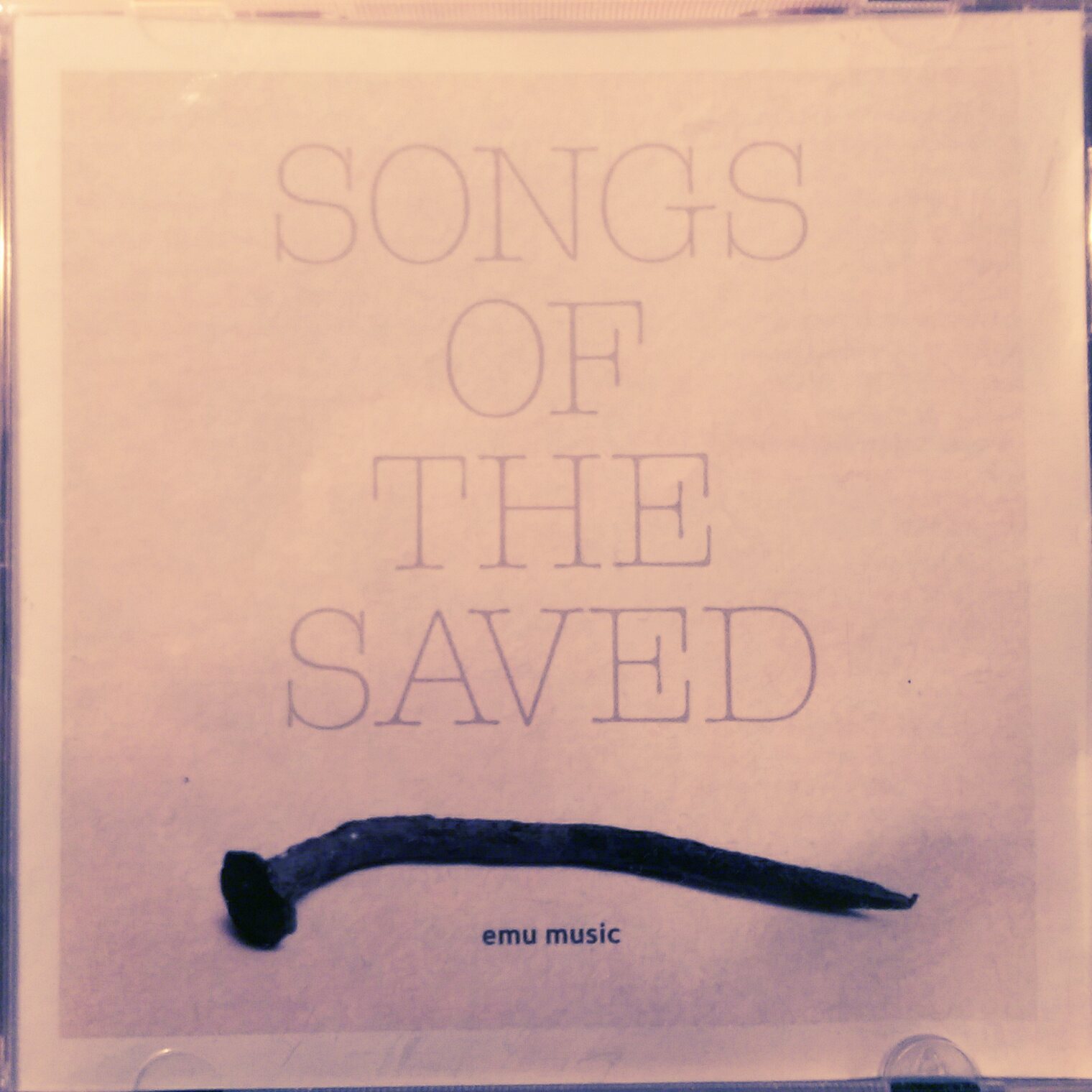
Songs of the Saved

IMAG3748_1 (1)Sharing today my two favourite songs from Emu Music‘s most recent album Songs of the Saved.
(You can listen to the album on Spotify). Both these songs would probably be good for a congregation to sing. I’m particularly keen on introducing Risen asap. It has such a triumphant chorus and bridge – and much encouragement! Blessings to you in your ministry.

Track 10: Risen 

1. When I am weak you are strong
When I am poor you are rich
When I am on my knees you are with me

2. When I lay down calm my fears
Death has no power you are near
Jesus my Lord will save
Jesus, you conquered the grave

Chorus
Jesus, you are our Saviour
Mighty, death has no hold
Risen, reigning forever
Jesus, you conquered the grave

3. Trumpets will sound, we will rise
Ashes and dust glorified
Never to die again
Never stop singing his praise

Bridge
You are wonderful, you are powerful
You are glorious, Jesus
You are wonderful, you are powerful
You are glorious, Jesus

© 2014 Michael Morrow, Philip Percival & Simone Richardson

Track 3: Rock of our Salvation

1. Have you heard the day is coming?
When the things our hearts have loved –
Dust and ashes ever-failing –
Will be seen for what they are

2. Can you hear a voice now calling?
Saying, “This is not the end
Come and walk new ways of blessing
And sing a new song to our Lord”

He’s the rock of our salvation
We will trust and be not afraid
He’s the sure and firm foundation
When every other ground gives way

3. Have you heard the condemnation?
Who could pay the dreadful price?
But, look, the silent suffering servant
Took on death to give us life!

4. Can you hear the voice of splendour?
Calling out “whom shall I send
To be a light to every nation?”
“Send me Lord God, here I am!”

The former things will be forgotten
A new creation descends at last
All fear and loss will be no more
All grief and sorrow and tears will pass

Mountains and trees will clap their hands
We’ll enter Zion with songs of joy
And every eye will see his glory
Our king exalted forevermore

He’s the Rock of our Salvation
Soon our hearts will be renewed
Crowned in everlasting gladness
And Jesus’ splendour fills our view

© 2013 Liv Chapman & Gavin Perkins