Music for Revelation and a fresh vision of the Risen Lord

Luke 3:16In the first week of January this year I spent 6 days leading music at a missions conference on top of a mountain in southeast Queensland. The conference was the CMS (Church Missionary Society) Summer School, an annual event for the mission organisation with various guest speakers and missionaries, and about 600 supporters, many of whom are advancing in years (though the younger age brackets are also well represented). The conference theme was ‘Keep Calm for Christ has Won’ with keynote bible talks from Revelation. In fact we covered the whole book in this time! Peter Rodgers, head of CMS Australia, taught us well, showing how Revelation really is a book for us, not written to confuse us but to encourage us, to comfort, strengthen and make us bold for the risen Christ who stands as Victor in the spiritual realm…now! This is the realm revealed in Revelation, the realm of things that must remain unseen until our current heaven and earth are ‘rolled back like a scroll’. Revelation looks behind that heavy backdrop curtain which is the present physical world. It reveals a giant canvas of spiritual realities, of the victory Christ has already won. Far from being a timetable for world history yet to come, the book of Revelation is largely a picture of what has taken place already. (Well, through the teaching we received it made much sense to understand that this is what John has revealed). His letter describes the giant canvas of Christ’s victory. As John takes in this visual revelation his focus zooms in on one area at a time, explaining each different aspect of the battle and the victory. Though people will no doubt continue to discuss and debate the sequence of events, and how many have already occured, we should take comfort in this revelation of the big picture spiritual reality, and not be frightened off by the endless debate which surrounds the book.Christ has won Christ has won the victory, at the Cross. No matter what the spiritual reality behind the scenes looked like at this point in world history, the outcome remains the same.

Probably the most striking vision of the Risen Christ we were confronted with comes in the very first chapter, at which John falls down as though dead!
“I turned around to see the voice that was speaking to me. And when I turned I saw seven golden lampstands, and among the lampstands was someone like a son of man, dressed in a robe reaching down to his feet and with a golden sash around his chest. The hair on his head was white like wool, as white as snow, and his eyes were like blazing fire. His feet were like bronze glowing in a furnace, and his voice was like the sound of rushing waters. In his right hand he held seven stars, and coming out of his mouth was a sharp, double-edged sword. His face was like the sun shining in all its brilliance. When I saw him, I fell at his feet as though dead. Then he placed his right hand on me and said: “Do not be afraid. I am the First and the Last. I am the Living One; I was dead, and now look, I am alive for ever and ever! And I hold the keys of death and Hades.”
Revelation 1:12-18 NIV

This is no defeated carpenter who suffered and died and was forgotten. This is no meek and mild moral teacher. This is the blazing Lion-Lamb who lives and reigns now! He suffered as a sacrifice and conquered over the power of sin and death, once and for all. Now he lives forever. His voice and feet and mouth are more brilliant than the sun, and full of power. This is the risen Lord Jesus, Son of God, Son of Man who would receive the Kingdom and restore people to God.
Why then should we fear if we belong to him and are united with Him by faith, united in His death and resurrection? This is the vision of Christ we must hold on to in our present struggles – struggles much like those the early Christians suffered as they held onto their faith amidst persecution and ridicule. This letter was written (this vision was revealed) as much for their encouragement as ours. Let’s explore it without fear!

There’s so much more I could write about all that I learned from Revelation at the conference, but this vision of the Mighty Risen Saviour stands out most clearly. Here are some of the songs we used at the conference which have strong references to the concepts and words of John’s Revelation. (You might find them useful if you are preaching or singing through a series on the book.)

Come Hear the Angels Sing (Michael Morrow)
We belong to the Day (Michael Morrow)
See Him Coming (Mark Peterson)
Crown Him with Many Crowns (hymn)
See the Man (Trevor Hodge)
It is well (Todd Fields version of this hymn with new chorus: “God has won! Christ prevailed!”)
Let Your Kingdom Come (Sovereign Grace)
Majesty of Heaven (Chris Tomlin)
No other name (Trevor Hodge)
The Power of the Cross (Keith Getty)
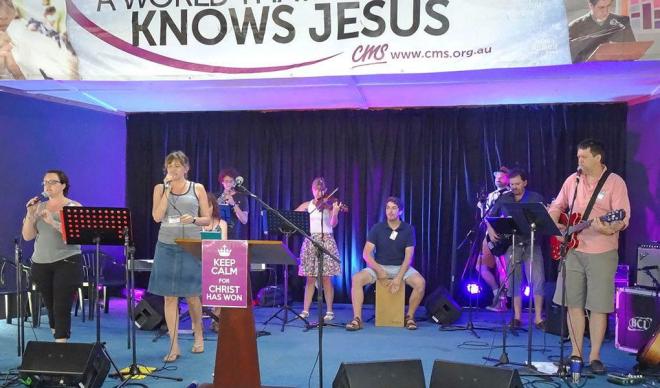
CMS2014
Here we are at CMS Conference 2014. Music brings such encouragement!

Ps. If you have been praying for my dad Martin, thanks! Please continue to pray that he will be able to keep absorbing the food he is now eating and gain in strength. We praise God for his recovery so far! Blessings,

Ros

Five Ways to Improve Congregational Singing

Five Ways to Improve Congregational Singing.

Here are some great tips from Keith Getty for you to consider if you are involved in Music ministry at your church. It will help review the effectiveness of what you are doing, as you remember who it is you are serving, and the goals of what you do. Blessings!
(Click the title above to read the full article at the Gospel Coalition)

You may also enjoy:

How effective is your music ministry?
cats recorder

Won’t you be my love?

This is a great song from Mercy Me, which brings a reminder of the unique position we are in as Christ’s followers. We are his hands and feet, his representatives on this planet, shining his brilliance and pointing people to Him.

“Won’t You Be My Love”

[Verse 1:]
When you fall asleep tonight
In your warm and cozy room
Know that I’m awake
And I’ve got no shelter and no food

[Pre-Chorus 1:]
I am not alone
My friends are broke and lost
Looking for someone to lead them to my cross
I need your help, I need your help

[Chorus 1:]
Won’t you be My voice calling
Won’t you be My hands healing
Won’t you be My feet walking into a broken world
Won’t you be My chain-breaker
Won’t you be My peacemaker
Won’t you be My hope and joy
Won’t you be My Love

[Verse 2:]
The other side of the world
She is just a few days old
A helpless little girl
With no family of her own

[Pre-Chorus 2:]
She is not to blame for the journey she is on
Her life is no mistake
Won’t you lead her to My cross?

[Chorus 1:]
Won’t you be My voice calling
Won’t you be My hands healing
Won’t you be My feet walking into a broken world
Won’t you be My chain-breaker
Won’t you be My peacemaker
Won’t you be My hope and joy
Won’t you be My Love

[Bridge:]
To those I call My own
To those I’ve set aside
As spotless without blame
The chosen ones My bride

[Chorus 2:]
We will be Your voice calling
We will be Your hands healing
We will be Your feet walking into a broken world
We will be Your chain-breaker
We will be Your peacemaker
We will be Your hope and joy
We will be Your love

Waiting on the Lord

“Do you not know? Have you not heard? The Lord is the everlasting God, the Creator of the ends of the earth. He will not grow tired or weary, and his understanding no one can fathom.   He gives strength to the weary and increases the power of the weak.   Even youths grow tired and weary, and young men stumble and fall;   but those who hope in the Lord  will renew their strength. They will soar on wings like eagles; they will run and not grow weary, they will walk and not be faint.”
Isaiah 40:28-31 NIV

Waiting on the Lord has taken on a whole new meaning in last two weeks. My family is waiting to see the Lord’s decision on my dad Martin, 85, who fell over his excited young dog on the farm, broke a rib and cartilage down front of rib cage, then ended up with in ICU with a digestive blockage and surgery. He has been in and out and back to the ICU, been sedated much of the second week – but he continues fighting on. It has been a difficult time for everyone and I would appreciate your prayers. I will probably continue to be fairly quiet on Seven Notes for a while yet.
Thank you all for being such a caring Blogging family!
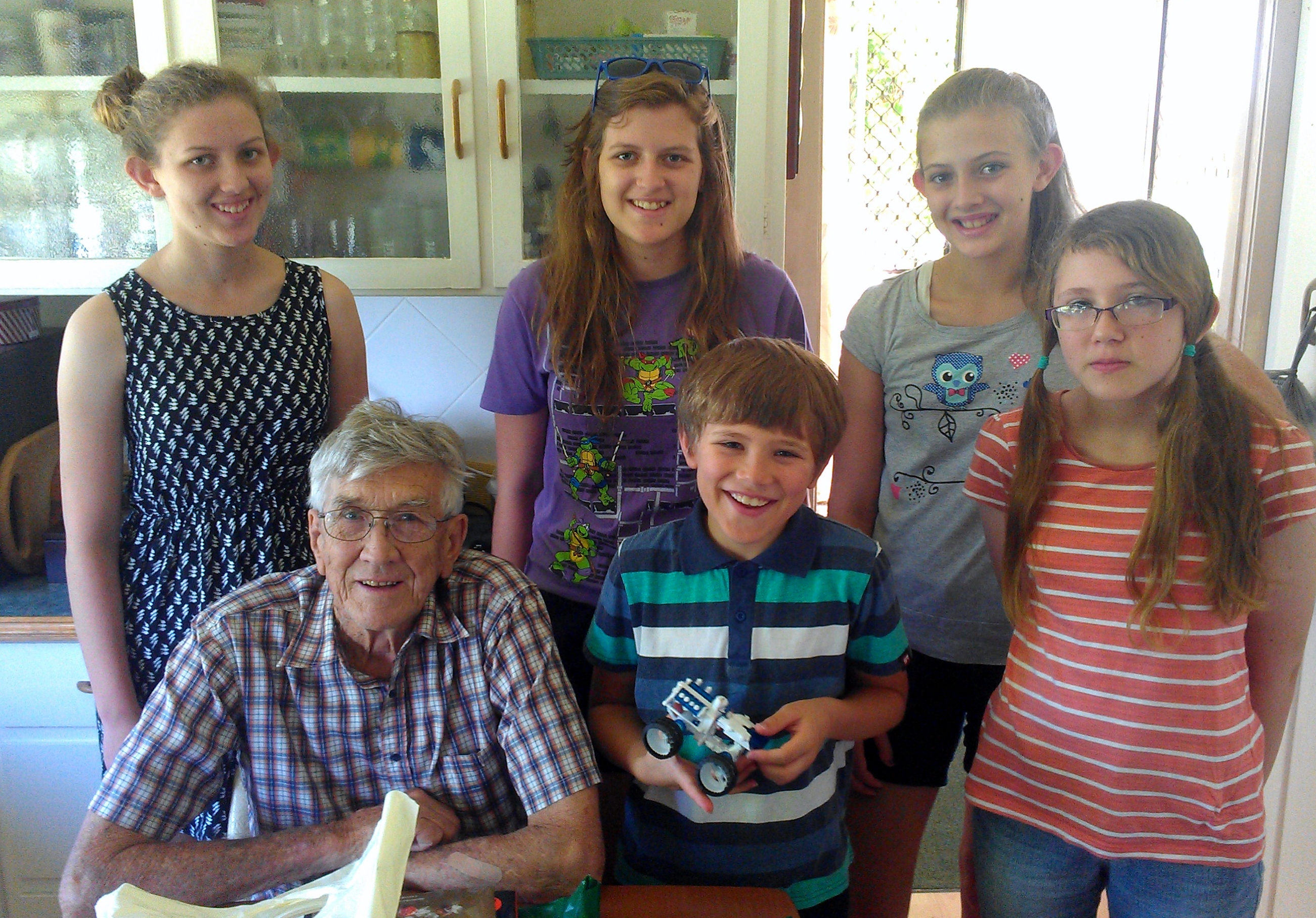
(Below you can see my dad Martin on Boxing Day 2013, his 85th birthday, with the 5 grandkids – mine are the three at the back. You can also read about him on this post: 23 Things my dad taught me ).

Blessings, Ros

Grandad and kids

Book Review: ‘One Forever’

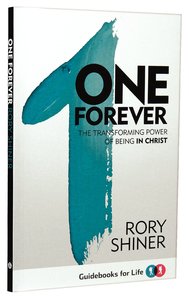
One Forever‘ by Rory Shiner (Matthias Media 2012) One forever2

When you think of yourself being “in Christ” what do you think of? How would you explain this gospel truth? It is much easier to understand Christianity in terms of believing in Christ, or following Christ or knowing Christ. Yet this “in Christ” terminology is favoured by the New Testament writers, Paul especially. It is also packed with the wondrous grace of God shown in the gift of His Son.
If you want to understand better what it means to be IN Christ then this book is for you.
Published in 2012 and written by Australian pastor Rory Shiner One Forever: The Transforming Power of Being in Christ explores so many facets of what this phrase means, in just seven chapters. His writing is conversational and friendly, accessible to most adults and probably many youth. His illustrations are easy to understand, yet the concepts are deep and his pastoral heart is clear. Rory wants us to have the confidence and certainty of being IN Christ, even if our faith is small.
Here are some of the main ideas he explores:

1. To be a Christian is to be in Christ.
“To be a Christian is to put on the Lord Jesus Christ. It is to believe into him. It is to clothe yourself with him.” p40

2. The size of your faith does not matter. The power of the one you have faith in does.

3. Justification is not up to us or our efforts.
Justification is objective. “Justification was not achieved in my heart but on a cross outside Jerusalem”.
“Justification is one of the great joy factories of the Christian life”.
P46

4. We are united with Christ in his death and his righteousness and his resurrection.
If we only think of ourselves as following Christ or knowing Christ or being near Christ then we don’t capture what union captures. p58. “Union with Christ is our defence against the playground bullies of sins and temptation.” p56

5. We are right before God because we are in Christ and HE is right before God.
“To stand in Christ is to stand in a place where the wrath of God will never be felt because wrath of God has already been there.” p36

6. Christians aren’t just ‘not perfect but forgiven’, they ‘forgiven and they are united to christ . . . indwelt by the Spirit of God, and they are empowered by God to live a new life. p 62

7. Christ identifies so closely with the Church, His church is His body, He is the Church. When his church is persecuted Christ is persecuted p.70, 68, “Church is the most concrete expression of your union with Christ.” p.73.
“The distinction we make between how we treat Christ and how we treat his gathered people is not a distinction that Jesus makes” (p74).

8. In the case of the weakest and most broken members of our churches, their very brokenness is their gift to the church. They gift to the church their brokenness, and as we are drawn out of ourselves to serve them, we learn how to be the body of Christ. p.72

Now if that has not whet your appetite to better understand the treasure of what it means to be “in Christ”, check out the video below which is designed to explain a little more. And you can find the book at Matthias, Koorong, and Amazon. I hope it will be a blessing to you!

You may also like: 

Holding on to what we already have in Christ – Philippians 3:16


and

Stones or bricks: God lives in us together (1 Corinthians 3:16)

Living in 10000 little moments of change

defining-momentsOver at Paul Tripp Ministries he has been discussing the possibility of life-changing change, something we all entertain every January as we consider our resolutions! Sometimes we even have some success with such changes, but as Tripp says, it takes 10000 moments to create lasting change. As you look ahead, consider if you are able to create more opportunities for those little, quiet “moments” where change takes place:

“Is change important? Yes, it is for all of us in some way. Is commitment essential? Of course! There’s a way in which all our lives are shaped by the commitments we make. But biblical Christianity – which has the gospel of Jesus Christ at its heart – simply doesn’t rest its hope in big, dramatic moments of change.

The fact of the matter is that the transforming work of grace is more of a mundane process than it is a series of a few dramatic events. Personal heart and life change is always a process. And where does that process take place? It takes place where you and I live everyday. And where do we live? We all have the same address – the utterly mundane.

Most of us won’t be written up in history books. Most of us only make three or four momentous decisions in our lives, and several decades after we die, the people we leave behind will struggle to remember the events of our lives. You and I live in little moments, and if God doesn’t rule our little moments and doesn’t work to re-create us in the middle of them, then there’s no hope for us, because that’s where you and I live.

This is where I think “Big Drama Christianity” gets us into trouble. It can cause us to devalue the significance of the little moments of life and the “small change” grace that meets us there. Because we devalue the little moments where we live, we don’t tend to notice the sin that gets exposed there and we fail to seek the grace that’s offered to us.

10,000 Little Moments

I don’t want to discourage you from making a resolution or tell you to throw away what you’ve already written, but I do want to challenge your way of thinking. You see, the character of your life won’t be established in two or three dramatic moments, but in 10,000 little moments. Your legacy will be shaped more by the 10,000 little decisions you make in 2014 rather than the last-minute resolution you’re about to make.

How can you establish a godly character and lasting legacy in 2014?

  • With 10,000 moments of personal insight and conviction.
  • With 10,000 moments of humble submission.
  • With 10,000 moments of foolishness exposed and wisdom gained.
  • With 10,000 moments of sin confessed and sin forsaken.
  • With 10,000 moments of courageous faith.
  • With 10,000 choice points of obedience.
  • With 10,000 times of forsaking the kingdom of self and running toward the kingdom of God.
  • With 10,000 moments where we abandon worship of the creation and give ourselves to worship of the Creator.

That’s a lot of moments. Too many, in fact, to accomplish successfully on our way. No wonder we settle for one big resolution instead of a day-by-day resolutions. But here’s what makes 10,000 little resolutions possible – GRACE. Relentless, transforming, little-moment grace.

You see, Jesus is Emmanuel not just because he came to earth, but because he makes you the place where he dwells. This means he is present and active in all the mundane moments of your daily life. In these small moments he is delivering every redemptive promise he has made to you. In these unremarkable moments, he is working to rescue you from you and transform you into his likeness.

By sovereign grace he places you in daily little moments that are designed to take you beyond your character, wisdom and grace so that you’ll seek the help and hope that can only be found in him. In a lifelong process of change, he is undoing you and rebuilding you again – exactly what each one of us needs!

Yes, you and I need to be committed to change in 2014, but not in a way that hopes for a big event of transformation, but in a way that finds joy in and is faithful to a day-by-day, step-by-step process of insight, confession, repentance and faith.

As 2013 gives way to 2014, wake up each day committed to live in the 10,000 little moments of your daily life with open eyes and humbly expectant hearts.”

You may also enjoy:
Try these New Life Resolutions
SYD0037  New Year's Eve Fireworks Sydney NSW _DSC2336

2013 in review

Thanks everyone for reading, following, sharing and commenting on Seven Notes of Grace in 2013. It has been great to interact with people both near and far away as we share our common hope in God’s great grace!
The WordPress.com stats helper monkeys prepared a 2013 annual report for my blog.

Here’s an excerpt:

The concert hall at the Sydney Opera House holds 2,700 people. This blog was viewed about 13,000 times in 2013. If it were a concert at Sydney Opera House, it would take about 5 sold-out performances for that many people to see it.

Click here to see the complete report.

Happy New Year

image

This is the view I’ve been enjoying for the last week. We are here once again camping by the creek on my parents’ farm just outside of Murwillumbah, NSW, Australia, with two other ministry families. It is a refreshing time! There are 6 adults and 9 children aged 8-17, and Mia the Maremma (dog). We have been exploring the book of Esther and devotional treasures from John Piper. Swimming, cards, reading and puzzles are the regular activities, as well as eating! We even have a shower operated by a car battery and a flushing real toilet!

Wherever you are I pray that your future hope lies not in the resolutions you make or keep, or in the happiness of circumstances that come your way. Rather may your hope lie in the good news of Jesus Christ and the salvation he won for you.

I pray (in the words of Larry Crabb):
“You will see Him clearly to the degree you clearly see your need for him, not for the blessings of a good life now but for the forgiveness that guarantees you your best life forever.”
(66 Love Letters, p.186)

Numbering our days on New Year’s Eve

From John Piper:

For me, the end of a year is like the end of my life. And 11:59 p.m will be like the moment of my death. The 365 days are like a miniature lifetime. And these final days are like the last hours in the hospital after the doctor has told me that the end is very near. And in these last hours, the lifetime of the year passes before my eyes and I face the inevitable question: Did I live it well? Will Jesus Christ, the righteous judge, say “Well done, good and faithful servant”?

I feel very fortunate that this is the way my year ends. And I pray that, at least for this morning, the year’s end might have the same significance for you. The reason I feel fortunate is that it is a great advantage to have a trial run at my own dying. It is a great benefit to rehearse once a year in preparation for the last scene of your life. It is a great benefit because the morning of January 1 will find most of us alive, at the brink of a whole new lifetime, able to start fresh all over again.

Teach Us to Number Our Days Teach Us to Number Our Days

The great thing about rehearsals is that they show you where your weaknesses are, where your preparation was faulty; and they leave you time to change before the real play. I suppose for some of you the thought of dying is so morbid, so gloomy, so fraught with grief and pain that you do your best to keep it out of your minds, especially during holidays. I think that is unwise and that you do yourself a great disservice. For I have found that there are few things more revolutionizing for my life than a periodic pondering of my own death. How do you get a heart of wisdom so as to know how best to live? The psalmist answers:

Thou dost sweep men away; they are like a dream, like grass which is renewed in the morning: in the morning it flourishes and withers. So teach us to number our days that we may get a heart of wisdom. (Psalm 90:5, 6, 12)

Numbering your days simply means remembering that your life is short and your dying will be soon. Great wisdom—great, life-revolutionizing wisdom—comes from periodically pondering these things.

Part of that life-changing wisdom that comes from numbering our days is humility and yieldedness to the sovereignty of God. James wrote to an arrogant group of people among the churches and said,

Come now, you who say, “Today or tomorrow we will go into such and such a town and spend a year there and trade and get gain”; whereas you do not know about tomorrow. What is your life? For you are a mist that appears for a little time and then vanishes. Instead you ought to say, “If the Lord wills, we shall live and we shall do this or that.” As it is, you boast in your arrogance. All such boasting is evil.

If we run away from the truth that we are a mist that appears a moment and then vanishes, if we try to keep this from our minds, then we will become arrogant and presumptuous. We will feel that we are the masters of our days and forget that every moment of life is owing to the free and sovereign will of God: “If the Lord wills, we shall live.”

But, if we do not run away from this truth and instead, at least once a year (for myself it must be much more often), imagine that our death is near, then we will be humbled and moved to yield ourselves to God more fully and filled with a practical wisdom for how to live.

From Desiring God
Read/Listen to the whole talk here at: http://www.desiringgod.org/resource-library/sermons/i-have-kept-the-faith

The Story behind the most famous Christmas carol

joy to the wJoy To The World (by Robert D. Kalis)

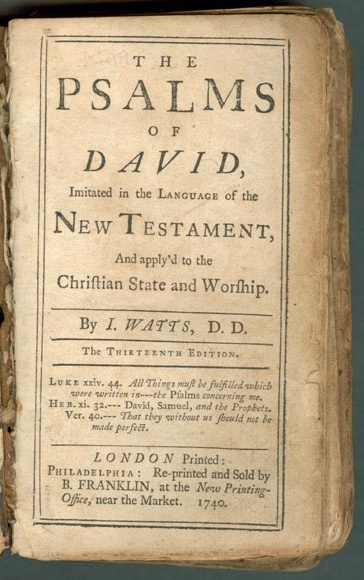
Our Christmas season would hardly seem complete without the singing of Joy to the World, the most joyous of the carols. Yet Isaac Watts, its author, never intended it to be a Christmas carol at all. Rather, it was a part of his Psalms of David Imitated, published in 1719, which contained paraphrases of many of the Psalms in New Testament language.

The story of the hymn, Joy to the World, is the story of the author, Isaac Watts (1675-1748), who is universally acknowledged as “The Father of English Hymnody”. He has earned the title, not because he was first to write English hymns, but because he gave impetus to hymnody and established its place in the worship of the English church.

For over one hundred years, congregational singing had been strictly limited to the Psalms of the Old Testament in poetic form. Many of these rhymed Psalms were so unnatural that Samuel Wesley, father of the famous brothers Charles and John, called them “scandalous doggerel,” and his opinion was shared by many.

The birth of Isaac Watts to a dissenting deacon and the daughter of a Huguenot refugee was followed by fourteen years of persecution and hardships for the entire family. Perhaps this suffering was responsible for Isaac Watts’ ill health, for he grew only to a height of just over five feet and was weak and sickly all his life.

Though weak in body, the boy was strong in mind and spirit and early in life showed promise of poetic capability. After one Sunday morning service, Isaac, then fifteen years old, complained of the atrocious worship in song. One of the deacons challenged him: “Give us something better, young man.” His answer was ready for the evening service and was sung that night in the Independents’ meeting, Southampton, where his father was pastor. Perhaps a hint of things to come was contained in this first verse of Isaac Watts:

Behold the glories of the Lamb Amidst His Father’s throne; Prepare new honors for His name, And songs before unknown.

When Isaac began to preach several years later, his congregation sang the songs that seemed to flow from his pen like a river. In 1707, the accumulation of eighteen years was published under the title, Hymns and Spiritual Songs. The river continued to flow, and in 1719 his “Psalms of David Imitated” was published, not as a new paraphrase of David, but as an imitation of him in New Testament language. It was as though the Psalms burst forth in their fulfillment at last.

watts-sacred_poemsJoy to the World is the “imitation” of the last half of Psalm 98. The author transformed the old Jewish psalm of praise for some historic deliverance into a Christian song of rejoicing for the salvation of God that began to be manifested when the Babe of Bethlehem came “to make his blessing flow far as the curse is found.” This is one of the most joyous hymns in all Christendom because it makes so real what Christ’s birth means to all mankind.

The tune to which the hymn is sung is attributed to George Frederick Handel and bears resemblance to phrases of his great oratorio, Messiah. Notably the first four tones match the beginning of the chorus, “Lift Up Your Heads.”

As we rejoice in the coming to earth of our Savior, we may also be glad for the veritable river of hymns that flowed from the pen of Isaac Watts. His name stands at the head of our most majestic hymns, notably, “When I Survey The Wondrous Cross.” In many hymnals more hymns of Isaac Watts are to be found than of any other single author.

http://www.joy-bringer-ministries.org/hymn1.html

You may also enjoy:
The Christmas Scale
The lost music of the Psalms