Lost in worshipping the created

I have some friends who are totally in lonature-man-in-tree-on-waterve with the beauty of the natural world. They ravenously consume nature documentaries and scientific discoveries, and relish the fascinating and amazing laws which exist in the universe. I must say I do share and rejoice in such a fascination! Yet it is possible to be lost, from God’s perspective, even with such an attitude. Linked to this love of creation is the exaltation of mankind, as the crown of creation. As mankind exalts, expresses, captures, ponders, reproduces, learns from and preserves all the wonder of creation, the wonder of the Creator (who in fact made, entered and sustains this creation!) can be, sadly, pushed aside.

Consider these words from John Piper:

“The tragedy of the world is that the echo is mistaken for the Original Shout. When our back is to the breathtaking beauty of God, we cast a shadow on the earth and fall in love with it. But it does not satisfy. The books or the music in which we thought the beauty was located will betray us if we trust to them. . . For they are not the thing itself; they are only the scent of the flower we have not found, the echo of a tune we have not heard, news from a country we have never visited.”
(from The Dangerous Duty of Delight)

His words remind me of those penned by the apostle Paul in his letter to the Romans, chapter 1:  For although they knew God, they neither glorified him as God nor gave thanks to him, but their thinking became futile and their foolish hearts were darkened. Although they claimed to be wise, they became fools and exchanged the glory of the immortal God for images made to look like mortal man and birds and animals and reptiles. . . They exchanged the truth about God for a lie, and worshiped and served created things rather than the Creator

Piper comments further on this ‘exchange’:  How could I put my eye to some great telescope, designed to make me glad with visions of the galaxies, and notice in the glass a dim reflection of my face and say:”Now I am happy, I am loved?” How could I stand before the setting sun, between the mountain range and the vastness of the sea, and think that everlasting joy should come from making much of me? . . . “
(Don’t Waste your Life, John Piper, 2003, p.186.)

What this really boils down to is love of humanity, humanity exalting itself in bold denial of the Creator, saying ‘all this can exist and be sustained simply by the ingenuity of mankind’ – or by the evolutionary process, which apparently needs no initial designer (?!).

How sad to be so in love with the shadow of the Creator, that a relationship with the Creator is fortfeited, the Creator in whose image we are made, the Creator whose love and sense of right and justice and compassion lives in us as a testimony to his character – even if we deny him.

If this is a struggle for you, please check out my older post on a similar topic: https://sevennotesofgrace.com/2013/07/01/an-unwasted-life-makes-much-of-jesus/

I trust and pray you can see the God who created and sustains this universe, by His living and eternal Word, Jesus Christ. Faith in him will never disappoint!

Don’t wait til you feel like singing

http://nickmorrowmusic.com/learning-to-jog/

If you’re the type of person who doesn’t like the current racket of Christian radio, or is embarrassed to invite your friends to church because they make fun of the music, I can relate. If you stand with your hand in your pockets during worship sets, or cross your arms, or pretend like you’re singing so that no one thinks you actually hate the music, or spend the entire worship set in the prayer room so that you don’t have to sing…I can relate. I’ve done all that since I was old enough to sing in church.

But about a year ago, something changed: I started jogging every morning.

Anyone who has ever made the resolution to work out in the morning knows that for the first 10-15 minutes of being awake, you want to stab yourself in the face for ever having the idea to wake up before the sun does, let alone work out. 

But five or ten minutes into my first run, something strange happened. My body adjusted to the shock, and the fresh air felt good on my lungs. The silence of the early morning brought a calming serenity, and my head cleared. Pretty quickly I realized that a morning workout was better than a strong cup of coffee. My energy levels drastically increased. I started eating healthier to supplement my work-out habit. Prayers and creative ideas would come to me during morning workouts. I became one of those crazy people who really like working out early in the morning. (For the record, I never started jogging in place or wearing bright spandex shorts.)

I realized that I had become pretty physically disciplined through exercise, but I was totally neglecting spiritual discipline in regards to corporate worship. “What would happen,” I thought, “if I treated corporate worship like I do my jogging routine. What if I was consistent whether I felt like it or not. What if every time I went to church, I made conscious decision that I was going to worship God, no matter what?”

The results were immediate. I started singing in church, every Sunday. No matter who was watching or listening, no matter how much I didn’t like the music. I reflected on the truth of the lyrics, and sang along. The first few times I did this, I noticed something strangely familiar. After about 10 minutes of singing my reservations wore off. My critical spirit disappeared, and I began to really open up and worship. I began to connect with God. My pretense slowly melted away, and I was left with gratitude and a sense of fulfillment. Just for having showed up and worshiped.

I also started leading worship more consistently for various church functions. No matter how I felt or what songs we were playing, I’ve committed to showing up, giving my best effort, and focusing my attention on God. Some of the times when I was most reluctant to show up and lead worship music have been the most engaging corporate worship experiences I’ve ever had.

I learned a solid principle when it comes to spiritual discipline: we should worship God because it is good for us, not because it makes us feel a certain way. We can’t wait around until we “feel” like worshiping. That may never happen. Worship is a spiritual discipline. We shouldn’t wait for a “reason to sing” any more than we should wait on a reason to pray or to love our neighbor. Like love within marriage, “worship” is a choice and an action, not a feeling. Sentimental emotions toward God will come and go, but the best weapon in the arsenal of Christian worship is resolution: a firm dedication to giving God the glory He is due, as often as possible. 

So next time you show up to a worship service and don’t feel like it, start with discipline. Force yourself to sing the gospel, and let me know how that goes for you…


Not the first generation to be addicted to bass

If you have ever wondered about the love of pipe organs in church music, and the intense love for ‘good old hymns’ which have been played on this grand instrument, the following research may help explain these strong connections:

Church organ Does organ music ‘instil religious feelings’?

According to an experiment people who experience a sense of spirituality in church may be reacting to the extreme bass sound produced by some organ pipes.

Many churches and cathedrals have organ pipes that are so long they emit infrasound which at a frequency lower than 20 Hertz is largely inaudible to the human ear. In a controlled experiment in which infrasound was pumped into a concert hall, UK scientists found they could instil strange feelings in the audience at will. These included an extreme sense of sorrow, coldness, anxiety and even shivers down the spine.

To test the impact of extreme bass notes from an organ pipe on an audience, researchers constructed a seven-metre-long “infrasonic cannon” which they placed at the back of the Purcell Room, a concert hall in South London. They then invited 750 people to report their feelings after listening to pieces of contemporary music intermittently laced with sound from the “cannon”.

The results showed that odd sensations in the audience increased by an average of 22% when the extreme bass was present. Some of the experiences were described as, ‘shivering on my wrist’, ‘an odd feeling in my stomach’, ‘increased heart rate’, ‘feeling very anxious’, and ‘a sudden memory loss’. This was an experiment done under controlled conditions and it shows infrasound does have an impact, and that has implications in a religious context and some of the unusual experiences people may be having in certain churches.”

Sarah Angliss, an engineer and composer in charge of the project, added: “Organ players have been adding infrasound to the mix for 500 years so maybe we’re not the first generation to be ‘addicted to bass’.”

The article “Organ music ‘instils religious feelings‘” was first reported by the BBC in 2003.

http://www.musicademy.com/2014/05/first-generation-addicted-bass/

The Gift (and Curse) of Musical Time Travel

Such is the power of music….

johnmarkmiller's avatarThe Artistic Christian

Wallace Monument and Me

A picture of me standing on top of the William Wallace Memorial in Stirling, Scotland, overlooking one of the battlefields where Wallace fought for freedom.

So it turns out time machines do exist…

Any musician will tell you that music offers the ability to transport its listeners to another place and time, allowing you to relive old memories in a powerful and moving way. Have you ever wondered why this is?

According to Daniel Levitin, author of This Is Your Brain on Music: The Science of a Human Obsession, the memory centers in your brain light up any time music is played. This close connection between music and memory is why the information attached to songs is what children tend to remember for a lifetime (think of how you learned to write… the ABC Song). This is also why Alzheimer’s patients can forget the faces of their own spouse and…

View original post 504 more words

How do you measure if Christ is growing in you?

20140521-222228-80548305.jpg
If you want to get serious and take an honest look at your Christian walk, then these eight questions (from Tim Keller’s book Center Church) will be very helpful. They have been effectively crafted to make you take a good look at your progress in becoming more like Christ. Talk them through with your growth group or a spouse or close friend or prayer partner. Pray about them too! They won’t make you feel comfortable, but since when was change comfortable? God is most definitely in the business of changing us.
 

  1. Do you have spiritual assurance of your standing in Christ? How clear and vivid is it?
  2. How does the Holy Spirit bear witness with your spirit that you are his child? Are you conscious of a growing spiritual light within, revealing more of the purity of the law, the holiness of God, the evil of sin, and the preciousness of the imputed righteousness of Christ?
  3. Is your love for Christians growing? Do you find yourself have a less critical, judgmental spirit towards weak Christians, those who fall, or those who are self-deceived? Have you been cold to anyone?
  4. Is your conscience growing more tender to convict you of the very first motions of sin in the mind, such as the onset of resentment; worry, pride or jealousy; an inordinate desire for power, approval and material comfort; and an over-concern for your reputation? Are you becoming more aware of and convicted about sins of the tongue, such as cutting remarks, rambling without listening, deception and semi-lying, gossip and slander, inappropriate humour, or thoughtless statements?
  5. Do you see signs of growth in the fruit of the Spirit? Can you give examples in which you responded in a new way – with love, joy, patience, honesty, humility, or self-control – in a situation that a year or two ago you would not have?
  6. Are you coming to discern false, idolatrous motives for some of the good service you do? Are you seeing that many things you thought you did for God you are actually doing for other reasons? Are you coming to see areas in your life in which you have resisted the Lord’s will?
  7. Are you seeing new ways to be better stewards of the talents, gifts, relationships, wealth, and other assets that God has given you?
  8. Are you having any seasons of the sweet delight that the Spirit brings? Are you finding certain promises extremely precious? Are you getting answers to prayers? Are you getting times of refreshing from reading or listening to the Word?

Discussion Questions for GOSPEL RENEWAL (from chapter 6 of Timothy Keller’s Center Church, 2012)

Shake like you’re changed

Mercy Me has produced another fun song with Shake (video and lyrics below) but the message is most significant! God’s love is real and we can’t stay the same as we were before. If we are in Christ there will be a noticeable difference in our lives, our attitudes, our reactions, our level of contentment, thankfulness and joy. This is the confidence we have, that God is committed to his project of changing us to be more like His Son. “He who began a good work in you will perfect it until the day of Christ Jesus.” (Philippians 1:6)
(Another great song you might like to look up on this topic of change is an older one from Steven Curtis Chapman: The Change?)


I just can’t believe
Where my life was at
All that I know is that my heart was broken
And I don’t ever wanna go back

Ain’t no explanation
How I saw the light
He found me and set me free
And it brought me back to life

Blame it on the transformation
Changed down to the core
His love is real
And I can’t sit still
Cause my name’s not shamed no more

Great God Almighty, gonna change this
Great God Almighty, He gonna change me

You gotta shake, shake, shake
Like you’re changed, changed, changed
Brand new looks so good on you
So shake like you’ve been changed

Come on and shake, shake, shake like you changed
Shake, shake, shake like you changed

Maybe He came to you
When everything seemed fine
Or maybe your world was upside down and hit you right between the eyes
No matter when it happened
At 7 or 95
Move your feet ’cause you are free
And you’ve never been more alive

You gotta shake, shake, shake
Like you’re changed, changed, changed
Brand new looks so good on you
So shake like you’ve been changed

Come on and shake, shake, shake
Like you’re changed, changed, changed
Brand new looks so good on you
So shake like you’ve been changed

Come on and shake, shake, shake like you changed
Shake, shake, shake like you changed
Shake, shake

Great God Almighty, gonna change me
Great God Almighty, He gonna change me
Great God Almighty, gonna change me
Great God Almighty, He gonna change me

No matter when it happened
At 7 or 95
Move your feet, ’cause you are free
And you’ve never been more alive
You gotta shake, shake, shake
Like you’re changed, changed, changed
Brand new looks so good on you
So shake like you’ve been changed

Scraps of Worship

scrapsSharing today a good post for Monday morning – for encouragement! How is your “devotional life” going? Much of this post from The Blazing Center will no doubt ring true for you too:

If you could use one word to describe your current devotional life, what would it be? Mine would be “scraps”. So often I feel like all I can muster is a distracted scrap of devotion to God. For example, here’s what my Bible reading time often looks like:

Step 1: Open Bible. Pray that God would meet me as I read his word.
Step 2: Read diligently for thirty seconds, taking in at least three full sentences.
Step 3: Begin wondering if I’ll ever receive my tax refund, because it sure would come in handy right now.
Step 4: Feel guilty for being distracted. Try to “come back” into the presence of God (whatever that means).
Step 5: Repeat steps one and two plus additional prayer of repentance for being distracted.
Step 6: Begin thinking about my next killer blog post that will rock the blogosphere.
Step 7: Repeat steps 1, 4, and 5.

You get the point. It’s a constant battle against my sinful nature, which will seize on the slightest distraction. Many times I feel guilty instead of refreshed after doing my devotions. I feel like I didn’t pray enough, or with enough passion, or for enough people. And I certainly didn’t have enough love for God. My feeble scraps of devotion to God are pathetic, with a capital “pathetic”.

But God has been teaching me about devotional scraps lately. My devotion (probably too strong of a word) to God is nothing more than scraps, but God accepts, and even delights in those scraps. And when I get distracted, I don’t have to work my way back into God’s presence. I can come right back to God and experience full acceptance. Why? Because Jesus Christ is holding the door open. Always.
God’s love for me has nothing to do with my devotion and everything to do with Christ’s perfect devotion. Jesus was passionately devoted to God. He didn’t offer any scraps, he offered perfect obedience and love. And then his life ended. Abruptly. Brutally.

Now his righteousness is mine, and he perfects my feeble scraps of devotion and presents them to God. God loves Jesus, which means God loves me, end of story. The door to God is held open by the cross.

So yes, my worship is nothing more than scraps. But to God, they’re delightful scraps, made perfect by his son. How freeing this truth is. Today let’s throw aside any hope we have in our scraps of devotion and place all our hope in Christ. True devotion to God starts at the cross.

Can you relate to my feeling of devotional scraps?

‘Christ in us’ rescues our relationships (James 3:16)

Screen Shot 2020-04-22 at 10.39.59 amYes, the title is a bit of a mouthful. I was also considering: “The wisdom that saves us from our destructive tendencies in human relationships.” Admittedly that is a tad too long, but this is the very essence of James 3:16. “For where you have envy and selfish ambition, there you find disorder and every evil practice.”
Continuing the Three Sixteen series we see here in James how our relationships suffer apart from Christ. Our fallen nature pits us against one another as natural enemies. We hold each other with suspicion, trying to ensure someone else is not better than us, or better off than us, with better stuff, or people, in their life).

You see this attitude play out clearly when two toddlers meet and cautiously approach each other for the first time. Can I really trust you? As adults we try to veil our suspicion, and often do it quite well, but the bent of envy and selfish ambition runs deep in our hearts. We can trace this way back to the vulnerability Adam and Eve felt once they recognized their nakedness. There was a need to cover up, to be on the defensive against the ambitions of others. Our relationships suffer as a result. Yet this is the wisdom of the world we live in.

James shows us another way, the way of wisdom from above. Let’s read the verse in context below:
“But if you harbour bitter envy and selfish ambition in your hearts, do not boast about it or deny the truth. Such “wisdom” does not come down from heaven but is earthly, unspiritual, demonic. For where you have envy and selfish ambition, there you find disorder and every evil practice. But the wisdom that comes from heaven is first of all pure; then peace-loving, considerate, submissive, full of mercy and good fruit, impartial and sincere. Peacemakers who sow in peace reap a harvest of righteousness.” (James 3:14-18 NIV)

These are such challenging things to actually live out, but when the peace of Christ comes to rule in our hearts we can have true peace with each other. We can rejoice with those who rejoice and express genuine love and care for others. This is what makes the Christian community so unique, so attractive to the world. Sure, we are not perfect, but if Christ is in us he cannot but shine through our relationships, which (to some extent) lack envy and selfish ambition. In Christ we can know some measure of sincere love, due to the measure of humility in our brothers and sisters, who are also being transformed into the likeness of Christ.

Let’s work to heed the warning of James’ 3:16 and yet also rejoice! The indwelling Saviour has sweetened our human existence beyond measure. Praise be to Him!

The violent grace that saves and transforms

Welcome to all my new followers who have joined up in the last few weeks. (Thanks!) Great to have you along! Today I’m reposting something I wrote a year or two ago which explores the unexpected nature of God’s grace to us in Christ . . . and a great song:

“So ruthless, He loves us,
So reckless His embrace

To show relentless kindness,
To a hardened human race

The joy that was before Him
On the Man of Sorrows face,
And by His blood He bought a violent grace”

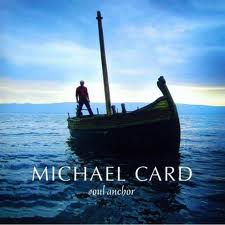
Many years ago some great ministry friends introduced me to a writer of very “deep” and challenging Christian songs, Michael Card. And I had almost forgotten him until the other day! Now why did I remember him, you ask? At the moment I am studying for an exam, a “big picture” Bible overview subject and I really need to get some memory verses and concepts stuck in my head, about how Christ fulfills all the OT law and prophets. So then I thought, Hebrews! Great book for explaining that. This was quickly followed by my recollection that Michael Card’s “Soul Anchor” album is the book of Hebrews in song (just about).

“A Violent Grace” (quoted above and below) is Track 1. So passionately does it remind us that God’s grace was no stroll in the park! Jesus was the high priest who sacrificed Himself. His love was (and is) ruthless! He showed the ultimate kindness and grace to the hardened human race that despised Him. Yet the joy set before Him held the Man of Sorrows to the Cross. And what was this joy? (Hebrews 12:2)
“Let us fix our eyes on Jesus, the author and perfecter of our faith, who for the joy set before him endured the cross, scorning its shame, and sat down at the right hand of the throne of God.” (NIV)
“We do this by keeping our eyes on Jesus, the champion who initiates and perfects our faith. Because of the joy awaiting him, he endured the cross, disregarding its shame. Now he is seated in the place of honor beside God’s throne.” (NLT)

What was this joy? I suppose there was the joy of sitting on the Throne. But moreso, we are His joy! We are His reward. His death saved a people. All those the Father gave Him can never be snatched from His hand by the power of His death and resurrection. (John 10:28-29) We are God’s chosen people, recipients of immense and violent grace.
No wonder the message of the Cross is so offensive to so many.
But for us being saved it is the power of God!

A Violent Grace (Michael Card, 2001)

A mural of memories moves by in a blur
His prayers all seem unanswered and unheard
His pleading petitions, his loud cries and tears
A last reprieve will simply not appear
So ruthless, He loves us, So reckless His embrace
To show relentless kindness, To a hardened human race
The joy that was before Him
On the Man of Sorrows face
And by His blood He bought a violent grace
Most willing of victims, And with His final breath
Destroyed the one who holds the power of death
The hate heaped upon Him, scorning all the shame
But all for love He died and overcame

In all of time no one had ever heard
And to the world the thought seemed so absurd
Beyond their wildest dreams no one could ever tell
Of a high priest who would sacrifice Himself

How worship murders our self-righteousness

20140428-162940.jpg
This is a post I have been meaning to share from Zac Hicks blog. It is a brilliant argument for persevering in the ‘gathered worship’ of God, even if we have issues with other people or with things not suiting our personal taste . . . Or even when it hurts! Of course ‘Worship’ is much greater than merely the Sunday gathering – it is a whole of life response of thankfulness for Christ’s saving work in us. But if you ever thought gathering together for corporate worship was not all that necessary, think again. God has some special work to do in us there.

“Many of us struggle to see gathered, corporate worship as helpful to our spiritual growth and vitality. And even if we find it helpful, we might lift an eyebrow at anyone who might say that it is instrumental or (dare say it) necessary. The irony for those of us who take lightly the weekly gathering of the people of God is that the spirit which rises up within us that says “I don’t really need this that much” is the very same spirit that worship intendeds to kill. If worship had a Twitter profile, its brief description would have to include “Murderer.” Worship was built by God to be a blood-thirsty attack dog with a keen appetite for something very specific in us. My favorite worship theologian, Jean-Jacques von Allmen, explains:

To declare that [worship] is optional, that it is not necessary to the continuation of God’s work of salvation, is to despise the source of grace. … By worship, if not by worship exclusively, the Church keeps open the wound which the resurrection of Christ and the outpouring of the Spirit have inflicted on the self-righteousness of the world, and in this way too the process of salvation is continued.*

God designed worship to slay our self-righteousness.

We human beings are “bruised by the Fall” (Philip Bliss) in such a way that we are hell-bent self-justification machines. We know no other pattern than to hide our weaknesses and manufacture pseudo-strengths. Our instinct, when accused of wrongdoing, is to deny and defend. Our default, when we do the right thing (no matter how much we say it’s “for the glory of God”) is to pat our spiritual selves on the back and believe that God is more happy with us because of what we’ve done. When the Holy Spirit applied the work of Christ to us, God the Father delivered the mortal wound to the beast of our self-righteousness. But the beast, while bleeding out this side of eternity, is still snarling, clawing, lashing, biting, and lunging. It is this disgusting creature that Paul is talking about in the latter half Romans 7, when he finally cries out, “Wretched man that I am!” This tormenter of souls rises weekly, daily, hourly within us.

But we’re not without hope. God has equipped a warrior to unsheath his gospel-sword every week to deliver another thrust into the thick flesh of our self-righteousness. That warrior is worship.

What von Allmen meant was that worship, rightly done, takes us on a needed weekly journey where we are reminded that we must come to the end of ourselves before we can fully see, appreciate, appropriate, and drink in the gospel. The beginning of worship should cast such a vision of God that we are blinded by His glory and leveled by His perfection. Worship gives us a picture of God’s holiness that is so high and so “other” that we are jarred out of any sense of being able to attain it. During the week, our amnesia begins to set in, and our eyes go blurry, such that the mountain of God’s glory starts looking like a gently-sloped hill. “I can climb that,” we think. (“I can avoid these pet sins for a few days.” “I can please God by being faithful in my devotions and Bible reading.” “I can be a good mom and not lose my temper.” “I can avoid those channels and sites.”) We think, “God must love me more this week, because I’ve been pretty good.”

And worship grabs us by the collar, slaps us in the face, and says, “Wake up, man!” It yells, “You’re far worse than you ever imagined, because, look, look at God!” And, once again, the scales fall off our eyes and the placid, green, hills-are-alive peak you thought you were looking at is really a hulking Himalayan cliff. And there it is: the moment of impossibility, where God’s gracious sword enters the beast yet again. Worship is God’s gracious murderer.

But God is in the business of killing precisely so He can make alive again. However, instead of reviving our self-righteousness, He gives us an alien organism–His very Self, Jesus Christ the Righteous One. This is the moment in worship where, after we have seen God’s glory and confessed our sin, God delivers the word, “There is therefore now no condemnation for those who are in Christ Jesus.” The gospel is good news, indeed.

Worship should be that epic…every week.”

*Jean-Jacques von Allmen, Worship: Its Theology and Practice (New York: Oxford, 1965), 115-116.

Check out this post for some more discussion about church and worship.
Blessings,
Ros