How’s your daily worship?

Even for professional worship leaders, it is easy to get so wrapped up in the logistics of leading a worship ministry that we neglect the daily art of worshiping God.


20140806-125428-46468831.jpg
Sharing today some interesting thoughts from Nick Morrows blog, on the topic of daily worship. I’ve had an inking for a while now that many spiritual disciplines (staple daily activities for Christians for centuries) have now fallen aside in our culture of excessive entertainment and instant gratification. Other things have replaced them. (Think about things which have become daily ritual for you – are they good or the ‘best’ things you could do on a daily basis….are they in any way helping to grow your faith in Christ?)

“The deeper I dive into the world of Christian worship history, the more I want to go. Most people hear the word “history” and want to fall asleep in about seventeen seconds. But I’m convinced that we can learn much about ourselves and our spiritual ancestry by becoming students of worship history. Understanding worship history gives worship leaders a well-rounded knowledge of where we come from. As the famous saying goes, “Those who don’t learn from history are doomed to repeat it.”

Here are a few themes I’ve seen in worship history, along with some practical suggestions in incorporating them into our worship services:

Worship as a daily practice. The earliest Christians inherited the “Tefillah” from their Jewish roots, a list of eighteen prayers to be said three times daily. Worship remained a daily ritual for most tefillahChristians up until the Middle Ages.

Many of us shudder when we hear “worship” and “discipline” mentioned in the same sentence. Many Christians today scratch their heads as to how worship works itself into our daily lives, outside of Christian radio and maybe a morning Scripture or two.

Even for professional worship leaders, it is easy to get so wrapped up in the logistics of leading a worship ministry that we neglect the daily art of worshiping God. Incorporating worship into our daily routine is more about intentionality than anything. Whether it’s reciting the Lord’s Prayer, a lunch time prayer walk, or bedtime confessions, our daily worship routines shape who we become.”

http://nickmorrowmusic.com/standing-on-the-shoulders-of-the-saints/

Boredom – an incredible gift

“We no longer expect children to endure boredom for a second. In our infancy we bounced balls, fed the rabbits, made a model with Mechano and watched the ascent and descent of a yo-yo. We also read books. Our meals were pretty predictable, and a visit to the local park was an event. Today visits to the zoo, bouncy castles, jumping on a trampoline are routine necessities. Daily playgroups and day-nurseries fill every vacant minute with watching videos, learning how to play with computers and bouncing on the soft-play. Everything is wound up to a pitch of noisy razzmatazz. The toys children play with are made of garish plastic of primary colours. The child who would cheerfully have eaten mashed potatoes and vegetables every day is now encouraged to stimulate its palate and develop a taste for chillies, aubergines, vindaloo curry or garlic.

A.N. Wilson has written, “Pascal said that all human trouble stemmed from our inability to sit quietly in one room. If he was right, then we have serious trouble ahead, with an extraordinarily restless, vacuous generation of human individuals waiting to take over the world. The lesson of how to be bored must be learnt if the child is to grow up sane, and this is for two reasons.

First, boredom is what most human lives consist of. Few jobs are interesting all of the time; and when retirement age has been reached, the long days of emptiness cannot possibly be entirely devoid of tedium. Learning how to cope with these periods of vacancy can actually reduce, or eliminate their boringness. A human being who has only grown up with the notion that he or she must be stimulated all the time will never be able to assuage ennui in the way that we grown-ups do – by walks, gardening, crosswords, or the inner life.

And this is the second and greater reason for hoping that a child will learn how to cope with an eventless afternoon. Out of what feels like boredom comes the capacity to be inward. Unless you have been bored, an essential part of your imagination will never have been allowed to grow. Stories, poetry, prayer and mathematics, all activities which have stretched the human race…have developed out of its capacity to live with boredom.”

This excerpt comes from ‘A Child Was Bored in the Service | Banner of Truth’

http://banneroftruth.org/us/resources/articles/2001/a-child-was-bored-in-the-service/

Reflections on effective Preaching: “A view from the pew”

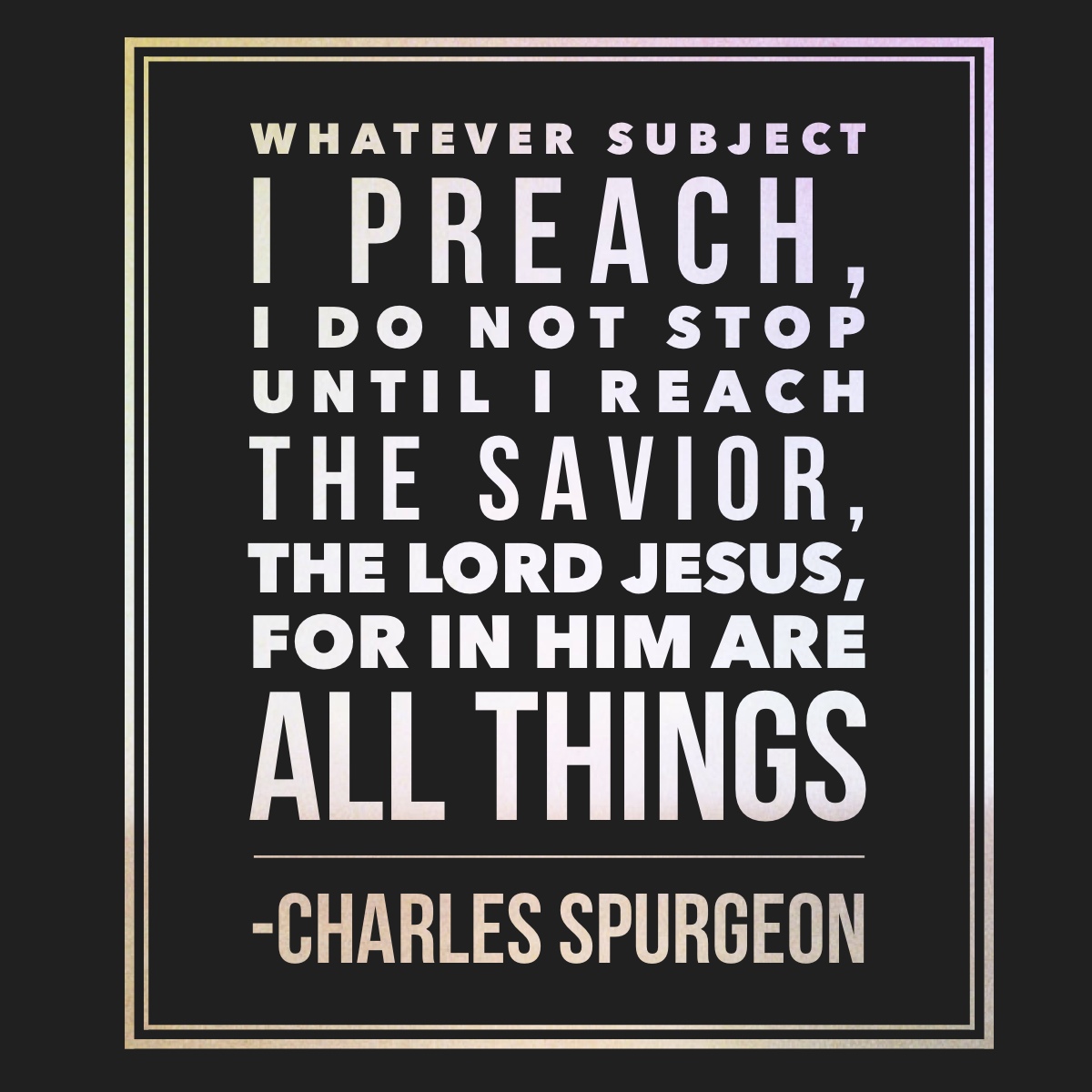
  1. 14–Charles-SpurgeonFor a preacher to have mastery of a passage, the passage ought to have mastery over him.
  2. Preachers who preach God’s truth into life (births, deaths, marriages, job losses, debts, breakins, car accidents, cancers etc.) give me the equipment to fight and survive as God’s child in the real world.
  3. Good preachers obliterate the divide between lofty grandeur of God and the messiness of real life, so that I see and do something about the constant rub of idolatry against the call to discipleship in my own life.
  4. I love it when preachers tell me what arrests, intrigues, amazes and captivates them from God’s word. A preacher’s delighted, wide-eyed insight is a massive aid to engagement.
  5. Preachers with a humble conviction about the authority of preaching pack more punch.
  6. “Unpacking a passage” is much less exciting than releasing a wild lion into our midst.
  7. I sense when a preacher’s preparation has included preparation of his own heart, because he preaches not only to me but to himself.
  8. I find preachers who walk boldly into a passage hungry for vital truth, fearless of apparent exegetical, theological or pastoral difficulty are far more compelling for their courage.
  9. I like to hear a preacher’s certainty born of a thoroughness of preparation and theological conviction.
  10. It is frustrating when a sermon has no application.
  11. I am discouraged when applications are effectively an exercise in heaping guilt on the listener. Rhetorical questions are a cheap way out! It is different from being challenged by gospel. My guilt has been taken by Christ!
  12. I’m captivated when I get sense that the preacher’s hardest fight has been the fight for his own soul, obedience, understanding and submission to the truth.
  13. Only after taking God’s word to his own heart is a preacher able to cleverly, sensitively, wisely, boldly craft a sermon that has the hearts of others as its goal. Pastors make good preachers – they are students of their own heart and other’s. They anticipate my questions.
  14. Laughter opens hearts and minds and helps me stay awake.
  15. Listeners lose interest when the preacher has lost interest first. (Boredom is the new morality – if it is boring it is more than wrong!)
  16. Every preacher must ask himself at the end of every sermon, “So what!?”
  17. God-breathed scriptures are full of risk, danger, opportunity, drama and daring – not like a stuffed lion in a museum. Tame sermons turn the living Word of God into a lifeless museum exhibit.
  18. Preachers shouldn’t be afraid of deep truths that average mortals have to take time and thought to comprehend. It isn’t bad that a listener doesn’t understand something this time round.
  19. I feel secure when preacher shares his sermon structure/aim for his sermon with me.
  20. Passion in preaching is by product of love for God.
  21. Preachers who tell me how to feel – or how they feel – leave my feelings unstirred. Challenge is to so use their words and their insight into the text and people to add the weight of all their energies to the Spirit’s sovereign work.
  22. Choose someone interesting if you are going to copy another preacher!
  23. Poetry and art are the preacher’s friends – they move hearts and stir affections…that my life would be warm to God!
  24. Biblical theses and models are helpful in my understanding and recall of breadth, theme and unity of the bible.
  25. Biblical theses and models can suck the life out of sermons when they become wheel ruts.
  26. Good preachers don’t take themselves too seriously, but take God’s truth seriously enough to die for.
  27. A sermon must be personal, passionate and pleading – not just a talk.
  28. A truth known intellectually may not be a truth truly comprehended, believed and obeyed. (It’s helpful when a preacher knows I believe it, but that I haven’t acted on it or truly comprehended it. It’s great when a preacher probes, personally, from pulpit!)
  29. You may never say anything really new, but that’s no excuse for not saying it in a fresh way.
  30. My obedience (thought, word, deed) completes God’s purpose for preaching.(These points were taken from a talk given at the QTC Preaching Conference 2012 by musician Colin Buchanan)

New Christmas album from Sovereign Grace!

Sharing an exciting announcement from Sovereign Grace: A new Christmas album, Prepare Him Room: Celebrating the Birth of Jesus in Song, will be released on September 1. Here are the details from Bob Kauflin:

PHR Album Art bg_Fotor“We released our first Christmas album, Savior: Celebrating the Mystery of God Become Man, in 2006. A few years ago I started thinking we should do another one. After all, we can never have too many songs that help us reflect on and celebrate the wonder of Jesus becoming Emmanuel, God with us.

So I was intrigued last fall when my good friend, Marty Machowski, asked if Sovereign Grace Music would be interested in producing a Christmas album to accompany an Advent curriculum he had written. After a few conversations with Marty and his publisher, New Growth Press, we decided it would be a great opportunity. The result was our next album, Prepare Him Room: Celebrating the Birth of Jesus in Song, due out Sept. 1. While the album will stand on its own, thirteen of the fourteen songs on it correspond with lessons from Marty’s devotional.

Writing songs to specific passages of Scripture in each lesson caused us to explore some new territory for Christmas songs. While not all of the songs ended up being congregational, I’m pretty excited about what we ended up with.

Below is a preview version of a song I co-wrote with Jason Hansen, a pastor in the Sovereign Grace Church in Gilbert, AZ. We started it at a songwriter retreat in January and finished it over many long distance sessions using FaceTime and Google Docs.

The song is called “Who Would Have Dreamed” and is based on Micah 5:1-2.

Now muster your troops, O daughter of troops; siege is laid against us;
with a rod they strike the judge of Israel on the cheek.
But you, O Bethlehem Ephrathah, who are too little to be among the clans of Judah,
from you shall come forth for me one who is to be ruler in Israel,
whose coming forth is from of old, from ancient days.

We tried to capture the wonder that God would choose unlikely Bethlehem as the birthplace for the Messiah, and the greater wonder that the Son of God himself would be born as an infant. Here are the lyrics:

On a starlit hillside, shepherds watched their sheep
Slowly, David’s city drifted off to sleep
But to this little town of no great renown
The Lord had a promise to keep

Prophets had foretold it, a mighty King would come
Long-awaited Ruler, God’s anointed one
But the Sovereign of all looked helpless and small
As God gave the world His own Son

And who would have dreamed or ever foreseen
That we could hold God in our hands?
The Giver of Life is born in the night
Revealing God’s glorious plan
To save the world

Wondrous gift of heaven: the Father sends the Son
Planned from time eternal, moved by holy love
He will carry our curse and death He’ll reverse
So we can be daughters and sons

And here’s the preview (above). I’m delighted that it’s being sung by my youngest daughter, McKenzie.”
(By Bob Kauflin)

Light meets the Dark – Tenth Avenue North

I’ve been enjoying the songs on this album (Light meets the Dark) by a group called Tenth Avenue North. The song below (track 1) reveals some great aspects of grace, of what happens when grace collides with the darkness within us. It was used in the film ‘Grace Card’. I trust you will enjoy!

“Healing Begins”

So you thought you had to keep this up All the work that you do So we think that you’re good And you can’t believe it’s not enough All the walls you built up Are just glass on the outside

So let ’em fall down
There’s freedom waiting in the sound When you let your walls fall to the ground
We’re here now

This is where the healing begins, oh This is where the healing starts
When you come to where you’re broken within
The light meets the dark

Afraid to let your secrets out
Everything that you hide
Can come crashing through the door now
But too scared to face all your fear
So you hide but you find
That the shame won’t disappear

So let it fall down
There’s freedom waiting in the sound When you let your walls fall to the ground
We’re here now
We’re here now, oh

This is where the healing begins …

Sparks will fly as grace collides
With the dark inside of us
So please don’t fight
This coming light
Let this blood come cover us
His blood can cover us

This is where the healing begins …

Always in His presence

music_is_nature__silhouette_by_sammy3773-1And God raised us up with Christ and seated us with him in the heavenly realms in Christ Jesus. . . (Ephesians 2:6)

“…the gathering is unique not as an encounter with God (it is that, though God’s presence is a constantly available comfort and help to the Christian); rather it’s unique because it is an encounter with the people of God, filled with the Spirit of God, spurring one another along in the mission of God. Christ in me meets Christ in you.”  (Mike Cosper, Rhythms of Grace)

Lately I’ve been chatting with fellow musical Christians on “LinkedIn” – particularly on the question of worship, the difference between the titles ‘song leader’ and ‘worship leader’ (click here to read that discussion) and if there is any way to reconcile our different opinions. In some ways I feel I’ve been told that my preference for calling those who lead the singing in church ‘song leaders’ is way too blinkered, because singer do so much more than just lead the singing. In the view of many, it seems, song leaders are actually leading people into God’s presence through the experience of corporate worship. Now this may just be semantics, and perhaps all they mean is that we feel closer to God as we draw near to Him together in praise. But if not then such ‘Worship leaders’ have the responsibility of making a way of access between sinful man and God. To me, that is a huge claim, a responsibility we could never have. In fact, it sounds like something that JESUS has already accomplished.

Now should I sit quietly and take this as being a denominational difference, or difference in opinion, which doesn’t really matter? Or is this view actually misleading, with no grounding in the New Testament texts or the practice of the early church? Does this view of corporate worship actually detract from what Christ has already done? Does it hark back to the Old Testament ‘temple worship’ model which is now fulfilled in Christ?

From what I understand in God’s word, the idea that our corporate worship is a worship experience – where we tentatively approach God and hope that he will inject his spirit and power into us through this experience – has very much been surpassed in Christ! This is how the Old Testament people (who did not experience the Holy Spirit in an ongoing, everyday, ‘I will never leave you’ kind of way) approached God in the temple. They came with some measure of uncertainty and a great measure of unworthiness.

But for us as Christ followers, living this side of the cross, the power that raised Jesus from the dead is living in us! He is living in us! We are always in Him, always in His presence. (Check this review of One Forever: The transforming power of being in Christ.) We are in the very throne room of heaven right now, even while our daily lives here continue. You could even say that we Christians are always in church, because we are always ‘in Christ’. There is such great certainty and confidence here. Our unworthiness has been dealt with and wrapped up in Christ.

“We do not go to church to worship, but, already at worship, we join our brothers and sisters in continuing those actions that should have been going on – privately, [as families], or even corporately – all week long.” (Harold Best, Music through the eyes of Faith, p.147)

Jesus is our great High Priest, the way to the Father which the Father provided. He is our one true worship leader, who leads us into a life of worshipping our loving Heavenly Father at the very moment we are saved.
Of course it is great to gather together as God’s people, to remind one another of the reality that we serve a great and wonderful God. As we sing we fulfill the way God designed for us to be building each other up in the Lord, speaking the ‘Word of Christ’ into each other’s lives. But we don’t need to see corporate worship as a tenuous time, when hopefully the music is good and powerful enough to lead people into His presence. My friends, we are already there! We are always in His presence!

“Paul says to the church at Corinth, ‘Don’t you know that you yourselves are God’s temple and that God’s Spirit lives in you?’ He later tells them that their bodies are the temple of God. This is the astounding reality of New Testament religion: we as Christians are the house of worship.”
(David Platt, Radical Together, 2011)

Here are a few other verses from God’s Word to consider – to remind us that our worship of the Almighty God is an ongoing and daily activity, which is also expressed corporately when we gather together.

“In him the whole building is joined together and rises to become a holy temple in the Lord. And in him you too are being built together to become a dwelling in which God lives by his Spirit.” (Ephesians 2:21-22)

“Therefore, I urge you, brothers and sisters, in view of God’s mercy, to offer your bodies as a living sacrifice, holy and pleasing to God—this is your true and proper worship.” (Romans 12:1)

Thanks for reading my rant – an important one! If you want to think more on these things check out the following:

https://sevennotesofgrace.com/2014/04/17/why-i-prefer-song-leader-to-worship-leader/
https://sevennotesofgrace.com/2013/09/13/two-books-ive-got-to-get-hold-of/
https://sevennotesofgrace.com/2013/09/25/all-of-creation-sing-with-me-now-the-veil-is-torn/
https://sevennotesofgrace.com/2013/10/26/corporate-worship-is-a-serious-gift/
https://sevennotesofgrace.com/2014/04/30/how-worship-murders-our-self-righteousness/
https://sevennotesofgrace.com/2014/04/26/drawing-back-the-curtains-on-christ-the-role-of-song-leaders/


A powerful performance

bryanpattersonfaithworks's avatarBryan Patterson's Faithworks

THE Piano Guys are on a mission to perform at all seven wonders of the world.

For their latest project, they travelled to the world famous Christ the Redeemer statue in Brazil. They created and performed a special piece at the special location, bringing the heartfelt hymn of praise How Great Thou Art together with the theme from the movie The Mission.

Listen and be calmed.

View original post

Most Influential Blogger Award

I’d like to thank John Mark Miller at The Artistic Christian for nominating me for the Most Influential Blogger Award!

Most Influential Blogger BadgeIf you enjoy posts about Art, Culture and Life from a Christian Perspective, then you should visit his blog. I’m sure you would enjoy it!

http://theartisticchristian.wordpress.com/welcome-to-the-artistic-christian/

Award Guidelines

Here are the guidelines for acceptance – really very straightforward.
To accept this award, the awardees must do the following:
1. Display the Award on your Blog.
2. Announce your win with a blog post and thank the Blogger who awarded you.
3. Present 10 deserving Bloggers with the Award.
4. Link your awardees in the post and let them know of their being awarded with a comment (or a pingback).
5. Include an embedded video of your current favorite song (YouTube has almost everything, just copy and paste the link into your WordPress editor). If a video is not possible you can embed a SoundCloud track.

My Favorite Song

At the moment I’m really enjoy listening to the album WORTH IT ALL by Meredith Andrews. This song, PIECES, is a goodie!

My List of Most Influential Bloggers!

It’s my privilege to introduce you to some talented bloggers who I believe are Most Influential Bloggers. I hope you enjoy their writing as much as I do:

1. Nick at MOUTHFUL OF GOSPEL http://nickmorrowmusic.com/

2. Bryan at BRYAN PATTERSON’S FAITHWORKS http://bryanpattersonfaithworks.wordpress.com/

3. Mel at IN MY FATHER’S HOUSE http://melwild.wordpress.com/

4. Rob at MERE INKLING http://mereinkling.wordpress.com/

5. Nathan at NATHAN MILLICAN’S BLOG  http://nathanmillican.com/

6. Deidre at CRUSTY BREAD http://crustybreadblog.com/

7. Anna at A JOURNEY OF FAITH http://daughterbydesign.wordpress.com/

8. Lori at A DISPLAY OF HIS SPLENDOR http://adisplayofsplendor.com/

9. Justin at EMBRACING GOD’S GRACE http://jmeyerksu.wordpress.com/

10. Belinda at GRACE AND TRUTH http://graceandtruth.me/about/

Growing into sacrificial, radical living

jesuschangedmylifejpgAs we grow in relational intimacy with Christ through the gospel, we gradually overflow in radical living for Christ. Any low-grade sense of guilt gets conquered by a high-grade sense of gospel that compels a willing, urgent, joyful, uncompromising, grace-saturated, God-glorifying obedience in us. We live sacrificially, not because we feel guilty, but because we have been loved greatly and now find satisfaction in sacrificial love for others. We live radically, not because we have to, but because we want to.

David Platt in “Radical Together

Go Deep in the Grace of God – Piper’s Five Points

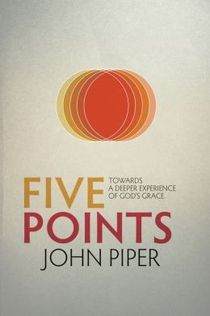
piper 5pts“Perhaps your greatest spiritual need right now is precisely this — to let the flood of God’s prodigal grace wash over you afresh and like never before. As much as your instincts may be saying that next step is yours, what decision you make, what change you can effect, it may be that what you need most is to stand back, look outside yourself, and see the salvation of the Lord which he has worked for you  — by sheer grace.”

If you are looking for a little book to read for some encouragement in understanding the grace of God, Pipers “Five Points” will probably fit the bill. In less than a hundred pages you can plumb the depths of the irresistible grace of God, in a journey through the Five Points of Calvinism, on which the book is based. Along with Martin Luther, John Calvin was the most influential writer in the Protestant Reformation. If you have never considered the building blocks of our Protestant faith, head over to Piper’s site for the free PDF.

http://www.desiringgod.org/blog/posts/go-deep-in-the-grace-of-god