Blessed with extravagant grace to bless others

Do you ever shake your head in bewilderment at God’s people in Old Testament days? Despite many blessings, God’s faithfulness and the repeated demonstration of His power and redeeming love, they refused to share the glory and knowledge of their merciful God with the peoples about them. Instead they chose to turn away from the true & living God to pursue the gods and lifestyle of the culture around them. How could they do this? (we ask!) I know I have thought this way in the past, but perhaps we need to examine ourselves here in 2012, as God’s blessed people.

Consider these words from David Platt: “God blesses His people with extravagant grace, so they might extend His extravagant glory to all peoples on the earth. This basic, fundamental truth permeates Scripture from beginning to end. . . (yet) we live in a church culture that has a dangerous tendency to disconnect the grace of God from the glory of God. Our hearts resonate with the idea of enjoying God’s grace. We bask in sermons, conferences and books that exalt a grace centering on us. And while the wonder of grace is worthy of our attention, if that grace is disconnected from its purpose, the sad result is a self-centred Christianity that bypasses the heart of God.”
(“Radical” by David Platt (2010), p69-70).

Ouch! Basking in conferences, sermons and books! (That’s me.)
So have we also been keeping God’s blessings to ourselves? In our modern (western) world we have freedoms and luxuries unimaginable in past eras. Consider our education, our health, our homes, our families, our incomes. Are we using them to make ourselves comfortable or to spread the extravagant glory and grace of God to all peoples? Do we use our technology, our maturity in Christ, our education and knowledge of the Bible to bless others? Our blessings are given that we might bless others – this was the essence of God’s promises to Abraham (that all the world would be blessed through Father Abraham’s great nation).
Let’s not be content to sit on our blessings – particularly the blessing of salvation.
Unlike those OT people, we have the gracious gift of the Holy Spirit at work in us, moulding and shaping us to be more like Christ and giving us the desire to serve Him. Pray that we would not be content with self-centred Christianity. . . let’s not keep the blessings to ourselves.

Jeremiah 31:33 –  “But this is the new covenant I will make with the people of Israel on that day,” says the Lord. “I will put my instructions deep within them, and I will write them on their hearts. I will be their God, and they will be my people. (NLT)


Jesus wants me for a sunbeam, or maybe a firework?

“Jesus wants me for a sunbeam” was one of the first Sunday school songs I ever learned. (If you have never had the pleasure of singing it, try google.) It called us all to shine for Jesus each day, to please Him “at home, at school, at play”. I wonder if Katy Perry learned this song in Sunday school? Daughter of an evangelist/pastor in California, Katy Perry grew up as part of her parents’ ministry, singing in church from age 9 to 17. She grew up listening to gospel music and was not allowed to listen to secular songs. And despite her recent liftestyle choices and the song lyrics which shout about things that would deny the God of her childhood, His truth comes shining through (at times), possibly despite her intentions.

Perhaps you already know what I’m talking about? Perry’s song “Firework” is her self-confessed favourite from the album ‘Teenage Dream’ (2010). When you check out the lyrics you could be mistaken for thinking this was a song that called Christians to remember that they are a unique creation, called to “shine like stars” in the darkness of this generation. Here is a sampling of the lyrics:

Do you know that there’s still a chance for you, ‘Cause there’s a spark in you
You just gotta ignite the light, and let it shine, Just own the night like the 4th of July
‘Cause baby you’re a firework,
Come on, show ’em what you’re worth
Make ’em go “Oh, oh, oh” As you shoot across the sky-y-y
Baby, you’re a firework, Come on, let your colours burst
Make ’em go “Oh, oh, oh”, You’re gonna leave ’em all in “awe, awe, awe”
You don’t have to feel like a wasted space,
You’re original, cannot be replaced
If you only knew what the future holds . . .

Perry says of this song: “Now, people are coming back and almost adopting it as their own anthem . . . I hope this could be one of those things where it’s like, ‘Yeah, I want to put my fist up and feel proud and feel strong. . . and I think ‘Firework’ … would be like the opus or my one song — if I had to pick a song to play — ’cause it has a great beat. But it also has a fantastic message.

God’s truth bleeds through this song, as it proclaims that we are unique beings, the intentional creation of a loving all-powerful Creator. Amen to that! But what she has needs to know is that our potential to “shine” comes from outside of us. It’s not “deep inside of you“, as Perry says, waiting for us to ignite it. Our “full potential” is realised when we make peace with God, through Christ, and He enters into our life. We become His children, heirs of the promise, co-heirs with Christ. He puts his Spirit in us, the “spark” which begins to restore us according to God’s original design. God’s spark is what makes us see our true worth, and changes the way we live our lives and interact with others, for their good. We can only shine out the likeness of His character if He is in us. We can shine out the family likeness only if our Father is God. Here is the way we are to “shine”:

Do everything without complaining or arguing, so that you may become blameless and pure, children of God without fault in a crooked and depraved generation, in which you shine like stars in the universe as you hold out the word of life—in order that I may boast on the day of Christ that I did not run or labor for nothing.” (Philippians 2:14-16)

If you are looking for a great ‘church’ song, produced by Sydney Anglicans which sums up the essence of this verse, try looking at EMU music for the song “The Light” by Nicky Chiswell (2000). It has been a real encouragement for many years in our church. Keep shining!

New songs say ‘God is doing something now’!

music_is_nature__silhouette_by_sammy3773-1Sometimes change can make us very uncomfortable. It can make us feel totally out of control, it can rob us of things to which we feel entitled. Let’s explore this for a moment in terms of church music.
We Christians develop a real attachment to the songs of our faith. They become associated with the ups and downs we have been through, or the exciting time of our youth, or the time we first came to faith. When we sing them the songs instantly conjure the emotions of those times. This is why some people just can’t sing songs from the funerals of dearly departed friends and family, without being overwhelmed by sadness.

So should we learn new hymns and spiritual songs, especially when such change can cause great angst?  I had a conversation with a lovely friend over the weekend who was frustrated with a lack of interest for changing and updating the songs they sing in their church. Many of her congregation are still attached to the ‘Scripture in Song’ repertoire which became popular in the 70s and 80s. The musical style of these choruses hark back to this era . . . and make some people really cringe!

I have found a great rationale for new songs from Rick Warren, author of the “Purpose Driven Church” (1995). If you study church history you’ll discover that every genuine revival has always been accompanied by new music. New songs say ‘God is doing something here and now, not just a hundred years ago’. Every generation needs new songs to express its faith“.

Another great insight comes from a Presbyterian minister Rowland Lowther (2002). He says that his favourite Christian song is “When I survey the Wondrous Cross”, to the old hymn tune, . . . but for the sake of the Gospel I would be willing to change the musical style so that those wonderful lyrics could impact on the next generation. . . What matters to me more is not that I be moved, but those in the next generation has those wonderful old lyrics to a music format that can lift their spirits to worship the same living God that the writer of this hymn worshipped hundreds of years ago”.

Great point. I think it also comes down to the concept of “renewing our minds”. By hearing the gospel explained by new people, in new and fresh ways, our understanding of God and the gospel of His grace is strengthened and deepened. That has got to be a good thing.

You may also like:

12 Principles for Church Singing                                       New Songs we have been singing
praise him picFamily Singing

Trusting school friends with your past and present.

Just signed up to a facebook group on a whim: my highschool cohort from grade 10-12 (1986-1988). There’s about 70 members, but the grade had around 200 students. And it is a strange kind of feeling reconnecting with people that you once knew pretty well for about a decade of your school life (20+ years ago), and no longer do at all! So why is it strange, and why do we do it? (and more to the point, why would we turn up for that even scarier situation, the face to face school reunion?)
I think part of it is about showing off, at least those aspects of yourself you think are worth showing off, that you are proud of (family, achievements, makeovers!). But part of it is also to be significant, to be recognised and remembered, and thought well of. We want people to see that we have changed and grown up. People may remember me as the musical geek (yes that’s how we were considered I think) who spent her every moment in the music room and in rehearsals. (Yes, we were allowed in the music rooms, unsupervised, during every break time and before school).
But there is that larger nagging question in the back of my mind: can I really trust these people, whom I no longer know, with the current information about who I am, who I have become after so many years of change and growing up. These barely recognisable faces, who like me have experienced the ravages of time, knew me at the height of my adolescent arrogance! Though I want to re-write that impression, I wonder if I can really trust them with it? And do they even care? All those highschool insecurities bubble to the surface, and tempt me to leave the group!
Yet I suppose all of us are in the same boat, aren’t we, not really knowing who each person turned out to be, where their life has taken them since highschool, and whether or not they can be trusted.
I hope I can be trusted! And I hope that I will show grace and kindness to anyone who chooses to reconnect with me.

Lessons from the tissue box

runny-noseA friend who knows I’m sick at the moment has passed on a deep theological question, probably just to keep me busy and distracted from the headcold and sore throat. Here is the question: is God teaching us stuff in sickness always, or is sickness just bad stuff that happens as a result of being in a sin filled world, or is it both? Well I could just say ‘both ‘and be done with it! But let’s ponder for a little while.

It seems that we all have become convinced that the default setting of our body should be 100% health. We think that eternal youth is possible if we just eat well, sleep well, exercise and use the right face cream. From the moment we are born our bodies begin to visibly grow and blossom, but at the same time we are degrading! Skin cells die and flake off even on those cute little babies. And there are a thousand other processes of repair (and warfare) going on behind the scenes, minute by minute, day after day, year after year, that we are not even aware of.
Sciencemuseum.org.uk says: “A cell can die in many ways – through infection, poisoning, overheating or lack of oxygen. An uncontrolled death is messy: the cell swells up, and its contents leak away. This may damage surrounding cells. But there is another, tidier way to go – programmed self-destruction, or apoptosis. It seems that cells often choose to kill themselves. We now know that controlled cell death is crucial for normal human development and good health throughout life.”
Yet strangely it is only when this ‘cell death and repair’ process inconveniences us (or threatens our very existence) that we notice it and label it ‘sickness’. The pain in the throat, the headache and the runny nose all represent an unseen and amazing battle being fought in our bodies. They are simply doing what God designed them with the ability to do – fight off intruding viruses and other random elements. Now this is cheery isn’t it!

If sin had never entered the world through the first Adam, would people still have had to endure sickness? Probably? Their immortal bodies, that were NOT going to have to experience death, surely would have to repair themselves, and sometimes that fight to repair would mean ‘sickness’. (This is all supposition, please understand).  Sickness is perhaps not so abnormal afterall, but a mechanism designed by God to sustain and repair us. And as it is part of normal life (though perhaps made more difficult by fall of man and the groanings of the imperfect world around us) it is something we must learn to be content with and glorify God in.

Paul’s words in Philippians 4 perhaps apply here: 12 I know what it is to be in need, and I know what it is to have plenty. I have learned the secret of being content in any and every situation, whether well fed or hungry, whether living in plenty or in want. 13 I can do everything through Him who gives me strength. Being sick brings a greater need, for sleep, for relief from pain, for someone to go to the shops and buy more tissues and panadol. Yet this is just part of the normal daily challenge to look to God and see this world and ourselves from His gracious perspective. He IS teaching us everyday, but could we say especially in days of sickness we LEARN more? Perhaps we are more teachable when it is a greater challenge to be content in Him. We learn more because our self-reliance, on our own abilities and physical strength, is sorely challenged.
But in Christ, who gives us strength, we can be content even in sickness. It will be a battle, as we remind ourselves that we are in Him, and seek to rest on His strength, not ours.

Sickness also helps imprint in our hearts and minds this truth from Romans 8:28 (NLT)
“. . . God causes everything to work togetherfor the good of those who love God and are called according to His purpose for them”.

Sickness teaches us to trust Him more – and rest in Him.

You may also like:
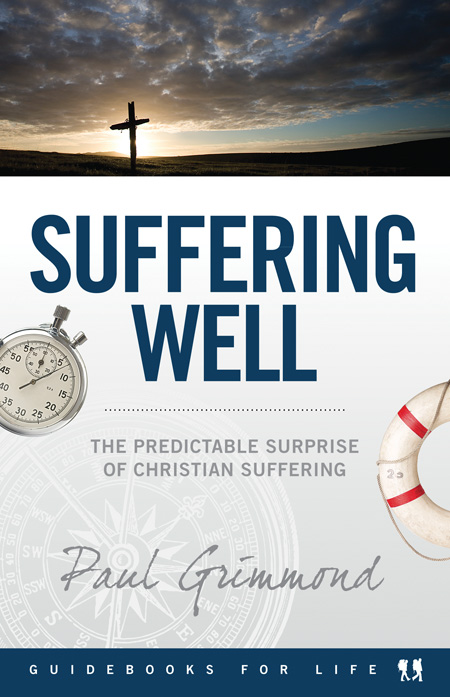
How to suffer well
Suffering Well book cover

Thinking about Psalm 73: What did Asaph find in the Sanctuary?

asaphMany thanks to guest preacher Andrew Bain who invited us last Sunday (Mother’s Day) to consider our attitude to the prosperity of the ungodly in the world. In Psalm 73 Asaph expresses at length his bitter envy of ungodly prosperous people and he cries out to the Lord at this extreme injustice. Then midway through the Psalm he takes the time to visit God’s sanctuary (probably the temple, to pray and read God’s word). There he realises how seriously skewed was this envy and this cry of injustice!  “I finally understood the destiny of the wicked” (v17). “I realised that my heart was bitter….I was foolish and ignorant” (v21-22).   In the sanctuary Asaph gains renewed confidence in the goodness of God, and realises that it is the ungodly, not himself, who are on the “slippery slope” to ruin.

What a strange coincidence (God-incidence!) that this Psalm was explored on Mother’s Day, a day when some of the “unfair” aspects of motherhood are supposedly remedied, with gifts and much  attention and thanks being showered on mothers. The world has been shouting at us for some time that motherhood is unfair, that our biology has put women at a disadvantage in a society where prosperity and material gain is the ultimate good (and god!). When we compare our opportunites with those of most men in the developed world, it can seem unfair that women must put their career and their bank balance on hold in order to bear children (in considerable agony). . . and then stay home with them, doing daily repetitive tasks which, though extremely valuable, are deigned unimportant in the eyes of the world. Even the alternative seems unfair: we put the children in day care, head back to work and then, exhausted, enjoy very little of our life as we juggle a thousand demands on our time and attention. We may even get to the point of envying non-Christian women, who sleep in on Sundays and don’t have to add church commitments, bible reading and prayer to their already full diaries! How unfair is it that women often must battle loneliness when at home with little ones, and again at the other end of life, lonely, widowed and apparently forgotten? How unfair is it that some women who want children have been deprived the opportunity, while the ungodly despise and dispose of their unborn children in great numbers?

So what do we do when these bitter thoughts creep in, settle down and discourage us? Like Asaph we need to turn to God. As Christians, we are the temple of the Holy Spirit, He lives in us, yet we must take the time to “tune in” to God’s voice. The “sanctuary” is a place we must go to daily, as we turn away from the voices and attitudes of the world, and tune into God’s voice in His word and through prayer. Paul challenges us in the book of Romans: “Do not be conformed to this world, but be transformed by the renewal of your mind” (Rom 12:2). As we tune into God’s voice, in His word, the Spirit helps us understand and see things from a right perspective. God reminds us that the world we live in does not hold correct opinions about heavenly realities: who is King, who is in charge, what is right and wrong, and the ultimate purpose of mankind! God reminds us of the riches we have in Christ, which far surpass anything we could aspire to own or achieve in this “unfair” world. Let’s turn to God and restore our confidence in his goodness. He sent His own son, Jesus, to face extreme injustice, nailed to a cross for the sins of those who were his enemies (us!) and because of this we can draw close to God. Yet I still belong to You; You hold my right hand.  You guide me with your counsel, leading me to a glorious destiny. Whom have I in heaven but You? I desire you more than anything on earth. My health may fail, and my spirit may grow weak, but God remains the strength of my heart; He is mine forever. (Psalm 73)

The Power of Thinking

thinkThis may sound like a really obvious thing to say, but when you tell others that you have been thinking about them, something good happens. If I were Oprah W, and had my own talk show, I may tell you that when someone thinks positive thoughts about someone else then it causes a cosmic set of ripples to flow out from you which can cross continents and oceans and contributes good karma to the universe . . or some such. But what I am actually proposing is much more practical and real. Let me explain.

While attempting to jog around the lake today (more of a jog/walk) the thought came to me that I should pray for my children, and specifically for their future spouses (if that is something that will be part of their future). I know many people who have made this a regular practice since their children were small, and I think we did it better many years ago; haven’t really discussed or prayed for them in this way for a while. So I did.

And the outcome? Well there weren’t 3 Christian Prince Charmings lined up at the door with application forms when I got home, but when I mentioned these thoughts and prayers to my eldest girl (15) I know by her response that she felt loved, knowing I cared about her future. No doubt this interaction, these shared thoughts, will lead to more careful thinking on her behalf as well. (Not that she needs to make a choice right now!)

Another example is a young mum who comes to our playgroup at church. She normally is difficult to engage in conversation, but by mentioning a simple thought to her, many new conversations have opened up about quite personal things. (You are probably wondering what ‘thought’ I shared with her? I simply shared that she really reminded me of the lead female character in the Hunger Games film. She checked her out and reported back to me the next week).

We all have so many thoughts about many different people throughout the course of a day. . . some of these are admittedly not always very edifying thoughts! But next time you are thinking, turns those ‘random’ thoughts to prayer, then see what happens if you share them with that very person (and let me know the outcome)!