Christmas will do us good – Dickens

image
“‘There are many things from which I might have derived good, by which I have not profited, I dare say,’ returned the nephew. ‘Christmas among the rest. But I am sure I have always thought of Christmas time, when it has come round . . . as a good time; a kind, forgiving, charitable, pleasant time; the only time I know of, in the long calendar of the year, when men and women seem by one consent to open their shut-up hearts freely, and to think of people below them as if they really were fellow-passengers to the grave, and not another race of creatures bound on other journeys. And therefore, uncle, though it has never put a scrap of gold or silver in my pocket, I believe that it has done me good, and will do me good; and I say, God bless it!”

Charles Dickens, A Christmas Carol

No vacancy . . .

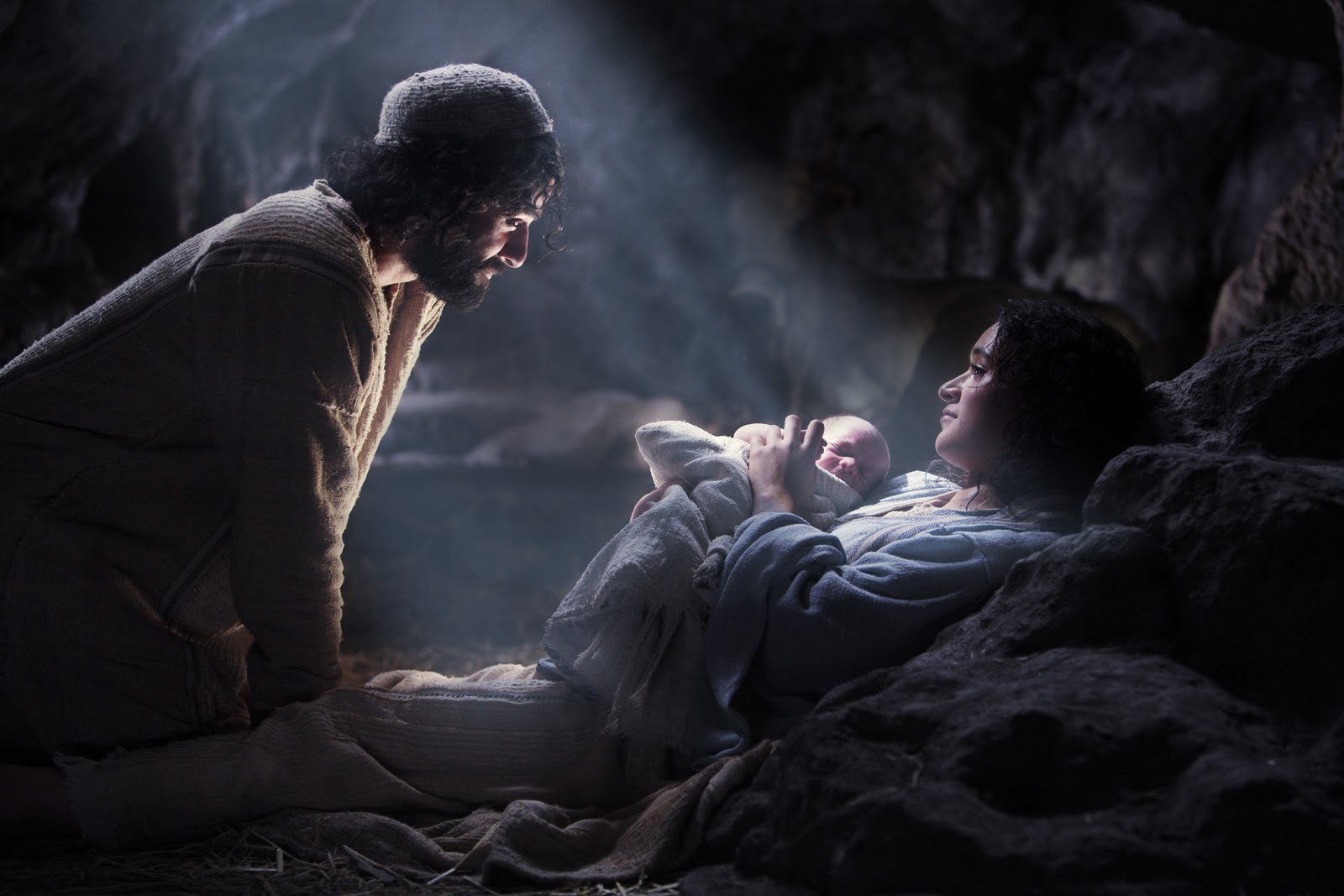
God’s will was that though Christ was rich, yet for your sake he became poor. The “No Vacancy” signs over all the motels in Bethlehem were for your sake. “For your sake he became poor” (2 Corinthians 8:9).

God rules all things — even motel capacities — for the sake of his children. The Calvary road begins with a “No Vacancy” sign in Bethlehem and ends with the spitting and scoffing of the cross in Jerusalem.

From http://www.desiringgod.org/messages/a-big-god-for-little-people

The dark canvas that points to Grace

This is such a joyful song which brilliantly describes the Joy we share in Christ. My favourite line is this: “The dark is just a canvas for Your grace and brightness.”  If this post meets you in a dark place look to Christ, the song of our hearts.

“Joy” (Rend Collective)
We’re choosing celebration
Breaking into freedom
You’re the song
You’re the song
Of our hearts

We cast aside our shadows
Trust You with our sorrows
You’re the song
You’re the song
Of our hearts

We’re dancing to the rhythm of Your heart
We’re rising from the ashes to the stars

You’re the joy joy joy lighting my soul
The joy joy joy making me whole
Though I’m broken, I am running
Into Your arms of love

The pain will not define us
Joy will reignite us
You’re the song
You’re the song
Of our hearts

The dark is just a canvas
For Your grace and brightness
You’re the song
You’re the song
Of our hearts

We’re dancing to the rhythm of Your heart
We’re rising from the ashes to the stars

CHORUS

You’re the joy
The song in my heart
The hope of my soul

In the shadows
In the sorrows
In the desert
When the pain hits
You are constant
Ever-present
You’re the song of my heart
[x2]

CHORUS


Music for the Unborn

Source: Music and Abortion

By Murray Campbell
image
Scientists have discovered that babies in the womb, as young as 16 weeks, respond to music by ‘dancing’.
“The foetuses responded to the music by moving their mouths or their tongues as if they wanted to wanted to speak or sing,” said one of the researchers, Marisa Lopez-Teijon. The research has been published in journal of the British Medical Ultrasound Society, Ultrasound.

What this means is that babies’ cognitive faculties, creative faculties, and listening and communication skills are more highly developed at 16 weeks than previously thought.

The more scientists study human beings in the womb, the more wonder, beauty and complexity we discover. As scientific research advances, the findings increasingly demonstrate that embryos are not less human but fully human, and from the very earliest stages.

I am reminded of the words spoken by one excited mum, ‘As soon as the sound of your greeting reached my ears, the baby in my womb leaped for joy’ (Luke 1:44).

It was interesting to note that the article inThe Australian, while sometimes referring to embryos, also addresses them as babies. The days when scientists and proabortionists justified abortion by claiming embryos were not human has long gone.

This latest research makes the reality of abortions even more appalling. It is a dreadful paradox of our society, that a child who enjoys listening to music in the womb can, on the same day, be killed in the womb.

How can we justify killing a child who in their first weeks of life is being moved by the sounds of Mozart and Bach? Not that responding to music defines their humanity but it further proves their humanity. He or she is not potential life, but is life with a mind and body that is active and alert.

Science is showing us the ignominy of our attitudes toward the unborn, but will we listen? We have longed turned deaf to the Bible’s pleas about the sanctity of life, and I suspect that we will also turn a blind eye to these amazing revelations that are being proven through empirical research.

Through music, science is affirming an ancient theological truth, embryos are people like us. But will we listen?

If you are reading this as a pregnant mum and you are questioning whether you should keep your baby, please talk to someone. We have a trained female counsellor at Mentone Baptist who is available to listen and help –faye.Ludik@mentonebaptist.com.au. 

If you are reading this post as someone who struggles with a past decision to undergo an abortion, I want you to know that the good news of Jesus Christ means that real forgiveness and healing is promised through him. Abortion is wrong, but it is not the unforgivable sin. Again, please contact our church counsellor. If you don’t live near Mentone but are keen to find out more, please contact us and we’ll try to find a suitable church near where you live. 

Sing along!

This is just such a groovy song. You will soon be singing along, trust me. Thanks for the music Pentatonix.

from the October 2015 self-titled album.

Waiting under the waterfall of Grace

This is a great little ‘sermon jam’ from Matt Chandler to renew your focus and hope in God.

Why you should thank your music teacher

gracepianoHere are ten things music teachers should be thanked for.

1. They taught you that it’s ok to make mistakes, and making them is how we learn and grow as a person. That’s something useful for life in general, not just music.

2. They taught you to believe in your abilities and stay calm under pressure. Again, not bad qualities to have regardless of what you’re doing.

3. They encouraged you to do your best and push your limits.

4. They destroyed the “practice makes perfect” cliche. In reality, a copious amount of practice is not enough to become a great musician. You always need to find a way to make yourself inspired.

5. They show tremendous dedication, including by taking after school lessons, running school orchestras and clubs, and planning activities. A lot of this additional commitment is never recognised in a teacher’s working hours or salary.

6. They made mathematics easier to understand.After all, its simpler to grasp the concept of two quarter notes fitting in to a half than trying to stare at a badly drawn diagram on a blackboard.

7. They pushed you to take responsibility for your actions, by practicing for your weekly piano lessons or remembering to bring your violin to school.

8. They opened the doors to something which has been shown to stimulate the entire brain. As we noted in a recent article, a vast quantity of scientific research has proven the positive effects of music in many areas.

9. They stressed the importance of always looking for ways to improve. Whether or not you’re still playing piano today, a healthy dose of self-criticism can only be a good thing.

10. They showed you that music is a lot more than just something you listen to or have on in the background. It’s there to be experienced.

Ten Reasons to Thank Your Music Teacher

Syrian orchestra in exile: Changing the image of refugees | Music | DW.COM | 22.09.2015

Syrian refugees have created a symphonic orchestra of musicians in exile in Europe. Hoping to change the image of their war-torn country, they rehearse for their opening concert in Bremen.

Bremen - Syrian Expat Philharmonic Orchestra, Copyright: Samih Amri

War, death, refugees – most people now associate Syria with devastation. “We want to change this,” says Raed Jazbeh determinatedly, “with our music.” The young double bassist initiated the “Syrian Expat Philharmonic Orchestra” (SEPO) a few months ago.

The orchestra will be giving its first concert in Bremen on September 22. Most of its approximately 30 musicians are Syrian refugees. They have come from all over Europe and are rehearsing together for the first time.

The opening piece is the overture to Felix Mendelssohn’s singspiel “Heimkehr aus der Fremde” (Return of the Roamer). With its sad sounds, this concert piece conveys a strong longing for home. Flight and exile characterize the atmosphere of the program, but it also explores the themes of love and hope, selections ranging from classical European symphonies to lesser-known music by the contemporary Syrian composer Mayas Al Yamani.

Bremen - Syrian Expat Philharmonic Orchestra, Copyright: Samih AmriRaed Jazbeh has been living in Germany for two years

Raed started dreaming of creating this orchestra two years ago, when he fled Syria to Germany. He corrects anyone who refers to his ensemble as a “refugee orchestra:” “We are an orchestra of exiles,” he says, gently running his hand over his double bass.

The orchestra practices until late in the night. There isn’t much time left until the premiere. “Even professionals usually need more than three days of group rehearsals,” says Naser, a horn player who now lives in Berlin and came to play with the SEPO, the first symphonic orchestra of Syrian musicians in Europe. They are hosted by German families during the rehearsals in Bremen.

Separated in Damascus, united in Bremen

Some of these Syrians had already performed together in their home country, at the Academy of Music in Damascus. Four years ago, civil war led the young musicians to new destinies – a forced exile in Europe.

Raed found some of his former colleagues over Facebook. It took him a long time to track down the violinist Michella Kasas, who now lives in France and pursues her music studies there.

“I can hardly believe that we are reunited after so many years,” says Michella. Playing with her former classmates in Bremen almost feels like a miracle for the 28-year-old musician. “It feels like we’re back in Damascus when we rehearse. It’s very emotional.”

Bremen - Syrian Expat Philharmonic Orchestra, Copyright: Samih Amri‘Play music with your feelings,’ says conductor Martin Lentz

Michella was lucky enough to be able to bring her violin to France, but the trumpeter Dolama Shabah had to leave his beloved instrument behind when he left: “I just didn’t have enough space in my small backpack,” he explains. It was the only piece of luggage he carried with him when he fled via Turkey, the Mediterranean Sea, Serbia and Hungary to finally reach Germany. A German offered him a used trumpet. “That gave me new hope. I’ve found my strength and my ambition through this orchestra,” says Dolama.

Chaos meets harmony

When he heard about the SEPO a few months ago, conductor Martin Lentz did not hesitate to get involved. Enjoying working with international groups, he recently supervised a project in Ramallah with the Israeli-Argentine conductor Daniel Barenboim.

Lentz is very affectionate and understanding with the young Syrians but remains strict in rehearsals. He repeatedly stops, improves and corrects the musicians: “This must be softer, much finer,” he tells the violinist in English. Then he gives the cues and nods his head. Fingertips roll on a Mideastern darbuka drum while bows are drawn on violins: The musicians gradually create a balanced, fresh rhythm together. Yet combining Arab and Western music on the same concert program is not an easy task.

Bremen - Syrian Expat Philharmonic Orchestra, Copyright: Samih AmriA musical statement with drums, trumpets and strings

Strange sounds keep popping up. Lentz interrupts once again. The musicians are nervous and insecure: Their performance is tomorrow.

They look up to their conductor for advice, and he tries to encourage them: “You don’t need to play as perfectly as the Berlin Philharmonic! Just play with your feelings.” Then he raises his hand and gives the cues: The rehearsal continues. There is no more time to lose before the opening concert.

The concert at the Radio Bremen broadcasting hall is sold out. Further concerts are planned: The next one will be on October 3 in Hitzacker.


http://www.dw.com/en/syrian-orchestra-in-exile-changing-the-image-of-refugees/a-18729484
Follow the link to better understand the Syrian refugees. And then pray.

The Joy of the Lord is my strength

THE JOY OF THE LORD

Verse 1
Though tears may fall
My song will rise, my song will rise
To You
Though my heart may fail
My song will rise, my song will rise
To You
While there’s breath in my lungs
I will praise You, Lord
In the dead of night, I’ll lift my eyes
I’ll lift my eyes to You
When the waters rise, I’ll lift my eyes
I’ll lift my eyes to You
While there’s hope in my heart
I will praise You, Lord

Chorus
The joy of the Lord is my strength!
In the darkness I’ll dance
in the shadows I’ll sing
The joy of the Lord is my strength!

Verse 2
When I cannot see You with my eyes
Let faith arise to You
When I cannot feel Your hand in mine
Let faith arise to You
God of mercy and love
I will praise You, Lord
Oh You shine with glory Lord of light
I feel alive with You
In Your presence now I come alive
I am alive with You
There is strength when I say
I will praise You, Lord

Chorus
|2x|

Bridge
When sorrow comes my way
You are the shield around me
Always, You remain
Like courage in the fight
I hear You call my name
Jesus, I am coming
Walking on the waves
Reaching for Your light!

Chorus
|2x|

2015 – by Rend Collective and Ed Cash 

A Prayer for Father’s Day (Down Under)

I prayed this prayer last year on Father’s Day at our church. Praise God for his heavenly Fatherliness!

nativitystorythe_photos_1Dear Heavenly Father
Thank you for sending your Son Jesus to earth, entrusting him into the care of an earthly Father and modelling to us your sacrificial love and servant leadership. We give thanks for our own earthly fathers, for the love, provision and protection they have given us, even though imperfectly at times. Lord, forgive us for demanding perfection from our dads, which is only something you can give. Help us all to be prayerful for our fathers and appreciate the important role they played in leading and guiding us. Help us to show and express our love for our dads today.
We also think of the many children around us who live in a fatherless world, through absence or neglect or abuse. We pray that those children might find in you the father they seek. We pray children and families we connect with through Clubhouse and the Kids holiday program, that they might know your perfect Father’s love, that they might know you as the Father of the Lord Jesus Christ. Thank you Lord that you are the Father to the Fatherless.
We pray too for those who have lost fathers in the last year, for your comfort at this time while others are celebrating the love of fathers. Thank you Lord for the good memories we can share at this time, and the many good things our fathers have contributed to our characters and lives.
Pray for all dads, that they can love and accept and affirm their children, showing wisdom and patience as they seek to teach their children about Jesus. We pray particularly for new dads, for the task of leading and guiding which they may feel so unprepared for. Thank you that no matter what experiences they have had, with a good, bad or absent father, that they can love like you because your holy and fatherly spirit lives in them, by faith.  We pray that your design for families to be led by Christ-following dads, would be lived out amongst us, and would influence the society around us, for good and your glory!
Amen