Won’t you be my love?

This is a great song from Mercy Me, which brings a reminder of the unique position we are in as Christ’s followers. We are his hands and feet, his representatives on this planet, shining his brilliance and pointing people to Him.

“Won’t You Be My Love”

[Verse 1:]
When you fall asleep tonight
In your warm and cozy room
Know that I’m awake
And I’ve got no shelter and no food

[Pre-Chorus 1:]
I am not alone
My friends are broke and lost
Looking for someone to lead them to my cross
I need your help, I need your help

[Chorus 1:]
Won’t you be My voice calling
Won’t you be My hands healing
Won’t you be My feet walking into a broken world
Won’t you be My chain-breaker
Won’t you be My peacemaker
Won’t you be My hope and joy
Won’t you be My Love

[Verse 2:]
The other side of the world
She is just a few days old
A helpless little girl
With no family of her own

[Pre-Chorus 2:]
She is not to blame for the journey she is on
Her life is no mistake
Won’t you lead her to My cross?

[Chorus 1:]
Won’t you be My voice calling
Won’t you be My hands healing
Won’t you be My feet walking into a broken world
Won’t you be My chain-breaker
Won’t you be My peacemaker
Won’t you be My hope and joy
Won’t you be My Love

[Bridge:]
To those I call My own
To those I’ve set aside
As spotless without blame
The chosen ones My bride

[Chorus 2:]
We will be Your voice calling
We will be Your hands healing
We will be Your feet walking into a broken world
We will be Your chain-breaker
We will be Your peacemaker
We will be Your hope and joy
We will be Your love

FREE E-Book: The Best of WorshipMatters.com

http://www.sovereigngraceministries.org/blogs/sgm/post/free-ebook-worshipmatters.aspx

Check out this free e-book from Bob Kauflin on Music Ministry

The Story behind the most famous Christmas carol

joy to the wJoy To The World (by Robert D. Kalis)

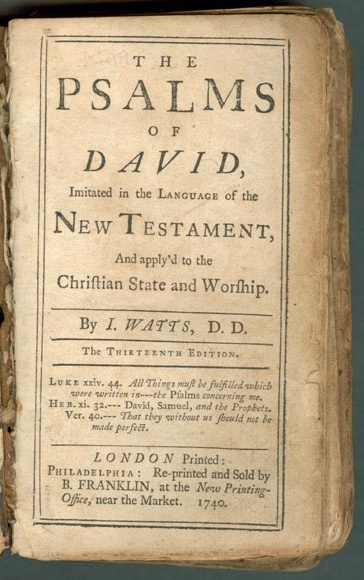
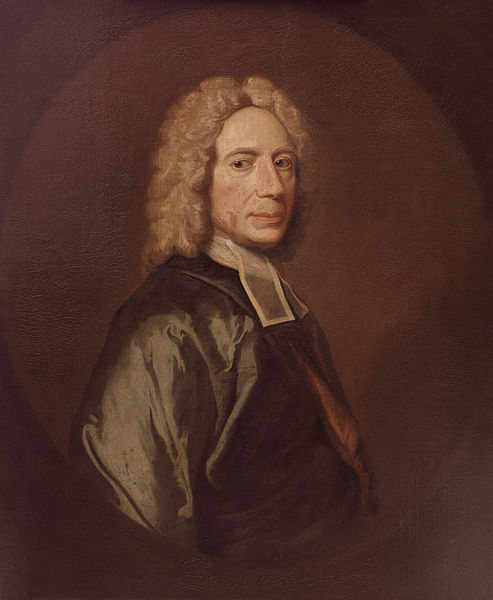
Our Christmas season would hardly seem complete without the singing of Joy to the World, the most joyous of the carols. Yet Isaac Watts, its author, never intended it to be a Christmas carol at all. Rather, it was a part of his Psalms of David Imitated, published in 1719, which contained paraphrases of many of the Psalms in New Testament language.

The story of the hymn, Joy to the World, is the story of the author, Isaac Watts (1675-1748), who is universally acknowledged as “The Father of English Hymnody”. He has earned the title, not because he was first to write English hymns, but because he gave impetus to hymnody and established its place in the worship of the English church.

For over one hundred years, congregational singing had been strictly limited to the Psalms of the Old Testament in poetic form. Many of these rhymed Psalms were so unnatural that Samuel Wesley, father of the famous brothers Charles and John, called them “scandalous doggerel,” and his opinion was shared by many.

The birth of Isaac Watts to a dissenting deacon and the daughter of a Huguenot refugee was followed by fourteen years of persecution and hardships for the entire family. Perhaps this suffering was responsible for Isaac Watts’ ill health, for he grew only to a height of just over five feet and was weak and sickly all his life.

Though weak in body, the boy was strong in mind and spirit and early in life showed promise of poetic capability. After one Sunday morning service, Isaac, then fifteen years old, complained of the atrocious worship in song. One of the deacons challenged him: “Give us something better, young man.” His answer was ready for the evening service and was sung that night in the Independents’ meeting, Southampton, where his father was pastor. Perhaps a hint of things to come was contained in this first verse of Isaac Watts:

Behold the glories of the Lamb Amidst His Father’s throne; Prepare new honors for His name, And songs before unknown.

When Isaac began to preach several years later, his congregation sang the songs that seemed to flow from his pen like a river. In 1707, the accumulation of eighteen years was published under the title, Hymns and Spiritual Songs. The river continued to flow, and in 1719 his “Psalms of David Imitated” was published, not as a new paraphrase of David, but as an imitation of him in New Testament language. It was as though the Psalms burst forth in their fulfillment at last.

watts-sacred_poemsJoy to the World is the “imitation” of the last half of Psalm 98. The author transformed the old Jewish psalm of praise for some historic deliverance into a Christian song of rejoicing for the salvation of God that began to be manifested when the Babe of Bethlehem came “to make his blessing flow far as the curse is found.” This is one of the most joyous hymns in all Christendom because it makes so real what Christ’s birth means to all mankind.

The tune to which the hymn is sung is attributed to George Frederick Handel and bears resemblance to phrases of his great oratorio, Messiah. Notably the first four tones match the beginning of the chorus, “Lift Up Your Heads.”

As we rejoice in the coming to earth of our Savior, we may also be glad for the veritable river of hymns that flowed from the pen of Isaac Watts. His name stands at the head of our most majestic hymns, notably, “When I Survey The Wondrous Cross.” In many hymnals more hymns of Isaac Watts are to be found than of any other single author.

http://www.joy-bringer-ministries.org/hymn1.html

You may also enjoy:
The Christmas Scale
The lost music of the Psalms

Homeless man’s surprise role in Carlos Whittaker’s music video

The recording of this music video took a turn for the amazing when a homeless man (Danny) kneels in worship and adds his powerful impromptu vocals to those of Carlos Whittaker. This is the power of music and the love of Christ is rolled into one! The praise of our great God is unstoppable!

Read the full story behind the event here: http://ragamuffinsoul.com/2013/11/dannygod/
If you would like to hear more from this singer, find his album here.

You may also enjoy:

Creation calls – are you listening?                               Praising God makes our Joy complete!
Image created by Sarah Danaher with a Canon EOS 5D MkIImade-to-praise_t

Heaven Everywhere

Another great lyric video for your Christmas services! This one was made to order by my daughter. Thanks Megan!!
You can visit her new photo blog here: http://wonderintheordinary.wordpress.com/
or her book blog Just a Story.

You may also enjoy:
Why wouldn’t we remember Christmas?                                                December 25 in Song!
dec 25francescachristmasalbum

Free Indeed!

After posting the clip about the prison ministry of Timothy’s Gift my mind turned to this song from Steven Curtis Chapman, “Free”. Listen below or check out the lyrics. I think the most beautiful lyric comes in the last chorus: “God’s grace has broken every chain and given us these wings.” If the Son has set you free you will be free indeed!

“Free” by Steven Curtis Chapman

The sun was beating down inside the walls of stone and razor wire
As we made our way across the prison yard
I felt my heart begin to race as we drew nearer to the place
Where they say that death is waiting in the dark
The slamming doors of iron echoed through the halls
Where despair holds life within its cruel claws
But then I met a man whose face seemed so strangely out of place
A blinding light of hope was shining in his eyes
And with repentance in his voice he told me of his tragic choice
That led him to this place where he must pay the price
But then his voice grew strong as he began to tell
About the One he said had rescued him from hell, he said . . .

I’m free, yeah, oh, I have been forgiven
God’s love has taken off my chains and given me these wings
And I’m free, yeah, yeah, and the freedom I’ve been given
Is something that not even death can take away from me
Because I’m free, Jesus set me free

We said a prayer and said goodbye and tears began to fill my eyes
As I stepped back out into the blinding sun
And even as I drove away I found that I could not escape
The way he spoke of what the grace of God had done
I thought about how sin had sentenced us to die
And how God gave His only Son so you and I could say . . .

And if the Son has set you free,
Oh, if the Son has set you free
Then you are free indeed,
Oh, you are really free
If the Son has set you free,
Oh, if the Son has set you free
Then you are free, really, really, free

Oh, we’re free, yeah, oh, we have been forgiven
God’s grace has broken every chain and given us these wings
And we’re free, yeah, yeah, and the freedom we’ve been given
Is something that not even death can take from you and me
Because we’re free, yeah, the freedom we’ve been given
Is something that not even death can take from you and me
Because we’re free, oh, we’re free
We are free, we are free
The Son has set us free

If the Son has set you free
You are free indeed

You may also enjoy:
Wake Up and see the Glory
steven-curtis-chapman-declaration-lyrics-4a1c

All you ever wanted to know about modern hymns – even writing them!

This post is from a site called MY SONG IN THE NIGHT. which exists to help you express words of worship & testimony through songs & stories. “But each day the Lord pours his unfailing love upon me, and through each night I sing his songs, praying to God who gives me life.”
Psalm 42:8 (New Living Translation) (Looking for info, chord chart and instructional videos for the hymn “My Song In The Night” by Kristen Gilles? Click Here.)

This post has a wealth of information for those keen to understand what it is about hymns that makes them work, makes them singable for a group, and places the word emphasis in the right place. Some great insights. I feel inspired once again to get writing!

Modern Hymnslearn to write, appreciate modern hymns with hymnists Bobby & Kristen Gilles

WHAT ARE MODERN HYMNS?

When people speak of “modern hymns” they usually mean one of two things:

  • Old hymn texts, written by masters like Isaac Watts, Charles Wesley, Anne Steele, John Newton, William Cowper and others, then set to contemporary melodies by the likes of Sandra McCracken and those in worship communities like Indelible Grace, Bifrost Arts, Page CXVI, Cardiphonia or Red Mountain Music. Some of these artists also revise and arrange the original texts, and may add choruses as well.
  • Completely new hymns, written in hymn meter by contemporary hymnodists like Stuart Townend and Keith and Kristyn Getty.

Kristen primarily composes hymn tunes. Bobby primarily writes & arranges texts

Our church Sojourn has recorded albums with songs in the former category (The Water And The Blood, Over The Grave) and the latter (Before The Throne). Some of my songs from these projects in the former category include “Let Your Blood Plead For Me,” “Warrior” and “We Are Changed.” In the latter, “Lead Us Back” and “All I Have Is Yours.” Other songwriting communities who do some of each include Sovereign Grace and Mars Hill (Seattle).

Kristen and I wrote “My Song In The Night,” the theme song of this website, after being inspired by an anonymous American folk hymn text of the same title. We only included two lines from the original, though.

WHAT KIND OF SONGWRITERS NEED TO KNOW ABOUT HYMN-WRITING?

You will benefit from understanding the mechanics of hymn text-writing, including form and meter, if:

  1. You are a writer/musician/tunesmith who arranges old hymn texts, adds choruses to hymn texts, or composes new music for old hymn texts – even if you aren’t altering lyrics (for more on composing new music for hymn texts and other pre-existing lyrics, click here).
  2. You write songs of any kind, style or genre, and want to expand your range and repertoire of songwriting techniques.
  3. You want to write modern hymns – lyric and melody.

TELL ME HOW TO WRITE A HYMN, COMPARED TO HOW TO WRITE OTHER SONGS

A hymn is a poem, set to music at the time of its composing or later (sometimes the music for our most well-known hymns came decades after the lyrics).  In contrast to many modern songs and praise & worship chorus lyrics, hymn text writers typically write their lyrics in fixed “metrical patterns” (syllables and accents per line). The three most common are:

  • Common Meter (alternating lines of eight and six syllables per line (86.86).
  • Long Meter (all lines are eight syllables) (88.88)
  • Short Meter (first, second and fourth lines are six syllables, while the third is eight syllables – 66.86)

This style of writing isn’t exclusive to hymnodists. Some of the best songwriters of modern times utilize hymn meter on occasion:

Bob Dylan uses Common Meter in Lay Down Your Weary Tune:

I gazed down in the river’s mirror
And watched its winding strum
The water smooth ran like a hymn
And like a harp did hum.

* You’ll notice Dylan’s first line contains nine syllables. Dylan is using accentual meter (what Robert Frost called “loose iambic”), which is outside the depth of discussion in this introductory page, but which we’ll discuss in our Songwriting/Hymns Workshop posts.

Leonard Cohen uses Common Meter in A Thousand Kisses Deep:Sir Isaac Watts, poet, Father of English Hymnody

And quiet is the thought of you
The file on you complete
Except what we forgot to do
A thousand kisses deep.

And when Coca Cola’s advertising agency McCann-Erickson created a jingle that would become one of the most memorable ads of all time, their songwriters (Bill Backer, Billy Davis, Roger Cook) of course used Common Meter:

I’d like to teach the world to sing
In perfect harmony
I’d like to buy the world a Coke
And keep it company.

Sing the lyrics to either of these songs, using the tune from “Amazing Grace” or “House Of The Rising Sun.” Or “Alas! And Did My Savior Bleed.” Or the theme song from Gilligan’s Island.

Works, huh? That’s one of the benefits of writing in hymn meter, and is the reason great hymns stand up to modern interpretation by artists like Indelible Grace and Sojourn.  Because of their mathematically precise patterns, composers from nearly any musical background can write new music for these texts, no matter how old.

Aside: Lindsey Blair and I wrote the entire text of our children’s book Our Home Is Like A Little Church in this same meter. I have a blast singing it, Gilligan’s Island style.

No matter the meter, within each line you’ll hear a simple pattern of accented and unaccented syllables.

  • Even-numbered syllables are often accented while the odd are unaccented. We call each of these two-syllable units an iambic foot. (Ex. “Alone”)
  • If the odd syllables are accented while the even are unaccented, we call it trochaic.  (Ex. “Glory”)

A trochaic line:

Lucy in the sky with diamonds (John Lennon/Paul McCartney)

An iambic line:

How sweet the name of Jesus sounds (John Newton)

You can see that although each line is eight syllables (the technical name for that is “tetrameter”) they have a different feel. The trochaic line is forceful and excitable. Iambic lines are stately and loping, reaching their climax at the end.

A QUICK 21ST CENTURY EXAMPLE OF METRICAL VARIATION

One lesser-known reason “In Christ Alone” evokes strong feelings is because Townend and Getty begin each even-numbered line with a strong trochee before sliding back into the stately, prevailing iambic pattern. So the congregation sings a biblical truth on the odd-numbered line, and then begins the next line with a punchy declaration or exclamation:

In CHRIST aLONE who TOOK on FLESH
FULness of GOD in HELPless BABE!
This GIFT of LOVE and RIGHteousNESS
SCORNED by the ONES he CAME to SAVE

Poets write trochaic substitutions in iambic lines to produce the effect of sudden movement or emphasis. This is the most common metrical variation in all of English poetry, used by Milton, Pope, Yeats, Auden, Wordsworth, Keats, Frost and many others.  More on metrical variation in our article “Writers: Why Singers Put The Wrong emPHAsis On The Wrong sylLAble.”

So Songwriters Have To Be Aware Of All These Metrical Terms And Possible Variants?

As Paul Fussell, Jr. wrote in Poetic Meter And Poetic Form (p. 42-43):

… although metrical variations can be displayed by scansion and analyzed dispassionately, when the poet performs them they are largely instinctual, a technique of his art so unconsciously mastered that he seldom pauses formally to debate a metrical alternative. Indeed, many poets whose work can be analyzed metrically according to the traditional foot system would undoubtedly be astonished to hear that they have indulged in anything like “substitution.” The poet composes according to the rhythms which his utterance supplies, and although these rhythms frequently turn out to consist of “base” and “substitute” feet, they do not necessarily begin that way.”

Get our free glossary of hymn meter & form terms here.

MORE COOLNESS IN LEARNING HOW TO WRITE HYMNS

As Keith Getty has said, “The hymn format means you can write songs that average 200 words. The average worship song only has about 40 words, so obviously can’t be as deep in proclamation of biblical truth.”

Maybe only folk ballads and hip hop can approach or exceed hymns in their ability to “go deep” into subject matter (you should check out Shai Linne and Lecrae – believers in Christ who write stunning music for the Church through the medium of hip hop).

Shai Linne at Sojourn

Shai Linne with our pastor Mike Cosper at Sojourn

Some of this may seem confusing, but don’t worry! We’ll go through it all, step-by-step, within the pages of mysonginthenight.com. In no time flat, trochees and iambs will be as familiar to you as water and sky. You’ll be swimming in the deep end of meter with nary a life jacket in sight.

Not only that, we’ll talk metaphor and simile. We’ll speak of dactyls and anapests, alliteration and rhyme. We’ll talk about “the songwriting rules,” including how to know when to break them.  We’ll discuss how to bring strong theology to your writing without making it dull, and how to tell your personal story through song without becoming unmoored from biblical teaching.

So sign up to our posts through email, subscribe through RSS or just visit mysonginthenight.com regularly.  Click on the Songwritng/Hymns category to see everything we post on the subject, and grow as a writer through the many songwriting assignments we’ll give you.

If you feel this page is helpful, we’d be thankful if you would link to it so that others who want to learn how to write modern hymns can find it on your site and in search engine results. For instance, copy-and-paste the URL of this web page into a hyperlink that says something like “To begin learning how to write modern hymns, visit mysonginthenight.com.

Interested in checking out worship communities who are considered part of the modern hymns movement? Our friend Zac Hicks has compiled the most comprehensive list we’re aware of, at his website.

Want to learn more about writing music for old hymn texts or other pre-existing poems and song lyrics? Visit our “How To Compose Tunes For Hymn Texts & Write Music For Other Song Lyrics” page.

And get our free Songwriter’s Glossary Of Poetic And Rhetorical Devices here

http://mysonginthenight.com/songwriting/modern-hymns/

Watch “COME ONE AND ALL” Christmas Clip

This is a lovely song with an interesting clip, recorded by Garage Hymnal.
It would make a lovely addition to any upcoming Christmas service.

COME ONE AND ALL

Come, oh come one and all
To Bethlehem’s stable, to Bethlehem’s stall
The star, it beams on this sight
The father in heaven sent us this glorious light.

More lovely than the angels
Than the stars, this holy child!
Lying here before us, sent here for us Jesus Christ!

Come, oh come one and all
The shepherds are kneeling, bowing before him in awe
Angels sing from above
Mary and Joseph smile at their baby with love

More lovely than the angels
Than the stars, this holy child!
Lying here before us, sent here for us Jesus Christ!

Music by Garage Hymnal, words by Alanna Rodgers with adaptations from Christoph Von Schmid’s German Folk Song, “Oh Come Little Children”
Animation by Taste Media http://www.tastemedia.com.au

How effective is your music ministry?

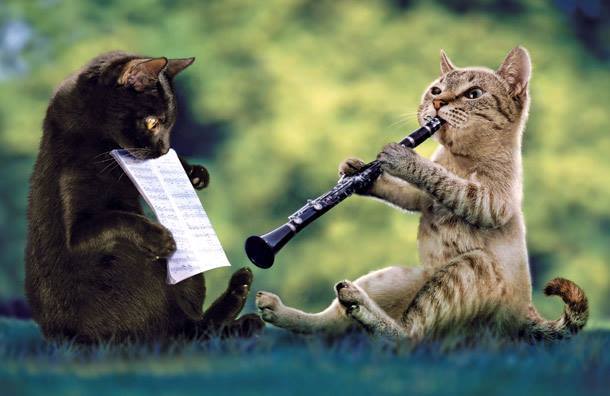
Sometimes we musicians get so caught up with organising and making music happen for our church gatherings that we forget to take stock of how things are cats recordergoing. Are we really achieving any of the goals of our ministry? Or is it just a lot of hard work?
For me, music ministry goals are:
* to engage people in enthusiastic praise of our great God who alone is worthy of our praise,
* to provide encouragement for the gathered Body of believers, and
* to declare/teach the great truths that God has revealed of himself and the gospel in His Word.

So how do you measure whether or not we are achieving that, at all?
Like many areas of ministry such results cannot be quantified. God doesn’t keep a score card and send us a report!
However by talking to people and allowing them the freedom to give encouragement and criticism, they can help you know how you are going with your goals. (It is, afterall, God’s people we are serving.) Thick skin is always required in the music department, so give grace to those who are willing to share their views. You need to hear them, whether they be “right” or “wrong” or somewhere inbetween. Godly insights, shared in a loving manner, can lead to greater effectiveness.

One way to measure the engagement of your congregation is simply by joining with them in the praise times during your service. This Sunday, for the first time in a long time, I was able to simply be a member of the congregation, with the opportunity to listen carefully to the most important voices – the voices of the gathered body of Christ. I could easily hear which songs were being sung with enthusiasm, and which were still probably too difficult for the non-musical person to catch on to. It helped me realise which songs needed to be retired, better than if I was actually leading or playing on team.

Speaking of singability I find it really helpful (in the planning stage) to play potential new songs to people who aren’t on the music team. If you find they can sing along by the second hearing (and they think the song is truthful and encouraging) then you probably have something most people in your church can sing, and sing well together (which is, afterall, the whole point).

In King David’s time, the musicians were clothed in white and stood apart from the assembled worshipers:  “All the Levites who were musicians—Asaph, Heman, Jeduthun and their sons and relatives—stood on the east side of the altar, dressed in fine linen and playing cymbals, harps and lyres. They were accompanied by 120 priests sounding trumpets.” (2 Chronicles 5:12)
Unlike these musicians we need to see ourselves as part of the gathered body, not removed from, more important or better than them. Often we are the last to know when something isn’t working to encourage people in corporate praise. We must be willing to listen, review and change and adapt to meet our goals – and not be too proud or stubborn to change.

For more help thinking through congregational singing, check out these posts:

10 Principles for Church Singinggrow music

Working for those moments of Joy

Sharing the Rich Indwelling Word (Colossians 3:16)

The Synchonicity of Singers

Worship through Congregational singing (a post from Christ Our Hope Church)

Rising Sun (All Sons and Daughters)

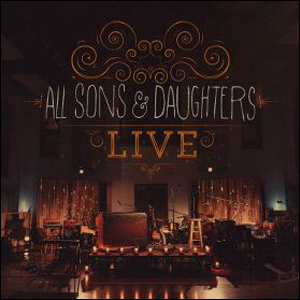
IBR-1113189Here is another song from All Sons and Daughters. Again the lyrics have a beautiful Psalm-like quality. As you may know, I’ve embarked on a quest to find singable contemporary Psalms. Suggestions are most welcome. Enjoy!
(Scroll down for youtube link with lyrics).

Rising Sun

Praise Him all you sinners, Sing oh sing you weary
Oh praise Him all you children of God
We lift high His glory, Shown throughout our stories
We praise Him as the children of God

Our great redeemer, Glorious Savior
Your name is higher than the rising sun
Light of the morning, You shine forever
Your name is higher than the rising sun

Praise His name forever, Speak it loud and clear now
Oh praise Him all you children of God

Our great redeemer, Glorious Savior. . .

Hallelujah, Name above all
Simply to speak Your name is praise
Hallelujah, Now and always
Forever we lift Your name in praise
Hallelujah, Our God, You reign
Simply to speak Your name is praise

Our great redeemer, Glorious Savior. . .

Hallelujah name above all
Hallelujah, Hallelujah

Learn more about the Album Sons & Daughters Live

You may also enjoy:
Great are You, Lord (All Sons & Daughters)                                      The Bible’s Songbook
all sons and daughtersImage created by Sarah Danaher with a Canon EOS 5D MkII