He is absolutely worth it all

There is absolutely nothing we could go through in this life that would prove our faith in Christ worthless. The joy, peace and assurance of our salvation in Him far outweighs any difficulties which faith in Christ brings.

“Indeed, I count everything as loss because of the surpassing worth of knowing Christ Jesus my Lord. For his sake I have suffered the loss of all things and count them as rubbish, in order that I may gain Christ and be found in him, not having a righteousness of my own that comes from the law, but that which comes through faith in Christ…”
(Philippians 3:8-9)

This assurance is beautifully expressed in a song sung by Meredith Andrews, the title track of her album Worth it All.

Meredith Andrews’ acoustic version:

Meredith Andrews’ studio version:


Worth it All

All I am Lord here before You
Reaching out for more
You’re the promise never failing
You are my reward
You are my reward

Chorus 1

I let go of all I have just to have all of You
And no matter what the cost
I will follow You
Jesus ev’rything I’ve lost I have found in You
When I fin’lly reach the end I’ll say
You are worth it all
(You are worth it all)

Verse 2

There’s no riches earthly treasure
That will satisfy
Ev’ry longing for You Jesus
Set this heart on fire

Misc 1

(Bridge)
When I’m there in Your glorious presence
Ev’ry knee is bowed before You
Hear the sound of heaven singing
You are worth it all
All the saints cry holy holy
Angels singing worthy worthy
Forever I will shout Your praises
You are worth it all
(You are worth it all)

Ben Cantelon | Benji Cowart | Jason Ingram | Jonathan Smith © 2011 Word Music

http://www.worshiptogether.com/songs/songdetail.aspx?iid=1908216

New Song from Keith & Kristyn Getty (& Graham Kendrick) | Worship Matters

New Song from Keith & Kristyn Getty (& Graham Kendrick)

by Bob Kauflin on February 10, 2015


Not too long ago I was in Nashville with Julie and we stopped by to see our friends, Keith and Kristyn Getty. While we were there Keith asked me if I wanted to hear a song they had been working on with Graham Kendrick. Of course, I said.

He played “My Worth is Not in What I Own.” I immediately thought, I want to sing this song and I want other people to sing this song. Now we can.

Col. 3:16 says that songs are meant to teach and admonish us while enabling the word of Christ to dwell in us richly. This song definitely accomplishes both goals.

Here are the words:

My worth is not in what I own;
Not in the strength of flesh and bone.
But in the costly wounds of love at the cross.
My worth is not in skill or name;
In win or lose, in pride or shame.
But in the blood of Christ that flowed at the cross.

I rejoice in my Redeemer, Greatest treasure
Wellspring of my soul
I will trust in Him, no other;
My soul is satisfied in Him alone.

As summer flowers we fade and die:
Fame, youth and beauty hurry by.
But life eternal calls to us at the cross.
I will not boast in wealth or might,
Or human wisdom’s fleeting light.
But I will boast in knowing Christ at the cross.

Two wonders here that I confess;
My worth and my unworthiness.
My value fixed–my ransom paid at the cross.
(c) 2014 Getty Music Publishing (BMI) and Makeway Music (Adm. by musicservices.org).

We’re reminded of where our true value lies – not in our accomplishments, efforts, skills, reputation, wealth, might, or wisdom–but in the finished atoning work of the Savior. We are valued not because we are valuable, but because God has set his affection on us. Our worth is in the “costly wounds of love at the cross.” Nothing in this world will satisfy us like Jesus Christ. These are truths we need to preach to ourselves constantly. And this song helps us do just that in a way that is memorable and beautiful.

Keith and Kristyn kindly gave me permission to give away the choir chart and hymn chart for the song for a week. Enjoy.

http://www.worshipmatters.com/2015/02/10/new-song-from-keith-kristyn-getty-graham-kendrick/

Ascribing greatness to the one true God

We find the deepest meaning in life when our hearts freely go out to admire God’s power, rather than turning inward to boast in our own — or even think about our own. We discover something overwhelming: It is profoundly satisfying not to be God, but to give up all thoughts or desires to be God.

In our giving heed to God’s power there rises up in us a realization that God created the universe for this: So that we could have the supremely satisfying experience of not being God, but admiring the Godness of God — the strength of God. There settles over us a peaceful realization that admiration of the infinite is the final end of all things.

We tremble at the slightest temptation to claim any power as coming from us. God has made us weak to protect us from this: “We have this treasure in jars of clay, to show that the surpassing power belongs to God and not to us” (2 Corinthians 4:7).

O what love this is, that God would protect us from replacing the everlasting heights of admiring his power with the futile attempt to boast in our own!

John Piper
http://www.desiringgod.org/articles/how-do-you-give-god-strength

Good Shepherd

This is a great modern hymn from Keith Getty (2013) and friends. Enjoy the rich lyrics and the performance from his wife Kristyn and Joni Eareckson Tada. If you know Joni’s story you will understand the significance of her singing this song, particularly the last four lines:
“Earth’s struggles overcome
Heav’n’s journey just begun
To search Christ’s depths
And ever to follow.”


Good Shepherd of my soul
Come dwell within me.
Take all I am and mould
Your likeness in me.
Before the cross of Christ
This is my sacrifice:
A life laid down
And ready to follow.

The troubled find their peace
In true surrender.
The prisoners their release
From chains of anger.
In springs of living grace
I find a resting place
To rise refreshed,
Determined to follow.

I’ll walk this narrow road
With Christ before me
Where thorns and thistles grow
And cords ensnare me.
Though doubted and denied
He never leaves my side
But lifts my head
And calls me to follow.

And when my days are gone
My strength is failing
He’ll carry me along
Through death’s unveiling
Earth’s struggles overcome
Heav’n’s journey just begun
To search Christ’s depths
And ever to follow.

Words and Music by Keith Getty, Kristyn Getty, Fionan de Barra, and Stuart Townend
© 2013 Getty Music Publishing (BMI) and Fionan de Barra (admin MusicServices.org) and Townend Songs

http://www.gettymusic.com/hymns-goodshepherd.aspx?

Celebrating the Anchor of Grace – with Rend Collective

Tomorrow starts a new chapter for me as I head back to the classroom teaching Senior English. No doubt there will be many challenges ahead, yet also many opportunities to bless and encourage these high school students to put their hope in Christ. This will mean considerably less blog writing, but I’ll endeavour to share any great songs I discover as often as possible.
At the moment I’m really enjoying the bright, energetic sound and biblical lyrics of Rend Collective.

Here are a few favourites I’ve recently discovered:
(All the chord sheets can be found here: http://rendcollective.com/chords/)

Build your Kingdom Here (Come, Set your rule)

Finally Free

My LightHouse

Prayer Isn’t Simply Plowing Through A List. What Is Prayer? This.

prayer girlBlessings for the New Year! I’m sure that like me you are keen to be more prayerful in 2015. This post from Blazing Center should whet your appetite for more. Keller’s book, referred to in this post, is certainly on my to read list.

What is prayer?

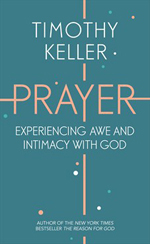
“Prayer is continuing a conversation that God has started through his Word and his grace, that leads to a full encounter with him,” Tim Keller writes in his book Prayer: Experiencing Awe and Intimacy with God.

That’s astounding, if you slow down and think about it. Prayer is talking tTim Keller Prayero the Creator of all that is. Even more, it’s talking back to him, in response to his initiative to start a conversation with us. But even that definition fails to adequately describe what actually happens when we pray. So before he gives a definition of prayer, Keller quotes the English poet George Herbert’s poem “Prayer (I).” Herbert doesn’t define prayer; instead, he describes it, in all its richness and variety. Here is the poem. Don’t rush. Read it slowly.

Prayer the church’s banquet, angel’s age,

God’s breath in man returning to his birth,

The soul in paraphrase, heart in pilgrimage,

The Christian plummet sounding heav’n and earth

Engine against th’ Almighty, sinner’s tow’r,

Reversed thunder, Christ-side-piercing spear,

The six-days world transposing in an hour,

A kind of tune, which all things hear and fear;

Softness, and peace, and joy, and love, and bliss,

Exalted manna, gladness of the best,

Heaven in ordinary, man well drest,

The milky way, the bird of Paradise,

Church-bells beyond the stars heard, the soul’s blood,

The land of spices; something understood.

Can we define prayer? Yes, certainly. But is defining it the end goal? By no means. We haven’t exhausted the meaning of prayer until we have personally experienced and entered into the riches Herbert describes. Don’t be content with a definition. Hear God’s invitation to you through Christ: you’re invited to the banquet. Enter the conversation. “For through [Christ] we both have access in one Spirit to the Father” (Ephesians 2:18).

By Josh Blount
http://theblazingcenter.com/2015/01/prayer-isnt-simply-going-through-a-list-what-is-prayer-this.html

Seven Christmas Meditations from John Piper

Nativity_tree2011I found each of these short Christmas devotions really encouraging. You will easily find a place to share them in your home, your church, your classroom or your facebook wall this Christmas!

1. A Big God for a Little PeopleLuke 2:1–5

Have you ever thought what an amazing thing it is that God ordained beforehand that the Messiah be born in Bethlehem (as the prophecy in Micah 5 shows); and that he so ordained things that when the time came, the Messiah’s mother and legal father were living in Nazareth; and that in order to fulfill his word and bring two little people to Bethlehem that first Christmas, God put it in the heart of Caesar Augustus that all the Roman world should be enrolled each in his own town?

Have you ever felt, like me, little and insignificant in a world of four billion people, where all the news is of big political and economic and social movements and of outstanding people with lots of power and prestige? If you have, don’t let that make you disheartened or unhappy. For it is implicit in Scripture that all the mammoth political forces and all the giant industrial complexes, without their even knowing it, are being guided by God, not for their own sake but for the sake of God’s little people—the little Mary and the little Joseph who have to be got from Nazareth to Bethlehem. God wields an empire to bless his children. Do not think, because you experience adversity, that the hand of the Lord is shortened. It is not our prosperity but our holiness that he seeks with all his heart. And to that end, he rules the whole world. As Proverbs 21:1 says: “The king’s heart is a stream of water in the hand of the Lord; he turns it wherever he will.” He is a big God for little people, and we have great cause to rejoice that, unbeknownst to them, all the kings and presidents and premiers and chancellors of the world follow the sovereign decrees of our Father in heaven, that we, the children, might be conformed to the image of his Son, Jesus Christ.

2. Calvary Road—Luke 2:6–7

Now you would think that if God so rules the world as to use an empire-wide census to bring Mary and Joseph to Bethlehem, he surely could have seen to it that a room was available in the inn. Yes, he could have. And Jesus could have been born into a wealthy family. He could have turned stone into bread in the wilderness. He could have called 10,000 angels to his aid in Gethsemane. He could have come down from the cross and saved himself. The question is not what God could do, but what he willed to do. God’s will was that though Christ was rich, yet for your sake he became poor. The “No Vacancy” signs over all the motels in Bethlehem were for your sake. “For your sake he became poor.” God rules all things—even motel capacities—for the sake of his children. The Calvary road begins with a “No Vacancy” sign in Bethlehem and ends with the spitting and scoffing and the cross in Jerusalem.

And we must not forget that he said: “He who would come after me must deny himself and take up his cross.” We join him on the Calvary road and hear him say: “Remember the word that I said to you, ‘A servant is not greater than his master.’ If they persecuted me, they will persecute you” (John 15:20). To the one who calls out enthusiastically: “I will follow you wherever you go!” Jesus responds, “Foxes have holes, and birds of the air have nests, but the Son of Man has nowhere to lay his head.”

Yes, God could have seen to it that Jesus have a room at his birth. But that would have been a detour off the Calvary road.

3. Fear Not—Luke 2:8–11

The angel said to Zechariah: “Fear not!” He said it to Mary: “Fear not!” And now he says it to the shepherds: “Fear not!” It’s a natural thing for a sinner to fear. The more guilt we have, the more things we fear: fear of being found out for some little deceit, fear that some ache we have is God’s judgment, fear of dying and meeting the holy God face to face.

But even though it’s natural, God sends Jesus with the word: Fear not! Hebrews 2:14 says: Jesus became man “that through death he might destroy him who has the power of death, that is, the devil, and deliver all those who through fear of death have been held in lifelong bondage.” Doesn’t this last phrase imply something tremendously liberating for our daily life? If the worst fear—fear of death—has been taken away through the death of Christ, then surely God does not want us to fear the lesser things in life: job insecurity, not having enough time to finish a sermon, having over for lunch someone who can’t speak English, failing a test in school, being rejected by your friends, etc. The message of Christmas is fear not! God is ruling the world for the great good of his children. Believe his promises: “Fear not for I am with you. Be not dismayed for I am your God. I will help you; I will strengthen you; I will uphold you with the right hand of my righteousness . . . Do not be anxious about your life, what you shall eat or what you shall wear . . . Cast all your anxieties on God because he cares for you . . . The Lord is my light and my salvation: whom shall I fear? The Lord is the stronghold of my life: of whom shall I be afraid?”

4. Rejoice!

And in the place of fear Jesus puts joy. Joyless faith in Jesus is a contradiction in terms. Paul summed up the goal of his whole ministry like this: “for the advancement and joy of your faith.” And he told the Philippians and Thessalonians, “Rejoice always, and again I will say rejoice.” Always? Yes. Not without tears of grief and pain. But still joyful. When my mother was killed, I cried for about half an hour before I could stop. But as I knelt there by my bed, I was not only grieving. I was hoping. And while it is very hard to describe, there was a kind of joy in God and his sovereign goodness that later on at her funeral I tried to express.

So don’t oversimplify: it is not wrong to cry (weep with those who weep), but there is a joy rooted in God’s rule of love that is never overcome in God’s children.

5. Peace for Whom?—Luke 2:12–14

Peace for whom? There is a somber note sounded in the angels’ praise. Peace among men on whom his favor rests. Peace among men with whom he is pleased. Without faith it is impossible to please God. So Christmas does not bring peace to all.

“This is the judgment,” Jesus said, “that the light has come into the world and men loved darkness rather than the light because their deeds are evil.” Or as the aged Simeon said when he saw the child Jesus: “Behold this child is set for the fall and rising of many in Israel and for a sign that is spoken against . . . that the thoughts of many hearts may be revealed.” O, how many there are who look out on a bleak and chilly Christmas day and see no more than that.

6. For Everyone Who Believes

He came to his own and his own received him not, but to as many as received him to them gave he power to become the sons of God, to as many as believed on his name. It was only to his disciples that Jesus said, “Peace I leave with you. My peace I give to you; not as the world gives do I give to you. Let not your heart be troubled, neither let it be afraid.” The people who enjoy the peace of God that surpasses all understanding are those who in everything by prayer and supplication let their requests be made known to God. The key that unlocks the treasure chest of God’s peace is faith in the promises of God. So Paul prays: “May the God of hope fill you with all joy and peace in believing“. And when we do trust the promises of God and have joy and peace and love, then God is glorified. Glory to God in the highest, and on earth peace to men with whom he is pleased: men who would believe.

7. Spreading the Light—Luke 2:17–20

In him was life, and the life was the light of men. The light shines in the darkness, and the darkness has not overcome it. There was a man sent from God whose name was John. He came for testimony, to bear witness to the light that all might believe through him.

If you are ever granted to see that light for what it really is, you will believe it. Everybody who knows the light is like John the Baptist: we have seen the light and testify to it. We have been lifted out of the dark caverns of our sin and guilt and fear into the bright daylight of his grace. How can we help but spread the light?

To symbolize the coming of the light into our dark world and the spreading of the light through the world we will spread the flame of the Christ candle through the room.


©2014 Desiring God Foundation. Used by Permission.

http://www.desiringgod.org/sermons/a-big-god-for-little-people

This Christmas – Idea of North

This ChristmasI somehow missed a great Christmas album two years ago. You may have done the same. The album is ‘This Christmas’ by the Idea of North. You can read the review below, or simply go and listen online. I’m sure you will enjoy it.

“If you want your Christmas to groove along with some stunning arrangements, then The Idea of North’s latest recording is an absolutely must.

This ensemble, known for its contemporary flavour and mellow vocal blend, has captured the joy of the season with a selection of traditional carols. American Christmas-themed songs (Have Yourself a Merry Christmas, The Christmas Song / Chestnuts Roasting, and I’ll Be Home for Christmas), also features along with some more modern numbers (Angel, Candlelight Carol), and are all mixed together with sophisticated jazz harmonies and some wonderfully rich orchestrations.

James Morrison’s inclusion (playing trombone) in Mary’s Boy Child lends an improvisatory edge to the setting, whilst the reprise of this song as a band mix has a more Latin feel. The title track, This Christmas, has an all-encompassing Christmas appeal (and some additional fine solo guitar work).

The inspirational song Angel (In the Arms of the Angel) has seen performances from all over the world, including from the song-writer Sarah McLachlan, Josh Groban, Westlife, Angelis, The King’s Singers, and Katherine Jenkins, not to mention this Australian version, which is as powerful as those famous renderings before it.

Australia’s most recognised contribution to the Australian carol tradition is not forgotten either, with William James’s The Silver Stars are in the Sky, which shows the group’s ability to find new harmonic gestures throughout the lullaby-like verses.

The Christmas Medley seamlessly merges rhythmic responses of Once in Royal David’s City and Hark The Herald Angels Sing, with a more straight forward God Rest Ye Merry Gentlemen. Poverty is hymn-like in its four-part traditional harmonies, giving a respite to the rhythmically energised arrangements that occupy the bulk of this recording.

Poignancy and simplicity is found in the Thad Jones signature tune, A Child is Born (complete with trumpet doubling the melody).

This CD should get a real workout this Christmas season, and become a favourite for many. Beautifully sung and meticulously recorded, The Idea of North has produced another gem in this recording, where every track has real musical magic.”

http://www.barrywalmsley.com.au/2012/12/this-christmas-the-idea-of-north/

The blessing of songs from across the sea!

ocean

12 Apostles – Great Ocean Road Victoria Australia

Thanks to Tim Challies for a recent post on his blog entitled “Songs we sing that you probably don’t”. His aim was to share some lesser known songs that have greatly blessed his church. This got me thinking, since most followers of SevenNotes are not from Australia (and I am) there are probably many songs that have become popular here that you are missing out on! What follows is my attempt to cover the best offerings for congregational singing which we have enjoyed from Australian songwriters in the last decade or so. Most of the lead sheets will be available through Song Select (CCLI) and part or full recordings of the songs are on the net. In fact, I have compiled a playlist on Spotify called Church Songs Australia where you can find them all! I will start with most recent and work backwards (and if I have already shared something on one of them, I’ll send you to that post to explore). Clicking on song titles below will take you to an mp3 and sheet music (most of the time). (NOTE: I’ve just discovered EMU’s homepage is down at the moment so some of the links may not work! Sorry – should be fixed soon.)

OVERFLOWED, NO OTHER NAME, SEE THE MAN (all 3 by Trevor Hodgehttp://www.trevorhodgemusic.com/

MY SAVIOUR’S CROSS (Rob Smith 2013)

GRACE HAS NOW APPEARED (Rob Smith 2012)

THIS LIFE I LIVE (Michael Morrow)

UNDIVIDED (Rob Smith)

STRONGER (Reuben Morgan)

HOLDING ON TO ME (Garage Hymnal)

COME HEAR THE ANGELS SING & WE BELONG TO THE DAY (Michael Morrow)

NEVER ALONE (Phillip Percival and Simone Richardson)

HALLELUJAH TO THE KING OF KINGS (Marl Peterson)

SEE HIM COMING (Mark Peterson)

WE ARE HIS PEOPLE (Phillip Percival)

HIGHEST PLACE (Mark Peterson)

MAY THE MIND OF CHRIST MY SAVIOUR (Words: Katie Barclay Wilkinson 1859-1928. Music: © 1997 Mark Peterson)

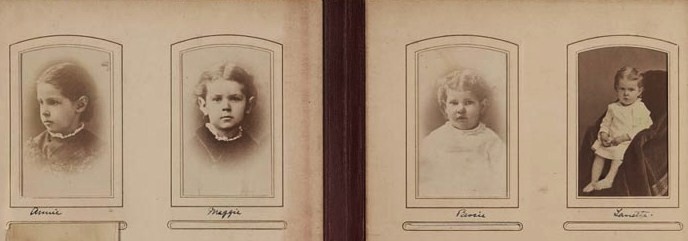
Four little girls, suffering and God’s perfect peace

4girlsspaffords1You’ve probably heard of Horatio Spafford. You may realise he is the author of the hymn “It Is Well” (When Peace Like a River) and that he suffered the tragic loss of his four daughters before penning those now famous words. But here is a little more background you may not be aware of, along with an interesting question from Tim Keller:

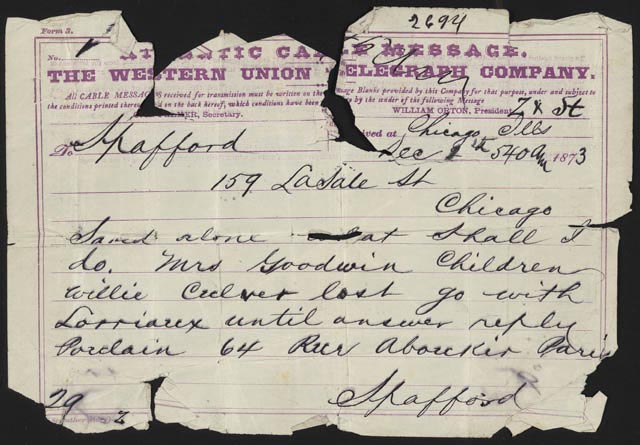
“Horatio Spafford was an American lawyer who lost everything he had in the Chicago fire of 1871. Only two years later, he sent his wife, Anna, and their four daughters on a ship across the Atlantic Ocean to England. The ship hit another ship and began to sink. As it was sinking, Anna got the four little girls together and prayed. The ship went under the water, and they all were scattered into the waves, and all four little girls drowned. Anna was found floating unconscious in the water by a rescue ship. They took her to England, and she cabled Horatio Spafford just two words: “saved alone.”

spaffordWhen Spafford was on the ship on his way to England to bring his wife home, he began to write a hymn – “It is well with my soul… When peace, like a river…” Those are the words he wrote.

Here is what I want you to think about: why would a man dealing with his grief, seeking the peace of God – the peace like a river – spend the entire hymn on Jesus and His work of salvation? And why would he bring up the subject of his own sin at such a time? He wrote:

My sin, oh, though the bliss of this glorious thought!
My sin, not in part but the whole,
Is nailed to the cross, and I bear it no more.
Praise the Lord, praise the Lord, O my soul.

What has that got to do with his four little girls who are dead? Everything!
Do you know why? When things go wrong, one of the ways you lose your peace is that you think maybe you are being punished. But look at the cross! All the punishment fell on Jesus. Another thing you may think is that maybe God doesn’t care. But look at the cross! The Bible gives you a God that says, “I have lost a child too; but not involuntarily – voluntarily, on the cross, for your sake. So that I could bring you into my family.”

In that hymn you can watch a man thinking, thanking and loving himself into the peace of God. It worked for him under those circumstances. It worked for Paul under his circumstances (Phil 4:6-13). It will work for you.

– Timothy Keller, “Walking With God Through Pain and Suffering”, p.311-312

You keep him in perfect peace whose mind is stayed on you, because he trusts in you. (Isaiah 26:3)

You can listen to a new arrangement of IT IS WELL by Todd Fields. Find it here on Spotify (our church songlist for 2014).