

II. Words of Salvation
Yesterday we looked at Jesus’ words of forgiveness: “Father, forgive them, for they do not know what they are doing.”
Today we continue with Luke 23:42-43, where Jesus offers words of salvation: 42 Then he said, “Jesus, remember me when you come into your kingdom.” 43 Jesus answered him, “Truly I tell you, today you will be with me in paradise.” (Read full chapter) Here are some key things to understand about Jesus’ response to one of the criminals beside him – the one who realised this Jesus, who had done no wrong, was truly the Saviour King he desperately needed.
1. Substitution:
When we imagine this moment, with all its injustice and brutality, we must remember that the the logistics of Calvary Hill did not take God by surprise. It was no accident that Jesus was placed between two thieves. Pink suggests that He was crucified with these criminals to “fully demonstrate the unfathomable depths of shame into which he had descended . . . the Saviour [was] numbered with the transgressors to show us the position he occupied as our substitute” (p.34). This takes us to the heart of Christ’s purpose. He came to save us by dying in our place. R.C Sproul’s explanation of “substitution” is helpful here: “When we look at the biblical depiction of sin as a crime, we see that Jesus acts as the Substitute, taking our place at the bar of God’s justice. For this reason, we sometimes speak of Jesus’ work on the cross as the substitutionary atonement of Christ, which means that when He offered an atonement, it was not to satisfy God’s justice for His own sins, but for the sins of others.”
2. Differing responses to Christ:
“In those three crosses and the ones who hung upon them we . . . have a vivid and concrete representation of the drama of salvation and man’s response” (Pink, p.35). Both men who hung with Christ were equally “near” Christ; they heard everything that took place in those six hours on the cross, yet they respond differently. One heart is hardened and one is melted; one refuses to repent and one, believing, finds mercy and life eternal.
There is no logical explanation for the sudden repentance and faith of the one thief. He has not yet seen all the supernatural events of the day (the triumphant cry, the hours of darkness, the quaking of the rocks, the rending of the temple veil, to name a few) and yet he believes. Clearly his faith is mercifully God-given. Though he initially mocked Jesus with the other thief, soldiers, and the crowd, when he reaches the end of himself, he turns to Christ. He rebukes his companion, saying Jesus had done nothing wrong. “Thus by a single stroke he cuts himself off from the favour of his companion and the crowd as well” (Pink, p.47). With his words he ultimately condemns the whole Jewish nation. This is a courageous faith.
3. Salvation won:
Jesus responds to assure the repentant thief that he will certainly share the joys of paradise with Him – today! Some question the genuineness of this thief’s repentance (and discuss the tricky logistics of how they would be in paradise together “today”). Even Pink wonders on this point: “How comes it that this babe in Christ made such amazing progress in the school of God? It can only be accounted by divine influence” (p.49). The thief’s request indicates a genuine confession where he acknowledges Jesus as King, as Saviour, and looks forward to the Second Coming, “remember me when you come into your kingdom.“ Though he has done no good works, or studied the word, his faith in Christ is rewarded with the unshakable certainty of a place in heaven. What immense hope and forgiveness this thief would have experienced in his final moments – knowing that His Saviour would be by his side, forever.
Join me for Day 3 tomorrow: Words of Affection. (John 19:25-27)
Bless!
(Here is a song to help you focus on the hope and the certainty of our Salvation through Christ.)
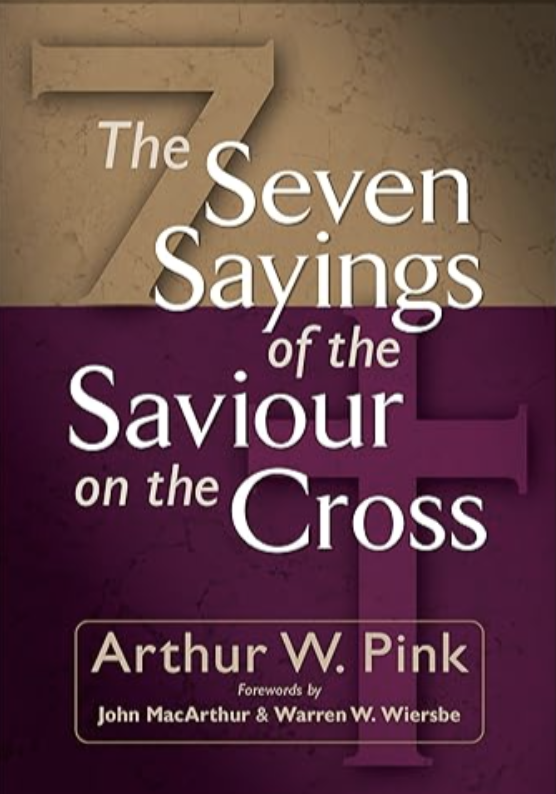
(This series draws on the structure and ideas in “The Seven Sayings of the Saviour on the Cross” by Arthur W. Pink, 1984, Baker Book House. Direct quotations are indicated. AI was NOT used in the creation of this Blog post.)
 sevennotesofgrace