A shot in the arm for your church music team

Sometimes being part of a church music team/worship band is an inspiring and encouraging thing, something you absolutely enjoy and look forward to. But other times it can become a bit of a drag, unfortunately! And if you are the leader, and you are experiencing the latter emotions, then oh dear! This is not good news for anyone, especially the congregation. Something needs to change and fast.
What to do?
The Cambridge online dictionary defines “a shot in the arm” as something which has a sudden and positive effect on something, providing encouragement and new activity. And that is precisely what I believe this great little set of 6 bible studies can do for you.

The study book “Sing for Joy” written by Nathan Lovell (2010) is produced by the insightful people at Matthias Media, as part of a range of Interactive Bible Studies. It would be a great shot in the arm for a flagging music team (or leader) as they work through it with others, in order to re-energise and refocus. It would allow you to raise and explore all those tricky issues about the behaviour and motives of church musicians/music in an unthreatening manner. Each study is around 8 pages long (in 60 page study booklet).

Here is a sampling of the topics you will discuss while diving into God’s Word together:
#1 What is Church and Why do we sing there? – looks at music as a natural expression of joy, and why singing is the right response for God’s gathered people.
#2 Praise be to God – looks at the nature of biblical praise, the songs of the Bible, and how we praise God in ways other than singing.
#3 True Worship – traces different meanings of the word “worship” and the implications for how God’s people serve in the Old and New Testament eras. The ideas of worship and sacrifice are explored through the texts of Romans 12 and Hebrews 12-13. Connections are drawn between true praise and true worship.
#4 The Function of Church Music – looks at the many different ways music benefits God’s gathered people.
#5 The Gift of Musicians – explores what it means to be gifted musically, and how to be a servant-hearted leader as a musician, rather than a self-focused one.
#6 Music & Lyrics – considers the importance of song lyrics which should “continually refocus our mind on Christ, teach us His Word and remind us of what he has done for us” (p.57)

One of the most useful and simple definitions given in these studies regarding with purpose of church singing was this: “we sing in church because we are rejoicing over who God is and what He has done for us. Our singing is a response to the Gospel – an extravagant, joyous response to our God who has delivered us from our enemies, redeemed us for Himself, and gathered us together as his people” (p.35)

Describing church musicians as both servants and leaders was a really interesting approach, and a really useful one I think.
“Like it or not, musicians are in the role of leadership within our congregations. It has always been this way. In David’s day there was a band consisting of 120 trumpets as well as cymbals, harps, lyres and a whole tribe of singers (2 Chronicles 5:12)! They dressed up in fine linen and stood apart from the rest of the congregation and led them in praise. What a spectacle that must have been!” (p.47)

We will definitely be discussing that at our next team meeting! You can order these studies by following this link to Matthias Media. I am sure they will help get your whole music team back on the same page. . . and singing from the same score!

Saved by a violent grace

“So ruthless, He loves us,
So reckless His embrace

To show relentless kindness,
To a hardened human race

The joy that was before Him
On the Man of Sorrows face,
And by His blood He bought a violent grace”

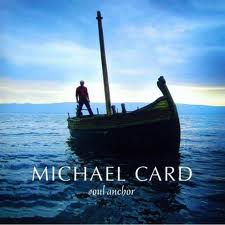
Many years ago some great ministry friends introduced me to a writer of very “deep” and challenging Christian songs, Michael Card. And I had almost forgotten him until the other day! Now why did I remember him, you ask? At the moment I am studying for an exam, a “big picture” Bible overview subject and I really need to get some memory verses and concepts stuck in my head, about how Christ fulfills all the OT law and prophets. So then I thought, Hebrews! Great book for explaining that. This was quickly followed by my recollection that Michael Card’s “Soul Anchor” album is the book of Hebrews in song (just about).

“A Violent Grace” (quoted above and below) is Track 1. So passionately does it remind us that God’s grace was no stroll in the park! Jesus was the high priest who sacrificed Himself. His love was (and is) ruthless! He showed the ultimate kindness and grace to the hardened human race that despised Him. Yet the joy set before Him held the Man of Sorrows to the Cross. And what was this joy? (Hebrews 12:2)
“Let us fix our eyes on Jesus, the author and perfecter of our faith, who for the joy set before him endured the cross, scorning its shame, and sat down at the right hand of the throne of God.” (NIV)
“We do this by keeping our eyes on Jesus, the champion who initiates and perfects our faith. Because of the joy awaiting him, he endured the cross, disregarding its shame. Now he is seated in the place of honor beside God’s throne.” (NLT)

What was this joy? I suppose there was the joy of sitting on the Throne. But moreso, we are His joy! We are His reward. His death saved a people. All those the Father gave Him can never be snatched from His hand by the power of His death and resurrection. (John 10:28-29) We are God’s chosen people, recipients of immense and violent grace.
No wonder the message of the Cross is so offensive to so many.
But for us being saved it is the power of God!

A Violent Grace (Michael Card, 2001)

A mural of memories moves by in a blur
His prayers all seem unanswered and unheard
His pleading petitions, his loud cries and tears
A last reprieve will simply not appear
So ruthless, He loves us, So reckless His embrace
To show relentless kindness, To a hardened human race
The joy that was before Him
On the Man of Sorrows face
And by His blood He bought a violent grace
Most willing of victims, And with His final breath
Destroyed the one who holds the power of death
The hate heaped upon Him, scorning all the shame
But all for love He died and overcame

In all of time no one had ever heard
And to the world the thought seemed so absurd
Beyond their wildest dreams no one could ever tell
Of a high priest who would sacrifice Himself

The Grace that breaks in and saves

“The Bible’s purpose is not so much to show you how to live a good life. The Bible’s purpose is to show you how God’s grace breaks into your life against your will and saves you from the sin and brokenness that otherwise you would never be able to overcome….Religion is ‘if you obey then you will be accepted.’ But the Gospel is ‘if you are absolutely accepted, and sure that you are accepted, only then will you ever begin to obey’. Those are two utterly different things. Every page of the Bible shows the difference.”
Tim Keller.

How to suffer well

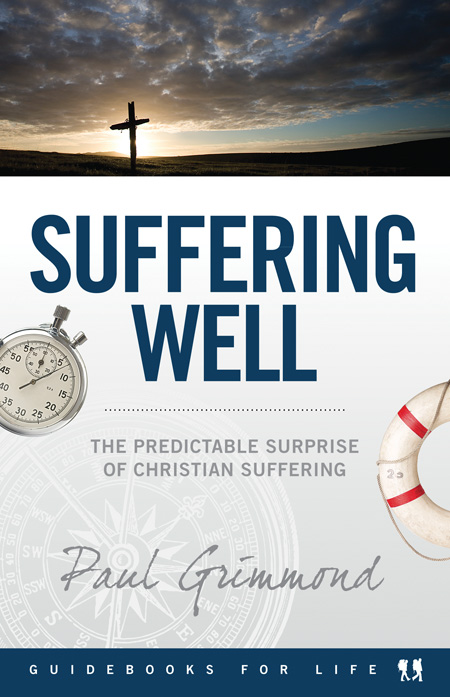
BOOK REVIEW: Suffering Well: The predictable surprise of Christian Suffering by Paul Grimmond (2011), Matthias Media.

It was John Wesley who famously said of Christians in his era “our people die well”.  Presumably they died strong in the faith, with an understanding that this life is not all there is, or all that matters, and with hope in the glorious future that awaits in Christ beyond the grave.

Could the same be said of Christians in the 21st century? How do we cope with suffering in general, let alone death? Do we suffer and die ‘well’?

In the first chapter of his challenging book ‘Suffering Well’ author Paul Grimmond states his case: when it comes to suffering we are prisoners of our age who have “lost touch with biblical truth because of the constant hum of worldly thinking that swirls around in our heads” (p.18). As a result we don’t know how to view suffering, to suffer well, or how to encourage one another in suffering for Christ.

I read this book during a month of suffering; it was not the sufferings of physical attack or public persecution, simply that the flu had descended, making an ordeal of every simple daily task. As I suffered and coughed, Grimmond’s book helped resolve some of the dilemmas about suffering which I had wrestled with before. Here are just two main points (of many great ones which the book raises) which will stay with me:

1. Don’t come to the Bible with the world’s view of suffering – start with Bible’s view and look at suffering in our world through those eyes. In the world’s view suffering, or at least the avoidance of suffering, is the new moral standard. According to Grimmond it is the only determinant of what is right: a disabled child will suffer, and so will the parents, so it is apparently “right” to terminate their existence before birth; the same goes for an injured dog and an old person with terminal cancer. Suffering is seen as the only evil, which must be avoided at all costs. “Suffering is a major part of the argument against God’s existence. The very presence of suffering . . . is a key piece of evidence. If we really have an all-good and all-powerful God then how can there possibly be suffering?” (p.25) More than that our world believes religion is one great cause of human suffering. “In our brave new world, suffering means that God is immoral and Christians are immoral” (p.28) since we believe in a God who would allow suffering to exist!

If we come to the Bible with this worldly view in our heads, no wonder we don’t know what to do with suffering, or how to speak up for the God who allows it. Grimmond takes us back to the Bible to see that God is in control, that God is God and I am not! He is the potter, we are His clay. God is in complete control over creation, which means that “the suffering of God’s creation occurs by his hands . . .Scripture never suggests suffering and difficulty come because God is out of control; rather . . . they come because he is IN control.” (p.46-7). This may seem a big and bitter pill to swallow, but it is the teaching of the Bible through and through. This God is not a god we have created, one the world would approve of, a benevolent grandfatherly figure who simply indulges us moment by moment. God wills, He purposes, He acts, He works all things together for good, including suffering. “The world is suffering because it stands under the heavy hand of God’s judgement . . . Our world, marked by suffering and death , is a world that has been bent out of shape BY GOD. . . God has visited upon us the results of our sin” (p48-49).
Yet this God has involved Himself in the suffering of His creation; suffering is at the heart of His plan to create a perfect world and glorify himself. Jesus faced the suffering that should be ours. While suffering may be painful and awful, it comes from the hand of a sovereign God who will use it for good, and who guarantees that good by the gift of his Son (p64).

2. Don’t downplay the real suffering for Christ that Western Christians experience – being scorned, reviled and mocked! In Chapter 6, entitled “Where’s all the persecution gone?” the discussion moves from the general suffering of our fallen world to specific suffering for being a Christian. Grimmond wants us to see that in taking up the cross of as Christ’s disciple, the imminent danger is not usually physical hardship, but the danger of being ashamed of Christ. “When we think of suffering for Christ “persecution” is the word we naturally use. But in the bible the language is much more diverse. It talks of being reviled and spoken against and maligned . . . The Bible’s big question for us is will you obey Jesus and speak for Him, or will you be ashamed of his words?” (p.96).  Grimmond sees the great danger for Western Christians is “the slow, spiritual death of a thousand tiny compromises crouched at the door, waiting to devour our hearts. . . at the moment we need it most we have let go of a robust theology of belonging to Christ and suffering for him”(p.97).  Though we live in a culture where words are cheap and people can say what they want and be rude to each other all the time, we don’t have to see it as weakness if those words really sting us. Grimmond suggests that we do not serve or encourage one another well when we say we don’t suffer, because it reinforces the view that suffering for Christ is only physical. “As a result we fail to teach each other to live without shame in the face of the more subtle pressures in our culture” (p.98).  So, this IS persecution and we discourage each other when we downplay it! We should also rebuke ourselves when we fear it or shy away from it. This is the shame we are NOT to be ashamed of! With regards to the promise of suffering for and with Christ, Grimmond insists we teach it to people from the moment of conversion. We must share this truth with our children so they grow up rejoicing that they’re counted as Christ’s when they suffer for him(p.103).

Grimmond says we also suffer as Christians because of our compassion. When we see the suffering, the sin, the lost people of this world through God’s eyes, it brings deep sorrow. And as for the ‘predictable surprise’ of the title . . . I might leave that for you to read about in chapter 5! If you want to get a better handle on the question of suffering, and find hope in the midst of it, grab a copy of Grimmond’s book, which successfully turns our eyes back to our Sovereign God, who is in control of all our suffering.

What are we Christians called to do in the face of suffering? We are called to wait well, to praise our God in every moment, and to ask for God’s strength to do good – even to our enemies (p.139).

You can buy Paul Grimmond’s book from Matthias Media by following this link: suffering-well

You may also like:
Thinking about Psalm 73                                                                    Lessons from the Tissue Box
asaphrunny-nose

Sharing the perspicuity of God’s gracious Word

Bible-28Perspicuity – I just love that word!
Before we go any further I should probably tell you what it means, shouldn’t I? It means “the quality of being perspicuous, of being clearly expressed and easily understood”. The word “Perspex” (which is a clear acrylic substitute for glass) is a close relative. If something is as “clear as glass” you can see through it!
Now for the sake of being “perspicuous” I better get to my main point: God’s Word is perspicuous, but many of us are unconvinced!
Years of sitting through bible studies and sermons can make us doubt the perspicuity of the bible, and our own ability to read and understand it. We think we must always rely on theologically trained people to explain the Bible to us. And so . . . we don’t read it, or we read with fear or reluctance. (Nb. I still love theologically trained people who teach the Word well.)
One great way to come back to the perspicuity to the bible is to read it with someone else, and this is what I was thinking about when I first came across the word a few months ago. I was preparing a presentation on One-2-One bible reading for a women’s breakfast. D. Broughton Knox (Moore College Principal 1959-1985) said regarding the perspicuity of the bible, that “the Bible is comprehensible, and its interpretation does not depend on experts or even authoritative interpreters“. Another theologian would like us to remember a similar point: “In evangelism, in edification, nothing can beat opening the text of the Bible and reading what God Himself has actually said. Christians need only have confidence in God’s word and a basic skill in reading it with others” (Phillip Jensen, Dean of Sydney, Anglican Church).

Through preparing and delivering my talk I now realise it is no easy task convincing people they can read the bible informally, understand it and be strengthened by it. Yet I have found this to be true by nearly all who will dare try it, including myself. So will you dare? If you are feeling flat or stuck or stifled or at a standstill in your growth as a Christian, or if you simply want to “let His Word dwell in you richly” (Colossians 3:16) then try it. All you need is a friend, a bible book (and pencil), and an hour a week, over whatever period of time you choose. Around 15-20 verses is enough to share each week; just pick up where you left off the next time you meet.

WHAT TO DO:
Read through the text aloud once, silently once, and then grab a pencil to mark up your text.
Identify 3 things: questions, “lightbulbs” (main points) and “arrows” (application points, things to apply and act on). I use little symbols for each of these. Once you’ve both marked your text with a pencil, simply share and discuss each of your questions, lightbulbs and arrows.

THINGS TO REMEMBER:
1. The purpose of reading together is to read and question the text together; the huge benefits come through the conversation, the dialogue you have around the text. Over time you will have talked your way through and in and around a whole book of the bible. You WILL remember the message of that book much better. . .and you will have deepened your friendship in the Lord! Bonus!
2. You don’t have to have all the answers or be an expert. It is best not to use study bibles as that can prevent you from thinking and really listening to the text. (That said, it is sometimes useful to look at intro notes before you start a book, just to clarify the context, date and author of a book. If burning or totally difficult issues/questions come out of your discussion look it up during the week and report back. I’ve found this isn’t required often at all).
3. No preparation! Don’t read ahead or study a passage so you can appear wiser/a better Christian! Trust that God can and will speak though His Word and that you will be able to discuss and understand it.
4. It’s good to use 2 different translations (if you can cope with that, like NIV and ESV and NLT) as you will get a greater grasp of the passage this way. A different translation sometimes help clarify the intended message.
5. Silence is okay! In fact, it’s great! Encourage thinking time. Make this clear to your reading partner at the start.
6. Pray at the start and end of your time together.

Enjoy the gracious gift of God’s perspicuous Word in your own language, and the opportunity to read it in freedom!

“God had every reader of Holy Scripture in mind at the time of its ‘exhalation’. This means not only that God’s Word is inspired and universally applicable, but also that, in it, God is speaking presently to every particular reader (or hearer) of His Word.”
(Peter Blowes, 2011, “Reading the Bible”, Matthias Minizine)

You may also like these posts:

From the Gospel Coalition: 7 Arrows for Bible Reading

The Blessed and God-breathed book (2 Timothy 3:16)GodBreathed_slide1x_365_y_273


We bear the creativity of a loving Creator

The only reason we can be creative people, who can make unique and beautiful designs in art, craft and music, is because we bear the image of an infinitely and extravagantly creative God. And when we observe how passionate some people get about their crafty creations, we are reminded of the Father’s passion for us, His new creations! Here are some thoughts I shared at a women’s Craft Day a little while ago:

Why do we treasure the things that we make? To other people it seems we place inordinate value on our creations, whether they be for ourselves or others. But we know all the thought and creative energy we have put into them. We have an intimate knowledge of their design and have blisters and sore eyes from the hours of careful manual work. We value them so much more highly than mass produced, shop bought items (just as we might value our child’s homemade card and craft so much more). Our finished creations take pride of place in our homes and on our bodies!  (One friend shared today how when she found a precious quilt she made someone scrunched up in the bottom of their cupboard; she quickly retrieved the object and decided to give it the love and care it deserves herself!) While others may admire the skill, the beauty and the design, it is their creator who holds them most highly valued. Since we know our creations so well, we also know their flaws, and are willing to work to improve them. We even treasure the broken, unfinished and seemingly useless creations, hoarding them away for the day when we will get around to finishing them.

The relationship between Creator and created is very unique, and how wonderful it is to remind ourselves that we are God’s treasured creation! He made us, He intimately knows our design, our flaws, our unfinished bits and He knows what He wants us to be when we are finished. God values us as His greatest treasure. Here are some of the phrases from God’s word which He uses to describe us. We are: His offspring, His prized possession, His handiwork, craftsmanship, masterpiece, the pinnacle of His creation and He rejoices over us with singing! This is the HOPE we have as Christians: that we are not biological accidents, but rather we are unique creations of a loving Creator. He knows us by name and by voice and fingerprint, and He has planned our days.

Rejoice! We are God’s treasure! He showed us this by sending his Son Jesus to save us from the punishment our rebellion deserved. “For God so loved the world that He sent His only son that whoever believes in Him will not perish but have everlasting life.” John 3:16
Here are two final points to ponder, which I believe you will find to be true as you follow your Creator:
1. We will be most satisfied in life when we treasure the One who treasures us most (Our Creator God!)
2. And He’s not finished making us yet! He is faithfully shaping us to be more and more like His son.

As the Message version of the Bible says in 2 Corinthians 3:18 our lives will be “. . . gradually becoming brighter and more beautiful as God enters our lives and we become like Him.”

Romans 8:28-30 (ESV)
And we know that for those who love God all things work together for good, for those who are called according to his purpose. For those whom he foreknew he also predestined to be conformed to the image of his Son, in order that he might be the firstborn among many brothers. And those whom he predestined he also called, and those whom he called he also justified, and those whom he justified he also glorified.

Creation Calls . . . are you listening?

Check out this great video accompaniment to a song by Brian Doerksen, “Creation Calls”. In light of creation he asks “How can they say there is no God”? What do you say? The GRACE of creation! God did not have to create such a beautiful place for us to enjoy, but he couldn’t help himself I suppose. Thanks God!

Thinking about Psalm 73: What did Asaph find in the Sanctuary?

asaphMany thanks to guest preacher Andrew Bain who invited us last Sunday (Mother’s Day) to consider our attitude to the prosperity of the ungodly in the world. In Psalm 73 Asaph expresses at length his bitter envy of ungodly prosperous people and he cries out to the Lord at this extreme injustice. Then midway through the Psalm he takes the time to visit God’s sanctuary (probably the temple, to pray and read God’s word). There he realises how seriously skewed was this envy and this cry of injustice!  “I finally understood the destiny of the wicked” (v17). “I realised that my heart was bitter….I was foolish and ignorant” (v21-22).   In the sanctuary Asaph gains renewed confidence in the goodness of God, and realises that it is the ungodly, not himself, who are on the “slippery slope” to ruin.

What a strange coincidence (God-incidence!) that this Psalm was explored on Mother’s Day, a day when some of the “unfair” aspects of motherhood are supposedly remedied, with gifts and much  attention and thanks being showered on mothers. The world has been shouting at us for some time that motherhood is unfair, that our biology has put women at a disadvantage in a society where prosperity and material gain is the ultimate good (and god!). When we compare our opportunites with those of most men in the developed world, it can seem unfair that women must put their career and their bank balance on hold in order to bear children (in considerable agony). . . and then stay home with them, doing daily repetitive tasks which, though extremely valuable, are deigned unimportant in the eyes of the world. Even the alternative seems unfair: we put the children in day care, head back to work and then, exhausted, enjoy very little of our life as we juggle a thousand demands on our time and attention. We may even get to the point of envying non-Christian women, who sleep in on Sundays and don’t have to add church commitments, bible reading and prayer to their already full diaries! How unfair is it that women often must battle loneliness when at home with little ones, and again at the other end of life, lonely, widowed and apparently forgotten? How unfair is it that some women who want children have been deprived the opportunity, while the ungodly despise and dispose of their unborn children in great numbers?

So what do we do when these bitter thoughts creep in, settle down and discourage us? Like Asaph we need to turn to God. As Christians, we are the temple of the Holy Spirit, He lives in us, yet we must take the time to “tune in” to God’s voice. The “sanctuary” is a place we must go to daily, as we turn away from the voices and attitudes of the world, and tune into God’s voice in His word and through prayer. Paul challenges us in the book of Romans: “Do not be conformed to this world, but be transformed by the renewal of your mind” (Rom 12:2). As we tune into God’s voice, in His word, the Spirit helps us understand and see things from a right perspective. God reminds us that the world we live in does not hold correct opinions about heavenly realities: who is King, who is in charge, what is right and wrong, and the ultimate purpose of mankind! God reminds us of the riches we have in Christ, which far surpass anything we could aspire to own or achieve in this “unfair” world. Let’s turn to God and restore our confidence in his goodness. He sent His own son, Jesus, to face extreme injustice, nailed to a cross for the sins of those who were his enemies (us!) and because of this we can draw close to God. Yet I still belong to You; You hold my right hand.  You guide me with your counsel, leading me to a glorious destiny. Whom have I in heaven but You? I desire you more than anything on earth. My health may fail, and my spirit may grow weak, but God remains the strength of my heart; He is mine forever. (Psalm 73)