
If you have just joined me for this series exploring Jesus’ final words on the Cross, please see also my previous two daily posts. This series combines key ideas from Arthur W. Pink’s “The Seven Sayings of the Saviour on the Cross” with my own observations and highlights.
Jesus’ first two phrases focus on forgiveness (for those who know not what they do) and then salvation (for the repentant thief on the cross, who would certainly share paradise with Jesus). We looked at Christ as our substitute, who dies in our place – who rescues repentant sinners to forgiveness and eternal life.
III. Words of Affection
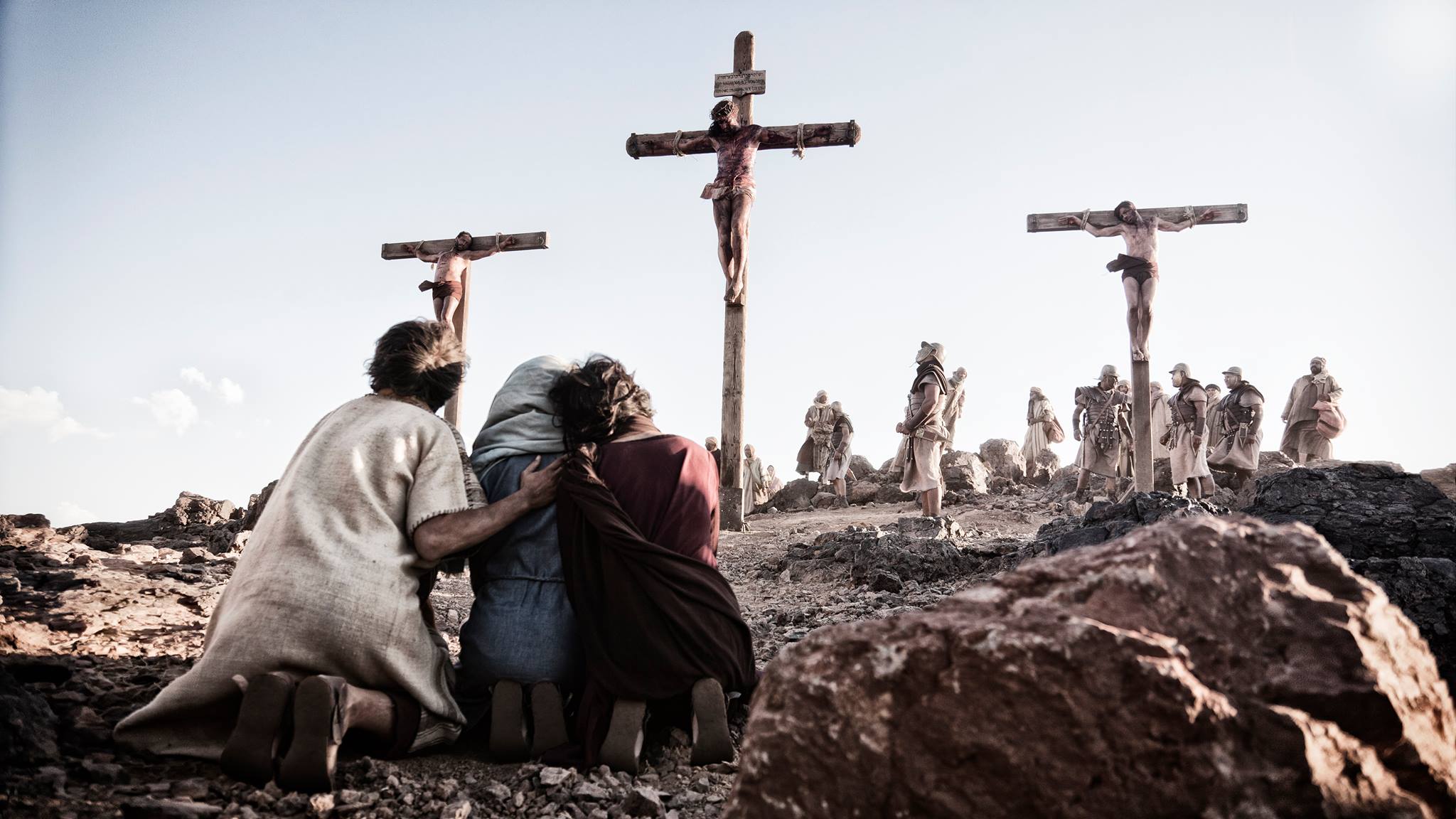
The third set of words Jesus utters is recorded in John 19:26-27. They are a compassionate request of two people who stand by the Cross, a request which ensures their relationship and care into the future. These two are Mary (his mother) and John, the disciple. In Christ’s most dire moment, his focus includes providing for the earthly needs of those he loves.
“When Jesus saw his mother there, and the disciple whom he loved standing nearby, he said to her, ‘Woman, here is your son,’ and to the disciple, ‘Here is your mother.’ From that time on, this disciple took her into his home.”
This request (and the response noted) reveals the heart and faithfulness of all three involved. There is much to unpack, but I will focus on just a few points.
- Jesus honouring his parent
Amidst the sufferings of the Cross, Christ thinks of the woman who loved him best, whom he loved. “This is one of the greatest wonders of His person – the blending of the most perfect human affection with His divine glory” (Pink, p.68). He knows Mary is a widow in need of provision and home. He sees her present and future needs and commits her to his most trustworthy and dear friend, John. Here, Jesus is the perfect man giving the perfect example of the care that we are all to show our parents, especially in their later years. The command to “Honour thy parents” is vividly portrayed in Christ’s last words of care for his mother. Pink sees this as a stark reminder of the fifth commandment, embedded in the sufferings of Christ. He says that to honour our parents with care, attention, provision and love is a “sacred duty” which Christ displays from the Cross. - Mary needed a Saviour and stood by him
The Mary of the Bible is not the revered “Mother of God” who is put on a pedestal. In fact, never once in the Bible is it recorded that Jesus called her ‘mother’. So to address her here as ‘woman’ is not a demeaning statement, but it is to remind us that she is a member of a fallen race, a woman in need of a Saviour. She has faith in her Son as Saviour and understands (probably) better than the disciples that he must die to deal with our sin debt. “Before the birth of Christ, she declared ‘My soul doth magnify the Lord, and my spirit hath rejoiced in my Saviour‘ (Luke 1:46-47) . . . And now at the death of the Lord Jesus she is found at the Cross” (p.67). Pink also reminds us of the courage and strength Mary shows in this moment, to stand for the full day and watch her Son endure the agony of the cross – and breathe his last. “Who can measure those hours of suffering as the sword was slowly drawn through Mary’s soul? (See Luke 2:35) . . . She suffered in unbroken silence . . . in profound desolation of spirit” (p.57). Yet John was by her side. - What better choice than John?
Of all the disciples, the one who returned to the cross was John, the disciple ‘whom Jesus loved‘. Clearly there was a great level of affection and friendship between them, so it was natural that after the other disciples fled in fear, John was the one who would return. Perhaps he understood the Saviour almost as well as Mary, so it was a fitting choice to hand them into each other’s care. There was “none so well suited to take care of Mary, none whose company she would find so congenial, and . . . none whose fellowship John would more enjoy” (p.65). Pink further explains why leaving John in the care of Mary who knew him best was so wise. He points out “that a wondrous and honorous work was waiting for John. Years later the Lord Jesus was to reveal himself to this apostle in glorious apocalypse” (referencing the visions of Revelation) . . . How better then could he equip himself than being constantly with her” (Mary), who knew Jesus so intimately for 30 years?
Join me for 4/7 next time, the words of Christ in Matthew 27:46. Blessings!
This series draws on the structure and ideas in “The Seven Sayings of the Saviour on the Cross” by Arthur W. Pink, 1984, Baker Book House. Direct quotations are indicated. AI was NOT used in the creation of this Blog post.


 “And God is able to make all grace abound to you, so that having all sufficiency in all things at all times, you may abound in every good work.”
 Today’s post comes from John Piper, but his childhood story struck a chord with me. I can faintly remember a similar moment when my dad rescued a mini-me from under a freak wave at the beach (in his good shoes). I trust you will find this an encouragement:


 sevennotesofgrace