What is so amazing about “Amazing Grace”?

It just dawned on me that though I have been blogging for almost a year now on the subject of music and grace, I haven’t even made a single mention of that most famous combination of music and grace: John Newton’sAmazing Grace“. It has been an anthem of hope and faith for generations.
But why has this hymn had such an impact? What does Newton point out about God’s grace that resonates with us so strongly? Is there something in the music which made it so popular?

At the time Newton penned Amazing Grace, hymnbooks did not contain music; they were simply religious poetry books. The first time Newton’s lines were joined to music was in 1808, in A Companion to the Countess of Huntingdon’s Hymns, set to the tune “Hephzibah” by English composer John Jenkins Husband. More than twenty musical settings of “Amazing Grace” circulated with varying popularity until 1835 when William Walker assigned Newton’s words to a traditional song named “New Britain”.

According to author Steve Turner, the joining of these words and melody was a “marriage made in heaven . . . There was a rise at the point of confession, as though the author was stepping out into the open and making a bold declaration, but a corresponding fall when admitting his blindness.”

Sing through the lyrics at the end (if you need them to test his theory). I think Turner is quite right. It is at this very point we can see why the hymn works so well in communal praise. As we sing this appropriately-shaped melody together, we step out into the open and make a public and communal confession of our wretchedness, our need for God’s forgiving grace. We declare we have moved from ‘lost’ to ‘found’, from hopeless to being filled with hope! As we declare this together, the Spirit works.

It probably has a lot to do with the truth which James expresses here:
“Confess your sins to each other and pray for each other so that you may be healed. The earnest prayer of a righteous person has great power and produces wonderful results.” (James 5:16)

This hymn is a prayer! We pray together as we sing. We confess (our wretched need for God’s grace) to one another, and look with eyes of faith to the glorious future for us who are ‘found’. The power of this prayer-song transcends time, culture and place. I would predict that there are many more centuries of life in Newton’s hymn.

(Nb. If you are so young that you only know of Amazing Grace as being part of Chris Tomlin’s “My Chains are gone” then you should note how skilfully Tomlin has mimicked the rise and fall of the “New Britain” melody in his additional chorus. In this way he moves our focus to the flood of mercy experienced by all who are in Christ. Such amazing grace!)

Here are the 6 verses of the hymn:

Amazing grace how sweet the sound
That saved a wretch like me
I once was lost but now am found
Was blind but now I see

‘Twas grace that taught my heart to fear
And grace my fears relieved
How precious did that grace appear
The hour I first believed

The Lord has promised good to me
His Word my hope secures
He will my shield and portion be
As long as life endures

Through many dangers toils and snares
I have already come
‘Tis grace hath brought me safe thus far
And grace will lead me home

Yea when this flesh and heart shall fail
And mortal life shall cease
I shall possess within the veil
A life of joy and peace

When we’ve been there ten thousand years
Bright shining as the sun
We’ve no less days to sing God’s praise
Than when we first begun

And Tomlin’s clever chorus:

My chains are gone, I’ve been set free
My God my Saviour has ransomed me
And like a flood His mercy rains
Unending love, Amazing Grace!

If you want to think a bit more about this grace, watch the film trailer . . . or the whole film AMAZING GRACE (2006).

You may also like:

Saved by a violent grace                                  Keep your ears tuned to the gospel of grace
soul anchorlisten

Creation sings the Father’s Song

Our church family is going through a rapid period of growth at the moment. This is not due to our evangelistic efforts, but by God’s gracious gifts. Four babies were born in the last few months (Alexis, Benjamin, Jackson, Jennifer). What a great opportunity this presents to be reminded of our Creator – the miracle of God’s design in creating new little people. We see it too in the relationship of love and care which grows between parents and their children.

Think of the way a baby’s cry wakens parents in the night, to alert them to their desperate need for food or attention. Think of the way that cry prompts a physical response in mum, to “let down” milk which will sustain her precious little one. She doesn’t have to even consciously think about the process. (Perhaps there are a few unconscious dads staggering about making up bottles as well!) Think of the way human relationships develop between a husband and wife so that they can share the intimate and difficult moments of childbirth, and care for a newborn through the small hours of the night. Think of the inner strength God has given mums to endure days and weeks of broken sleep and other emotional demands. Think of the tender strength of a dad to help everyone hold it all together (and change nappies)!

A song I’ve been listening to lately contains a line which so aptly describes God’s command over creation: “He commands the newborn baby’s cry”. Without that God-given inbuilt response, a child would not demand food or be able to ask that any other need be seen to. Without all those ‘small hours’ moments, parents would not get to know the unique personality of their child so quickly and well, and form a lasting bond.

All these systems have been established by our loving God, to grow us physically and in relationship to each other – and in relationship to Him. They truly show His glory to the world, even to those people who choose to believe His truly amazing design is random and without purpose or meaning. May God help us to continue to be amazed at the wonder of His creation. Though marred by sin and human defiance, creation still points to God’s amazing mind that we cannot fully comprehend.

Make sure you keep your eyes open to the miracles of the God who is seen everywhere, but most especially in us! (Genesis 1:26, Romans 1:20)

Creation sings the Father’s Song (by Kristyn and Keith Getty & Stuart Townend)

Creation sings the Father’s song, He calls the sun to wake the dawn
And run the course of day Till evening comes in crimson rays.
His fingerprints in flakes of snow, His breath upon this spinning globe,
He charts the eagle’s flight; Commands the newborn baby’s cry.

Hallelujah!
Let all creation stand and sing,
“Hallelujah!”
Fill the earth with songs of worship
Tell the wonders of creation’s King.

2.Creation gazed upon His face; The ageless One in time’s embrace
Unveiled the Father’s plan Of reconciling God and man.
A second Adam walked the earth Whose blameless life would break the curse,
Whose death would set us free To live with Him eternally.

3. Creation longs for His return, When Christ shall reign upon the earth;
The bitter wars that rage Are birth pains of a coming age.
When He renews the land and sky, All heaven will sing and earth reply
With one resplendent theme: The glory of our God and King

The gracious choice to carry others’ burdens

The other day I was involved in a discussion about how we can knowingly or unknowingly tempt others to sin. What is our responsibility in that situation? Interesting discussion!
One person shared a verse from James 1:14 –But each person is tempted when he is lured and enticed by his own desire.” In their view this verse excuses us from much responsibility. Now James does have a fair point here of course. People do have a choice, to give in to the temptation/entertain the thought, or not! But does this exempt me from responsibility?
If I know someone who has difficulty with being, frankly, a glutton, should I offer them a large serve of chips and a whole block of chocolate? If someone has a problem with anger, should I provoke them by luring them into a heated debate? If someone, by virtue of being male, is tempted by images of scantily dressed females should I make the effort to wear more modest, less figure hugging clothes? If someone is an avid gossiper should I mention some tasty little bit of information to them, out of turn?

In seeking godly wisdom for this dilemma, Paul reminded me in his letter to the Galatians (6:1-2) that: ” . . .  if someone is caught in a sin, you who are spiritual should restore him gently. But watch yourself, or you also may be tempted. Carry each other’s burdens, and in this way you will fulfill the law of Christ.(NIV)
Also in Philippians we read: “Do nothing out of selfish ambition or vain conceit, but in humility consider others better than yourselves. Each of you should look not only to your own interests, but also to the interests of others.” (James 2:3-4)

This is how the law of Christ is fulfilled! This is the law of love, lived out when we consider that each of us carry burdens, and the heaviest burden is sin. Paul commands us to carry each other’s burdens. “This is how we know what love is: Jesus Christ laid down his life for us. And we ought to lay down our lives for our brothers.(1 John 3:16). (See the post in the Three Sixteens.)

We carry each others burdens best when we remember that we are part of the Body of Christ. We are part of a larger unit of people who need each other, and should support each other, just as the different organs and limbs in our physical bodies do. We are a living system and we are to seek the good of others in that system. I don’t think God intends us to struggle alone with our sin, without help. Let’s look around and consider what burdens others are carrying, and help them by being mindful of their weakness. We can even pray for them! And if it means we have to change something about ourselves, our actions, then so be it. Just because we aren’t responsible for other people’s sinful actions doesn’t mean we shouldn’t consider them ‘better’ enough to help carry their burden. Let’s spur each other on to love and good deeds (not more sin).

Ps.
I now feel compelled to, most daringly, turn this whole thing around and back on to me.
Does this all mean that I, a sinner saved by grace, should be honest enough and vulnerable enough with others to let them know my struggles with sin? Am I willing to do that? If I don’t, aren’t I preventing others from fulfilling the law of Christ. What do you think?

You may also like

The waterfall, river and reservoir of God’s Grace                Unexpected Timing of Grace  
solid-joy-appkingscross


God’s light at the end of the tunnel

Really love this photo. The light at the end just beckons you to follow. Throughout history God has always provided a light at the end of the tunnel: the promised Son of Adam would finally crush the enemy in the Garden; the promise of land and blessings given to Abraham was the light at the end of Israel’s captivity in Egypt; the return to the promised land was the light for the exiles in captivity; and Isaiah’s promised Suffering Servant was a light to all who looked forward from the other side of the Cross. He would make a final and full payment for the sin of the people, allowing them to experience the certainty of forgiveness.

Today we live in the glorious light of the Cross and the future hope it has secured for us. The hope of heaven illuminates our minds, even in the darkest circumstances. The ‘light of Christ’ shows us how momentary these troubles are by comparison with the glory that is to come. Thanks be to God for always providing the light of hope at the end of the tunnel. Let’s keep our eyes fixed on Jesus, the Light of the World. He is the author and perfector of our faith!

This photo comes courtesy of a blog I follow (The Phoblography by David Bignell).
Click here to see more.

Blessed with extravagant grace to bless others

Do you ever shake your head in bewilderment at God’s people in Old Testament days? Despite many blessings, God’s faithfulness and the repeated demonstration of His power and redeeming love, they refused to share the glory and knowledge of their merciful God with the peoples about them. Instead they chose to turn away from the true & living God to pursue the gods and lifestyle of the culture around them. How could they do this? (we ask!) I know I have thought this way in the past, but perhaps we need to examine ourselves here in 2012, as God’s blessed people.

Consider these words from David Platt: “God blesses His people with extravagant grace, so they might extend His extravagant glory to all peoples on the earth. This basic, fundamental truth permeates Scripture from beginning to end. . . (yet) we live in a church culture that has a dangerous tendency to disconnect the grace of God from the glory of God. Our hearts resonate with the idea of enjoying God’s grace. We bask in sermons, conferences and books that exalt a grace centering on us. And while the wonder of grace is worthy of our attention, if that grace is disconnected from its purpose, the sad result is a self-centred Christianity that bypasses the heart of God.”
(“Radical” by David Platt (2010), p69-70).

Ouch! Basking in conferences, sermons and books! (That’s me.)
So have we also been keeping God’s blessings to ourselves? In our modern (western) world we have freedoms and luxuries unimaginable in past eras. Consider our education, our health, our homes, our families, our incomes. Are we using them to make ourselves comfortable or to spread the extravagant glory and grace of God to all peoples? Do we use our technology, our maturity in Christ, our education and knowledge of the Bible to bless others? Our blessings are given that we might bless others – this was the essence of God’s promises to Abraham (that all the world would be blessed through Father Abraham’s great nation).
Let’s not be content to sit on our blessings – particularly the blessing of salvation.
Unlike those OT people, we have the gracious gift of the Holy Spirit at work in us, moulding and shaping us to be more like Christ and giving us the desire to serve Him. Pray that we would not be content with self-centred Christianity. . . let’s not keep the blessings to ourselves.

Jeremiah 31:33 –  “But this is the new covenant I will make with the people of Israel on that day,” says the Lord. “I will put my instructions deep within them, and I will write them on their hearts. I will be their God, and they will be my people. (NLT)

Romans 3:16 – Pursued by mercy not misery

“Destruction and misery always follow them.” Romans 3:16

We seem to be a little let down by Paul’s letter to the Romans in our great run of significant “Three Sixteen” verses. I have thought long and hard about what to write. I can’t really see this verse appearing on a pretty motivational poster, or embroidered on a wall hanging in your toilet! But the verse is significant none the less.

In context this verse is speaking about the fact that all people, whether Jews or Gentiles, are born sinners. We are under the power of sin, slaves to sin. The Jews are no better off. All humans are born into sin. We don’t understand, we are not righteous and we don’t seek God. In this section Paul has tied together several Old Testament verses (from Psalms and Isaiah 59) to make his case. In verse 15 Paul is speaking of the unrighteous who are swift to shed others’ blood; they rush into murder. And what follows this? Destruction and misery! They have no peace and no fear of the Lord.

What a wretched position to be in, and what a contrast to those of us who now do know the Lord and are resting in His righteousness. This grace is open to all in Christ, Jew or Greek, slave or free.

Psalm 23 paints a picture of the goodness and mercy that always follow and protect His sheep – we are not hounded destruction and misery. So if we know Christ, and know that we are IN Christ, this “miserable” 3:16 verse must give rise to celebration and thankfulness. It reminds us that this is what we have been rescued from, from being followed by destruction and misery. What terrible companions. What horrific pursuers! For me this evokes the mental image of a nightmare where you are relentlessly pursued by some unknown yet horrible creature. (I can vividly remember the first one of those I had about age five.)

Anyway, back to Romans. The destruction and misery that pursues unsaved sinners is exactly what Christ delivers us from. And this is not down to us. It is not by our desire or effort that we know the Lord. It is only by His immense grace. Praise be to Him for sending his goodness and mercy after us.
“Surely your goodness and unfailing love will pursue me all the days of my life,
and I will live in the house of the Lord forever.” (Psalm 23:6) NLT

“My Hope” in God’s grace

same loveFor many years I have been a church music junkie (still am). I spend lots of time seeking out great new songs to inspire the local church. Paul Baloche is one writer who usually delivers great songs about great bible truths and the great love of our Saviour.

This one is a fairly recently release, the song “My Hope”. We have taught it at our church; actually it became a sort of theme song to a sermon series on Deuteronomy. The song speaks of the guidance and the faithfulness of God, how through every test His GRACE is with us. Amen to that. Our God is not fickle or changing. That’s why we can hold on to Him. I’m really looking forward to teaching about 600 women this new song at a Women’s conference (called GROW) in Brisbane early next month. I hope you enjoy the song too.

“My Hope” from the album The Same Love, Paul Baloche 2012
Nothing will change if all the plans I make go wrong
Your love stays the same
Your light will guide me through it all
I’m hanging on, I’m leaning in to You

Nothing can reach the end of all Your faithfulness
Your grace is with me through every shadow every test
I’m hanging on, I’m leaning in to You

I don’t know where You’ll take me
But I know You’re always good

My hope is built on nothing less
Than Your great love, Your righteousness
I will not walk another way
I trust Your heart, I trust Your Name
I’m holding on, I’m holding on to You

You are my Rock when storms are raging all around
You shelter me God
I’m safe with You on solid ground
I’m hanging on, I’m leaning in to You

I don’t know where You’ll take me
But I know You’re always good

My hope is built on nothing less than Your great love, Your righteousness,
I will not walk another way, I trust Your heart, I trust Your Name
I’m holding on, I’m holding on to You

CCLI Song # 5882177  Alyssa Mellinger | Ed Kerr | Paul Baloche | Sheila Rabe
© 2010 kerrtunes Integrity Worship Music (Admin. by Crossroad Distributors Pty. Ltd.)

You may also like:
I will boast in the Lord my God                                                                More Great grace songs
Image created by Sarah Danaher with a Canon EOS 5D MkIIadvent


You are our Song from Age to Age

“. . . Though tears now veil our eyes
Your steadfast love, our perfect hope
Our eyes are fixed on grace
We have no doubt You’ll lead us home
To finally see Your face”

These words are found in verse 3 of a new song by Sovereign Grace music, “Our Song from Age to Age”. I first heard it last Thursday night in Brisbane at an event hosted by Qld Theological College, where Don Carson shared an amazing vision of the “Future of Christianity” (from Revelation 21-22) with around 1500 people.

For me this song highlights GRACE, the thing we fix our eyes on as Christians, the GRACE by which we are saved. (See Ephesians 2:8-10). This is the only thing worth singing about and has been since . . . forever!

The first grace-filled song recorded in the Bible (though most probably not the first song uttered on this topic!) comes from Moses and Miriam in Exodus 15. Here are a few choice lines:

“I will sing to the Lord, for he has triumphed gloriously; he has hurled both horse and rider into the sea.
The Lord is my strength and my song; he has given me victory. . .
Who is like you among the gods, O Lord—  glorious in holiness, awesome in splendor, performing great wonders?
You raised your right hand, and the earth swallowed our enemies.
With your unfailing love you lead the people you have redeemed.
In your might, you guide them to your sacred home.”

This great rescue is pure grace. Yet so is music! So is praising God! It is a healing balm for the soul.
God has created us with the desire to praise Him and strangely, we feel most satisfied in ourselves when we are doing just that. Though sin deceives us into thinking we will feel our best when proudly singing our own praises, that will make us feel worse. Really, how long could we praise ourselves before we ran into something we would rather not sing about?
We must praise Him, not just with our mouths but with all our heart, our attitudes, our actions, our thoughts. Even if we could praise Him fully or perfectly, there would still be more to praise Him for, with the grace of each new day and into eternity! As creative image bearers of our Father, we should never run out of fresh ways to “declare the praises of him who called you out of darkness into his wonderful light. Once you were not a people, but now you are the people of God; once you had not received mercy, but now you have received mercy.” (1 Peter 2:9-10)
If you have found great grace in praising God, whether by yourself, or when gathered with his people, I would love to hear your comments.

Here is the link to listen to the song “Our Song from Age to Age” written by Joel Sczebel 2012.

And if you are someone who enjoys discovering great praise and worship songs for today’s church, then spend a bit of time exploring the Sovereign Grace site:  www.sovereigngracemusic.org . They graciously allow you to download their lyrics and sheet music for free! (Click on the STORE tab). These are inspiring and singable songs, full of bible/gospel truth. Enjoy!

Oh and if you want to know more about Don Carson, I’m sure you can figure out how to google him. Also check out a great website of his resources: thegospelcoalition.org

Blessings (through raindrops!)

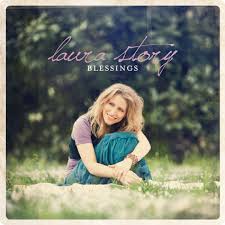
Blessings laura sThis is a song by Laura Story, author of the very popular song Indescribable, a song made famous by Chris Tomlin. (Apparently she wrote the song with the help of Tomlin’s bass player.)  I love the way she challenges us to remember that even circumstances we don’t consider “blessings” may actually be just that! My favourite line comes at the end of each chorus: “What if the trials of this life are Your mercies in disguise?” You can listen to the song by following the link at the end. Blessings!

“We pray for blessings, We pray for peace,
Comfort for family, protection while we sleep
We pray for healing, for prosperity,
We pray for Your mighty hand to ease our suffering
All the while, You hear each spoken need,
Yet love us way too much to give us lesser things
‘Cause what if Your blessings come through raindrops,
What if Your healing comes through tears,
What if a thousand sleepless nights are what it takes to know You’re near
What if trials of this life are Your mercies in disguise?

We pray for wisdom, Your voice to hear,
And we cry in anger when we cannot feel You near
We doubt Your goodness, we doubt Your love,
As if every promise from Your Word is not enough
All the while, You hear each desperate plea
And long that we’d have faith to believe
When friends betray us, When darkness seems to win
We know the pain reminds this heart
That this is not, this is not our home
‘Cause what if Your blessings come through raindrops
What if Your healing comes through tears and
What if a thousand sleepless nights are what it takes to know You’re near
What if my greatest disappointments
Or the aching(s) of this life
Is the revealing of a greater thirst this world can’t satisfy
And what if trials of this life,
The rain, the storms, the hardest nights
Are Your mercies in disguise.”


You may also like:
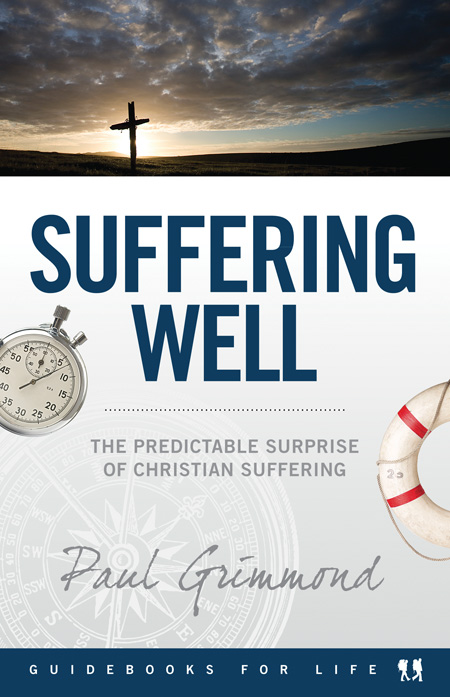
Lessons from the tissue box                                                                               How to Suffer Well
runny-noseSuffering Well book cover


Lessons from the tissue box

runny-noseA friend who knows I’m sick at the moment has passed on a deep theological question, probably just to keep me busy and distracted from the headcold and sore throat. Here is the question: is God teaching us stuff in sickness always, or is sickness just bad stuff that happens as a result of being in a sin filled world, or is it both? Well I could just say ‘both ‘and be done with it! But let’s ponder for a little while.

It seems that we all have become convinced that the default setting of our body should be 100% health. We think that eternal youth is possible if we just eat well, sleep well, exercise and use the right face cream. From the moment we are born our bodies begin to visibly grow and blossom, but at the same time we are degrading! Skin cells die and flake off even on those cute little babies. And there are a thousand other processes of repair (and warfare) going on behind the scenes, minute by minute, day after day, year after year, that we are not even aware of.
Sciencemuseum.org.uk says: “A cell can die in many ways – through infection, poisoning, overheating or lack of oxygen. An uncontrolled death is messy: the cell swells up, and its contents leak away. This may damage surrounding cells. But there is another, tidier way to go – programmed self-destruction, or apoptosis. It seems that cells often choose to kill themselves. We now know that controlled cell death is crucial for normal human development and good health throughout life.”
Yet strangely it is only when this ‘cell death and repair’ process inconveniences us (or threatens our very existence) that we notice it and label it ‘sickness’. The pain in the throat, the headache and the runny nose all represent an unseen and amazing battle being fought in our bodies. They are simply doing what God designed them with the ability to do – fight off intruding viruses and other random elements. Now this is cheery isn’t it!

If sin had never entered the world through the first Adam, would people still have had to endure sickness? Probably? Their immortal bodies, that were NOT going to have to experience death, surely would have to repair themselves, and sometimes that fight to repair would mean ‘sickness’. (This is all supposition, please understand).  Sickness is perhaps not so abnormal afterall, but a mechanism designed by God to sustain and repair us. And as it is part of normal life (though perhaps made more difficult by fall of man and the groanings of the imperfect world around us) it is something we must learn to be content with and glorify God in.

Paul’s words in Philippians 4 perhaps apply here: 12 I know what it is to be in need, and I know what it is to have plenty. I have learned the secret of being content in any and every situation, whether well fed or hungry, whether living in plenty or in want. 13 I can do everything through Him who gives me strength. Being sick brings a greater need, for sleep, for relief from pain, for someone to go to the shops and buy more tissues and panadol. Yet this is just part of the normal daily challenge to look to God and see this world and ourselves from His gracious perspective. He IS teaching us everyday, but could we say especially in days of sickness we LEARN more? Perhaps we are more teachable when it is a greater challenge to be content in Him. We learn more because our self-reliance, on our own abilities and physical strength, is sorely challenged.
But in Christ, who gives us strength, we can be content even in sickness. It will be a battle, as we remind ourselves that we are in Him, and seek to rest on His strength, not ours.

Sickness also helps imprint in our hearts and minds this truth from Romans 8:28 (NLT)
“. . . God causes everything to work togetherfor the good of those who love God and are called according to His purpose for them”.

Sickness teaches us to trust Him more – and rest in Him.

You may also like:
How to suffer well
Suffering Well book cover