City of Angels – God’s gracious warriors and guides

The film City of Angels (1998) presents a most intriguing and unusual portrayal of angels, which in some ways lines up neatly with the Bible (though not entirely). They are far-removed from most Hollywood and Christmas card offerings, of cherub-like babes who float about on clouds. And the concept that “every time a bell rings an angel gets its wings” (from It’s a Wonderful Life) is no where to be found (thankfully). These angels are not humans who have graduated to a higher plane. Rather they are God’s unique created beings, strong warriors, men in black (coats), who carefully observe humans and work together for good. Their most important task is to calmly escort recently departed souls to the ‘hereafter’.
Like the angels we discussed last week (Angels long to understand the story of grace) they long to understand why humans think and act the way they do. The main character, Angel Seth (Nicolas Cage) is even willing to make himself human (an irreversible act, an unbiblical concept!) in order to experience the range of human emotions. Now I’m not going to give much away about the plot, or the whole impossible angel-human romance between Cage and Meg Ryan. And while I’m not sure whether angels help all humanity, or just God’s children, I do love many things this film suggests about them. The angels in this film:
* watch over us, standing closeby or keeping a watchful eye on the city from billboards and rooftops.
* move among the living, hearing their conversations.
* hear people’s thoughts – and especially enjoy hanging out in libraries so they can enjoy the literature humans are reading.
* don’t fully understand why humans act and feel the way they do, having never been human.
* calm people’s raging emotions which could cause harm or distress to others, often by a simple hand on the shoulder.
* can choose to allow themselves to be seen by people (though generally they are unseen. I wonder if this why people in real life are able to “entertain angels unaware“? Hebrews 13:2)
* gather together on the beach at dawn and dusk, to listen to heavenly music. (I would love this one to be true, but it is perhaps just creative licence.)
* experience the beauty of creation that humans rarely stop to enjoy or even notice.

Whether these features are completely accurate or not, it is comforting to be reminded that God is concerned for and constantly watching over his creation, protecting and guiding us so that his purposes might be realised. His angels are not wimps, but powerful agents who do his bidding. And they celebrate when God’s purposes are achieved.
From His Word we know that there are five things that make the angels in Heaven rejoice:
The first was when God said, “Let there be light.” (Job 38:7)
The second was on the night of the Lord’s birth. (Luke 2:13-14)
The third is whenever a sinner gives His heart to the Lord. (Luke 15:7,10)
The 4th is when the Church arrives in Heaven. (Rev. 5:11-12)
And the fifth is when the Lord defeats His enemies on Earth and returns to reign. (Rev. 19:6-7)
Comparing it to those other events, you can see how important the salvation of each believer is to our God.

Praise be to God for the provision of His men in black – or white.

You also may like:
Angels long to understand the story of Grace
angel star


Creation sings the Father’s Song

Our church family is going through a rapid period of growth at the moment. This is not due to our evangelistic efforts, but by God’s gracious gifts. Four babies were born in the last few months (Alexis, Benjamin, Jackson, Jennifer). What a great opportunity this presents to be reminded of our Creator – the miracle of God’s design in creating new little people. We see it too in the relationship of love and care which grows between parents and their children.

Think of the way a baby’s cry wakens parents in the night, to alert them to their desperate need for food or attention. Think of the way that cry prompts a physical response in mum, to “let down” milk which will sustain her precious little one. She doesn’t have to even consciously think about the process. (Perhaps there are a few unconscious dads staggering about making up bottles as well!) Think of the way human relationships develop between a husband and wife so that they can share the intimate and difficult moments of childbirth, and care for a newborn through the small hours of the night. Think of the inner strength God has given mums to endure days and weeks of broken sleep and other emotional demands. Think of the tender strength of a dad to help everyone hold it all together (and change nappies)!

A song I’ve been listening to lately contains a line which so aptly describes God’s command over creation: “He commands the newborn baby’s cry”. Without that God-given inbuilt response, a child would not demand food or be able to ask that any other need be seen to. Without all those ‘small hours’ moments, parents would not get to know the unique personality of their child so quickly and well, and form a lasting bond.

All these systems have been established by our loving God, to grow us physically and in relationship to each other – and in relationship to Him. They truly show His glory to the world, even to those people who choose to believe His truly amazing design is random and without purpose or meaning. May God help us to continue to be amazed at the wonder of His creation. Though marred by sin and human defiance, creation still points to God’s amazing mind that we cannot fully comprehend.

Make sure you keep your eyes open to the miracles of the God who is seen everywhere, but most especially in us! (Genesis 1:26, Romans 1:20)

Creation sings the Father’s Song (by Kristyn and Keith Getty & Stuart Townend)

Creation sings the Father’s song, He calls the sun to wake the dawn
And run the course of day Till evening comes in crimson rays.
His fingerprints in flakes of snow, His breath upon this spinning globe,
He charts the eagle’s flight; Commands the newborn baby’s cry.

Hallelujah!
Let all creation stand and sing,
“Hallelujah!”
Fill the earth with songs of worship
Tell the wonders of creation’s King.

2.Creation gazed upon His face; The ageless One in time’s embrace
Unveiled the Father’s plan Of reconciling God and man.
A second Adam walked the earth Whose blameless life would break the curse,
Whose death would set us free To live with Him eternally.

3. Creation longs for His return, When Christ shall reign upon the earth;
The bitter wars that rage Are birth pains of a coming age.
When He renews the land and sky, All heaven will sing and earth reply
With one resplendent theme: The glory of our God and King

It’s all Yours!

Feeling desperately tired and somewhat overwhelmed by all the demands on my being, I found a refreshing perspective in a song by Steven Curtis Chapman the other day, “Yours”. Here is a little of the perspective he shared:

It’s all Yours, God
My life is Yours, my heart is Yours
My hands and my feet are Yours
Every song that I sing
It’s all Yours, all is Yours
All belongs to You
Our gifts are Yours, God
All our dreams are Yours, God
All our plans are Yours, God
The whole earth is Yours, God
Everything is Yours

For me this song brought a “Peter moment”. I was able to get my eyes off the waves and stresses of my situation, and look instead to the God who created and calms the waves.

Despite all the strivings of mankind,striving to appear competent, achieve worthwhile things, be responsible and get a slice of glory in this world, it really all belongs to God! We are a vapour. He is the only rightful recipient of praise. He made everything and everyone. He owns everything! All the glory goes to Him.

We are most satisfied in this life when we recognise that God is the one who deserves praise and glory. We are most satisfied when He gets the glory He deserves. Everything is yours, God! The pressures of our day to day living are relieved and we are refreshed when we grasp this reality.


IT’S ALL YOURS

I walk the streets of London
And notice in the faces passing by
Somthing that makes me stop and listen
My heart grows heavy with the cry
Where is the hope for London?
You whisper and my heart begins to soar
As I’m reminded that every street in London in Yours

I walk the dirt roads of Uganda
I see the scars that war has left behind
Hope like the sun is fading
They’re waiting for a cure no one can find
And I hear children’s voices singing
Of a God who heals and rescues and restores
And I’m reminded that every child in Africa is Yours

And its all Yours, God, Yours, God
Everything is Yours
From the stars in the sky to the depths of the ocean floor
And its all Yours, God, Yours, God
Everything is Yours
You’re the Maker and Keeper, Father and Ruler of everything
It’s all Yours

And I walk the sidewalks of Nashville
Like Singapore, Manila and Shanghai
I rush by the beggar’s hand and the wealthy man
And everywhere I look I realize
That just like the streets of London
For every man and woman, boy and girl
All of creation, This is our Father’s world

It’s all Yours, God
It’s all Yours, God
It’s all Yours, God
It’s all Yours, God
The glory is Yours, God
All the honor is Yours, God
The power is Yours, God
The glory is Yours, God
You’re the King of Kings
And Lord of Lords

It’s all Yours, God
My life is Yours, my heart is Yours
My hands and my feet are Yours
Every song that I sing
It’s all Yours, all is Yours
All belongs to You
Our gifts are Yours, God
All our dreams are Yours, God
All our plans are Yours, God
The whole earth is Yours, God
Everything is Yours

Steven Curtis Chapman (2007) Album: This Moment

You are our Song from Age to Age

“. . . Though tears now veil our eyes
Your steadfast love, our perfect hope
Our eyes are fixed on grace
We have no doubt You’ll lead us home
To finally see Your face”

These words are found in verse 3 of a new song by Sovereign Grace music, “Our Song from Age to Age”. I first heard it last Thursday night in Brisbane at an event hosted by Qld Theological College, where Don Carson shared an amazing vision of the “Future of Christianity” (from Revelation 21-22) with around 1500 people.

For me this song highlights GRACE, the thing we fix our eyes on as Christians, the GRACE by which we are saved. (See Ephesians 2:8-10). This is the only thing worth singing about and has been since . . . forever!

The first grace-filled song recorded in the Bible (though most probably not the first song uttered on this topic!) comes from Moses and Miriam in Exodus 15. Here are a few choice lines:

“I will sing to the Lord, for he has triumphed gloriously; he has hurled both horse and rider into the sea.
The Lord is my strength and my song; he has given me victory. . .
Who is like you among the gods, O Lord—  glorious in holiness, awesome in splendor, performing great wonders?
You raised your right hand, and the earth swallowed our enemies.
With your unfailing love you lead the people you have redeemed.
In your might, you guide them to your sacred home.”

This great rescue is pure grace. Yet so is music! So is praising God! It is a healing balm for the soul.
God has created us with the desire to praise Him and strangely, we feel most satisfied in ourselves when we are doing just that. Though sin deceives us into thinking we will feel our best when proudly singing our own praises, that will make us feel worse. Really, how long could we praise ourselves before we ran into something we would rather not sing about?
We must praise Him, not just with our mouths but with all our heart, our attitudes, our actions, our thoughts. Even if we could praise Him fully or perfectly, there would still be more to praise Him for, with the grace of each new day and into eternity! As creative image bearers of our Father, we should never run out of fresh ways to “declare the praises of him who called you out of darkness into his wonderful light. Once you were not a people, but now you are the people of God; once you had not received mercy, but now you have received mercy.” (1 Peter 2:9-10)
If you have found great grace in praising God, whether by yourself, or when gathered with his people, I would love to hear your comments.

Here is the link to listen to the song “Our Song from Age to Age” written by Joel Sczebel 2012.

And if you are someone who enjoys discovering great praise and worship songs for today’s church, then spend a bit of time exploring the Sovereign Grace site:  www.sovereigngracemusic.org . They graciously allow you to download their lyrics and sheet music for free! (Click on the STORE tab). These are inspiring and singable songs, full of bible/gospel truth. Enjoy!

Oh and if you want to know more about Don Carson, I’m sure you can figure out how to google him. Also check out a great website of his resources: thegospelcoalition.org

How to suffer well

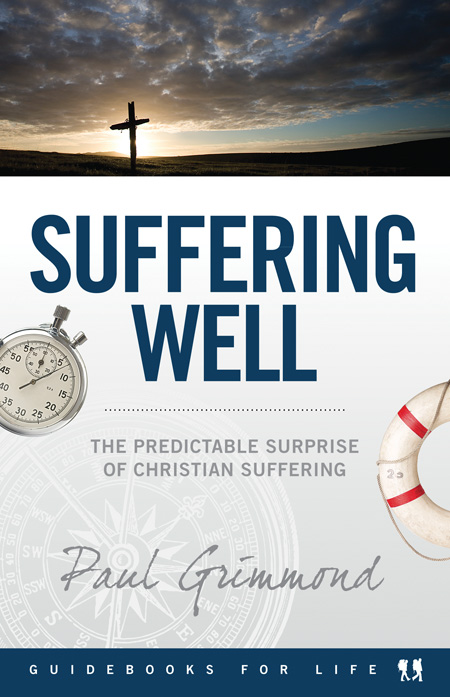
BOOK REVIEW: Suffering Well: The predictable surprise of Christian Suffering by Paul Grimmond (2011), Matthias Media.

It was John Wesley who famously said of Christians in his era “our people die well”.  Presumably they died strong in the faith, with an understanding that this life is not all there is, or all that matters, and with hope in the glorious future that awaits in Christ beyond the grave.

Could the same be said of Christians in the 21st century? How do we cope with suffering in general, let alone death? Do we suffer and die ‘well’?

In the first chapter of his challenging book ‘Suffering Well’ author Paul Grimmond states his case: when it comes to suffering we are prisoners of our age who have “lost touch with biblical truth because of the constant hum of worldly thinking that swirls around in our heads” (p.18). As a result we don’t know how to view suffering, to suffer well, or how to encourage one another in suffering for Christ.

I read this book during a month of suffering; it was not the sufferings of physical attack or public persecution, simply that the flu had descended, making an ordeal of every simple daily task. As I suffered and coughed, Grimmond’s book helped resolve some of the dilemmas about suffering which I had wrestled with before. Here are just two main points (of many great ones which the book raises) which will stay with me:

1. Don’t come to the Bible with the world’s view of suffering – start with Bible’s view and look at suffering in our world through those eyes. In the world’s view suffering, or at least the avoidance of suffering, is the new moral standard. According to Grimmond it is the only determinant of what is right: a disabled child will suffer, and so will the parents, so it is apparently “right” to terminate their existence before birth; the same goes for an injured dog and an old person with terminal cancer. Suffering is seen as the only evil, which must be avoided at all costs. “Suffering is a major part of the argument against God’s existence. The very presence of suffering . . . is a key piece of evidence. If we really have an all-good and all-powerful God then how can there possibly be suffering?” (p.25) More than that our world believes religion is one great cause of human suffering. “In our brave new world, suffering means that God is immoral and Christians are immoral” (p.28) since we believe in a God who would allow suffering to exist!

If we come to the Bible with this worldly view in our heads, no wonder we don’t know what to do with suffering, or how to speak up for the God who allows it. Grimmond takes us back to the Bible to see that God is in control, that God is God and I am not! He is the potter, we are His clay. God is in complete control over creation, which means that “the suffering of God’s creation occurs by his hands . . .Scripture never suggests suffering and difficulty come because God is out of control; rather . . . they come because he is IN control.” (p.46-7). This may seem a big and bitter pill to swallow, but it is the teaching of the Bible through and through. This God is not a god we have created, one the world would approve of, a benevolent grandfatherly figure who simply indulges us moment by moment. God wills, He purposes, He acts, He works all things together for good, including suffering. “The world is suffering because it stands under the heavy hand of God’s judgement . . . Our world, marked by suffering and death , is a world that has been bent out of shape BY GOD. . . God has visited upon us the results of our sin” (p48-49).
Yet this God has involved Himself in the suffering of His creation; suffering is at the heart of His plan to create a perfect world and glorify himself. Jesus faced the suffering that should be ours. While suffering may be painful and awful, it comes from the hand of a sovereign God who will use it for good, and who guarantees that good by the gift of his Son (p64).

2. Don’t downplay the real suffering for Christ that Western Christians experience – being scorned, reviled and mocked! In Chapter 6, entitled “Where’s all the persecution gone?” the discussion moves from the general suffering of our fallen world to specific suffering for being a Christian. Grimmond wants us to see that in taking up the cross of as Christ’s disciple, the imminent danger is not usually physical hardship, but the danger of being ashamed of Christ. “When we think of suffering for Christ “persecution” is the word we naturally use. But in the bible the language is much more diverse. It talks of being reviled and spoken against and maligned . . . The Bible’s big question for us is will you obey Jesus and speak for Him, or will you be ashamed of his words?” (p.96).  Grimmond sees the great danger for Western Christians is “the slow, spiritual death of a thousand tiny compromises crouched at the door, waiting to devour our hearts. . . at the moment we need it most we have let go of a robust theology of belonging to Christ and suffering for him”(p.97).  Though we live in a culture where words are cheap and people can say what they want and be rude to each other all the time, we don’t have to see it as weakness if those words really sting us. Grimmond suggests that we do not serve or encourage one another well when we say we don’t suffer, because it reinforces the view that suffering for Christ is only physical. “As a result we fail to teach each other to live without shame in the face of the more subtle pressures in our culture” (p.98).  So, this IS persecution and we discourage each other when we downplay it! We should also rebuke ourselves when we fear it or shy away from it. This is the shame we are NOT to be ashamed of! With regards to the promise of suffering for and with Christ, Grimmond insists we teach it to people from the moment of conversion. We must share this truth with our children so they grow up rejoicing that they’re counted as Christ’s when they suffer for him(p.103).

Grimmond says we also suffer as Christians because of our compassion. When we see the suffering, the sin, the lost people of this world through God’s eyes, it brings deep sorrow. And as for the ‘predictable surprise’ of the title . . . I might leave that for you to read about in chapter 5! If you want to get a better handle on the question of suffering, and find hope in the midst of it, grab a copy of Grimmond’s book, which successfully turns our eyes back to our Sovereign God, who is in control of all our suffering.

What are we Christians called to do in the face of suffering? We are called to wait well, to praise our God in every moment, and to ask for God’s strength to do good – even to our enemies (p.139).

You can buy Paul Grimmond’s book from Matthias Media by following this link: suffering-well

You may also like:
Thinking about Psalm 73                                                                    Lessons from the Tissue Box

asaphrunny-nose

Blessings (through raindrops!)

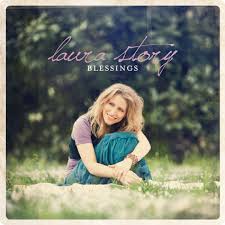
Blessings laura sThis is a song by Laura Story, author of the very popular song Indescribable, a song made famous by Chris Tomlin. (Apparently she wrote the song with the help of Tomlin’s bass player.)  I love the way she challenges us to remember that even circumstances we don’t consider “blessings” may actually be just that! My favourite line comes at the end of each chorus: “What if the trials of this life are Your mercies in disguise?” You can listen to the song by following the link at the end. Blessings!

“We pray for blessings, We pray for peace,
Comfort for family, protection while we sleep
We pray for healing, for prosperity,
We pray for Your mighty hand to ease our suffering
All the while, You hear each spoken need,
Yet love us way too much to give us lesser things
‘Cause what if Your blessings come through raindrops,
What if Your healing comes through tears,
What if a thousand sleepless nights are what it takes to know You’re near
What if trials of this life are Your mercies in disguise?

We pray for wisdom, Your voice to hear,
And we cry in anger when we cannot feel You near
We doubt Your goodness, we doubt Your love,
As if every promise from Your Word is not enough
All the while, You hear each desperate plea
And long that we’d have faith to believe
When friends betray us, When darkness seems to win
We know the pain reminds this heart
That this is not, this is not our home
‘Cause what if Your blessings come through raindrops
What if Your healing comes through tears and
What if a thousand sleepless nights are what it takes to know You’re near
What if my greatest disappointments
Or the aching(s) of this life
Is the revealing of a greater thirst this world can’t satisfy
And what if trials of this life,
The rain, the storms, the hardest nights
Are Your mercies in disguise.”


You may also like:
Lessons from the tissue box                                                                               How to Suffer Well
runny-noseSuffering Well book cover


Creation Calls . . . are you listening?

Check out this great video accompaniment to a song by Brian Doerksen, “Creation Calls”. In light of creation he asks “How can they say there is no God”? What do you say? The GRACE of creation! God did not have to create such a beautiful place for us to enjoy, but he couldn’t help himself I suppose. Thanks God!

The Music behind all music

how-great-is-our-lord_t_ntThis post comes courtesy of the DESIRING GOD blog. Here is how it opens:

“The creation surrounding us is the product of the triune God. That is incredible enough. But take one more profound step and we discover, as Pastor John explains in The Pleasures of God, that “creation is an expression of the overflow of that life and joy that the Father and the Son have in each other” (72).

To put this another way, we see a kaleidoscope of galaxies, animals, and music genres because the Father and Son enjoy a kaleidoscope of delight in each other, and it is a spilling-over delight. As the triune delight spills over in creation, it expands and radiates outward for us to share in. Out of this throbbing delight we have creation, a creation that speaks . . .

Read on here:  The Music behind all music

Lessons from the tissue box

runny-noseA friend who knows I’m sick at the moment has passed on a deep theological question, probably just to keep me busy and distracted from the headcold and sore throat. Here is the question: is God teaching us stuff in sickness always, or is sickness just bad stuff that happens as a result of being in a sin filled world, or is it both? Well I could just say ‘both ‘and be done with it! But let’s ponder for a little while.

It seems that we all have become convinced that the default setting of our body should be 100% health. We think that eternal youth is possible if we just eat well, sleep well, exercise and use the right face cream. From the moment we are born our bodies begin to visibly grow and blossom, but at the same time we are degrading! Skin cells die and flake off even on those cute little babies. And there are a thousand other processes of repair (and warfare) going on behind the scenes, minute by minute, day after day, year after year, that we are not even aware of.
Sciencemuseum.org.uk says: “A cell can die in many ways – through infection, poisoning, overheating or lack of oxygen. An uncontrolled death is messy: the cell swells up, and its contents leak away. This may damage surrounding cells. But there is another, tidier way to go – programmed self-destruction, or apoptosis. It seems that cells often choose to kill themselves. We now know that controlled cell death is crucial for normal human development and good health throughout life.”
Yet strangely it is only when this ‘cell death and repair’ process inconveniences us (or threatens our very existence) that we notice it and label it ‘sickness’. The pain in the throat, the headache and the runny nose all represent an unseen and amazing battle being fought in our bodies. They are simply doing what God designed them with the ability to do – fight off intruding viruses and other random elements. Now this is cheery isn’t it!

If sin had never entered the world through the first Adam, would people still have had to endure sickness? Probably? Their immortal bodies, that were NOT going to have to experience death, surely would have to repair themselves, and sometimes that fight to repair would mean ‘sickness’. (This is all supposition, please understand).  Sickness is perhaps not so abnormal afterall, but a mechanism designed by God to sustain and repair us. And as it is part of normal life (though perhaps made more difficult by fall of man and the groanings of the imperfect world around us) it is something we must learn to be content with and glorify God in.

Paul’s words in Philippians 4 perhaps apply here: 12 I know what it is to be in need, and I know what it is to have plenty. I have learned the secret of being content in any and every situation, whether well fed or hungry, whether living in plenty or in want. 13 I can do everything through Him who gives me strength. Being sick brings a greater need, for sleep, for relief from pain, for someone to go to the shops and buy more tissues and panadol. Yet this is just part of the normal daily challenge to look to God and see this world and ourselves from His gracious perspective. He IS teaching us everyday, but could we say especially in days of sickness we LEARN more? Perhaps we are more teachable when it is a greater challenge to be content in Him. We learn more because our self-reliance, on our own abilities and physical strength, is sorely challenged.
But in Christ, who gives us strength, we can be content even in sickness. It will be a battle, as we remind ourselves that we are in Him, and seek to rest on His strength, not ours.

Sickness also helps imprint in our hearts and minds this truth from Romans 8:28 (NLT)
“. . . God causes everything to work togetherfor the good of those who love God and are called according to His purpose for them”.

Sickness teaches us to trust Him more – and rest in Him.

You may also like:
How to suffer well
Suffering Well book cover

Thinking about Psalm 73: What did Asaph find in the Sanctuary?

asaphMany thanks to guest preacher Andrew Bain who invited us last Sunday (Mother’s Day) to consider our attitude to the prosperity of the ungodly in the world. In Psalm 73 Asaph expresses at length his bitter envy of ungodly prosperous people and he cries out to the Lord at this extreme injustice. Then midway through the Psalm he takes the time to visit God’s sanctuary (probably the temple, to pray and read God’s word). There he realises how seriously skewed was this envy and this cry of injustice!  “I finally understood the destiny of the wicked” (v17). “I realised that my heart was bitter….I was foolish and ignorant” (v21-22).   In the sanctuary Asaph gains renewed confidence in the goodness of God, and realises that it is the ungodly, not himself, who are on the “slippery slope” to ruin.

What a strange coincidence (God-incidence!) that this Psalm was explored on Mother’s Day, a day when some of the “unfair” aspects of motherhood are supposedly remedied, with gifts and much  attention and thanks being showered on mothers. The world has been shouting at us for some time that motherhood is unfair, that our biology has put women at a disadvantage in a society where prosperity and material gain is the ultimate good (and god!). When we compare our opportunites with those of most men in the developed world, it can seem unfair that women must put their career and their bank balance on hold in order to bear children (in considerable agony). . . and then stay home with them, doing daily repetitive tasks which, though extremely valuable, are deigned unimportant in the eyes of the world. Even the alternative seems unfair: we put the children in day care, head back to work and then, exhausted, enjoy very little of our life as we juggle a thousand demands on our time and attention. We may even get to the point of envying non-Christian women, who sleep in on Sundays and don’t have to add church commitments, bible reading and prayer to their already full diaries! How unfair is it that women often must battle loneliness when at home with little ones, and again at the other end of life, lonely, widowed and apparently forgotten? How unfair is it that some women who want children have been deprived the opportunity, while the ungodly despise and dispose of their unborn children in great numbers?

So what do we do when these bitter thoughts creep in, settle down and discourage us? Like Asaph we need to turn to God. As Christians, we are the temple of the Holy Spirit, He lives in us, yet we must take the time to “tune in” to God’s voice. The “sanctuary” is a place we must go to daily, as we turn away from the voices and attitudes of the world, and tune into God’s voice in His word and through prayer. Paul challenges us in the book of Romans: “Do not be conformed to this world, but be transformed by the renewal of your mind” (Rom 12:2). As we tune into God’s voice, in His word, the Spirit helps us understand and see things from a right perspective. God reminds us that the world we live in does not hold correct opinions about heavenly realities: who is King, who is in charge, what is right and wrong, and the ultimate purpose of mankind! God reminds us of the riches we have in Christ, which far surpass anything we could aspire to own or achieve in this “unfair” world. Let’s turn to God and restore our confidence in his goodness. He sent His own son, Jesus, to face extreme injustice, nailed to a cross for the sins of those who were his enemies (us!) and because of this we can draw close to God. Yet I still belong to You; You hold my right hand.  You guide me with your counsel, leading me to a glorious destiny. Whom have I in heaven but You? I desire you more than anything on earth. My health may fail, and my spirit may grow weak, but God remains the strength of my heart; He is mine forever. (Psalm 73)