The unexpected timing of God’s grace

From Tim Keller:

God’s sense of timing will confound ours, no matter what culture we’re from. His grace rarely operates according to our schedule. When Jesus looks at Jairus and says, “Trust me, be patient,” in effect he is looking over Jairus’ head at all of us and saying, “Remember how when I calmed the storm I showed you that my grace and love are compatible with going through storms, though you may not think so? Well, now I’m telling you that my grace and love are compatible with what seem to you unconscionable delays.
It’s not “I will not be hurried even though I love you”; it’s “I will not be hurried because I love you. I know what I’m doing. And if you try to impose your understanding of schedule and timing on me, you will struggle to feel loved by me.”

(Kings Cross, pg. 63)

You may also like:
Taking control doesn’t guarantee safety or happiness
hands on wheel

Praying through the songs 500+ women will sing tomorrow

grow2013_bannerI’m spending some time reflecting on the 9 songs (titles in bold) I’ll be leading tomorrow at the GROW Women’s Conference at Brisbane’s Convention and Exhibition Centre. The cool thing is that as these women sing, they are also declaring God’s greatness to each other, and praying publicly to Him! I’ve just woven the nine titles into a prayer. May it also be your prayer today:

Dear Loving Heavenly Father
Blessed be Your Name! There is no other name given under heaven by which we can be saved. We have more than 10 000 Reasons to praise you for the blessings you have given us in Christ, the blessings that reveal your faithfulness to us, your trustworthy character, and the fact that you keep your promises. We See the Man, Jesus, the man you sent to reverse the curse we brought on ourselves by our disobedience to you. He is the man who destroys death and now reigns, the righteous one who died for the unrighteous, that we might know You. Jesus is all we need in this changing and uncertain world, because he is the unchanging promised Saviour. Help us to realise that all we need is Christ. Indeed, All I have is Christ! We cannot keep any of the glory this world offers. neither do we need it! Thankyou for this confidence! Whatever our circumstances you have taught us to say It is Well, It is well with my soul. We have this peace like a river, peace that we have come to know if we are in Christ. He is an anchor for our souls and we can say “it is well”, the victory is won. I will rise on eagle’s wings because Jesus has overcome the sin that kept us dead to you. Oh the Deep Deep love of Jesus which is vast, unmeasured, boundless and free! It is an ocean full of blessing in the midst of every test. You will bring us home to glory. Great is Thy Faithfulness – in fact, nothing can reach the end of your faithfulness. If all the plans I make go wrong your love stays the same. You light will guide me through every shadow, every storm. I will hold on to you because you are My Hope, a hope built on your great love and righteousness. Keep me walking in your way, keep me trusting your heart and trusting your name.

Amen.

The power of a foolish Cross – and how to make the most of it

Cross“The message of the Cross is foolishness to those who are perishing, but to us who are being saved it is the power of God.” (1 Corinthians 1:18)

Making the Most of the Cross” (2011, Matthias media) is a book which gets right to the heart of Christianity, the Cross of Jesus Christ. It takes us on a tour of the riches God offers us at the Cross, and how to make the most of them, to grow our confidence in God. In less than 100 pages of fairly large print, author John Chapman examines two main topics: the death of Jesus and His resurrection.  Chapman writes in a simple yet engaging manner, with the clever wit of a seasoned preacher and evangelist.  He explains fully, yet clearly and in short chapters, who Jesus was and why he had to die. It is an excellent book for Christians to read, to revisit the basics of the Gospel and be challenged again by the grace of God. But it is also especially good for newcomers to the faith. It would make a great companion for home reading in conjunction with a course like ‘Christianity Explained’, ‘Christianity Explored’ or ‘Introducing God’ – or simply for extra reading for someone new to Jesus and the message of the Cross. Each chapter contains plenty of discussion from the big story of the bible to help people grasp God’s redemptive plan and how it is fulfilled in Jesus. There is a suggested short prayer at the end of each chapter, to pull together and apply what has been discussed.

For Chapman, Jesus’ death is “unique, unrepeatable and sufficient for all who turn to him” (p24). Chapman impresses on his readers that salvation is at the heart of what Jesus was about. Along the way he is not afraid to discuss God’s wrath (the reason we need salvation!) and to answer common objections, such as the belief that God is a vindictive child abuser (p26): “The Father did not force any punishment upon the Son; the Son himself chose to bear it on our behalf because of His love for us. That is anything but child abuse.” Jesus’ death turns away God’s anger, brings the defeat of Satan and justifies sinners. God is just, He punishes sin and love sinners. These are the clear concepts Chapman wants to reinforce.

I particularly enjoyed chapter 7 which explored the way ‘Jesus’ death is the unifying force in the Christian community’. He says we are “made acceptable to one another because of Christ. . . Understanding this truth is wonderfully liberating. We are free to be ourselves. There is no need to pretend. It doesn’t matter what you find out about my past, or what I might discover about yours. It is all deal with in the death of Jesus. That is the basis of acceptability. We are all sinners saved by grace.”
He then challenges us to apply this to how we treat others, to conduct radical surgery on our thinking, to accept and love others even (especially?) when it’s incovenient.

The second half of the book looks at the Resurrection across seven chapters. Of particular interest was his discussion of our ‘resurrection bodies’  This is a pretty difficult concept for people to grasp, but using texts from 1 Corinthians 15 and Revelation 21, Chapman makes it clear that we won’t be disembodied spirits floating around forever on clouds. He says Christ will take up our bodies “and transform them so they will be breathtaking! They will be immortal, imperishable, powerful, glorious and spiritual. They will be perfectly suited to the new creation. . . When I see the apostles relating to the risen Lord Jesus, I can see how it will be. I can see that the resurrection of the Lord Jesus means that there really is eternal life; there really is a new world in which we will live and relate to each other and to the Lord Jesus Christ” (p83-84).

13CHAPMANOne great thing about reading “Making the most of the Cross” is knowing that the author, John Chapman, can now see the reality of the things he has written about, the things he has long hoped for.  Last year, after 82 years, John Chapman went to be with the Lord.  We can take great encouragement from his faithful ministry – and his many books – of which this is most worthy of a read! Buy two and pass one on today. (Buy here)

Some of Chapman’s other books include:

  • Know and Tell the Gospel: a coherent and highly influential theological account not only of the gospel but of the involvement of every Christian in its spread
  • A Fresh Start: the most widely used gospel give-away book of the past 30 years
  • Setting Hearts on Fire: an inspiring and informative training resource for evangelistic preachers
  • A Sinner’s Guide to Holiness: a short guidebook on how the gospel calls sinners to a holy life as the fruit, not the means, of salvation
  • A Foot in Two Worlds: a simple guide to the eschatology of the gospel—that we belong to the next age but live out our salvation in this evil age
  • Making the Most of the Rest of Your Life: an evangelistic book for seniors on the meaning of eternal life
  • Making the Most of the Cross: a simple exposition of the key facets of the death and resurrection of Jesus
  • Making the Most of the Bible: a simple argument for the authority and sufficiency of Scripture as a necessary corollary of our faith in Jesus as Lord.

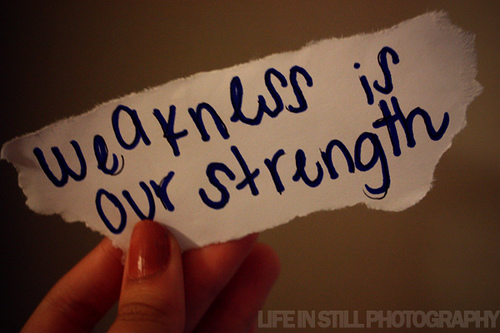
God graciously works through the weak and unimpressive

weaknessI’m sharing today something encouraging I found over at the Blazing Center blog. If you want to read the whole post you can visit there, but this is the heart of it:

“God often does his most powerful work through those who are weak and unimpressive.

John Flavel says:

How the weak have been used for the good of the church! Christ did not choose eloquent orators, or men of authority in the courts of kings and emperors, but twelve poor labourers, and fishermen. This is the most ridiculous course that can be imagined, in appearance, for such a design. And yet, in how short a time was the gospel spread in all the kingdoms of the world. (Voices From the Past, 140)

Jesus established his kingdom on the shoulders of fishermen, tax collectors, and prostitutes. He chose Peter to lead the charge out of Jerusalem. Peter, the guy who denied Jesus three times. Peter, the guy who gave up gospel ground to the Judaizers. Peter, the guy whose mouth seemed to always run ahead of his brain.

Jesus could have chosen the most articulate orators as his spokesman. He could have chosen great war heroes, or political superstars. He could have built a campaign of shock and awe and power. Instead he chose fisherman. Guys with cracked hands, plain speech, minimal learning, and the constant aroma of raw fish.  The disciples were not power players in the Roman world.

God will not allow us to receive any of the glory, so he builds his kingdom through and in spite of our weakness. If your worship team is mediocre, don’t freak out. Instead, work toward excellence and trust that God will use your weak, halting efforts for his glory. If you stutter and stammer when sharing the gospel, don’t get discouraged! Seek to improve your gospel communication, but more importantly, trust God to use your stutters and stammers to bring salvation to the lost. If your sermons feel like duds, don’t sink into despair. Improve your sermons and improve your confidence in God. If you feel like a constant parenting trainwreck, seek to grow in your parenting and trust God to use your trainwreck efforts to work in your children.”

Songs to GROW Women by . . .

.facebook_-22058451Great to have an audience of interested people who can consider my song selection for a Women’s conference in July, called GROW. Speaker Jenny Salt from Sydney will no doubt have some ‘salty’ words to share, teaching from the book of Numbers to show God’s trustworthiness and to encourage us to count on God, holding on to Him through all of life’s jouney. Themes include: trusting God, His faithfulness, taking Him at his Word, resting in God’s promises which are fulfilled in Jesus, blessings, consequences of sin, God’s holiness.

Here is my initial shortlist of songs, keeping in mind that we are hoping to cover a wide range of ages and denominations, mixing well known and new songs.

When Peace like a River (Hymn, aka It is Well) – connected with I will Rise (Chris Tomlin)
Hymn – Great is Your Faithfulness
My Hope (Nothing will change, if all the plans I make go wrong… by Paul Baloche). We taught this one last year at GROW.
Desert Song (This is my prayer in the desert – quite appropriate for Numbers, by Brooke Fraser)
O the Deep Deep Love of Jesus (Bob Kauflin’s hymn arrangement) – will do as item in 3part harmony, to teach it to the group.
Mighty to Save (Hillsong).
See the Man (Trevor Hodge) – this is a great one for see howing God’s promises are fulfilled in Jesus!
No Other Name (Trevor Hodge)
10 000 reasons
(Bless the Lord O my Soul . . . Chris Tomlin)
Blessed be your name (Matt Redman)

If you have any thoughts for other songs that tie into the theme perfectly, please comment below. I hope you can also find a new song or two above!

My Father’s holding on to me

garage hymnalThis song from Garage Hymnal is one that has been really encouraging to our church family. It speaks with such certainty of the secure salvation we have in Christ.
We first came across it about 5 years ago, but it is the truth of Romans 8:28-39 that makes it lasting. Our heavenly Father is holding us. He is mighty to save, mighty and strong enough to keep hold of us even when we are on a slippery slope. He can lift us up, gently restore us, and he won’t let go. He is our Sovereign Lord!
This is the promise we find in Philippians 1:4-6.
“In all my prayers for all of you, I always pray with joy because of your partnership in the gospel from the first day until now, being confident of this, that he who began a good work in you will carry it on to completion until the day of Christ Jesus.

Holding on to Me  (Click here to listen. Click song title for downloads)

Chosen since the start of time
Resting in your grace divine
Showing here on earth your throne
A people calling heaven home

Left my things and followed you
Choices you already knew
You knew my name, my life, my call
When I’d rise, and when I’d fall

My Father’s holding on to me
He gave his Son for me
My Father’s Holding on to me
And he won’t let go       

His arms outstretched and lifted high
We hear the Word incarnate cry
Drying blood and heavy hearts
Breath of Life from God departs

This is my deepest prayer: Hold me O Lord
My hands are not so strong
Though darkness hides your love
and doubt consumes me  / My soul cries “Holy Lord”

Words Copyright © 2006 Andy Judd / Music Copyright © 2006 Andy Judd and Lynda Thoms

Why do we sing about Wrath?

I’m sharing this post from one of my favourite blogs (The Blazing Center) by songwriter/Pastor Mark Altrogge from Sovereign Grace:

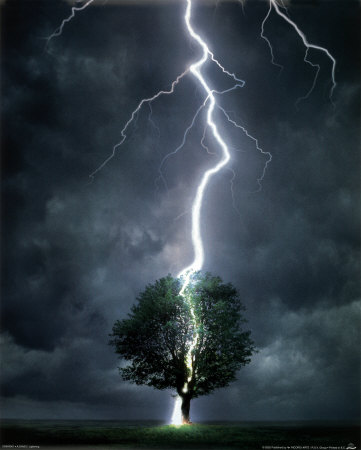
lightningSometimes I think if a stranger came into our church he might wonder why in the world are we singing songs about a Roman instrument of death, spikes, whips, and a crown made out of a thorn bush. Why are we singing about some poor guy hanging alone in darkness, bleeding, and thirsting while crowds mock him and spit on him?
And it might really seem strange that so many of our songs mention wrath. This stranger might wonder if we’re fixated on death. He might say, “I thought I would come here and sing about God’s love.” We do. We definitely do. But God’s love for us involves….wrath. We can’t sing songs about God’s love without mentioning his wrath, and a cross, and a bloody sacrifice.
“The common contemporary view of this is that we are estranged from God, but He is not estranged from us. The enmity is all one sided. The picture we get is that God goes on loving us with an unconditional love while we remain hateful toward Him. The cross belies this picture. Yes, the cross occurred because God loves us. His love stands behind His plan of salvation. However, Christ was not sacrificed on the cross to placate us or to serve as a propitiation to us. His sacrifice was not designed to satisfy our unjust enmity toward God but to satisfy God’s just wrath toward us. The Father was the object of the Son’s act of propitiation. The effect of the cross was to remove the divine estrangement from us, not our estrangement from Him. If we deny God’s estrangement from us, the cross is reduced to a pathetic and anemic moral influence with no substitutionary satisfaction of God.” — RC Sproul

God’s wrath makes his love that much more amazing and sweet.

If there were no wrath, if God somehow just loved us and didn’t deal with our sins – if he somehow just put up with them – “Oh boys will be boys. You just have to love them anyway” – we wouldn’t appreciate his love and mercy. Most likely we wouldn’t love him, but go on loving our sins. But God’s wrath that once hung over our heads like a very real sword, waiting to overwhelm us with unspeakable and unending horror and unimaginable, infinite agony is gone! Gone forever! And where did it go? It fell on the one human being who didn’t deserve any wrath. It fell on the innocent, spotless Lamb. It fell on Jesus.

And why? Because of God’s love for us. Because of God’s tender mercy and compassion. Oh yes, we will sing of wrath. Wrath well deserved. Wrath stored up from day one. Heaps and mounds and oceans of wrath barrelling down on us like a juggernaut, then suddenly diverted. Suddenly turned aside. And heaped on Jesus. Jesus, like some kind of heavenly lightning rod, absorbing billions of volts of retribution that was due us. Jesus, on the cross, going to hell.

Yes we will sing about wrath. And meditate on it. And marvel at what we deserved but didn’t receive. We will celebrate and sing our strange songs about wounds and blood and darkness of soul and a cry of abandonment. Because God’s wrath makes his love for us so much sweeter.

O Father, thank you for your deep, deep love. Jesus thank you for the height, width, breadth and depth of your love. Thank you Father for sparing us the terrifying wrath we so well deserved and pouring it out on your Son. Jesus, thank you for taking our place on the cross and drinking this unimaginable cup to the dregs for us. Holy Spirit, thank you for showing us the wrath of God and the love of God.

Science and God: still playing on the same team

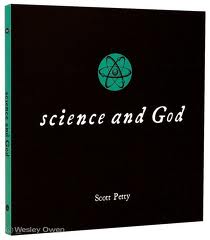
While the “new athiest” movement is doing its best to persuade people otherwise, there remains an incredible amount of harmony between the world of scientific knowledge and the Christian faith. The main reason why this (perhaps unrecognised) harmony is possible is that science and faith are really asking different types of questions about the universe. This means that ultimately we don’t have to pick one team or the other! These thoughts are the subject of Scott Petty’s most engaging Little Black Book “Science and God” (part of a series published by Matthias Media, 2011).

Petty begins by asking us to consider whether or not fact and faith really are locked in a tenacious battle to the death, which is by and large the way popular culture presents the issue. And the winner of this battle, we are told, will be Science! with Faith backed only by rigid conservative moralists – and stupid people! We need to look beyond these popular portrayals of the issue to see that science and Christianity have in fact enjoyed a long friendship stretching back centuries. Petty cites evidence of many science-focused Christians, past and present, who have advanced scientific research and knowledge. And such findings in no way contradict the claims of the Bible.

This is the heart of the matter: science and faith are answering different questions. One answers the question of how the universe works – the other answers the question of why the universe exists. “Just because we think we have understood the mechanism or operation of something in the universe without bring in God does not mean that there was no God who designed the universe in the beginning.” Petty uses a great illustration of the Ford motor car: gaining knowledge of the workings of the car does not negate the fact that Ford designed it, even though, within the car, Henry Ford is no where to be found. God may not visible to the human eye, but it would be a big mistake to dismiss the Him as designer, without precious scientific evidence to prove his non-existence (if that is what you are placing your faith in).

This book has a great deal more to offer, particularly regarding how the Big Bang theory (not the TV show) matches well with God’s explanation for the Creation moment, that single definite point at which the universe was created, out of nothing! Petty shares recent evidence from Hubble telescope and other research to back this. “It denies plain reason to say that no-one created something out of nothing, and it demolishes the building blocks of science to say that when it comes to the universe, there is no cause”.

Chapter 3 of this little book explores all the factors which work together to support life on the planet, things like gravity and the atmosphere. Petty then moves onto the ultimate chicken and egg problem of human DNA: “if you believe life emerged from non-living things like chemicals and such” you have problem, says Petty. “DNA relies on proteins for its production. But proteins rely on DNA for their existence. So which came first? Each must be present for the other to be made. It seems neither proteins nor DNA could create themselves”.

Petty deals with each of these points in good detail and with appropriate references to reputable studies. He also tackles the big “challenge” of evolution in a clear and effective manner, diffusing the bomb that some people see it to be. He also discusses the language and purpose of the biblical Creation account in a refreshing way, offering perspectives you may not have previously considered. But rather than give all that away, I’ll leave it with you to get a hold of the book and read it for yourself. Make sure you then pass it on to someone who finds the whole Science/Faith debate to be a real challenge. It would be a great book for your church or council library, for youth groups, university or highschool students – or anyone like you or me who live on this planet and must wrestle with these issues. There are only 96 pages of reading (and the pages are small, size of a CD case), with a helpful Q and A section at the end. Petty concludes with a friendly challenge to the reader, to consider that while scientific knowledge is useful, it is the personal and relational knowledge of God, through his Son, that counts most.
“God is not afraid of science, and he also knows that it’s not enough if we are to know him. In the past he spoke through the prophets, but in these last days he has spoken to us by His Son”.

You can buy a copy of the book directly from Matthias Media by clicking here.

No wonder there is no wonder

Yesterday I found these words scrawled on an old crumbly piece of paper in the bottom of my filing cabinet: (from Max Lucado, In the Grip of Grace – 1996, p15.)
The loss of mystery has led to the loss of majesty
The more we know the less we believe.
No wonder there is no wonder.
We think we have figured it all out.
Strange, don’t you think?
Knowledge of the workings shouldn’t negate the wonder.
Knowledge should stir wonder.
Who has more reason to worship than the astronomer who has seen the stars?
Than the surgeon who has held a heart?
Than the oceanographer who has pondered the depths”.

Now there was a reason I copied those words by hand from Lucado’s book quite a while ago. I was probably wanting to be reminded that the heavens declare the glory of God, that day after day creation pours forth speech about our Maker (Psalm 19). I wanted to be challenged not to allow my understanding of the universe, by virtue of my education, to deny me the pleasure of “wondering” at God’s ultimate creativity.

But the reason I am sharing them today is slightly different. Since I’ve being doing a few theological subjects lately, these words got me thinking about the wonder of our salvation, and the “danger” of theological study. When approached as a purely academic exercise, Bible students can easily lose some of the wonder of the Cross. The greatness of God, and the immensity of His grace to us in Christ, can become smaller in our eyes because we think we understand it! Worse still we can become proud of our ability to wrap our brains around the mystery of Christ. In some ways this is also the lot of a composer or professional musician who cannot enjoy the wonder of the symphony for their awareness of all the notes!

Then as I was thinking these thoughts, and preparing to wrestle with revising Numbers and Deuteronomy today, I read a great post on this very dilemma over at Mere Inkling (where C.S. Lewis’ thoughts are explored regularly) a post entitled Theological Training.

Here is how it begins: “I’m proud I graduated from a well-respected seminary. And I’m proud of following that Master of Divinity degree with an advanced Master of Theology degree in Patristics. And that’s precisely the problem . . . I’m proud. As a Christian, I recognize that pride is one of the most destructive and insidious sins. . .” Read more

As I do my own study today I pray that God will keep from me the sin of pride in understanding Him, and focus my thoughts instead on the grace that I am called His child. (Actually, writing this post has helped greatly with that!)

Keep your ears tuned to the Gospel of Grace

Found a great quote about grace from Tim Chester the other day, in a post over at The Blazing Center. It goes like this:
In Greek mythology, the Sirens would sing enchanting songs, drawing sailors irresistibly toward the rocks and certain shipwreck. Odysseus filled his crew’s ears with wax and had them tie him to the mast. This is like the approach of legalism. We bind ourselves up with laws and disciplines in a vain attempt to resist temptation. Orpheus, on the other hand, played such beautiful music on his harp that his sailors ignored the seductions of the Sirens’ song. This is the way of faith. The grace of the gospel sings a far more glorious song than the enticements of sin, if only we have the faith to hear its music. – Tim Chester, ‘You Can Change’

God is pure GRACE! Our salvation is grace, our faith is grace, Christ living in us – is grace!
God is the source of our faith, he gives us the faith to hear the music of the Gospel, he opens the eyes of our heart to see and receive Jesus as the risen Lord, glorious Saviour.  And He comes to live in us. Let’s keep our hearts and minds and ears tuned into the gracious music of the Gospel*.

“For it is by grace you have been saved, through faith—and this not from yourselves, it is the gift of God— not by works, so that no one can boast. For we are God’s workmanship, created in Christ Jesus to do good works, which God prepared in advance for us to do.” (Ephesians 2:8-10)

(* And might I just add that actually listening to music which handles the grace of the Gospel well can really help! Check out some of the songs in Church Songs shortlist. I’m gradually adding to this list; so many great songs to go!)