
4/7: Anguish (The Significance of Jesus’ Final Words on the Cross)

IV. Words of Anguish

Matthew 27: 45-46
From noon until three in the afternoon darkness came over all the land. About three in the afternoon Jesus cried out in a loud voice, “Eli, Eli, lema sabachthani?” (which means “My God, my God, why have you forsaken me?”).

Why have you forsaken me?
Most of us find this anguished, questioning cry to be the most shocking and confusing of the words uttered by Christ on the Cross. We can understand His words of compassion and forgiveness. But what are we to make of Christ asking why the Father has left him? How could Jesus feel or be abandoned, forsaken, by his loving Father God?

This is an incredibly confronting idea. The Lord God had never forsaken His people. Throughout history, He rescued them again and again. When the people cried out, He listened and acted. He was their Rock and Refuge in every trial. “Jesus’ cry startles and staggers us. Of old (King) David said, ‘I have never seen the righteous forsaken,’ but here we behold the Righteous One forsaken” (Pink, p.74).

Though Jesus had existed in perfect communion with the Father and Spirit from eternity, here he suffers painful, undeserved separation and shame. “The hiding of the Father’s face from Him was the most bitter ingredient of that cup the Father had given the redeemer to drink” (p.73). The separation of Jesus from His Father due to our sin is indeed the point. These anguished words point to the enormity of the weight of sin transferred to his shoulders, sin which separates him from the Father.

Pink points out that no other historical judgement poured out against sin compares to this moment on Calvary hill. It is the ultimate “demonstration of God’s inflexible justice and ineffable holiness, of His infinite hatred of sin . . . [which] flamed against His own Son on the Cross. Because he was enduring sin’s terrific judgement, He was forsaken of God. . . God’s holy character could not do less than judge sin even though it be found on Christ himself” (p.80).

This is the whole message of the Gospel and the reason for our hope: Christ died for sinners! He saved us! As Galatians 3:13 says, “Christ redeemed us from the curse of the law by becoming a curse for us, for it is written: “Cursed is everyone who is hung on a pole” (or tree). The death of Christ was the death of a curse, the curse of alienation from God. In these words of anguish, Jesus feels the weight of this alienation: “My God, my God, why have you forsaken me?

As we leave this scene, we shouldn’t forget that it is the love of the Father which drives this great sacrifice of his Son. As he hands Jesus over to be punished for our sin, there is nothing but love as the motivation. Christ is forsaken so that we are not.

“See what great love the Father has lavished on us, that we should be called children of God!”  (1 John 3:1). Stuart Townend sums this up so well in the song below, “How deep the Father’s love” (1995). I’ll leave you to spend some time contemplating the lyrics.

How deep the Father’s love for us
How vast beyond all measure
That He should give His only Son
To make a wretch His treasure How great the pain of searing loss
The Father turns His face away
As wounds which mar the Chosen One bring many sons to glory

Behold the man upon a cross,
My sin upon His shoulders;
Ashamed, I hear my mocking voice
Call out among the scoffers.
It was my sin that held Him there
Until it was accomplished;

His dying breath has brought me life – I know that it is finished.

I will not boast in anything,
No gifts, no power, no wisdom;
But I will boast in Jesus Christ,
His death and resurrection.
Why should I gain from His reward?
I cannot give an answer;
But this I know with all my heart – His wounds have paid my ransom.

You can read more about this song and the lyrics in this previous post: “Why should I gain from his reward?

Blessings, and see you for #5.

How Deep The Father’s Love: Artist: Celtic Worship // Writer: Stuart Townend © 1995 Thankyou Music.
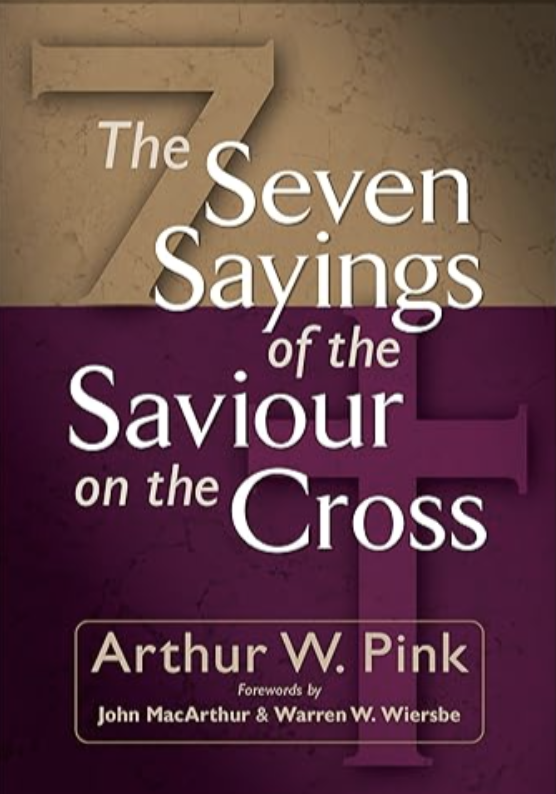
This series draws on the structure and ideas in “The Seven Sayings of the Saviour on the Cross” by Arthur W. Pink, 1984, Baker Book House. Direct quotations are indicated. AI was NOT used in the creation of this Blog post.

Main picture Credit: https://www.deviantart.com/muhammadriza/art/Eli-Eli-Lama-Sabachthani-411714602

2/7: Salvation (The Significance of Jesus’ Final Words on the Cross)

II. Words of Salvation

Yesterday we looked at Jesus’ words of forgiveness: “Father, forgive them, for they do not know what they are doing.”

Today we continue with Luke 23:42-43, where Jesus offers words of salvation: 42 Then he said, “Jesus, remember me when you come into your kingdom.” 43 Jesus answered him, “Truly I tell you, today you will be with me in paradise. (Read full chapter) Here are some key things to understand about Jesus’ response to one of the criminals beside him – the one who realised this Jesus, who had done no wrong, was truly the Saviour King he desperately needed.

1. Substitution:
When we imagine this moment, with all its injustice and brutality, we must remember that the the logistics of Calvary Hill did not take God by surprise. It was no accident that Jesus was placed between two thieves. Pink suggests that He was crucified with these criminals to “fully demonstrate the unfathomable depths of shame into which he had descended . . . the Saviour [was] numbered with the transgressors to show us the position he occupied as our substitute” (p.34). This takes us to the heart of Christ’s purpose. He came to save us by dying in our place. R.C Sproul’s explanation of “substitution” is helpful here: “When we look at the biblical depiction of sin as a crime, we see that Jesus acts as the Substitute, taking our place at the bar of God’s justice. For this reason, we sometimes speak of Jesus’ work on the cross as the substitutionary atonement of Christ, which means that when He offered an atonement, it was not to satisfy God’s justice for His own sins, but for the sins of others.”

2. Differing responses to Christ:
“In those three crosses and the ones who hung upon them we . . . have a vivid and concrete representation of the drama of salvation and man’s response(Pink, p.35). Both men who hung with Christ were equally “near” Christ; they heard everything that took place in those six hours on the cross, yet they respond differently. One heart is hardened and one is melted; one refuses to repent and one, believing, finds mercy and life eternal.

There is no logical explanation for the sudden repentance and faith of the one thief. He has not yet seen all the supernatural events of the day (the triumphant cry, the hours of darkness, the quaking of the rocks, the rending of the temple veil, to name a few) and yet he believes. Clearly his faith is mercifully God-given. Though he initially mocked Jesus with the other thief, soldiers, and the crowd, when he reaches the end of himself, he turns to Christ. He rebukes his companion, saying Jesus had done nothing wrong. “Thus by a single stroke he cuts himself off from the favour of his companion and the crowd as well” (Pink, p.47). With his words he ultimately condemns the whole Jewish nation. This is a courageous faith.

3. Salvation won:
Jesus responds to assure the repentant thief that he will certainly share the joys of paradise with Him – today! Some question the genuineness of this thief’s repentance (and discuss the tricky logistics of how they would be in paradise together “today”). Even Pink wonders on this point: “How comes it that this babe in Christ made such amazing progress in the school of God? It can only be accounted by divine influence” (p.49). The thief’s request indicates a genuine confession where he acknowledges Jesus as King, as Saviour, and looks forward to the Second Coming, “remember me when you come into your kingdom. Though he has done no good works, or studied the word, his faith in Christ is rewarded with the unshakable certainty of a place in heaven. What immense hope and forgiveness this thief would have experienced in his final moments – knowing that His Saviour would be by his side, forever.

Join me for Day 3 tomorrow: Words of Affection. (John 19:25-27)
Bless!

(Here is a song to help you focus on the hope and the certainty of our Salvation through Christ.)

(This series draws on the structure and ideas in “The Seven Sayings of the Saviour on the Cross” by Arthur W. Pink, 1984, Baker Book House. Direct quotations are indicated. AI was NOT used in the creation of this Blog post.)

The Significance of Jesus’ Final Words on the Cross (1/7)


As a teacher of English literature, I often point students to explore the significance of a character’s final words, spoken when they exit a text or when the author brings the whole story-world to a conclusion. In these final words we see the essence of each character’s intentions, motives, and – well, how else can I say it – character! These words also crystallise what the author wants us to know or remember about the character, their actions and meaning.

What can we learn then from Jesus’ final words – the words of the Word of Life, the Author and perfector of our Faith? “The Seven Sayings of the Saviour on the Cross” is a book by Arthur W. Pink which has been waiting on my desk for some time. It seems like this Easter week is a perfect time to make actually reading it a priority. At the end of each chapter, I’ll offer you some insights on the significance of Jesus’ final words, which reveal his heart, mind, and purpose. Stay with me if you want to know more, but can’t see yourself reading the whole book.


Before we begin to explore Jesus’ words more deeply, let me remind you of the key facts of Jesus’ crucifixion. This summary is provided by Charles Swindoll:

Jesus of Nazareth said He would “suffer . . . be killed, and be raised up on the third day” (Matt. 16:21). Betrayed by Judas, He was seized, placed under arrest, pushed hurriedly through several trials (all of them illegal), and declared guilty . . . first of “blasphemy,” next of “treason” (Luke 22:70–23:24). Alone and forsaken, He endured the torture of scourging, the humiliation of insults and mockery, and the agony of that walk to Golgotha (Mark 15:15–22). The horrors of crucifixion followed, leaving Him suspended for six excruciating hours . . . the last three of which were spent in eerie darkness that “fell over the whole land” (Mark 15:33). By three o’clock that afternoon He uttered His final words. “Father, into Your hands I commit My spirit” (Luke 23:46). Then . . . He died (Matt. 27:50Mark 15:37Luke 23:46John 19:30).

(NB. I also recommend Swindoll’s The Darkness and the Dawn as another great read for Easter. It will give you a much insight into the last 24 hours of Jesus’ life.)

  1. Words of Forgiveness

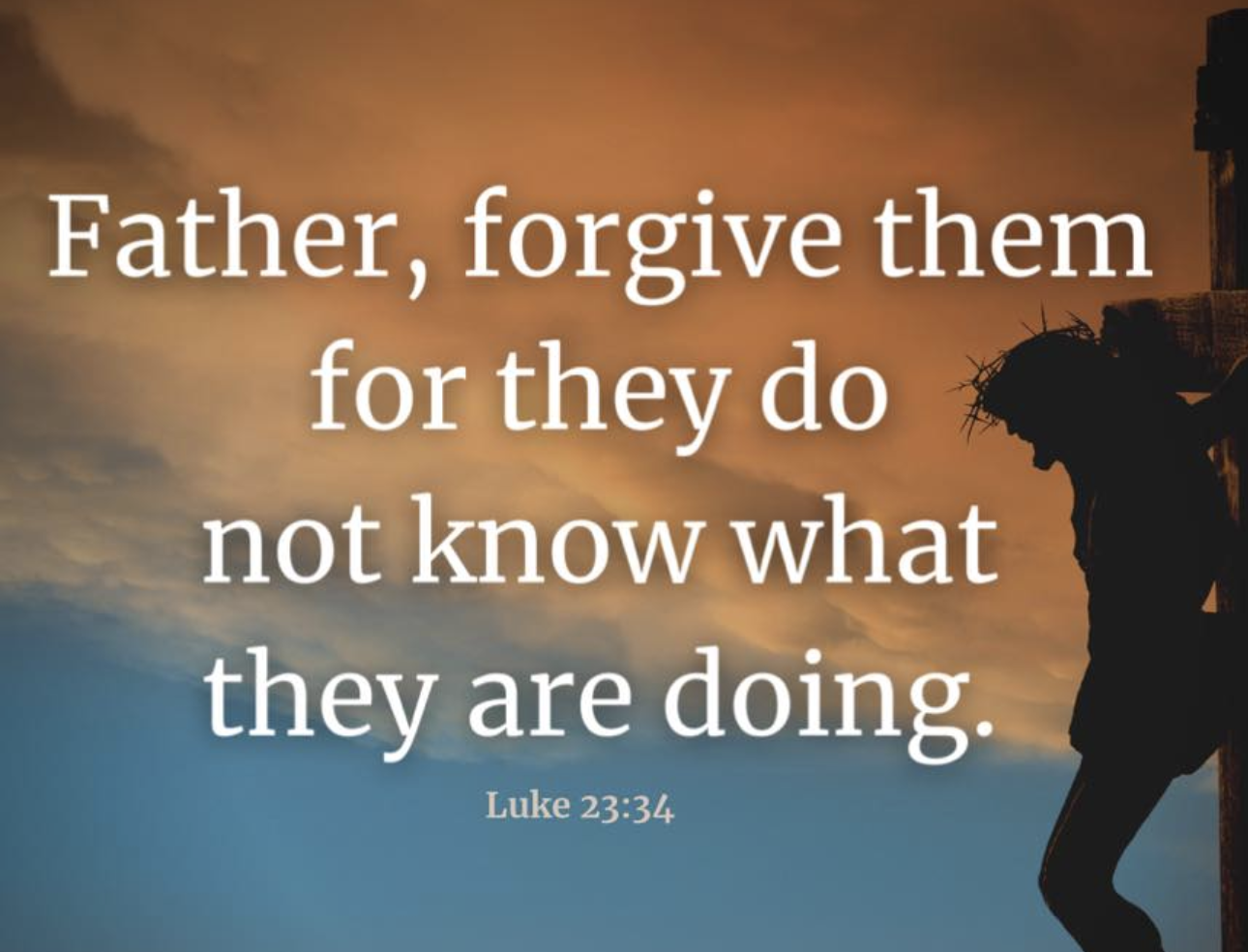
“Jesus said, “Father, forgive them, for they do not know what they are doing.”
Luke 23:34 (NIV)

These first “last” words, also translated more poetically as “they know not what they do”, are probably the most famous words associated with Jesus’ crucifixion. They sum up his compassion and humility, and emphasise just how undeserving he is of such punishment at the hands of sin-blinded humans. In this moment, Jesus is praying for his enemies, both those who are inflicting this ultimate form of Roman torture and those who have forsaken him and fled. Jesus prays for forgiveness from the Father, for all who acted in wilful ignorance. He prays for these people (people just like us) on their behalf, that the Father might forgive them.

Here are 4 most important things to know about this first phrase, when Jesus prays “Father, forgive them, they know not what they do.”

1. A Prophecy Fulfilled: The book of Isaiah foretold that the promised Saviour would make “intercession for the transgressors”. In these complex terms we find the significance of Jesus’ gracious prayer at the time of the crucifixion. Intercession means the act of intervening or praying on behalf of others; in this case, the ‘others’ are transgressors – criminals or offenders – who break laws or moral principles. Now read Isaiah 53 again, or at least verse 12: “. . . He poured out his life unto death and was numbered with the transgressors. For he bore the sin of many and made intercession for the transgressors.In the words ‘Father forgive them‘, Jesus prays for all those who have rejected and beaten him, who mocked and spat on him. He pleads for his crucifiers and asks on their behalf for forgiveness. Jesus’ prayer fulfills this role of the promised Messiah. (All of Isaiah 53 points to Jesus’ death (hundreds of years later) with pinpoint accuracy. Please spend some time there.)

2. The Blindness of the Human Heart:They know not what they do” does not mean these people didn’t know the facts of the crucifixion and their role in it. They are fully aware of the impact of their cries to “crucify him” and how they delight in the spectacle of his mocking trial, torture, and death. But they do not know the enormity of their crime against the Son of God. It is what they are doing that they don’t know. They are rejecting the promised Saviour. Yet Pink says they should have known. “From the start of Jesus’ ministry, His was a life on which was stamped the Father’s approval: ‘This is my beloved Son, in whom I am well pleased’.” Pink laments that this tragic rejection of Jesus continues to be repeated across time and place: “Sinner, little you know what you are doing in neglecting God’s great salvation. You little know how awful is the sin of slighting the Christ of God and spurning the invitations of his mercy” (p.26). May God reveal the truth of Christ in the lives of all who continue to deny Him.

3. Christ Identifies with His people: In asking “Father, forgive them,” Jesus reveals how much he identifies with the humans whose sin he carries. This is the only time when Jesus requests that His Father bestow forgiveness. Prior to this, Jesus himself is the one forgiving the sins of multiple people (often with simultaneous healing). To forgive sin is a divine prerogative and that is why Jesus must call on the Father instead to forgive. When Jesus is raised from earth, hanging on the Cross as the Son of Man, he has given up his divine position. He has “become” sin for us, taking our place as one of us and carrying the weight of our sin. He pleads with the Father to forgive those whose sins he has taken as his own.

4. Jesus’ Prayer is fulfilled: Jesus’ request that the Father “forgive them” is fulfilled just over a month later with the astonishing conversion of 3000 souls on the Day of Pentecost. This connection is made clear by the Apostle Peter in Acts 3: 17-20:
17 “Now, fellow Israelites, I know that you acted in ignorance, as did your leaders. 18 But this is how God fulfilled what he had foretold through all the prophets, saying that his Messiah would suffer. 19 Repent, then, and turn to God, so that your sins may be wiped out, that times of refreshing may come from the Lord, 20 and that he may send the Messiah, who has been appointed for you—even Jesus.” Pink sees this as a direct and perfect fulfilment of Jesus’ prayer: “it was not Peter’s eloquence that was the cause, but the Saviour’s prayer” (p.21) which turned these once ignorant people to Him and won their salvation.

In summary, Pink says that “in praying for His enemies, not only did Christ set before us a perfect example of how we should treat those who wrong and hate us, he also taught us never to regard any as beyond the reach of prayer. If Christ prayed for His murderers, then surely we have encouragement to pray now for the very chief of sinners! Christian reader, never lose hope (p.20).

Let’s rejoice that Jesus’ prayer continues to be answered. According to the World Christian Encyclopedia, around 2.7 million people convert to Christianity from other religions each year, which is about 7500 people per day! The Encyclopedia also notes that Christianity is “the religion with the largest net gain in population through religious conversions.” In an article about the unexpected surge of Global Christianity (2024), Frontier Partners International reports that “Christianity is not only growing in numbers but is also expanding geographically.”

Let’s continue to pray that Jesus’ prayer would be fulfilled this Easter – that forgiveness may be won and souls redeemed to new life in Him. Catch you again on Day 2. You may like to think ahead and consider the significance for yourself. Luke 23:42-43

And here is a song which I think sums up much of the compassion of the dying Saviour who seeks forgiveness for us on our behalf: “Glorious Day” by Casting Crowns:

https://youtu.be/2ntwGWzdCwc?si=8PhGFJj4cj2RKg2y

(This series draws on the structure and ideas in “The Seven Sayings of the Saviour on the Cross” by Arthur W. Pink, 1984, Baker Book House. Direct quotations are indicated. AI was NOT used in the creation of this Blog post.)

Grace – City Alight

A beautiful ‘grace’ song for your congregation from City Alight.

Don’t Burn that Bridge – from The Blazing Center

bridgeHe who demands mercy and shows none burns the bridges over which he himself must later pass. -Thomas Adams

“Blessed are the merciful, for they shall receive mercy”. Matthew 5:7

Are you merciful? Is that who you are? Of all people on the face of the earth, we who believe in Jesus should be the most merciful. The quickest to forgive. The most forbearing with other’s sins against us. Why? Because we have received such incredible mercy from God ourselves. Each of us has sinned horrifically and repeatedly against the Holy One who will tolerate no sin in his presence. Yet he so loved us he sent his Son to become the lightning rod for the wrath we deserved. To have it strike him instead of us. Jesus got what we deserve and we received what we never deserved – Mercy. If we appreciate the mercy we’ve received, we should be quick to pour it out. And pour it out on those who don’t deserve it.

We should pour out mercy on those who sin against us. Those who hurt us. Who misunderstand us and can’t see our point. Those who insist that they are right and we are wrong. Those who don’t realize they are sinning. We should quote Jesus regularly: “Father, forgive them for they know not what they are doing.” They don’t realize their sin. They don’t see their pride and stubbornness. They don’t know how much they are hurting me. Or maybe they do, but Father, have mercy on them as you have had mercy on me. And help me to have mercy on them. As John Piper says, we should:

“Be stunned that you are a beneficiary of mercy – be reminded and stunned that you and I deserve nothing but wrath from God, and in Christ receive nothing but mercy from him. Be stunned. And then pray that God would make you merciful to the undeserving.Oh, how sweet marriages would be if we stopped thinking about what we deserve and thought more about how to show more mercy – how to do more undeserved good to each other. Oh, how sweet would be the fellowship of the church if we all really felt undeserving of any good and lavished with God’s mercy. And, oh, how bright the gospel would shine if we touched the poor with Christ-exalting mercy. May God raise up many who will build, with joy, ministries of mercy to the city and the nations.”

Are you stunned by the mercy you’ve received from God? Do you reflect regularly on the mercy you’ve received? Are you a merciful person – is that who you are? Not just something you do, but something you are? Who do you most struggle to feel merciful toward? Pray for that person. Affirm that you forgive them, whether they have asked your forgiveness or not. Ask God to bless them. You and I are not yet perfect. We will need mercy in the future. We don’t want to burn bridges we’ll need to pass over later. Lord Jesus, make us merciful, as you are merciful.

http://theblazingcenter.com/2016/03/you-dont-want-to-burn-that-bridge.html

Grace can redeem our broken relationships

Grace shows up in unlikely places if we keep our hearts and minds open. What fear buries, grace resurrects. Fear pushed me to withdraw from precious friends for years, but grace promises to redeem lost time. Fear convinced me to lump these friends with everyone else who had hurt me, but grace is a reconciler.

From: http://iamsteveaustin.com/2015/12/07/the-deaf-man-who-spoke-grace-to-my-heart/