7/7 Contentment (The Significance of Jesus’ Final Words on the Cross)

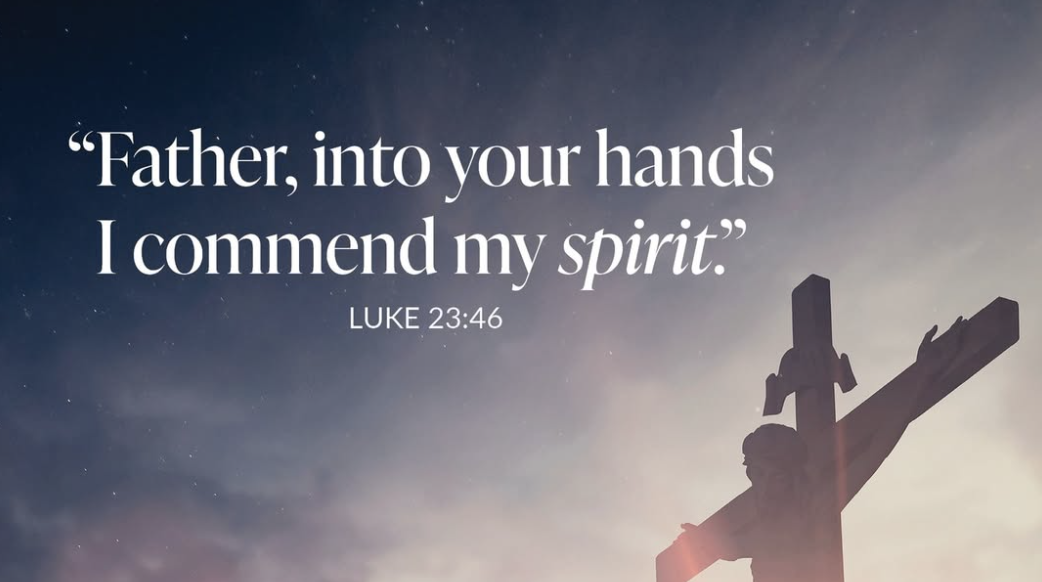
“Jesus called out with a loud voice, ‘Father, into your hands I commit my spirit.’ When he had said this, he breathed his last” (Luke 23:46).

Jesus’ words on the Cross began with “Father forgive” and now they end with absolute trust and rest in the Father. Pink suggests that Jesus’ final words could be described as expressing “contentment”. I think they also show reconciliation, trust, and peace. The work of the Son of Man is complete, it is finished! He has taken the “cup” of wrath from the Father’s hands, emptied it through his suffering, and now the Son is restored to the loving hands of the Father. Here are Pink’s key points from the final chapter:

  1. The hands of men and the hands of the Father:
    What a contrast! Christ has been in the hands of men for the last 12 hours or more, tortured, reviled, betrayed. (Matt 17:22-23). Christ could have avoided this. Voluntarily he delivered himself into the hands of sinners; now he delivers his Spirit into the hands of the Father. He is back in perfect communion with the Father, having dealt with the sin that separates. He will be honoured as the Perfect Son and Saviour King!
  2. The absolute uniqueness of our Saviour:
    Jesus’ life was not taken from Him, he gave it up. (John 10:17-18). In laying down His life, His death was differentiated from all others. “Who but a divine person could have done this? In a mere man it would have been suicide; but in Him it was proof of His perfection and uniqueness . . . the Prince of Life (p.136).
  3. The Heart’s true haven:
    Jesus’ example in his final words points us to what matters – our souls, the eternal spirit within us.
    “[Christ’s] words then may be taken to express the believer’s care for his soul, that it may be safe, whatever becomes of the body. . . My friend . . . you are unable to take care of yourself in life, much less will you be able to do so in death. Life has many trials and temptations. Your soul is menaced at every side . . . Here then is your beacon of hope amid the darkness. Here is the harbor of shelter from all storms. . . Thank God there is a refuge from the gales of life and from the terrors of death – the Father’s hands – the heart’s true haven” (p.139).

Going a step further, I’m reminded that the Father has given all things into Jesus’ hands. “The Father loves the Son and has given all things into his hand” (John 3:35). This includes you and me! “I give them eternal life, and they shall never perish; no one will snatch them out of my hand” (John 10:28).

In fact, let’s take a moment to zoom out on John 10:27-30. I love the way the NLT phrases it:
27 My sheep listen to my voice; I know them, and they follow me. 28 I give them eternal life, and they will never perish. No one can snatch them away from me, 29 for my Father has given them to me, and he is more powerful than anyone else. No one can snatch them from the Father’s hand. 30 The Father and I are one.”

Jesus knows ultimate assurance and contentment as he breathes his last, committing Himself into His Father’s hands. We too can also rest in Christ’s completed work, in life and death! (Please listen to the wonderful song below!) Thanks for joining me in this series.
Please like or subscribe. Blessings!

CHRIST OUR HOPE IN LIFE AND DEATH

What is our hope in life and death? Christ alone, Christ alone.
What is our only confidence? That our souls to him belong.
Who holds our days within his hand? What comes, apart from his command?
And what will keep us to the end? The love of Christ, in which we stand.

O sing hallelujah! Our hope springs eternal;
O sing hallelujah! Now and ever we confess Christ our hope in life and death.


What truth can calm the troubled soul? God is good, God is good.
Where is his grace and goodness known? In our great Redeemer’s blood.
Who holds our faith when fears arise? Who stands above the stormy trial?
Who sends the waves that bring us nigh Unto the shore, the rock of Christ?

Unto the grave, what shall we sing? “Christ, he lives; Christ, he lives!”
And what reward will heaven bring? Everlasting life with him.
There we will rise to meet the Lord, Then sin and death will be destroyed,
And we will feast in endless joy, When Christ is ours forevermore.

Words and Music by Keith Getty, Matt Boswell, Jordan Kauflin, Matt Merker, Matt Papa ©2020 Getty Music Publishing (BMI) / Messenger Hymns (BMI) / Jordan Kauflin Music (BMI) / Matthew Merker Music (BMI) / Getty Music Hymns and Songs (ASCAP) / Love Your Enemies Publishing (ASCAP) / adm at MusicServices.org
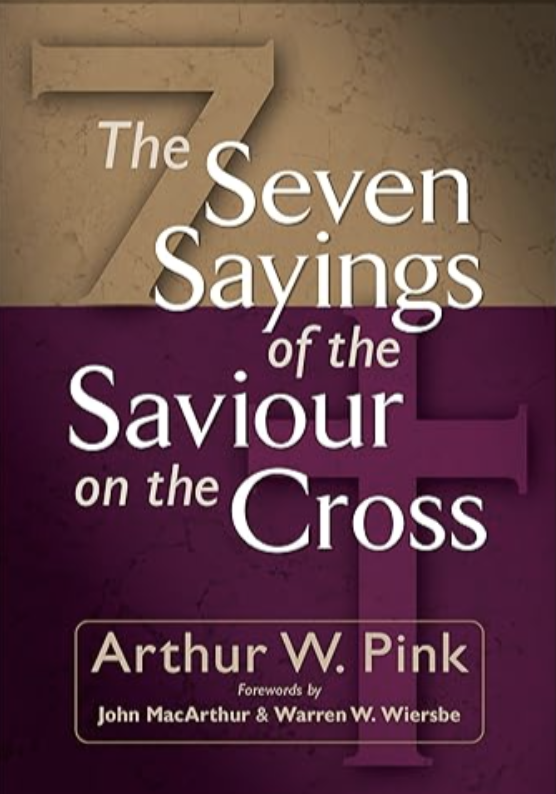
This series draws on the structure and ideas in “The Seven Sayings of the Saviour on the Cross” by Arthur W. Pink, 1984, Baker Book House. Direct quotations are indicated. AI was NOT used in the creation of this Blog post.

Main image credit: dmdiocese on Instagram
6/7 Victory (The Significance of Jesus’ Final Words on the Cross)

When he had received the drink, Jesus said, “It is finished.” With that, he bowed his head and gave up his spirit.” John 19:30

Though I didn’t complete this series before Easter Sunday, it seems fitting that the remaining two ‘sayings’ of Christ on the Cross are victorious words of completion and restoration. It is within the power of these final two sayings that we live and breathe, where life eternal begins. We are His because His work is finished. We can have complete confidence that Jesus is now restored to the Father, the living, Risen King who conquered death and sin.

Pink explains the power of these words:
“‘It is finished.’ This was not the despairing cry of a helpless martyr; it was not an expression of satisfaction that the termination of his sufferings was now reached; it was not the last gasp of a worn out life. No, rather it was the declaration on the part of the divine Redeemer that all for which He came from heaven to earth to do was now done; that all that was needed to reveal the full character of God had now been accomplished; that all that was required by the law before sinners could be saved had now been performed: that the full price of our redemption had been paid” (Pink, p.110).

As we have looked at in the previous five posts, Jesus’ death was no accident. It was a purposeful and loving rescue plan which culminated in the Cross – the design of a loving Father. In this moment close to death, Jesus sees that he has “finished” or made complete all these:

  1. Hundred of prophecies about his saving work, by his death.
  2. His sufferings.
  3. The goal of His incarnation (coming to earth inhabiting a human body and dying as a man).
  4. The atonement (the reconciliation of God and man, sins taken away, sin debt paid).
  5. The removal of our sins, which stands between God and us (Christ took them into the desolate land where God was not).
  6. The Law’s requirements.
  7. The destruction of Satan’s power.

Pink then asks us the most important question: “reader, do you believe it? Or are you trying to add to the finished work of Christ to secure the favour of God?” (p.125). Let’s take some time to reflect on this before we leave Easter celebrations. May we know that our own efforts are as filthy rags. It is Christ’s righteousness that matters.

“All that a holy God requires has been done. Nothing is left for the sinner to add. . . His finished work is the ground of all our hopes” (p. 121)

May the Lord show us where we are trying to bring our own “righteousness” to Him (and others), instead of depending on Christ’s finished work. This song from the Passion (2019) well sums up all that Christ has “finished” for us. What amazing grace!

See you soon for the final post. (Please like or subscribe below.)

This series draws on the structure and ideas in “The Seven Sayings of the Saviour on the Cross” by Arthur W. Pink, 1984, Baker Book House. Direct quotations are indicated. AI was NOT used in the creation of this Blog post.

Main image credit: https://www.betheltempletwinfalls.org/devotionals/2020/4/10/it-is-finished

5/7: Suffering (The Significance of Jesus’ Final Words on the Cross)


If you have just joined me for this series exploring Jesus’ final words on the Cross, please see my previous posts (links below). Jesus’ words speak of salvation and forgiveness, revealing His great compassion. They also show his great anguish in being separated from the Father by our sin. But, most importantly, his words reveal who He is and what He is doing.

Today we look at the fifth and very short statement Jesus makes: “I thirst” (John 19:28). These words, spoken close to death after three hours of darkness (and six hours on the Cross), express physical suffering. But his actual thirst is not the only reason for saying them, as the surrounding verses reveal: “Later, knowing that everything had now been finished, and so that Scripture would be fulfilled, Jesus said, ‘I am thirsty.’”(NIV)

Jesus’ Humanity

As theologian Charles Spurgeon explains, there are multiple physical reasons for Jesus’ thirst: ” . . . [it] was caused, perhaps, in part by the loss of blood, and by the fever created by the irritation caused by his four grievous wounds. The nails were fastened in the most sensitive parts of the body . . . The extreme tension produced a burning feverishness. It was pain that dried his mouth and made it like an oven, till he declared, in the language of the twenty-second psalm, “My tongue cleaveth to my jaws. (Charles Spurgeon Sermon 1409.)

Pink believes that “I thirst” was not an appeal for pity, nor a request to alleviate his sufferings: “It gave expression to the intensity of the agonies He was undergoing” (p.98). At this point, Jesus thirsts both physically and spiritually, separated from the Father, longing to be reunited with Him. “His thirst was the effect of the agony of His soul in the fierce heat of God’s wrath. It told of the drought of the land where the living God is not” (p.98).

The Messiah who fulfils Scripture

Jesus expressed both the desire and knowledge that Scripture must be fulfilled. His phrase “I thirst” is the specific fulfilment of Psalm 69:21 (one of the many Messianic Psalms – we are just scratching the surface!). Jesus knew the predictions of previous verses were already fulfilled. For example, he had:
* sunk in the “deep mire”
* been hated “without a cause”
* borne reproach and shame
* become a stranger to his brothers
* cried to God in His distress
Nothing remained except the offer of gall and vinegar. For this reason, Jesus says, “I thirst”. Pink sees Christ’s deep reverence for both the Scriptures and his role as our Saviour, who must bow to the authority of the Father’s word in both life and death. “He hung on the cross for six hours and passed through unparalleled suffering, yet is His mind clear and His memory unimpaired. . . He remembers there is one prophetic Scripture unaccomplished. He overlooked nothing. What a proof is this that He was divinely superior to all circumstances!” (p.100).

Jesus, our Saviour, thirsts on the Cross to fulfil his role as the promised Messiah. He is obedient to His Father and to Scripture, to the drink the cup of wrath that we deserve. And though he thirsts on the Cross, he offers us “living water”. We need never thirst again.

These words from John 4 bring us this assurance: Jesus answered, “Everyone who drinks this water will be thirsty again, but whoever drinks the water I give them will never thirst. Indeed, the water I give them will become in them a spring of water welling up to eternal life.” This the power of Christ’s death for us!

See you for #6, Christ’s words from John 19:30: When he had received the drink, Jesus said, “It is finished.” With that, he bowed his head and gave up his spirit.”

Please also enjoy this beautiful modern Easter Hymn (2005) written by Keith Getty and Stuart Townend

This series draws on the structure and ideas in “The Seven Sayings of the Saviour on the Cross” by Arthur W. Pink, 1984, Baker Book House. Direct quotations are indicated. AI was NOT used in the creation of this Blog post.

Main image credit: https://resurrectionopc.org/i-thirst/

4/7: Anguish (The Significance of Jesus’ Final Words on the Cross)

IV. Words of Anguish

Matthew 27: 45-46
From noon until three in the afternoon darkness came over all the land. About three in the afternoon Jesus cried out in a loud voice, “Eli, Eli, lema sabachthani?” (which means “My God, my God, why have you forsaken me?”).

Why have you forsaken me?
Most of us find this anguished, questioning cry to be the most shocking and confusing of the words uttered by Christ on the Cross. We can understand His words of compassion and forgiveness. But what are we to make of Christ asking why the Father has left him? How could Jesus feel or be abandoned, forsaken, by his loving Father God?

This is an incredibly confronting idea. The Lord God had never forsaken His people. Throughout history, He rescued them again and again. When the people cried out, He listened and acted. He was their Rock and Refuge in every trial. “Jesus’ cry startles and staggers us. Of old (King) David said, ‘I have never seen the righteous forsaken,’ but here we behold the Righteous One forsaken” (Pink, p.74).

Though Jesus had existed in perfect communion with the Father and Spirit from eternity, here he suffers painful, undeserved separation and shame. “The hiding of the Father’s face from Him was the most bitter ingredient of that cup the Father had given the redeemer to drink” (p.73). The separation of Jesus from His Father due to our sin is indeed the point. These anguished words point to the enormity of the weight of sin transferred to his shoulders, sin which separates him from the Father.

Pink points out that no other historical judgement poured out against sin compares to this moment on Calvary hill. It is the ultimate “demonstration of God’s inflexible justice and ineffable holiness, of His infinite hatred of sin . . . [which] flamed against His own Son on the Cross. Because he was enduring sin’s terrific judgement, He was forsaken of God. . . God’s holy character could not do less than judge sin even though it be found on Christ himself” (p.80).

This is the whole message of the Gospel and the reason for our hope: Christ died for sinners! He saved us! As Galatians 3:13 says, “Christ redeemed us from the curse of the law by becoming a curse for us, for it is written: “Cursed is everyone who is hung on a pole” (or tree). The death of Christ was the death of a curse, the curse of alienation from God. In these words of anguish, Jesus feels the weight of this alienation: “My God, my God, why have you forsaken me?

As we leave this scene, we shouldn’t forget that it is the love of the Father which drives this great sacrifice of his Son. As he hands Jesus over to be punished for our sin, there is nothing but love as the motivation. Christ is forsaken so that we are not.

“See what great love the Father has lavished on us, that we should be called children of God!”  (1 John 3:1). Stuart Townend sums this up so well in the song below, “How deep the Father’s love” (1995). I’ll leave you to spend some time contemplating the lyrics.

How deep the Father’s love for us
How vast beyond all measure
That He should give His only Son
To make a wretch His treasure How great the pain of searing loss
The Father turns His face away
As wounds which mar the Chosen One bring many sons to glory

Behold the man upon a cross,
My sin upon His shoulders;
Ashamed, I hear my mocking voice
Call out among the scoffers.
It was my sin that held Him there
Until it was accomplished;

His dying breath has brought me life – I know that it is finished.

I will not boast in anything,
No gifts, no power, no wisdom;
But I will boast in Jesus Christ,
His death and resurrection.
Why should I gain from His reward?
I cannot give an answer;
But this I know with all my heart – His wounds have paid my ransom.

You can read more about this song and the lyrics in this previous post: “Why should I gain from his reward?

Blessings, and see you for #5.

How Deep The Father’s Love: Artist: Celtic Worship // Writer: Stuart Townend © 1995 Thankyou Music.

This series draws on the structure and ideas in “The Seven Sayings of the Saviour on the Cross” by Arthur W. Pink, 1984, Baker Book House. Direct quotations are indicated. AI was NOT used in the creation of this Blog post.

Main picture Credit: https://www.deviantart.com/muhammadriza/art/Eli-Eli-Lama-Sabachthani-411714602

The Significance of Jesus’ Final Words on the Cross (1/7)


As a teacher of English literature, I often point students to explore the significance of a character’s final words, spoken when they exit a text or when the author brings the whole story-world to a conclusion. In these final words we see the essence of each character’s intentions, motives, and – well, how else can I say it – character! These words also crystallise what the author wants us to know or remember about the character, their actions and meaning.

What can we learn then from Jesus’ final words – the words of the Word of Life, the Author and perfector of our Faith? “The Seven Sayings of the Saviour on the Cross” is a book by Arthur W. Pink which has been waiting on my desk for some time. It seems like this Easter week is a perfect time to make actually reading it a priority. At the end of each chapter, I’ll offer you some insights on the significance of Jesus’ final words, which reveal his heart, mind, and purpose. Stay with me if you want to know more, but can’t see yourself reading the whole book.


Before we begin to explore Jesus’ words more deeply, let me remind you of the key facts of Jesus’ crucifixion. This summary is provided by Charles Swindoll:

Jesus of Nazareth said He would “suffer . . . be killed, and be raised up on the third day” (Matt. 16:21). Betrayed by Judas, He was seized, placed under arrest, pushed hurriedly through several trials (all of them illegal), and declared guilty . . . first of “blasphemy,” next of “treason” (Luke 22:70–23:24). Alone and forsaken, He endured the torture of scourging, the humiliation of insults and mockery, and the agony of that walk to Golgotha (Mark 15:15–22). The horrors of crucifixion followed, leaving Him suspended for six excruciating hours . . . the last three of which were spent in eerie darkness that “fell over the whole land” (Mark 15:33). By three o’clock that afternoon He uttered His final words. “Father, into Your hands I commit My spirit” (Luke 23:46). Then . . . He died (Matt. 27:50Mark 15:37Luke 23:46John 19:30).

(NB. I also recommend Swindoll’s The Darkness and the Dawn as another great read for Easter. It will give you a much insight into the last 24 hours of Jesus’ life.)

  1. Words of Forgiveness

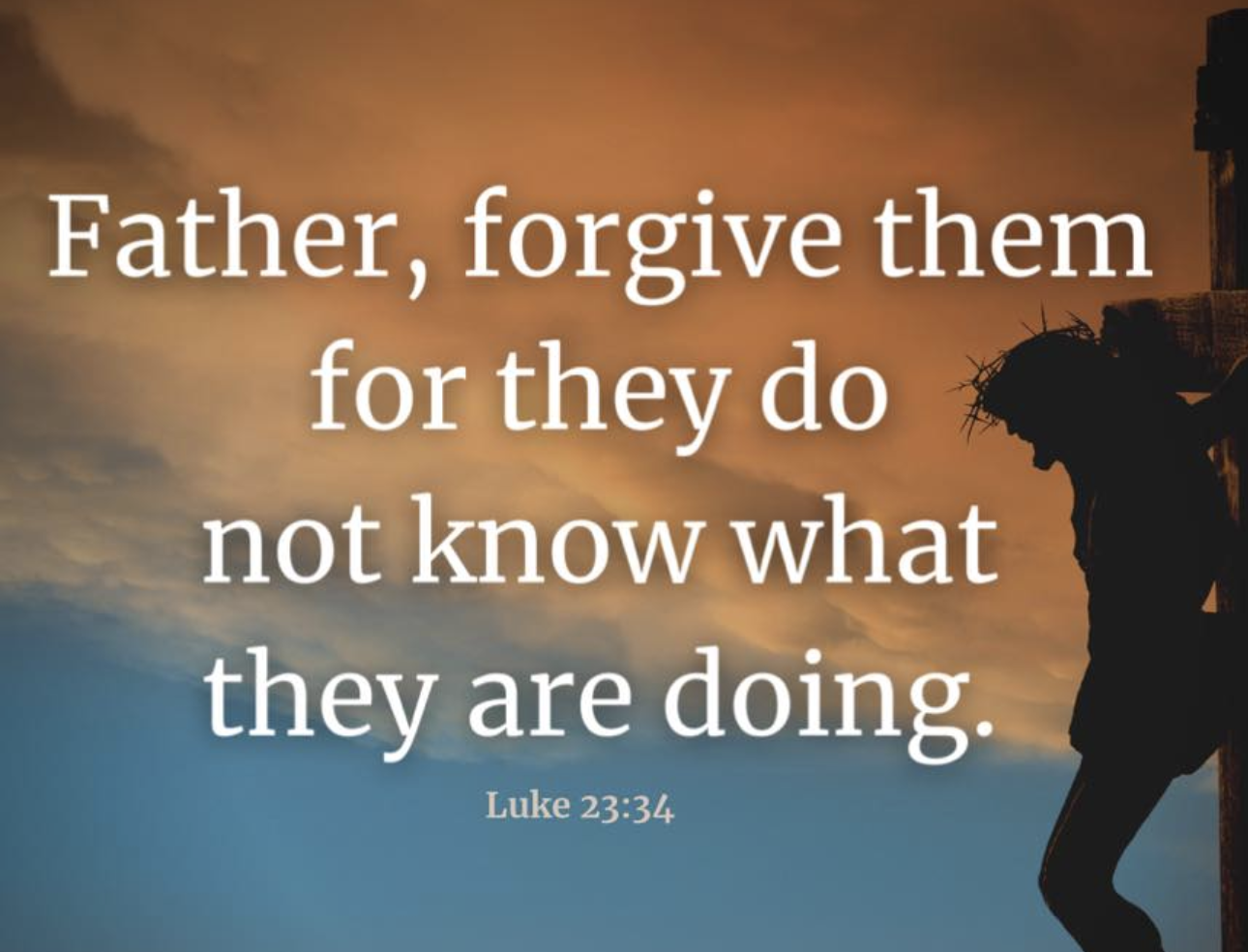
“Jesus said, “Father, forgive them, for they do not know what they are doing.”
Luke 23:34 (NIV)

These first “last” words, also translated more poetically as “they know not what they do”, are probably the most famous words associated with Jesus’ crucifixion. They sum up his compassion and humility, and emphasise just how undeserving he is of such punishment at the hands of sin-blinded humans. In this moment, Jesus is praying for his enemies, both those who are inflicting this ultimate form of Roman torture and those who have forsaken him and fled. Jesus prays for forgiveness from the Father, for all who acted in wilful ignorance. He prays for these people (people just like us) on their behalf, that the Father might forgive them.

Here are 4 most important things to know about this first phrase, when Jesus prays “Father, forgive them, they know not what they do.”

1. A Prophecy Fulfilled: The book of Isaiah foretold that the promised Saviour would make “intercession for the transgressors”. In these complex terms we find the significance of Jesus’ gracious prayer at the time of the crucifixion. Intercession means the act of intervening or praying on behalf of others; in this case, the ‘others’ are transgressors – criminals or offenders – who break laws or moral principles. Now read Isaiah 53 again, or at least verse 12: “. . . He poured out his life unto death and was numbered with the transgressors. For he bore the sin of many and made intercession for the transgressors.In the words ‘Father forgive them‘, Jesus prays for all those who have rejected and beaten him, who mocked and spat on him. He pleads for his crucifiers and asks on their behalf for forgiveness. Jesus’ prayer fulfills this role of the promised Messiah. (All of Isaiah 53 points to Jesus’ death (hundreds of years later) with pinpoint accuracy. Please spend some time there.)

2. The Blindness of the Human Heart:They know not what they do” does not mean these people didn’t know the facts of the crucifixion and their role in it. They are fully aware of the impact of their cries to “crucify him” and how they delight in the spectacle of his mocking trial, torture, and death. But they do not know the enormity of their crime against the Son of God. It is what they are doing that they don’t know. They are rejecting the promised Saviour. Yet Pink says they should have known. “From the start of Jesus’ ministry, His was a life on which was stamped the Father’s approval: ‘This is my beloved Son, in whom I am well pleased’.” Pink laments that this tragic rejection of Jesus continues to be repeated across time and place: “Sinner, little you know what you are doing in neglecting God’s great salvation. You little know how awful is the sin of slighting the Christ of God and spurning the invitations of his mercy” (p.26). May God reveal the truth of Christ in the lives of all who continue to deny Him.

3. Christ Identifies with His people: In asking “Father, forgive them,” Jesus reveals how much he identifies with the humans whose sin he carries. This is the only time when Jesus requests that His Father bestow forgiveness. Prior to this, Jesus himself is the one forgiving the sins of multiple people (often with simultaneous healing). To forgive sin is a divine prerogative and that is why Jesus must call on the Father instead to forgive. When Jesus is raised from earth, hanging on the Cross as the Son of Man, he has given up his divine position. He has “become” sin for us, taking our place as one of us and carrying the weight of our sin. He pleads with the Father to forgive those whose sins he has taken as his own.

4. Jesus’ Prayer is fulfilled: Jesus’ request that the Father “forgive them” is fulfilled just over a month later with the astonishing conversion of 3000 souls on the Day of Pentecost. This connection is made clear by the Apostle Peter in Acts 3: 17-20:
17 “Now, fellow Israelites, I know that you acted in ignorance, as did your leaders. 18 But this is how God fulfilled what he had foretold through all the prophets, saying that his Messiah would suffer. 19 Repent, then, and turn to God, so that your sins may be wiped out, that times of refreshing may come from the Lord, 20 and that he may send the Messiah, who has been appointed for you—even Jesus.” Pink sees this as a direct and perfect fulfilment of Jesus’ prayer: “it was not Peter’s eloquence that was the cause, but the Saviour’s prayer” (p.21) which turned these once ignorant people to Him and won their salvation.

In summary, Pink says that “in praying for His enemies, not only did Christ set before us a perfect example of how we should treat those who wrong and hate us, he also taught us never to regard any as beyond the reach of prayer. If Christ prayed for His murderers, then surely we have encouragement to pray now for the very chief of sinners! Christian reader, never lose hope (p.20).

Let’s rejoice that Jesus’ prayer continues to be answered. According to the World Christian Encyclopedia, around 2.7 million people convert to Christianity from other religions each year, which is about 7500 people per day! The Encyclopedia also notes that Christianity is “the religion with the largest net gain in population through religious conversions.” In an article about the unexpected surge of Global Christianity (2024), Frontier Partners International reports that “Christianity is not only growing in numbers but is also expanding geographically.”

Let’s continue to pray that Jesus’ prayer would be fulfilled this Easter – that forgiveness may be won and souls redeemed to new life in Him. Catch you again on Day 2. You may like to think ahead and consider the significance for yourself. Luke 23:42-43

And here is a song which I think sums up much of the compassion of the dying Saviour who seeks forgiveness for us on our behalf: “Glorious Day” by Casting Crowns:

https://youtu.be/2ntwGWzdCwc?si=8PhGFJj4cj2RKg2y

(This series draws on the structure and ideas in “The Seven Sayings of the Saviour on the Cross” by Arthur W. Pink, 1984, Baker Book House. Direct quotations are indicated. AI was NOT used in the creation of this Blog post.)

Social isolation, then and now

Here is an entertaining yet poignant look at our world right now, which also takes us back to the social isolation in Jesus’ day. (Highly recommend…made by a friend of mine and played in our Good Friday livestream.)

Behold the Lamb (Communion Hymn)

Sometimes it is easy to miss out on a really great song that could be a great encouragement for your congregation to sing together. We have been using this four-verse modern hymn for a while, courtesy of writers Keith and Kristyn Getty, with Stuart Townend. It is great for communion/Lord’s supper and Easter celebrations. If you have missed it, then it’s time to catch up. Blessings!

“Behold the Lamb who bears our sins away,
Slain for us – and we remember
The promise made that all who come in faith
Find forgiveness at the cross.
So we share in this bread of life,
And we drink of His sacrifice
As a sign of our bonds of peace
Around the table of the King.

The body of our Saviour Jesus Christ,
Torn for you – eat and remember
The wounds that heal, the death that brings us life
Paid the price to make us one.
So we share in this bread of life,
And we drink of His sacrifice
As a sign of our bonds of love
Around the table of the King.

The blood that cleanses every stain of sin,
Shed for you – drink and remember
He drained death’s cup that all may enter in
To receive the life of God.
So we share in this bread of life,
And we drink of His sacrifice
As a sign of our bonds of grace
Around the table of the King.

And so with thankfulness and faith we rise
To respond, – and to remember
Our call to follow in the steps of Christ
As His body here on earth.
As we share in His suffering
We proclaim Christ will come again!
And we’ll join in the feast of heaven
Around the table of the King ”

— WORDS AND MUSIC BY KEITH AND KRISTYN GETTY & STUART TOWNEND

Our Saviour chose the Mercy Tree

This a beautiful song – a blessed Easter to you!
May your celebrations proclaim the grace and mercy of the empty tomb.

MERCY TREE

On a hill called Calvary
Stands an endless mercy tree
Every broken weary soul
Find your rest and be made whole
Stripes of blood that stain its frame
Shed to wash away our shame
From the scars pure love released
Salvation by the mercy tree

Verse 2
In the spot between two thieves
Hung the blameless Prince of Peace
Beaten, battered, scarred, and scorned
Sacred head pierced by our thorns
It is finished was his cry
The perfect lamb was crucified
His sacrifice, our victory
Our Savior chose the mercy tree

Chorus
Death has died, love has won
Hallelujah! Hallelujah!
Jesus Christ has overcome
He has risen from the dead

Verse 3
Hope went dark that violent day
The whole earth quaked at love’s display
Three days silent in the ground
This body born for heaven’s crown
On that bright and glorious day
When heaven opened up the grave
He’s alive and risen indeed!
Praise him for the mercy tree!

Verse 4
One day soon, we’ll see his face
And every tear, he’ll wipe away
No more pain or suffering
Praise him for the mercy tree

(Chorus 2x)
On a hill called Calvary
Stands an endless mercy tree

Official music video of “Mercy Tree” by Lacey Sturm, as seen in the film “The Cross” featuring Billy Graham. To watch the film visit http://watchbillygraham.com.